IC Trays for Semiconductor and BGA Packaging
Tổng quan:
Review IC tray options for BGA and QFN devices. Request pocket drawings, material specifications, ESD evidence and samples for your handling process.
IC Trays for Semiconductor Handling and Packaging
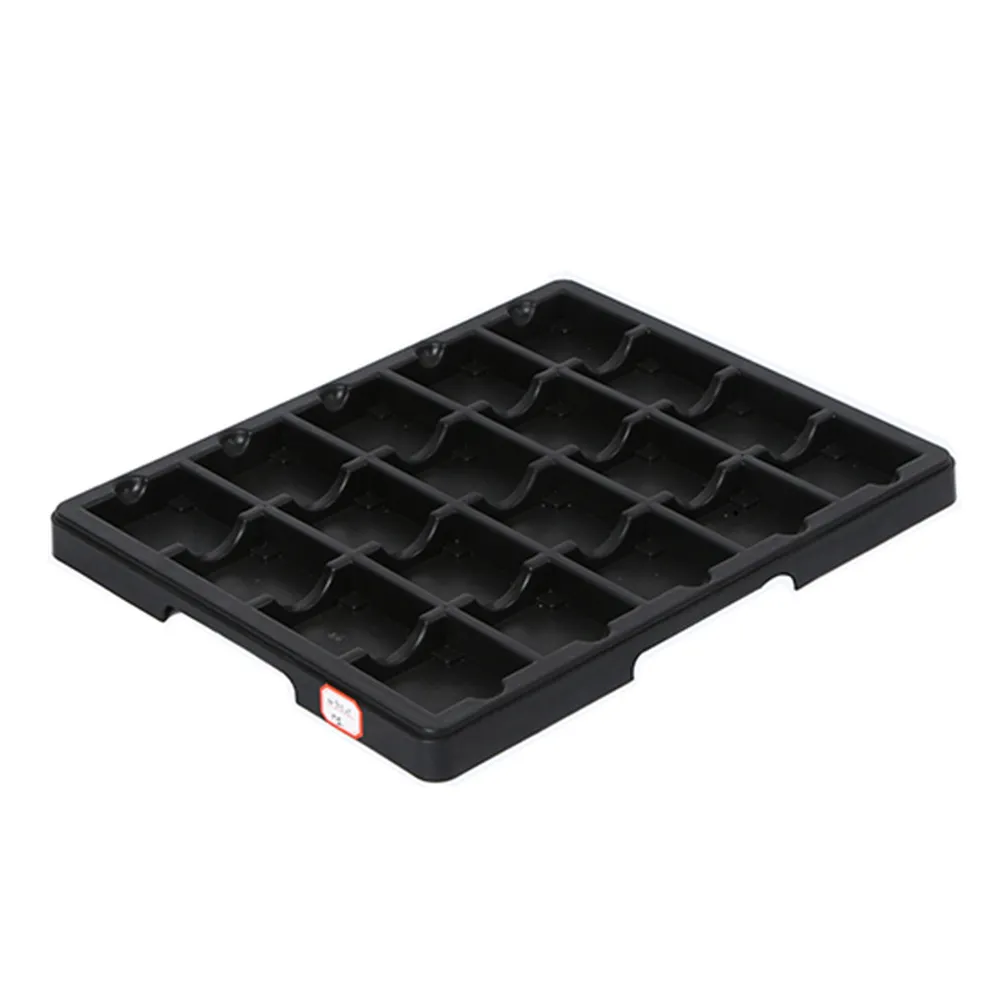
IC trays locate packaged semiconductor devices for controlled storage, inspection and handling. Select the pocket layout for the actual device package, permitted support areas and pickup process. SWESD’s catalogue on this page includes BGA and QFN tray options; confirm the current drawing and supplied configuration for the model you intend to purchase.
A tray’s appearance or an ESD description does not establish every required protective function. Ask for the relevant material and test evidence under your ESD control plan. Packaging used outside an ESD protected area may require discharge shielding as part of the complete package. See the EOS/ESD Association’s control principles for that distinction.
What to Confirm Before Ordering an IC Tray
- Device package drawing, pocket geometry, orientation and permitted contact surfaces.
- Tray outline, stacking interface and compatibility with the actual handling equipment.
- Material grade and the relevant electrical test method, conditions and results.
- Any required thermal exposure, its duration and the permitted supplier-defined conditions. Do not assume every device needs baking or every tray supports the same cycle.
- Sample acceptance, labeling, cleanliness, repeat supply and change notification requirements.
If JEDEC compatibility is required, specify the applicable current drawing or standard and request supporting evidence for the exact model. Confirming a tray outline does not by itself qualify the pocket, material or complete packaging arrangement for your device.
Sử dụng tray drawing review guide, pocket tolerance checklist và Hướng dẫn RFQ khay IC tùy chỉnh to prepare a sample request. For the wider carrier range, browse SWESD ESD trays.
The catalogue figures below are product-listing information. Request the current supplier drawing, material specification, relevant test conditions and approved use limits before accepting a particular model for production. For a quotation, send your device drawing, handling route, quantity and evidence requirements through the SWESD inquiry page.
Thông số kỹ thuật
Scroll the specification tables horizontally to compare all listed models.
| Tên sản phẩm | Khay IC | ||||
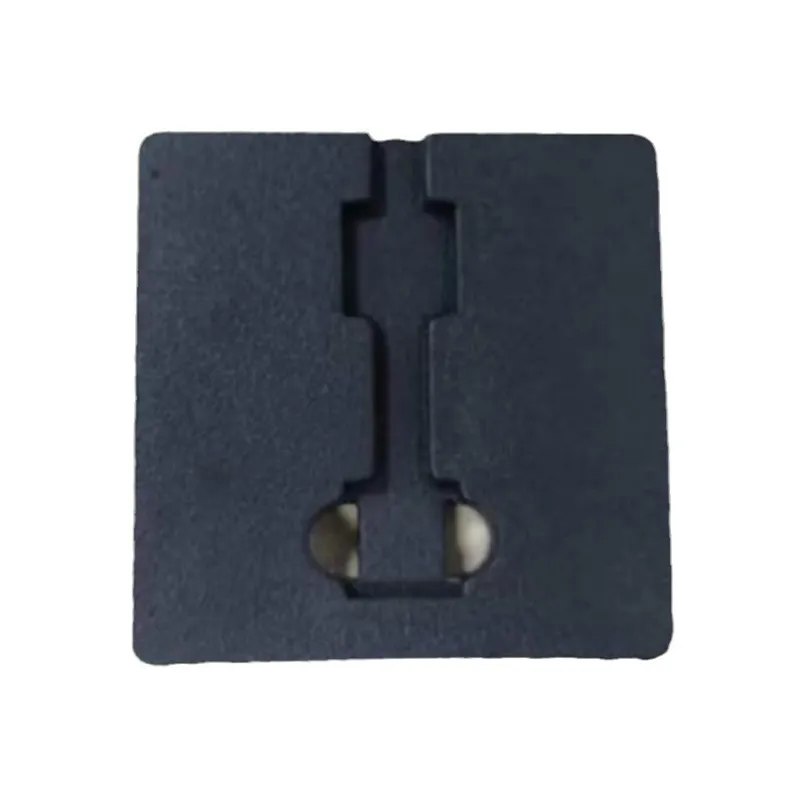
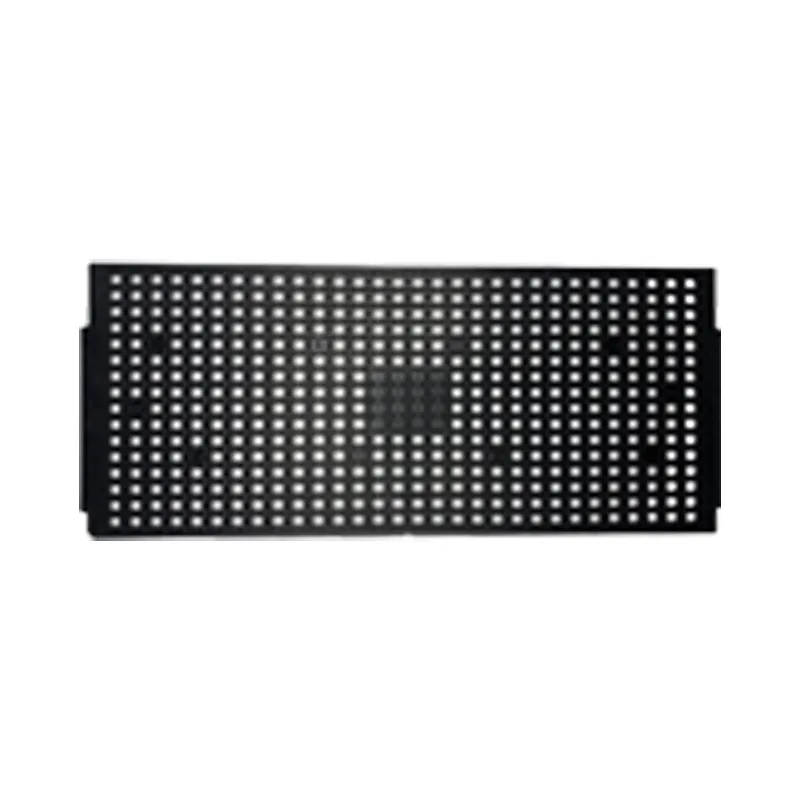
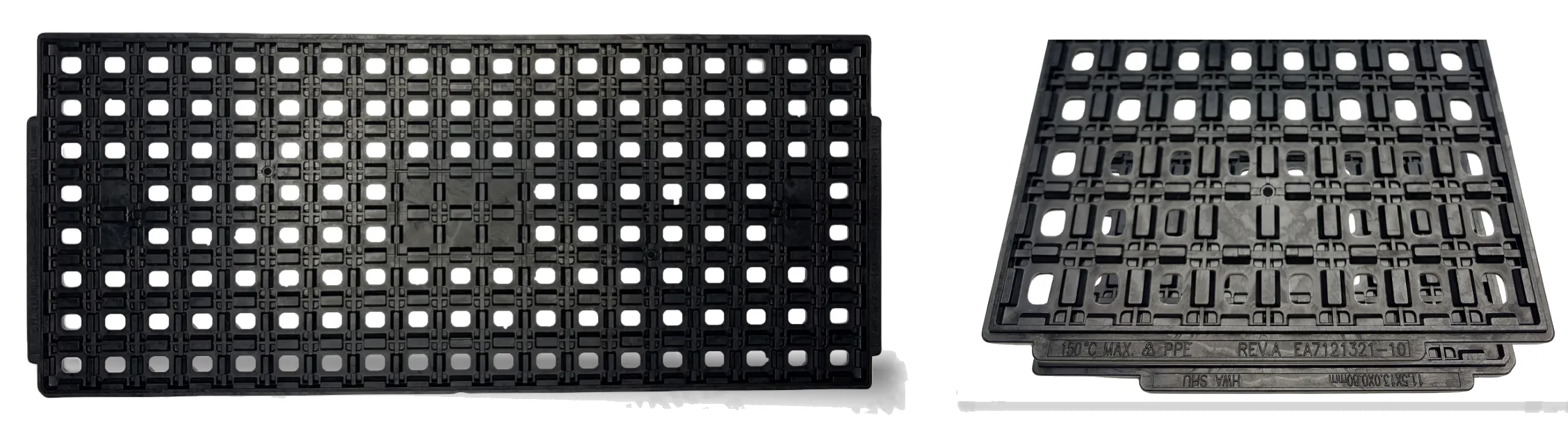
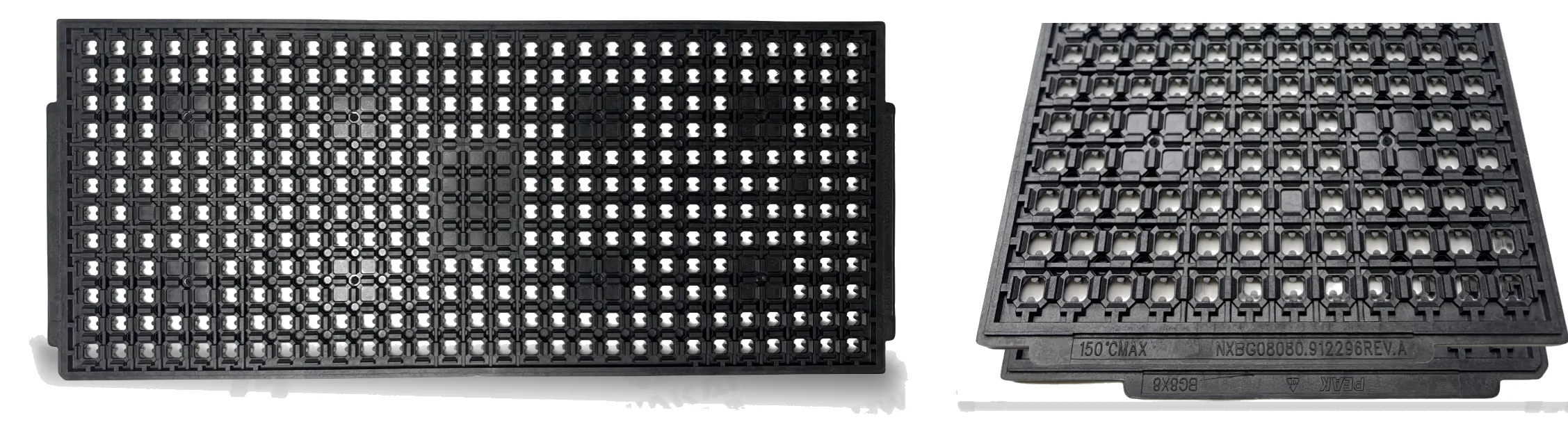
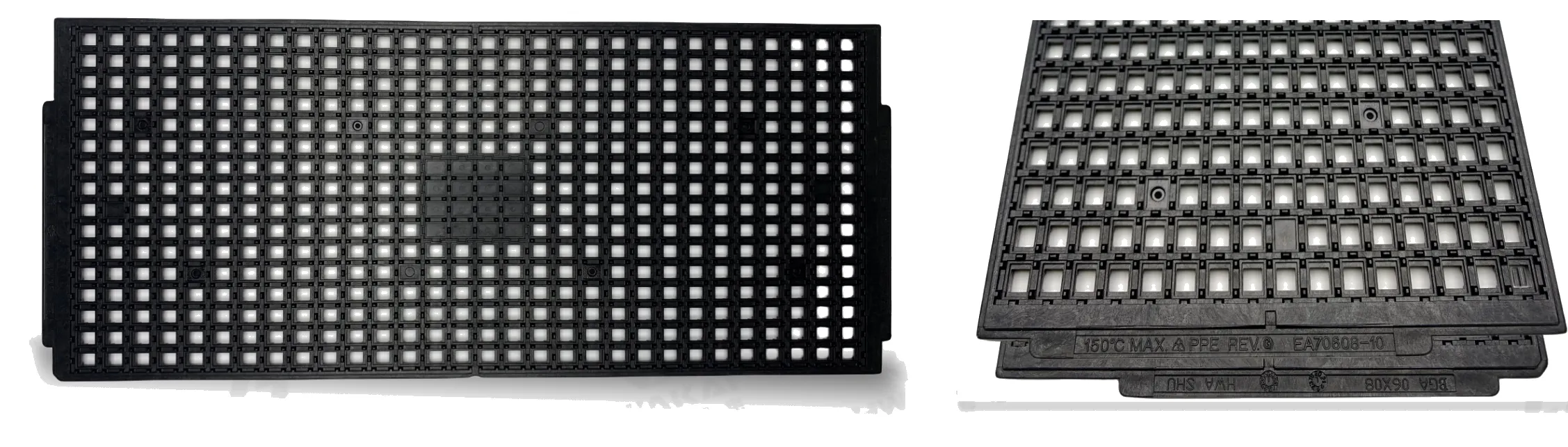
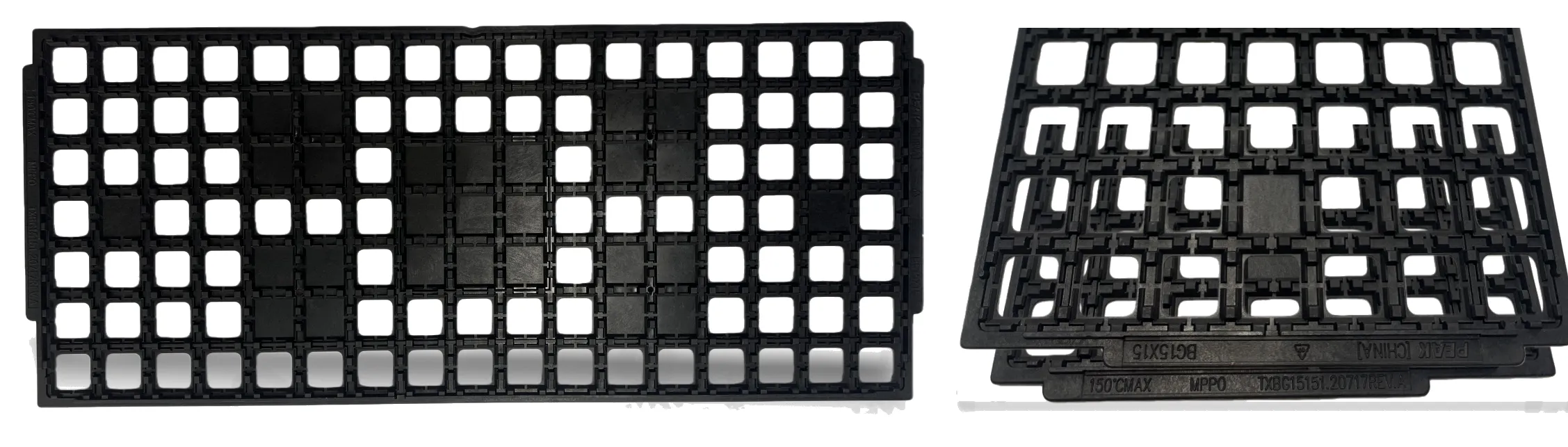
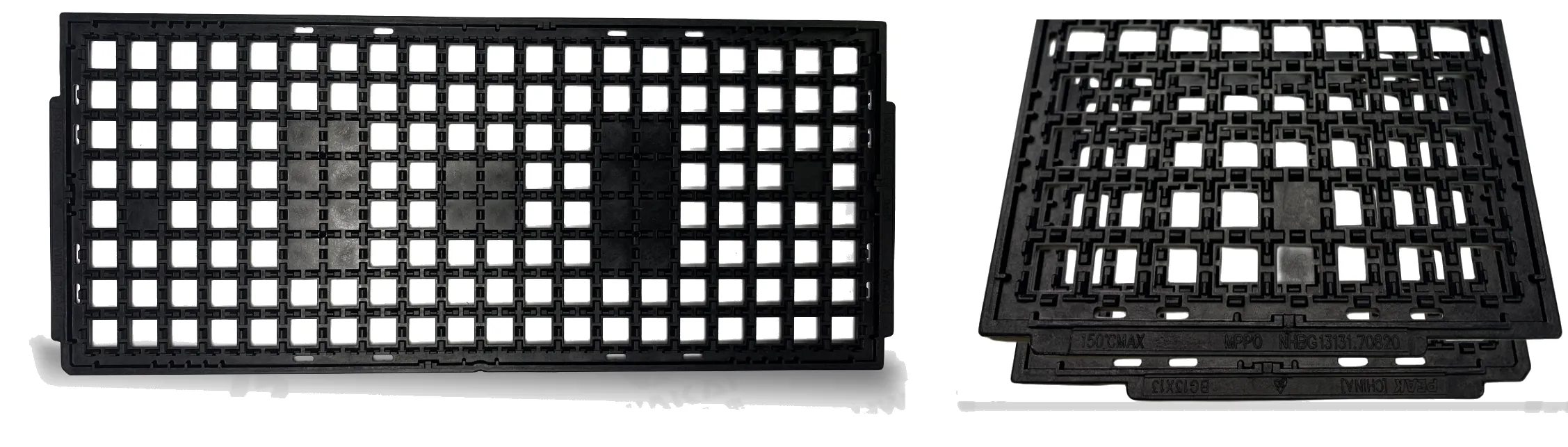
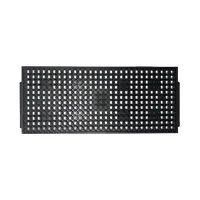
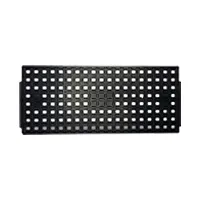
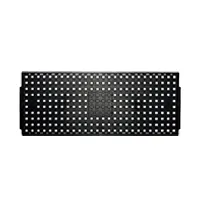
| Model sản phẩm | BGA6x8 | BGA8x8 | BGA11.5×13 | BGA13x13 | |
 |
 |
 |
 |
||
| Thông số kỹ thuật | ●Model | EA70608-10 | NXBG08080.912296REV.A | EA7121321-10 | NHBG13131.70820 |
| ●Tray cavity design | BGA | BGA | BGA | BGA | |
| ●Specifications | 6*8 | 8*8 | 11.5*13*0.8 | 13*13 | |
| ●Matrix | 16*30=480 | 12*29=348 | 8*19=152 | 8*20=160 | |
| ●Temperature MAX (℃) | 150 | 150 | 150 | 150 | |
| ●Surface Resistance | 10^5(Ω)~10^11(Ω) | 10^5(Ω)~10^11(Ω) | 10^5(Ω)~10^11(Ω) | 10^5(Ω)~10^11(Ω) | |
| ●Weight (g) | 138.5 | 162.4 | 125 | 110 | |
| Tên sản phẩm | Khay IC | ||
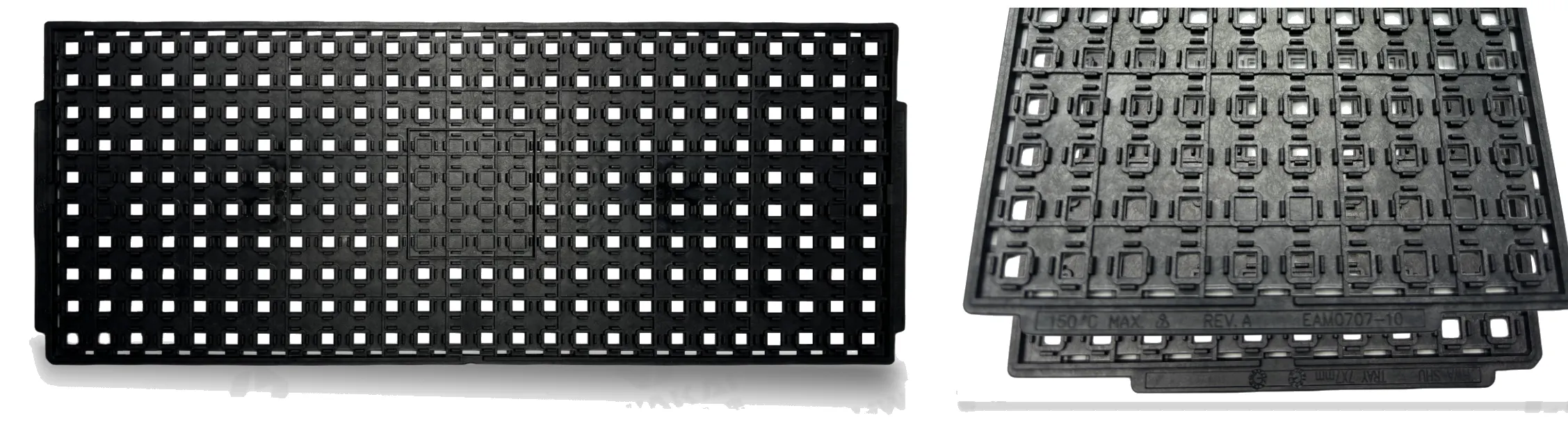
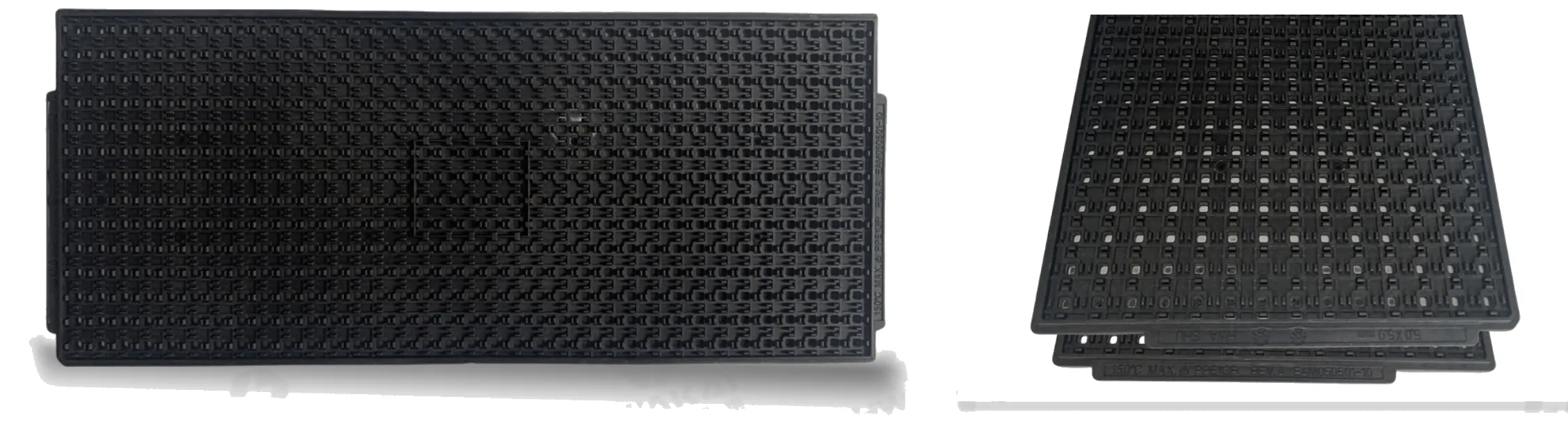
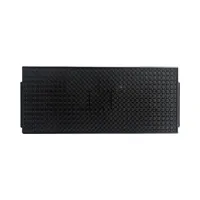
| Model sản phẩm | QFN5x5 | QFN7x7 | |
 |
 |
||
| Thông số kỹ thuật | ●Model | EAM050501-10 | EAM0707-10 |
| ●Tray cavity design | QFN | QFN | |
| ●Specifications | 5*5 | 7*7 | |
| ●Matrix | 14*35=490 | 10*26=260 | |
| ●Temperature MAX (℃) | 150 | 150 | |
| ●Surface Resistance | 10^5(Ω)~10^11(Ω) | 10^4(Ω)~10^11(Ω) | |
| ●Weight (g) | 183.9 | 148 | |
Năng lực sản xuất ESD đẳng cấp thế giới
Khi bạn lấy nguồn hàng từ Sanwei, bạn đang hợp tác trực tiếp với nhà sản xuất OEM/ODM dẫn đầu ngành. Chúng tôi vận hành một hệ thống hiện đại Cơ sở sản xuất tích hợp rộng hơn 70.000 m² tại Khu công nghiệp trung tâm Nhạc Thanh, Chiết Giang, quản lý từng quy trình từ công thức vật liệu độc quyền đến việc đúc sản phẩm có độ chính xác cao cuối cùng.
Cân tích hợp
Cơ sở hiện đại rộng hơn 70.000 m² được trang bị máy ép phun độ chính xác cao tải trọng lớn để xử lý các đơn hàng bán buôn số lượng lớn với thời gian giao hàng ổn định.
Kiểm soát toàn trình
Quy trình khép kín hoàn toàn từ nghiên cứu và phát triển vật liệu chống tĩnh điện độc quyền, kỹ thuật khuôn mẫu kết cấu, sản xuất tự động cho đến giao hàng logistics toàn cầu nhanh chóng.
Kiểm tra nghiêm ngặt
Việc kiểm tra nguyên liệu thô nghiêm ngặt kết hợp với việc đo điện trở bề mặt tại nhiều điểm trên dây chuyền sản xuất đảm bảo sản phẩm 100% tuân thủ các hướng dẫn của tiêu chuẩn ESD quốc tế.
Chống tĩnh điện Sản phẩm và Giải pháp
Cung cấp giải pháp bảo vệ tĩnh điện toàn diện trong toàn bộ chuỗi sản xuất và vận hành của bạn.
Thiết bị SMT
Hộp và giá đựng chống tĩnh điện dành cho dây chuyền tự động.

Lưu trữ & Vận vận logistics
Xe đẩy luân chuyển hàng, kệ, hộp, khay và thùng chứa linh kiện.

Trạm làm việc & PPE
Ghế chống tĩnh điện, thảm, dây đeo cổ tay và thiết bị bảo vệ cá nhân.
Phát triển tùy chỉnh
Phát triển khuôn mẫu tùy chỉnh và vật liệu chống tĩnh điện đặc biệt.
LỢI THẾ OEM/ODM CỦA CHÚNG TÔI

Nghiên cứu & Phát triển Nâng cao & Đổi mới Vật liệu
Vật liệu chống tĩnh điện tự phát triển với bằng sáng chế phát minh quốc gia và khả năng chịu nhiệt lên đến 200°C. Chúng tôi không chỉ ép nhựa — chúng tôi pha chế hợp chất.

Năng lực sản xuất toàn diện
Nhà máy rộng 30.000m² với các hệ thống ép phun, tạo hạt và gia công hỗ trợ hoàn chỉnh để cung cấp ổn định và hiệu quả.

Tùy chỉnh toàn diện quy trình
Điện trở suất, màu sắc, kích thước, logo, bao bì và chứng nhận của vật liệu — có thể tùy chỉnh để đáp ứng các tiêu chuẩn IEC61340-5-1, ANSI/ESD S20.20 hoặc tiêu chuẩn quân sự.

Chất lượng được chứng nhận & Tuân thủ toàn cầu
“Sanwei đã phát triển thành công khay màu tự nhiên sạch chịu nhiệt độ cao tùy chỉnh cho dây chuyền lắp ráp chất bán dẫn của chúng tôi, thay thế các sản phẩm nhập khẩu, đảm bảo an toàn ESD tuyệt vời và đáp ứng các yêu cầu độ sạch cao của nhà xưởng.”
ĐƯỢC TIN DÙNG BỞI CÁC TẬP ĐOÀN HÀNG ĐẦU THẾ GIỚI THUỘC FORTUNE 500
Các giải pháp ESD độc quyền của chúng tôi đang được triển khai tại các cơ sở sản xuất hàng đầu trên toàn thế giới, bao gồm: Intel, Motorola, Siemens, IBM, Panasonic, Nokia và Dell.
Bạn đang tìm kiếm kích thước tùy chỉnh hoặc giá bán buôn số lượng lớn?
Được hỗ trợ bởi đội ngũ R&D nội bộ mạnh mẽ của chúng tôi, Sanwei cung cấp các giải pháp OEM/ODM toàn diện được thiết kế riêng cho các dây chuyền sản xuất SMT hoặc bố trí kho hàng của bạn. Hãy liên hệ với các chuyên gia của chúng tôi ngay hôm nay để có khuôn tùy chỉnh, mã màu hoặc tư vấn lưu trữ 5S tích hợp.
Các câu hỏi thường gặp (FAQ)
1. What is an IC tray?
It’s basically a plastic tray that holds semiconductor chips during manufacturing, testing, shipping, and storage. They’re specially made to be ESD‑safe so static doesn’t fry the chips. Most of them follow standard sizes so they work with automated handling equipment.
2. What are the materials used in IC packaging?
That’s a whole “package” of stuff – you’ve got the molding compound (usually epoxy resin), a substrate (organic or ceramic), lead frames, die attach adhesives, bonding wires, and solder balls. All these materials work together to protect the chip, connect it to the circuit, and help keep it cool.
3. What material are ice trays made of?
Ice trays for your freezer are a totally different story – they’re all about food safety. The most common are food‑grade polypropylene (PP) and silicone. Silicone’s nice because it’s flexible and makes popping out the ice cubes super easy.
4. What is the standard tray size?
When people say “standard tray,” they usually mean the JEDEC size – that’s 12.7 x 5.35 inches, or about 322.6 x 136 mm. Thickness can be either 0.25 inches (thin) or 0.40 inches (thick). There’s also a common 320mm x 240mm size used internationally.
5. What is a JEDEC tray?
It’s a tray that meets the specs set by JEDEC – the group that writes standards for the semiconductor industry. Think of it as a universal container for chips (like BGA or QFP packages) so that trays from different manufacturers all fit the same machines and processes.
6. What is the tolerance of JEDEC trays?
They’re made to pretty tight tolerances to make sure chips sit exactly right. For example, the dimension accuracy is often around ±0.15 mm, and the overall flatness is kept within about 0.76 mm. That said, the exact numbers can vary a bit between suppliers – always check the data sheet.
7. What is the JEDEC standard?
JEDEC is basically the rule‑maker for the microelectronics world. They publish standards for everything from memory chips (like DDR5) to how parts are packaged and tested. It’s the common language that makes sure chips from different companies can work together.
8. What is the difference between JEDEC and IPC?
Think of it this way: JEDEC focuses on the chip itself – its electrical specs, physical dimensions, and testing. IPC, on the other hand, deals with the circuit board and assembly – how PCBs are designed, manufactured, and soldered. So JEDEC is about the silicon, IPC is about the board.