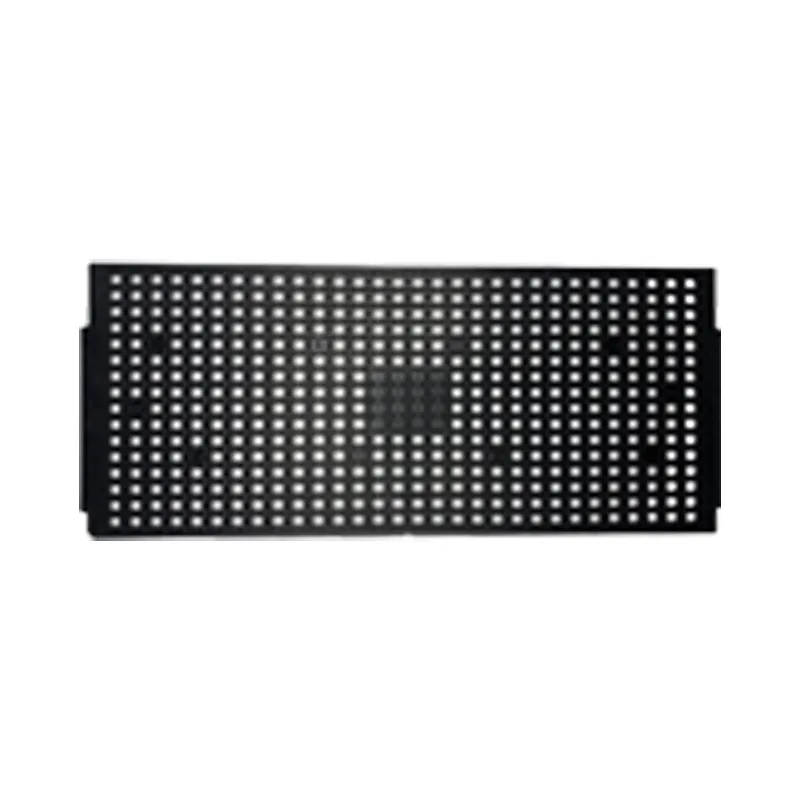
IC Tray JEDEC Standard Anti-Static Chip Packaging Test Tray
Gambaran Keseluruhan:
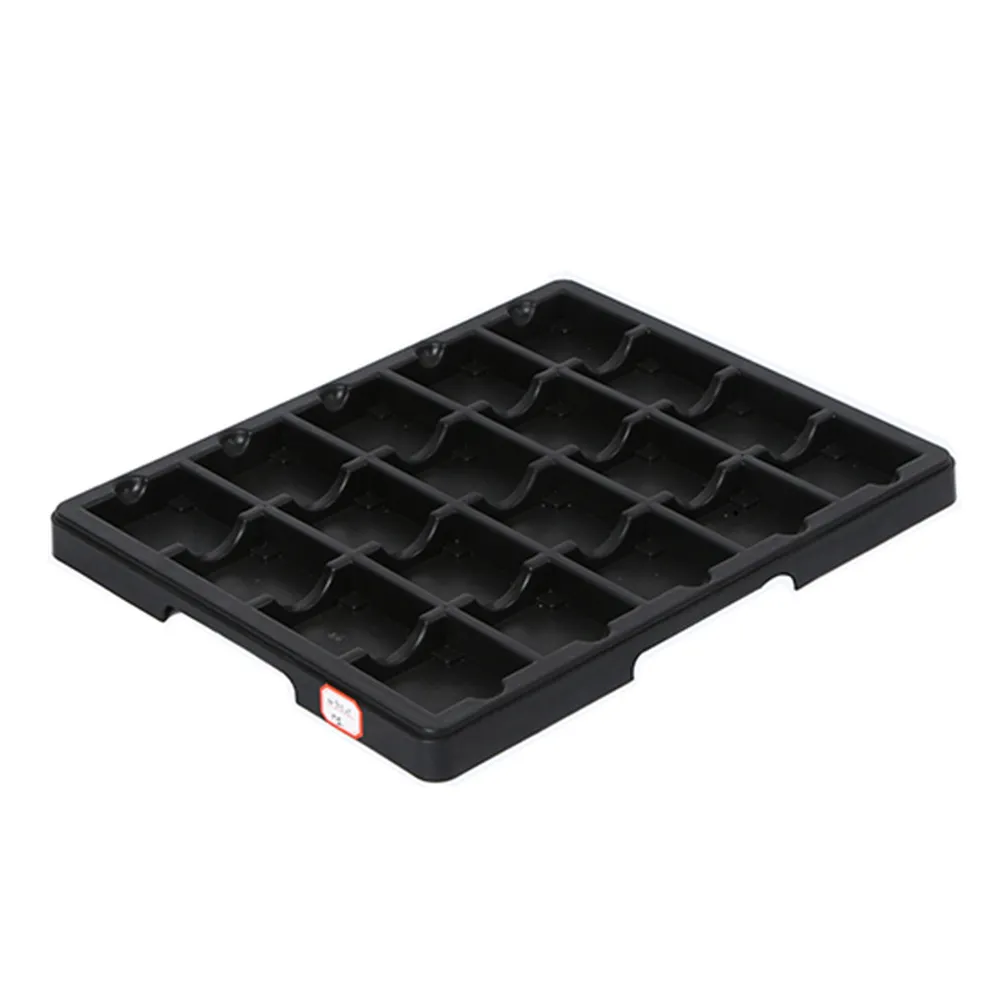
IC tray, also known as electronic chip tray, is a plastic tray used by semiconductor packaging and testing companies for their chip (IC) packaging and testing, complies with JEDEC international standards.
Product Introduction
IC tray, also known as electronic chip tray, is a plastic tray used by semiconductor packaging and testing companies for their chip (IC) packaging and testing, complies with JEDEC international standards.
It can prevent the product from electrostatic contact, protect the chip from damage, and facilitate automated detection and installation. IC trays can be used for various packaging methods such as BGA, QFN, QFP, PGA, TSOP, TQFP, LQFP, PLCC, SOC, SiP, etc.
IC tray material performance requirements
(1) In order to provide electrostatic protection for the chip, the material needs to have antistatic properties, and is generally modified by adding antistatic agents, conductive carbon black or conductive carbon fibers.
(2) Before the chip is assembled at the terminal, it must be baked to avoid moisture inside the chip, which requires the material to be heat-resistant.
(3) The gap between the upper and lower trays needs to hold the pins of the main chip to prevent the pins from shaking and bending or breaking. This requires certain dimensional stability of the material. (4) To avoid the impact of a humid environment on the chip, the tray material is required to have a low water absorption rate.
(5) In order to reduce pollution and save losses, materials are required to be reusable and recyclable.
Technical Specification
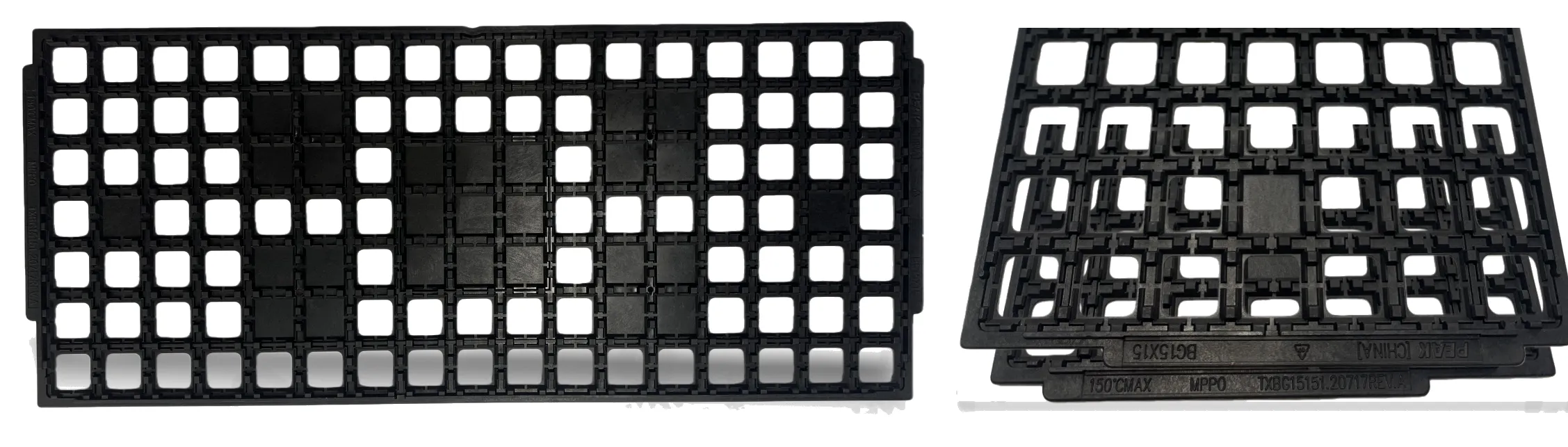
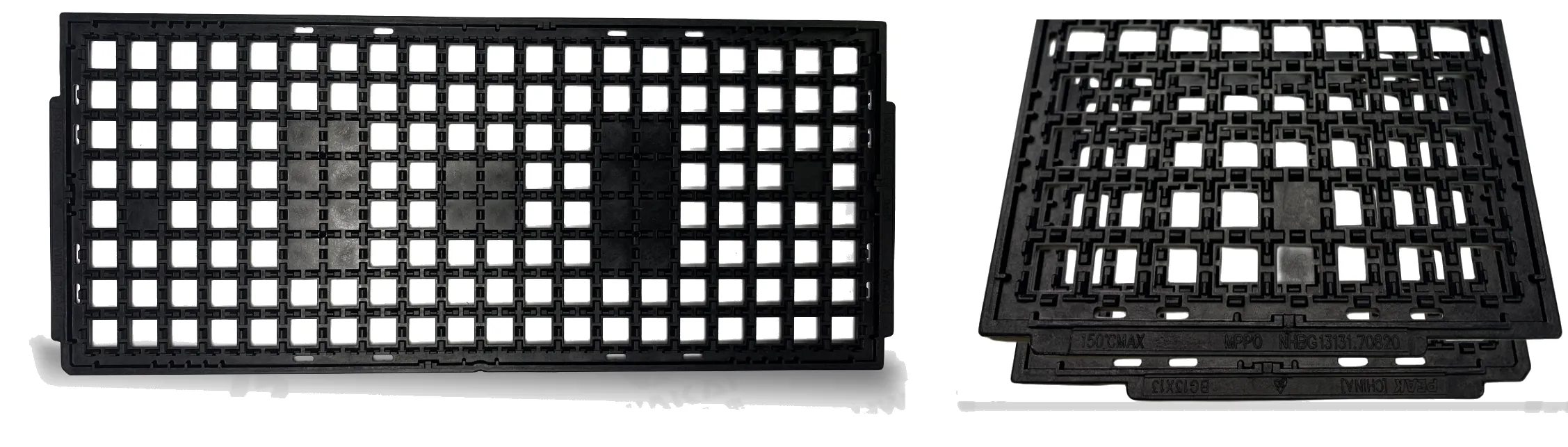
| Product name | IC tray | ||||
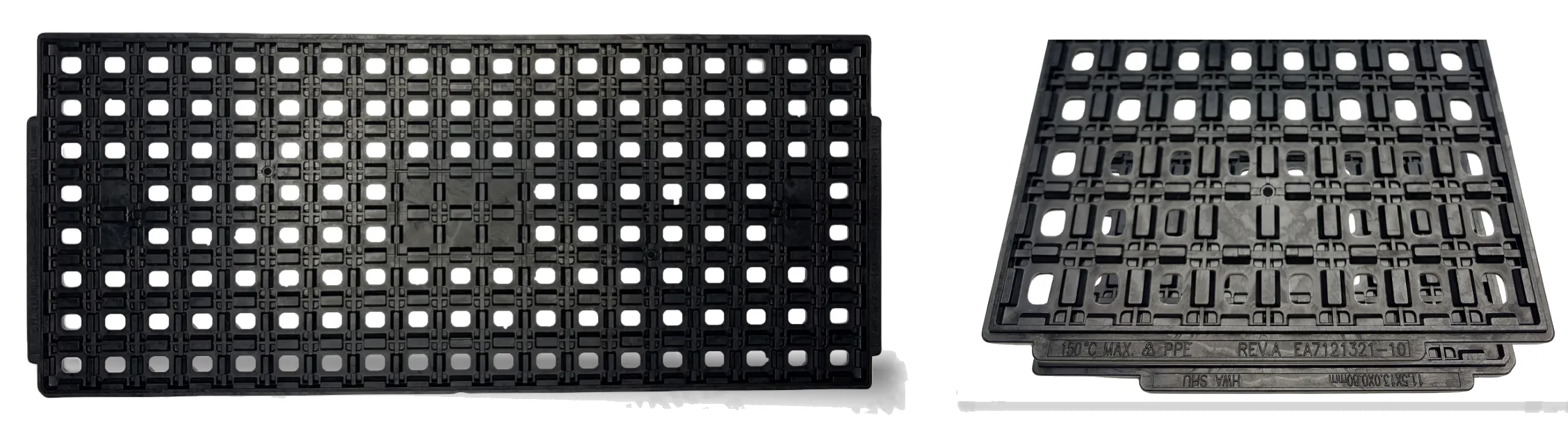
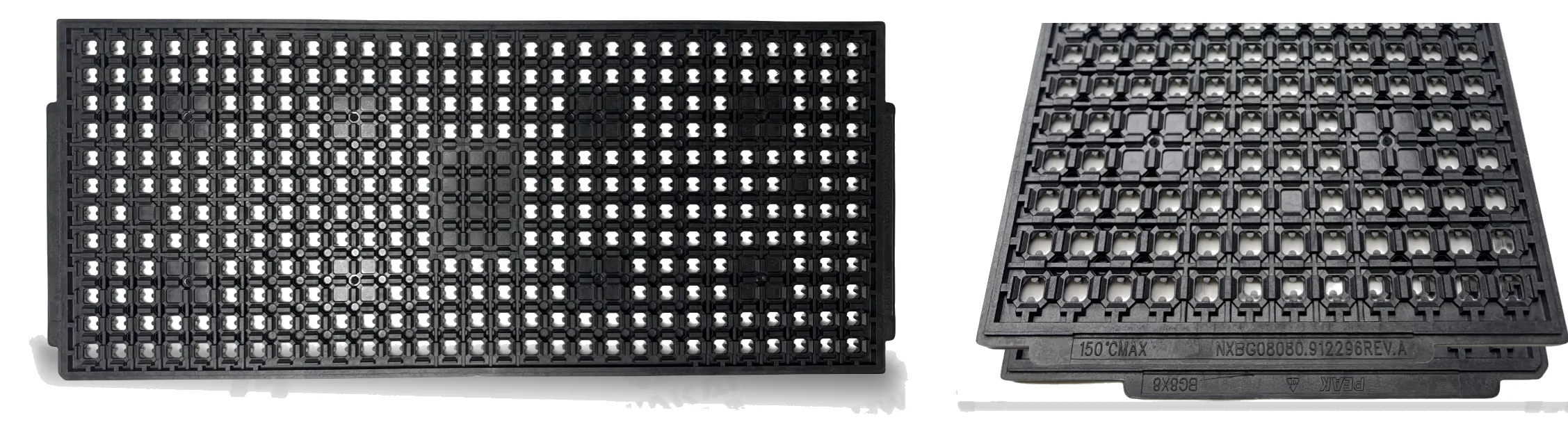
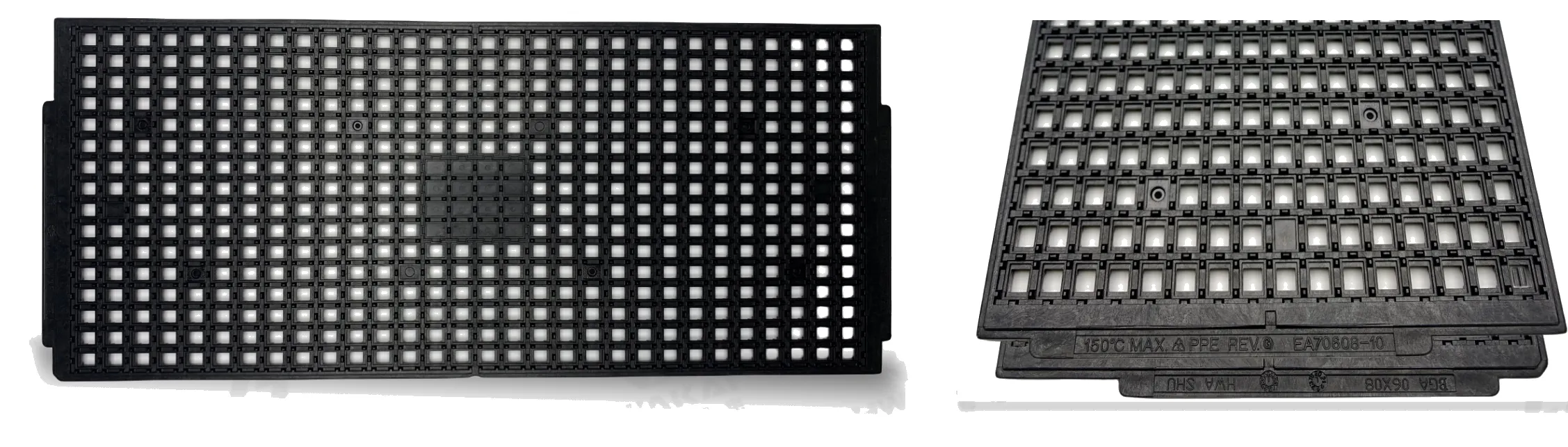
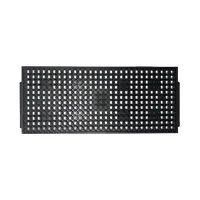
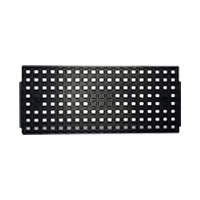
| Product model | BGA6x8 | BGA8x8 | BGA11.5×13 | BGA13x13 | |
 |
 |
 |
 |
||
| Specification parameters | ●Model | EA70608-10 | NXBG08080.912296REV.A | EA7121321-10 | NHBG13131.70820 |
| ●Tray cavity design | BGA | BGA | BGA | BGA | |
| ●Specifications | 6*8 | 8*8 | 11.5*13*0.8 | 13*13 | |
| ●Matrix | 16*30=480 | 12*29=348 | 8*19=152 | 8*20=160 | |
| ●Temperature MAX (℃) | 150 | 150 | 150 | 150 | |
| ●Surface Resistance | 10^5(Ω)~10^11(Ω) | 10^5(Ω)~10^11(Ω) | 10^5(Ω)~10^11(Ω) | 10^5(Ω)~10^11(Ω) | |
| ●Weight (g) | 138.5 | 162.4 | 125 | 110 | |
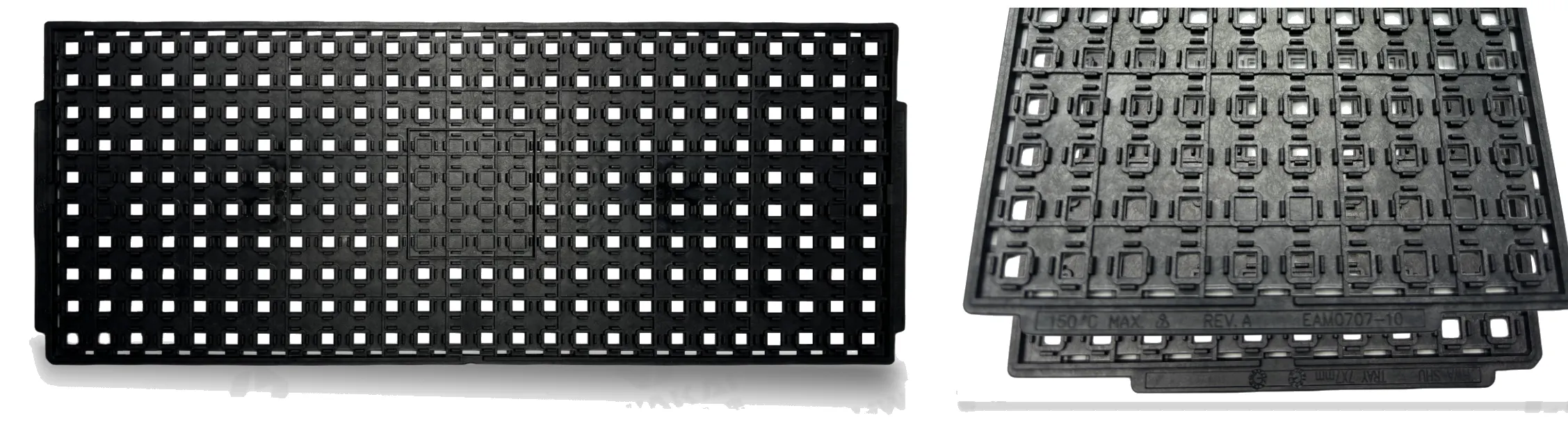
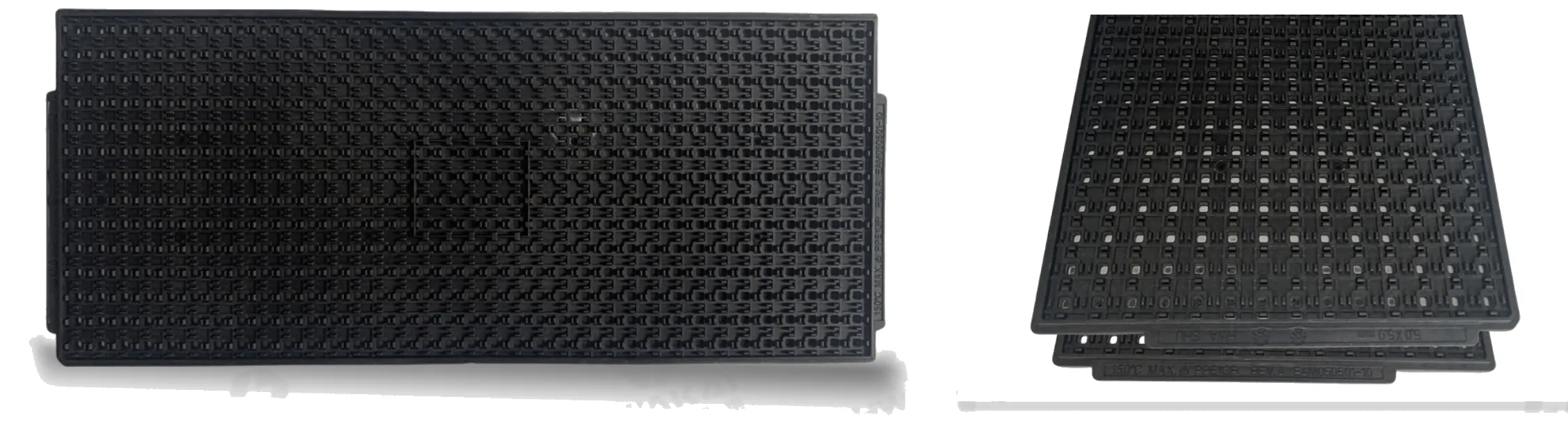
| Product name | IC tray | ||
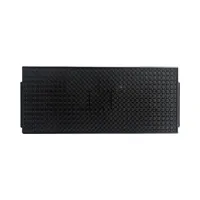
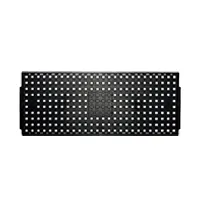
| Product model | QFN5x5 | QFN7x7 | |
 |
 |
||
| Specification parameters | ●Model | EAM050501-10 | EAM0707-10 |
| ●Tray cavity design | QFN | QFN | |
| ●Specifications | 5*5 | 7*7 | |
| ●Matrix | 14*35=490 | 10*26=260 | |
| ●Temperature MAX (℃) | 150 | 150 | |
| ●Surface Resistance | 10^5(Ω)~10^11(Ω) | 10^4(Ω)~10^11(Ω) | |
| ●Weight (g) | 183.9 | 148 | |
Kapasiti Pembuatan ESD Bertaraf Dunia
Apabila anda mendapatkan sumber daripada Sanwei, anda sedang bekerjasama secara langsung dengan pengeluar OEM/ODM peneraju industri. Kami mengendalikan sebuah teknologi terkini Kemudahan pengeluaran bersepadu seluas 70,000+ m² di Taman Perindustrian Pusat Yueqing, Zhejiang, menguruskan setiap proses tunggal daripada rumusan bahan proprietari kepada acuan produk ketepatan tinggi akhir.
Skala Bersepadu
Pangkalan pengeluaran canggih seluas 70,000+ m² yang dilengkapi dengan mesin pengacuan suntikan ketepatan tugas berat untuk menangani pesanan borong pukal dengan masa Memimpin yang stabil.
Kawalan Rantaian Penuh
Kawalan dalaman sepenuhnya yang merangkumi R&D bahan anti-statik proprietari, kejuruteraan acuan struktur, pembuatan automatik, dan penghantaran logistik global yang pantas.
Pemeriksaan Rapi
Ujian bahan mentah yang ketat digabungkan dengan pengukuran rintangan permukaan berbilang titik pada barisan pengeluaran memastikan pematuhan 100% dengan garis panduan piawaian ESD antarabangsa.
Anti-Statik Produk dan Penyelesaian
Menyediakan perlindungan elektrostatik yang menyeluruh merentasi keseluruhan kitaran hayat pembuatan dan operasi anda.
Peralatan SMT
Kotak dan rak kutipan anti-statik untuk talian automatik.

Penyimpanan & Logistik
Troli pusing ganti, rak, kotak, dulang, dan bekas komponen.
Stesen Kerja & PPE
Kerusi anti-statik, tikar, tali pergelangan tangan, dan perlindungan diri.
Pembangunan Tersuai
Pembangunan acuan tersuai dan bahan anti-statik khas.
KELEBIHAN OEM/ODM KAMI

R&D Lanjutan & Inovasi Bahan
Bahan anti-statik buatan sendiri dengan paten ciptaan nasional dan rintangan haba sehingga 200℃. Kami bukan sekadar membentuk — kami merumus sebatian.

Kapasiti Pengeluaran Skala Penuh
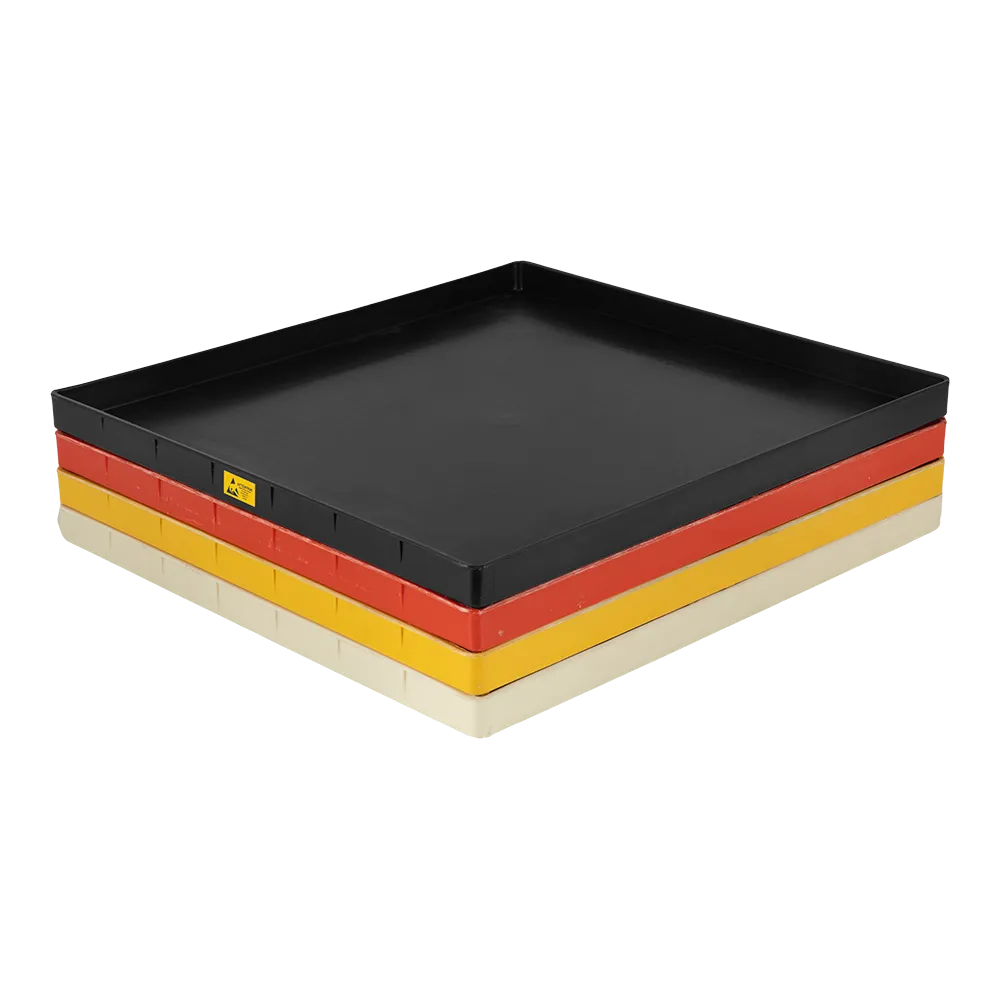
Kilang seluas 30,000㎡ dengan sistem pengacuan suntikan, granulasi dan pemprosesan sokongan yang lengkap untuk bekalan yang stabil dan cekap.

Penyesuaian Proses Penuh
Kerintangan bahan, warna, saiz, logo, pembungkusan dan pensijilan — boleh disesuaikan untuk memenuhi piawaian IEC61340-5-1, ANSI/ESD S20.20 atau ketenteraan.

Kualiti Disahkan & Pematuhan Global
“Sanwei berjaya menghasilkan dulang warna semula jadi bersih tahan suhu tinggi tersuai untuk barisan pemasangan semikonduktor kami, menggantikan produk import, memastikan keselamatan ESD yang sangat baik, dan memenuhi keperluan kebersihan yang tinggi di bengkel tersebut.”
DIKEYAKI OLEH PEMIMPIN INDUSTRI FORTUNE 500 GLOBAL
Penyelesaian ESD proprietari kami telah diletakkan di kemudahan pengeluaran terkemuka di seluruh dunia, termasuk: Intel, Motorola, Siemens, IBM, Panasonic, Nokia, dan Dell.
Mencari Saiz Tersuai atau Harga Borong Pukal?
Disokong oleh pasukan R&D dalaman kami yang kukuh, Sanwei menyediakan pilihan OEM/ODM lengkap yang disesuaikan dengan barisan pengeluaran SMT atau susun atur gudang spesifik anda. Hubungi pakar kami hari ini untuk acuan tersuai, kod warna, atau perundingan storan 5S bersepadu.
Soalan Lazim (FAQ)
1. What is an IC tray?
It’s basically a plastic tray that holds semiconductor chips during manufacturing, testing, shipping, and storage. They’re specially made to be ESD‑safe so static doesn’t fry the chips. Most of them follow standard sizes so they work with automated handling equipment.
2. What are the materials used in IC packaging?
That’s a whole “package” of stuff – you’ve got the molding compound (usually epoxy resin), a substrate (organic or ceramic), lead frames, die attach adhesives, bonding wires, and solder balls. All these materials work together to protect the chip, connect it to the circuit, and help keep it cool.
3. What material are ice trays made of?
Ice trays for your freezer are a totally different story – they’re all about food safety. The most common are food‑grade polypropylene (PP) and silicone. Silicone’s nice because it’s flexible and makes popping out the ice cubes super easy.
4. What is the standard tray size?
When people say “standard tray,” they usually mean the JEDEC size – that’s 12.7 x 5.35 inches, or about 322.6 x 136 mm. Thickness can be either 0.25 inches (thin) or 0.40 inches (thick). There’s also a common 320mm x 240mm size used internationally.
5. What is a JEDEC tray?
It’s a tray that meets the specs set by JEDEC – the group that writes standards for the semiconductor industry. Think of it as a universal container for chips (like BGA or QFP packages) so that trays from different manufacturers all fit the same machines and processes.
6. What is the tolerance of JEDEC trays?
They’re made to pretty tight tolerances to make sure chips sit exactly right. For example, the dimension accuracy is often around ±0.15 mm, and the overall flatness is kept within about 0.76 mm. That said, the exact numbers can vary a bit between suppliers – always check the data sheet.
7. What is the JEDEC standard?
JEDEC is basically the rule‑maker for the microelectronics world. They publish standards for everything from memory chips (like DDR5) to how parts are packaged and tested. It’s the common language that makes sure chips from different companies can work together.
8. What is the difference between JEDEC and IPC?
Think of it this way: JEDEC focuses on the chip itself – its electrical specs, physical dimensions, and testing. IPC, on the other hand, deals with the circuit board and assembly – how PCBs are designed, manufactured, and soldered. So JEDEC is about the silicon, IPC is about the board.