IC Trays for Semiconductor and BGA Packaging
Genel Bakış:
Review IC tray options for BGA and QFN devices. Request pocket drawings, material specifications, ESD evidence and samples for your handling process.
IC Trays for Semiconductor Handling and Packaging
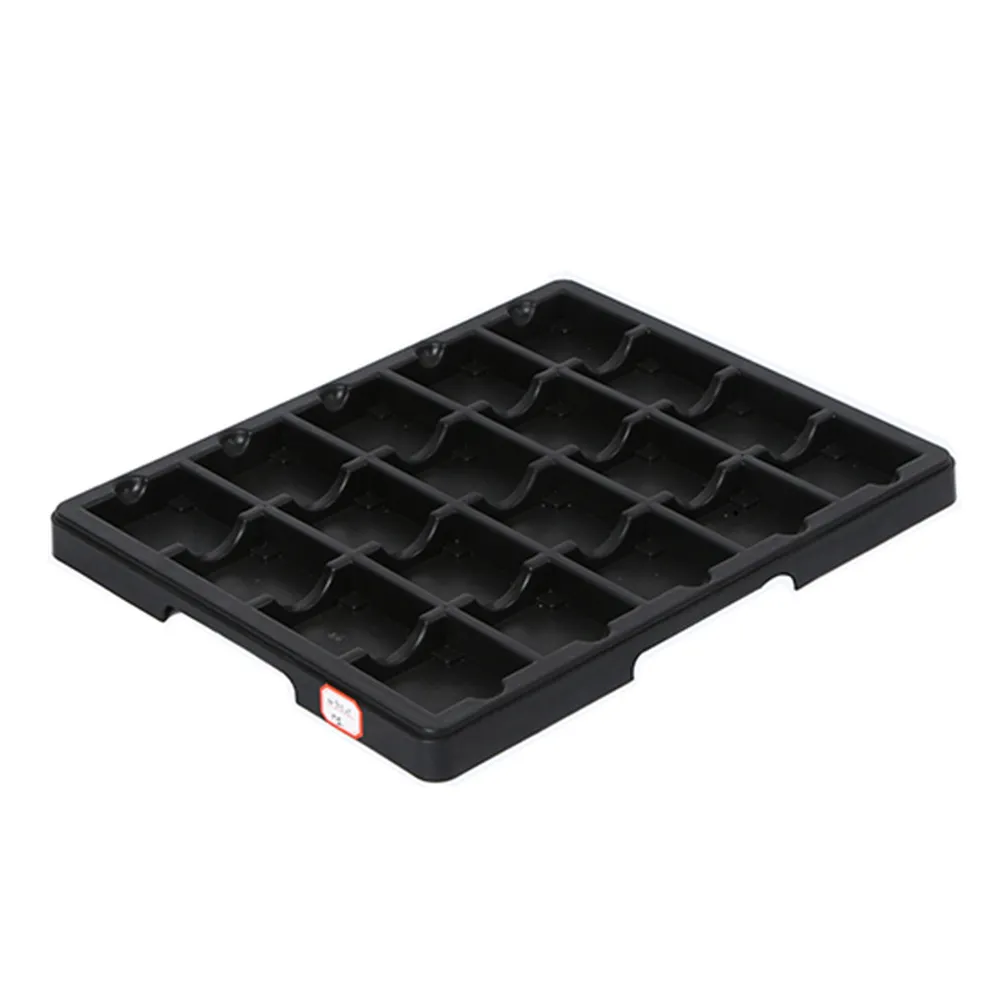
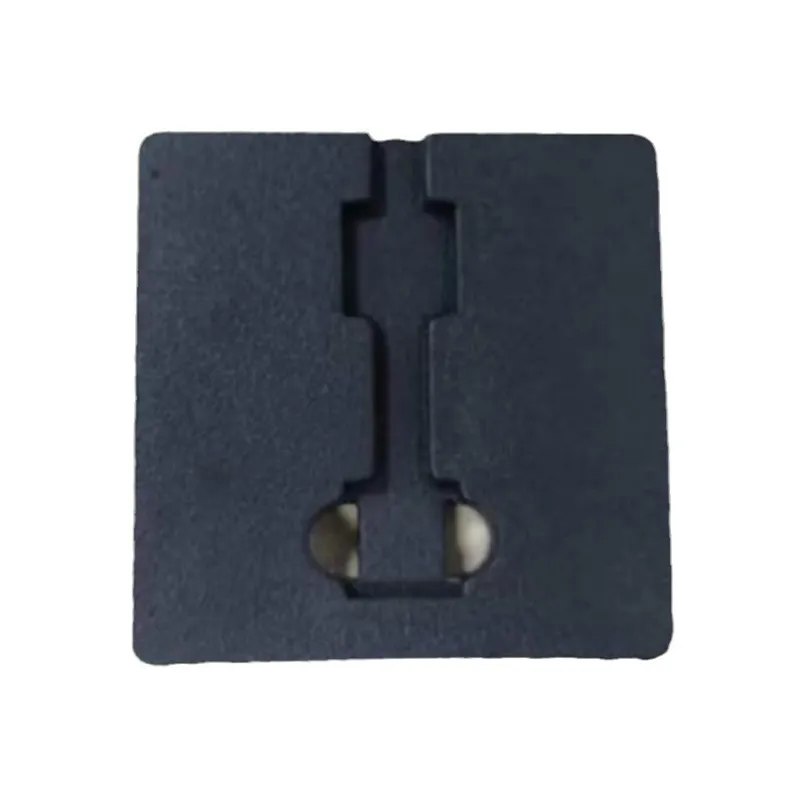
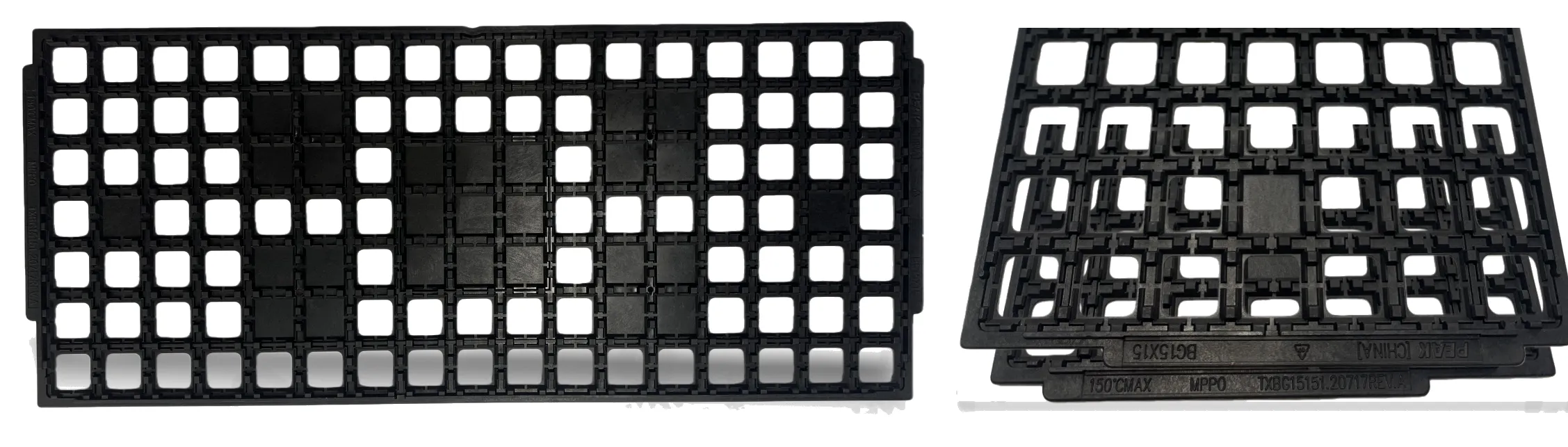
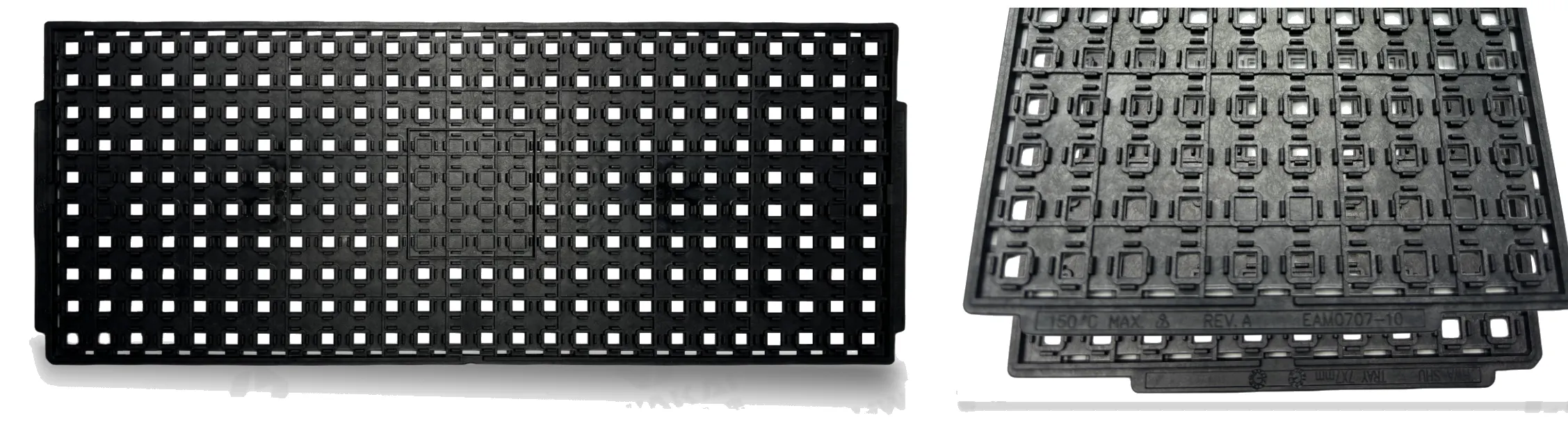
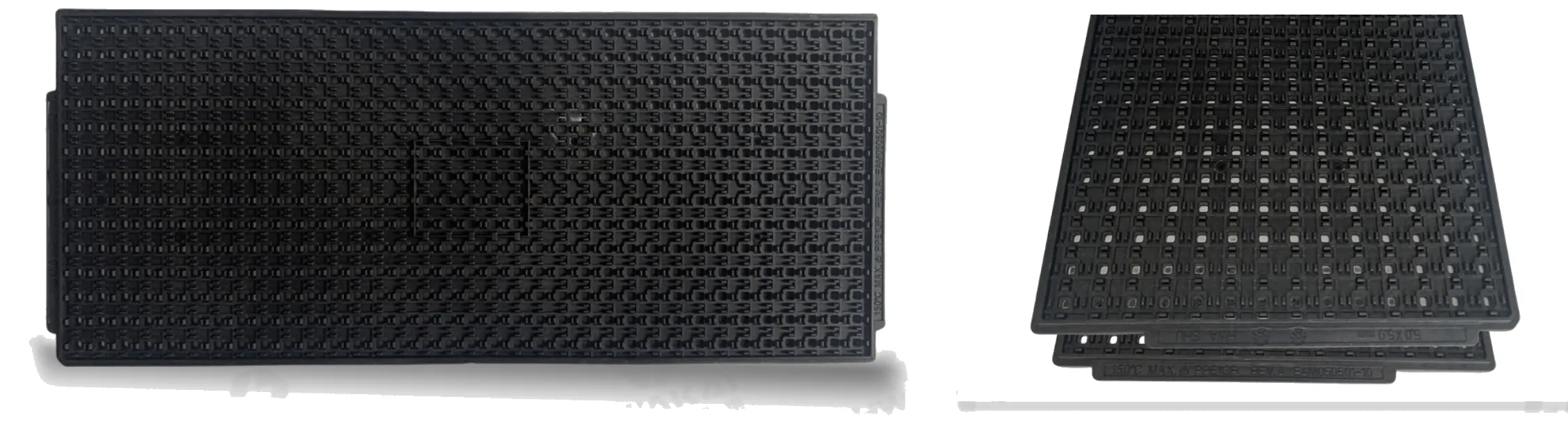
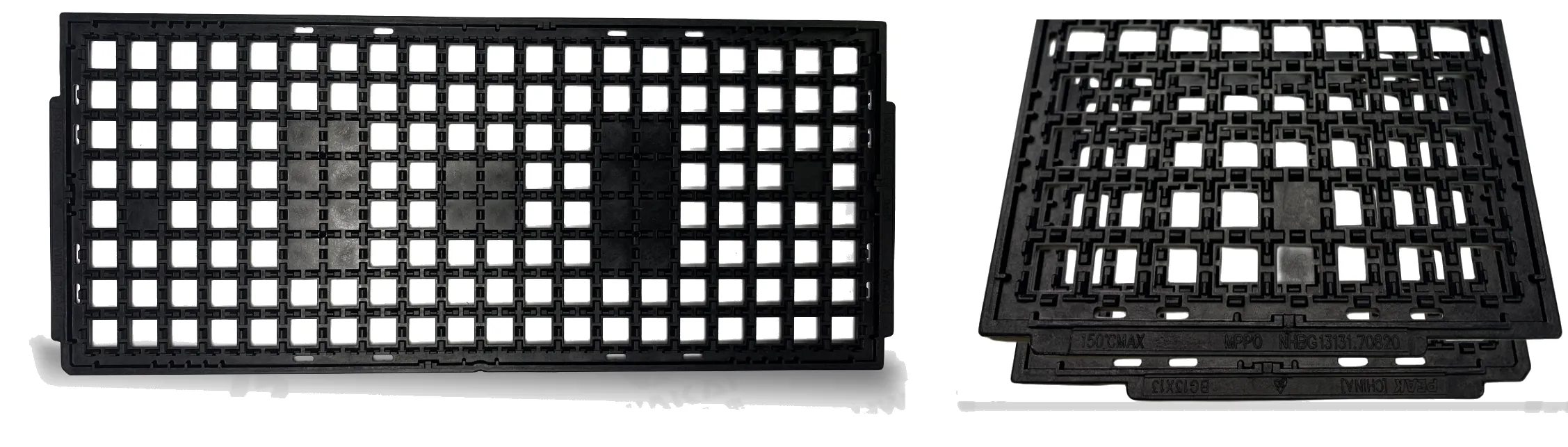
IC trays locate packaged semiconductor devices for controlled storage, inspection and handling. Select the pocket layout for the actual device package, permitted support areas and pickup process. SWESD’s catalogue on this page includes BGA and QFN tray options; confirm the current drawing and supplied configuration for the model you intend to purchase.
A tray’s appearance or an ESD description does not establish every required protective function. Ask for the relevant material and test evidence under your ESD control plan. Packaging used outside an ESD protected area may require discharge shielding as part of the complete package. See the EOS/ESD Association’s control principles for that distinction.
What to Confirm Before Ordering an IC Tray
- Device package drawing, pocket geometry, orientation and permitted contact surfaces.
- Tray outline, stacking interface and compatibility with the actual handling equipment.
- Material grade and the relevant electrical test method, conditions and results.
- Any required thermal exposure, its duration and the permitted supplier-defined conditions. Do not assume every device needs baking or every tray supports the same cycle.
- Sample acceptance, labeling, cleanliness, repeat supply and change notification requirements.
If JEDEC compatibility is required, specify the applicable current drawing or standard and request supporting evidence for the exact model. Confirming a tray outline does not by itself qualify the pocket, material or complete packaging arrangement for your device.
Kullan tray drawing review guide, pocket tolerance checklist ve Özel Entegre Devre Tepsisi RFQ Kılavuzu to prepare a sample request. For the wider carrier range, browse SWESD ESD trays.
The catalogue figures below are product-listing information. Request the current supplier drawing, material specification, relevant test conditions and approved use limits before accepting a particular model for production. For a quotation, send your device drawing, handling route, quantity and evidence requirements through the SWESD inquiry page.
Teknik Şartname
Scroll the specification tables horizontally to compare all listed models.
| Ürün adı | IC tepsisi | ||||
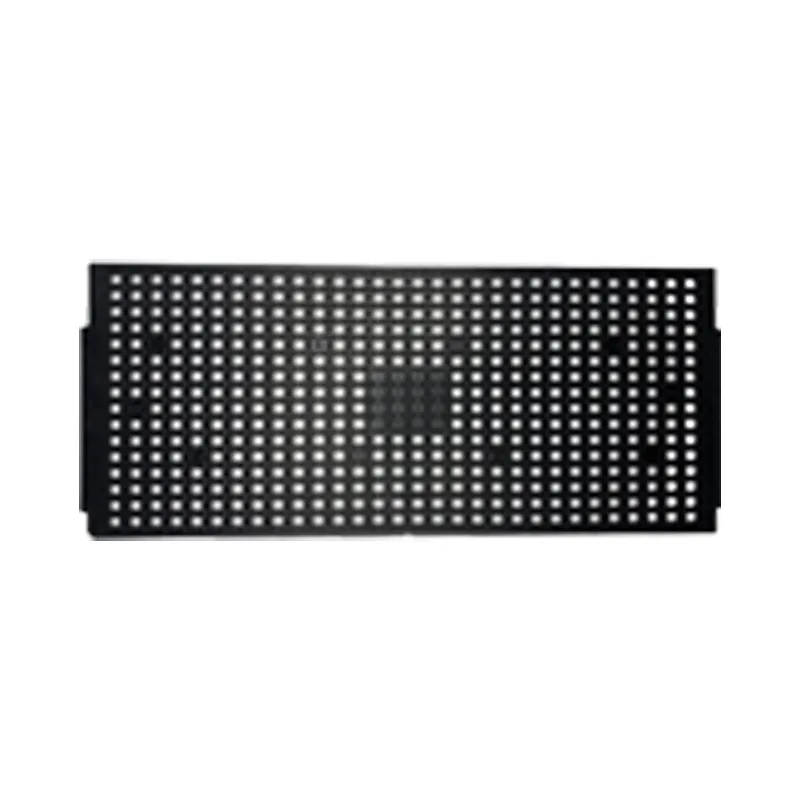
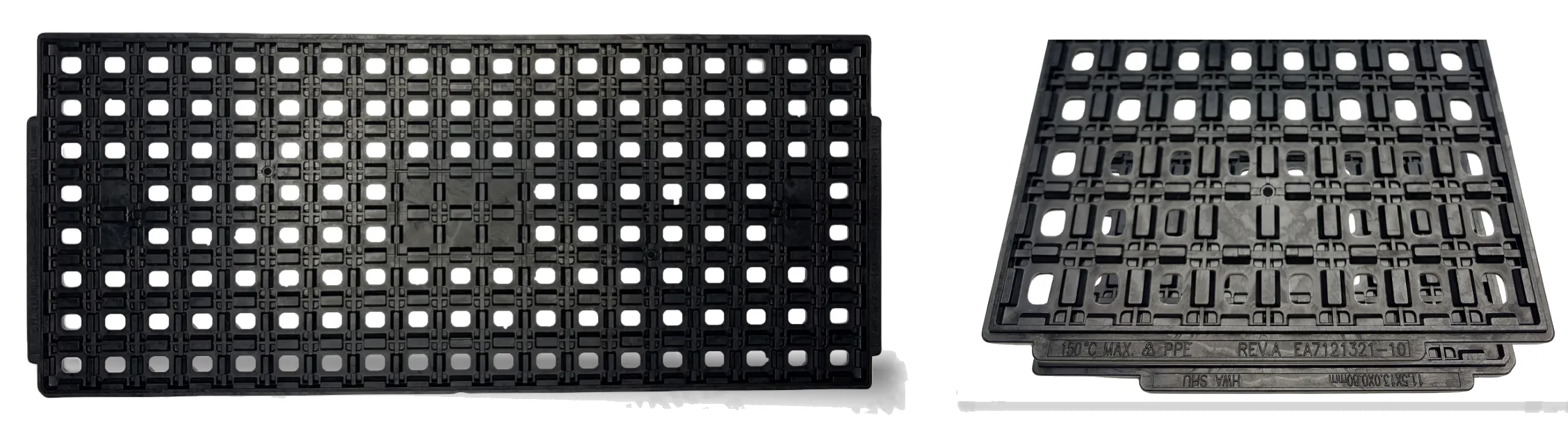
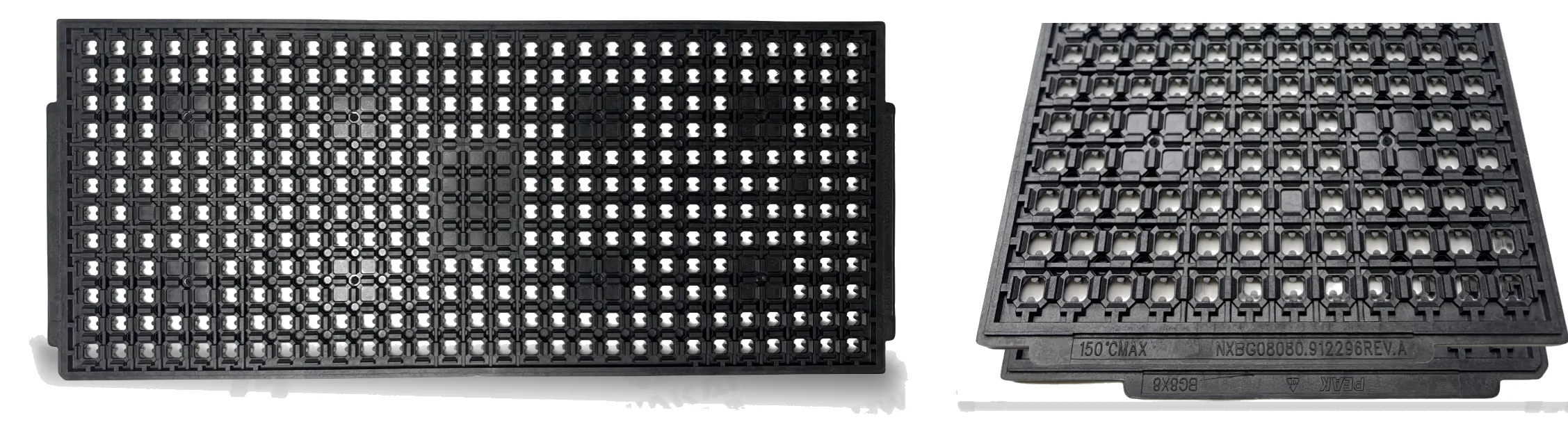
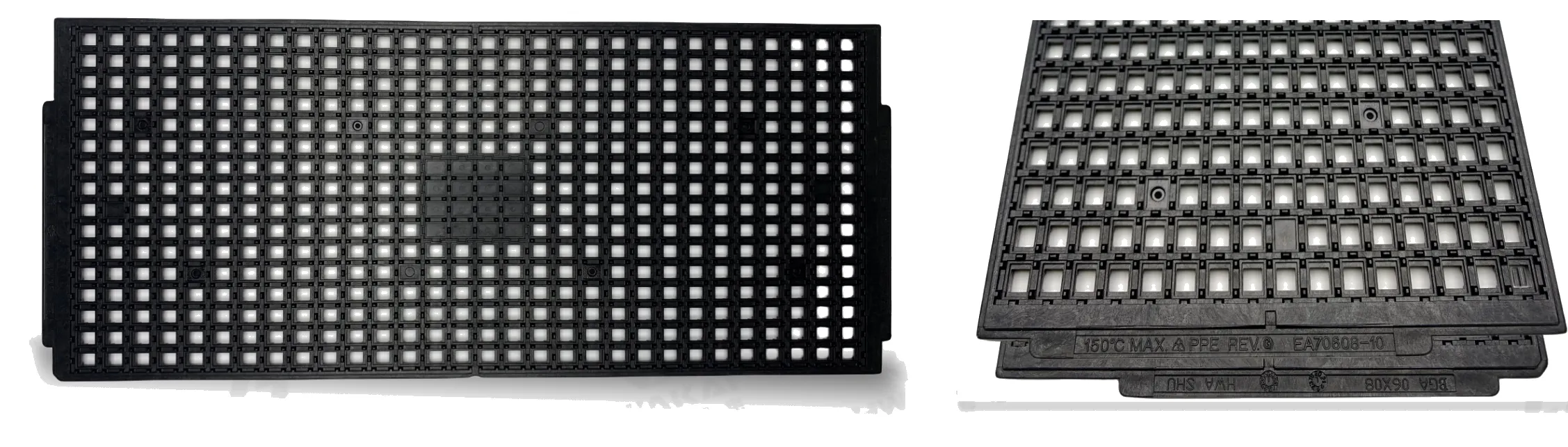
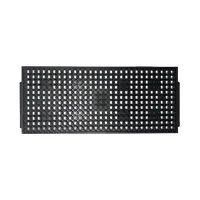
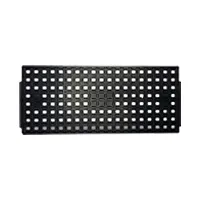
| Ürün modeli | BGA6x8 | BGA8x8 | BGA11.5×13 | BGA13x13 | |
 |
 |
 |
 |
||
| Specification parameters | ●Model | EA70608-10 | NXBG08080.912296REV.A | EA7121321-10 | NHBG13131.70820 |
| ●Tray cavity design | BGA | BGA | BGA | BGA | |
| ●Specifications | 6*8 | 8*8 | 11.5*13*0.8 | 13*13 | |
| ●Matrix | 16*30=480 | 12*29=348 | 8*19=152 | 8*20=160 | |
| ●Temperature MAX (℃) | 150 | 150 | 150 | 150 | |
| ●Surface Resistance | 10^5(Ω)~10^11(Ω) | 10^5(Ω)~10^11(Ω) | 10^5(Ω)~10^11(Ω) | 10^5(Ω)~10^11(Ω) | |
| ●Weight (g) | 138.5 | 162.4 | 125 | 110 | |
| Ürün adı | IC tepsisi | ||
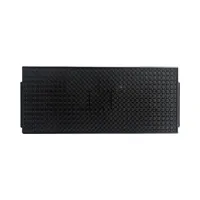
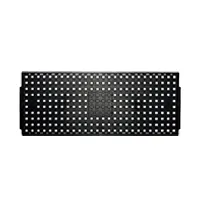
| Ürün modeli | QFN5x5 | QFN7x7 | |
 |
 |
||
| Specification parameters | ●Model | EAM050501-10 | EAM0707-10 |
| ●Tray cavity design | QFN | QFN | |
| ●Specifications | 5*5 | 7*7 | |
| ●Matrix | 14*35=490 | 10*26=260 | |
| ●Temperature MAX (℃) | 150 | 150 | |
| ●Surface Resistance | 10^5(Ω)~10^11(Ω) | 10^4(Ω)~10^11(Ω) | |
| ●Weight (g) | 183.9 | 148 | |
Dünya Standartlarında ESD Üretim Kapasitesi
Sanwei'den tedarik yaptığınızda, sektör lideri bir OEM/ODM üreticisiyle doğrudan iş ortaklığı yapmış olursunuz. Son teknolojiye sahip bir tesis işletiyoruz. 70.000+ m² entegre üretim tesisi Zhejiang, Yueqing Merkez Endüstri Parkı'nda, tescilli malzeme formülasyonundan son yüksek hassasiyetli ürün kalıplamasına kadar her bir süreci yönetmektedir.
Entegre Terazi
70.000+ m² alana kurulu, istikrarlı teslimat süreleriyle toplu toptan siparişleri karşılamak için ağır hizmet tipi hassas enjeksiyon makineleriyle donatılmış gelişmiş üretim tesisi.
Uçtan Uca Kontrol
Tescilli anti-statik malzeme Ar-Ge'si, yapısal kalıp mühendisliği, otomasyonlu üretim ve hızlı küresel lojistik teslimatını kapsayan tamamen şirket içi kontrol.
Titiz Denetim
Üretim hattında gerçekleştirilen çok noktalı yüzey direnci ölçümleriyle birleştirilen sıkı hammadde testleri, 100% ürününün uluslararası ESD standart kılavuzlarına uygunluğunu garanti eder.
Antistatik Ürünler ve Çözümler
Tüm üretim ve operasyonel yaşam döngünüz boyunca kapsamlı elektrostatik koruma sağlıyoruz.
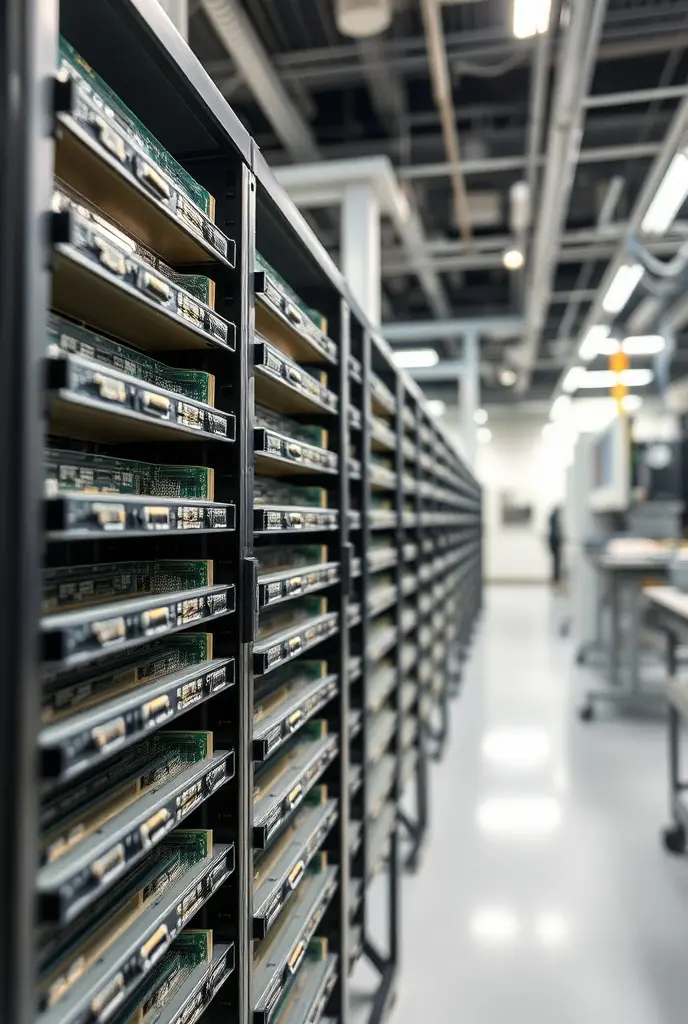
SMT Ekipmanları
Otomatik hatlar için anti-statik toplama kutuları ve rafları.

Depolama ve Lojistik
Devirdaim arabaları, raflar, kutular, tepsiler ve parça kapları.

İş İstasyonu ve KKD
Antistatik sandalyeler, matlar, bileklikler ve kişisel koruma.
Özel Geliştirme
Özel kalıp geliştirme ve özel anti-statik malzemeler.
OEM/ODM AVANTAJLARIMIZ

İleri Ar-Ge ve Malzeme İnovasyonu
Ulusal buluş patentlerine sahip ve 200℃'ye kadar ısı dayanımı bulunan, bünyemizde geliştirilmiş antistatik malzemeler. Biz sadece kalıplama yapmıyoruz; bileşikler formüle ediyoruz.

Tam Ölçekli Üretim Kapasitesi
Kararlı ve verimli tedarik için eksiksiz enjeksiyon kalıplama, granülasyon ve destekleyici işleme sistemlerine sahip 30.000 m²'lik tesis.

Uçtan Uca Özel Tasarım
Malzeme özdirenci, renk, boyut, logo, ambalaj ve sertifikalar; IEC61340-5-1, ANSI/ESD S20.20 veya askeri standartları karşılayacak şekilde özelleştirilebilir.

Sertifikalı Kalite ve Küresel Uyumluluk
“Sanwei, yarı iletken montaj hattımız için özel yüksek sıcaklığa dayanıklı, temiz doğal renkli tepsi üretimini başarıyla gerçekleştirerek ithal ürünlerin yerini almış, mükemmel ESD güvenliği sağlamış ve atölyenin yüksek temizlik gereksinimlerini karşılamıştır.”
KÜRESEL FORTUNE 500 ENDÜSTRİ LİDERLERİNİN GÜVENDİĞİ
Tescilli ESD çözümlerimiz, aşağıdakiler dahil olmak üzere dünya çapındaki seçkin üretim tesislerinde kullanılmaktadır: Intel, Motorola, Siemens, IBM, Panasonic, Nokia ve Dell.
Özel Ölçüler veya Toplu Toptan Fiyatlandırma mı arıyorsunuz?
Güçlü büro-içi Ar-Ge ekibimizin desteğiyle Sanwei; özel SMT üretim hatlarınıza veya depo yerleşiminize göre uyarlanmış eksiksiz OEM/ODM seçenekleri sunar. Özel kalıplar, renk kodlaması veya entegre 5S depolama danışmanlığı için uzmanlarımızla bugün iletişime geçin.
Sık Sorulan Sorular (SSS)
1. What is an IC tray?
It’s basically a plastic tray that holds semiconductor chips during manufacturing, testing, shipping, and storage. They’re specially made to be ESD‑safe so static doesn’t fry the chips. Most of them follow standard sizes so they work with automated handling equipment.
2. What are the materials used in IC packaging?
That’s a whole “package” of stuff – you’ve got the molding compound (usually epoxy resin), a substrate (organic or ceramic), lead frames, die attach adhesives, bonding wires, and solder balls. All these materials work together to protect the chip, connect it to the circuit, and help keep it cool.
3. What material are ice trays made of?
Ice trays for your freezer are a totally different story – they’re all about food safety. The most common are food‑grade polypropylene (PP) and silicone. Silicone’s nice because it’s flexible and makes popping out the ice cubes super easy.
4. What is the standard tray size?
When people say “standard tray,” they usually mean the JEDEC size – that’s 12.7 x 5.35 inches, or about 322.6 x 136 mm. Thickness can be either 0.25 inches (thin) or 0.40 inches (thick). There’s also a common 320mm x 240mm size used internationally.
5. What is a JEDEC tray?
It’s a tray that meets the specs set by JEDEC – the group that writes standards for the semiconductor industry. Think of it as a universal container for chips (like BGA or QFP packages) so that trays from different manufacturers all fit the same machines and processes.
6. What is the tolerance of JEDEC trays?
They’re made to pretty tight tolerances to make sure chips sit exactly right. For example, the dimension accuracy is often around ±0.15 mm, and the overall flatness is kept within about 0.76 mm. That said, the exact numbers can vary a bit between suppliers – always check the data sheet.
7. What is the JEDEC standard?
JEDEC is basically the rule‑maker for the microelectronics world. They publish standards for everything from memory chips (like DDR5) to how parts are packaged and tested. It’s the common language that makes sure chips from different companies can work together.
8. What is the difference between JEDEC and IPC?
Think of it this way: JEDEC focuses on the chip itself – its electrical specs, physical dimensions, and testing. IPC, on the other hand, deals with the circuit board and assembly – how PCBs are designed, manufactured, and soldered. So JEDEC is about the silicon, IPC is about the board.