IC Trays for Semiconductor and BGA Packaging
Overview:
Review IC tray options for BGA and QFN devices. Request pocket drawings, material specifications, ESD evidence and samples for your handling process.
IC Trays for Semiconductor Handling and Packaging
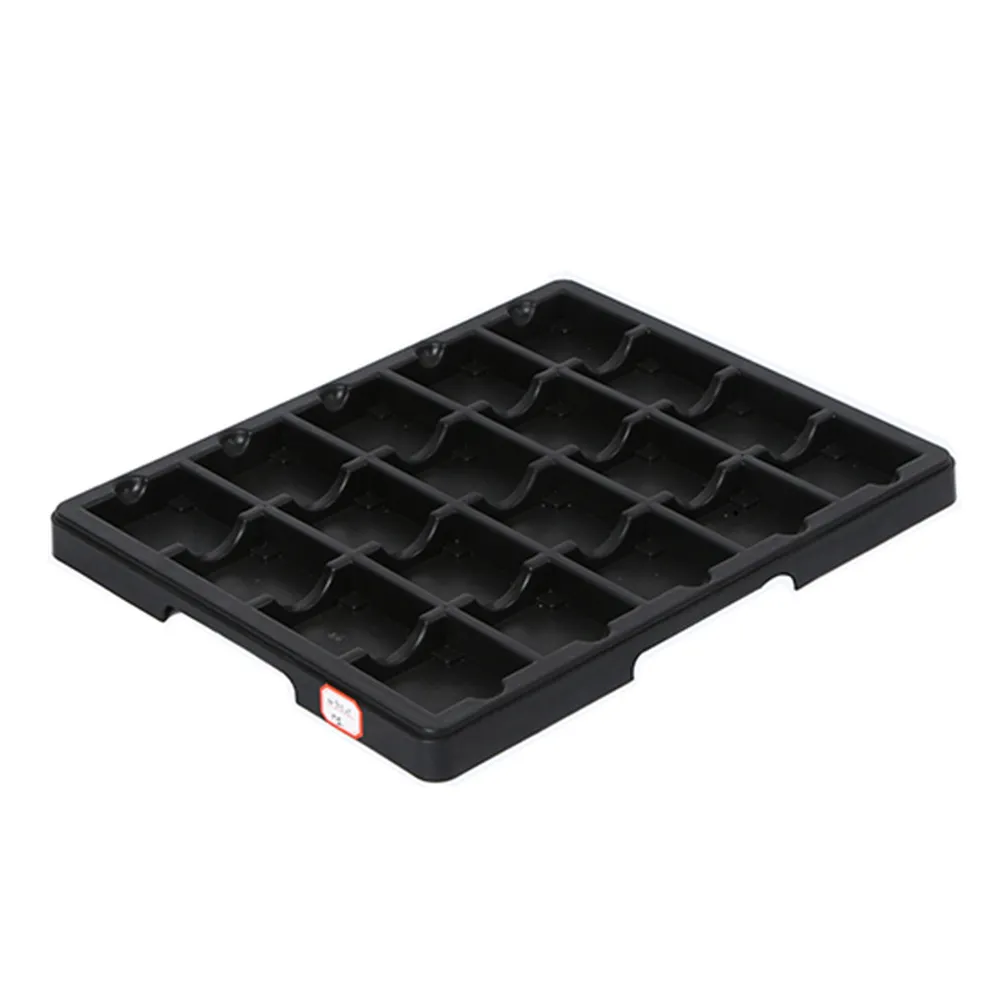
IC trays locate packaged semiconductor devices for controlled storage, inspection and handling. Select the pocket layout for the actual device package, permitted support areas and pickup process. SWESD’s catalogue on this page includes BGA and QFN tray options; confirm the current drawing and supplied configuration for the model you intend to purchase.
A tray’s appearance or an ESD description does not establish every required protective function. Ask for the relevant material and test evidence under your ESD control plan. Packaging used outside an ESD protected area may require discharge shielding as part of the complete package. See the EOS/ESD Association’s control principles for that distinction.
What to Confirm Before Ordering an IC Tray
- Device package drawing, pocket geometry, orientation and permitted contact surfaces.
- Tray outline, stacking interface and compatibility with the actual handling equipment.
- Material grade and the relevant electrical test method, conditions and results.
- Any required thermal exposure, its duration and the permitted supplier-defined conditions. Do not assume every device needs baking or every tray supports the same cycle.
- Sample acceptance, labeling, cleanliness, repeat supply and change notification requirements.
If JEDEC compatibility is required, specify the applicable current drawing or standard and request supporting evidence for the exact model. Confirming a tray outline does not by itself qualify the pocket, material or complete packaging arrangement for your device.
Use the tray drawing review guide, pocket tolerance checklist and custom IC tray RFQ guide to prepare a sample request. For the wider carrier range, browse SWESD ESD trays.
The catalogue figures below are product-listing information. Request the current supplier drawing, material specification, relevant test conditions and approved use limits before accepting a particular model for production. For a quotation, send your device drawing, handling route, quantity and evidence requirements through the SWESD inquiry page.
Technical Specification
Scroll the specification tables horizontally to compare all listed models.
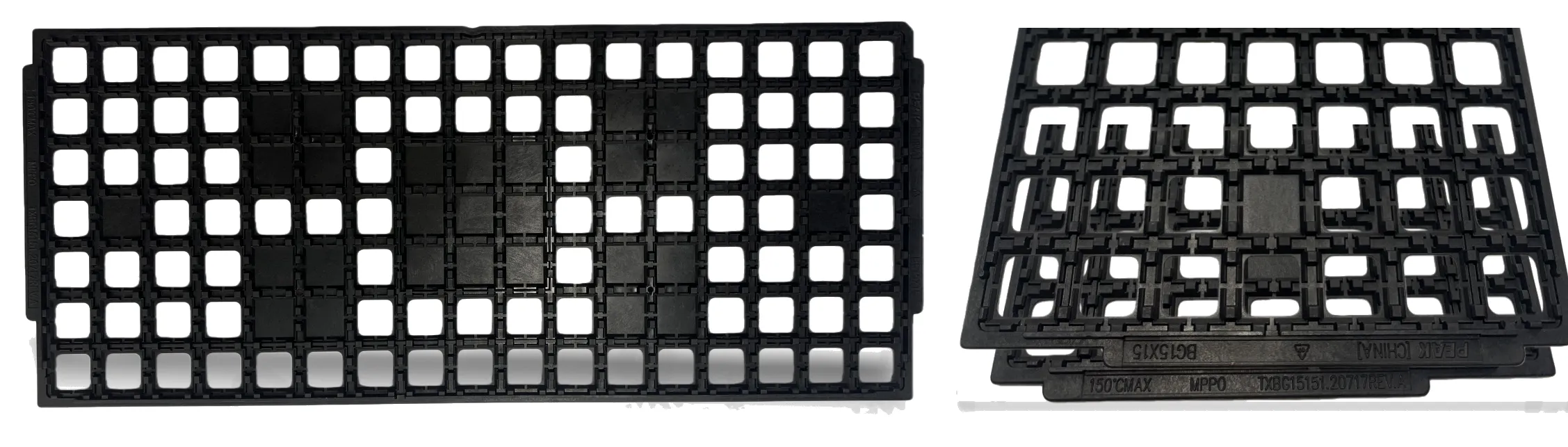
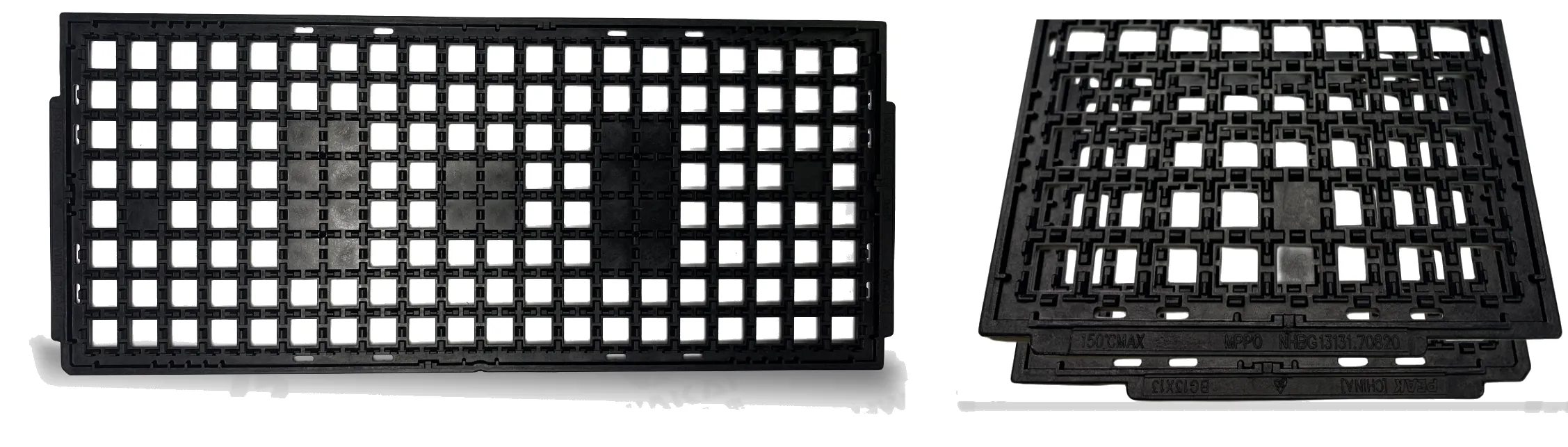
| Product name | IC tray | ||||
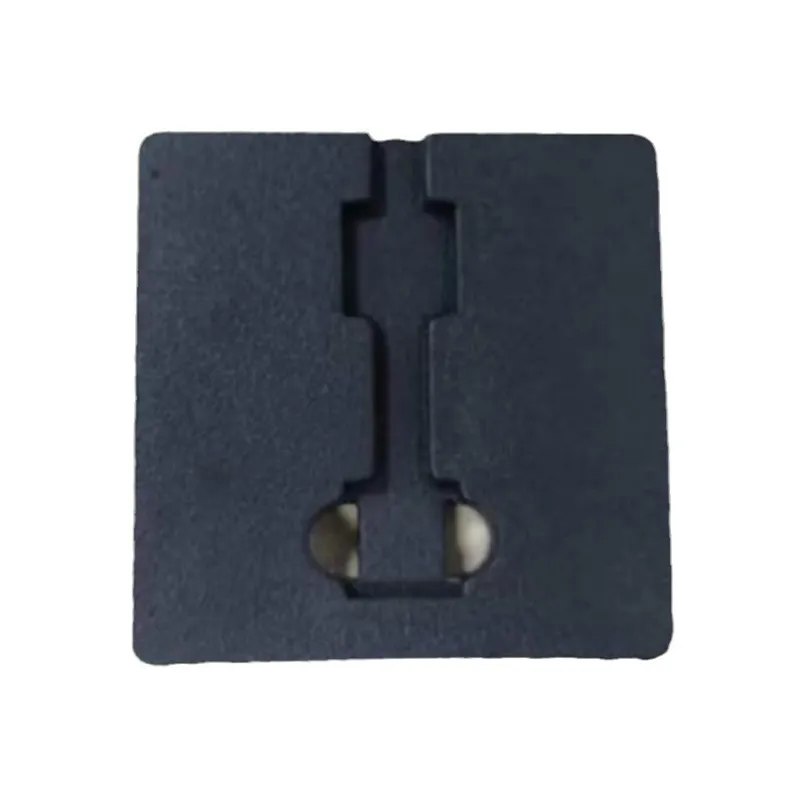
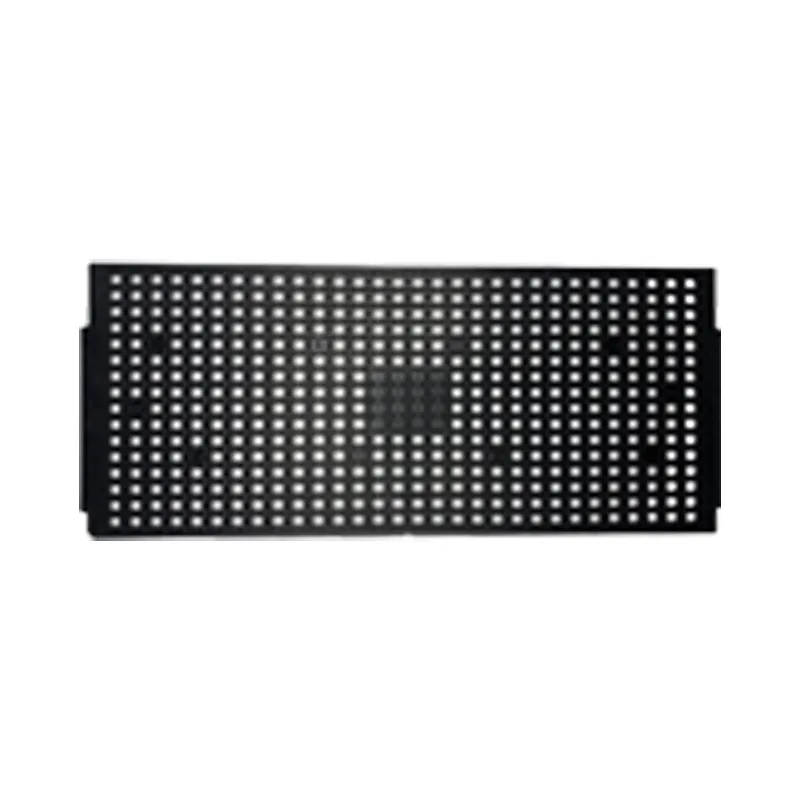
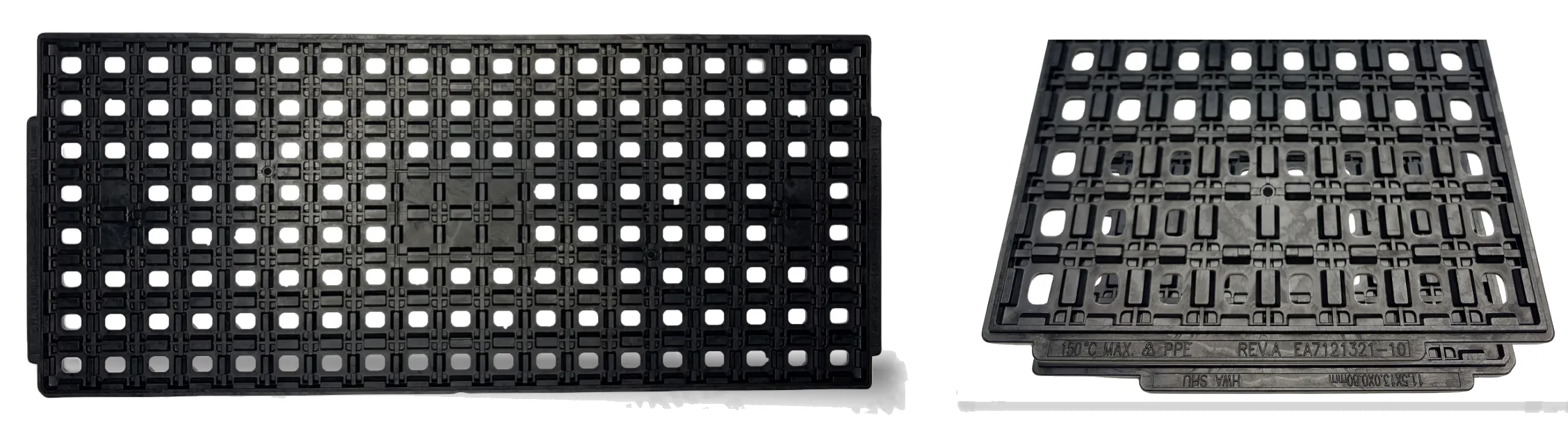
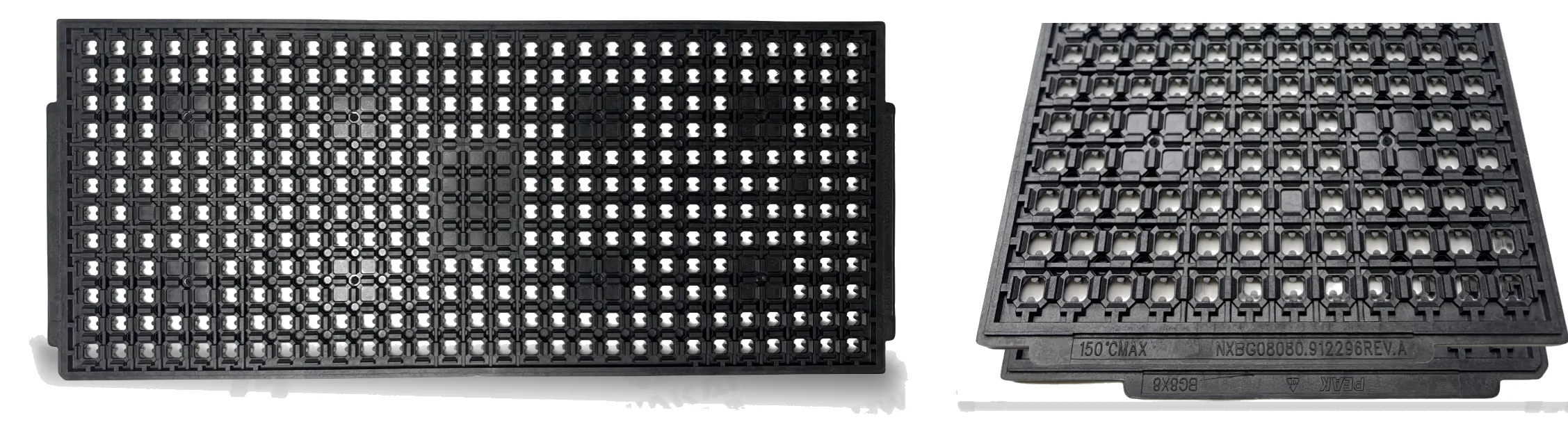
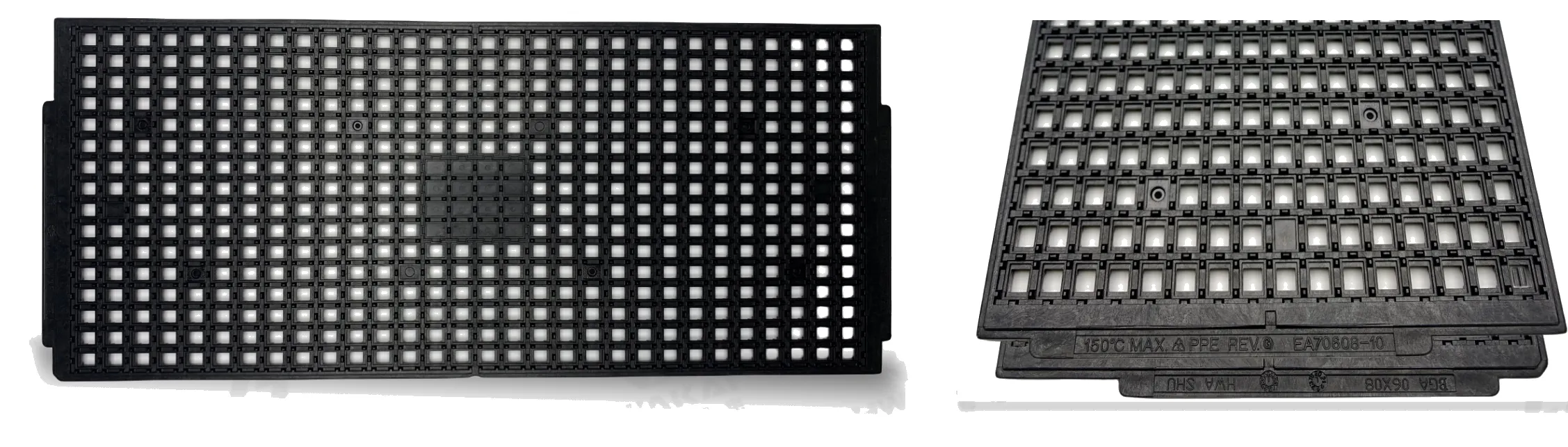
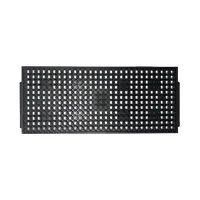
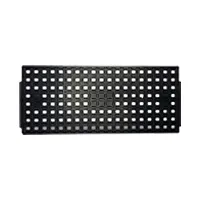
| Product model | BGA6x8 | BGA8x8 | BGA11.5×13 | BGA13x13 | |
 |
 |
 |
 |
||
| Specification parameters | ●Model | EA70608-10 | NXBG08080.912296REV.A | EA7121321-10 | NHBG13131.70820 |
| ●Tray cavity design | BGA | BGA | BGA | BGA | |
| ●Specifications | 6*8 | 8*8 | 11.5*13*0.8 | 13*13 | |
| ●Matrix | 16*30=480 | 12*29=348 | 8*19=152 | 8*20=160 | |
| ●Temperature MAX (℃) | 150 | 150 | 150 | 150 | |
| ●Surface Resistance | 10^5(Ω)~10^11(Ω) | 10^5(Ω)~10^11(Ω) | 10^5(Ω)~10^11(Ω) | 10^5(Ω)~10^11(Ω) | |
| ●Weight (g) | 138.5 | 162.4 | 125 | 110 | |
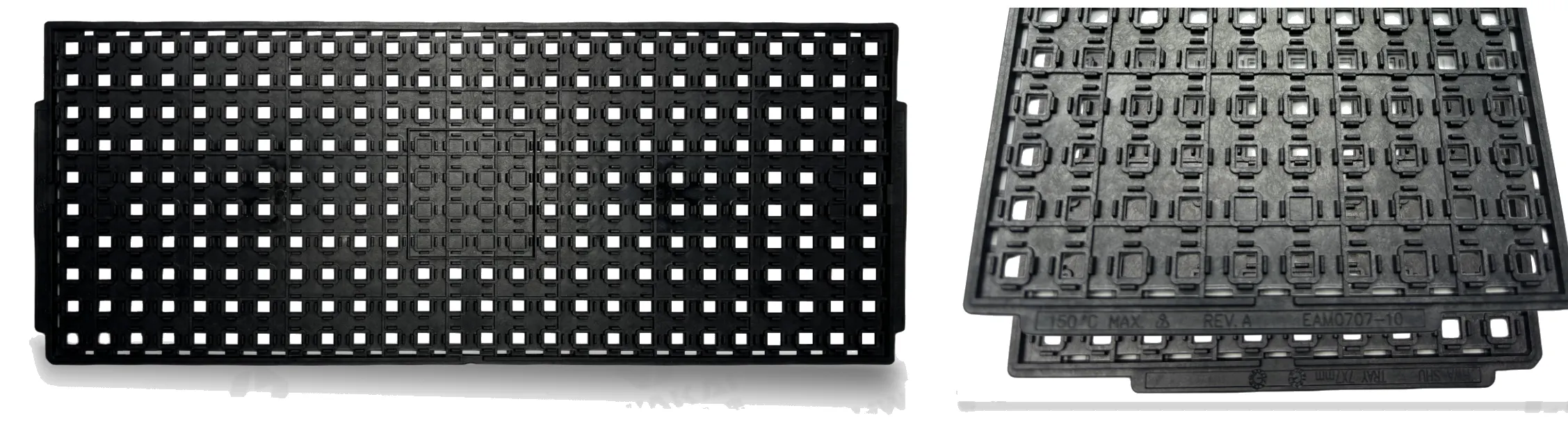
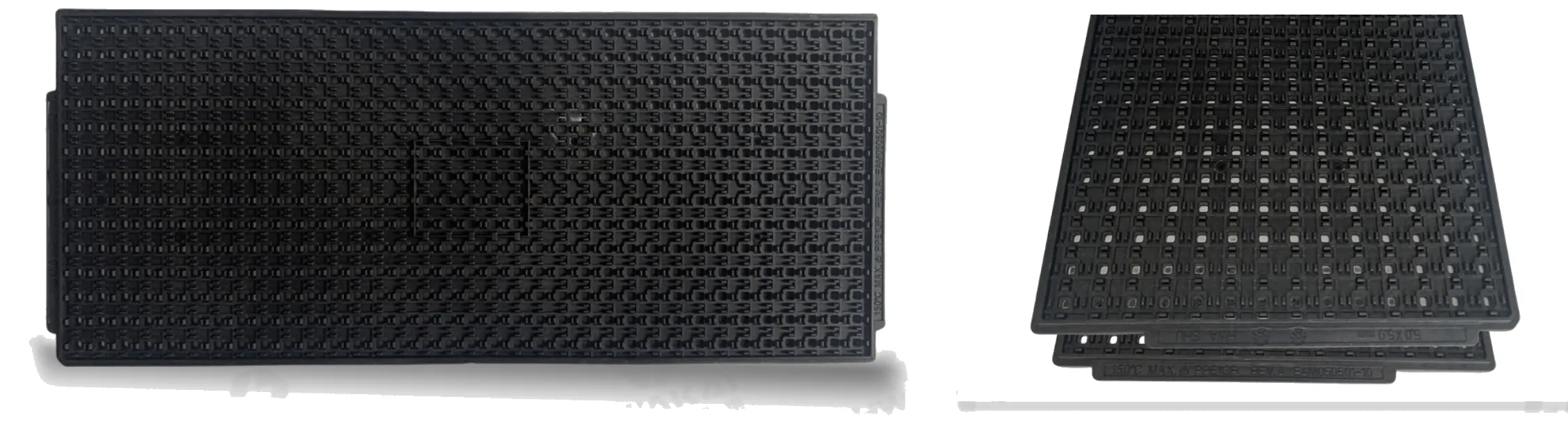
| Product name | IC tray | ||
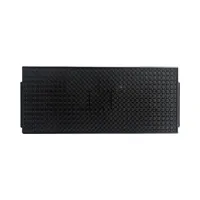
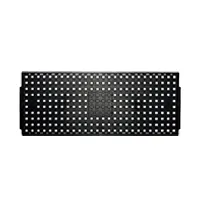
| Product model | QFN5x5 | QFN7x7 | |
 |
 |
||
| Specification parameters | ●Model | EAM050501-10 | EAM0707-10 |
| ●Tray cavity design | QFN | QFN | |
| ●Specifications | 5*5 | 7*7 | |
| ●Matrix | 14*35=490 | 10*26=260 | |
| ●Temperature MAX (℃) | 150 | 150 | |
| ●Surface Resistance | 10^5(Ω)~10^11(Ω) | 10^4(Ω)~10^11(Ω) | |
| ●Weight (g) | 183.9 | 148 | |
World-Class ESD Manufacturing Capacity
When you source from Sanwei, you are partnering directly with an industry-leading OEM/ODM manufacturer. We operate a state-of-the-art 70,000+ m² integrated production facility in Yueqing Central Industrial Park, Zhejiang, managing every single process from proprietary material formulation to final high-precision product molding.
Integrated Scale
70,000+ m² advanced plant base equipped with heavy-duty precision injection molding machines to handle bulk wholesale orders with stable lead times.
Full-Chain Control
Complete in-house control spanning proprietary anti-static material R&D, structural mold engineering, automated manufacturing, and swift global logistics delivery.
Rigorous Inspection
Strict raw material testing combined with multi-point surface resistivity metering on the production line ensures 100% compliance with international ESD standard guidelines.
Anti-Static Products and Solutions
Delivering comprehensive electrostatic protection across your entire manufacturing and operational lifecycle.
SMT Equipment
Anti-static collection boxes and racks for automated lines.

Storage & Logistics
Turnover carts, shelves, boxes, trays, and component containers.

Workstation & PPE
Anti-static chairs, mats, wrist straps, and personal protection.
Custom Development
Custom mold development and special anti-static materials.
OUR OEM/ODM ADVANTAGES

Advanced R&D & Material Innovation
In-house developed anti-static materials with national invention patents and heat resistance up to 200℃. We do not just mold — we formulate compounds.

Full-Scale Production Capacity
30,000㎡ plant with complete injection molding, granulation and supporting processing systems for stable and efficient supply.

Full-Process Customization
Material resistivity, color, size, logo, packaging and certifications — customizable to meet IEC61340-5-1, ANSI/ESD S20.20 or military standards.

Certified Quality & Global Compliance
“Sanwei successfully developed custom high-temperature resistant clean natural color trays for our semiconductor assembly line, replacing imported products, ensuring excellent ESD safety, and meeting the high cleanliness requirements of the workshop.”
TRUSTED BY GLOBAL FORTUNE 500 INDUSTRY LEADERS
Our proprietary ESD solutions are deployed in elite production facilities worldwide, including: Intel, Motorola, Siemens, IBM, Panasonic, Nokia, and Dell.
Looking for Custom Sizes or Bulk Wholesale Pricing?
Backed by our robust in-house R&D team, Sanwei provides complete OEM/ODM options tailored to your specific SMT production lines or warehouse layout. Contact our specialists today for custom molds, color coding, or integrated 5S storage consulting.
Frequently Asked Questions (FAQ)
1. What is an IC tray?
It’s basically a plastic tray that holds semiconductor chips during manufacturing, testing, shipping, and storage. They’re specially made to be ESD‑safe so static doesn’t fry the chips. Most of them follow standard sizes so they work with automated handling equipment.
2. What are the materials used in IC packaging?
That’s a whole “package” of stuff – you’ve got the molding compound (usually epoxy resin), a substrate (organic or ceramic), lead frames, die attach adhesives, bonding wires, and solder balls. All these materials work together to protect the chip, connect it to the circuit, and help keep it cool.
3. What material are ice trays made of?
Ice trays for your freezer are a totally different story – they’re all about food safety. The most common are food‑grade polypropylene (PP) and silicone. Silicone’s nice because it’s flexible and makes popping out the ice cubes super easy.
4. What is the standard tray size?
When people say “standard tray,” they usually mean the JEDEC size – that’s 12.7 x 5.35 inches, or about 322.6 x 136 mm. Thickness can be either 0.25 inches (thin) or 0.40 inches (thick). There’s also a common 320mm x 240mm size used internationally.
5. What is a JEDEC tray?
It’s a tray that meets the specs set by JEDEC – the group that writes standards for the semiconductor industry. Think of it as a universal container for chips (like BGA or QFP packages) so that trays from different manufacturers all fit the same machines and processes.
6. What is the tolerance of JEDEC trays?
They’re made to pretty tight tolerances to make sure chips sit exactly right. For example, the dimension accuracy is often around ±0.15 mm, and the overall flatness is kept within about 0.76 mm. That said, the exact numbers can vary a bit between suppliers – always check the data sheet.
7. What is the JEDEC standard?
JEDEC is basically the rule‑maker for the microelectronics world. They publish standards for everything from memory chips (like DDR5) to how parts are packaged and tested. It’s the common language that makes sure chips from different companies can work together.
8. What is the difference between JEDEC and IPC?
Think of it this way: JEDEC focuses on the chip itself – its electrical specs, physical dimensions, and testing. IPC, on the other hand, deals with the circuit board and assembly – how PCBs are designed, manufactured, and soldered. So JEDEC is about the silicon, IPC is about the board.