IC Trays for Semiconductor and BGA Packaging
Aperçu
Review IC tray options for BGA and QFN devices. Request pocket drawings, material specifications, ESD evidence and samples for your handling process.
IC Trays for Semiconductor Handling and Packaging
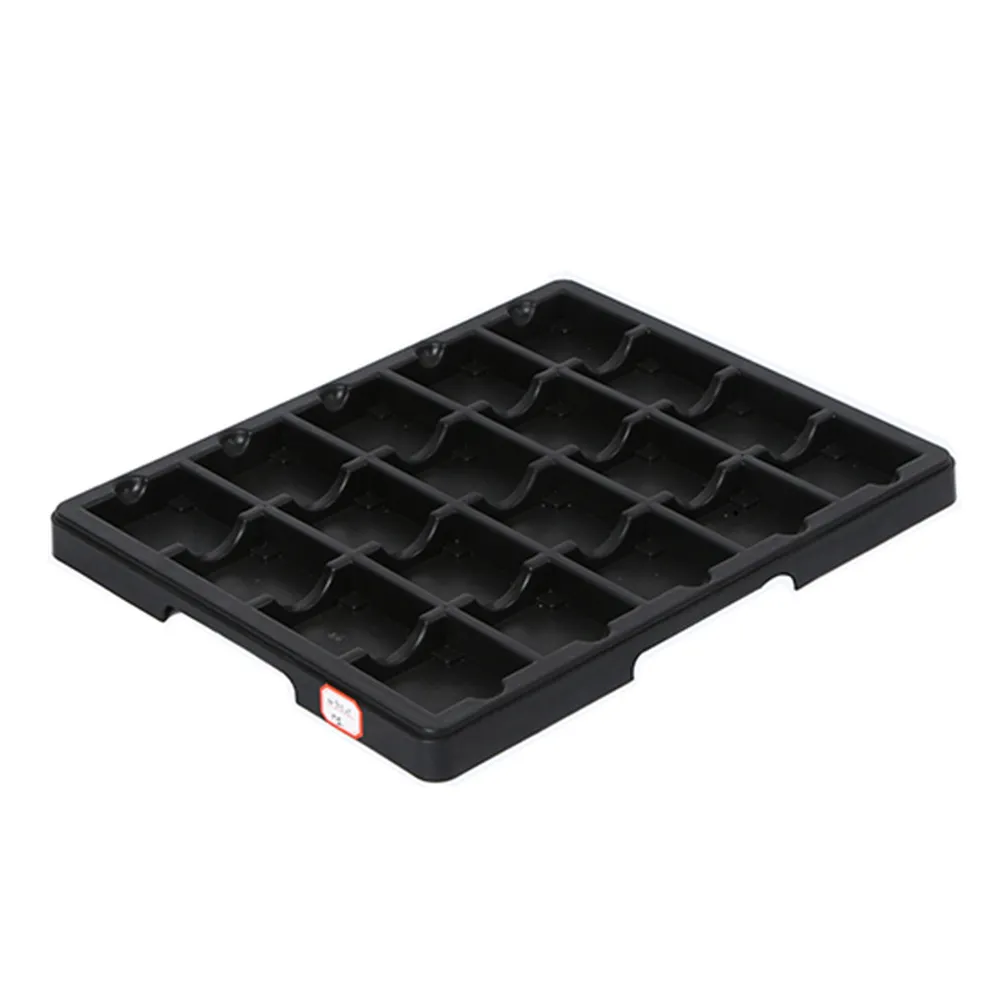
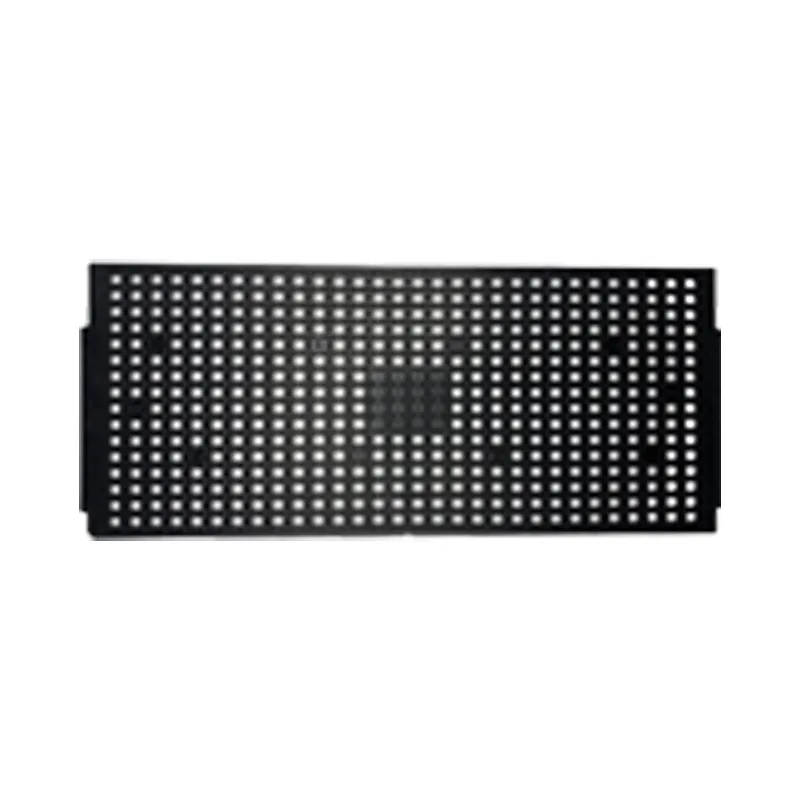
IC trays locate packaged semiconductor devices for controlled storage, inspection and handling. Select the pocket layout for the actual device package, permitted support areas and pickup process. SWESD’s catalogue on this page includes BGA and QFN tray options; confirm the current drawing and supplied configuration for the model you intend to purchase.
A tray’s appearance or an ESD description does not establish every required protective function. Ask for the relevant material and test evidence under your ESD control plan. Packaging used outside an ESD protected area may require discharge shielding as part of the complete package. See the EOS/ESD Association’s control principles for that distinction.
What to Confirm Before Ordering an IC Tray
- Device package drawing, pocket geometry, orientation and permitted contact surfaces.
- Tray outline, stacking interface and compatibility with the actual handling equipment.
- Material grade and the relevant electrical test method, conditions and results.
- Any required thermal exposure, its duration and the permitted supplier-defined conditions. Do not assume every device needs baking or every tray supports the same cycle.
- Sample acceptance, labeling, cleanliness, repeat supply and change notification requirements.
If JEDEC compatibility is required, specify the applicable current drawing or standard and request supporting evidence for the exact model. Confirming a tray outline does not by itself qualify the pocket, material or complete packaging arrangement for your device.
Utilisez tray drawing review guide, pocket tolerance checklist et Guide de demande de devis pour plateaux CI sur mesure to prepare a sample request. For the wider carrier range, browse SWESD ESD trays.
The catalogue figures below are product-listing information. Request the current supplier drawing, material specification, relevant test conditions and approved use limits before accepting a particular model for production. For a quotation, send your device drawing, handling route, quantity and evidence requirements through the SWESD inquiry page.
Spécification technique
Scroll the specification tables horizontally to compare all listed models.
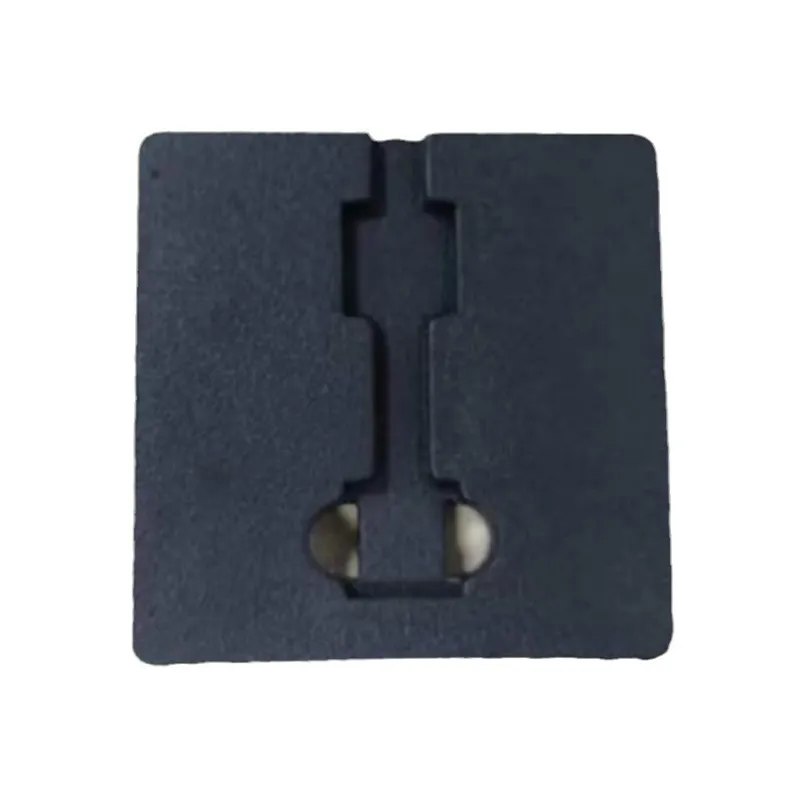
| Nom du produit | Tray IC | ||||
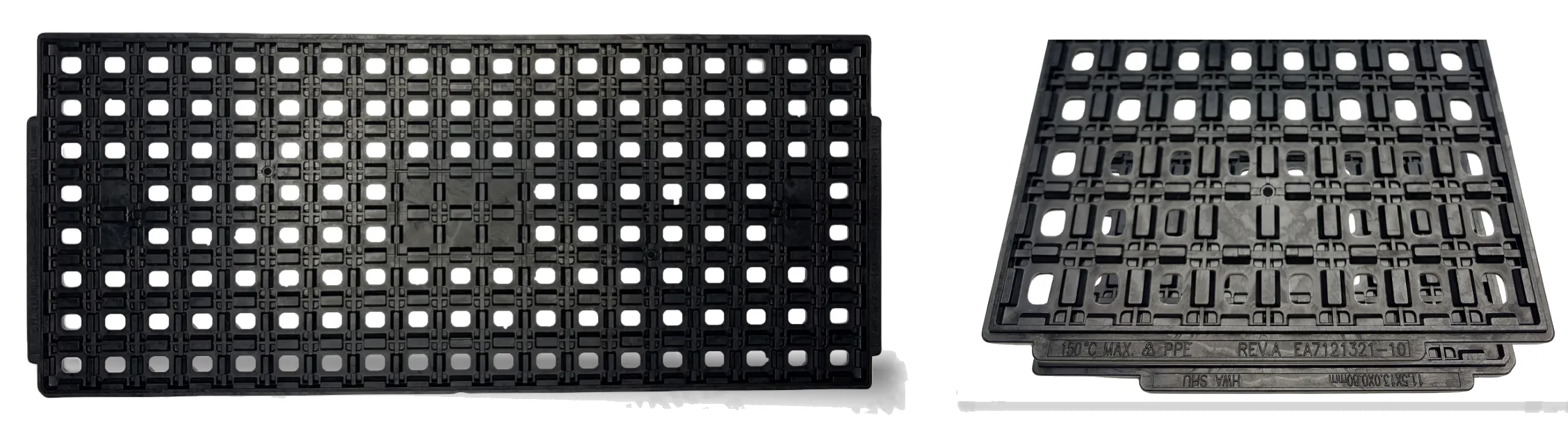
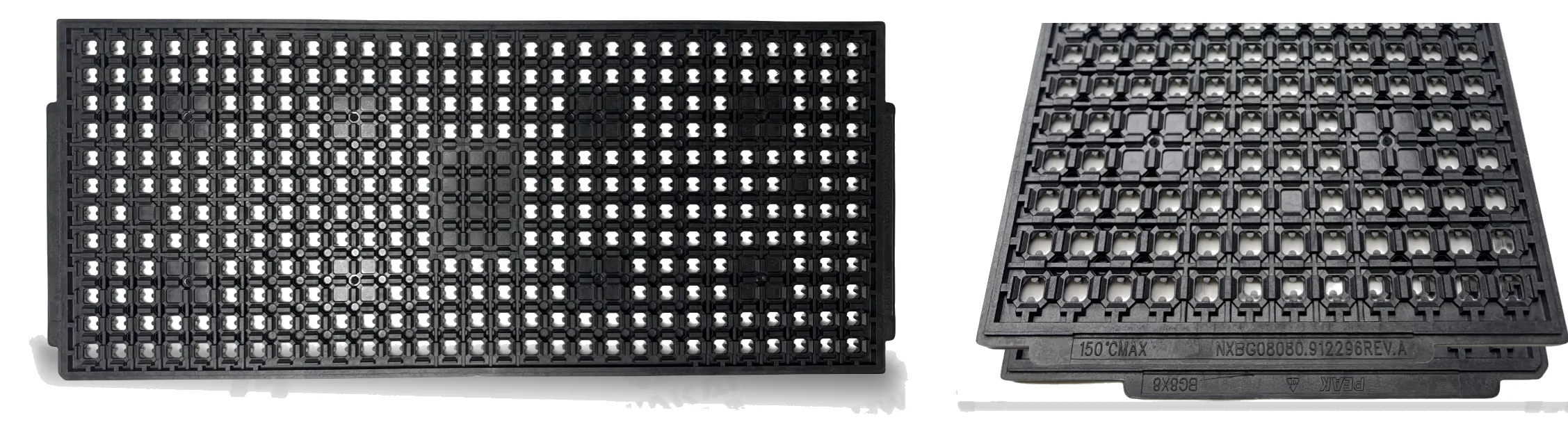
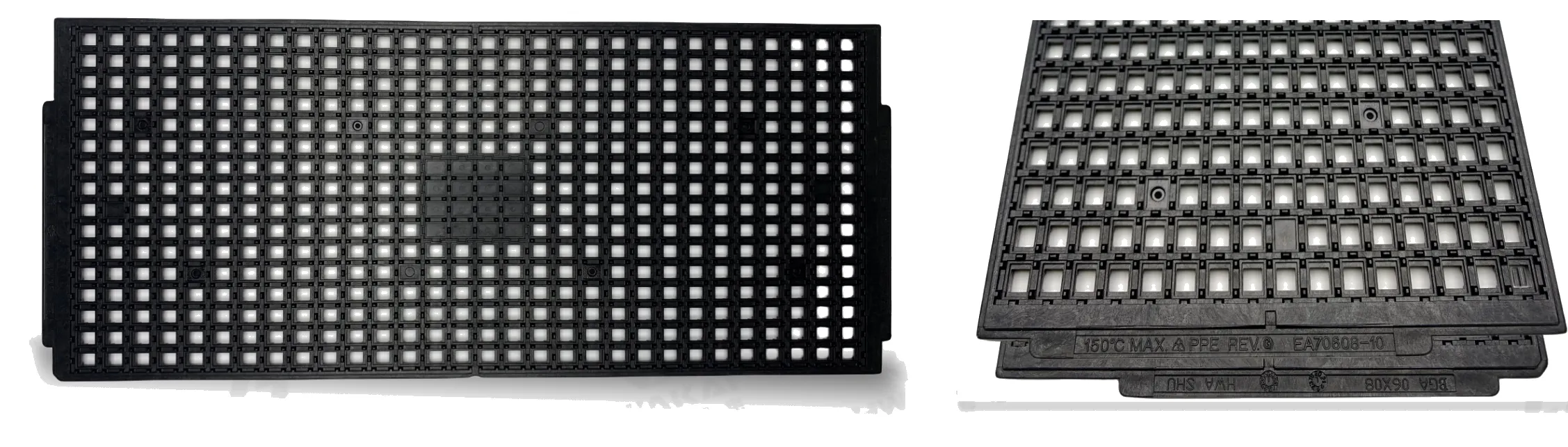
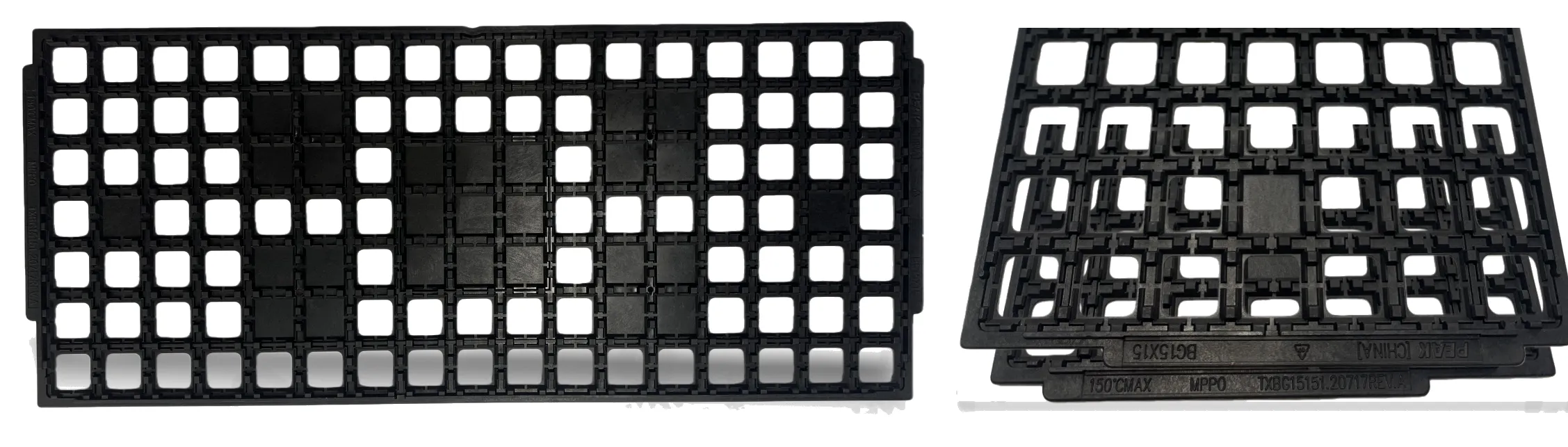
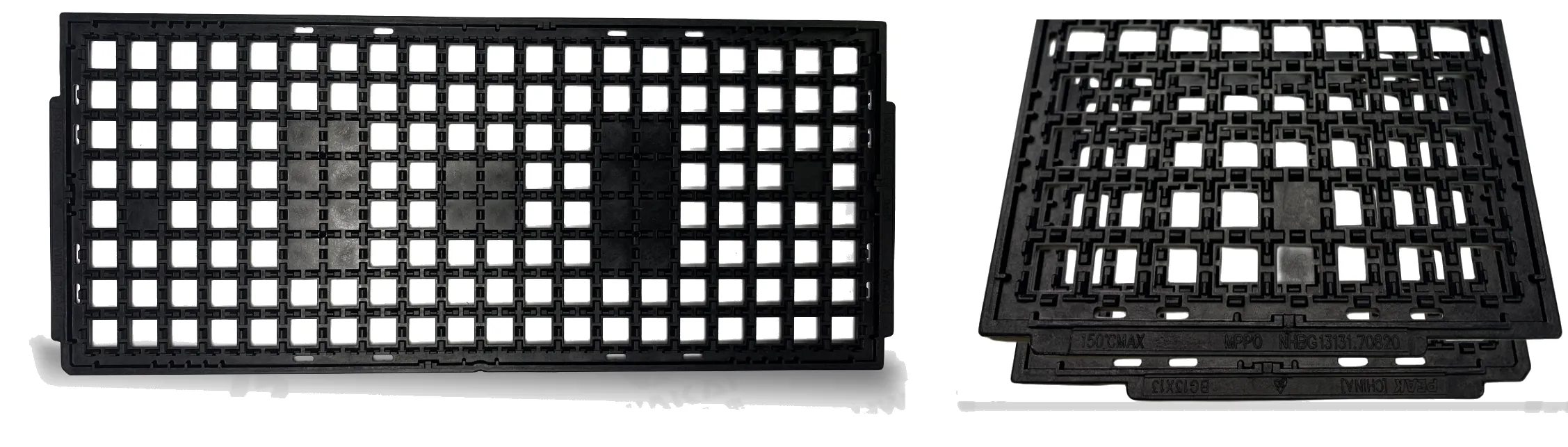
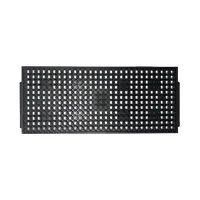
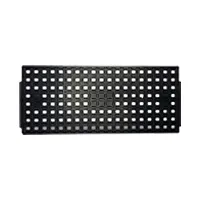
| Modèle de produit | BGA6x8 | BGA8x8 | BGA11.5×13 | BGA13x13 | |
 |
 |
 |
 |
||
| Paramètres de spécification | ●Modèle | EA70608-10 | NXBG08080.912296REV.A | EA7121321-10 | NHBG13131.70820 |
| ● Conception de la cavité du plateau | CMB | CMB | CMB | CMB | |
| ●Spécifications | 6*8 | 8*8 | 11.5*13*0.8 | 13*13 | |
| Matrice | 16*30=480 | 12*29=348 | 8*19=152 | 8*20=160 | |
| ●Température MAX (℃) | 150 | 150 | 150 | 150 | |
| Résistance de surface | 10^5(Ω)~10^11(Ω) | 10^5(Ω)~10^11(Ω) | 10^5(Ω)~10^11(Ω) | 10^5(Ω)~10^11(Ω) | |
| ●Poids (g) | 138.5 | 162.4 | 125 | 110 | |
| Nom du produit | Tray IC | ||
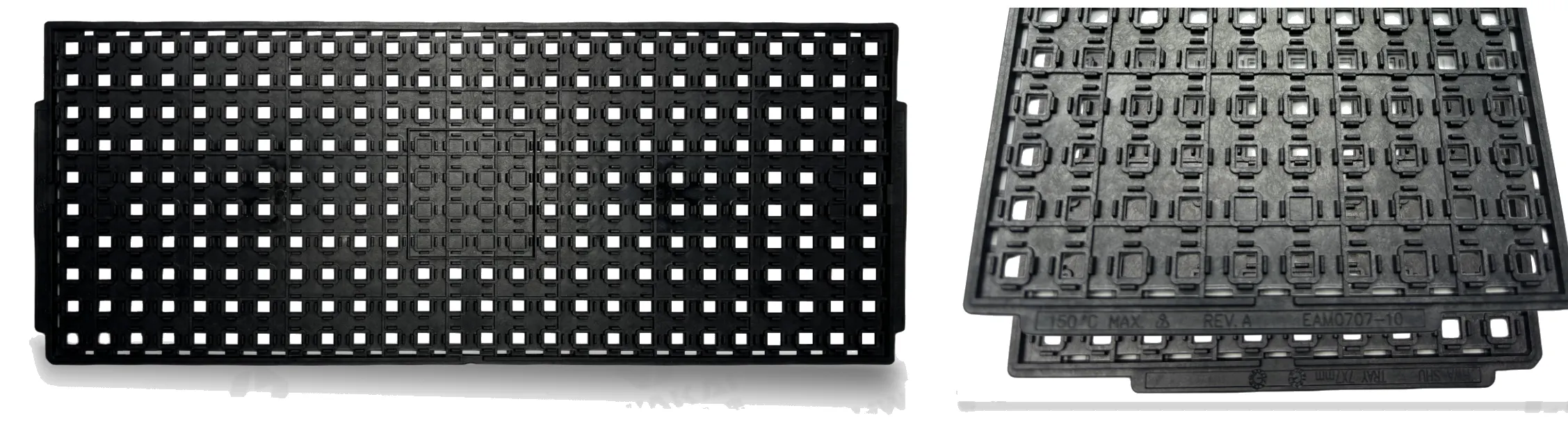
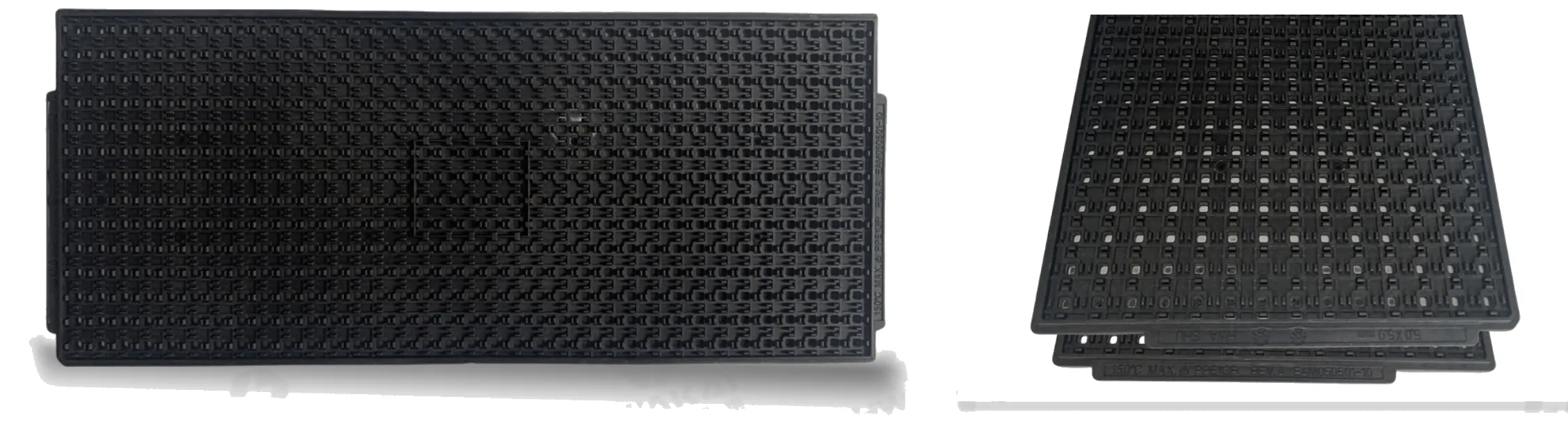
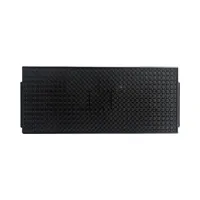
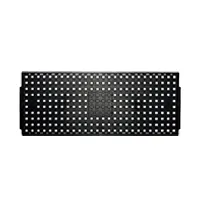
| Modèle de produit | QFN5x5 | QFN7x7 | |
 |
 |
||
| Paramètres de spécification | ●Modèle | EAM050501-10 | EAM0707-10 |
| ● Conception de la cavité du plateau | QFN | QFN | |
| ●Spécifications | 5*5 | 7*7 | |
| Matrice | 14*35=490 | 10*26=260 | |
| ●Température MAX (℃) | 150 | 150 | |
| Résistance de surface | 10^5(Ω)~10^11(Ω) | 10^4(Ω)~10^11(Ω) | |
| ●Poids (g) | 183.9 | 148 | |
Capacité de fabrication ESD de classe mondiale
En vous approvisionnant auprès de Sanwei, vous vous associez directement à un fabricant OEM/ODM leader de l'industrie. Nous exploitons un site de pointe Installation de production intégrée de plus de 70 000 m² dans le parc industriel central de Yueqing, dans le Zhejiang, en gérant chaque processus, de la formulation des matériaux propriétaires au moulage final de produits de haute précision.
Échelle intégrée
Base de production avancée de plus de 70 000 m² équipée de machines de moulage par injection de haute précision pour charges lourdes afin de traiter les commandes en gros avec des délais stables.
Contrôle de bout en bout
Maîtrise interne complète couvrant la R&D de matériaux antistatiques propriétaires, l'ingénierie des moules structurels, la fabrication automatisée et la livraison logistique mondiale rapide.
Inspection rigoureuse
Des contrôles rigoureux des matières premières, associés à des mesures multipoints de la résistivité de surface effectuées sur la chaîne de production, garantissent la conformité du 100% aux directives des normes internationales en matière d'ESD.
Antistatique Produits et Solutions
Fournir une protection électrostatique complète tout au long de votre cycle de fabrication et d'exploitation.
Matériel SMT
Boîtes et racks antistatiques pour lignes automatisées.

Stockage et Logistique
Chariots de manutention, étagères, boîtes, plateaux et conteneurs de composants.

Poste de travail & EPI
Chaises antistatiques, tapis, bracelets antistatiques et protection personnelle.
Développement personnalisé
Développement de moules sur mesure et matériaux antistatiques spéciaux.
NOS AVANTAGES OEM/ODM

R&D Avancé & Innovation en Matériaux
Matériaux antistatiques développés en interne bénéficiant de brevets d'invention nationaux et d'une résistance à la chaleur allant jusqu'à 200 °C. Nous ne faisons pas que mouler, nous formulons des composés.

Capacité de production à grande échelle
Usine de 30 000 m² dotée de systèmes complets de moulage par injection, de granulation et de traitement auxiliaire pour un approvisionnement stable et efficace.

Personnalisation complète du processus
Résistivité du matériau, couleur, taille, logo, emballage et certifications — personnalisables pour répondre aux normes CEI 61340-5-1, ANSI/ESD S20.20 ou militaires.

Qualité Certifiée & Conformité Globale
“Sanwei a développé avec succès des plateaux sur mesure résistants aux hautes températures, de couleur naturelle propre, pour notre chaîne d'assemblage de semi-conducteurs, remplaçant ainsi des produits importés, garantissant une excellente sécurité ESD et répondant aux exigences élevées de propreté de l'atelier.”
LA CONFIANCE DES LEADERS MONDIAUX DU FORTUNE 500
Nos solutions ESD propriétaires sont déployées dans des usines de production d'élite du monde entier, notamment : Intel, Motorola, Siemens, IBM, Panasonic, Nokia et Dell.
Vous recherchez des tailles sur mesure ou des tarifs de gros ?
Soutenue par notre solide équipe interne de R&D, Sanwei propose des options complètes d'OEM/ODM adaptées à vos lignes de production SMT ou à la disposition de votre entrepôt. Contactez nos spécialistes dès aujourd'hui pour des moules sur mesure, un code couleur ou un conseil en stockage 5S intégré.
Foire aux questions (FAQ)
1. What is an IC tray?
It’s basically a plastic tray that holds semiconductor chips during manufacturing, testing, shipping, and storage. They’re specially made to be ESD‑safe so static doesn’t fry the chips. Most of them follow standard sizes so they work with automated handling equipment.
2. What are the materials used in IC packaging?
That’s a whole “package” of stuff – you’ve got the molding compound (usually epoxy resin), a substrate (organic or ceramic), lead frames, die attach adhesives, bonding wires, and solder balls. All these materials work together to protect the chip, connect it to the circuit, and help keep it cool.
3. What material are ice trays made of?
Ice trays for your freezer are a totally different story – they’re all about food safety. The most common are food‑grade polypropylene (PP) and silicone. Silicone’s nice because it’s flexible and makes popping out the ice cubes super easy.
4. What is the standard tray size?
When people say “standard tray,” they usually mean the JEDEC size – that’s 12.7 x 5.35 inches, or about 322.6 x 136 mm. Thickness can be either 0.25 inches (thin) or 0.40 inches (thick). There’s also a common 320mm x 240mm size used internationally.
5. What is a JEDEC tray?
It’s a tray that meets the specs set by JEDEC – the group that writes standards for the semiconductor industry. Think of it as a universal container for chips (like BGA or QFP packages) so that trays from different manufacturers all fit the same machines and processes.
6. What is the tolerance of JEDEC trays?
They’re made to pretty tight tolerances to make sure chips sit exactly right. For example, the dimension accuracy is often around ±0.15 mm, and the overall flatness is kept within about 0.76 mm. That said, the exact numbers can vary a bit between suppliers – always check the data sheet.
7. What is the JEDEC standard?
JEDEC is basically the rule‑maker for the microelectronics world. They publish standards for everything from memory chips (like DDR5) to how parts are packaged and tested. It’s the common language that makes sure chips from different companies can work together.
8. What is the difference between JEDEC and IPC?
Think of it this way: JEDEC focuses on the chip itself – its electrical specs, physical dimensions, and testing. IPC, on the other hand, deals with the circuit board and assembly – how PCBs are designed, manufactured, and soldered. So JEDEC is about the silicon, IPC is about the board.