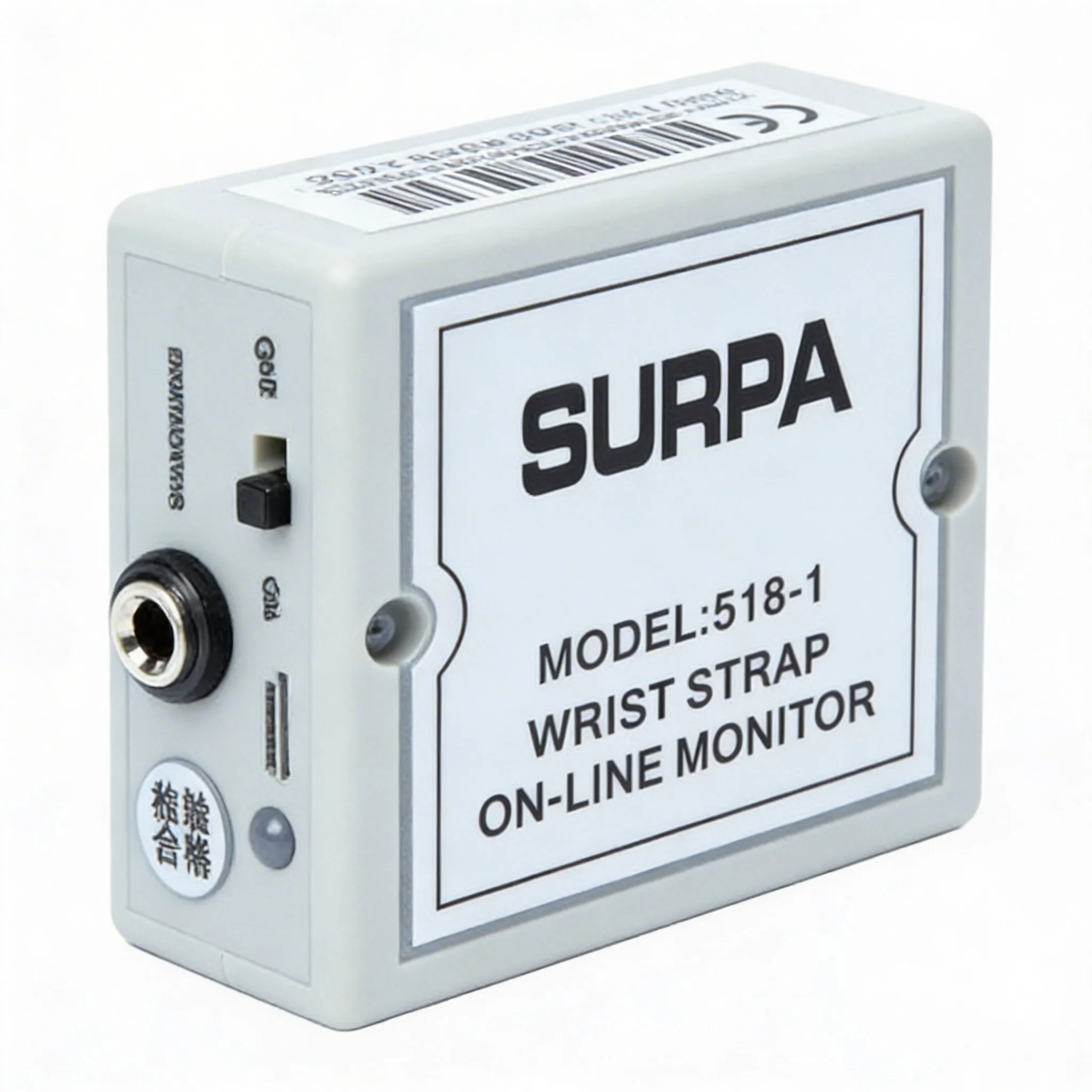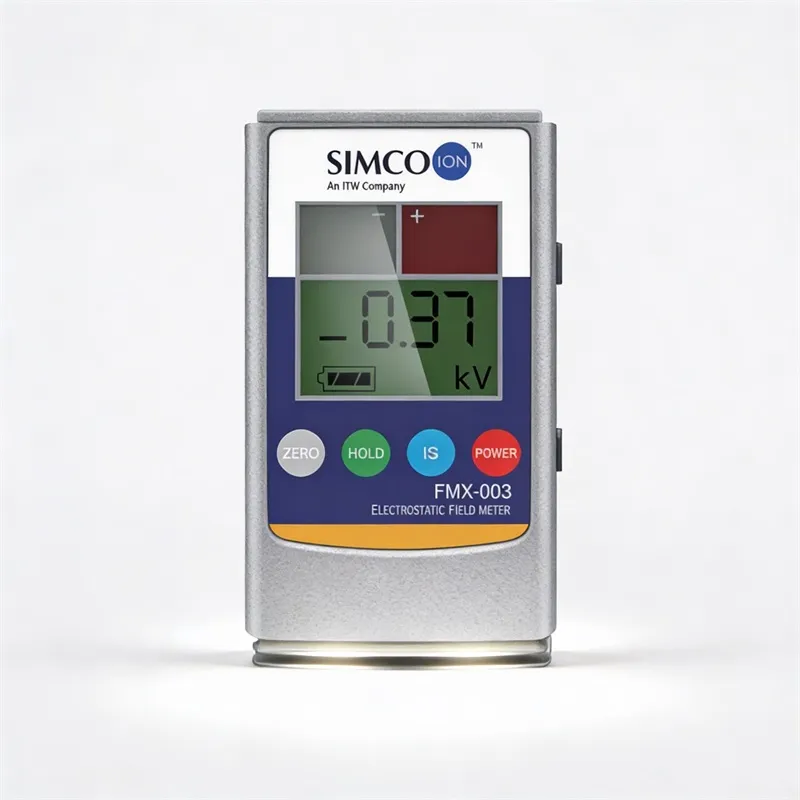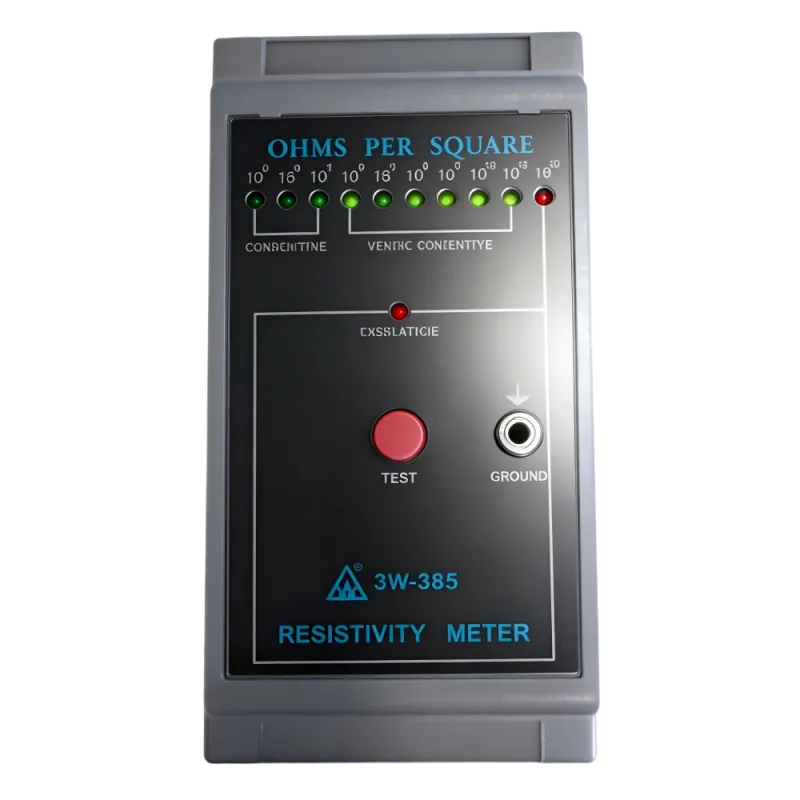
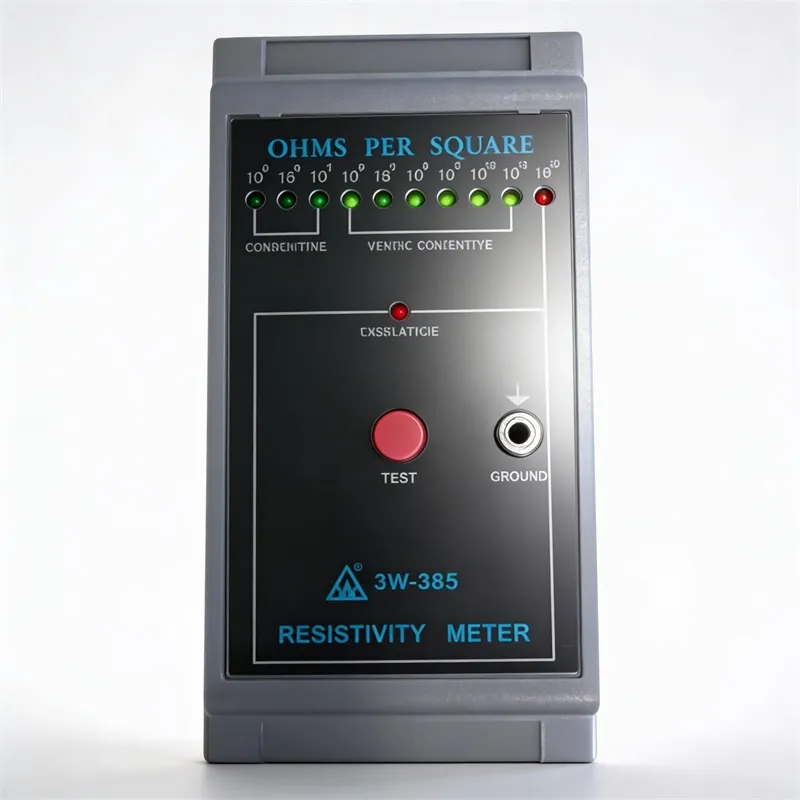
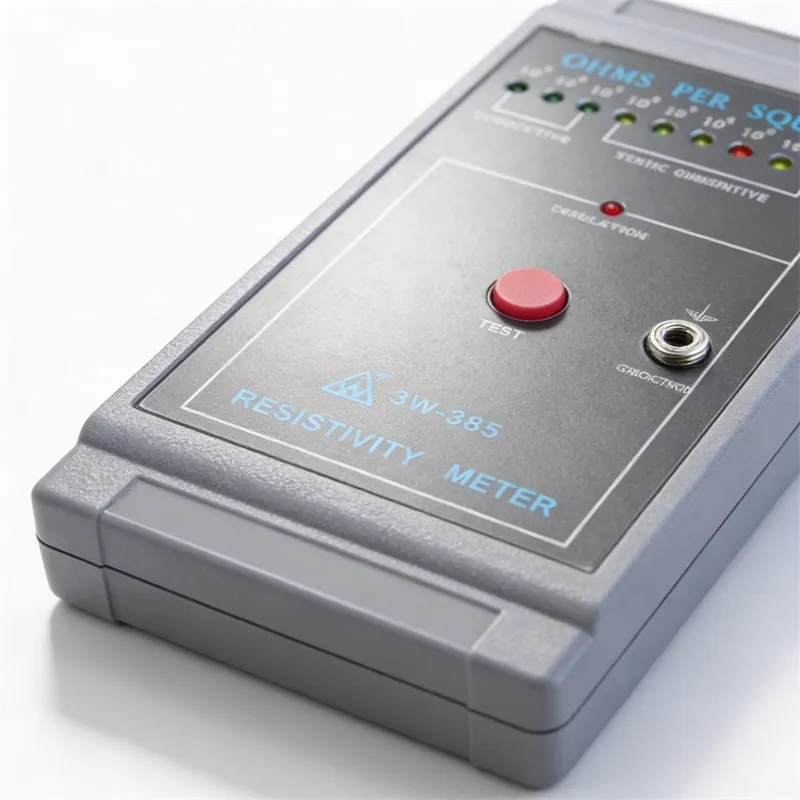
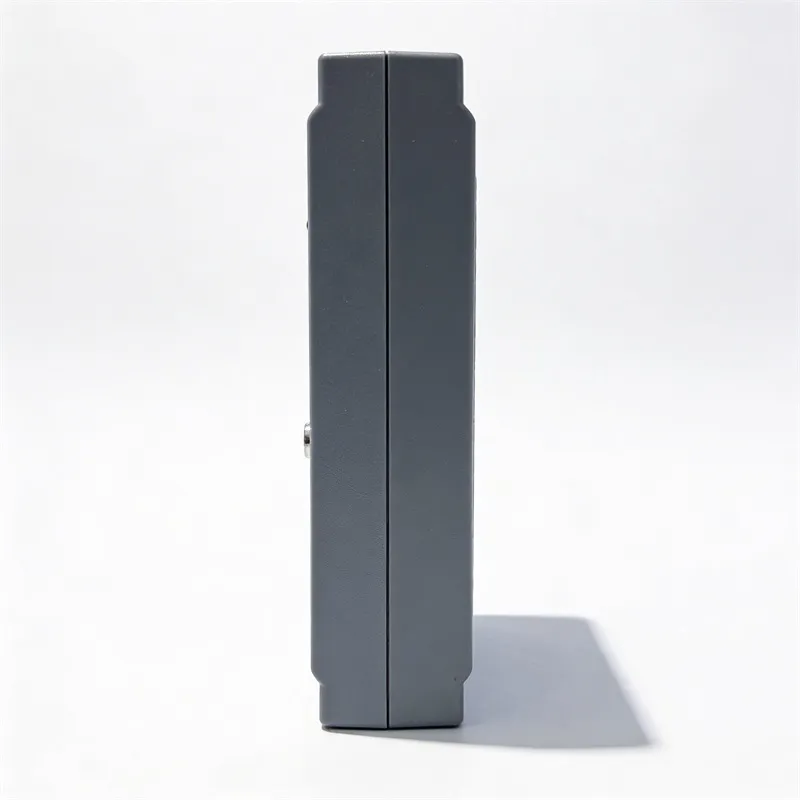
Surface Resistance Tester Handheld ESD Resistivity Measuring Instrument
نظرة عامة
ال جهاز قياس مقاومة السطح (also referred to as an جهاز اختبار مقاومة سطح ESD or surface resistivity tester) is a dedicated measurement instrument designed to accurately determine the surface resistance value of materials, thereby evaluating their conductive properties, static dissipative capability, and insulating characteristics.
Working Principle and Core Technology
The surface resistance tester operates on the principle of DC voltage resistance measurement. It applies a known voltage to the surface of the material under test and measures the resulting current flowing across the surface. The resistance value is then calculated according to Ohm’s law. Most modern instruments offer two test voltages – 10 V and 100 V – with automatic range switching: for example, when the resistance is ≥1×10⁶ Ω, the instrument applies 100 V; when the resistance lies between 1×10⁴ Ω and 1×10⁶ Ω, it uses 10 V. This ensures optimal measurement accuracy across different material types.
Wide Measurement Range and Precision Classification
A high‑quality surface resistance tester typically covers a broad measurement range from 10³ Ω to 10¹² Ω, making it suitable for testing everything from conductive materials to insulators. Different models feature various display methods – some use LED indicators to visually show the resistance range: green for conductive (10³–10⁶ Ω), yellow for static‑dissipative (10⁷–10¹¹ Ω), and red for insulative (≥10¹² Ω). Others employ LCD or OLED digital displays for more precise numeric readings. Measurement accuracy generally reaches ±10 %, with high‑end models achieving up to ±0.5 order of magnitude.
Flexible Test Methods and Electrode Configurations
ال surface resistivity test method complies with multiple international standards, including ASTM D257, IEC 62631‑3‑2, و GB/T 1410. To accommodate diverse testing scenarios, a surface resistance tester is usually equipped with or offers optional electrodes: parallel electrodes for rapid screening, weighted electrodes (2.27 kg or 2.5 kg) for point‑to‑point surface resistance measurement, concentric ring electrodes for surface resistivity testing in accordance with EOS/ESD S11.11, and two‑point electrodes for small‑area measurements. The dimensions, contact pressure, and material of these electrodes are specified by the relevant standards to ensure consistency and repeatability of test results.
Multi‑Scenario Applications and Industry Value
Surface resistivity testing plays an indispensable role across various industries:
-
Electronics manufacturing – inspecting the surface resistance of anti‑static workstations, ESD flooring, and packaging materials to safeguard the production environment.
-
Semiconductor and precision instrumentation – testing wafer carriers, PCB protective coatings, and containers for static‑sensitive devices to prevent electrostatic damage.
-
Laboratories and R&D – studying the static performance of new materials and characterising their surface resistivity.
-
Warehousing and logistics – verifying the resistance of ESD trays, tote boxes, and shipping tubes to avoid electrostatic discharge during storage and transport.
-
Medical and aerospace – measuring the surface resistance of equipment housings and operating tables to ensure user safety and operational reliability.
Portable Design and Smart Features
Modern surface resistance testers are typically designed to be compact and lightweight (often 120–170 g), allowing for easy on‑site testing. Many models also incorporate data logging and transfer capabilities – exporting data via USB, generating comprehensive test reports with companion software, and some advanced versions even storing up to 50,000 measurement records. Built‑in environmental temperature and humidity sensors further enhance traceability, ensuring that every test is performed under documented conditions.
المواصفات الفنية
| نطاق القياس | 10³-10¹² أوم |
| الدقة | ±٠٫٥ |
| الحجم (الطول × العرض × الارتفاع) | ٧٠*٢٧*١٣٠ مم |
| وزن | 0.14 غرام |
| مزود الطاقة | 9 فولت |
قدرة تصنيع عالمية المستوى لمقاومة التفريغ الكهروستاتيكي
عندما تشتري من سانواي، فأنت تشارك مباشرة شركة مصنعة رائدة في مجال التصنيع الأصلي وتصميم التصنيع الأصلي (OEM/ODM). نحن نشغل مركزًا حديثًا منشأة إنتاج متكاملة مساحتها أكثر من 70,000 متر مربع في مجمع يويتشينغ المركزي الصناعي بمقاطعة تشجيانغ، حيث يتم إدارة كل عملية بدقة، بدءاً من تركيبة المواد الخاصة وحتى تشكيل المنتج النهائي عالي الدقة.
مقياس متكامل
قاعدة مصنع متطورة بمساحة تزيد عن 70,000 متر مربع مجهزة بمكائن حقن بلاستيك دقيقة وعالية التحمل للتعامل مع طلبات الجملة الكبيرة بأوقات تسليم مستقرة.
التحكم كامل السلسلة
تحكم داخلي بالكامل يشمل البحث والتطوير للمواد الخاصة المضادة للكهرباء الساكنة، هندسة القوالب الهيكلية، التصنيع الآلي، والتسليم اللوجستي العالمي السريع.
فحص دقيق
يضمن الاختبار الدقيق للمواد الخام، إلى جانب قياس المقاومة السطحية متعدد النقاط على خط الإنتاج، توافق منتج 100% مع المبادئ التوجيهية للمعايير الدولية المتعلقة بالتحميل الكهروستاتيكي (ESD).
مضاد للكهرباء الساكنة المنتجات والحلول
توفير حماية شاملة ضد الكهرباء الساكنة عبر دورة التصنيع والتشغيل بأكملها.
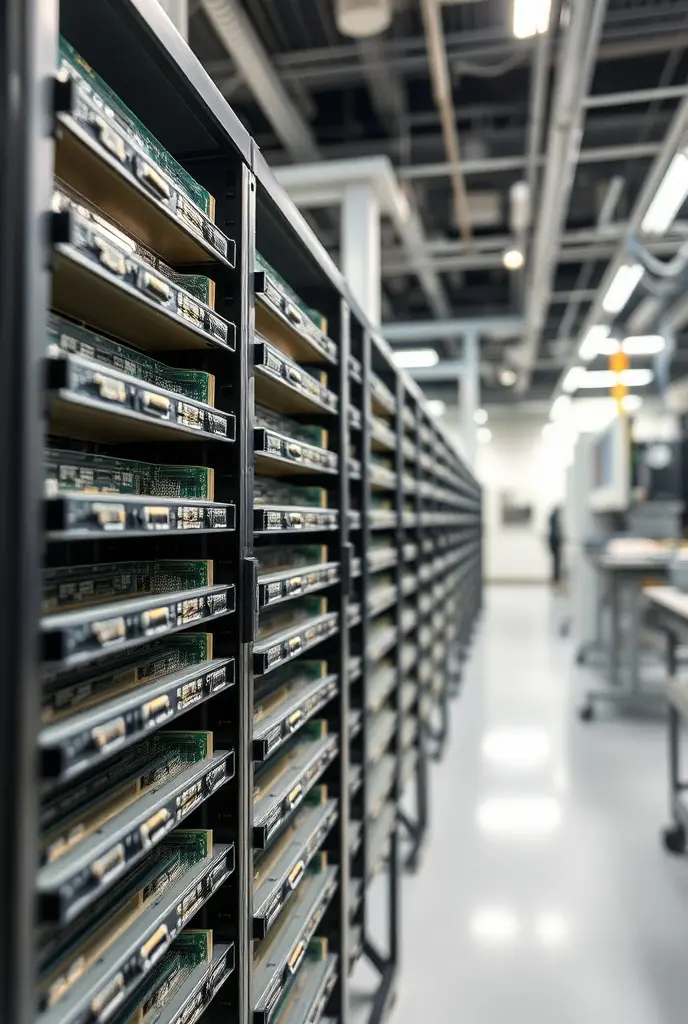
معدات SMT
صناديق ورفوف مانعة للشحنات الساكنة للخطوط المؤتمتة.

التخزين والخدمات اللوجستية
عربات دوارة، أرفف، صناديق، صواني، وحاويات مكونات.
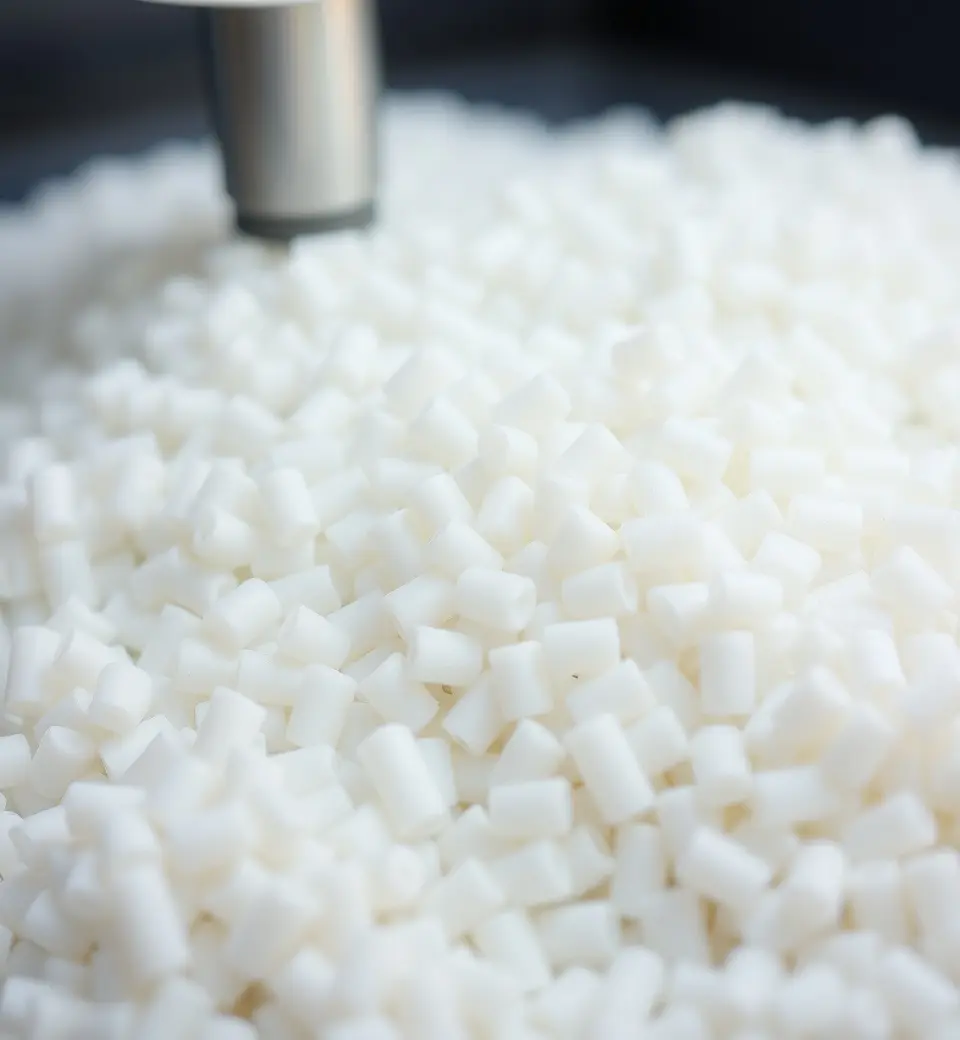
محطة العمل ومعدات الوقاية الشخصية
كراسي مقاومة للكهرباء الساكنة، وحصائر، وأربطة معصم، وحماية شخصية.
تطوير مخصص
تطوير قوالب مخصصة ومواد خاصة مضادة للكهرباء الساكنة.
مزايا OEM/ODM لدينا

البحث والتطوير المتقدم وابتكار المواد
مواد مضادة للكهرباء الساكنة مطورة داخلياً حاصلة على براءة اختراع وطنية للاختراع ومقاومة للحرارة حتى 200 درجة مئوية. نحن لا نقوم بالتشكيل فحسب، بل نُركّب المركبات أيضاً.

الإنتاج بسعة كاملة
مصنع مساحة 30,000 متر مربع يضم أنظمة كاملة للحقن والقولبة، والحبيبات، ومعالجة داعمة لتوريد مستقر وفعال.

تخصيص العملية الكاملة
مقاومة المادة، واللون، والحجم، والشعار، والتعبئة والتغليف، والشهادات — كلها قابلة للتخصيص لتلبي معايير IEC61340-5-1، أو ANSI/ESD S20.20، أو المعايير العسكرية.

الجودة المعتمدة والامتثال العالمي
“نجحت شركة سانوي في تطوير صوانٍ مخصصة ذات لون طبيعي ونظيف ومقاومة درجات الحرارة العالية لخط تجميع أشباه الموصلات الخاص بنا، مما أدى إلى استبدال المنتجات المستوردة، وضمان سلامة ممتازة ضد التفريغ الكهروستاتيكي (ESD)، وتلبية متطلبات النظافة العالية للورشة.”
موثوق به من قبل قادة الصناعة العالمية في قائمة فورتشن 500
يتم نشر حلولنا الخاصة للتحكم في الشحنات الكهروستاتيكية (ESD) في مرافق الإنتاج النخبوية في جميع أنحاء العالم، بما في ذلك: إنتل، موتورولا، سيمنز، آي بي إم، باناسونيك، نوكيا، وديل.
هل تبحث عن مقاسات مخصصة أو أسعار الجملة للكميات الكبيرة؟
مدعومة بفريق البحث والتطوير القوي الخاص بنا، توفر سانوي خيارات تصنيع المعدات الأصلية (OEM) والتصميم الأصلي (ODM) الكاملة المصممة خصيصاً لخطوط إنتاج تقنية التثبيت السطحي (SMT) أو تخطيط المستودعات لديك. اتصل بأخصائيينا اليوم للحصول على قوالب مخصصة، أو ترميز بالألوان، أو استشارات متكاملة لتخزين نظام الـ 5S.
الأسئلة الشائعة
1. What is the standard for surface resistivity?
The primary standards for measuring surface resistivity are ASTM D257 و IEC 62631-3-2. ASTM D257 is a key standard that details techniques for measuring both surface and volume resistivity using a guarded electrode system. IEC 62631-3-2 serves as the international equivalent.
2. What is surface insulation resistance?
Surface Insulation Resistance (SIR) is a measure of the electrical resistance across the surface of an insulating material between two conductors. It is a key indicator of a material’s ability to resist electrical leakage and electrochemical failures, especially under humid conditions.
3. What equipment is used to test insulation resistance?
The most common equipment used to test insulation resistance is an insulation resistance tester, often generically called a Megger. These are portable, high-range resistance meters (ohmmeters) with a built-in DC generator that provide direct readings of insulation resistance.
4. What is the surface insulation resistance test?
ال surface insulation resistance test is a method used to measure the resistance across a material’s surface. It’s a non-destructive test often used to evaluate the reliability of electronic assemblies. The test typically involves measuring the resistance between two comb-shaped electrodes on a test board under controlled conditions.
5. What is the surface resistance instrument?
A surface resistance instrument (or tester) is a device used to measure the electrical resistance directly on the surface of a material. It expresses resistance in ohms (Ω) and is commonly used for field audits of ESD workstations, mats, and floors to determine if materials are conductive or static dissipative.