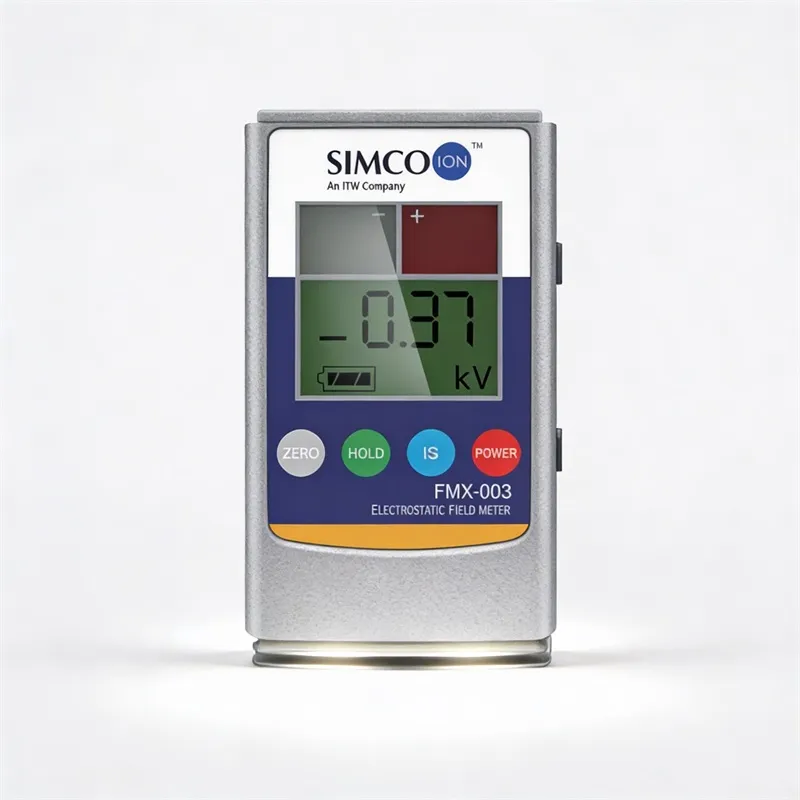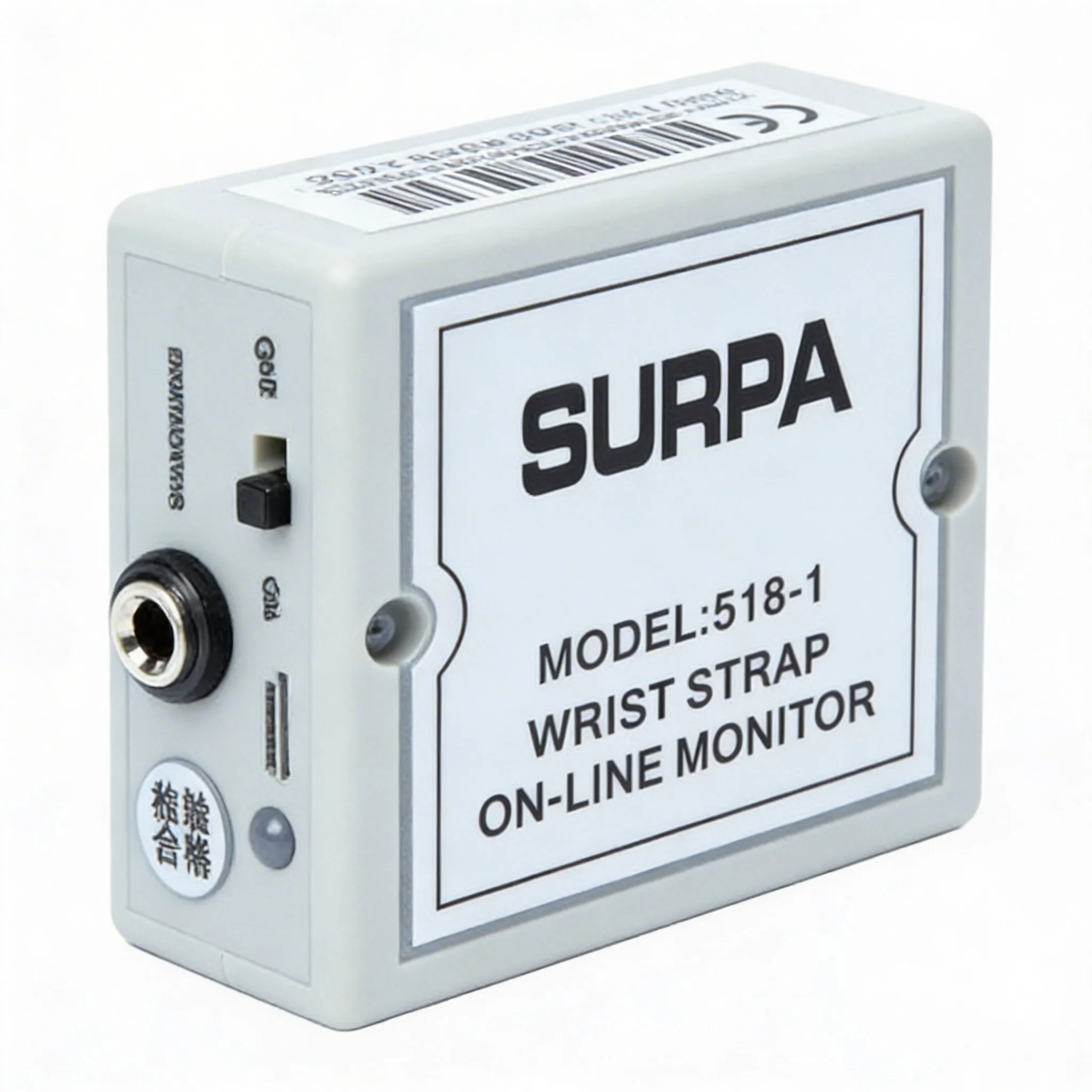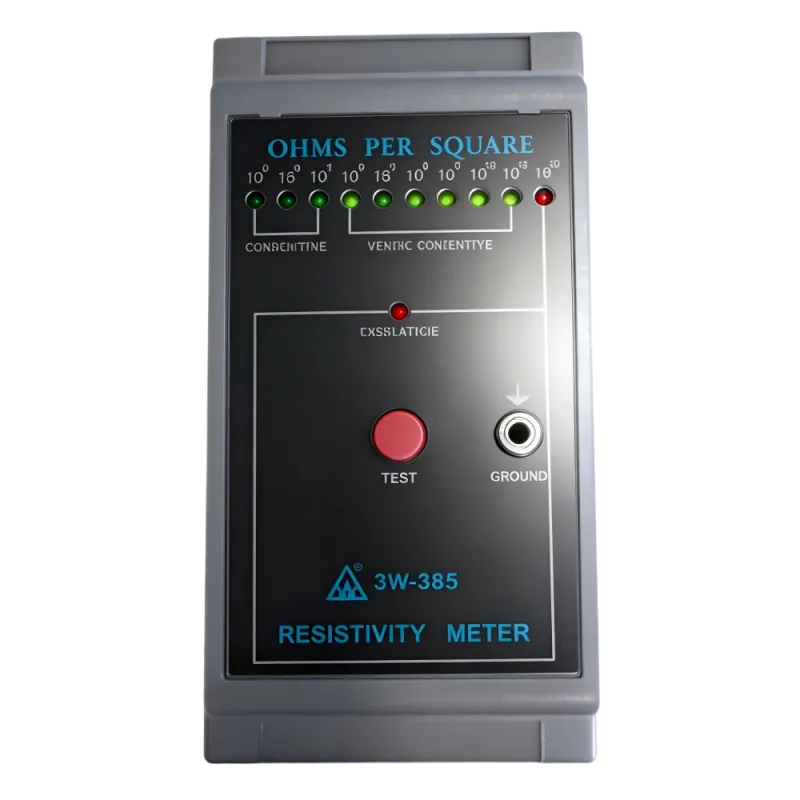
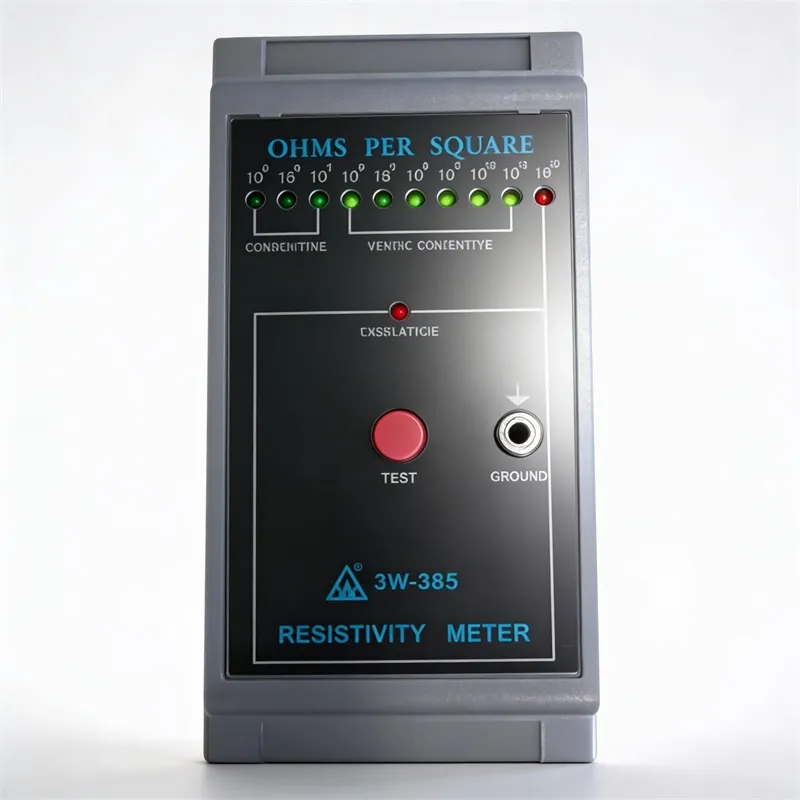
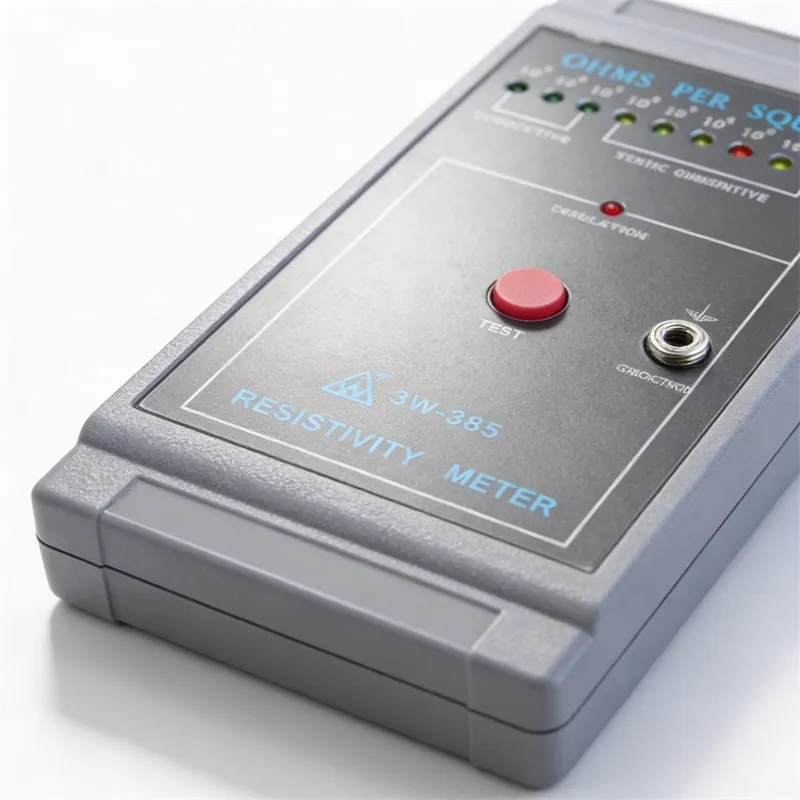
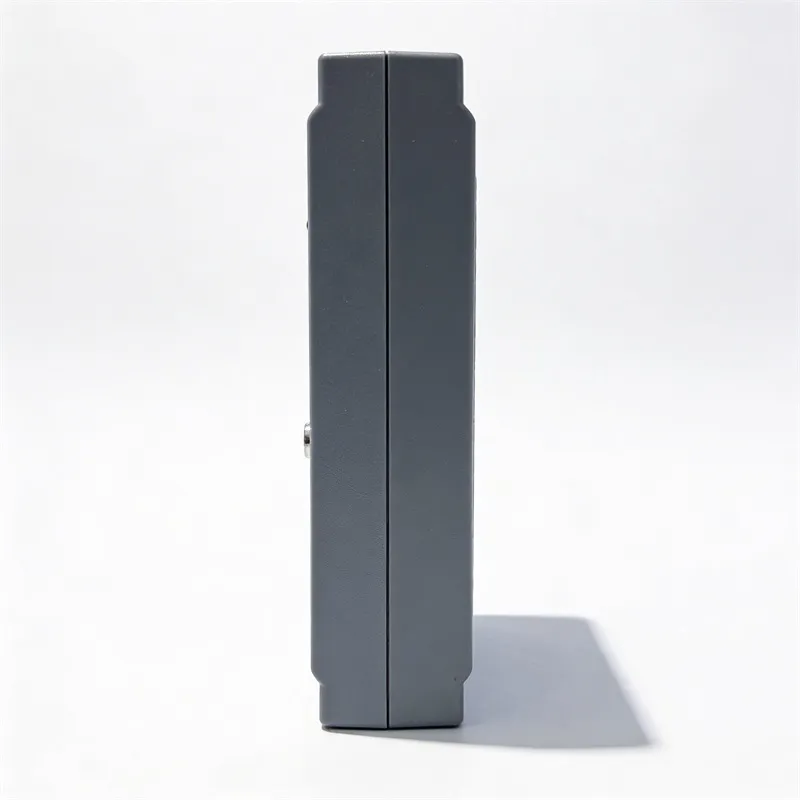
Surface Resistance Tester Handheld ESD Resistivity Measuring Instrument
Genel Bakış:
The yüzey direnç test cihazı (also referred to as an ESD surface resistance tester or surface resistivity tester) is a dedicated measurement instrument designed to accurately determine the surface resistance value of materials, thereby evaluating their conductive properties, static dissipative capability, and insulating characteristics.
Working Principle and Core Technology
The surface resistance tester operates on the principle of DC voltage resistance measurement. It applies a known voltage to the surface of the material under test and measures the resulting current flowing across the surface. The resistance value is then calculated according to Ohm’s law. Most modern instruments offer two test voltages – 10 V and 100 V – with automatic range switching: for example, when the resistance is ≥1×10⁶ Ω, the instrument applies 100 V; when the resistance lies between 1×10⁴ Ω and 1×10⁶ Ω, it uses 10 V. This ensures optimal measurement accuracy across different material types.
Wide Measurement Range and Precision Classification
A high‑quality surface resistance tester typically covers a broad measurement range from 10³ Ω to 10¹² Ω, making it suitable for testing everything from conductive materials to insulators. Different models feature various display methods – some use LED indicators to visually show the resistance range: green for conductive (10³–10⁶ Ω), yellow for static‑dissipative (10⁷–10¹¹ Ω), and red for insulative (≥10¹² Ω). Others employ LCD or OLED digital displays for more precise numeric readings. Measurement accuracy generally reaches ±10 %, with high‑end models achieving up to ±0.5 order of magnitude.
Flexible Test Methods and Electrode Configurations
The surface resistivity test method complies with multiple international standards, including ASTM D257, IEC 62631‑3‑2, ve GB/T 1410. To accommodate diverse testing scenarios, a surface resistance tester is usually equipped with or offers optional electrodes: parallel electrodes for rapid screening, weighted electrodes (2.27 kg or 2.5 kg) for point‑to‑point surface resistance measurement, concentric ring electrodes for surface resistivity testing in accordance with EOS/ESD S11.11, and two‑point electrodes for small‑area measurements. The dimensions, contact pressure, and material of these electrodes are specified by the relevant standards to ensure consistency and repeatability of test results.
Multi‑Scenario Applications and Industry Value
Surface resistivity testing plays an indispensable role across various industries:
-
Electronics manufacturing – inspecting the surface resistance of anti‑static workstations, ESD flooring, and packaging materials to safeguard the production environment.
-
Semiconductor and precision instrumentation – testing wafer carriers, PCB protective coatings, and containers for static‑sensitive devices to prevent electrostatic damage.
-
Laboratories and R&D – studying the static performance of new materials and characterising their surface resistivity.
-
Warehousing and logistics – verifying the resistance of ESD trays, tote boxes, and shipping tubes to avoid electrostatic discharge during storage and transport.
-
Medical and aerospace – measuring the surface resistance of equipment housings and operating tables to ensure user safety and operational reliability.
Portable Design and Smart Features
Modern surface resistance testers are typically designed to be compact and lightweight (often 120–170 g), allowing for easy on‑site testing. Many models also incorporate data logging and transfer capabilities – exporting data via USB, generating comprehensive test reports with companion software, and some advanced versions even storing up to 50,000 measurement records. Built‑in environmental temperature and humidity sensors further enhance traceability, ensuring that every test is performed under documented conditions.
Teknik Şartname
| Measurement Range | 10³-10¹²Ω |
| Accuracy | ±0.5 |
| Size (L×W×H) | 70*27*130mm |
| Ağırlık | 0.14G |
| Power Supply | 9V |
Dünya Standartlarında ESD Üretim Kapasitesi
Sanwei'den tedarik yaptığınızda, sektör lideri bir OEM/ODM üreticisiyle doğrudan iş ortaklığı yapmış olursunuz. Son teknolojiye sahip bir tesis işletiyoruz. 70.000+ m² entegre üretim tesisi Zhejiang, Yueqing Merkez Endüstri Parkı'nda, tescilli malzeme formülasyonundan son yüksek hassasiyetli ürün kalıplamasına kadar her bir süreci yönetmektedir.
Entegre Terazi
70.000+ m² alana kurulu, istikrarlı teslimat süreleriyle toplu toptan siparişleri karşılamak için ağır hizmet tipi hassas enjeksiyon makineleriyle donatılmış gelişmiş üretim tesisi.
Uçtan Uca Kontrol
Tescilli anti-statik malzeme Ar-Ge'si, yapısal kalıp mühendisliği, otomasyonlu üretim ve hızlı küresel lojistik teslimatını kapsayan tamamen şirket içi kontrol.
Titiz Denetim
Üretim hattında gerçekleştirilen çok noktalı yüzey direnci ölçümleriyle birleştirilen sıkı hammadde testleri, 100% ürününün uluslararası ESD standart kılavuzlarına uygunluğunu garanti eder.
Antistatik Ürünler ve Çözümler
Tüm üretim ve operasyonel yaşam döngünüz boyunca kapsamlı elektrostatik koruma sağlıyoruz.
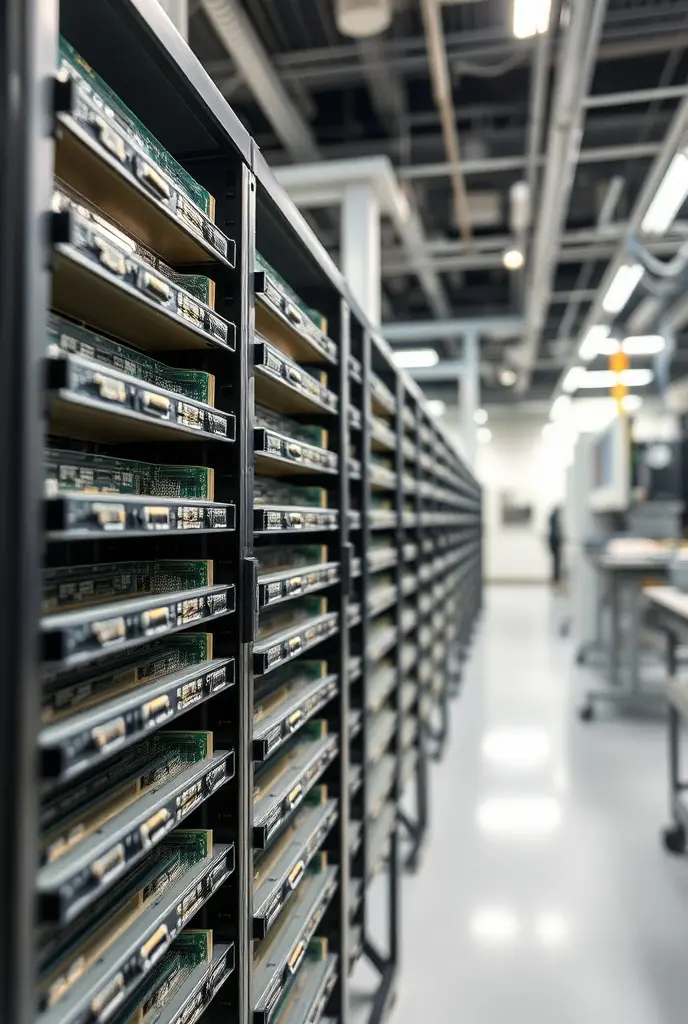
SMT Ekipmanları
Otomatik hatlar için anti-statik toplama kutuları ve rafları.

Depolama ve Lojistik
Devirdaim arabaları, raflar, kutular, tepsiler ve parça kapları.
İş İstasyonu ve KKD
Antistatik sandalyeler, matlar, bileklikler ve kişisel koruma.
Özel Geliştirme
Özel kalıp geliştirme ve özel anti-statik malzemeler.
OEM/ODM AVANTAJLARIMIZ

İleri Ar-Ge ve Malzeme İnovasyonu
Ulusal buluş patentlerine sahip ve 200℃'ye kadar ısı dayanımı bulunan, bünyemizde geliştirilmiş antistatik malzemeler. Biz sadece kalıplama yapmıyoruz; bileşikler formüle ediyoruz.

Tam Ölçekli Üretim Kapasitesi
Kararlı ve verimli tedarik için eksiksiz enjeksiyon kalıplama, granülasyon ve destekleyici işleme sistemlerine sahip 30.000 m²'lik tesis.

Uçtan Uca Özel Tasarım
Malzeme özdirenci, renk, boyut, logo, ambalaj ve sertifikalar; IEC61340-5-1, ANSI/ESD S20.20 veya askeri standartları karşılayacak şekilde özelleştirilebilir.

Sertifikalı Kalite ve Küresel Uyumluluk
“Sanwei, yarı iletken montaj hattımız için özel yüksek sıcaklığa dayanıklı, temiz doğal renkli tepsi üretimini başarıyla gerçekleştirerek ithal ürünlerin yerini almış, mükemmel ESD güvenliği sağlamış ve atölyenin yüksek temizlik gereksinimlerini karşılamıştır.”
KÜRESEL FORTUNE 500 ENDÜSTRİ LİDERLERİNİN GÜVENDİĞİ
Tescilli ESD çözümlerimiz, aşağıdakiler dahil olmak üzere dünya çapındaki seçkin üretim tesislerinde kullanılmaktadır: Intel, Motorola, Siemens, IBM, Panasonic, Nokia ve Dell.
Özel Ölçüler veya Toplu Toptan Fiyatlandırma mı arıyorsunuz?
Güçlü büro-içi Ar-Ge ekibimizin desteğiyle Sanwei; özel SMT üretim hatlarınıza veya depo yerleşiminize göre uyarlanmış eksiksiz OEM/ODM seçenekleri sunar. Özel kalıplar, renk kodlaması veya entegre 5S depolama danışmanlığı için uzmanlarımızla bugün iletişime geçin.
Sık Sorulan Sorular (SSS)
1. What is the standard for surface resistivity?
The primary standards for measuring surface resistivity are ASTM D257 ve IEC 62631-3-2. ASTM D257 is a key standard that details techniques for measuring both surface and volume resistivity using a guarded electrode system. IEC 62631-3-2 serves as the international equivalent.
2. What is surface insulation resistance?
Surface Insulation Resistance (SIR) is a measure of the electrical resistance across the surface of an insulating material between two conductors. It is a key indicator of a material’s ability to resist electrical leakage and electrochemical failures, especially under humid conditions.
3. What equipment is used to test insulation resistance?
The most common equipment used to test insulation resistance is an insulation resistance tester, often generically called a Megger. These are portable, high-range resistance meters (ohmmeters) with a built-in DC generator that provide direct readings of insulation resistance.
4. What is the surface insulation resistance test?
The surface insulation resistance test is a method used to measure the resistance across a material’s surface. It’s a non-destructive test often used to evaluate the reliability of electronic assemblies. The test typically involves measuring the resistance between two comb-shaped electrodes on a test board under controlled conditions.
5. What is the surface resistance instrument?
A surface resistance instrument (or tester) is a device used to measure the electrical resistance directly on the surface of a material. It expresses resistance in ohms (Ω) and is commonly used for field audits of ESD workstations, mats, and floors to determine if materials are conductive or static dissipative.