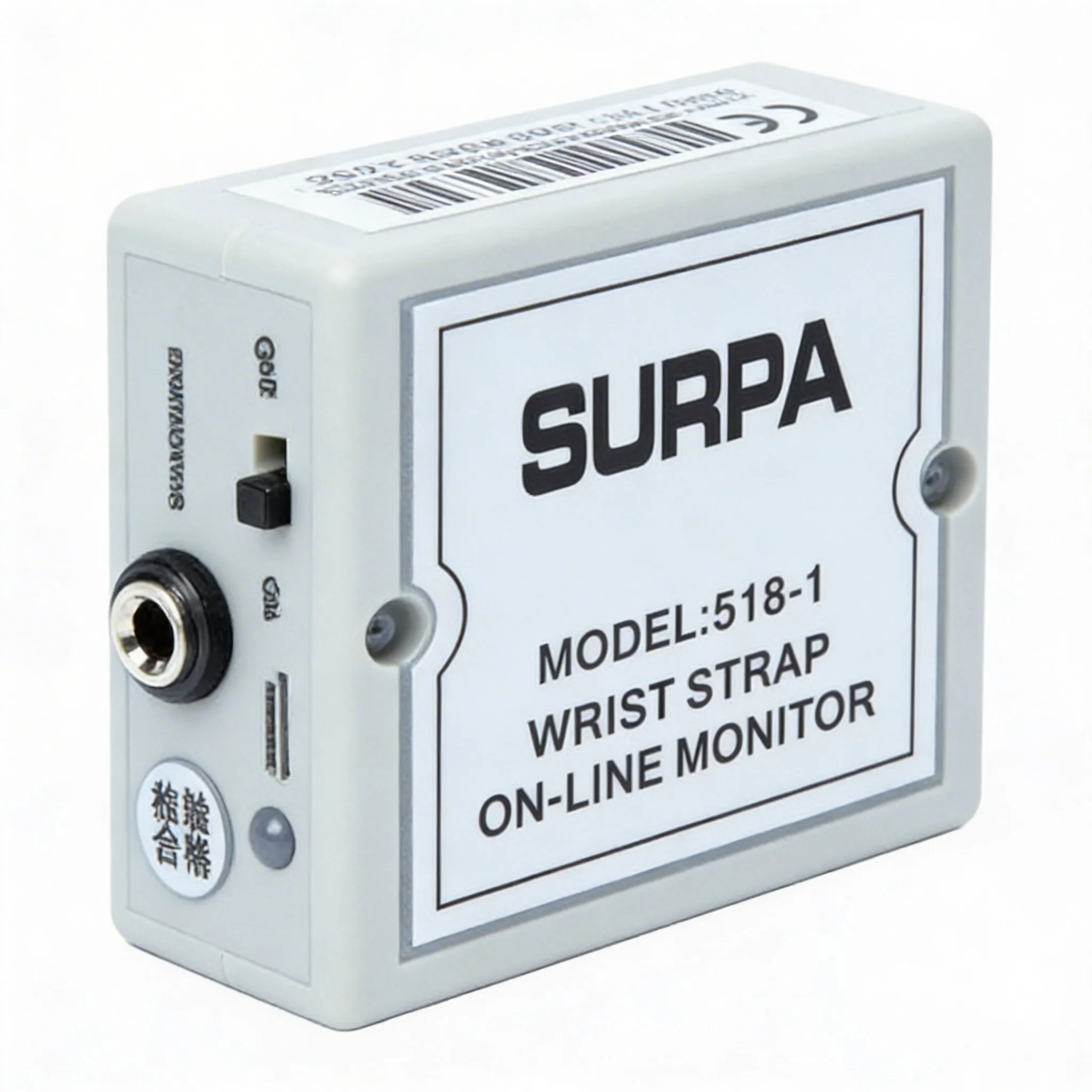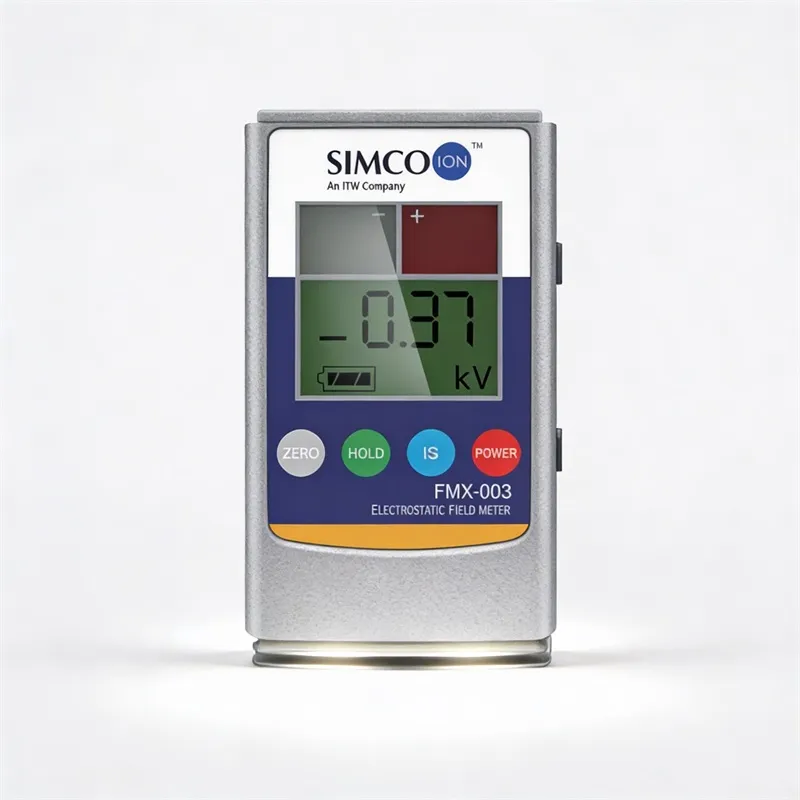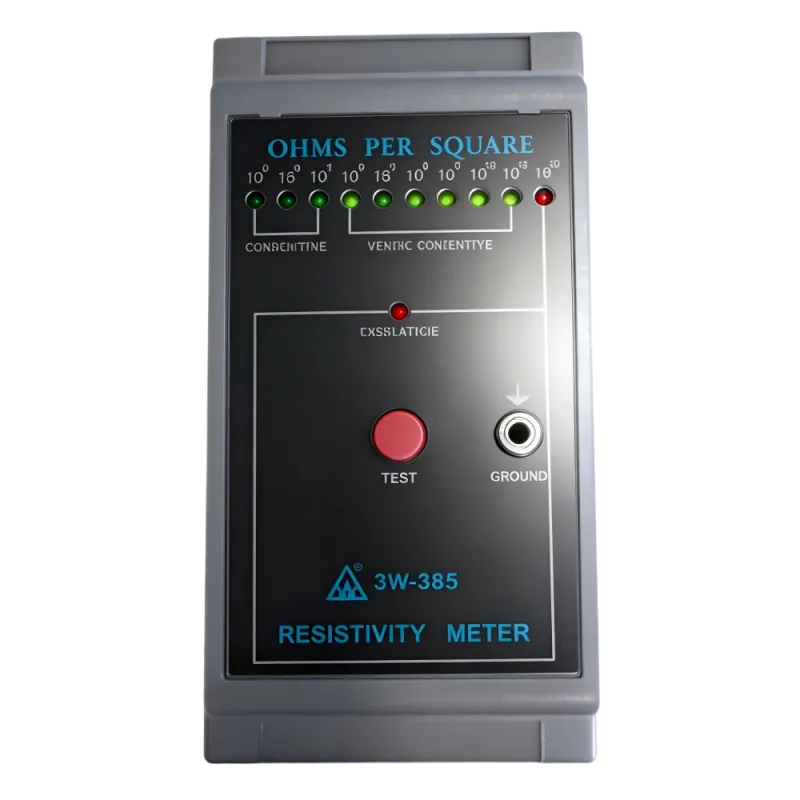
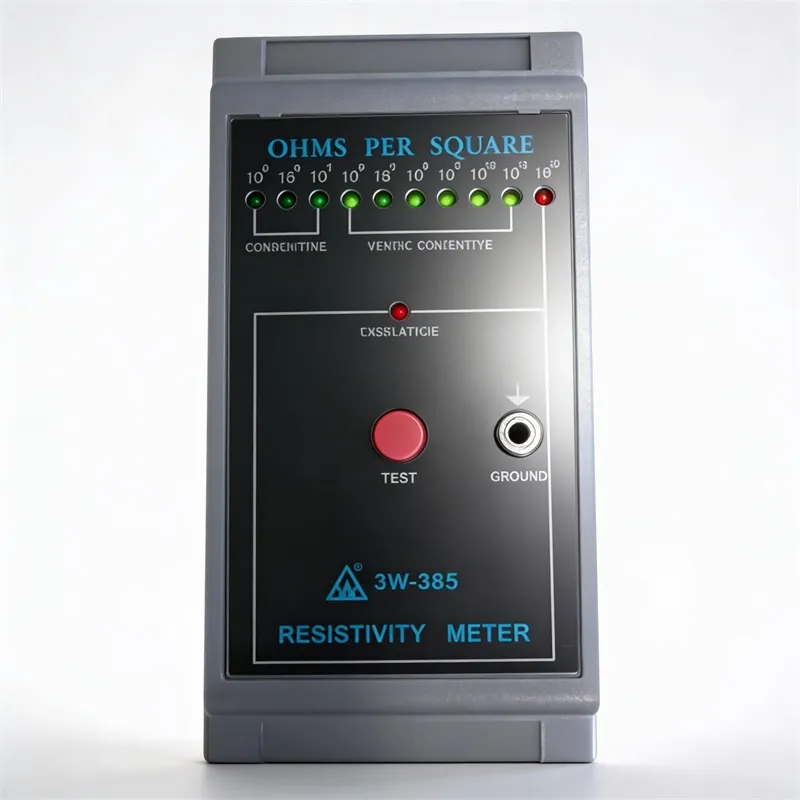
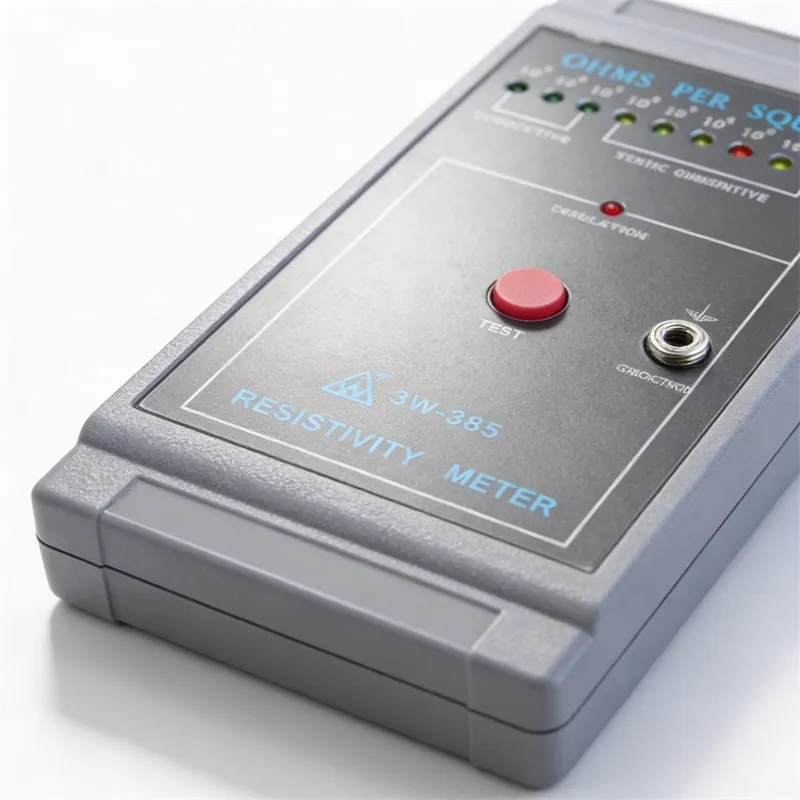
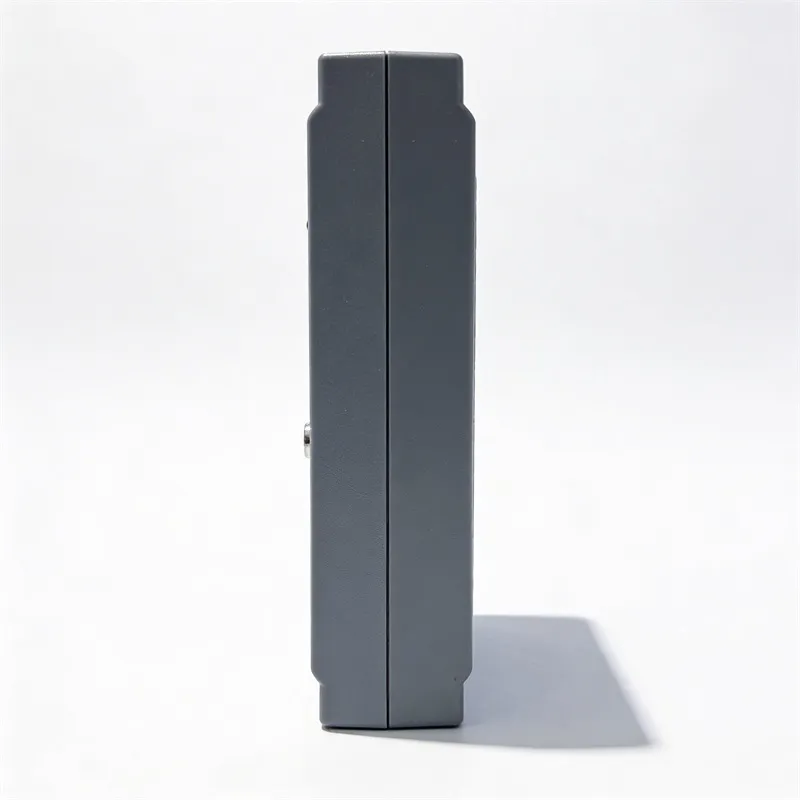
Surface Resistance Tester Handheld ESD Resistivity Measuring Instrument
Ikhtisar:
Itu penguji resistansi permukaan (also referred to as an ESD surface resistance tester or surface resistivity tester) is a dedicated measurement instrument designed to accurately determine the surface resistance value of materials, thereby evaluating their conductive properties, static dissipative capability, and insulating characteristics.
Working Principle and Core Technology
The surface resistance tester operates on the principle of DC voltage resistance measurement. It applies a known voltage to the surface of the material under test and measures the resulting current flowing across the surface. The resistance value is then calculated according to Ohm’s law. Most modern instruments offer two test voltages – 10 V and 100 V – with automatic range switching: for example, when the resistance is ≥1×10⁶ Ω, the instrument applies 100 V; when the resistance lies between 1×10⁴ Ω and 1×10⁶ Ω, it uses 10 V. This ensures optimal measurement accuracy across different material types.
Wide Measurement Range and Precision Classification
A high‑quality surface resistance tester typically covers a broad measurement range from 10³ Ω to 10¹² Ω, making it suitable for testing everything from conductive materials to insulators. Different models feature various display methods – some use LED indicators to visually show the resistance range: green for conductive (10³–10⁶ Ω), yellow for static‑dissipative (10⁷–10¹¹ Ω), and red for insulative (≥10¹² Ω). Others employ LCD or OLED digital displays for more precise numeric readings. Measurement accuracy generally reaches ±10 %, with high‑end models achieving up to ±0.5 order of magnitude.
Flexible Test Methods and Electrode Configurations
Itu surface resistivity test method complies with multiple international standards, including ASTM D257, IEC 62631‑3‑2, and GB/T 1410. To accommodate diverse testing scenarios, a surface resistance tester is usually equipped with or offers optional electrodes: parallel electrodes for rapid screening, weighted electrodes (2.27 kg or 2.5 kg) for point‑to‑point surface resistance measurement, concentric ring electrodes for surface resistivity testing in accordance with EOS/ESD S11.11, and two‑point electrodes for small‑area measurements. The dimensions, contact pressure, and material of these electrodes are specified by the relevant standards to ensure consistency and repeatability of test results.
Multi‑Scenario Applications and Industry Value
Surface resistivity testing plays an indispensable role across various industries:
-
Electronics manufacturing – inspecting the surface resistance of anti‑static workstations, ESD flooring, and packaging materials to safeguard the production environment.
-
Semiconductor and precision instrumentation – testing wafer carriers, PCB protective coatings, and containers for static‑sensitive devices to prevent electrostatic damage.
-
Laboratories and R&D – studying the static performance of new materials and characterising their surface resistivity.
-
Warehousing and logistics – verifying the resistance of ESD trays, tote boxes, and shipping tubes to avoid electrostatic discharge during storage and transport.
-
Medical and aerospace – measuring the surface resistance of equipment housings and operating tables to ensure user safety and operational reliability.
Portable Design and Smart Features
Modern surface resistance testers are typically designed to be compact and lightweight (often 120–170 g), allowing for easy on‑site testing. Many models also incorporate data logging and transfer capabilities – exporting data via USB, generating comprehensive test reports with companion software, and some advanced versions even storing up to 50,000 measurement records. Built‑in environmental temperature and humidity sensors further enhance traceability, ensuring that every test is performed under documented conditions.
Spesifikasi Teknis
| Measurement Range | 10³-10¹²Ω |
| Accuracy | ±0.5 |
| Size (L×W×H) | 70*27*130mm |
| Weight | 0.14G |
| Power Supply | 9V |
Kapasitas Manufaktur ESD Kelas Dunia
Saat Anda bermitra dengan Sanwei, Anda bekerja sama secara langsung dengan produsen OEM/ODM terkemuka di industri ini. Kami mengoperasikan fasilitas mutakhir Fasilitas produksi terintegrasi seluas 70.000+ m² di Taman Industri Pusat Yueqing, Zhejiang, mengelola setiap proses mulai dari formulasi bahan milik sendiri hingga pencetakan produk presisi tinggi akhir.
Skala Terintegrasi
Basis pabrik canggih seluas 70.000+ m² yang dilengkapi dengan mesin cetak suntik presisi tugas berat untuk menangani pesanan grosir massal dengan waktu tunggu yang stabil.
Kontrol Rantai Penuh
Pengendalian penuh di dalam perusahaan yang mencakup penelitian dan pengembangan material antistatis milik sendiri, rekayasa cetakan struktural, manufaktur otomatis, dan pengiriman logistik global yang cepat.
Inspeksi Ketat
Pengujian bahan baku yang ketat, dikombinasikan dengan pengukuran resistivitas permukaan multi-titik di jalur produksi, memastikan kepatuhan 100% terhadap pedoman standar ESD internasional.
Antistatis Produk dan Solusi
Menyediakan perlindungan elektrostatik yang komprehensif di seluruh siklus hidup manufaktur dan operasional Anda.
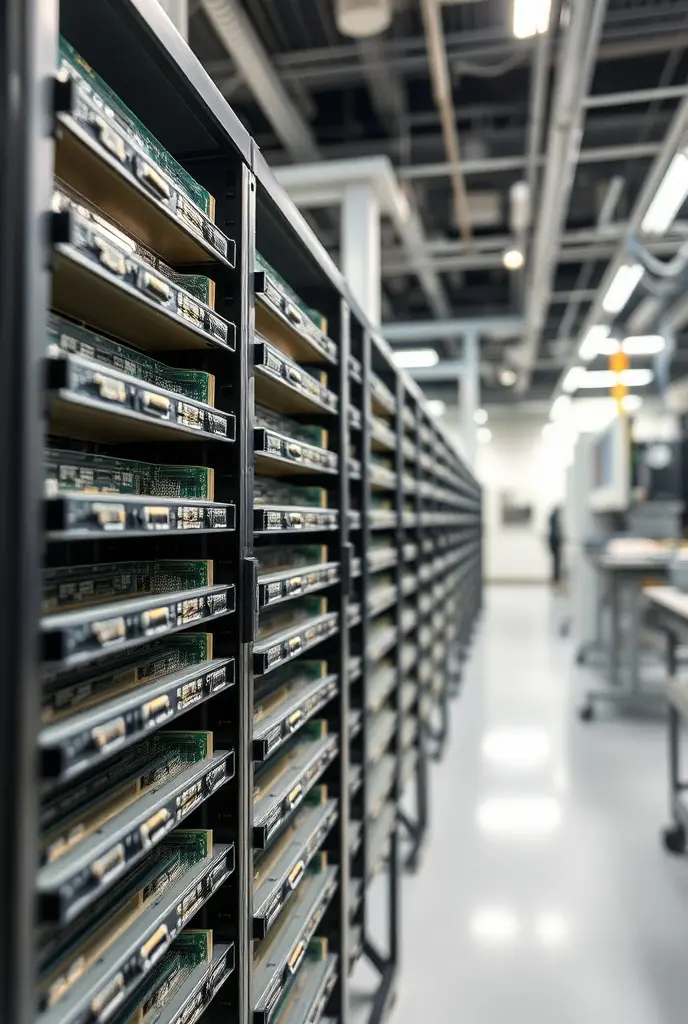
Peralatan SMT
Kotak dan rak pengumpul anti-statis untuk jalur otomatis.

Penyimpanan & Logistik
Kereta dorong pemindah barang, rak, kotak, nampan, dan wadah komponen.
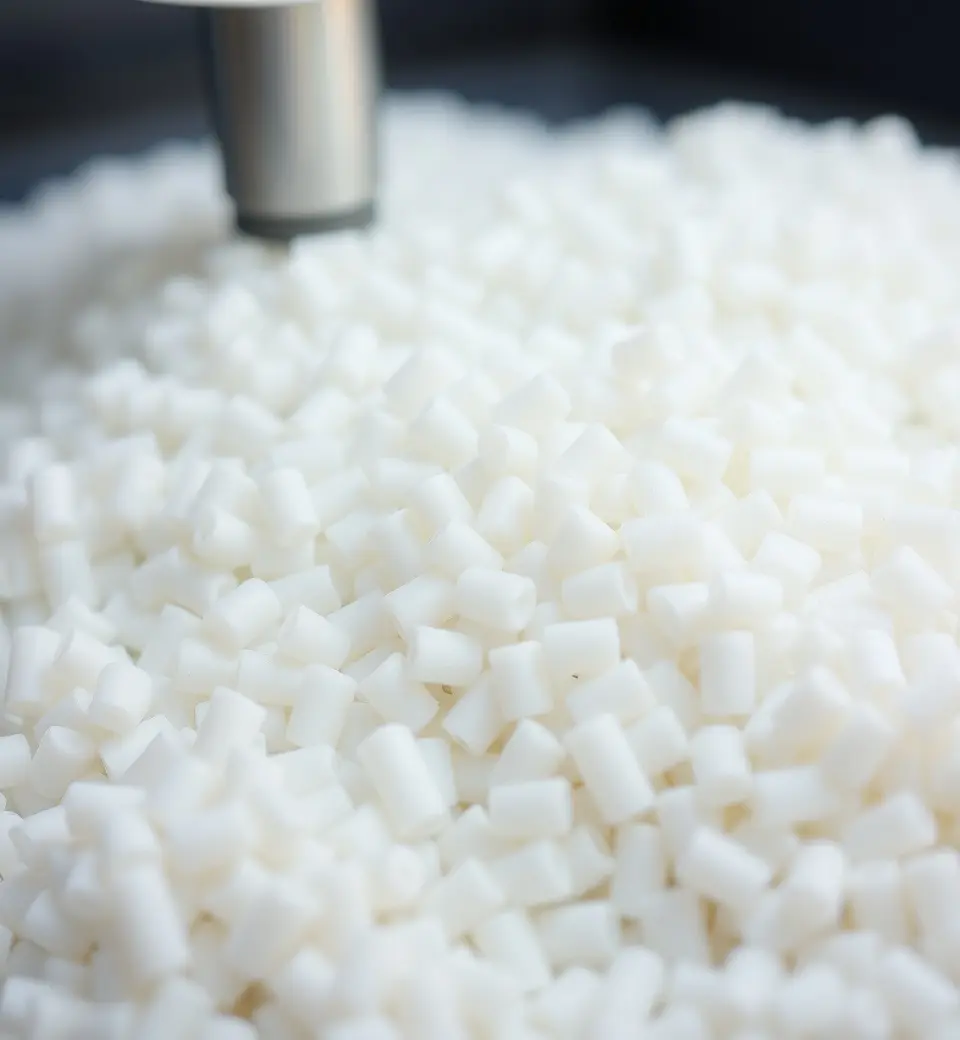
Stasiun Kerja & APD
Kursi anti-statis, tikar, tali pergelangan tangan, dan perlindungan diri.
Pengembangan Kustom
Pengembangan cetakan khusus dan bahan anti-statis khusus.
KEUNGGULAN OEM/ODM KAMI

R&D Lanjutan & Inovasi Material
Material anti-statis yang dikembangkan secara internal dengan paten penemuan nasional dan ketahanan panas hingga 200℃. Kami tidak hanya mencetak — kami memformulasikan senyawa.

Kapasitas Produksi Skala Penuh
Pabrik seluas 30.000㎡ dengan sistem pengecoran injeksi, granulasi, dan pemrosesan pendukung yang lengkap untuk pasokan yang stabil dan efisien.

Kustomisasi Proses Penuh
Resistivitas material, warna, ukuran, logo, kemasan, dan sertifikasi — dapat disesuaikan untuk memenuhi standar IEC61340-5-1, ANSI/ESD S20.20, atau standar militer.

Kualitas Bersertifikat & Kepatuhan Global
“Sanwei berhasil mengembangkan baki warna alami bersih tahan suhu tinggi khusus untuk lini perakitan semikonduktor kami, menggantikan produk impor, memastikan keamanan ESD yang sangat baik, dan memenuhi persyaratan kebersihan yang tinggi di area kerja.”
DIPERCAYA OLEH PEMIMPIN INDUSTRI FORTUNE 500 GLOBAL
Solusi ESD hak milik kami diterapkan di fasilitas produksi elit di seluruh dunia, termasuk: Intel, Motorola, Siemens, IBM, Panasonic, Nokia, dan Dell.
Mencari Ukuran Kustom atau Harga Grosir dalam Jumlah Besar?
Didukung oleh tim R&D internal kami yang tangguh, Sanwei menyediakan opsi OEM/ODM lengkap yang disesuaikan dengan lini produksi SMT atau tata letak gudang spesifik Anda. Hubungi spesialis kami hari ini untuk cetakan kustom, kode warna, atau konsultasi penyimpanan 5S terintegrasi.
Pertanyaan yang Sering Diajukan (FAQ)
1. What is the standard for surface resistivity?
The primary standards for measuring surface resistivity are ASTM D257 dan IEC 62631-3-2. ASTM D257 is a key standard that details techniques for measuring both surface and volume resistivity using a guarded electrode system. IEC 62631-3-2 serves as the international equivalent.
2. What is surface insulation resistance?
Surface Insulation Resistance (SIR) is a measure of the electrical resistance across the surface of an insulating material between two conductors. It is a key indicator of a material’s ability to resist electrical leakage and electrochemical failures, especially under humid conditions.
3. What equipment is used to test insulation resistance?
The most common equipment used to test insulation resistance is an insulation resistance tester, often generically called a Megger. These are portable, high-range resistance meters (ohmmeters) with a built-in DC generator that provide direct readings of insulation resistance.
4. What is the surface insulation resistance test?
Itu surface insulation resistance test is a method used to measure the resistance across a material’s surface. It’s a non-destructive test often used to evaluate the reliability of electronic assemblies. The test typically involves measuring the resistance between two comb-shaped electrodes on a test board under controlled conditions.
5. What is the surface resistance instrument?
A surface resistance instrument (or tester) is a device used to measure the electrical resistance directly on the surface of a material. It expresses resistance in ohms (Ω) and is commonly used for field audits of ESD workstations, mats, and floors to determine if materials are conductive or static dissipative.