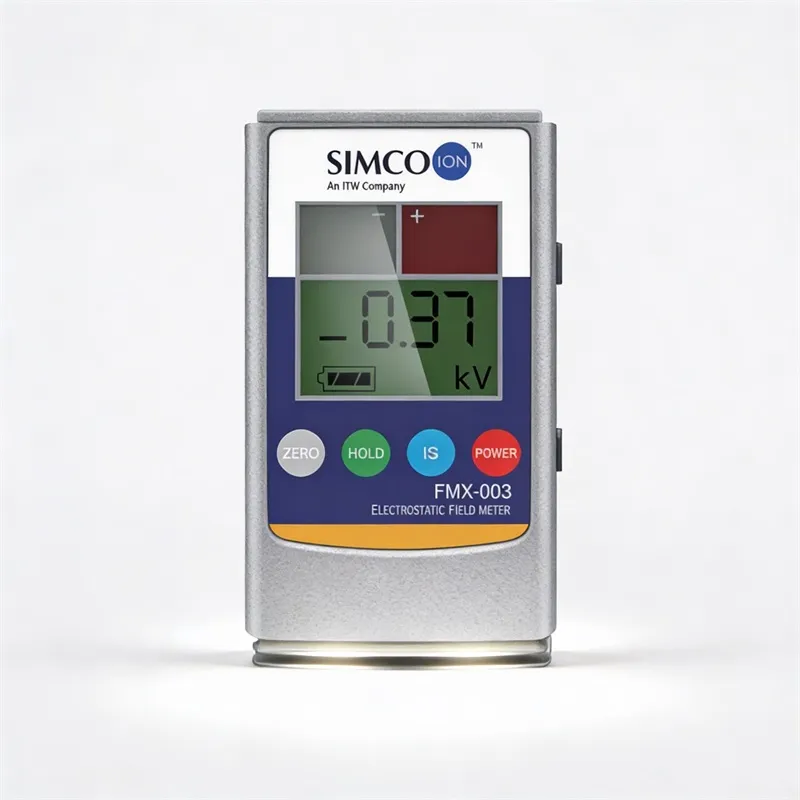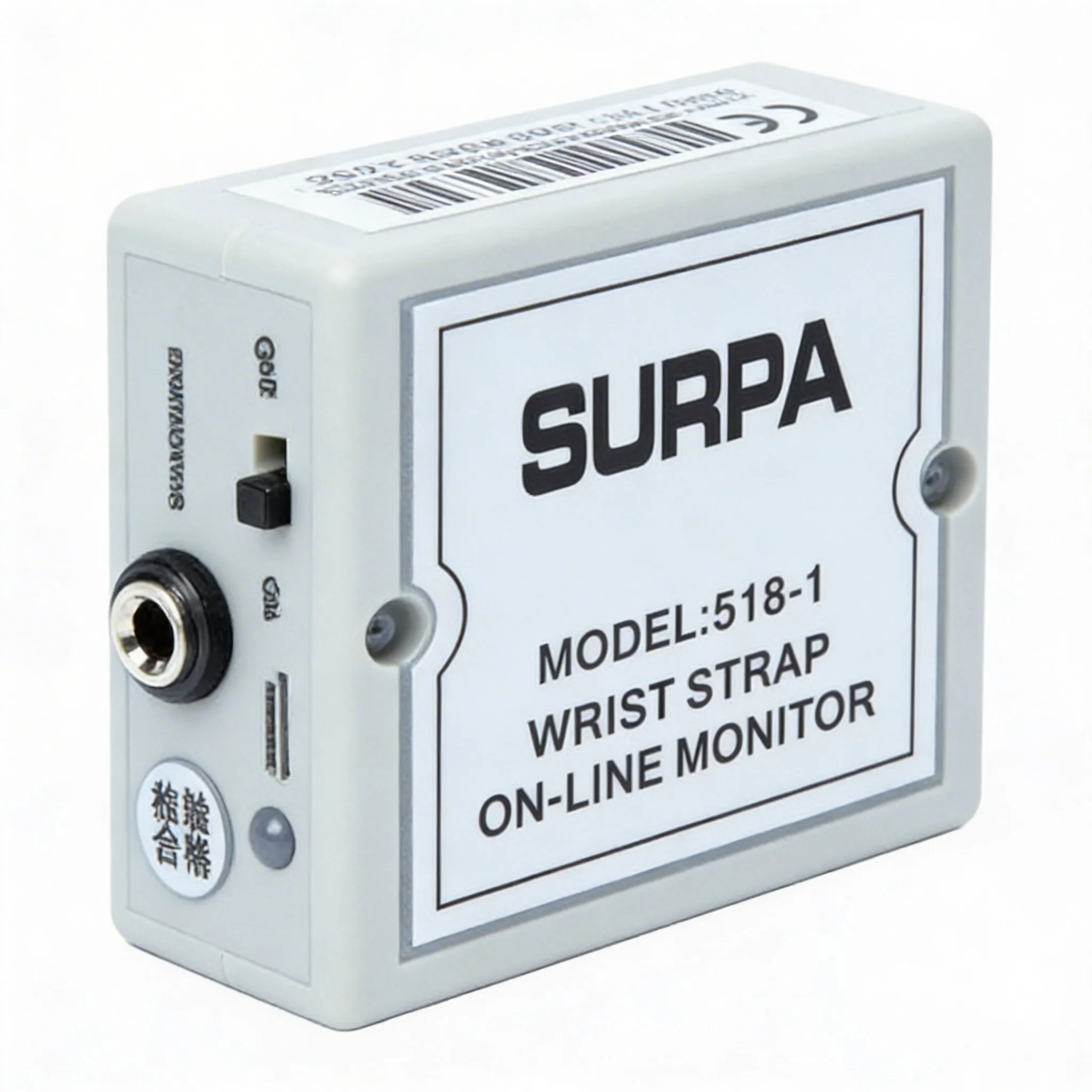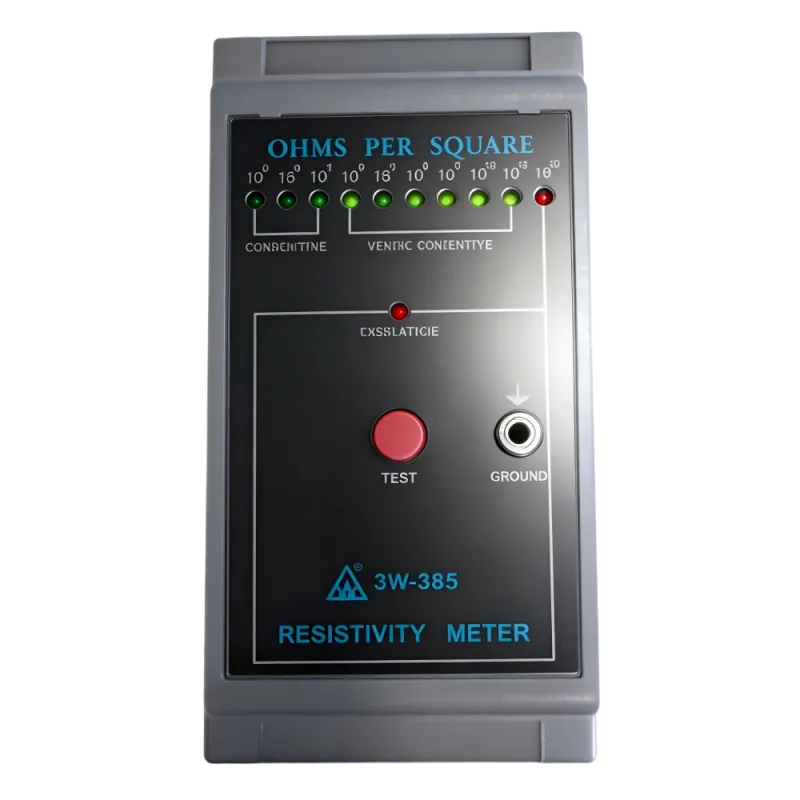
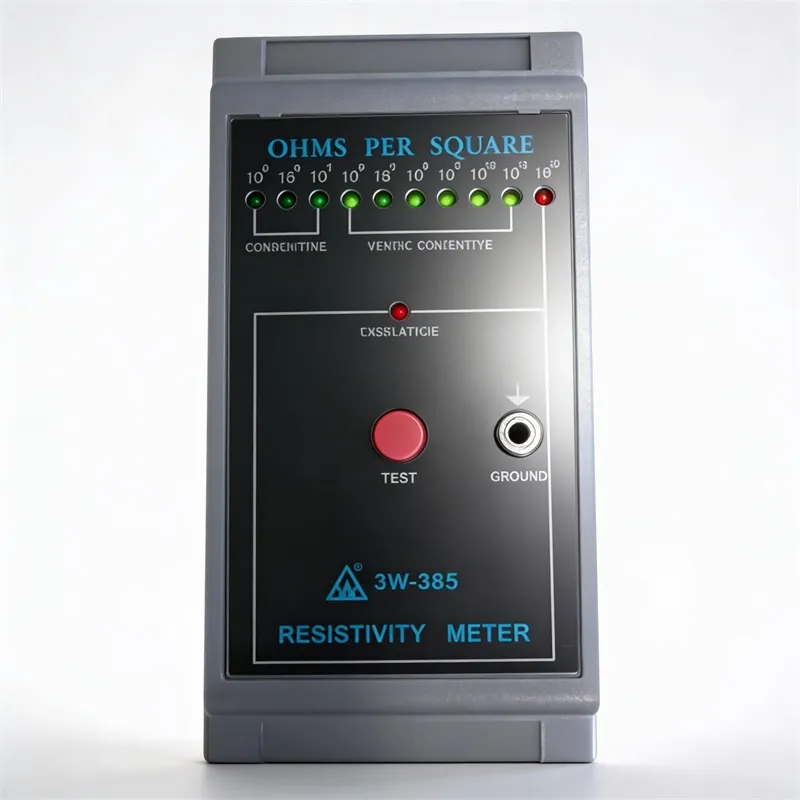
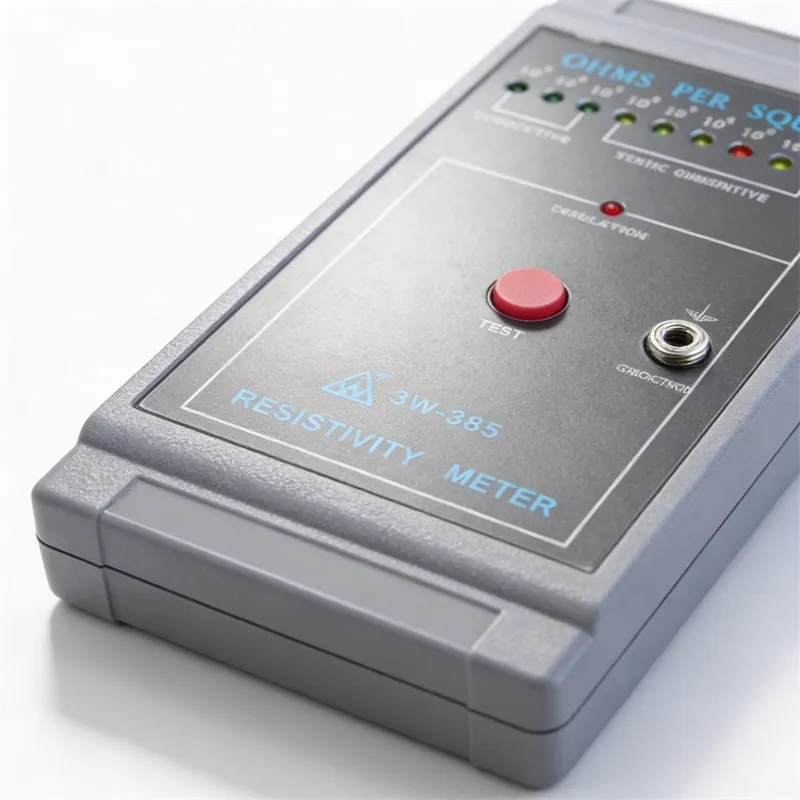
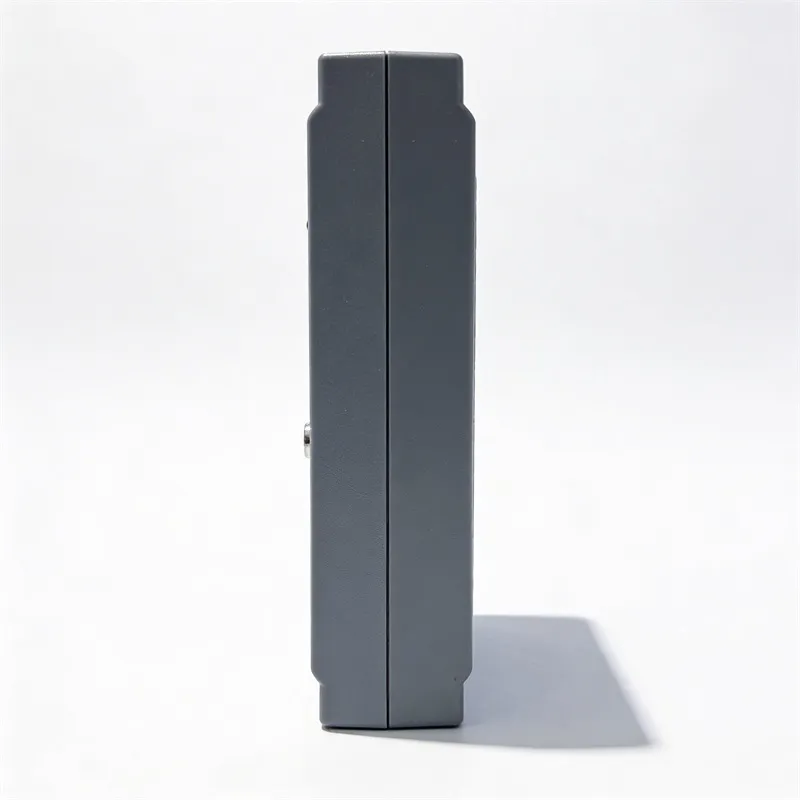
Surface Resistance Tester Handheld ESD Resistivity Measuring Instrument
Overzicht:
De oppervlakteweerstandsmeter (also referred to as an ESD surface resistance tester or surface resistivity tester) is a dedicated measurement instrument designed to accurately determine the surface resistance value of materials, thereby evaluating their conductive properties, static dissipative capability, and insulating characteristics.
Working Principle and Core Technology
The surface resistance tester operates on the principle of DC voltage resistance measurement. It applies a known voltage to the surface of the material under test and measures the resulting current flowing across the surface. The resistance value is then calculated according to Ohm’s law. Most modern instruments offer two test voltages – 10 V and 100 V – with automatic range switching: for example, when the resistance is ≥1×10⁶ Ω, the instrument applies 100 V; when the resistance lies between 1×10⁴ Ω and 1×10⁶ Ω, it uses 10 V. This ensures optimal measurement accuracy across different material types.
Wide Measurement Range and Precision Classification
A high‑quality surface resistance tester typically covers a broad measurement range from 10³ Ω to 10¹² Ω, making it suitable for testing everything from conductive materials to insulators. Different models feature various display methods – some use LED indicators to visually show the resistance range: green for conductive (10³–10⁶ Ω), yellow for static‑dissipative (10⁷–10¹¹ Ω), and red for insulative (≥10¹² Ω). Others employ LCD or OLED digital displays for more precise numeric readings. Measurement accuracy generally reaches ±10 %, with high‑end models achieving up to ±0.5 order of magnitude.
Flexible Test Methods and Electrode Configurations
De surface resistivity test method complies with multiple international standards, including ASTM D257, IEC 62631‑3‑2, and GB/T 1410. To accommodate diverse testing scenarios, a surface resistance tester is usually equipped with or offers optional electrodes: parallel electrodes for rapid screening, weighted electrodes (2.27 kg or 2.5 kg) for point‑to‑point surface resistance measurement, concentric ring electrodes for surface resistivity testing in accordance with EOS/ESD S11.11, and two‑point electrodes for small‑area measurements. The dimensions, contact pressure, and material of these electrodes are specified by the relevant standards to ensure consistency and repeatability of test results.
Multi‑Scenario Applications and Industry Value
Surface resistivity testing plays an indispensable role across various industries:
-
Electronics manufacturing – inspecting the surface resistance of anti‑static workstations, ESD flooring, and packaging materials to safeguard the production environment.
-
Semiconductor and precision instrumentation – testing wafer carriers, PCB protective coatings, and containers for static‑sensitive devices to prevent electrostatic damage.
-
Laboratories and R&D – studying the static performance of new materials and characterising their surface resistivity.
-
Warehousing and logistics – verifying the resistance of ESD trays, tote boxes, and shipping tubes to avoid electrostatic discharge during storage and transport.
-
Medical and aerospace – measuring the surface resistance of equipment housings and operating tables to ensure user safety and operational reliability.
Portable Design and Smart Features
Modern surface resistance testers are typically designed to be compact and lightweight (often 120–170 g), allowing for easy on‑site testing. Many models also incorporate data logging and transfer capabilities – exporting data via USB, generating comprehensive test reports with companion software, and some advanced versions even storing up to 50,000 measurement records. Built‑in environmental temperature and humidity sensors further enhance traceability, ensuring that every test is performed under documented conditions.
Technische specificatie
| Measurement Range | 10³-10¹²Ω |
| Accuracy | ±0.5 |
| Size (L×W×H) | 70*27*130mm |
| Weight | 0.14G |
| Power Supply | 9V |
Wereldwijde ESD-productiecapaciteit
Wanneer u inkoopt bij Sanwei, werkt u direct samen met een toonaangevende OEM/ODM-fabrikant. Wij beheren een ultramoderne 70.000+ m² geïntegreerde productiefaciliteit in het Centrale Industriepark van Yueqing, Zhejiang, waarbij elk afzonderlijk proces wordt beheerd, van eigen materiaalformulering tot het uiteindelijke zeer nauwkeurige productvormproces.
Geïntegreerde schaal
70.000+ m² geavanceerde productiefaciliteit, uitgerust met zware precisie-spuitgietmachines om grote wholesalebestellingen te verwerken met stabiele levertijden.
Volledige ketenbeheersing
Volledige beheer in eigen huis, variërend van R&D van eigen antistatisch materiaal, structurele malengineering, geautomatiseerde productie tot snelle wereldwijde logistieke levering.
Grوندige inspectie
Strenge grondstofcontroles in combinatie met meerpuntsmetingen van de oppervlakteweerstand op de productielijn garanderen dat 100% voldoet aan de internationale ESD-richtlijnen.
Antistatisch Producten en Oplossingen
Het leveren van uitgebreide elektrostatische bescherming gedurende uw gehele productie- en operationele levenscyclus.
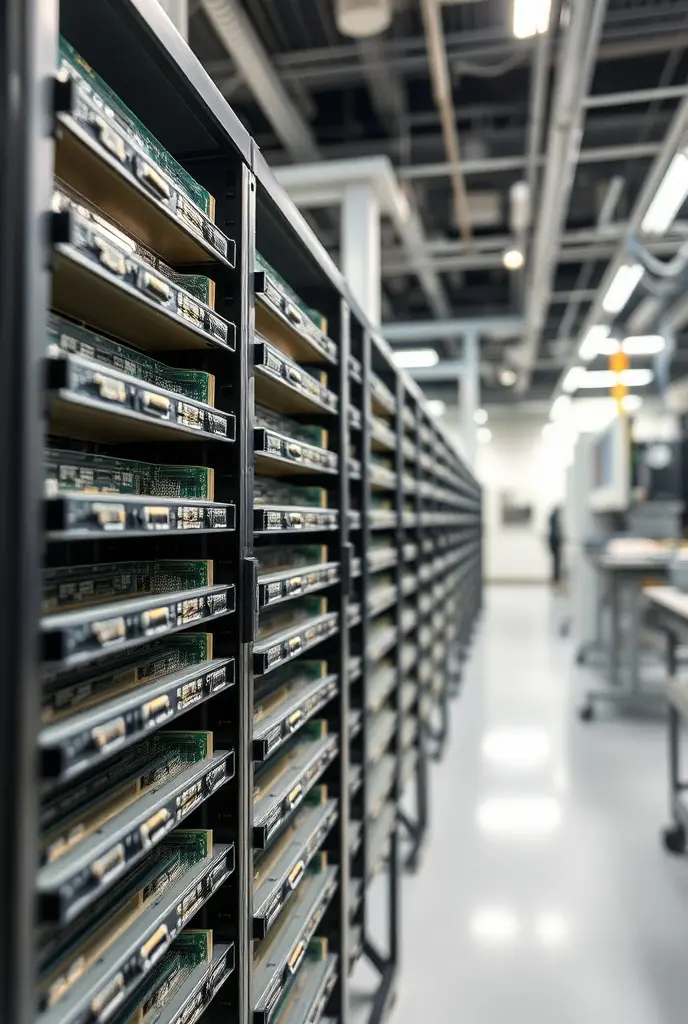
SMT-apparatuur
Antistatische verzamelbakken en rekken voor geautomatiseerde lijnen.

Opslag & Logistiek
Veilingkarren, legborden, bakken, schalen en onderdelenbakken.
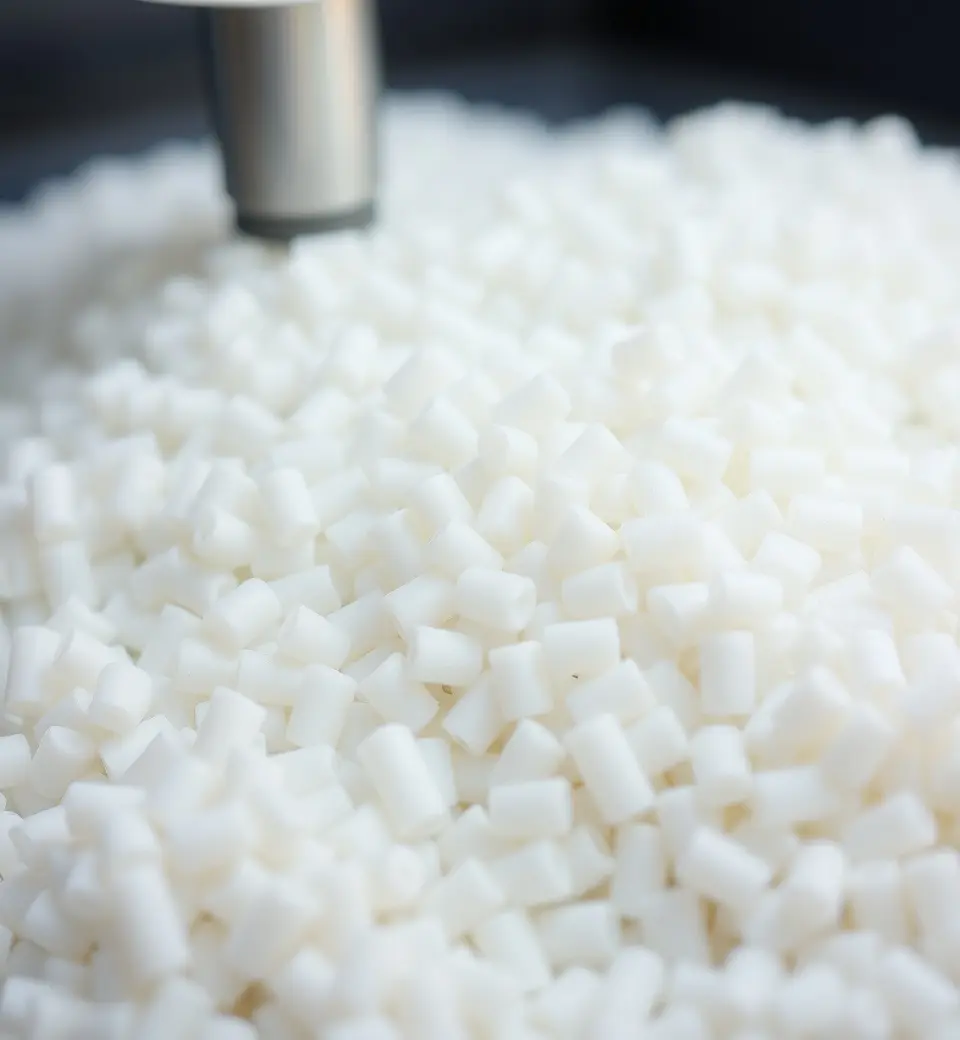
Werkplek & PBM
Antistatische stoelen, matten, polsbandjes en persoonlijke bescherming.
Maatwerkontwikkeling
Ontwikkeling van aangepaste matrijzen en speciale antistatische materialen.
ONZE OEM/ODM-VOORDELEN

Geavanceerde R&D & Materiaalinnovatie
Interne ontwikkelde antistatische materialen met nationale uitvindingsoctrooien en hittebestendigheid tot 200℃. Wij vormen niet alleen — we formuleren compounds.

Volledige productiecapaciteit
30.000㎡ fabriek met complete spuitgiet-, granulatie- en ondersteunende verwerkingssystemen voor een stabiele en efficiënte levering.

Volledig op maat gemaakt proces
Materiaalweerstand, kleur, afmetingen, logo, verpakking en certificeringen — aanpasbaar om te voldoen aan IEC61340-5-1, ANSI/ESD S20.20 of militaire normen.

Gecertificeerde Kwaliteit & Wereldwijde Naleving
“Sanwei heeft met succes aangepaste, hittebestendige, schone trays in natuurlijke kleur ontwikkeld voor onze halfgeleidermontagelijn, ter vervanging van geïmporteerde producten, waarmee uitstekende ESD-veiligheid wordt gewaarborgd en aan de hoge reinheidseisen van de werkplaats wordt voldaan.”
BEVERTROUWD DOOR WERELDWIJDE FORTUNE 500 INDUSTRIELEADERS
Onze propriëtaire ESD-oplossingen worden wereldwijd ingezet in geavanceerde productiefaciliteiten, waaronder: Intel, Motorola, Siemens, IBM, Panasonic, Nokia en Dell.
Op zoek naar aangepaste maten of bulk groothandelsprijzen?
Ondersteund door ons robuuste eigen R&D-team biedt Sanwei complete OEM/ODM-opties die zijn afgestemd op uw specifieke SMT-productielijnen of magazijnindeling. Neem vandaag nog contact op met onze specialisten voor aangepaste matrijzen, kleurcodering of geïntegreerd 5S-opslagadvies.
Veelgestelde Vragen (FAQ)
1. What is the standard for surface resistivity?
The primary standards for measuring surface resistivity are ASTM D257 en IEC 62631-3-2. ASTM D257 is a key standard that details techniques for measuring both surface and volume resistivity using a guarded electrode system. IEC 62631-3-2 serves as the international equivalent.
2. What is surface insulation resistance?
Surface Insulation Resistance (SIR) is a measure of the electrical resistance across the surface of an insulating material between two conductors. It is a key indicator of a material’s ability to resist electrical leakage and electrochemical failures, especially under humid conditions.
3. What equipment is used to test insulation resistance?
The most common equipment used to test insulation resistance is an insulation resistance tester, often generically called a Megger. These are portable, high-range resistance meters (ohmmeters) with a built-in DC generator that provide direct readings of insulation resistance.
4. What is the surface insulation resistance test?
De surface insulation resistance test is a method used to measure the resistance across a material’s surface. It’s a non-destructive test often used to evaluate the reliability of electronic assemblies. The test typically involves measuring the resistance between two comb-shaped electrodes on a test board under controlled conditions.
5. What is the surface resistance instrument?
A surface resistance instrument (or tester) is a device used to measure the electrical resistance directly on the surface of a material. It expresses resistance in ohms (Ω) and is commonly used for field audits of ESD workstations, mats, and floors to determine if materials are conductive or static dissipative.