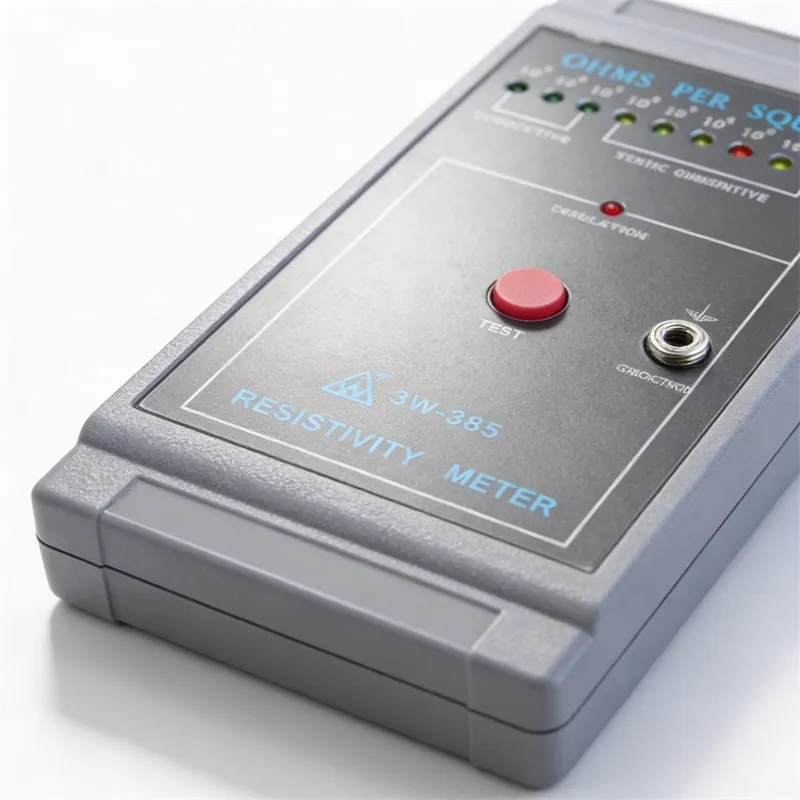
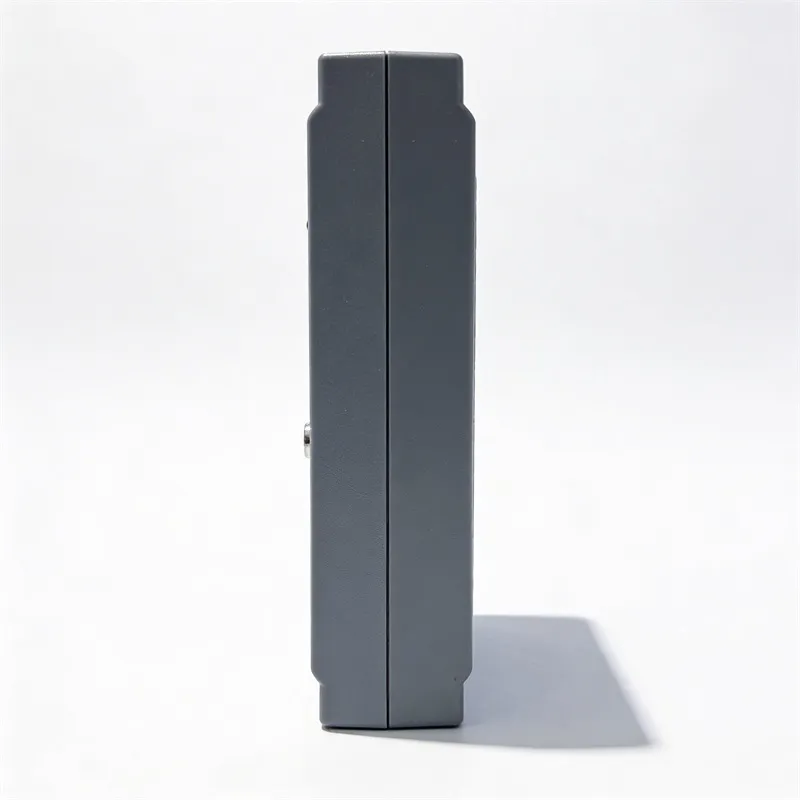
Surface Resistance Tester Handheld ESD Resistivity Measuring Instrument
Tổng quan:
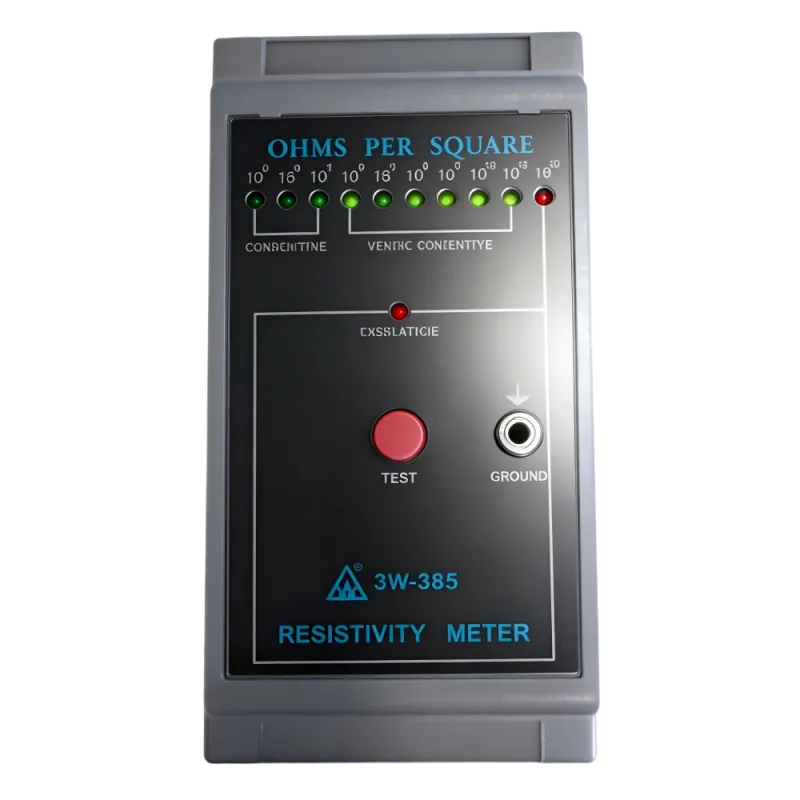
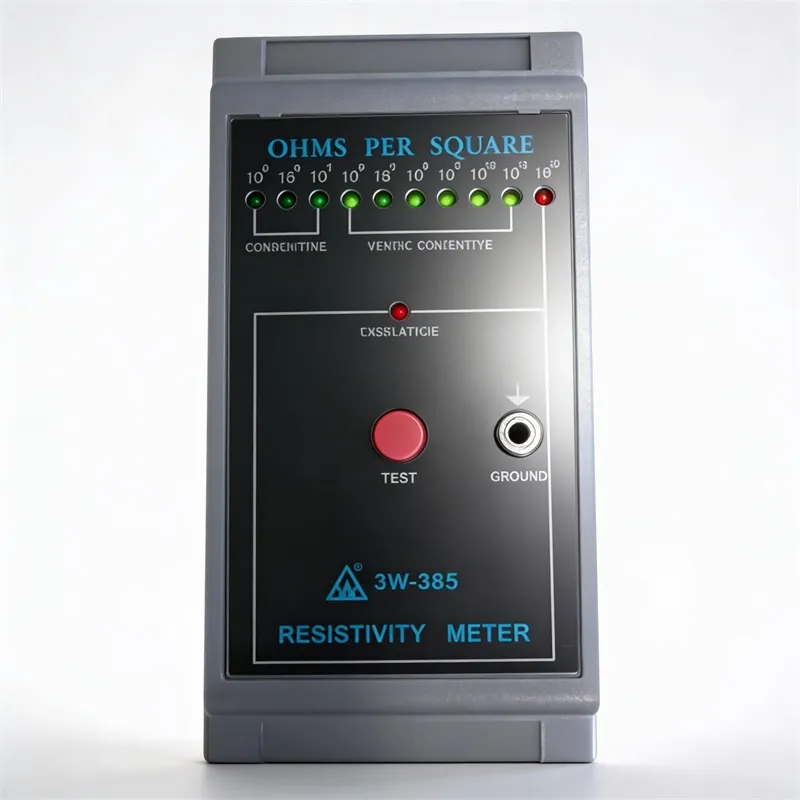
The thiết bị đo điện trở bề mặt (also referred to as an ESD surface resistance tester or surface resistivity tester) is a dedicated measurement instrument designed to accurately determine the surface resistance value of materials, thereby evaluating their conductive properties, static dissipative capability, and insulating characteristics.
Working Principle and Core Technology
The surface resistance tester operates on the principle of DC voltage resistance measurement. It applies a known voltage to the surface of the material under test and measures the resulting current flowing across the surface. The resistance value is then calculated according to Ohm’s law. Most modern instruments offer two test voltages – 10 V and 100 V – with automatic range switching: for example, when the resistance is ≥1×10⁶ Ω, the instrument applies 100 V; when the resistance lies between 1×10⁴ Ω and 1×10⁶ Ω, it uses 10 V. This ensures optimal measurement accuracy across different material types.
Wide Measurement Range and Precision Classification
A high‑quality surface resistance tester typically covers a broad measurement range from 10³ Ω to 10¹² Ω, making it suitable for testing everything from conductive materials to insulators. Different models feature various display methods – some use LED indicators to visually show the resistance range: green for conductive (10³–10⁶ Ω), yellow for static‑dissipative (10⁷–10¹¹ Ω), and red for insulative (≥10¹² Ω). Others employ LCD or OLED digital displays for more precise numeric readings. Measurement accuracy generally reaches ±10 %, with high‑end models achieving up to ±0.5 order of magnitude.
Flexible Test Methods and Electrode Configurations
The surface resistivity test method complies with multiple international standards, including ASTM D257, IEC 62631‑3‑2, và GB/T 1410. To accommodate diverse testing scenarios, a surface resistance tester is usually equipped with or offers optional electrodes: parallel electrodes for rapid screening, weighted electrodes (2.27 kg or 2.5 kg) for point‑to‑point surface resistance measurement, concentric ring electrodes for surface resistivity testing in accordance with EOS/ESD S11.11, and two‑point electrodes for small‑area measurements. The dimensions, contact pressure, and material of these electrodes are specified by the relevant standards to ensure consistency and repeatability of test results.
Multi‑Scenario Applications and Industry Value
Surface resistivity testing plays an indispensable role across various industries:
-
Electronics manufacturing – inspecting the surface resistance of anti‑static workstations, ESD flooring, and packaging materials to safeguard the production environment.
-
Semiconductor and precision instrumentation – testing wafer carriers, PCB protective coatings, and containers for static‑sensitive devices to prevent electrostatic damage.
-
Laboratories and R&D – studying the static performance of new materials and characterising their surface resistivity.
-
Warehousing and logistics – verifying the resistance of ESD trays, tote boxes, and shipping tubes to avoid electrostatic discharge during storage and transport.
-
Medical and aerospace – measuring the surface resistance of equipment housings and operating tables to ensure user safety and operational reliability.
Portable Design and Smart Features
Modern surface resistance testers are typically designed to be compact and lightweight (often 120–170 g), allowing for easy on‑site testing. Many models also incorporate data logging and transfer capabilities – exporting data via USB, generating comprehensive test reports with companion software, and some advanced versions even storing up to 50,000 measurement records. Built‑in environmental temperature and humidity sensors further enhance traceability, ensuring that every test is performed under documented conditions.
Thông số kỹ thuật
| Measurement Range | 10³-10¹²Ω |
| Accuracy | ±0.5 |
| Size (L×W×H) | 70*27*130mm |
| Weight | 0.14G |
| Power Supply | 9V |
Năng lực sản xuất ESD đẳng cấp thế giới
Khi bạn lấy nguồn hàng từ Sanwei, bạn đang hợp tác trực tiếp với nhà sản xuất OEM/ODM dẫn đầu ngành. Chúng tôi vận hành một hệ thống hiện đại Cơ sở sản xuất tích hợp rộng hơn 70.000 m² tại Khu công nghiệp trung tâm Nhạc Thanh, Chiết Giang, quản lý từng quy trình từ công thức vật liệu độc quyền đến việc đúc sản phẩm có độ chính xác cao cuối cùng.
Cân tích hợp
Cơ sở hiện đại rộng hơn 70.000 m² được trang bị máy ép phun độ chính xác cao tải trọng lớn để xử lý các đơn hàng bán buôn số lượng lớn với thời gian giao hàng ổn định.
Kiểm soát toàn trình
Quy trình khép kín hoàn toàn từ nghiên cứu và phát triển vật liệu chống tĩnh điện độc quyền, kỹ thuật khuôn mẫu kết cấu, sản xuất tự động cho đến giao hàng logistics toàn cầu nhanh chóng.
Kiểm tra nghiêm ngặt
Việc kiểm tra nguyên liệu thô nghiêm ngặt kết hợp với việc đo điện trở bề mặt tại nhiều điểm trên dây chuyền sản xuất đảm bảo sản phẩm 100% tuân thủ các hướng dẫn của tiêu chuẩn ESD quốc tế.
Chống tĩnh điện Sản phẩm và Giải pháp
Cung cấp giải pháp bảo vệ tĩnh điện toàn diện trong toàn bộ chuỗi sản xuất và vận hành của bạn.
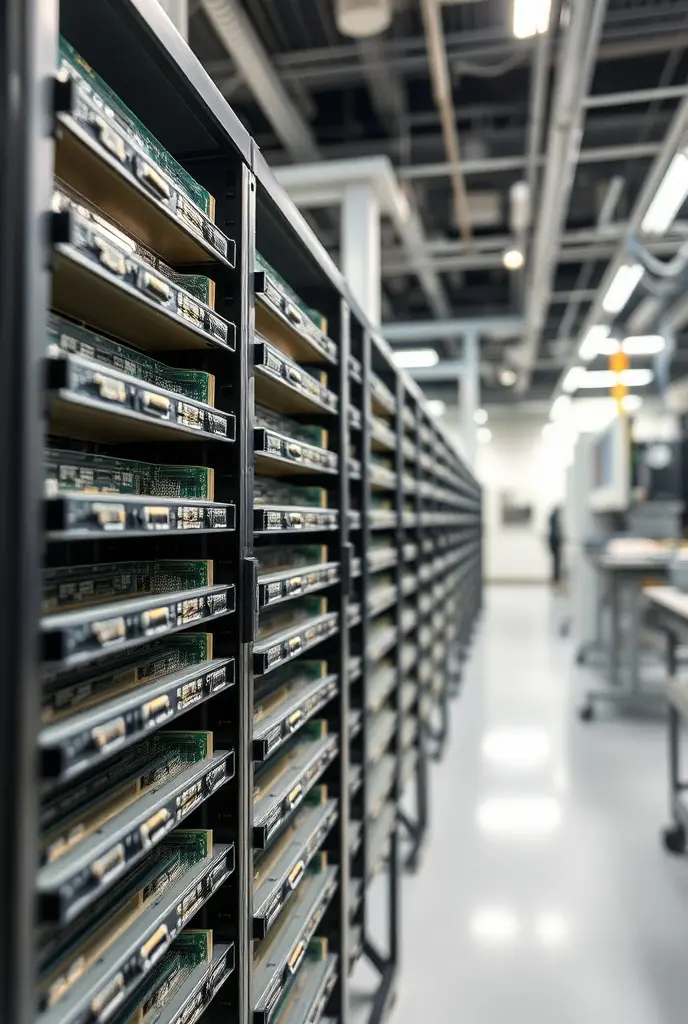
Thiết bị SMT
Hộp và giá đựng chống tĩnh điện dành cho dây chuyền tự động.

Lưu trữ & Vận vận logistics
Xe đẩy luân chuyển hàng, kệ, hộp, khay và thùng chứa linh kiện.
Trạm làm việc & PPE
Ghế chống tĩnh điện, thảm, dây đeo cổ tay và thiết bị bảo vệ cá nhân.
Phát triển tùy chỉnh
Phát triển khuôn mẫu tùy chỉnh và vật liệu chống tĩnh điện đặc biệt.
LỢI THẾ OEM/ODM CỦA CHÚNG TÔI

Nghiên cứu & Phát triển Nâng cao & Đổi mới Vật liệu
Vật liệu chống tĩnh điện tự phát triển với bằng sáng chế phát minh quốc gia và khả năng chịu nhiệt lên đến 200°C. Chúng tôi không chỉ ép nhựa — chúng tôi pha chế hợp chất.

Năng lực sản xuất toàn diện
Nhà máy rộng 30.000m² với các hệ thống ép phun, tạo hạt và gia công hỗ trợ hoàn chỉnh để cung cấp ổn định và hiệu quả.

Tùy chỉnh toàn diện quy trình
Điện trở suất, màu sắc, kích thước, logo, bao bì và chứng nhận của vật liệu — có thể tùy chỉnh để đáp ứng các tiêu chuẩn IEC61340-5-1, ANSI/ESD S20.20 hoặc tiêu chuẩn quân sự.

Chất lượng được chứng nhận & Tuân thủ toàn cầu
“Sanwei đã phát triển thành công khay màu tự nhiên sạch chịu nhiệt độ cao tùy chỉnh cho dây chuyền lắp ráp chất bán dẫn của chúng tôi, thay thế các sản phẩm nhập khẩu, đảm bảo an toàn ESD tuyệt vời và đáp ứng các yêu cầu độ sạch cao của nhà xưởng.”
ĐƯỢC TIN DÙNG BỞI CÁC TẬP ĐOÀN HÀNG ĐẦU THẾ GIỚI THUỘC FORTUNE 500
Các giải pháp ESD độc quyền của chúng tôi đang được triển khai tại các cơ sở sản xuất hàng đầu trên toàn thế giới, bao gồm: Intel, Motorola, Siemens, IBM, Panasonic, Nokia và Dell.
Bạn đang tìm kiếm kích thước tùy chỉnh hoặc giá bán buôn số lượng lớn?
Được hỗ trợ bởi đội ngũ R&D nội bộ mạnh mẽ của chúng tôi, Sanwei cung cấp các giải pháp OEM/ODM toàn diện được thiết kế riêng cho các dây chuyền sản xuất SMT hoặc bố trí kho hàng của bạn. Hãy liên hệ với các chuyên gia của chúng tôi ngay hôm nay để có khuôn tùy chỉnh, mã màu hoặc tư vấn lưu trữ 5S tích hợp.
Các câu hỏi thường gặp (FAQ)
1. What is the standard for surface resistivity?
The primary standards for measuring surface resistivity are ASTM D257 và IEC 62631-3-2. ASTM D257 is a key standard that details techniques for measuring both surface and volume resistivity using a guarded electrode system. IEC 62631-3-2 serves as the international equivalent.
2. What is surface insulation resistance?
Surface Insulation Resistance (SIR) is a measure of the electrical resistance across the surface of an insulating material between two conductors. It is a key indicator of a material’s ability to resist electrical leakage and electrochemical failures, especially under humid conditions.
3. What equipment is used to test insulation resistance?
The most common equipment used to test insulation resistance is an insulation resistance tester, often generically called a Megger. These are portable, high-range resistance meters (ohmmeters) with a built-in DC generator that provide direct readings of insulation resistance.
4. What is the surface insulation resistance test?
The surface insulation resistance test is a method used to measure the resistance across a material’s surface. It’s a non-destructive test often used to evaluate the reliability of electronic assemblies. The test typically involves measuring the resistance between two comb-shaped electrodes on a test board under controlled conditions.
5. What is the surface resistance instrument?
A surface resistance instrument (or tester) is a device used to measure the electrical resistance directly on the surface of a material. It expresses resistance in ohms (Ω) and is commonly used for field audits of ESD workstations, mats, and floors to determine if materials are conductive or static dissipative.