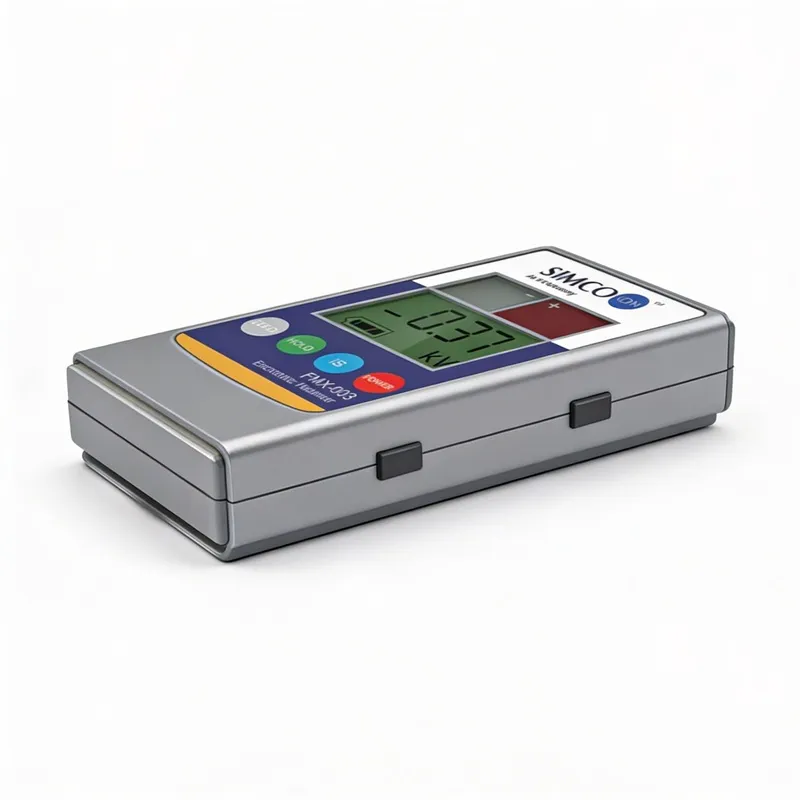
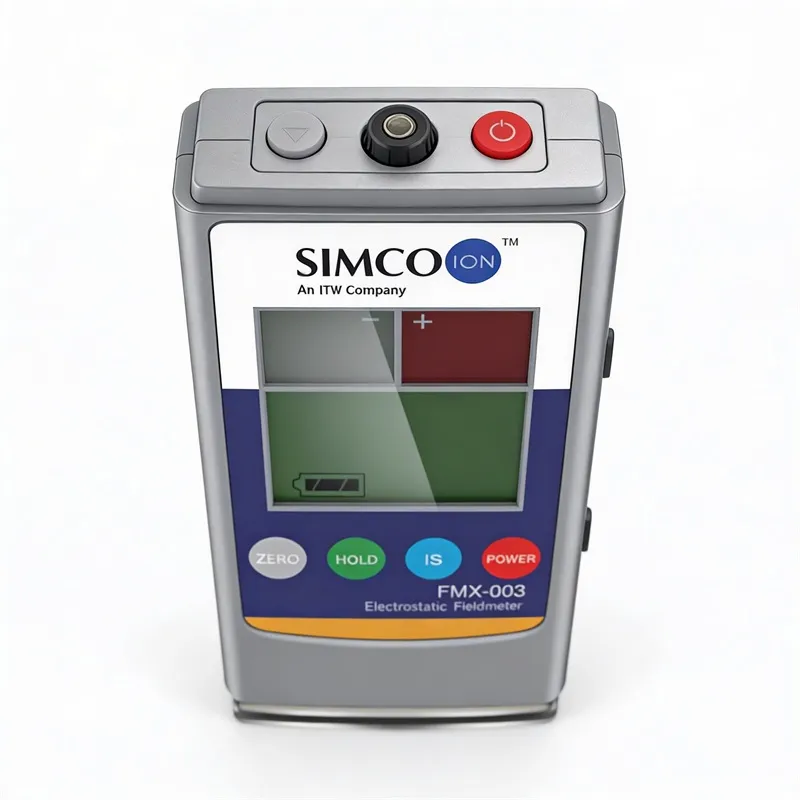
Máy đo điện trường tĩnh điện FMX-003 Máy dò điện áp tĩnh cầm tay
Tổng quan:
Introduction
If you’ve ever had to track down the source of an unexplained ESD failure or verify whether your ionisers are actually doing their job, you know that static charge is invisible but anything but harmless. That’s where an electrostatic field meter comes in. Unlike resistance testers that require physical contact, these handheld devices let you measure static charge on surfaces from a safe distance—quickly, reliably, and without disturbing the object under test. Whether you’re auditing a production floor, troubleshooting a cleanroom issue, or simply doing routine static surveys, a good electrostatic field meter is your eyes for the invisible.
What Exactly Is an Electrostatic Field Meter?
At its core, an electrostatic field meter is a non‑contact instrument that detects the electric field generated by a charged object. It works on the principle of electrostatic induction—sensing the field strength and converting it into a voltage reading, typically in kilovolts per unit distance. Because it doesn’t draw any current from the object, it can measure delicate electronic components, packaging materials, and even human body charges without affecting the charge itself. This makes it fundamentally different from a surface resistance tester, which measures ohmic conductivity.
The SIMCO FMX‑003 Electrostatic Field Meter
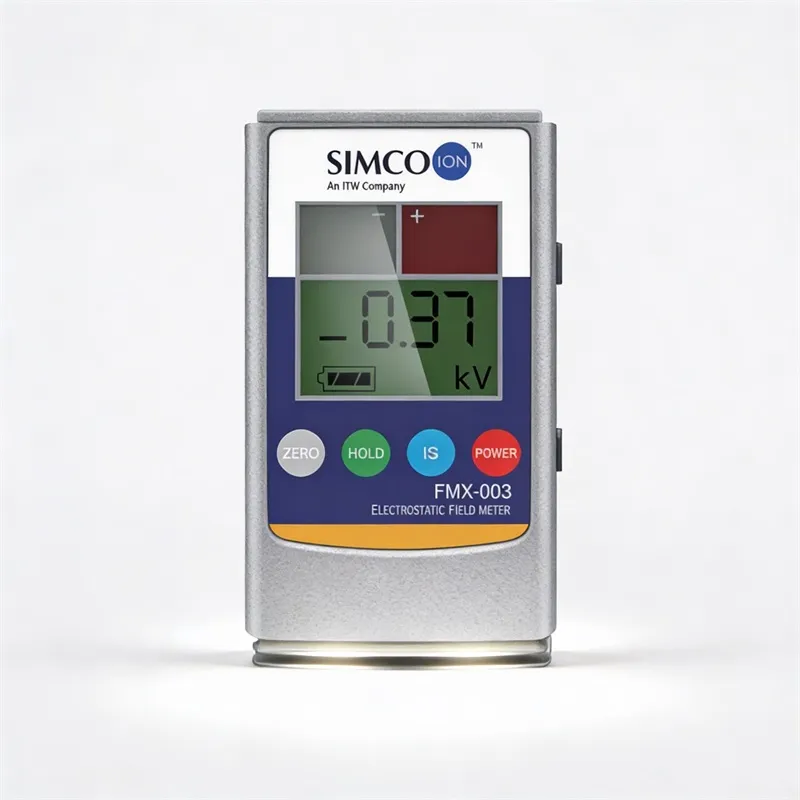
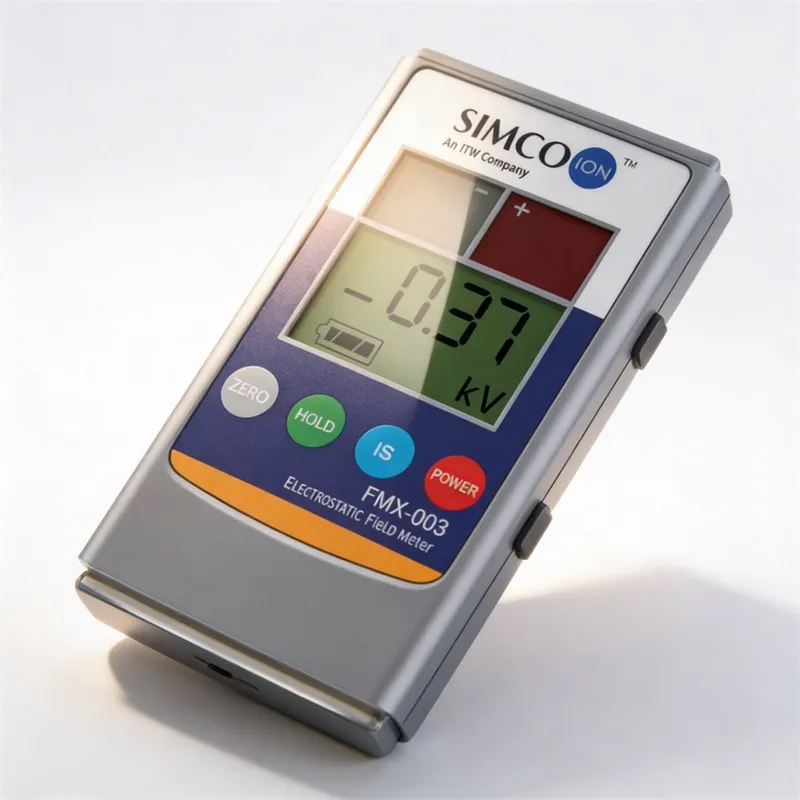
If there’s one model that has earned a reputation for reliability in the ESD community, it’s the SIMCO FMX‑003 electrostatic field meter. This pocket‑sized unit measures static voltages up to ±22 kV at a fixed distance of 1 inch (25 mm) – a distance that’s easily maintained thanks to two built‑in LED guide lights that show you exactly where to position the sensor. The display gives you both a numerical value and a colour‑coded bar graph (red for positive, blue for negative), so you can read results at a glance even in dim lighting. It also includes an ion balance mode for checking ioniser offset voltage (0 to ±220 V), a HOLD function to freeze readings, and an audible alarm for out‑of‑range measurements. Weighing just 170 g and featuring a conductive case with a grounding snap, it’s designed for real‑world field use—not just lab conditions.
Why Electrostatic Field Meter Calibration Matters
You might have the best instrument on the market, but without regular electrostatic field meter calibration, your readings are just educated guesses. Calibration ensures that the sensor’s response remains linear and accurate over time, compensating for component drift and environmental factors. Reputable manufacturers typically provide NIST‑traceable calibration certificates with each unit, and industry best practice recommends recalibration at least annually—or more frequently if the meter sees heavy use. Standards like IEC 61340 outline specific procedures for verifying performance, including test voltage levels, distance accuracy, and environmental conditions. Skipping calibration isn’t worth the risk: a false low reading could leave you with an unchecked static hazard, while a false high reading might send you chasing problems that don’t exist.
Where You’ll Actually Use a Handheld Electrostatic Field Meter
The list of applications for a handheld electrostatic field meter is longer than most people think. In electronics assembly, it’s the go‑to tool for auditing ESD workstations, checking charge buildup on PCBs and components, and verifying that packaging materials aren’t generating excessive static. In cleanrooms and medical device manufacturing, it helps prevent particle attraction—static charges can pull in dust and contaminants, compromising product sterility. In printing and converting, it identifies static issues that cause ink misregistration or material misalignment. And in R&D labs, it’s used for material characterisation and comparative studies. Essentially, any environment where static charge could affect quality, safety, or reliability is a candidate for regular electrostatic field meter use.
Thông số kỹ thuật
| Model | Measurement Range | Accuracy Range | Test Distance | Size (L×W×H) | Weight |
| 3W-7802(FMX-003) | ±20KV | 10% | 25mm | 122×65×27mm | 130G |
Năng lực sản xuất ESD đẳng cấp thế giới
Khi bạn lấy nguồn hàng từ Sanwei, bạn đang hợp tác trực tiếp với nhà sản xuất OEM/ODM dẫn đầu ngành. Chúng tôi vận hành một hệ thống hiện đại Cơ sở sản xuất tích hợp rộng hơn 70.000 m² tại Khu công nghiệp trung tâm Nhạc Thanh, Chiết Giang, quản lý từng quy trình từ công thức vật liệu độc quyền đến việc đúc sản phẩm có độ chính xác cao cuối cùng.
Cân tích hợp
Cơ sở hiện đại rộng hơn 70.000 m² được trang bị máy ép phun độ chính xác cao tải trọng lớn để xử lý các đơn hàng bán buôn số lượng lớn với thời gian giao hàng ổn định.
Kiểm soát toàn trình
Quy trình khép kín hoàn toàn từ nghiên cứu và phát triển vật liệu chống tĩnh điện độc quyền, kỹ thuật khuôn mẫu kết cấu, sản xuất tự động cho đến giao hàng logistics toàn cầu nhanh chóng.
Kiểm tra nghiêm ngặt
Việc kiểm tra nguyên liệu thô nghiêm ngặt kết hợp với việc đo điện trở bề mặt tại nhiều điểm trên dây chuyền sản xuất đảm bảo sản phẩm 100% tuân thủ các hướng dẫn của tiêu chuẩn ESD quốc tế.
Chống tĩnh điện Sản phẩm và Giải pháp
Cung cấp giải pháp bảo vệ tĩnh điện toàn diện trong toàn bộ chuỗi sản xuất và vận hành của bạn.
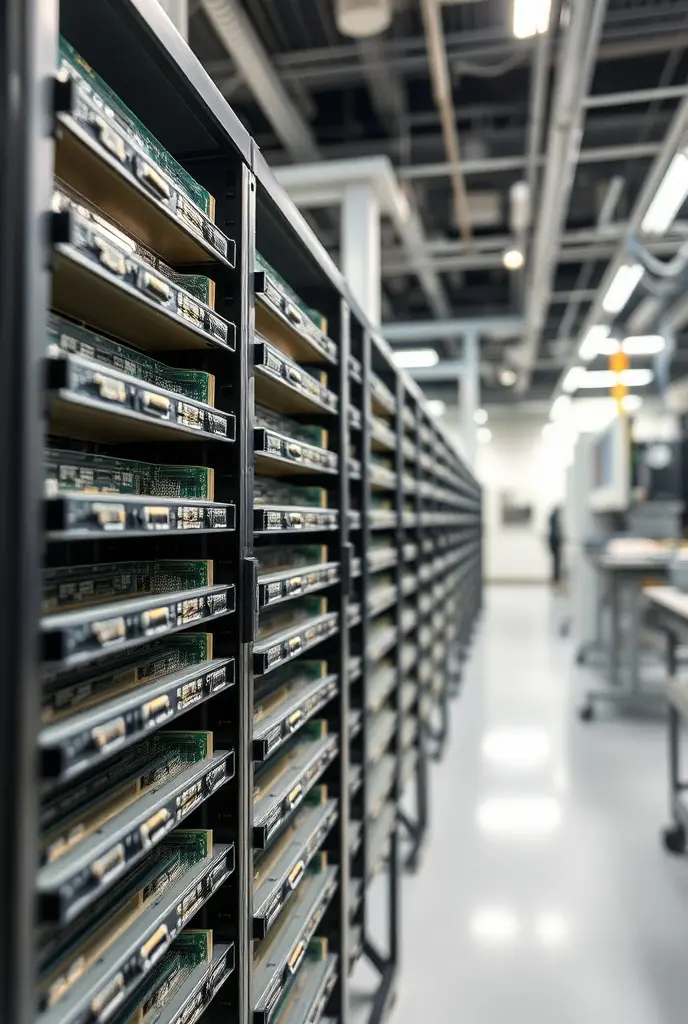
Thiết bị SMT
Hộp và giá đựng chống tĩnh điện dành cho dây chuyền tự động.

Lưu trữ & Vận vận logistics
Xe đẩy luân chuyển hàng, kệ, hộp, khay và thùng chứa linh kiện.

Trạm làm việc & PPE
Ghế chống tĩnh điện, thảm, dây đeo cổ tay và thiết bị bảo vệ cá nhân.
Phát triển tùy chỉnh
Phát triển khuôn mẫu tùy chỉnh và vật liệu chống tĩnh điện đặc biệt.
LỢI THẾ OEM/ODM CỦA CHÚNG TÔI

Nghiên cứu & Phát triển Nâng cao & Đổi mới Vật liệu
Vật liệu chống tĩnh điện tự phát triển với bằng sáng chế phát minh quốc gia và khả năng chịu nhiệt lên đến 200°C. Chúng tôi không chỉ ép nhựa — chúng tôi pha chế hợp chất.

Năng lực sản xuất toàn diện
Nhà máy rộng 30.000m² với các hệ thống ép phun, tạo hạt và gia công hỗ trợ hoàn chỉnh để cung cấp ổn định và hiệu quả.

Tùy chỉnh toàn diện quy trình
Điện trở suất, màu sắc, kích thước, logo, bao bì và chứng nhận của vật liệu — có thể tùy chỉnh để đáp ứng các tiêu chuẩn IEC61340-5-1, ANSI/ESD S20.20 hoặc tiêu chuẩn quân sự.

Chất lượng được chứng nhận & Tuân thủ toàn cầu
“Sanwei đã phát triển thành công khay màu tự nhiên sạch chịu nhiệt độ cao tùy chỉnh cho dây chuyền lắp ráp chất bán dẫn của chúng tôi, thay thế các sản phẩm nhập khẩu, đảm bảo an toàn ESD tuyệt vời và đáp ứng các yêu cầu độ sạch cao của nhà xưởng.”
ĐƯỢC TIN DÙNG BỞI CÁC TẬP ĐOÀN HÀNG ĐẦU THẾ GIỚI THUỘC FORTUNE 500
Các giải pháp ESD độc quyền của chúng tôi đang được triển khai tại các cơ sở sản xuất hàng đầu trên toàn thế giới, bao gồm: Intel, Motorola, Siemens, IBM, Panasonic, Nokia và Dell.
Bạn đang tìm kiếm kích thước tùy chỉnh hoặc giá bán buôn số lượng lớn?
Được hỗ trợ bởi đội ngũ R&D nội bộ mạnh mẽ của chúng tôi, Sanwei cung cấp các giải pháp OEM/ODM toàn diện được thiết kế riêng cho các dây chuyền sản xuất SMT hoặc bố trí kho hàng của bạn. Hãy liên hệ với các chuyên gia của chúng tôi ngay hôm nay để có khuôn tùy chỉnh, mã màu hoặc tư vấn lưu trữ 5S tích hợp.
Các câu hỏi thường gặp (FAQ)
1. What is an electrostatic field meter used for?
It detects and measures static charge on surfaces without touching them, helping you find ESD risks in manufacturing, cleanrooms, packaging, and labs.
2. What is the principle of electrostatic field meter?
It senses the electric field from a charged object by induction – the field induces a charge on the meter’s sensor, which is then converted into a voltage reading.
3. What is the electrostatic field meter FMX 004?
It’s a compact handheld model from Simco‑Ion, measuring up to ±30 kV at 1‑inch distance, with LED guides, colour‑coded display, and ion‑balance mode.
4. How does the electrostatic field meter work?
It places a sensor near the charged surface, picks up the field strength, converts that into an electrical signal, and displays the result as a voltage value.
5. What is the difference between electrostatic field meter and electrostatic voltmeter?
A field meter measures the overall field over a larger area; a voltmeter measures the exact voltage at a tiny, specific spot. Field meters are quicker for surveys; voltmeters are more precise for detailed analysis.