جهاز قياس المجال الكهروستاتيكي FMX-003 كاشف الجهد الاستاتيكي المحمول
نظرة عامة
Introduction
If you’ve ever had to track down the source of an unexplained ESD failure or verify whether your ionisers are actually doing their job, you know that static charge is invisible but anything but harmless. That’s where an مقياس المجال الكهروستاتيكي comes in. Unlike resistance testers that require physical contact, these handheld devices let you measure static charge on surfaces from a safe distance—quickly, reliably, and without disturbing the object under test. Whether you’re auditing a production floor, troubleshooting a cleanroom issue, or simply doing routine static surveys, a good electrostatic field meter is your eyes for the invisible.
What Exactly Is an Electrostatic Field Meter?
At its core, an مقياس المجال الكهروستاتيكي is a non‑contact instrument that detects the electric field generated by a charged object. It works on the principle of electrostatic induction—sensing the field strength and converting it into a voltage reading, typically in kilovolts per unit distance. Because it doesn’t draw any current from the object, it can measure delicate electronic components, packaging materials, and even human body charges without affecting the charge itself. This makes it fundamentally different from a surface resistance tester, which measures ohmic conductivity.
The SIMCO FMX‑003 Electrostatic Field Meter
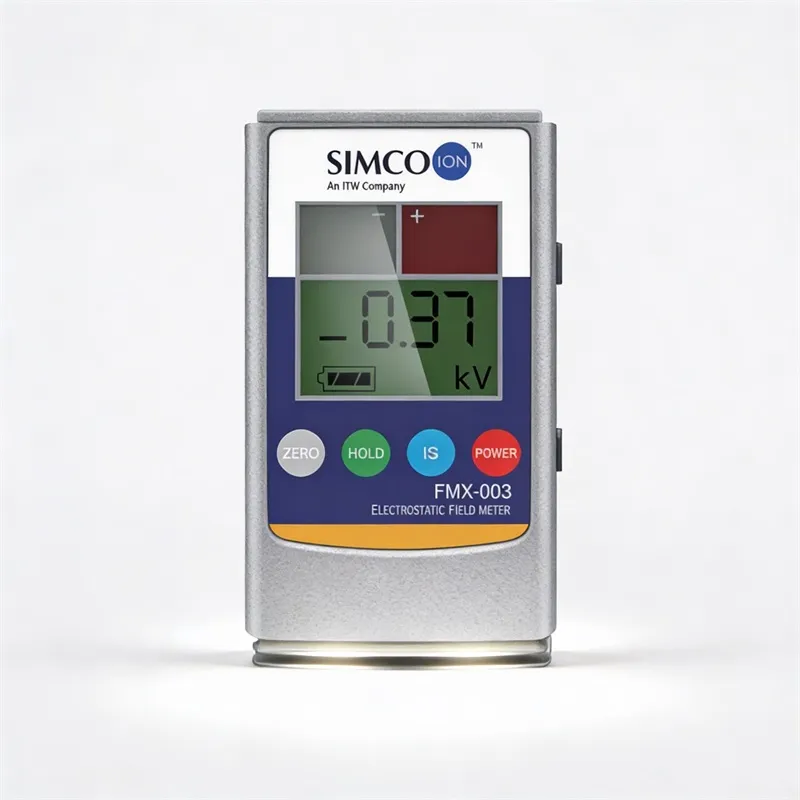
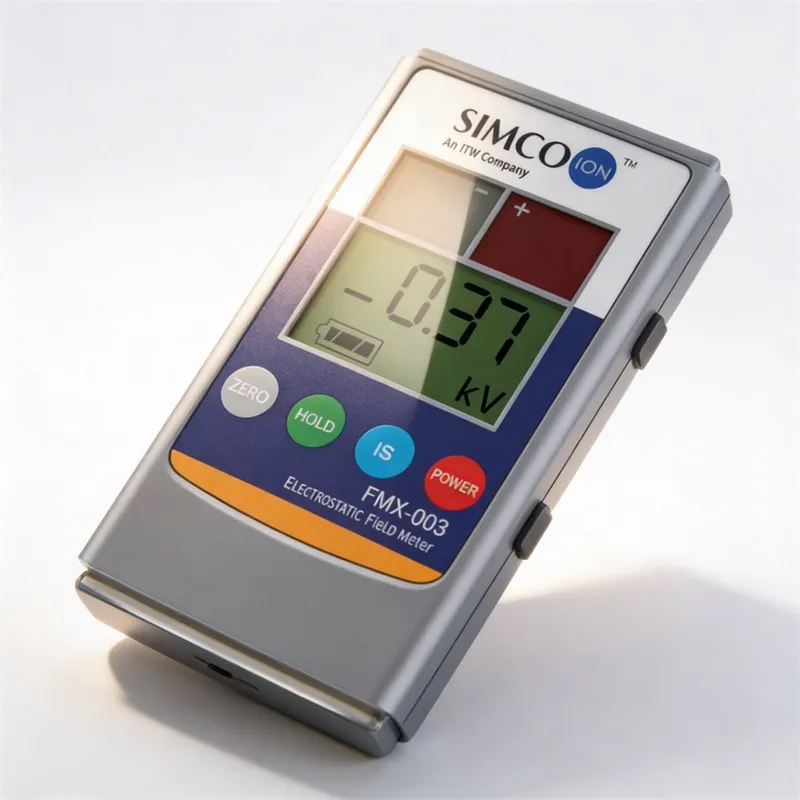
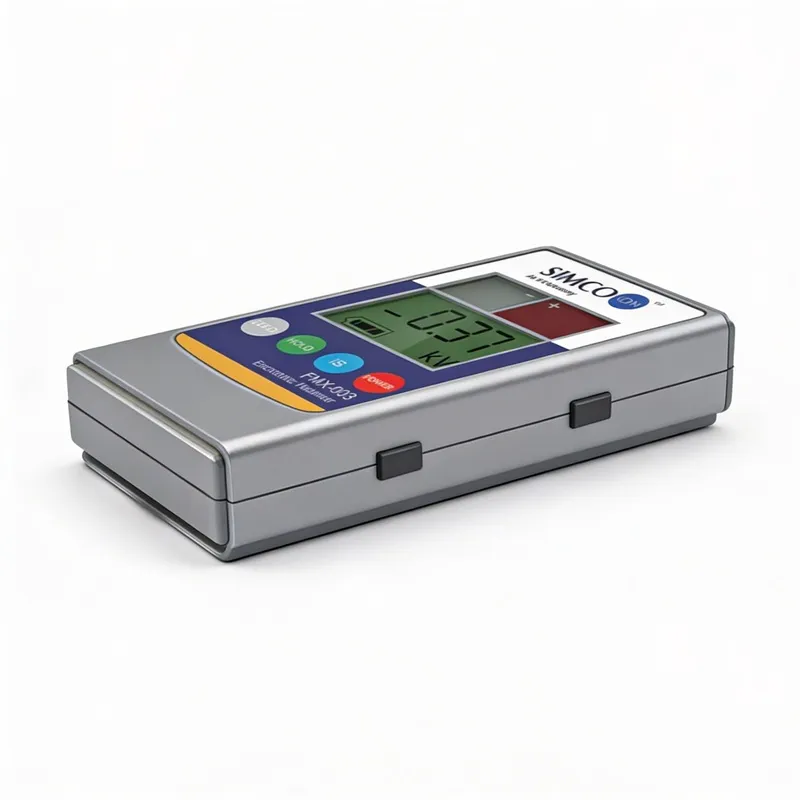
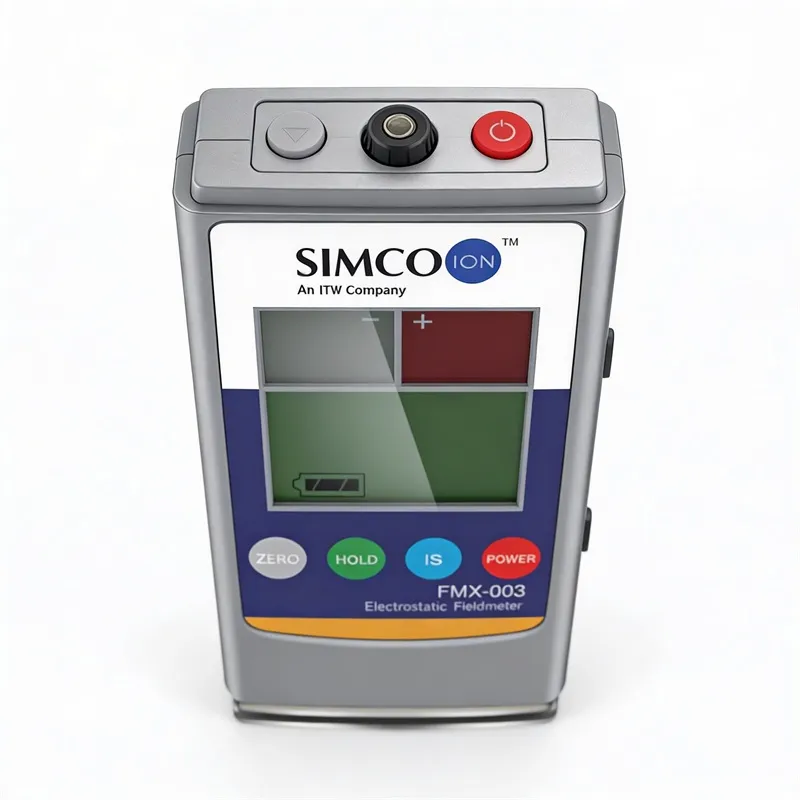
If there’s one model that has earned a reputation for reliability in the ESD community, it’s the SIMCO FMX‑003 electrostatic field meter. This pocket‑sized unit measures static voltages up to ±22 kV at a fixed distance of 1 inch (25 mm) – a distance that’s easily maintained thanks to two built‑in LED guide lights that show you exactly where to position the sensor. The display gives you both a numerical value and a colour‑coded bar graph (red for positive, blue for negative), so you can read results at a glance even in dim lighting. It also includes an ion balance mode for checking ioniser offset voltage (0 to ±220 V), a HOLD function to freeze readings, and an audible alarm for out‑of‑range measurements. Weighing just 170 g and featuring a conductive case with a grounding snap, it’s designed for real‑world field use—not just lab conditions.
Why Electrostatic Field Meter Calibration Matters
You might have the best instrument on the market, but without regular electrostatic field meter calibration, your readings are just educated guesses. Calibration ensures that the sensor’s response remains linear and accurate over time, compensating for component drift and environmental factors. Reputable manufacturers typically provide NIST‑traceable calibration certificates with each unit, and industry best practice recommends recalibration at least annually—or more frequently if the meter sees heavy use. Standards like IEC 61340 outline specific procedures for verifying performance, including test voltage levels, distance accuracy, and environmental conditions. Skipping calibration isn’t worth the risk: a false low reading could leave you with an unchecked static hazard, while a false high reading might send you chasing problems that don’t exist.
Where You’ll Actually Use a Handheld Electrostatic Field Meter
The list of applications for a handheld electrostatic field meter is longer than most people think. In electronics assembly, it’s the go‑to tool for auditing ESD workstations, checking charge buildup on PCBs and components, and verifying that packaging materials aren’t generating excessive static. In cleanrooms and medical device manufacturing, it helps prevent particle attraction—static charges can pull in dust and contaminants, compromising product sterility. In printing and converting, it identifies static issues that cause ink misregistration or material misalignment. And in R&D labs, it’s used for material characterisation and comparative studies. Essentially, any environment where static charge could affect quality, safety, or reliability is a candidate for regular electrostatic field meter use.
المواصفات الفنية
| نموذج | نطاق القياس | نطاق الدقة | مسافة الاختبار | الحجم (الطول × العرض × الارتفاع) | وزن |
| 3W-7802(FMX-003) | ±20 كيلوفولت | 10% | ٢٥ ملم | ١٢٢×٦٥×٢٧ ملم | 130ج |
قدرة تصنيع عالمية المستوى لمقاومة التفريغ الكهروستاتيكي
عندما تشتري من سانواي، فأنت تشارك مباشرة شركة مصنعة رائدة في مجال التصنيع الأصلي وتصميم التصنيع الأصلي (OEM/ODM). نحن نشغل مركزًا حديثًا منشأة إنتاج متكاملة مساحتها أكثر من 70,000 متر مربع في مجمع يويتشينغ المركزي الصناعي بمقاطعة تشجيانغ، حيث يتم إدارة كل عملية بدقة، بدءاً من تركيبة المواد الخاصة وحتى تشكيل المنتج النهائي عالي الدقة.
مقياس متكامل
قاعدة مصنع متطورة بمساحة تزيد عن 70,000 متر مربع مجهزة بمكائن حقن بلاستيك دقيقة وعالية التحمل للتعامل مع طلبات الجملة الكبيرة بأوقات تسليم مستقرة.
التحكم كامل السلسلة
تحكم داخلي بالكامل يشمل البحث والتطوير للمواد الخاصة المضادة للكهرباء الساكنة، هندسة القوالب الهيكلية، التصنيع الآلي، والتسليم اللوجستي العالمي السريع.
فحص دقيق
يضمن الاختبار الدقيق للمواد الخام، إلى جانب قياس المقاومة السطحية متعدد النقاط على خط الإنتاج، توافق منتج 100% مع المبادئ التوجيهية للمعايير الدولية المتعلقة بالتحميل الكهروستاتيكي (ESD).
مضاد للكهرباء الساكنة المنتجات والحلول
توفير حماية شاملة ضد الكهرباء الساكنة عبر دورة التصنيع والتشغيل بأكملها.
معدات SMT
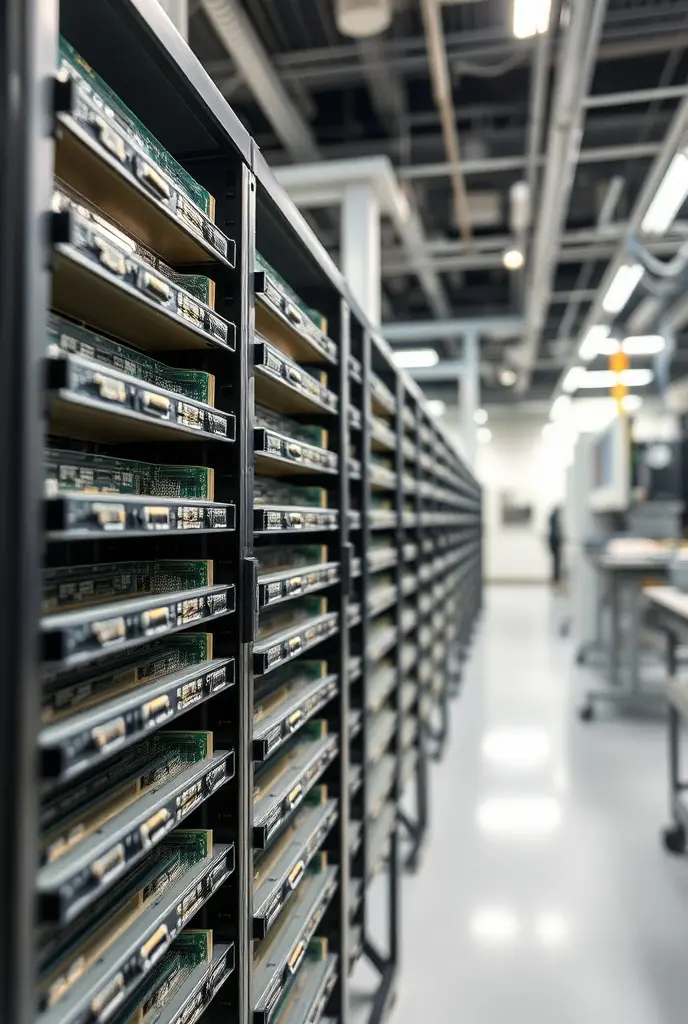
صناديق ورفوف مانعة للشحنات الساكنة للخطوط المؤتمتة.

التخزين والخدمات اللوجستية
عربات دوارة، أرفف، صناديق، صواني، وحاويات مكونات.

محطة العمل ومعدات الوقاية الشخصية
كراسي مقاومة للكهرباء الساكنة، وحصائر، وأربطة معصم، وحماية شخصية.
تطوير مخصص
تطوير قوالب مخصصة ومواد خاصة مضادة للكهرباء الساكنة.
مزايا OEM/ODM لدينا

البحث والتطوير المتقدم وابتكار المواد
مواد مضادة للكهرباء الساكنة مطورة داخلياً حاصلة على براءة اختراع وطنية للاختراع ومقاومة للحرارة حتى 200 درجة مئوية. نحن لا نقوم بالتشكيل فحسب، بل نُركّب المركبات أيضاً.

الإنتاج بسعة كاملة
مصنع مساحة 30,000 متر مربع يضم أنظمة كاملة للحقن والقولبة، والحبيبات، ومعالجة داعمة لتوريد مستقر وفعال.

تخصيص العملية الكاملة
مقاومة المادة، واللون، والحجم، والشعار، والتعبئة والتغليف، والشهادات — كلها قابلة للتخصيص لتلبي معايير IEC61340-5-1، أو ANSI/ESD S20.20، أو المعايير العسكرية.

الجودة المعتمدة والامتثال العالمي
“نجحت شركة سانوي في تطوير صوانٍ مخصصة ذات لون طبيعي ونظيف ومقاومة درجات الحرارة العالية لخط تجميع أشباه الموصلات الخاص بنا، مما أدى إلى استبدال المنتجات المستوردة، وضمان سلامة ممتازة ضد التفريغ الكهروستاتيكي (ESD)، وتلبية متطلبات النظافة العالية للورشة.”
موثوق به من قبل قادة الصناعة العالمية في قائمة فورتشن 500
يتم نشر حلولنا الخاصة للتحكم في الشحنات الكهروستاتيكية (ESD) في مرافق الإنتاج النخبوية في جميع أنحاء العالم، بما في ذلك: إنتل، موتورولا، سيمنز، آي بي إم، باناسونيك، نوكيا، وديل.
هل تبحث عن مقاسات مخصصة أو أسعار الجملة للكميات الكبيرة؟
مدعومة بفريق البحث والتطوير القوي الخاص بنا، توفر سانوي خيارات تصنيع المعدات الأصلية (OEM) والتصميم الأصلي (ODM) الكاملة المصممة خصيصاً لخطوط إنتاج تقنية التثبيت السطحي (SMT) أو تخطيط المستودعات لديك. اتصل بأخصائيينا اليوم للحصول على قوالب مخصصة، أو ترميز بالألوان، أو استشارات متكاملة لتخزين نظام الـ 5S.
الأسئلة الشائعة
1. What is an electrostatic field meter used for?
It detects and measures static charge on surfaces without touching them, helping you find ESD risks in manufacturing, cleanrooms, packaging, and labs.
2. What is the principle of electrostatic field meter?
It senses the electric field from a charged object by induction – the field induces a charge on the meter’s sensor, which is then converted into a voltage reading.
3. What is the electrostatic field meter FMX 004?
It’s a compact handheld model from Simco‑Ion, measuring up to ±30 kV at 1‑inch distance, with LED guides, colour‑coded display, and ion‑balance mode.
4. How does the electrostatic field meter work?
It places a sensor near the charged surface, picks up the field strength, converts that into an electrical signal, and displays the result as a voltage value.
5. What is the difference between electrostatic field meter and electrostatic voltmeter?
A field meter measures the overall field over a larger area; a voltmeter measures the exact voltage at a tiny, specific spot. Field meters are quicker for surveys; voltmeters are more precise for detailed analysis.