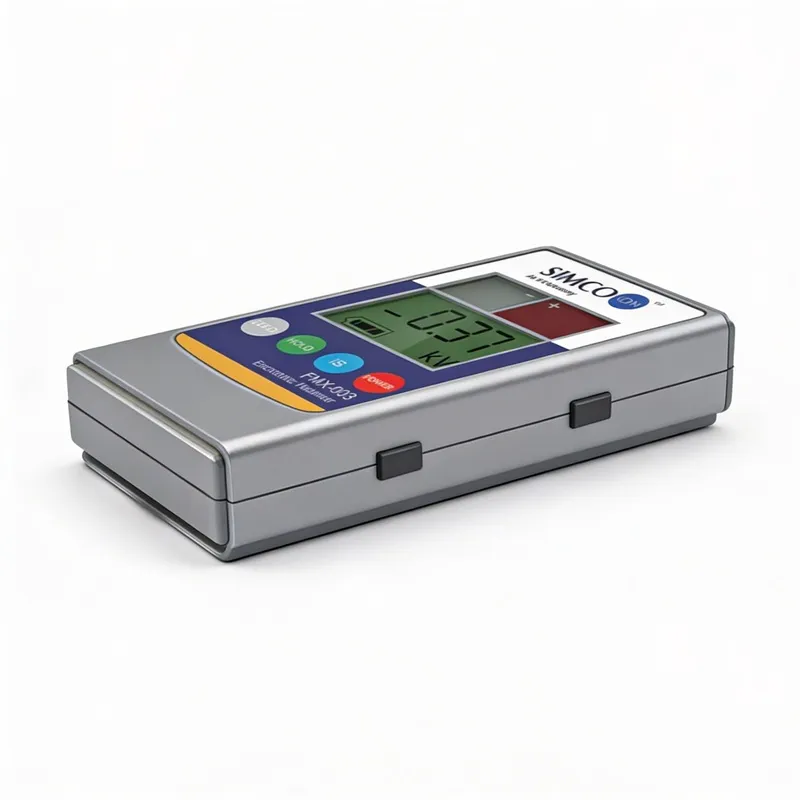
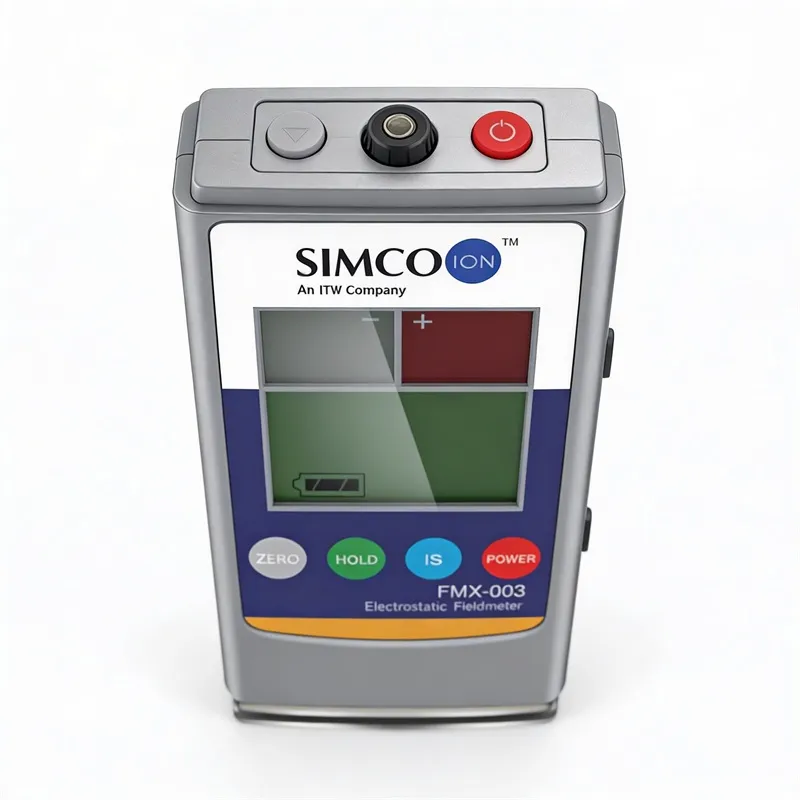
Medidor de Campo Eletrostático FMX-003 Detector de Tensão Estática Portátil
Visão geral:
Introduction
If you’ve ever had to track down the source of an unexplained ESD failure or verify whether your ionisers are actually doing their job, you know that static charge is invisible but anything but harmless. That’s where an electrostatic field meter comes in. Unlike resistance testers that require physical contact, these handheld devices let you measure static charge on surfaces from a safe distance—quickly, reliably, and without disturbing the object under test. Whether you’re auditing a production floor, troubleshooting a cleanroom issue, or simply doing routine static surveys, a good electrostatic field meter is your eyes for the invisible.
What Exactly Is an Electrostatic Field Meter?
At its core, an electrostatic field meter is a non‑contact instrument that detects the electric field generated by a charged object. It works on the principle of electrostatic induction—sensing the field strength and converting it into a voltage reading, typically in kilovolts per unit distance. Because it doesn’t draw any current from the object, it can measure delicate electronic components, packaging materials, and even human body charges without affecting the charge itself. This makes it fundamentally different from a surface resistance tester, which measures ohmic conductivity.
The SIMCO FMX‑003 Electrostatic Field Meter
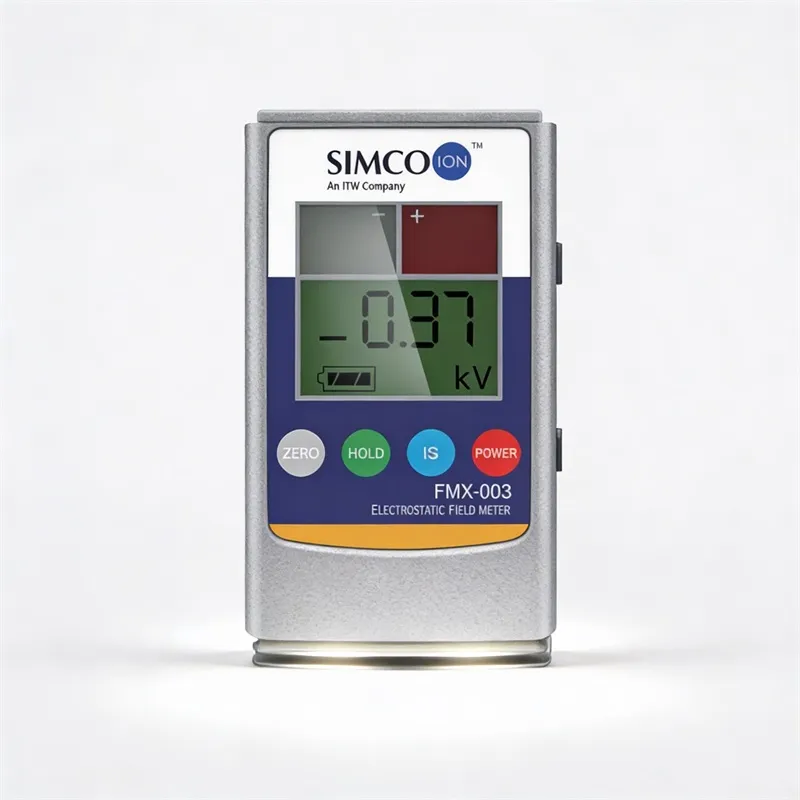
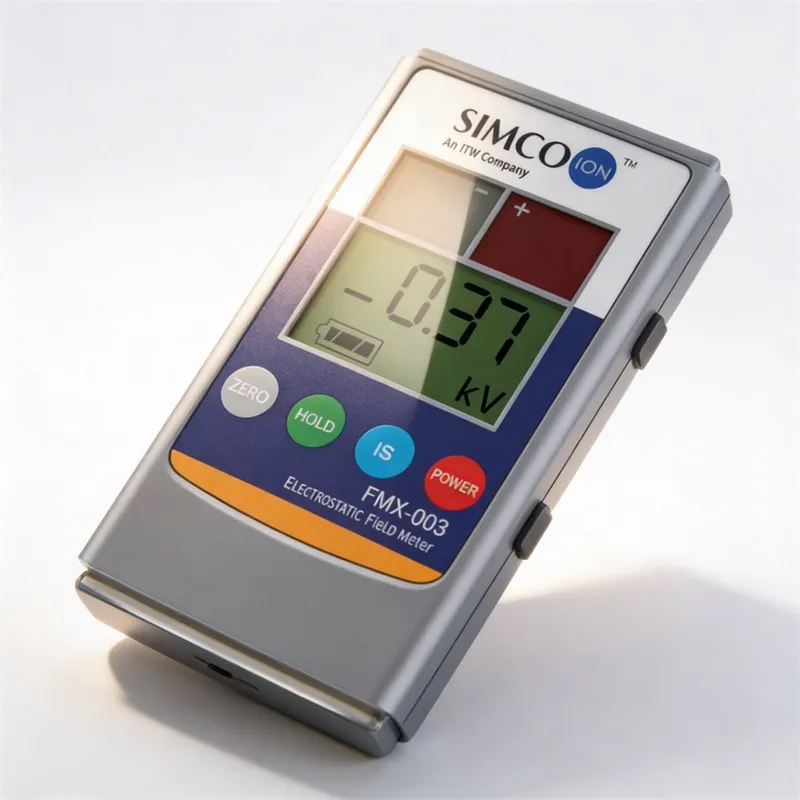
If there’s one model that has earned a reputation for reliability in the ESD community, it’s the SIMCO FMX‑003 electrostatic field meter. This pocket‑sized unit measures static voltages up to ±22 kV at a fixed distance of 1 inch (25 mm) – a distance that’s easily maintained thanks to two built‑in LED guide lights that show you exactly where to position the sensor. The display gives you both a numerical value and a colour‑coded bar graph (red for positive, blue for negative), so you can read results at a glance even in dim lighting. It also includes an ion balance mode for checking ioniser offset voltage (0 to ±220 V), a HOLD function to freeze readings, and an audible alarm for out‑of‑range measurements. Weighing just 170 g and featuring a conductive case with a grounding snap, it’s designed for real‑world field use—not just lab conditions.
Why Electrostatic Field Meter Calibration Matters
You might have the best instrument on the market, but without regular electrostatic field meter calibration, your readings are just educated guesses. Calibration ensures that the sensor’s response remains linear and accurate over time, compensating for component drift and environmental factors. Reputable manufacturers typically provide NIST‑traceable calibration certificates with each unit, and industry best practice recommends recalibration at least annually—or more frequently if the meter sees heavy use. Standards like IEC 61340 outline specific procedures for verifying performance, including test voltage levels, distance accuracy, and environmental conditions. Skipping calibration isn’t worth the risk: a false low reading could leave you with an unchecked static hazard, while a false high reading might send you chasing problems that don’t exist.
Where You’ll Actually Use a Handheld Electrostatic Field Meter
The list of applications for a handheld electrostatic field meter is longer than most people think. In electronics assembly, it’s the go‑to tool for auditing ESD workstations, checking charge buildup on PCBs and components, and verifying that packaging materials aren’t generating excessive static. In cleanrooms and medical device manufacturing, it helps prevent particle attraction—static charges can pull in dust and contaminants, compromising product sterility. In printing and converting, it identifies static issues that cause ink misregistration or material misalignment. And in R&D labs, it’s used for material characterisation and comparative studies. Essentially, any environment where static charge could affect quality, safety, or reliability is a candidate for regular electrostatic field meter use.
Especificação Técnica
| Model | Measurement Range | Accuracy Range | Test Distance | Size (L×W×H) | Weight |
| 3W-7802(FMX-003) | ±20KV | 10% | 25mm | 122×65×27mm | 130G |
Capacidade de Fabrico ESD de Classe Mundial
Ao recorrer à Sanwei, está a fazer uma parceria direta com um fabricante OEM/ODM líder de mercado. Operamos um serviço topo de gama Instalação de produção integrada com mais de 70.000 m² no Parque Industrial Central de Yueqing, em Zhejiang, gerindo cada processo individual, desde a formulação de material próprio até à moldagem final de alta precisão.
Balança integrada
Instalação avançada com mais de 70.000 m², equipada com máquinas de moldagem por injeção de precisão para trabalhos pesados, capaz de gerir encomendas grossistas em grandes quantidades com prazos de entrega estáveis.
Controlo de Cadeia Completa
Controlo interno completo que abrange a I&D de material antiestático proprietário, engenharia de moldes estruturais, fabrico automatizado e entrega logística global rápida.
Inspecção Rigorosa
Os rigorosos testes às matérias-primas, combinados com medições multiponto da resistividade superficial na linha de produção, garantem a conformidade do 100% com as diretrizes das normas internacionais de ESD.
Anti-estático Produtos e Soluções
Fornecer proteção eletrostática abrangente em todo o seu ciclo de vida de fabrico e operacional.
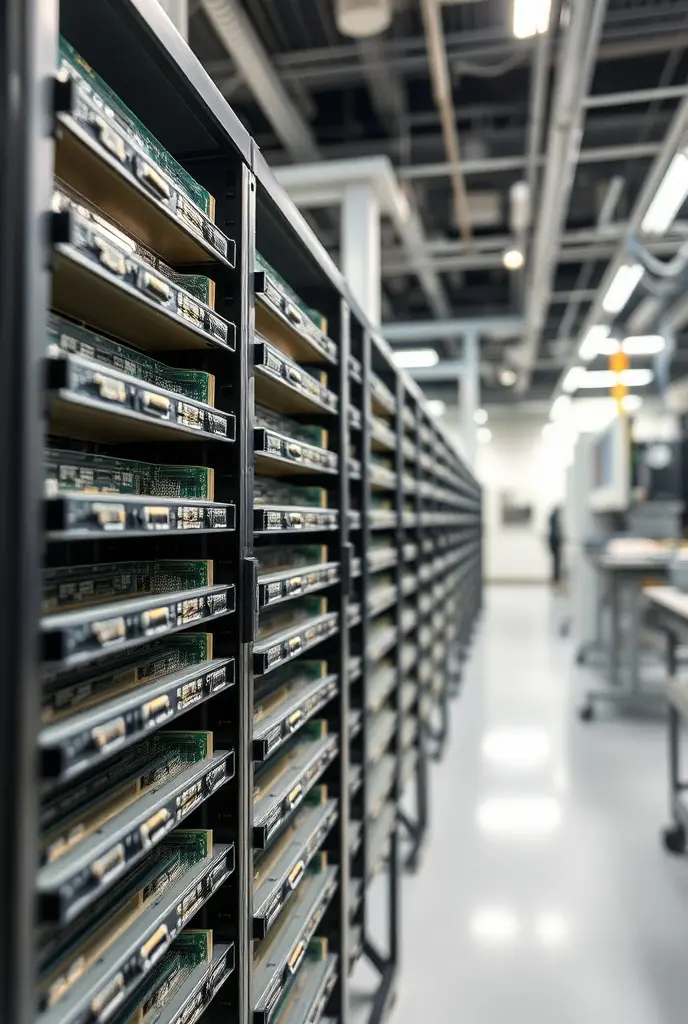
Equipamento SMT
Caixas de recolha e suportes anti-estáticos para linhas automatizadas.

Armazenamento e Logística
Carrinhos de rotação, prateleiras, caixas, tabuleiros e contentores de componentes.

Posto de trabalho e EPI
Cadeiras anti-estáticas, tapetes, braceletes e proteção pessoal.
Desenvolvimento à medida
Desenvolvimento de moldes personalizados e materiais anti-estáticos especiais.
AS NOSSAS VANTAGENS OEM/ODM

Investigação e Desenvolvimento Avançados e Inovação de Materiais
Materiais antiestáticos desenvolvidos internamente com patentes de invenção nacionais e resistência ao calor até 200℃. Nós não nos limitamos a moldar — formulamos compostos.

Capacidade de Produção em Escala Total
Fábrica de 30.000 m² com sistemas completos de moldagem por injeção, granulação e processamento de apoio para um fornecimento estável e eficiente.

Personalização de Processo Completo
Resistividade do material, cor, tamanho, logótipo, embalagem e certificações — personalizáveis para cumprir as normas IEC61340-5-1, ANSI/ESD S20.20 ou normas militares.

Qualidade Certificada e Conformidade Global
“A Sanwei desenvolveu com sucesso tabuleiros personalizados de cor natural limpa, resistentes a altas temperaturas, para a nossa linha de montagem de semicondutores, substituindo produtos importados, garantindo uma excelente segurança ESD e cumprindo os elevados requisitos de limpeza da oficina.”
UTILIZADO POR LÍDERES GLOBAIS DA FORTUNE 500
As nossas soluções proprietárias de ESD estão implementadas em instalações de produção de elite em todo o mundo, incluindo: Intel, Motorola, Siemens, IBM, Panasonic, Nokia e Dell.
Procura tamanhos personalizados ou preços de revenda por grosso?
Apoiada pela nossa robusta equipa interna de I&D, a Sanwei disponibiliza opções completas de OEM/ODM adaptadas às suas linhas de produção SMT específicas ou ao layout do seu armazém. Contacte hoje os nossos especialistas para moldes personalizados, códigos de cores ou consultoria integrada de armazenamento 5S.
Perguntas Frequentes (FAQ)
1. What is an electrostatic field meter used for?
It detects and measures static charge on surfaces without touching them, helping you find ESD risks in manufacturing, cleanrooms, packaging, and labs.
2. What is the principle of electrostatic field meter?
It senses the electric field from a charged object by induction – the field induces a charge on the meter’s sensor, which is then converted into a voltage reading.
3. What is the electrostatic field meter FMX 004?
It’s a compact handheld model from Simco‑Ion, measuring up to ±30 kV at 1‑inch distance, with LED guides, colour‑coded display, and ion‑balance mode.
4. How does the electrostatic field meter work?
It places a sensor near the charged surface, picks up the field strength, converts that into an electrical signal, and displays the result as a voltage value.
5. What is the difference between electrostatic field meter and electrostatic voltmeter?
A field meter measures the overall field over a larger area; a voltmeter measures the exact voltage at a tiny, specific spot. Field meters are quicker for surveys; voltmeters are more precise for detailed analysis.