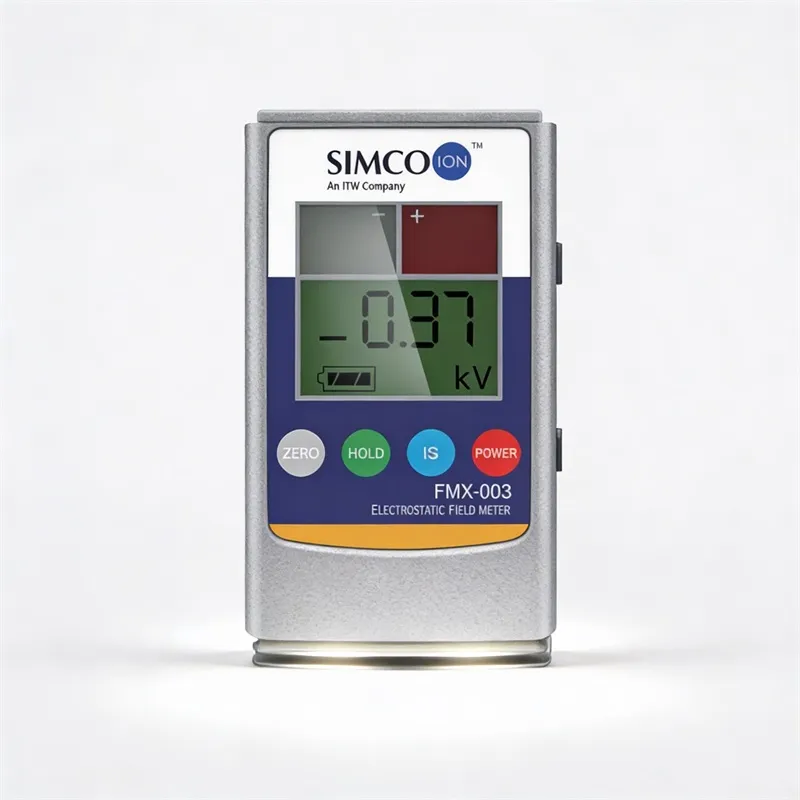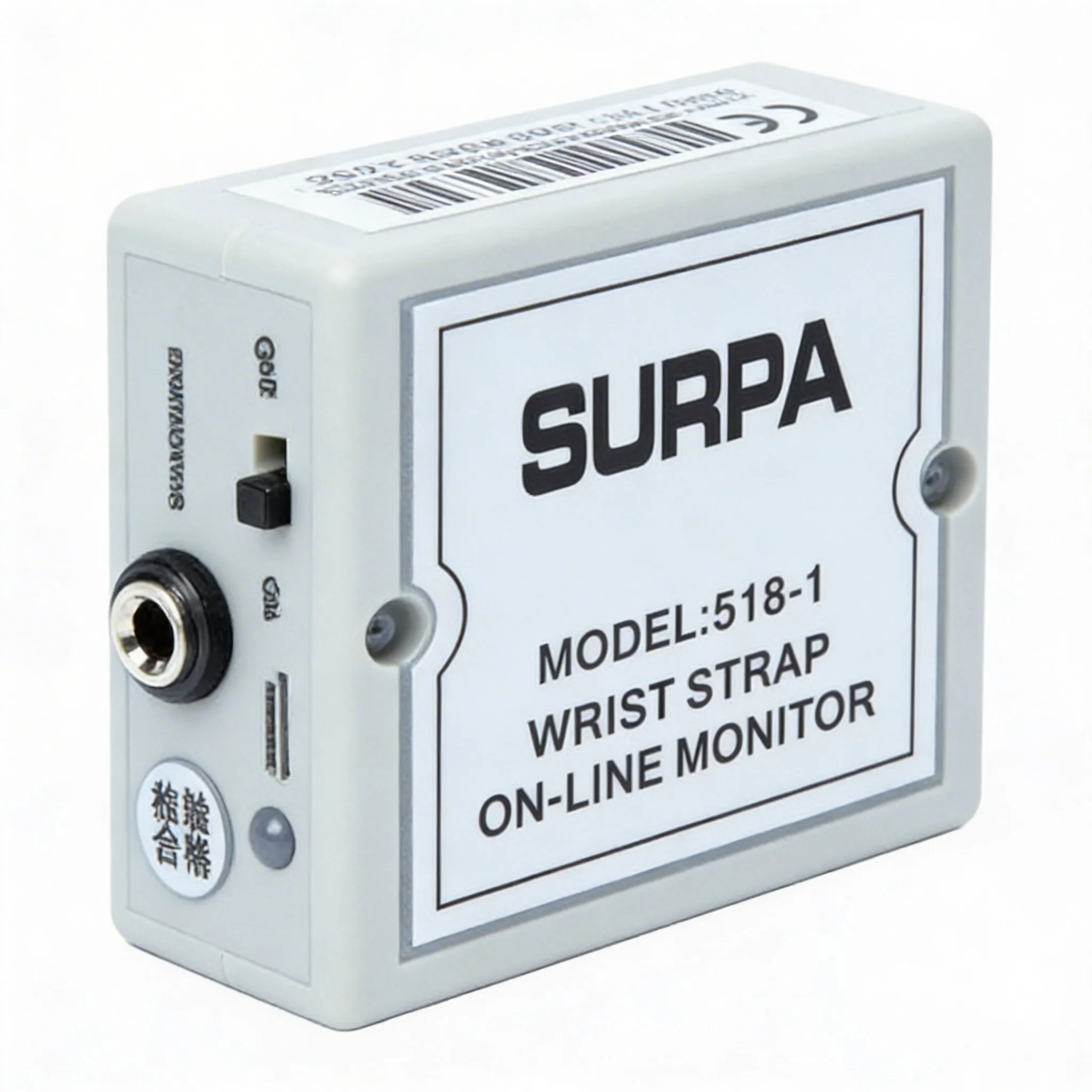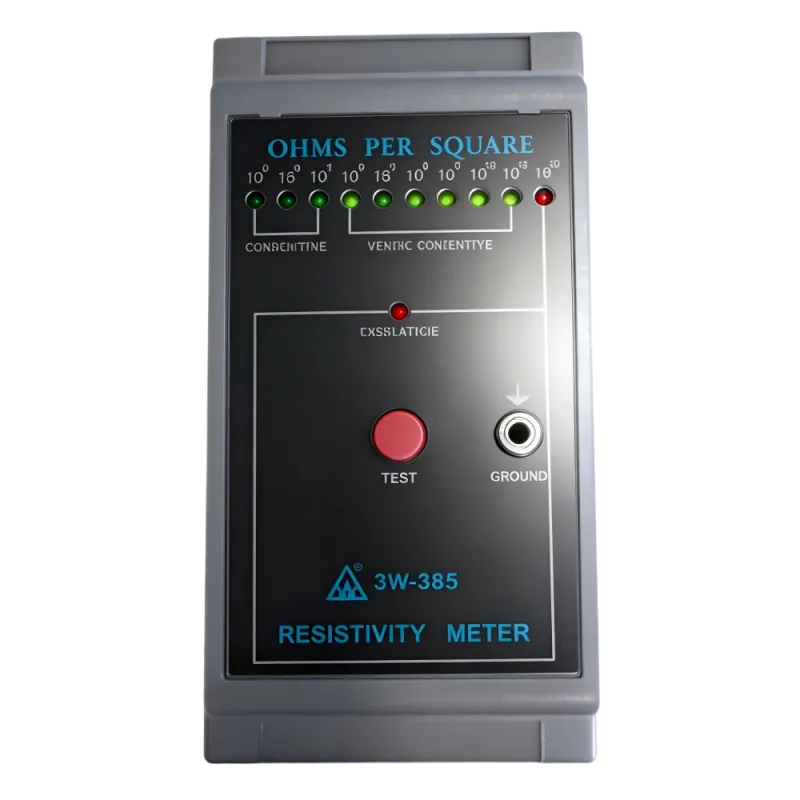
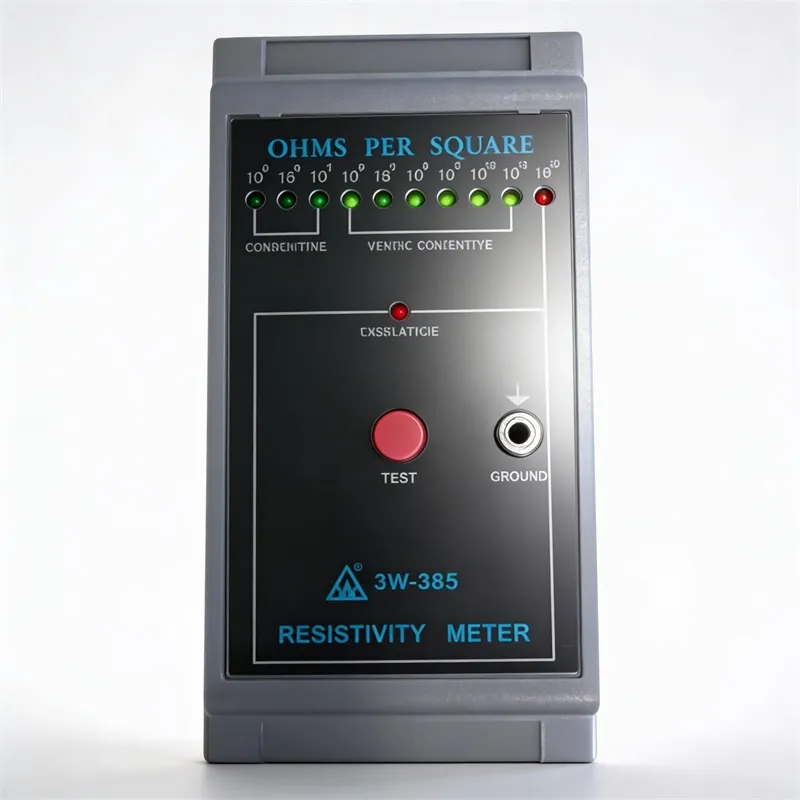
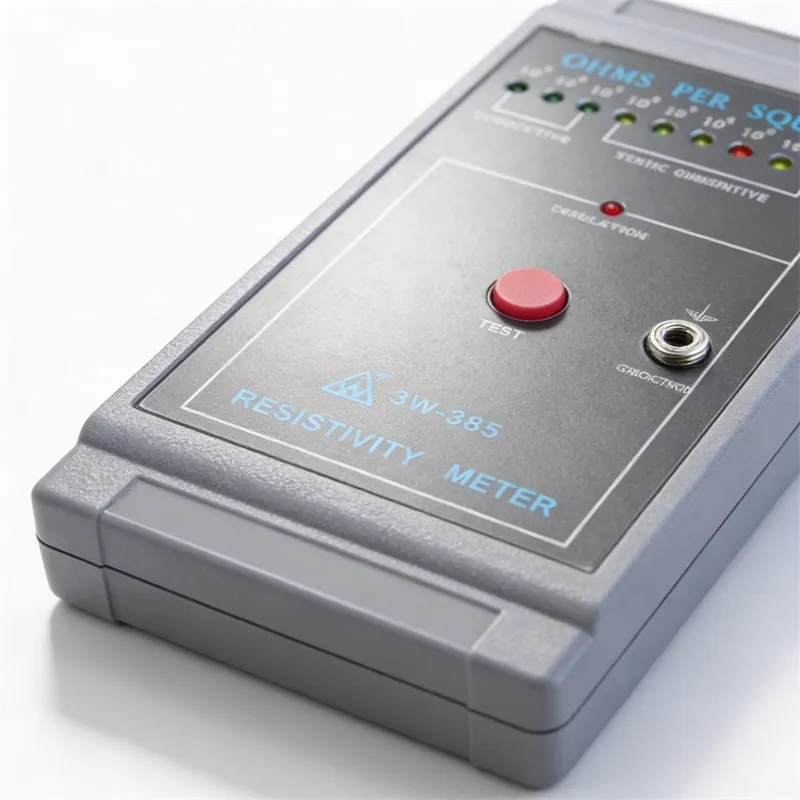
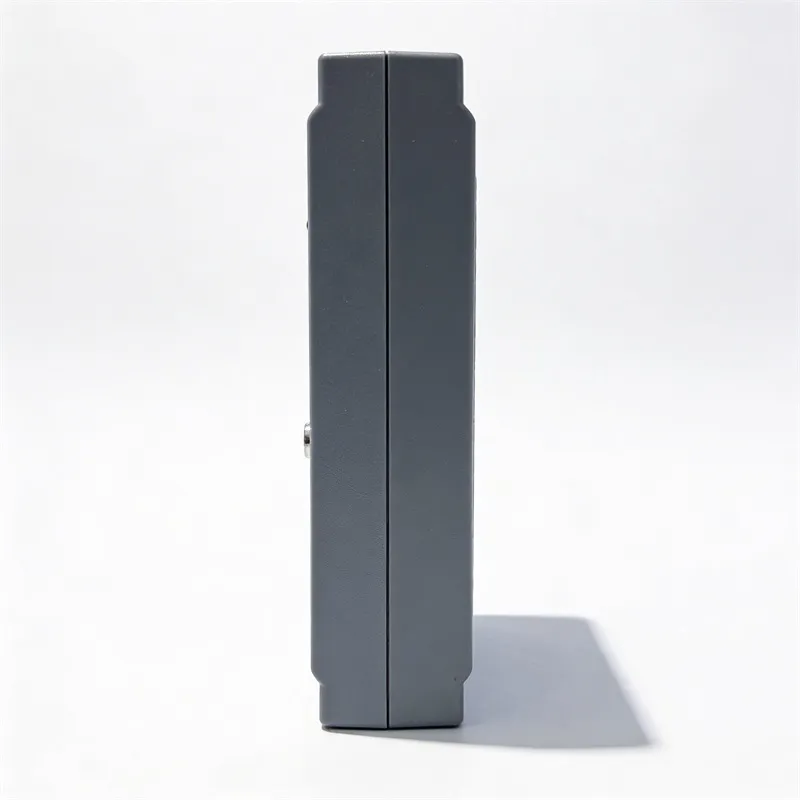
เครื่องวัดความต้านทานพื้นผิว แบบมือถือ เครื่องมือวัดค่าความต้านทานไฟฟ้าสถิต ESD
ภาพรวม:
เดอะ เครื่องทดสอบความต้านทานพื้นผิว (also referred to as an ESD surface resistance tester or surface resistivity tester) is a dedicated measurement instrument designed to accurately determine the surface resistance value of materials, thereby evaluating their conductive properties, static dissipative capability, and insulating characteristics.
Working Principle and Core Technology
The surface resistance tester operates on the principle of DC voltage resistance measurement. It applies a known voltage to the surface of the material under test and measures the resulting current flowing across the surface. The resistance value is then calculated according to Ohm’s law. Most modern instruments offer two test voltages – 10 V and 100 V – with automatic range switching: for example, when the resistance is ≥1×10⁶ Ω, the instrument applies 100 V; when the resistance lies between 1×10⁴ Ω and 1×10⁶ Ω, it uses 10 V. This ensures optimal measurement accuracy across different material types.
Wide Measurement Range and Precision Classification
A high‑quality surface resistance tester typically covers a broad measurement range from 10³ Ω to 10¹² Ω, making it suitable for testing everything from conductive materials to insulators. Different models feature various display methods – some use LED indicators to visually show the resistance range: green for conductive (10³–10⁶ Ω), yellow for static‑dissipative (10⁷–10¹¹ Ω), and red for insulative (≥10¹² Ω). Others employ LCD or OLED digital displays for more precise numeric readings. Measurement accuracy generally reaches ±10 %, with high‑end models achieving up to ±0.5 order of magnitude.
Flexible Test Methods and Electrode Configurations
เดอะ surface resistivity test method complies with multiple international standards, including ASTM D257, IEC 62631‑3‑2, and GB/T 1410. To accommodate diverse testing scenarios, a surface resistance tester is usually equipped with or offers optional electrodes: parallel electrodes for rapid screening, weighted electrodes (2.27 kg or 2.5 kg) for point‑to‑point surface resistance measurement, concentric ring electrodes for surface resistivity testing in accordance with EOS/ESD S11.11, and two‑point electrodes for small‑area measurements. The dimensions, contact pressure, and material of these electrodes are specified by the relevant standards to ensure consistency and repeatability of test results.
Multi‑Scenario Applications and Industry Value
Surface resistivity testing plays an indispensable role across various industries:
-
Electronics manufacturing – inspecting the surface resistance of anti‑static workstations, ESD flooring, and packaging materials to safeguard the production environment.
-
Semiconductor and precision instrumentation – testing wafer carriers, PCB protective coatings, and containers for static‑sensitive devices to prevent electrostatic damage.
-
Laboratories and R&D – studying the static performance of new materials and characterising their surface resistivity.
-
Warehousing and logistics – verifying the resistance of ESD trays, tote boxes, and shipping tubes to avoid electrostatic discharge during storage and transport.
-
Medical and aerospace – measuring the surface resistance of equipment housings and operating tables to ensure user safety and operational reliability.
Portable Design and Smart Features
Modern surface resistance testers are typically designed to be compact and lightweight (often 120–170 g), allowing for easy on‑site testing. Many models also incorporate data logging and transfer capabilities – exporting data via USB, generating comprehensive test reports with companion software, and some advanced versions even storing up to 50,000 measurement records. Built‑in environmental temperature and humidity sensors further enhance traceability, ensuring that every test is performed under documented conditions.
ข้อกำหนดทางเทคนิค
| Measurement Range | 10³-10¹²Ω |
| ความแม่นยำ | ±0.5 |
| Size (L×W×H) | 70*27*130mm |
| Weight | 0.14G |
| Power Supply | 9V |
กำลังการผลิต ESD ระดับโลก
เมื่อคุณจัดหาจากซานเหว่ย (Sanwei) คุณกำลังร่วมมือโดยตรงกับผู้ผลิต OEM/ODM ชั้นนำในอุตสาหกรรม เราดำเนินงานด้วยความทันสมัย โรงงานผลิตแบบครบวงจรขนาดกว่า 70,000 ตารางเมตร ในนิคมอุตสาหกรรมกลางเย่ว์ชิง มณฑลเจ้อเจียง จัดการทุกกระบวนการตั้งแต่การคิดค้นสูตรวัสดุที่เป็นกรรมสิทธิ์ ไปจนถึงการขึ้นรูปผลิตภัณฑ์ที่มีความแม่นยำสูงขั้นสุดท้าย.
ตาชั่งแบบบูรณาการ
ฐานการผลิตขั้นสูงขนาดกว่า 70,000 ตารางเมตร พร้อมด้วยเครื่องฉีดพลาสติกความแม่นยำสูงสำหรับงานหนัก เพื่อรองรับคำสั่งซื้อขายส่งจำนวนมากด้วยระยะเวลาจัดส่งที่เสถียร.
การควบคุมแบบเต็มวงจร
การควบคุมภายในองค์กรแบบครบวงจร ครอบคลุมตั้งแต่การวิจัยและพัฒนาวัสดุป้องกันไฟฟ้าสถิตที่เป็นกรรมสิทธิ์, การวิศวกรรมแม่พิมพ์โครงสร้าง, การผลิตอัตโนมัติ, ไปจนถึงการจัดส่งโลจิสติกส์ระดับโลกที่รวดเร็ว.
การตรวจสอบอย่างเข้มงวด
การตรวจสอบวัตถุดิบอย่างเคร่งครัด ร่วมกับการวัดค่าความต้านทานผิวแบบหลายจุด บนสายการผลิต ช่วยให้มั่นใจว่า 100% เป็นไปตามแนวทางมาตรฐาน ESD ระดับสากล.
ป้องกันไฟฟ้าสถิต ผลิตภัณฑ์และโซลูชัน
ให้บริการการป้องกันไฟฟ้าสถิตอย่างครอบคลุมตลอดวงจรการผลิตและการดำเนินงานทั้งหมดของคุณ.
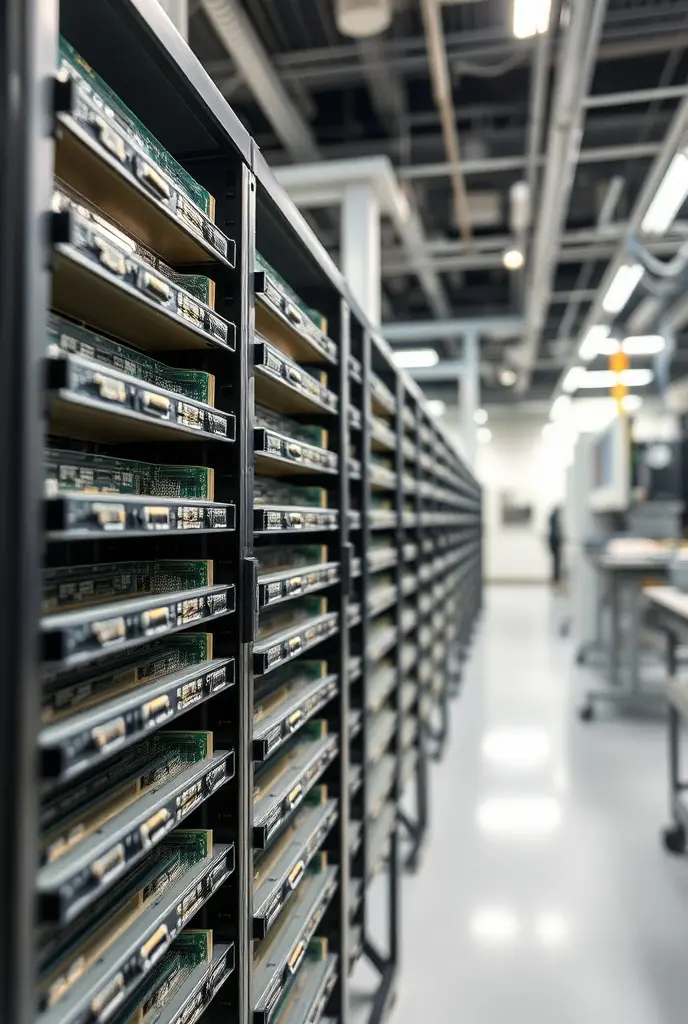
อุปกรณ์ SMT
กล่องและชั้นวางป้องกันไฟฟ้าสถิตสำหรับไลน์อัตโนมัติ.

การจัดเก็บและโลจิสติกส์
รถเข็นอเนกประสงค์ ชั้นวาง กล่อง ถาด และภาชนะบรรจุชิ้นส่วน.
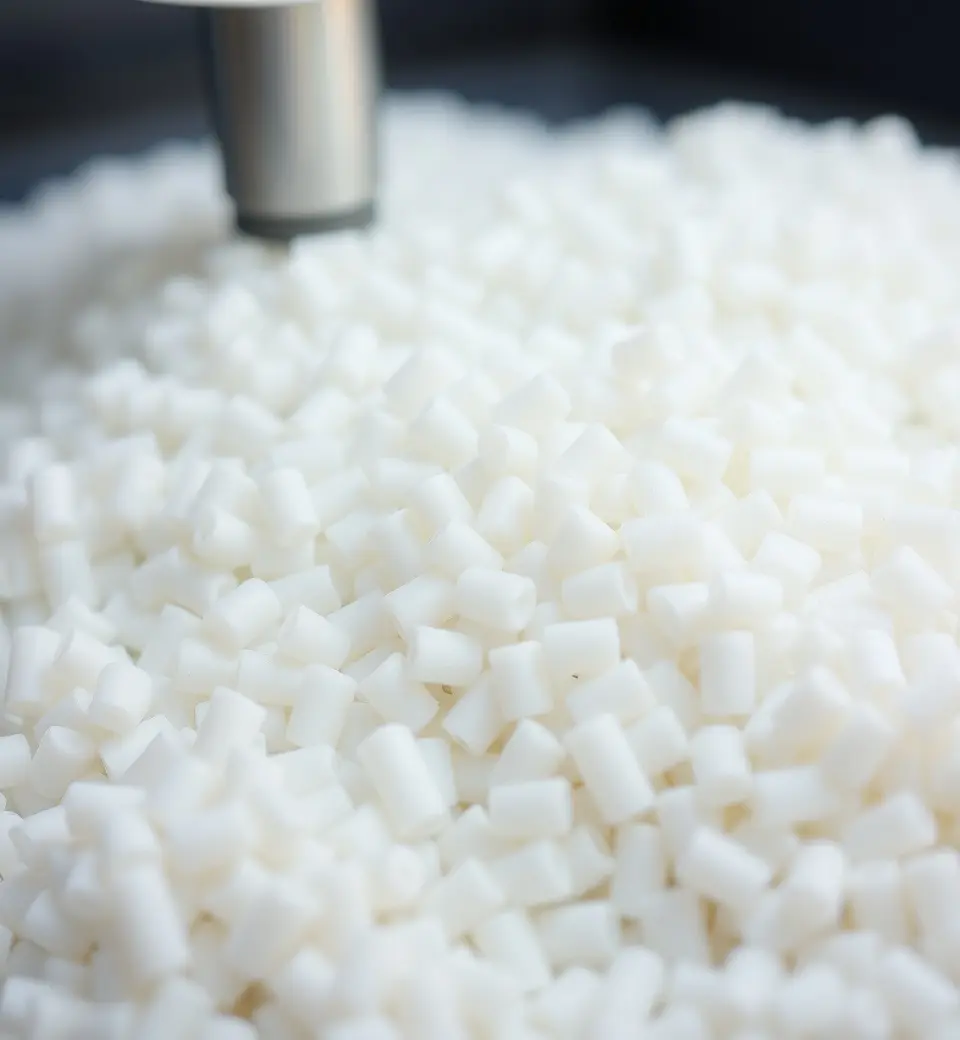
พื้นที่ทำงานและอุปกรณ์คุ้มครองความปลอดภัยส่วนบุคคล
เก้าอี้ป้องกันไฟฟ้าสถิต แผ่นรอง สายรัดข้อมือ และอุปกรณ์ป้องกันส่วนบุคคล.
การพัฒนาแบบกำหนดเอง
การพัฒนาแม่พิมพ์แบบกำหนดเองและวัสดุป้องกันไฟฟ้าสถิตพิเศษ.
จุดเด่นด้านบริการ OEM/ODM ของเรา

การวิจัยและพัฒนาขั้นสูงและนวัตกรรมวัสดุ
วัสดุป้องกันไฟฟ้าสถิตที่พัฒนาขึ้นเองภายในบริษัท พร้อมสิทธิบัตรการประดิษฐ์ระดับชาติ และทนความร้อนได้สูงถึง 200°C เราไม่ใช่แค่ขึ้นรูป แต่เราคิดค้นและพัฒนาสูตรคอมปาวด์เอง.

กำลังการผลิตเต็มรูปแบบ
โรงงานขนาด 30,000 ตารางเมตร พร้อมระบบการขึ้นรูปด้วยการฉีด การทำเม็ดพลาสติก และระบบประมวลผลสนับสนุนที่ครบครัน เพื่อการจัดหาที่มั่นคงและมีประสิทธิภาพ.

การปรับแต่งแบบครบวงจร
ความต้านทานของวัสดุ, สี, ขนาด, โลโก้, บรรจุภัณฑ์ และใบรับรอง — สามารถปรับแต่งได้เพื่อให้เป็นไปตามมาตรฐาน IEC61340-5-1, ANSI/ESD S20.20 หรือมาตรฐานทางทหาร.

คุณภาพที่ได้รับการรับรองและการปฏิบัติตามกฎระเบียบระดับสากล
“ซานเหว่ยประสบความสำเร็จในการพัฒนาถาดสีธรรมชาติสะอาดทนอุณหภูมิสูงแบบกำหนดเองสำหรับสายการผลิตเซมิคอนดักเตอร์ของเรา โดยทดแทนผลิตภัณฑ์นำเข้า รับประกันความปลอดภัยด้าน ESD ที่ยอดเยี่ยม และตอบสนองความต้องการด้านความสะอาดสูงของโรงงาน”
ได้รับความไว้วางใจจากผู้นำอุตสาหกรรมระดับโลก FORTUNE 500
โซลูชัน ESD ที่เป็นกรรมสิทธิ์ของเราได้รับการติดตั้งในโรงงานผลิตระดับแนวหน้าทั่วโลก รวมถึง: อินเทล, โมโตโรล่า, ซีเมนส์, ไอบีเอM, พานาโซนิค, โนเกีย และเดลล์.
กำลังมองหาขนาดพิเศษหรือราคาขายส่งจำนวนมากใช่ไหม
ด้วยการสนับสนุนจากทีมวิจัยและพัฒนาภายในองค์กรที่มีความเชี่ยวชาญของเรา ซานเหว่ย (Sanwei) จึงมีบริการ OEM/ODM ครบวงจรที่ปรับแต่งให้เข้ากับสายการผลิต SMT หรือเลย์เอาต์คลังสินค้าเฉพาะของคุณโดยเฉพาะ ติดต่อผู้เชี่ยวชาญของเราวันนี้เพื่อรับบริการแม่พิมพ์สั่งทำ การกำหนดรหัสสี หรือคำปรึกษาด้านการจัดเก็บระบบ 5ส แบบครบวงจร.
คำถามที่พบบ่อย (FAQ)
1. What is the standard for surface resistivity?
The primary standards for measuring surface resistivity are ASTM D257 และ IEC 62631-3-2. ASTM D257 is a key standard that details techniques for measuring both surface and volume resistivity using a guarded electrode system. IEC 62631-3-2 serves as the international equivalent.
2. What is surface insulation resistance?
Surface Insulation Resistance (SIR) is a measure of the electrical resistance across the surface of an insulating material between two conductors. It is a key indicator of a material’s ability to resist electrical leakage and electrochemical failures, especially under humid conditions.
3. What equipment is used to test insulation resistance?
The most common equipment used to test insulation resistance is an insulation resistance tester, often generically called a Megger. These are portable, high-range resistance meters (ohmmeters) with a built-in DC generator that provide direct readings of insulation resistance.
4. What is the surface insulation resistance test?
เดอะ surface insulation resistance test is a method used to measure the resistance across a material’s surface. It’s a non-destructive test often used to evaluate the reliability of electronic assemblies. The test typically involves measuring the resistance between two comb-shaped electrodes on a test board under controlled conditions.
5. What is the surface resistance instrument?
A surface resistance instrument (or tester) is a device used to measure the electrical resistance directly on the surface of a material. It expresses resistance in ohms (Ω) and is commonly used for field audits of ESD workstations, mats, and floors to determine if materials are conductive or static dissipative.