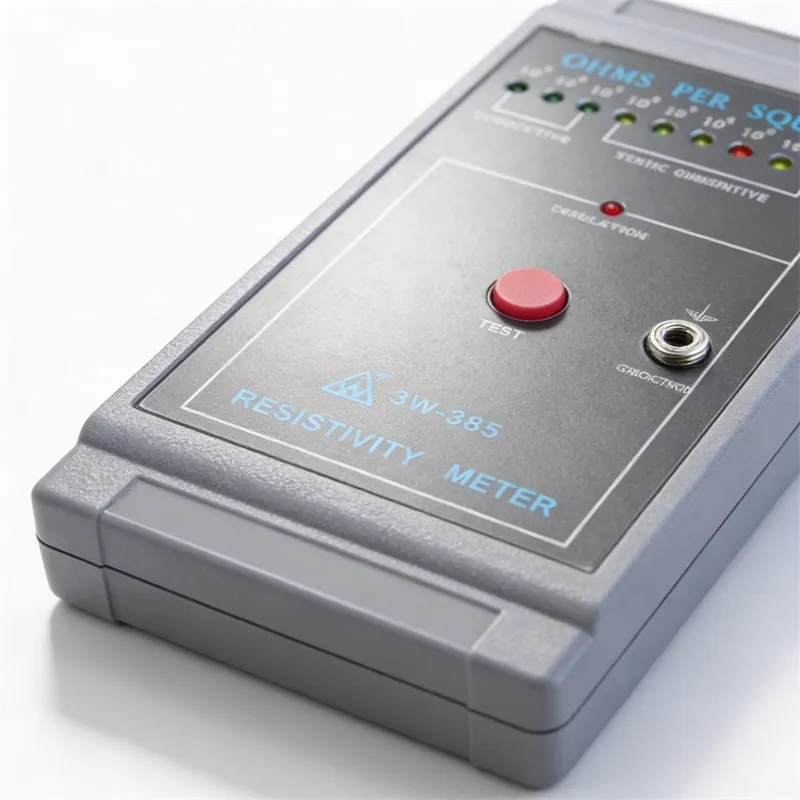
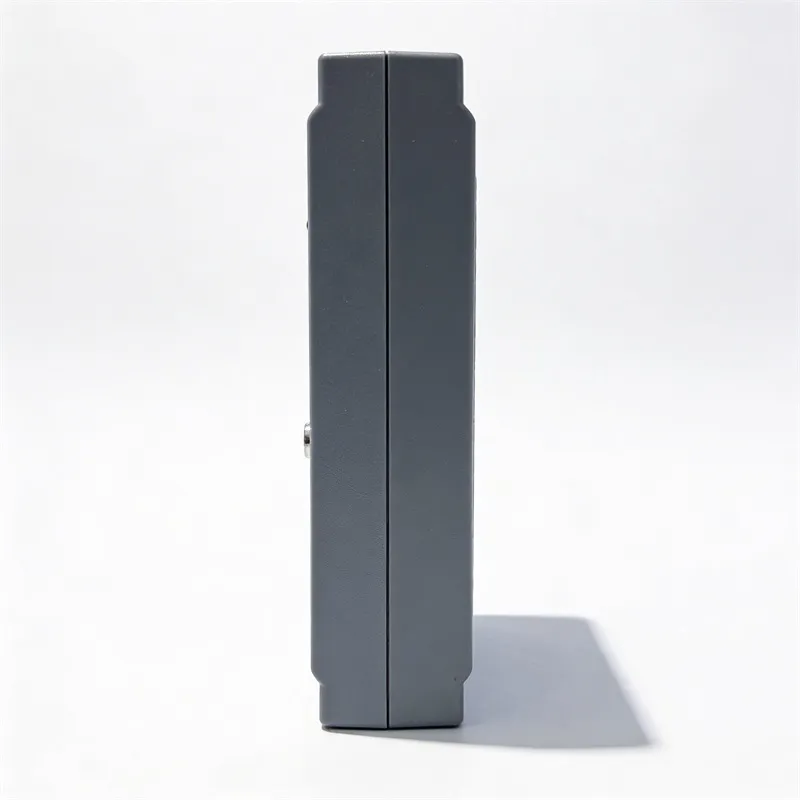
Surface Resistance Tester Handheld ESD Resistivity Measuring Instrument
Resumen:
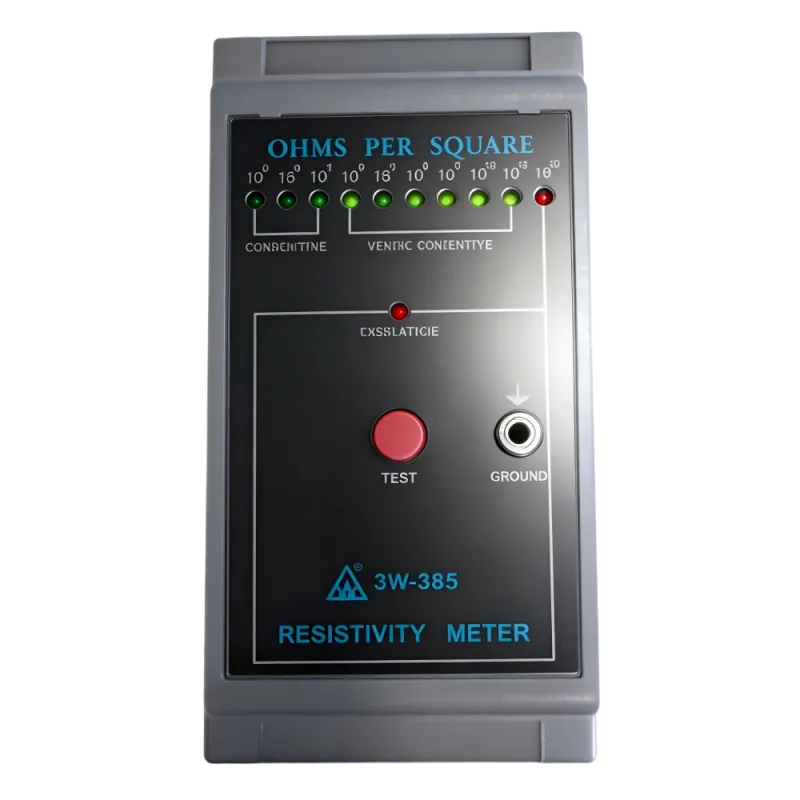
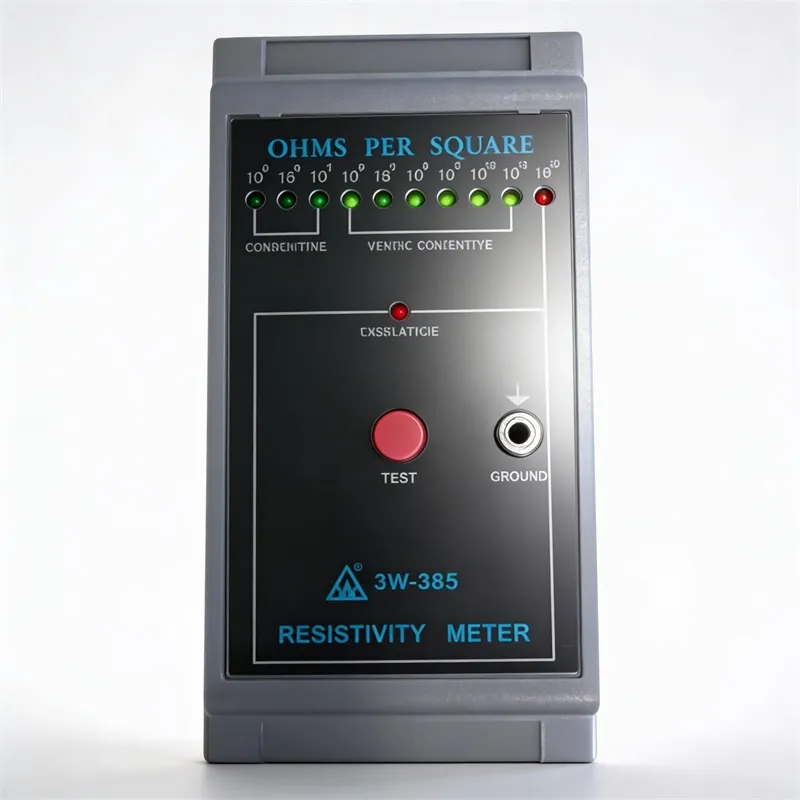
El probador de resistencia superficial (also referred to as an ESD surface resistance tester or surface resistivity tester) is a dedicated measurement instrument designed to accurately determine the surface resistance value of materials, thereby evaluating their conductive properties, static dissipative capability, and insulating characteristics.
Working Principle and Core Technology
The surface resistance tester operates on the principle of DC voltage resistance measurement. It applies a known voltage to the surface of the material under test and measures the resulting current flowing across the surface. The resistance value is then calculated according to Ohm’s law. Most modern instruments offer two test voltages – 10 V and 100 V – with automatic range switching: for example, when the resistance is ≥1×10⁶ Ω, the instrument applies 100 V; when the resistance lies between 1×10⁴ Ω and 1×10⁶ Ω, it uses 10 V. This ensures optimal measurement accuracy across different material types.
Wide Measurement Range and Precision Classification
A high‑quality surface resistance tester typically covers a broad measurement range from 10³ Ω to 10¹² Ω, making it suitable for testing everything from conductive materials to insulators. Different models feature various display methods – some use LED indicators to visually show the resistance range: green for conductive (10³–10⁶ Ω), yellow for static‑dissipative (10⁷–10¹¹ Ω), and red for insulative (≥10¹² Ω). Others employ LCD or OLED digital displays for more precise numeric readings. Measurement accuracy generally reaches ±10 %, with high‑end models achieving up to ±0.5 order of magnitude.
Flexible Test Methods and Electrode Configurations
El surface resistivity test method complies with multiple international standards, including ASTM D257, IEC 62631‑3‑2, y GB/T 1410. To accommodate diverse testing scenarios, a surface resistance tester is usually equipped with or offers optional electrodes: parallel electrodes for rapid screening, weighted electrodes (2.27 kg or 2.5 kg) for point‑to‑point surface resistance measurement, concentric ring electrodes for surface resistivity testing in accordance with EOS/ESD S11.11, and two‑point electrodes for small‑area measurements. The dimensions, contact pressure, and material of these electrodes are specified by the relevant standards to ensure consistency and repeatability of test results.
Multi‑Scenario Applications and Industry Value
Surface resistivity testing plays an indispensable role across various industries:
-
Electronics manufacturing – inspecting the surface resistance of anti‑static workstations, ESD flooring, and packaging materials to safeguard the production environment.
-
Semiconductor and precision instrumentation – testing wafer carriers, PCB protective coatings, and containers for static‑sensitive devices to prevent electrostatic damage.
-
Laboratories and R&D – studying the static performance of new materials and characterising their surface resistivity.
-
Warehousing and logistics – verifying the resistance of ESD trays, tote boxes, and shipping tubes to avoid electrostatic discharge during storage and transport.
-
Medical and aerospace – measuring the surface resistance of equipment housings and operating tables to ensure user safety and operational reliability.
Portable Design and Smart Features
Modern surface resistance testers are typically designed to be compact and lightweight (often 120–170 g), allowing for easy on‑site testing. Many models also incorporate data logging and transfer capabilities – exporting data via USB, generating comprehensive test reports with companion software, and some advanced versions even storing up to 50,000 measurement records. Built‑in environmental temperature and humidity sensors further enhance traceability, ensuring that every test is performed under documented conditions.
Technical Specification
| Measurement Range | 10³-10¹²Ω |
| Accuracy | ±0.5 |
| Size (L×W×H) | 70*27*130mm |
| Weight | 0.14G |
| Power Supply | 9V |
Capacidad de fabricación ESD de clase mundial
Al abastecerse de Sanwei, se está asociando directamente con un fabricante OEM/ODM líder en la industria. Operamos unas instalaciones de vanguardia Instalación de producción integrada de más de 70 000 m² en el Parque Industrial Central de Yueqing, Zhejiang, gestionando cada proceso, desde la formulación de materiales patentados hasta el moldeado final de productos de alta precisión.
Balanza integrada
Base de producción avanzada de más de 70.000 m² equipada con máquinas de moldeo por inyección de precisión para trabajos pesados para gestionar pedidos al por mayor con plazos de entrega estables.
Control de cadena completa
Control interno completo que abarca la investigación y desarrollo de material antiestático propio, ingeniería de moldes estructurales, fabricación automatizada y entrega rápida de logística global.
Inspección rigurosa
Los rigurosos ensayos de las materias primas, combinados con mediciones multipunto de la resistividad superficial en la línea de producción, garantizan que el 100% cumpla con las directrices de las normas internacionales sobre ESD.
Antiestático Productos y Soluciones
Ofreciendo protección electrostática integral en todo su ciclo de vida operativo y de fabricación.
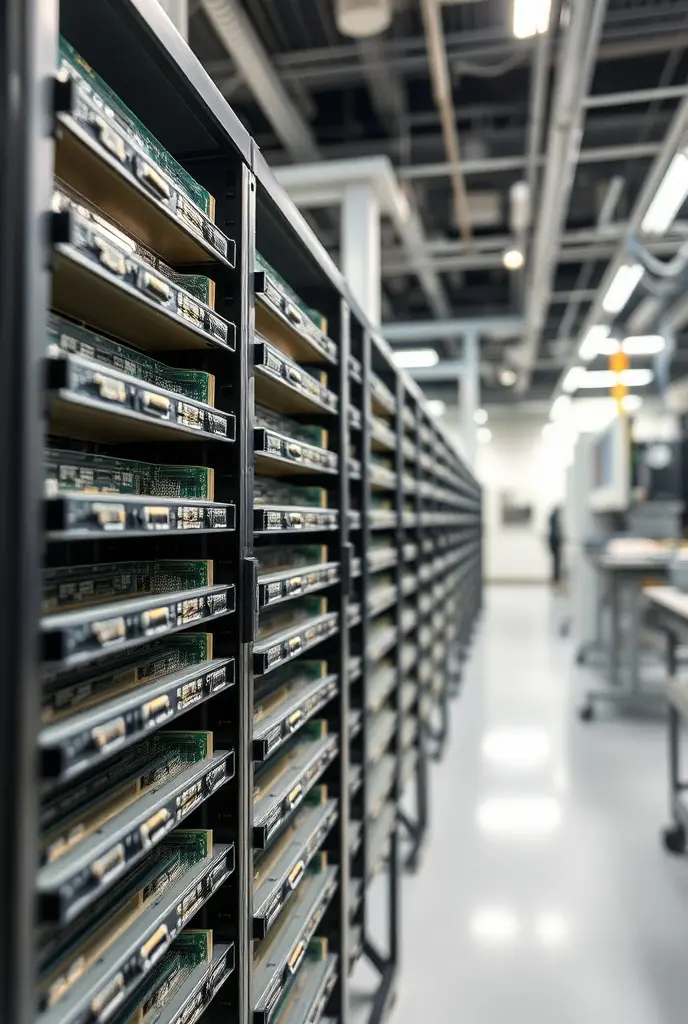
Equipos SMT
Cajas y soportes antiestáticos para líneas automatizadas.

Almacenamiento y Logística
Carros de rotación, estantes, cajas, bandejas y contenedores de componentes.
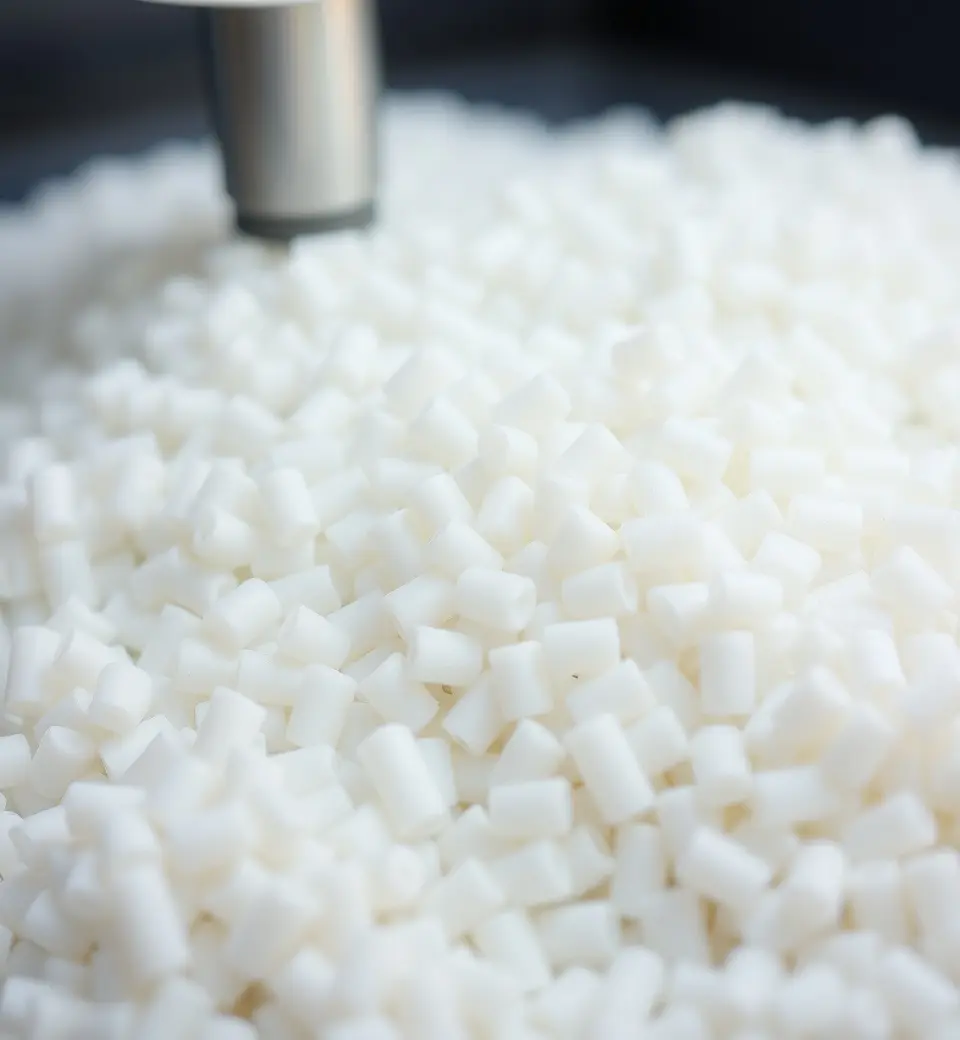
Estación de trabajo y EPP
Sillas antiestáticas, alfombrillas, pulseras antiestáticas y protección personal.
Desarrollo a medida
Desarrollo de moldes personalizados y materiales antiestáticos especiales.
NUESTRAS VENTAJAS OEM/ODM

I+D Avanzada e Innovación de Materiales
Materiales antiestáticos desarrollados internamente con patentes de invención nacionales y resistencia al calor de hasta 200 ℃. Nosotros no solo moldeamos, formulamos compuestos.

Capacidad de producción a escala completa
Planta de 30.000 m² con sistemas completos de moldeo por inyección, granulación y procesamiento auxiliar para un suministro estable y eficiente.

Personalización de proceso completo
Resistividad del material, color, tamaño, logotipo, embalaje y certificaciones — personalizables para cumplir con las normas IEC61340-5-1, ANSI/ESD S20.20 o estándares militares.

Calidad Certificada y Cumplimiento Global
“Sanwei desarrolló con éxito bandejas personalizadas de color natural limpio y resistentes a altas temperaturas para nuestra línea de ensamblaje de semiconductores, reemplazando productos importados, garantizando una excelente seguridad ESD y cumpliendo con los altos requisitos de limpieza del taller.”
CON LA CONFIANZA DE LOS LÍDERES INDUSTRIALES GLOBALES DE FORTUNE 500
Nuestras soluciones ESD patentadas se implementan en instalaciones de producción de élite en todo el mundo, incluidas: Intel, Motorola, Siemens, IBM, Panasonic, Nokia y Dell.
¿Busca tamaños personalizados o precios de venta al por mayor?
Respaldado por nuestro sólido equipo interno de I+D, Sanwei ofrece opciones completas de OEM/ODM adaptadas a sus líneas de producción SMT específicas o a la disposición de su almacén. Póngase en contacto con nuestros especialistas hoy mismo para obtener moldes personalizados, códigos de colores o asesoramiento integrado de almacenamiento 5S.
Preguntas frecuentes (FAQ)
1. What is the standard for surface resistivity?
The primary standards for measuring surface resistivity are ASTM D257 y IEC 62631-3-2. ASTM D257 is a key standard that details techniques for measuring both surface and volume resistivity using a guarded electrode system. IEC 62631-3-2 serves as the international equivalent.
2. What is surface insulation resistance?
Surface Insulation Resistance (SIR) is a measure of the electrical resistance across the surface of an insulating material between two conductors. It is a key indicator of a material’s ability to resist electrical leakage and electrochemical failures, especially under humid conditions.
3. What equipment is used to test insulation resistance?
The most common equipment used to test insulation resistance is an insulation resistance tester, often generically called a Megger. These are portable, high-range resistance meters (ohmmeters) with a built-in DC generator that provide direct readings of insulation resistance.
4. What is the surface insulation resistance test?
El surface insulation resistance test is a method used to measure the resistance across a material’s surface. It’s a non-destructive test often used to evaluate the reliability of electronic assemblies. The test typically involves measuring the resistance between two comb-shaped electrodes on a test board under controlled conditions.
5. What is the surface resistance instrument?
A surface resistance instrument (or tester) is a device used to measure the electrical resistance directly on the surface of a material. It expresses resistance in ohms (Ω) and is commonly used for field audits of ESD workstations, mats, and floors to determine if materials are conductive or static dissipative.