- Turbo
- Blog
Un ESD pallet is a reusable logistics platform intended to move electrostatic-discharge-sensitive materials without introducing an uncontrolled packaging layer. Selection is not simply a choice between black and ordinary plastic. Buyers must define the ESD function, load case, deck and runner geometry, equipment interface, cleaning method, route outside or inside an ESD protected area, and the evidence required from the supplier. The pallet also works with boxes, trays, bags, stretch materials, racks, and lift equipment, so its performance cannot be judged in isolation. This guide provides a practical specification, qualification, incoming-inspection, and RFQ framework for electronics factories and warehouses.
Define the pallet’s role in the material route
Start by mapping every transfer from receiving to line-side use. Record whether sensitive devices are sealed in protective packaging, exposed in trays, or carried inside conductive containers. A pallet under closed shielding packages performs a different role from one carrying exposed assemblies inside an EPA. The required packaging boundary must remain intact during forklift pickup, staging, storage, and unpacking.
Also identify the uncontrolled portions of the route. A material described as conductive or dissipative does not automatically provide electrostatic shielding. NASA workmanship guidance treats transport, grounding, and protective packaging as coordinated controls. Define which layer supplies physical support, which limits charge generation, and which provides any required field shielding.

Separate ESD behavior from load performance
The electrical claim and the mechanical rating answer different questions. Ask for a declared test method, conditioning, test locations, acceptance criteria, and traceable results for the supplied material. Do not approve a pallet from color or resin name alone. Additives, contamination, wear, humidity, and production variation may affect measured behavior.
Mechanical qualification must address the real load: uniformly distributed cartons behave differently from point loads, drums, racks, or containers with small feet. Confirm static storage, dynamic handling, racking support, impact, deck deflection, runner integrity, and the intended lift direction with the responsible packaging engineer. Never copy an attractive load number from another pallet geometry.
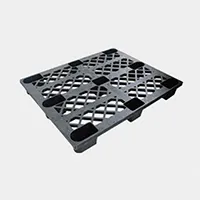
Match deck and runner geometry to equipment
Review pallet width, length, height, entry direction, fork opening, runner pattern, deck openings, edge lips, and nesting or stacking behavior. Check all forklifts, pallet jacks, conveyors, lifts, racks, and automated systems that will touch the pallet. Small dimensional differences can create unsafe fork engagement or unstable conveyor travel.
Closed decks can reduce the chance of small items falling through and may simplify some cleaning tasks, while open decks may reduce mass and improve drainage. The correct choice depends on contamination controls and the load. Ribbing, anti-slip features, rims, and retaining edges should be reviewed with the actual boxes or totes rather than from a catalogue image.
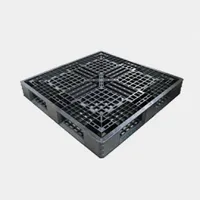
Control every layer above the pallet
An ESD pallet does not correct an uncontrolled load. Ordinary stretch film, insulating straps, nonqualified foam, loose labels, or damaged boxes can remain charge-generating materials near sensitive hardware. List each packaging layer and decide whether it is inside or outside the protection boundary.
Confirm how loads are bonded, grounded, enclosed, or separated where required by the facility control plan. If the pallet is used only as a mechanical carrier for closed protective packages, state that limitation. If it is expected to participate in a conductive path, verify contacts and interfaces in the loaded configuration rather than measuring an isolated clean surface.
Plan cleaning, inspection and retirement
Document an approved cleaning method and verify compatibility before release. Residue, dust, oils, and aggressive chemicals can change both handling and electrical behavior. Cleaners should not be adopted from a generic plastic-care procedure without checking the pallet material, workplace requirements, and ESD plan.
Create visual retirement criteria for cracked runners, excessive deck deformation, damaged lips, exposed sharp edges, embedded contamination, illegible identification, and repairs that change construction. Define the ESD retest interval from risk, use frequency, environment, historical variation, and the organization’s control program rather than assuming indefinite performance.
Tableau de sélection et de qualification
| Route question | Pourquoi c'est important | Éléments de preuve à demander |
|---|---|---|
| Inside or outside an EPA? | Determines the protective packaging boundary | Route map and package configuration |
| What load and support pattern? | Controls deflection and structural risk | Load drawing and handling trial |
| Which handling equipment? | Controls fork entry and conveyor fit | Interface dimensions and trial |
| What ESD function is claimed? | Prevents vague “anti-static” approval | Test method, conditions and results |
| How is it cleaned and reused? | Affects contamination and lifecycle performance | Approved procedure and inspection criteria |
Effectuer un essai contrôlé de premier article
Utilisez un échantillon documenté qui représente la construction de production proposée. Comparez-le avec l'article approuvé actuel lorsqu'il en existe un. Enregistrez l'identification, la révision, le lot du fournisseur, les conditions environnementales, l'équipement, les opérateurs et les observations. Un essai doit couvrir la réception, le stockage, la préparation, l'utilisation normale, le nettoyage le cas échéant, ainsi que l'élimination ou le retour. Arrêtez l'essai si l'article endommage un produit, crée une contamination, interfère avec l'équipement ou entre en conflit avec la ESD ou la procédure de sécurité.
Séparez les critères de réussite des observations. Les dimensions, l'étiquetage, l'ajustement, la fabrication, les preuves matérielles et le comportement fonctionnel peuvent nécessiter des contrôles différents. Résolvez les écarts avant d'approuver les quantités de production, et conservez le dessin contrôlé, le rapport et l'échantillon d'approbation. Exigez une notification du fournisseur avant toute modification de la source de matériau, d'additif, d'adhésif, de construction, d'outillage, de processus ou de dimension critique.
Contrôle à réception et contrôle en cours de fabrication
- Vérifiez que l'article, la révision du plan, la quantité, le lot fournisseur et l'étiquette d'emballage correspondent à la commande.
- Inspecter pour détecter toute contamination, dommage, mauvaise exécution, dimensions incorrectes et absence d'identification.
- Effectuer l'échantillonnage et la vérification convenus selon une méthode documentée et à l'aide d'équipements étalonnés lorsque des mesures sont nécessaires.
- Mettez en quarantaine tout changement inexpliqué de couleur, d'odeur, de texture, de pégosité, d'ajustement, d'enroulement, de géométrie ou de performance.
- Conserver les registres de réception et lier les réclamations ou les défaillances au lot concerné.
- Révisez la spécification lorsque le produit, l'équipement, l'itinéraire, la méthode de nettoyage ou le plan de contrôle change.
Liste de contrôle RFQ pour les acheteurs
Précisez l'application, la limite de protection, l'interface de l'équipement ou de la pièce, les dimensions et tolérances, la composition des matériaux, la fonction requise, la méthode d'essai et les critères d'acceptation, les exigences de propreté et de fabrication, l'emballage, l'étiquetage, la traçabilité, la quantité d'échantillons, les attentes concernant le premier article, la documentation, la notification de modification et la quantité de livraison. Référencez le SWESD anti-static logistics pallet product pour le type de produit actuellement affiché, et utilisez le Centre de produits SWESD pour le coordonner avec les équipements de manutention associés.
Demandez au fournisseur de lister ses hypothèses et exceptions. Évitez de copier des affirmations de catalogue non vérifiées dans un cahier des charges contrôlé. Les limites techniques, les certifications et les déclarations de conformité doivent être examinées au regard de l'article effectivement fourni et de l'application de l'acheteur.
Comparez les échantillons dans les mêmes conditions
Une comparaison utile ne modifie qu'une seule décision à la fois. Utilisez les mêmes pièces représentatives, opérateurs, équipements, itinéraires, préparations de nettoyage et périodes d'observation pour chaque candidat. Étiquetez les échantillons afin que les évaluateurs ne confondent pas l'identité du fournisseur, la révision ou la séquence de test. Lorsque cela est pratique, incluez l'article actuellement approuvé comme référence. Enregistrez à la fois le comportement réussi et le travail nécessaire pour y parvenir, tel qu'un réglage supplémentaire, un nettoyage répété, une manipulation plus lente ou l'intervention de l'opérateur.
Ne combinez pas les conclusions électriques, mécaniques, de propreté et commerciales en un seul score vague. Un candidat peut convenir parfaitement mais manquer de preuves matérielles traçables, ou disposer d'une documentation solide tout en obtenant de mauvais résultats sur la machine. Maintenez des critères de réussite distincts pour la sécurité, le contrôle ESD, la protection du produit, la compatibilité des équipements, la contamination, l'ergonomie, la documentation et le coût du cycle de vie. Tout échec critique doit être résolu plutôt que masqué par une moyenne élevée.
La comparaison commerciale doit utiliser le coût d'un processus achevé et accepté, et non seulement le prix par pièce. Incluez l'effort d'inspection, le temps de changement de série, les déchets, le nettoyage, le remplacement, le risque d'indisponibilité, la logistique des retours, la documentation et l'effet de lots inconsistants. Ces facteurs ne justifient pas d'inventer une allégation de durée de vie ; ils aident l'acheteur à concevoir un essai qui mesure les conditions qui génèrent réellement des coûts.
Ressources de planification SWESD associées
- planning combined trolley, box, and rack transport
- defining load requirements for ESD transport carts
- selecting the corrugated boxes used above a pallet
Educational video: Fundamentals of Electrostatic Discharge by Maxim Integrated
This electronics education video explains the discharge risk that an ESD logistics system is intended to control. The written guide remains complete without the video.
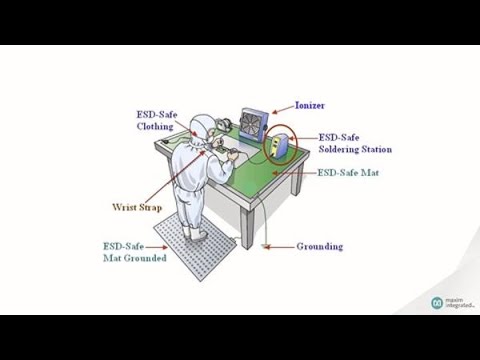
Open this video from Maxim Integrated on YouTube.
Foire aux questions
Is a black plastic pallet automatically ESD safe?
No. Color is not evidence. Approve the declared function using a relevant method, documented conditions, traceable results, and the supplied construction.
Can an ESD pallet replace shielding packaging?
Not automatically. A pallet can support controlled logistics, but shielding requirements must be met by a qualified packaging system for the actual route.
What should be tested first?
Confirm equipment fit and representative load behavior, then perform the agreed ESD verification at defined locations and conditions.
When should a pallet be retired?
Retire or quarantine it when structural damage, deformation, contamination, unauthorized repair, lost traceability, or failed verification violates the approved criteria.
Références autorisées
Dernière publication
-

-
 ESD Wrist Strap Test Frequency and Recordkeeping12 Oct,2026
 -
 Handheld vs Fixed Electrostatic Field Meters12 Oct,2026
Laisser un commentaire