- Turbo
- Blog
Sebuah ESD pallet is a reusable logistics platform intended to move electrostatic-discharge-sensitive materials without introducing an uncontrolled packaging layer. Selection is not simply a choice between black and ordinary plastic. Buyers must define the ESD function, load case, deck and runner geometry, equipment interface, cleaning method, route outside or inside an ESD protected area, and the evidence required from the supplier. The pallet also works with boxes, trays, bags, stretch materials, racks, and lift equipment, so its performance cannot be judged in isolation. This guide provides a practical specification, qualification, incoming-inspection, and RFQ framework for electronics factories and warehouses.
Define the pallet’s role in the material route
Start by mapping every transfer from receiving to line-side use. Record whether sensitive devices are sealed in protective packaging, exposed in trays, or carried inside conductive containers. A pallet under closed shielding packages performs a different role from one carrying exposed assemblies inside an EPA. The required packaging boundary must remain intact during forklift pickup, staging, storage, and unpacking.
Also identify the uncontrolled portions of the route. A material described as conductive or dissipative does not automatically provide electrostatic shielding. NASA workmanship guidance treats transport, grounding, and protective packaging as coordinated controls. Define which layer supplies physical support, which limits charge generation, and which provides any required field shielding.

Separate ESD behavior from load performance
The electrical claim and the mechanical rating answer different questions. Ask for a declared test method, conditioning, test locations, acceptance criteria, and traceable results for the supplied material. Do not approve a pallet from color or resin name alone. Additives, contamination, wear, humidity, and production variation may affect measured behavior.
Mechanical qualification must address the real load: uniformly distributed cartons behave differently from point loads, drums, racks, or containers with small feet. Confirm static storage, dynamic handling, racking support, impact, deck deflection, runner integrity, and the intended lift direction with the responsible packaging engineer. Never copy an attractive load number from another pallet geometry.
Match deck and runner geometry to equipment
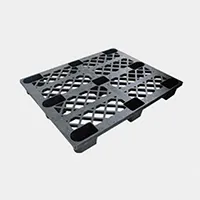
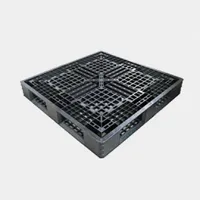
Review pallet width, length, height, entry direction, fork opening, runner pattern, deck openings, edge lips, and nesting or stacking behavior. Check all forklifts, pallet jacks, conveyors, lifts, racks, and automated systems that will touch the pallet. Small dimensional differences can create unsafe fork engagement or unstable conveyor travel.
Closed decks can reduce the chance of small items falling through and may simplify some cleaning tasks, while open decks may reduce mass and improve drainage. The correct choice depends on contamination controls and the load. Ribbing, anti-slip features, rims, and retaining edges should be reviewed with the actual boxes or totes rather than from a catalogue image.
Control every layer above the pallet
An ESD pallet does not correct an uncontrolled load. Ordinary stretch film, insulating straps, nonqualified foam, loose labels, or damaged boxes can remain charge-generating materials near sensitive hardware. List each packaging layer and decide whether it is inside or outside the protection boundary.
Confirm how loads are bonded, grounded, enclosed, or separated where required by the facility control plan. If the pallet is used only as a mechanical carrier for closed protective packages, state that limitation. If it is expected to participate in a conductive path, verify contacts and interfaces in the loaded configuration rather than measuring an isolated clean surface.
Plan cleaning, inspection and retirement
Document an approved cleaning method and verify compatibility before release. Residue, dust, oils, and aggressive chemicals can change both handling and electrical behavior. Cleaners should not be adopted from a generic plastic-care procedure without checking the pallet material, workplace requirements, and ESD plan.
Create visual retirement criteria for cracked runners, excessive deck deformation, damaged lips, exposed sharp edges, embedded contamination, illegible identification, and repairs that change construction. Define the ESD retest interval from risk, use frequency, environment, historical variation, and the organization’s control program rather than assuming indefinite performance.
Jadual pemilihan dan kelayakan
| Route question | Mengapa ia penting | Bukti untuk diminta |
|---|---|---|
| Inside or outside an EPA? | Determines the protective packaging boundary | Route map and package configuration |
| What load and support pattern? | Controls deflection and structural risk | Load drawing and handling trial |
| Which handling equipment? | Controls fork entry and conveyor fit | Interface dimensions and trial |
| What ESD function is claimed? | Prevents vague “anti-static” approval | Test method, conditions and results |
| How is it cleaned and reused? | Affects contamination and lifecycle performance | Approved procedure and inspection criteria |
Jalankan percubaan artikel pertama yang terkawal
Gunakan sampel didokumenkan yang mewakili pembinaan pengeluaran yang dicatatkan. Bandingkannya dengan item diluluskan semasa jika ada. Rekodkan pengenalan, semakan, lot pembekal, keadaan persekitaran, peralatan, pengendali, dan pemerhatian. Percubaan harus merangkumi penerimaan, penyimpanan, penyediaan, penggunaan biasa, pembersihan jika berkenaan, dan pelupusan atau pemulangan. Hentikan percubaan jika item tersebut merosakkan produk, menyebabkan pencemaran, mengganggu peralatan, atau bercanggah dengan ESD atau prosedur keselamatan.
Asingkan kriteria lulus daripada pemerhatian. Dimensi, pelabelan, kesesuaian, mutu kerja, bukti bahan, dan kelakuan fungsian mungkin memerlukan pemeriksaan yang berbeza. Selesaikan penyimpangan sebelum kelulusan kuantiti pengeluaran, dan simpan lukisan terkawal, laporan, dan sampel kelulusan. Wajibkan pemberitahuan pembekal sebelum sebarang perubahan pada sumber bahan, bahan tambah, pelekat, pembinaan, perkakasan, proses, atau dimensi kritikal.
Pemeriksaan ketibaan dan kawalan berterusan
- Padankan item, semakan lukisan, kuantiti, lot pembekal, and label pembungkusan dengan pesanan.
- Periksa pencemaran, kerosakan, mutu kerja yang buruk, dimensi yang tidak betul, and pengenalan yang hilang.
- Lakukan persampelan dan pengesahan yang bersetuju dengan kaedah yang didokumenkan dan peralatan yang dikalibrasi di mana pengukuran diperlukan.
- Kuarantin perubahan yang tidak dapat dijelaskan pada warna, bau, tekstur, kemelekatan, kesesuaian, gulungan, geometri, atau prestasi.
- Simpan rekod penerimaan dan pautkan aduan atau kegagalan kepada lot yang terjejas.
- Semak semula spesifikasi apabila produk, peralatan, laluan, kaedah pembersihan, atau pelan kawalan berubah.
Senarai semak RFQ untuk pembeli
Nyatakan aplikasi, sempadan perlindungan, antara muka peralatan atau bahagian, dimensi dan toleransi, binaan bahan, fungsi yang diperlukan, kaedah ujian dan kriteria penerimaan, keperluan kebersihan dan mutu kerja, pembungkusan, pelabelan, kebolehkesanan, kuantiti sampel, jangkaan artikel pertama, dokumentasi, pemberitahuan perubahan, dan kuantiti penghantaran. Rujuk kepada SWESD anti-static logistics pallet product untuk jenis produk yang sedang dipaparkan, dan gunakan Pusat produk SWESD untuk menyelaraskannya dengan peralatan pengendalian yang berkaitan.
Minta pembekal menyenaraikan andaian dan pengecualian. Elakkan daripada menyalin dakwaan katalog yang belum disahkan ke dalam spesifikasi terkawal. Had teknikal, pensijilan, and penyataan pematuhan harus disemak berbanding item sebenar yang dibekalkan dan aplikasi pembeli.
Bandingkan sampel di bawah syarat yang sama
Perbandingan yang berguna mengubah satu keputusan pada satu masa. Gunakan bahagian, pengendali, peralatan, laluan, persediaan pembersihan, dan tempoh pemerhatian yang sama untuk setiap calon. Labelkan sampel supaya penilai tidak mengelirukan identiti pembekal, semakan, atau urusan ujian. Jika praktikal, sertakan item yang diluluskan sekarang sebagai garis dasar. Rekodkan kedua-dua kelakuan berjaya dan kerja yang diperlukan untuk mencapainya, seperti pelarasan tambahan, pembersihan berulang, pengendalian yang lebih perlahan, atau campur tangan pengendali.
Jangan gabungkan kesimpulan elektrik, mekanikal, kebersihan, dan komersial ke dalam satu skor yang samar. Calon mungkin sesuai tetapi kekurangan bukti ketara yang boleh dikesan, atau mempunyai dokumentasi yang kukuh tetapi prestasi yang lemah dalam mesin. Kekalkan kriteria lulus yang berasingan untuk keselamatan, kawalan ESD, perlindungan produk, keserasian peralatan, pencemaran, kebolehtagunaan, dokumentasi, dan kos kitaran hayat. Sebarang kegagalan ketara harus diselesaikan dan bukannya disembunyikan oleh skor purata yang tinggi.
Perbandingan komersial harus menggunakan kos proses yang siap dan diterima, bukan hanya harga sepasang. Masukkan usaha pemeriksaan, masa penukaran, sisa, pembersihan, penggantian, risiko masa henti, logistik pemulangan, dokumentasi, dan kesan lot yang tidak konsisten. Faktor-faktor ini tidak mewajarkan penciptaan tuntutan jangka hayat perkhidmatan; faktor-faktor ini membantu pembeli merangka percubaan yang mengukur syarat-syarat yang sebenarnya mewujudkan kos.
Sumber perancangan SWESD yang berkaitan
- planning combined trolley, box, and rack transport
- defining load requirements for ESD transport carts
- selecting the corrugated boxes used above a pallet
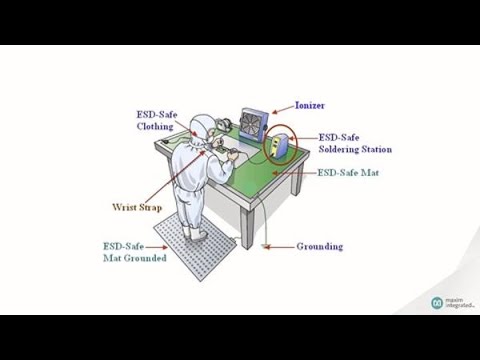
Educational video: Fundamentals of Electrostatic Discharge by Maxim Integrated
This electronics education video explains the discharge risk that an ESD logistics system is intended to control. The written guide remains complete without the video.
Open this video from Maxim Integrated on YouTube.
Soalan Lazim
Is a black plastic pallet automatically ESD safe?
No. Color is not evidence. Approve the declared function using a relevant method, documented conditions, traceable results, and the supplied construction.
Can an ESD pallet replace shielding packaging?
Not automatically. A pallet can support controlled logistics, but shielding requirements must be met by a qualified packaging system for the actual route.
What should be tested first?
Confirm equipment fit and representative load behavior, then perform the agreed ESD verification at defined locations and conditions.
When should a pallet be retired?
Retire or quarantine it when structural damage, deformation, contamination, unauthorized repair, lost traceability, or failed verification violates the approved criteria.


Tinggalkan Balasan