- Turbo
- Blog
An ESD pallet is a reusable logistics platform intended to move electrostatic-discharge-sensitive materials without introducing an uncontrolled packaging layer. Selection is not simply a choice between black and ordinary plastic. Buyers must define the ESD function, load case, deck and runner geometry, equipment interface, cleaning method, route outside or inside an ESD protected area, and the evidence required from the supplier. The pallet also works with boxes, trays, bags, stretch materials, racks, and lift equipment, so its performance cannot be judged in isolation. This guide provides a practical specification, qualification, incoming-inspection, and RFQ framework for electronics factories and warehouses.
Define the pallet’s role in the material route
Start by mapping every transfer from receiving to line-side use. Record whether sensitive devices are sealed in protective packaging, exposed in trays, or carried inside conductive containers. A pallet under closed shielding packages performs a different role from one carrying exposed assemblies inside an EPA. The required packaging boundary must remain intact during forklift pickup, staging, storage, and unpacking.
Also identify the uncontrolled portions of the route. A material described as conductive or dissipative does not automatically provide electrostatic shielding. NASA workmanship guidance treats transport, grounding, and protective packaging as coordinated controls. Define which layer supplies physical support, which limits charge generation, and which provides any required field shielding.

Separate ESD behavior from load performance
The electrical claim and the mechanical rating answer different questions. Ask for a declared test method, conditioning, test locations, acceptance criteria, and traceable results for the supplied material. Do not approve a pallet from color or resin name alone. Additives, contamination, wear, humidity, and production variation may affect measured behavior.
Mechanical qualification must address the real load: uniformly distributed cartons behave differently from point loads, drums, racks, or containers with small feet. Confirm static storage, dynamic handling, racking support, impact, deck deflection, runner integrity, and the intended lift direction with the responsible packaging engineer. Never copy an attractive load number from another pallet geometry.
Match deck and runner geometry to equipment
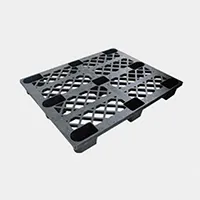
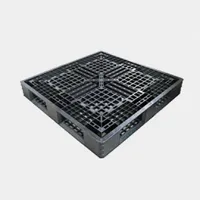
Review pallet width, length, height, entry direction, fork opening, runner pattern, deck openings, edge lips, and nesting or stacking behavior. Check all forklifts, pallet jacks, conveyors, lifts, racks, and automated systems that will touch the pallet. Small dimensional differences can create unsafe fork engagement or unstable conveyor travel.
Closed decks can reduce the chance of small items falling through and may simplify some cleaning tasks, while open decks may reduce mass and improve drainage. The correct choice depends on contamination controls and the load. Ribbing, anti-slip features, rims, and retaining edges should be reviewed with the actual boxes or totes rather than from a catalogue image.
Control every layer above the pallet
An ESD pallet does not correct an uncontrolled load. Ordinary stretch film, insulating straps, nonqualified foam, loose labels, or damaged boxes can remain charge-generating materials near sensitive hardware. List each packaging layer and decide whether it is inside or outside the protection boundary.
Confirm how loads are bonded, grounded, enclosed, or separated where required by the facility control plan. If the pallet is used only as a mechanical carrier for closed protective packages, state that limitation. If it is expected to participate in a conductive path, verify contacts and interfaces in the loaded configuration rather than measuring an isolated clean surface.
Plan cleaning, inspection and retirement
Document an approved cleaning method and verify compatibility before release. Residue, dust, oils, and aggressive chemicals can change both handling and electrical behavior. Cleaners should not be adopted from a generic plastic-care procedure without checking the pallet material, workplace requirements, and ESD plan.
Create visual retirement criteria for cracked runners, excessive deck deformation, damaged lips, exposed sharp edges, embedded contamination, illegible identification, and repairs that change construction. Define the ESD retest interval from risk, use frequency, environment, historical variation, and the organization’s control program rather than assuming indefinite performance.
Selectie- en kwalificatietabel
| Route question | Waarom het ertoe doet | Bewijs om op te vragen |
|---|---|---|
| Inside or outside an EPA? | Determines the protective packaging boundary | Route map and package configuration |
| What load and support pattern? | Controls deflection and structural risk | Load drawing and handling trial |
| Which handling equipment? | Controls fork entry and conveyor fit | Interface dimensions and trial |
| What ESD function is claimed? | Prevents vague “anti-static” approval | Test method, conditions and results |
| How is it cleaned and reused? | Affects contamination and lifecycle performance | Approved procedure and inspection criteria |
Voer een gecontroleerde nulserieproef uit
Gebruik een gedocumenteerd monster dat de voorgestelde productieconstructie vertegenwoordigt. Vergelijk dit met het huidige goedgekeurde item, indien dat aanwezig is. Leg identificatie, revisie, leverancierspartij, omgevingsomstandigheden, apparatuur, operators en observaties vast. Een proef moet ontvangst, opslag, voorbereiding, normaal gebruik, reiniging waar van toepassing, en afvoer of retour omvatten. Stop de proef als het item een product beschadigt, verontreiniging veroorzaakt, interfereert met apparatuur, of in conflict is met de ESD- of veiligheidsprocedure.
Scheid goedkeuringscriteria van observaties. Afmetingen, etikettering, pasvorm, vakmanschap, materiële bewijzen en functioneel gedrag kunnen verschillende controles vereisen. Los afwijkingen op voordat productiehoeveelheden worden goedgekeurd, en bewaar de gecontroleerde tekening, het rapport en het goedkeuringsmonster. Vereist melding door de leverancier voorafgaand aan een wijziging in materiaalbron, additief, lijm, constructie, gereedschap, proces of kritische afmeting.
Inkomende inspectie en doorlopende controle
- Controleer of het artikel, de revisie van de tekening, de hoeveelheid, de leverancierslot en het verpakkingsetiket overeenkomen met de bestelling.
- Inspecteren op verontreiniging, beschadiging, slechte afwerking, onjuiste afmetingen en ontbrekende identificatie.
- Voer de overeengekomen bemonstering en verificatie uit met een gedocumenteerde methode en gekalibreerde apparatuur waar meting vereist is.
- Quarantaine onverklaarbare veranderingen in kleur, geur, textuur, kleverigheid, pasvorm, wikkeling, geometrie of prestaties.
- Houd acceptatieregistraties bij en koppel klachten of storingen aan de betreffende lotgrootte.
- Herzie de specificatie wanneer het product, de apparatuur, de route, de reinigingsmethode of het beheersplan verandert.
Offerteaanvraagchecklist voor kopers
Vermeld de toepassing, beschermingsgrens, uitrusting- of onderdeelinterface, afmetingen en toleranties, materiaalsamenstelling, vereiste functie, testmethode en acceptatiecriteria, reinheids- en afwerkingsvereisten, verpakking, etikettering, traceerbaarheid, monsterhoeveelheid, verwachtingen voor het eerste artikel, documentatie, wijzigingsmelding en leveringshoeveelheid. Verwijs naar de SWESD anti-static logistics pallet product voor het momenteel weergegeven producttype, en gebruik de SWESD-productcentrum om dit te coördineren met aanverwante behandelingsapparatuur.
Vraag de leverancier om aannames en voorbehouden op te sommen. Vermijd het overnemen van niet-gecontroleerde catalogusclaims in een beheerde specificatie. Technische limieten, certificeringen en nalevingsverklaringen moeten worden getoetst aan het daadwerkelijk geleverde item en de toepassing van de koper.
Vergelijk monsters onder dezelfde omstandigheden
Een nuttige vergelijking verandert één beslissing tegelijk. Gebruik dezelfde representatieve onderdelen, operators, apparatuur, route, reinigingsvoorbereiding en observatieperiode voor elke kandidaat. Voorzie monsters van een label zodat reviewers de identiteit van de leverancier, revisie of testvolgorde niet verwarren. Neem, waar praktisch, het goedgekeurde item van dat moment op als referentiekader. Registreer zowel het succesvolle gedrag als het werk dat nodig was om dat te bereiken, zoals extra afstelling, herhaalde reiniging, langzamere hantering of tussenkomst van de operator.
Combineer elektrische, mechanische, reinigheids- en commerciële conclusies niet tot één vaag score. Een kandidaat past misschien goed, maar mist aantoonbaar materieel bewijs, of heeft sterke documentatie maar presteert slecht in de machine. Houd afzonderlijke slaapcriteria aan voor veiligheid, ESD-besturing, productbescherming, apparatuurcompatibiliteit, vervuiling, bruikbaarheid, documentatie en levensduurkosten. Een harde fout moet worden opgelost in plaats van verborgen te worden door een hoge gemiddelde score.
Commerciële vergelijking moet gebruikmaken van de kosten van een voltooid en geaccepteerd proces, niet alleen de prijs per stuk. Neem hierin op: inspectie-inspanning, omsteltijd, uitval, reiniging, vervanging, stilstandsrisico, retourlogistiek, documentatie en het effect van inconsistente lots. Deze factoren rechtvaardigen niet het verzinnen van een levensduurclaim; ze helpen de koper bij het ontwerpen van een proef die de omstandigheden meet die daadwerkelijk kosten veroorzaken.
Gerelateerde SWESD-planningsbronnen
- planning combined trolley, box, and rack transport
- defining load requirements for ESD transport carts
- selecting the corrugated boxes used above a pallet
Educational video: Fundamentals of Electrostatic Discharge by Maxim Integrated
This electronics education video explains the discharge risk that an ESD logistics system is intended to control. The written guide remains complete without the video.
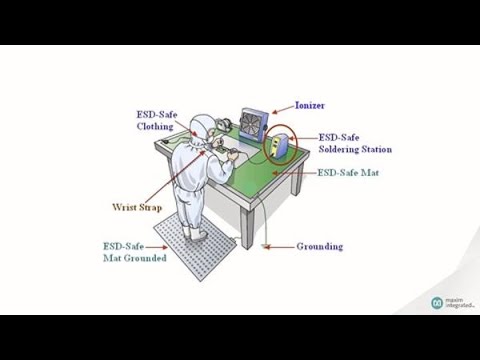
Open this video from Maxim Integrated on YouTube.
Veelgestelde vragen
Is a black plastic pallet automatically ESD safe?
No. Color is not evidence. Approve the declared function using a relevant method, documented conditions, traceable results, and the supplied construction.
Can an ESD pallet replace shielding packaging?
Not automatically. A pallet can support controlled logistics, but shielding requirements must be met by a qualified packaging system for the actual route.
What should be tested first?
Confirm equipment fit and representative load behavior, then perform the agreed ESD verification at defined locations and conditions.
When should a pallet be retired?
Retire or quarantine it when structural damage, deformation, contamination, unauthorized repair, lost traceability, or failed verification violates the approved criteria.


Plaats een reactie