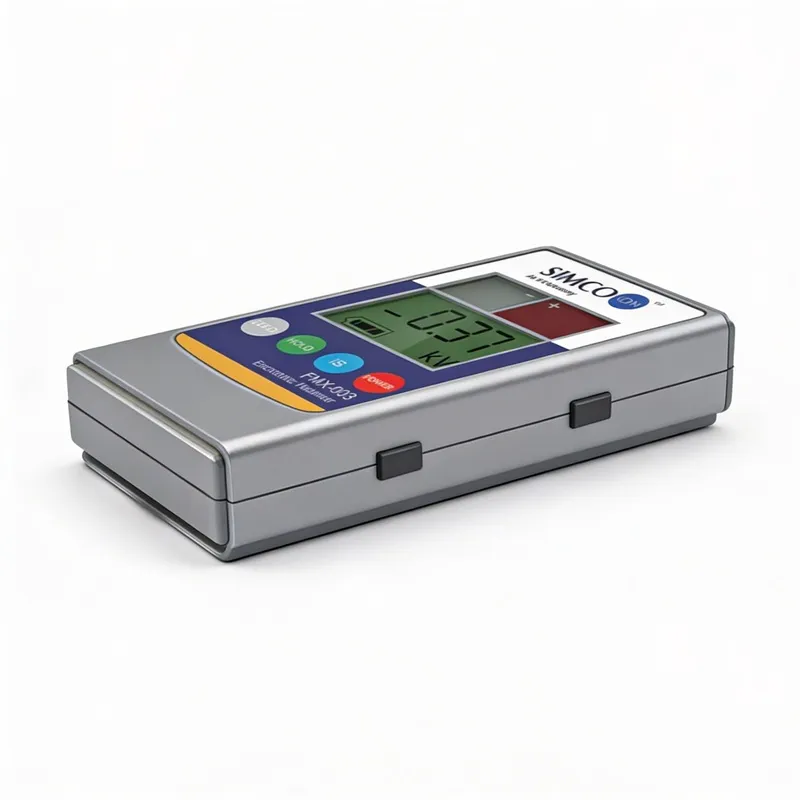
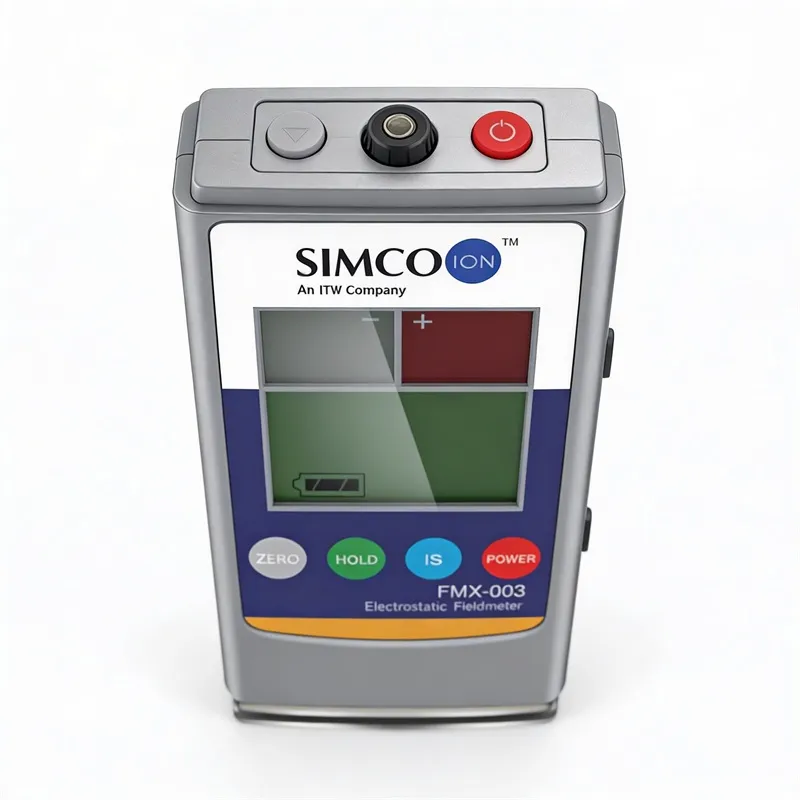
Elektrostatik Alan Ölçer FMX-003 El Tipi Statik Voltaj Dedektörü
Genel Bakış:
Introduction
If you’ve ever had to track down the source of an unexplained ESD failure or verify whether your ionisers are actually doing their job, you know that static charge is invisible but anything but harmless. That’s where an electrostatic field meter comes in. Unlike resistance testers that require physical contact, these handheld devices let you measure static charge on surfaces from a safe distance—quickly, reliably, and without disturbing the object under test. Whether you’re auditing a production floor, troubleshooting a cleanroom issue, or simply doing routine static surveys, a good electrostatic field meter is your eyes for the invisible.
What Exactly Is an Electrostatic Field Meter?
At its core, an electrostatic field meter is a non‑contact instrument that detects the electric field generated by a charged object. It works on the principle of electrostatic induction—sensing the field strength and converting it into a voltage reading, typically in kilovolts per unit distance. Because it doesn’t draw any current from the object, it can measure delicate electronic components, packaging materials, and even human body charges without affecting the charge itself. This makes it fundamentally different from a surface resistance tester, which measures ohmic conductivity.
The SIMCO FMX‑003 Electrostatic Field Meter
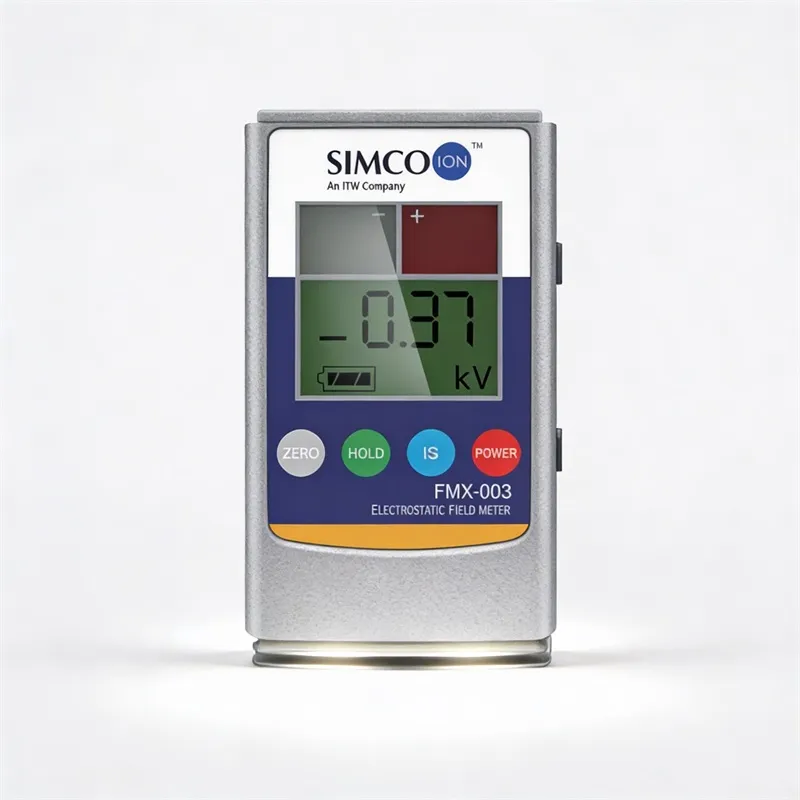
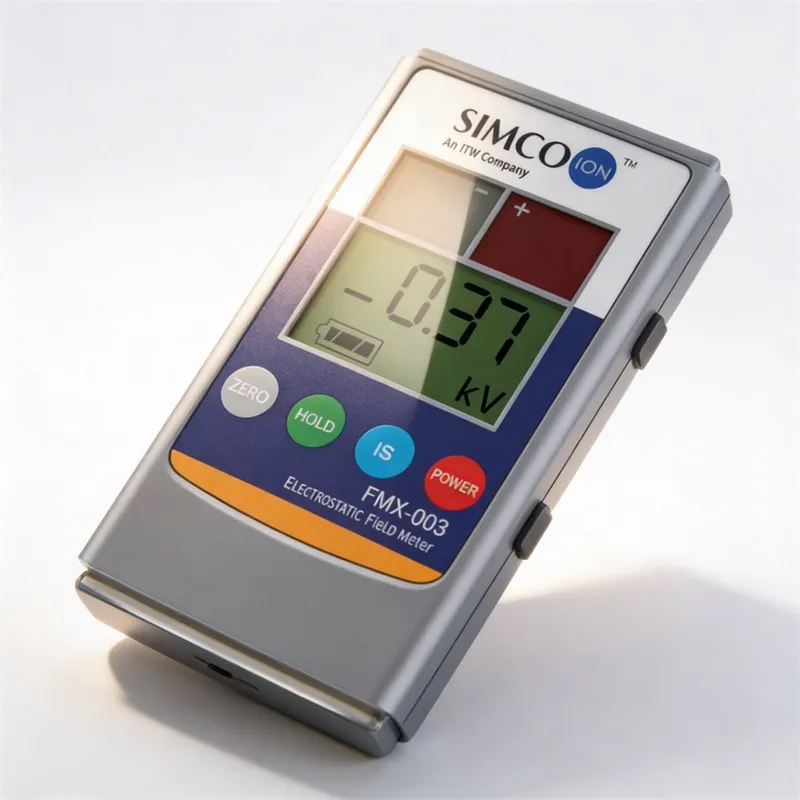
If there’s one model that has earned a reputation for reliability in the ESD community, it’s the SIMCO FMX‑003 electrostatic field meter. This pocket‑sized unit measures static voltages up to ±22 kV at a fixed distance of 1 inch (25 mm) – a distance that’s easily maintained thanks to two built‑in LED guide lights that show you exactly where to position the sensor. The display gives you both a numerical value and a colour‑coded bar graph (red for positive, blue for negative), so you can read results at a glance even in dim lighting. It also includes an ion balance mode for checking ioniser offset voltage (0 to ±220 V), a HOLD function to freeze readings, and an audible alarm for out‑of‑range measurements. Weighing just 170 g and featuring a conductive case with a grounding snap, it’s designed for real‑world field use—not just lab conditions.
Why Electrostatic Field Meter Calibration Matters
You might have the best instrument on the market, but without regular electrostatic field meter calibration, your readings are just educated guesses. Calibration ensures that the sensor’s response remains linear and accurate over time, compensating for component drift and environmental factors. Reputable manufacturers typically provide NIST‑traceable calibration certificates with each unit, and industry best practice recommends recalibration at least annually—or more frequently if the meter sees heavy use. Standards like IEC 61340 outline specific procedures for verifying performance, including test voltage levels, distance accuracy, and environmental conditions. Skipping calibration isn’t worth the risk: a false low reading could leave you with an unchecked static hazard, while a false high reading might send you chasing problems that don’t exist.
Where You’ll Actually Use a Handheld Electrostatic Field Meter
The list of applications for a handheld electrostatic field meter is longer than most people think. In electronics assembly, it’s the go‑to tool for auditing ESD workstations, checking charge buildup on PCBs and components, and verifying that packaging materials aren’t generating excessive static. In cleanrooms and medical device manufacturing, it helps prevent particle attraction—static charges can pull in dust and contaminants, compromising product sterility. In printing and converting, it identifies static issues that cause ink misregistration or material misalignment. And in R&D labs, it’s used for material characterisation and comparative studies. Essentially, any environment where static charge could affect quality, safety, or reliability is a candidate for regular electrostatic field meter use.
Teknik Şartname
| Model | Measurement Range | Accuracy Range | Test Distance | Size (L×W×H) | Ağırlık |
| 3W-7802(FMX-003) | ±20KV | 10% | 25mm | 122×65×27mm | 130G |
Dünya Standartlarında ESD Üretim Kapasitesi
Sanwei'den tedarik yaptığınızda, sektör lideri bir OEM/ODM üreticisiyle doğrudan iş ortaklığı yapmış olursunuz. Son teknolojiye sahip bir tesis işletiyoruz. 70.000+ m² entegre üretim tesisi Zhejiang, Yueqing Merkez Endüstri Parkı'nda, tescilli malzeme formülasyonundan son yüksek hassasiyetli ürün kalıplamasına kadar her bir süreci yönetmektedir.
Entegre Terazi
70.000+ m² alana kurulu, istikrarlı teslimat süreleriyle toplu toptan siparişleri karşılamak için ağır hizmet tipi hassas enjeksiyon makineleriyle donatılmış gelişmiş üretim tesisi.
Uçtan Uca Kontrol
Tescilli anti-statik malzeme Ar-Ge'si, yapısal kalıp mühendisliği, otomasyonlu üretim ve hızlı küresel lojistik teslimatını kapsayan tamamen şirket içi kontrol.
Titiz Denetim
Üretim hattında gerçekleştirilen çok noktalı yüzey direnci ölçümleriyle birleştirilen sıkı hammadde testleri, 100% ürününün uluslararası ESD standart kılavuzlarına uygunluğunu garanti eder.
Antistatik Ürünler ve Çözümler
Tüm üretim ve operasyonel yaşam döngünüz boyunca kapsamlı elektrostatik koruma sağlıyoruz.
SMT Ekipmanları
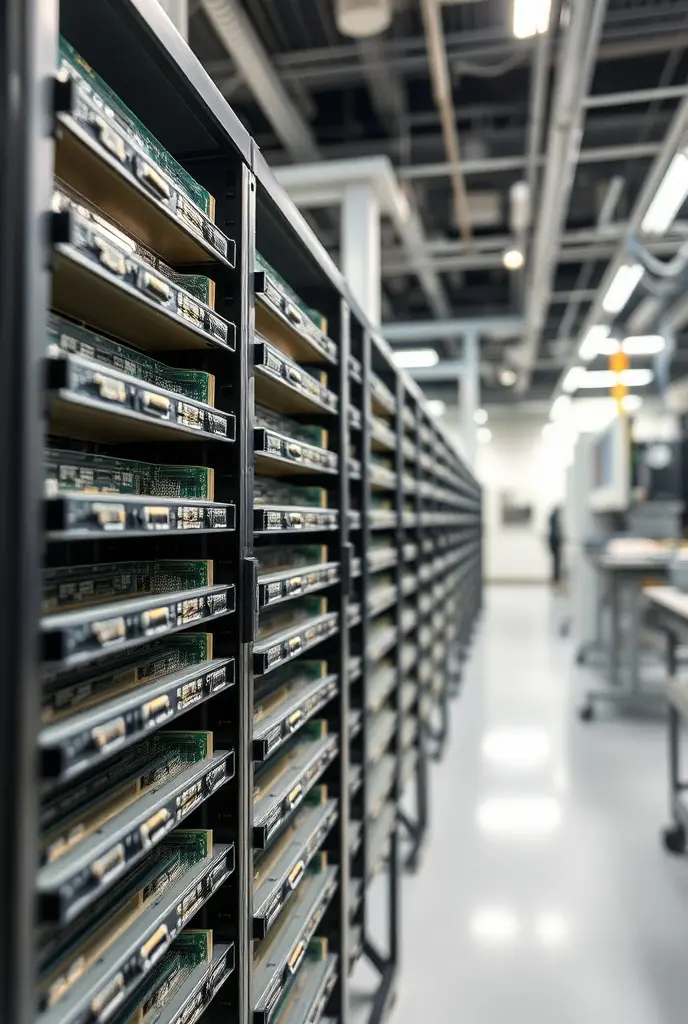
Otomatik hatlar için anti-statik toplama kutuları ve rafları.

Depolama ve Lojistik
Devirdaim arabaları, raflar, kutular, tepsiler ve parça kapları.

İş İstasyonu ve KKD
Antistatik sandalyeler, matlar, bileklikler ve kişisel koruma.
Özel Geliştirme
Özel kalıp geliştirme ve özel anti-statik malzemeler.
OEM/ODM AVANTAJLARIMIZ

İleri Ar-Ge ve Malzeme İnovasyonu
Ulusal buluş patentlerine sahip ve 200℃'ye kadar ısı dayanımı bulunan, bünyemizde geliştirilmiş antistatik malzemeler. Biz sadece kalıplama yapmıyoruz; bileşikler formüle ediyoruz.

Tam Ölçekli Üretim Kapasitesi
Kararlı ve verimli tedarik için eksiksiz enjeksiyon kalıplama, granülasyon ve destekleyici işleme sistemlerine sahip 30.000 m²'lik tesis.

Uçtan Uca Özel Tasarım
Malzeme özdirenci, renk, boyut, logo, ambalaj ve sertifikalar; IEC61340-5-1, ANSI/ESD S20.20 veya askeri standartları karşılayacak şekilde özelleştirilebilir.

Sertifikalı Kalite ve Küresel Uyumluluk
“Sanwei, yarı iletken montaj hattımız için özel yüksek sıcaklığa dayanıklı, temiz doğal renkli tepsi üretimini başarıyla gerçekleştirerek ithal ürünlerin yerini almış, mükemmel ESD güvenliği sağlamış ve atölyenin yüksek temizlik gereksinimlerini karşılamıştır.”
KÜRESEL FORTUNE 500 ENDÜSTRİ LİDERLERİNİN GÜVENDİĞİ
Tescilli ESD çözümlerimiz, aşağıdakiler dahil olmak üzere dünya çapındaki seçkin üretim tesislerinde kullanılmaktadır: Intel, Motorola, Siemens, IBM, Panasonic, Nokia ve Dell.
Özel Ölçüler veya Toplu Toptan Fiyatlandırma mı arıyorsunuz?
Güçlü büro-içi Ar-Ge ekibimizin desteğiyle Sanwei; özel SMT üretim hatlarınıza veya depo yerleşiminize göre uyarlanmış eksiksiz OEM/ODM seçenekleri sunar. Özel kalıplar, renk kodlaması veya entegre 5S depolama danışmanlığı için uzmanlarımızla bugün iletişime geçin.
Sık Sorulan Sorular (SSS)
1. What is an electrostatic field meter used for?
It detects and measures static charge on surfaces without touching them, helping you find ESD risks in manufacturing, cleanrooms, packaging, and labs.
2. What is the principle of electrostatic field meter?
It senses the electric field from a charged object by induction – the field induces a charge on the meter’s sensor, which is then converted into a voltage reading.
3. What is the electrostatic field meter FMX 004?
It’s a compact handheld model from Simco‑Ion, measuring up to ±30 kV at 1‑inch distance, with LED guides, colour‑coded display, and ion‑balance mode.
4. How does the electrostatic field meter work?
It places a sensor near the charged surface, picks up the field strength, converts that into an electrical signal, and displays the result as a voltage value.
5. What is the difference between electrostatic field meter and electrostatic voltmeter?
A field meter measures the overall field over a larger area; a voltmeter measures the exact voltage at a tiny, specific spot. Field meters are quicker for surveys; voltmeters are more precise for detailed analysis.