- Tăng áp
- Blog
An ESD EVA foam tray combines shaped cushioning with an electrostatic-control claim, but those two functions must be specified and verified separately. The tray must fit the actual part, support approved surfaces, limit damaging movement, permit safe loading and removal, and remain suitable for the intended ESD protected or transport environment. A black foam appearance, density description, or generic “anti-static” label is not enough to approve it. Buyers need traceable material evidence, a controlled cavity drawing, a representative fit test, cleanliness and shedding checks, and lifecycle criteria. This guide explains how to turn a custom foam-tray request into a verifiable electronics packaging specification.
Clarify whether the tray is cushioning, positioning, or primary protection
A foam tray may prevent part-to-part contact, hold orientation, cushion shock, or serve as a work-in-process carrier. State which function is essential. If the tray directly contacts an unprotected sensitive device, its electrical and contamination behavior becomes part of the ESD control plan. If sealed shielding bags surround every item, the foam may play primarily a mechanical role.
Do not assume that cushioning equals shielding. Electrostatic field protection, low charge generation, resistance behavior, and mechanical energy absorption are different properties. Assign each requirement to a packaging layer and make the boundary clear on the drawing and process instruction.
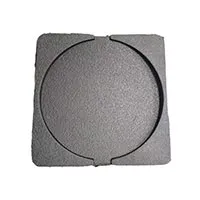
Design cavities from the component—not from a generic sample
Use current part data, approved contact areas, keep-out zones, connector locations, lead or pin protection, polarity, orientation, and removal sequence. Provide finger access or a suitable removal feature so operators do not pull on sensitive leads or scratch functional surfaces. Evaluate tolerance stack-up between the part, cavity, and any cover.
The cavity should retain the part during the defined route without excessive compression. Foam that is too tight can stress the part or shed during loading; foam that is too loose allows impact and rubbing. Prototype with production-representative parts and observe loading, removal, inversion, vibration exposure, and operator variation.
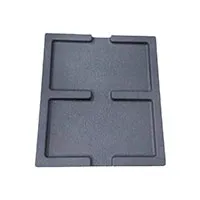
Specify material evidence precisely
EVA describes a polymer family, not an ESD performance category. Ask the supplier to identify the material construction, claimed electrical behavior, applicable test method, conditioning environment, specimen preparation, measured result, and lot traceability. If layers, coatings, laminations, or adhesives are used, identify each one.
A report for a flat raw sheet may not fully represent a molded or machined tray. Heat, machining, skin formation, adhesives, contamination, and cleaning can affect the finished item. Agree whether qualification and periodic checks apply to raw material, finished cavities, contact surfaces, or all three.
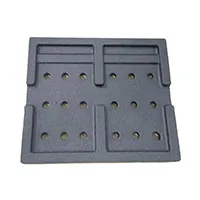
Evaluate cleanliness, shedding and chemical compatibility
Inspect cut edges and cavities for loose particles, dust, odor, residue, and torn surfaces. Cleanroom or high-reliability applications may require tighter controls than general warehouse packaging. The buyer should define the allowed preparation and cleaning method rather than letting each operator improvise.
Check compatibility with component finishes, optics, labels, bags, and any approved cleaning agent. Do not claim low outgassing, chemical resistance, cleanroom classification, or long-term stability without applicable evidence. Where those properties are critical, make them separate qualification items with an agreed method.
Control tooling, revisions and replacement
Custom cavities are controlled features. Record drawing revision, cavity dimensions, tray orientation, tooling identity, material specification, date or lot code, and approval sample. Require notification before changes to foam source, additive system, color, adhesive, manufacturing process, or tooling.
Define what constitutes damage: crushed cavities, permanent set, tears, contamination, lost labels, warped trays, or failed verification. Reuse should be based on inspection and risk, not appearance alone. A replacement plan is especially important when the tray becomes part of automated loading or tightly fitted racks.
Bảng lựa chọn và sơ tuyển
| Specification item | Question for the buyer | Qualification evidence |
|---|---|---|
| Protection role | What must the tray physically and electrically do? | Packaging boundary and process map |
| Cavity geometry | Where may the foam touch the part? | Controlled drawing and fit trial |
| Vật liệu | Which construction is actually supplied? | Declaration, method and traceable results |
| Sự sạch sẽ | What residue or shedding is unacceptable? | Visual criteria and approved cleaning trial |
| Lifecycle | How will wear and changes be controlled? | Inspection, retest and change-notice plan |
Chạy thử nghiệm sản phẩm mẫu đầu tiên có kiểm soát
Sử dụng mẫu đã được ghi chép đại diện cho quá trình thi công sản xuất đề xuất. So sánh nó với hạng mục hiện tại đã được phê duyệt nếu có. Ghi lại nhận dạng, phiên bản, lô nhà cung cấp, điều kiện môi trường, thiết bị, người vận hành và các quan sát. Một đợt thử nghiệm nên bao gồm khâu tiếp nhận, lưu trữ, chuẩn bị, sử dụng bình thường, làm sạch nếu có, và xử lý hoặc trả lại. Dừng thử nghiệm nếu hạng mục làm hỏng sản phẩm, tạo ra sự ô nhiễm, cản trở thiết bị, hoặc xung đột với quy trình ESD hoặc an toàn.
Tách biệt các tiêu chí đạt chuẩn khỏi các quan sát. Kích thước, nhãn mác, độ vừa vặn, tay nghề chế tác, bằng chứng vật liệu và hành vi chức năng có thể yêu cầu các kiểm tra khác nhau. Giải quyết các sai lệch trước khi phê duyệt số lượng sản xuất, đồng thời lưu giữ bản vẽ được kiểm soát, báo cáo và mẫu phê duyệt. Yêu cầu nhà cung cấp thông báo trước khi có bất kỳ thay đổi nào đối với nguồn vật liệu, chất phụ gia, chất kết tinh, kết cấu, dụng cụ, quy trình hoặc kích thước quan trọng.
Kiểm tra đầu vào và kiểm soát thường xuyên
- Khớp mặt hàng, lần sửa đổi bản vẽ, số lượng, lô của nhà cung cấp và nhãn bao bì với đơn hàng.
- Kiểm tra sự ô nhiễm, hư hỏng, tay nghề kém, kích thước không chính xác và thiếu nhận diện.
- Tiến hành lấy mẫu và xác minh theo thỏa thuận bằng một phương pháp có tài liệu hướng dẫn và thiết bị hiệu chuẩn trong trường hợp yêu cầu đo lường.
- Cách ly các thay đổi không rõ nguyên nhân về màu sắc, mùi, kết cấu, độ dính, độ vừa vặn, kiểu quấn, hình học hoặc hiệu suất.
- Lưu giữ hồ sơ nghiệm thu và liên kết các khiếu nại hoặc lỗi với lô hàng bị ảnh hưởng.
- Xem xét lại đặc tả kỹ thuật khi có thay đổi về sản phẩm, thiết bị, tuyến đường, phương pháp vệ sinh hoặc kế hoạch kiểm soát.
Danh sách kiểm tra RFQ dành cho người mua
Nêu rõ ứng dụng, ranh giới bảo vệ, giao diện thiết bị hoặc bộ phận, kích thước và dung sai, cấu trúc vật liệu, chức năng yêu cầu, phương pháp thử nghiệm và tiêu chuẩn chấp nhận, các yêu cầu về độ sạch và tay nghề, bao bì, nhãn mác, khả năng truy xuất nguồn gốc, số lượng mẫu, kỳ vọng về sản phẩm mẫu đầu tiên (first-article), tài liệu, thông báo thay đổi, và số lượng giao hàng. Tham chiếu SWESD EVA integrated molding tray range cho loại sản phẩm hiện đang hiển thị, và sử dụng Trung tâm sản phẩm SWESD để phối hợp nó với các thiết bị xử lý liên quan.
Yêu cầu nhà cung cấp liệt kê các giả định và ngoại lệ. Tránh sao chép các tuyên bố chưa được xác minh từ catalogue vào một thông số kỹ thuật được kiểm soát. Các giới hạn kỹ thuật, chứng nhận và tuyên bố tuân thủ cần được xem xét đối với mặt hàng thực tế được cung cấp và ứng dụng của bên mua.
So sánh các mẫu dưới cùng điều kiện
Một phép so sánh hữu ích chỉ thay đổi một quyết định tại một thời điểm. Sử dụng các bộ phận đại diện, thao tác, thiết bị, tuyến đường, bước chuẩn bị làm sạch và khoảng thời gian quan sát giống nhau cho mỗi ứng dụng viên. Dán nhãn các mẫu để người đánh giá không nhầm lẫn danh tính nhà cung cấp, phiên bản hoặc trình tự thử nghiệm. Khi thực tế cho phép, hãy đưa mặt hàng hiện đang được phê duyệt vào làm đường cơ sở. Ghi lại cả hành vi thành công lẫn công sức cần thiết để đạt được điều đó, chẳng hạn như điều chỉnh thêm, làm sạch lặp lại, xử lý chậm hơn hoặc sự can thiệp của người vận hành.
Không gộp các kết luận về điện, cơ khí, độ sạch và thương mại thành một điểm số chung chung. Một ứng viên có thể phù hợp nhưng thiếu bằng chứng vật lý có thể truy xuất, hoặc có tài liệu mạnh nhưng vận hành kém trên máy. Duy trì các tiêu chí đạt riêng biệt cho an toàn, kiểm soát ESD, bảo vệ sản phẩm, khả năng tương thích của thiết bị, độ nhiễm bẩn, khả năng sử dụng, tài liệu và chi phí vòng đời. Bất kỳ lỗi nghiêm trọng nào cũng phải được giải quyết thay vì bị che giấu bởi điểm trung bình cao.
So sánh thương mại nên sử dụng chi phí của một quy trình hoàn chỉnh và được nghiệm thu, không chỉ là giá trên từng sản phẩm. Cần tính đến công sức kiểm tra, thời gian chuyển đổi, phế liệu, vệ sinh, thay thế, rủi ro dừng máy, logistics thu hồi, tài liệu, và ảnh hưởng của các lô hàng không đồng nhất. Các yếu tố này không biện minh cho việc bịa đặt ra một tuyên bố về tuổi thọ dịch vụ; chúng giúp người mua thiết kế một cuộc thử nghiệm nhằm đo lường các điều kiện thực sự tạo ra chi phí.
Các tài nguyên lập kế hoạch SWESD liên quan
- comparing custom thermoformed ESD trays
- choosing between IC and logistics trays
- reviewing temperature exposure for ESD trays
Educational video: Fundamentals of Electrostatic Discharge by Maxim Integrated
This educational video provides the device-level ESD background needed to define why direct-contact tray materials must be controlled. The written guide remains complete without the video.
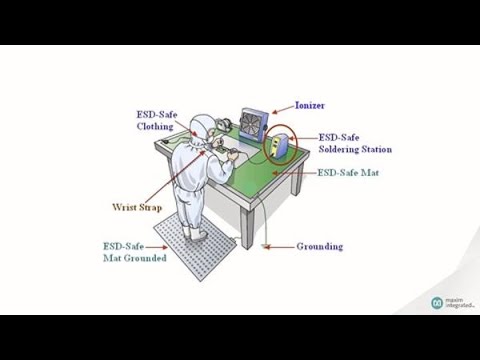
Open this video from Maxim Integrated on YouTube.
Các câu hỏi thường gặp
Is every black EVA foam tray conductive?
No. Appearance does not prove electrical behavior. Require the claimed property, test method, conditions, results, and traceability for the supplied construction.
Does an ESD foam tray provide shielding?
Not automatically. Direct-contact and resistance properties do not by themselves establish electrostatic shielding performance.
Should the tray grip the component tightly?
Only within an approved mechanical design. Excessive compression can stress parts or create particles, while loose cavities permit movement and rubbing.
What belongs on the controlled drawing?
Include cavity dimensions, contact and keep-out areas, orientation, material, layers or adhesive, identification, tolerances, cleaning assumptions, revision, and approval criteria.
Tài liệu tham khảo có thẩm quyền
Bài đăng gần đây
-
 Kiểm tra độ lệch của hộp ESD: Đo kích thước phù hợp trước khi phát hành22 tháng 10 năm 2026
-
 Kiểm tra điện trở bề mặt khay JEDEC: Hình dạng, tiếp xúc và báo cáo22 tháng 10 năm 2026
-

Để lại phản hồi