- Turbo
- Blog
Sebuah ESD EVA foam tray combines shaped cushioning with an electrostatic-control claim, but those two functions must be specified and verified separately. The tray must fit the actual part, support approved surfaces, limit damaging movement, permit safe loading and removal, and remain suitable for the intended ESD protected or transport environment. A black foam appearance, density description, or generic “anti-static” label is not enough to approve it. Buyers need traceable material evidence, a controlled cavity drawing, a representative fit test, cleanliness and shedding checks, and lifecycle criteria. This guide explains how to turn a custom foam-tray request into a verifiable electronics packaging specification.
Clarify whether the tray is cushioning, positioning, or primary protection
A foam tray may prevent part-to-part contact, hold orientation, cushion shock, or serve as a work-in-process carrier. State which function is essential. If the tray directly contacts an unprotected sensitive device, its electrical and contamination behavior becomes part of the ESD control plan. If sealed shielding bags surround every item, the foam may play primarily a mechanical role.
Do not assume that cushioning equals shielding. Electrostatic field protection, low charge generation, resistance behavior, and mechanical energy absorption are different properties. Assign each requirement to a packaging layer and make the boundary clear on the drawing and process instruction.
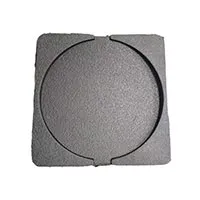
Design cavities from the component—not from a generic sample
Use current part data, approved contact areas, keep-out zones, connector locations, lead or pin protection, polarity, orientation, and removal sequence. Provide finger access or a suitable removal feature so operators do not pull on sensitive leads or scratch functional surfaces. Evaluate tolerance stack-up between the part, cavity, and any cover.
The cavity should retain the part during the defined route without excessive compression. Foam that is too tight can stress the part or shed during loading; foam that is too loose allows impact and rubbing. Prototype with production-representative parts and observe loading, removal, inversion, vibration exposure, and operator variation.
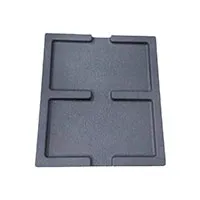
Specify material evidence precisely
EVA describes a polymer family, not an ESD performance category. Ask the supplier to identify the material construction, claimed electrical behavior, applicable test method, conditioning environment, specimen preparation, measured result, and lot traceability. If layers, coatings, laminations, or adhesives are used, identify each one.
A report for a flat raw sheet may not fully represent a molded or machined tray. Heat, machining, skin formation, adhesives, contamination, and cleaning can affect the finished item. Agree whether qualification and periodic checks apply to raw material, finished cavities, contact surfaces, or all three.
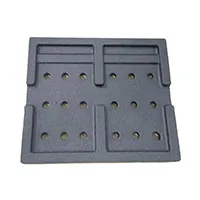
Evaluate cleanliness, shedding and chemical compatibility
Inspect cut edges and cavities for loose particles, dust, odor, residue, and torn surfaces. Cleanroom or high-reliability applications may require tighter controls than general warehouse packaging. The buyer should define the allowed preparation and cleaning method rather than letting each operator improvise.
Check compatibility with component finishes, optics, labels, bags, and any approved cleaning agent. Do not claim low outgassing, chemical resistance, cleanroom classification, or long-term stability without applicable evidence. Where those properties are critical, make them separate qualification items with an agreed method.
Control tooling, revisions and replacement
Custom cavities are controlled features. Record drawing revision, cavity dimensions, tray orientation, tooling identity, material specification, date or lot code, and approval sample. Require notification before changes to foam source, additive system, color, adhesive, manufacturing process, or tooling.
Define what constitutes damage: crushed cavities, permanent set, tears, contamination, lost labels, warped trays, or failed verification. Reuse should be based on inspection and risk, not appearance alone. A replacement plan is especially important when the tray becomes part of automated loading or tightly fitted racks.
Jadual pemilihan dan kelayakan
| Specification item | Question for the buyer | Qualification evidence |
|---|---|---|
| Protection role | What must the tray physically and electrically do? | Packaging boundary and process map |
| Cavity geometry | Where may the foam touch the part? | Controlled drawing and fit trial |
| Bahan | Which construction is actually supplied? | Declaration, method and traceable results |
| Kebersihan | What residue or shedding is unacceptable? | Visual criteria and approved cleaning trial |
| Lifecycle | How will wear and changes be controlled? | Inspection, retest and change-notice plan |
Jalankan percubaan artikel pertama yang terkawal
Gunakan sampel didokumenkan yang mewakili pembinaan pengeluaran yang dicatatkan. Bandingkannya dengan item diluluskan semasa jika ada. Rekodkan pengenalan, semakan, lot pembekal, keadaan persekitaran, peralatan, pengendali, dan pemerhatian. Percubaan harus merangkumi penerimaan, penyimpanan, penyediaan, penggunaan biasa, pembersihan jika berkenaan, dan pelupusan atau pemulangan. Hentikan percubaan jika item tersebut merosakkan produk, menyebabkan pencemaran, mengganggu peralatan, atau bercanggah dengan ESD atau prosedur keselamatan.
Asingkan kriteria lulus daripada pemerhatian. Dimensi, pelabelan, kesesuaian, mutu kerja, bukti bahan, dan kelakuan fungsian mungkin memerlukan pemeriksaan yang berbeza. Selesaikan penyimpangan sebelum kelulusan kuantiti pengeluaran, dan simpan lukisan terkawal, laporan, dan sampel kelulusan. Wajibkan pemberitahuan pembekal sebelum sebarang perubahan pada sumber bahan, bahan tambah, pelekat, pembinaan, perkakasan, proses, atau dimensi kritikal.
Pemeriksaan ketibaan dan kawalan berterusan
- Padankan item, semakan lukisan, kuantiti, lot pembekal, and label pembungkusan dengan pesanan.
- Periksa pencemaran, kerosakan, mutu kerja yang buruk, dimensi yang tidak betul, and pengenalan yang hilang.
- Lakukan persampelan dan pengesahan yang bersetuju dengan kaedah yang didokumenkan dan peralatan yang dikalibrasi di mana pengukuran diperlukan.
- Kuarantin perubahan yang tidak dapat dijelaskan pada warna, bau, tekstur, kemelekatan, kesesuaian, gulungan, geometri, atau prestasi.
- Simpan rekod penerimaan dan pautkan aduan atau kegagalan kepada lot yang terjejas.
- Semak semula spesifikasi apabila produk, peralatan, laluan, kaedah pembersihan, atau pelan kawalan berubah.
Senarai semak RFQ untuk pembeli
Nyatakan aplikasi, sempadan perlindungan, antara muka peralatan atau bahagian, dimensi dan toleransi, binaan bahan, fungsi yang diperlukan, kaedah ujian dan kriteria penerimaan, keperluan kebersihan dan mutu kerja, pembungkusan, pelabelan, kebolehkesanan, kuantiti sampel, jangkaan artikel pertama, dokumentasi, pemberitahuan perubahan, dan kuantiti penghantaran. Rujuk kepada SWESD EVA integrated molding tray range untuk jenis produk yang sedang dipaparkan, dan gunakan Pusat produk SWESD untuk menyelaraskannya dengan peralatan pengendalian yang berkaitan.
Minta pembekal menyenaraikan andaian dan pengecualian. Elakkan daripada menyalin dakwaan katalog yang belum disahkan ke dalam spesifikasi terkawal. Had teknikal, pensijilan, and penyataan pematuhan harus disemak berbanding item sebenar yang dibekalkan dan aplikasi pembeli.
Bandingkan sampel di bawah syarat yang sama
Perbandingan yang berguna mengubah satu keputusan pada satu masa. Gunakan bahagian, pengendali, peralatan, laluan, persediaan pembersihan, dan tempoh pemerhatian yang sama untuk setiap calon. Labelkan sampel supaya penilai tidak mengelirukan identiti pembekal, semakan, atau urusan ujian. Jika praktikal, sertakan item yang diluluskan sekarang sebagai garis dasar. Rekodkan kedua-dua kelakuan berjaya dan kerja yang diperlukan untuk mencapainya, seperti pelarasan tambahan, pembersihan berulang, pengendalian yang lebih perlahan, atau campur tangan pengendali.
Jangan gabungkan kesimpulan elektrik, mekanikal, kebersihan, dan komersial ke dalam satu skor yang samar. Calon mungkin sesuai tetapi kekurangan bukti ketara yang boleh dikesan, atau mempunyai dokumentasi yang kukuh tetapi prestasi yang lemah dalam mesin. Kekalkan kriteria lulus yang berasingan untuk keselamatan, kawalan ESD, perlindungan produk, keserasian peralatan, pencemaran, kebolehtagunaan, dokumentasi, dan kos kitaran hayat. Sebarang kegagalan ketara harus diselesaikan dan bukannya disembunyikan oleh skor purata yang tinggi.
Perbandingan komersial harus menggunakan kos proses yang siap dan diterima, bukan hanya harga sepasang. Masukkan usaha pemeriksaan, masa penukaran, sisa, pembersihan, penggantian, risiko masa henti, logistik pemulangan, dokumentasi, dan kesan lot yang tidak konsisten. Faktor-faktor ini tidak mewajarkan penciptaan tuntutan jangka hayat perkhidmatan; faktor-faktor ini membantu pembeli merangka percubaan yang mengukur syarat-syarat yang sebenarnya mewujudkan kos.
Sumber perancangan SWESD yang berkaitan
- comparing custom thermoformed ESD trays
- choosing between IC and logistics trays
- reviewing temperature exposure for ESD trays
Educational video: Fundamentals of Electrostatic Discharge by Maxim Integrated
This educational video provides the device-level ESD background needed to define why direct-contact tray materials must be controlled. The written guide remains complete without the video.
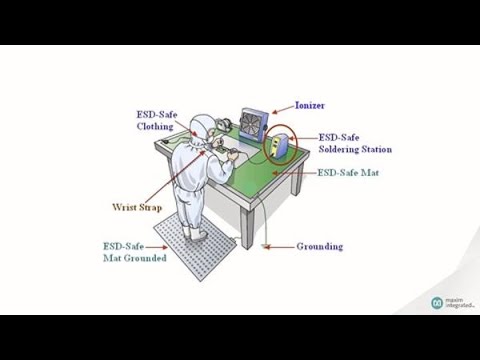
Open this video from Maxim Integrated on YouTube.
Soalan Lazim
Is every black EVA foam tray conductive?
No. Appearance does not prove electrical behavior. Require the claimed property, test method, conditions, results, and traceability for the supplied construction.
Does an ESD foam tray provide shielding?
Not automatically. Direct-contact and resistance properties do not by themselves establish electrostatic shielding performance.
Should the tray grip the component tightly?
Only within an approved mechanical design. Excessive compression can stress parts or create particles, while loose cavities permit movement and rubbing.
What belongs on the controlled drawing?
Include cavity dimensions, contact and keep-out areas, orientation, material, layers or adhesive, identification, tolerances, cleaning assumptions, revision, and approval criteria.

Tinggalkan Balasan