- Turbo
- Blog
An ESD EVA foam tray combines shaped cushioning with an electrostatic-control claim, but those two functions must be specified and verified separately. The tray must fit the actual part, support approved surfaces, limit damaging movement, permit safe loading and removal, and remain suitable for the intended ESD protected or transport environment. A black foam appearance, density description, or generic “anti-static” label is not enough to approve it. Buyers need traceable material evidence, a controlled cavity drawing, a representative fit test, cleanliness and shedding checks, and lifecycle criteria. This guide explains how to turn a custom foam-tray request into a verifiable electronics packaging specification.
Clarify whether the tray is cushioning, positioning, or primary protection
A foam tray may prevent part-to-part contact, hold orientation, cushion shock, or serve as a work-in-process carrier. State which function is essential. If the tray directly contacts an unprotected sensitive device, its electrical and contamination behavior becomes part of the ESD control plan. If sealed shielding bags surround every item, the foam may play primarily a mechanical role.
Do not assume that cushioning equals shielding. Electrostatic field protection, low charge generation, resistance behavior, and mechanical energy absorption are different properties. Assign each requirement to a packaging layer and make the boundary clear on the drawing and process instruction.
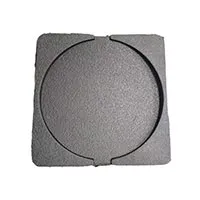
Design cavities from the component—not from a generic sample
Use current part data, approved contact areas, keep-out zones, connector locations, lead or pin protection, polarity, orientation, and removal sequence. Provide finger access or a suitable removal feature so operators do not pull on sensitive leads or scratch functional surfaces. Evaluate tolerance stack-up between the part, cavity, and any cover.
The cavity should retain the part during the defined route without excessive compression. Foam that is too tight can stress the part or shed during loading; foam that is too loose allows impact and rubbing. Prototype with production-representative parts and observe loading, removal, inversion, vibration exposure, and operator variation.
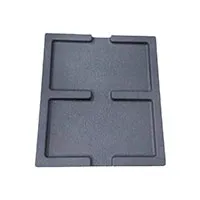
Specify material evidence precisely
EVA describes a polymer family, not an ESD performance category. Ask the supplier to identify the material construction, claimed electrical behavior, applicable test method, conditioning environment, specimen preparation, measured result, and lot traceability. If layers, coatings, laminations, or adhesives are used, identify each one.
A report for a flat raw sheet may not fully represent a molded or machined tray. Heat, machining, skin formation, adhesives, contamination, and cleaning can affect the finished item. Agree whether qualification and periodic checks apply to raw material, finished cavities, contact surfaces, or all three.
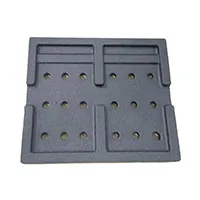
Evaluate cleanliness, shedding and chemical compatibility
Inspect cut edges and cavities for loose particles, dust, odor, residue, and torn surfaces. Cleanroom or high-reliability applications may require tighter controls than general warehouse packaging. The buyer should define the allowed preparation and cleaning method rather than letting each operator improvise.
Check compatibility with component finishes, optics, labels, bags, and any approved cleaning agent. Do not claim low outgassing, chemical resistance, cleanroom classification, or long-term stability without applicable evidence. Where those properties are critical, make them separate qualification items with an agreed method.
Control tooling, revisions and replacement
Custom cavities are controlled features. Record drawing revision, cavity dimensions, tray orientation, tooling identity, material specification, date or lot code, and approval sample. Require notification before changes to foam source, additive system, color, adhesive, manufacturing process, or tooling.
Define what constitutes damage: crushed cavities, permanent set, tears, contamination, lost labels, warped trays, or failed verification. Reuse should be based on inspection and risk, not appearance alone. A replacement plan is especially important when the tray becomes part of automated loading or tightly fitted racks.
Selectie- en kwalificatietabel
| Specification item | Question for the buyer | Qualification evidence |
|---|---|---|
| Protection role | What must the tray physically and electrically do? | Packaging boundary and process map |
| Cavity geometry | Where may the foam touch the part? | Controlled drawing and fit trial |
| Materiaal | Which construction is actually supplied? | Declaration, method and traceable results |
| Netheid | What residue or shedding is unacceptable? | Visual criteria and approved cleaning trial |
| Lifecycle | How will wear and changes be controlled? | Inspection, retest and change-notice plan |
Voer een gecontroleerde nulserieproef uit
Gebruik een gedocumenteerd monster dat de voorgestelde productieconstructie vertegenwoordigt. Vergelijk dit met het huidige goedgekeurde item, indien dat aanwezig is. Leg identificatie, revisie, leverancierspartij, omgevingsomstandigheden, apparatuur, operators en observaties vast. Een proef moet ontvangst, opslag, voorbereiding, normaal gebruik, reiniging waar van toepassing, en afvoer of retour omvatten. Stop de proef als het item een product beschadigt, verontreiniging veroorzaakt, interfereert met apparatuur, of in conflict is met de ESD- of veiligheidsprocedure.
Scheid goedkeuringscriteria van observaties. Afmetingen, etikettering, pasvorm, vakmanschap, materiële bewijzen en functioneel gedrag kunnen verschillende controles vereisen. Los afwijkingen op voordat productiehoeveelheden worden goedgekeurd, en bewaar de gecontroleerde tekening, het rapport en het goedkeuringsmonster. Vereist melding door de leverancier voorafgaand aan een wijziging in materiaalbron, additief, lijm, constructie, gereedschap, proces of kritische afmeting.
Inkomende inspectie en doorlopende controle
- Controleer of het artikel, de revisie van de tekening, de hoeveelheid, de leverancierslot en het verpakkingsetiket overeenkomen met de bestelling.
- Inspecteren op verontreiniging, beschadiging, slechte afwerking, onjuiste afmetingen en ontbrekende identificatie.
- Voer de overeengekomen bemonstering en verificatie uit met een gedocumenteerde methode en gekalibreerde apparatuur waar meting vereist is.
- Quarantaine onverklaarbare veranderingen in kleur, geur, textuur, kleverigheid, pasvorm, wikkeling, geometrie of prestaties.
- Houd acceptatieregistraties bij en koppel klachten of storingen aan de betreffende lotgrootte.
- Herzie de specificatie wanneer het product, de apparatuur, de route, de reinigingsmethode of het beheersplan verandert.
Offerteaanvraagchecklist voor kopers
Vermeld de toepassing, beschermingsgrens, uitrusting- of onderdeelinterface, afmetingen en toleranties, materiaalsamenstelling, vereiste functie, testmethode en acceptatiecriteria, reinheids- en afwerkingsvereisten, verpakking, etikettering, traceerbaarheid, monsterhoeveelheid, verwachtingen voor het eerste artikel, documentatie, wijzigingsmelding en leveringshoeveelheid. Verwijs naar de SWESD EVA integrated molding tray range voor het momenteel weergegeven producttype, en gebruik de SWESD-productcentrum om dit te coördineren met aanverwante behandelingsapparatuur.
Vraag de leverancier om aannames en voorbehouden op te sommen. Vermijd het overnemen van niet-gecontroleerde catalogusclaims in een beheerde specificatie. Technische limieten, certificeringen en nalevingsverklaringen moeten worden getoetst aan het daadwerkelijk geleverde item en de toepassing van de koper.
Vergelijk monsters onder dezelfde omstandigheden
Een nuttige vergelijking verandert één beslissing tegelijk. Gebruik dezelfde representatieve onderdelen, operators, apparatuur, route, reinigingsvoorbereiding en observatieperiode voor elke kandidaat. Voorzie monsters van een label zodat reviewers de identiteit van de leverancier, revisie of testvolgorde niet verwarren. Neem, waar praktisch, het goedgekeurde item van dat moment op als referentiekader. Registreer zowel het succesvolle gedrag als het werk dat nodig was om dat te bereiken, zoals extra afstelling, herhaalde reiniging, langzamere hantering of tussenkomst van de operator.
Combineer elektrische, mechanische, reinigheids- en commerciële conclusies niet tot één vaag score. Een kandidaat past misschien goed, maar mist aantoonbaar materieel bewijs, of heeft sterke documentatie maar presteert slecht in de machine. Houd afzonderlijke slaapcriteria aan voor veiligheid, ESD-besturing, productbescherming, apparatuurcompatibiliteit, vervuiling, bruikbaarheid, documentatie en levensduurkosten. Een harde fout moet worden opgelost in plaats van verborgen te worden door een hoge gemiddelde score.
Commerciële vergelijking moet gebruikmaken van de kosten van een voltooid en geaccepteerd proces, niet alleen de prijs per stuk. Neem hierin op: inspectie-inspanning, omsteltijd, uitval, reiniging, vervanging, stilstandsrisico, retourlogistiek, documentatie en het effect van inconsistente lots. Deze factoren rechtvaardigen niet het verzinnen van een levensduurclaim; ze helpen de koper bij het ontwerpen van een proef die de omstandigheden meet die daadwerkelijk kosten veroorzaken.
Gerelateerde SWESD-planningsbronnen
- comparing custom thermoformed ESD trays
- choosing between IC and logistics trays
- reviewing temperature exposure for ESD trays
Educational video: Fundamentals of Electrostatic Discharge by Maxim Integrated
This educational video provides the device-level ESD background needed to define why direct-contact tray materials must be controlled. The written guide remains complete without the video.
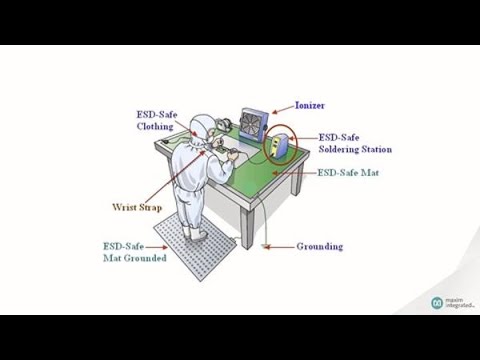
Open this video from Maxim Integrated on YouTube.
Veelgestelde vragen
Is every black EVA foam tray conductive?
No. Appearance does not prove electrical behavior. Require the claimed property, test method, conditions, results, and traceability for the supplied construction.
Does an ESD foam tray provide shielding?
Not automatically. Direct-contact and resistance properties do not by themselves establish electrostatic shielding performance.
Should the tray grip the component tightly?
Only within an approved mechanical design. Excessive compression can stress parts or create particles, while loose cavities permit movement and rubbing.
What belongs on the controlled drawing?
Include cavity dimensions, contact and keep-out areas, orientation, material, layers or adhesive, identification, tolerances, cleaning assumptions, revision, and approval criteria.

Plaats een reactie