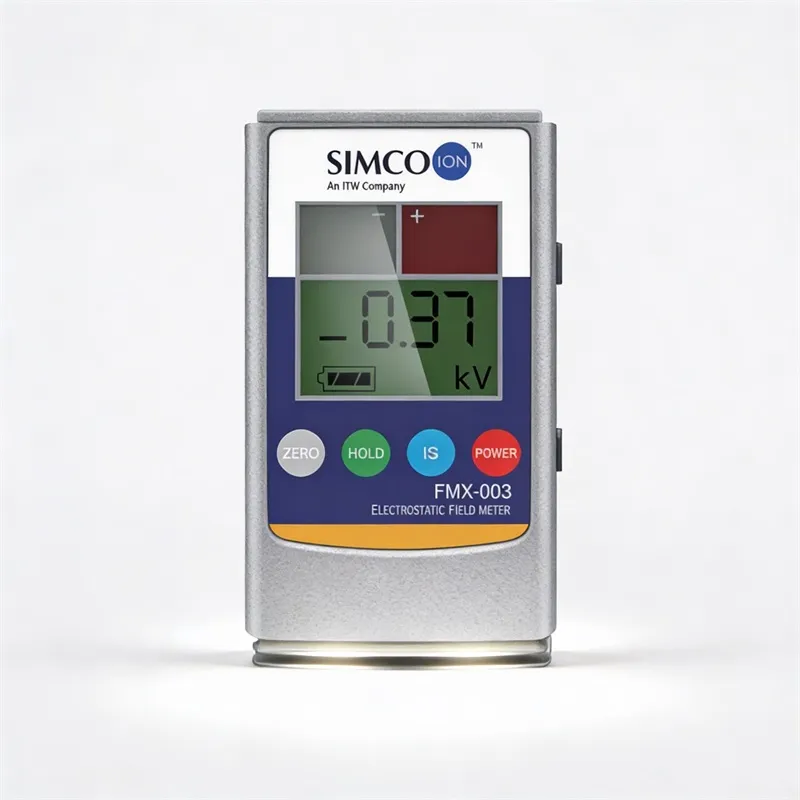
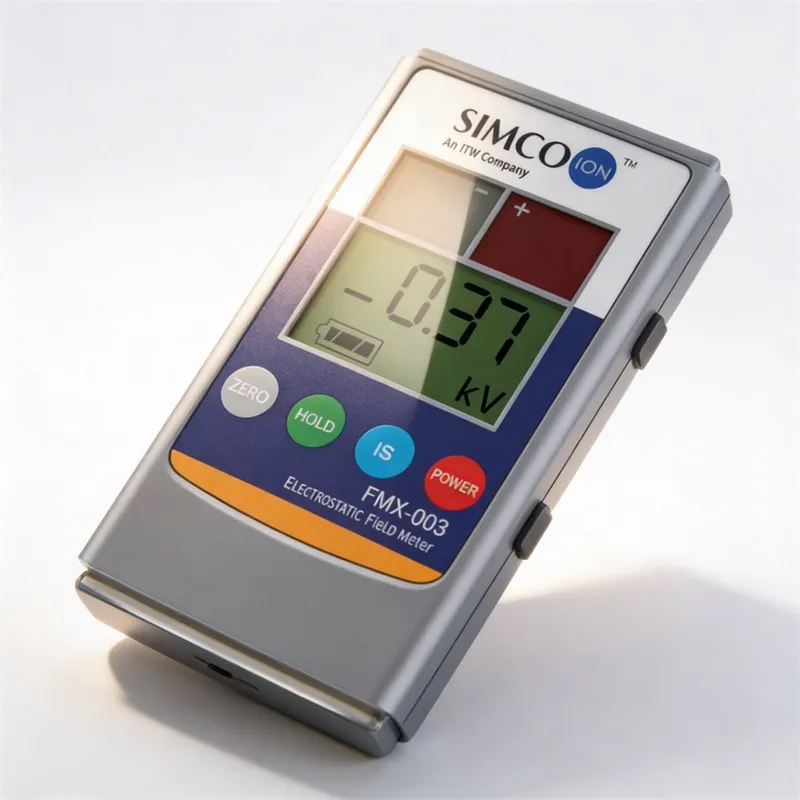
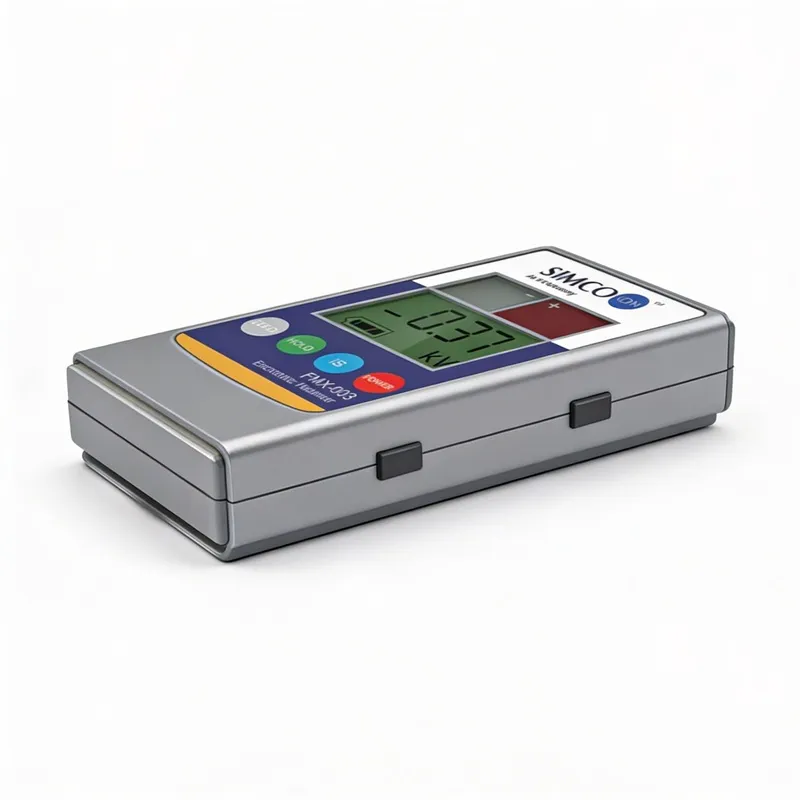
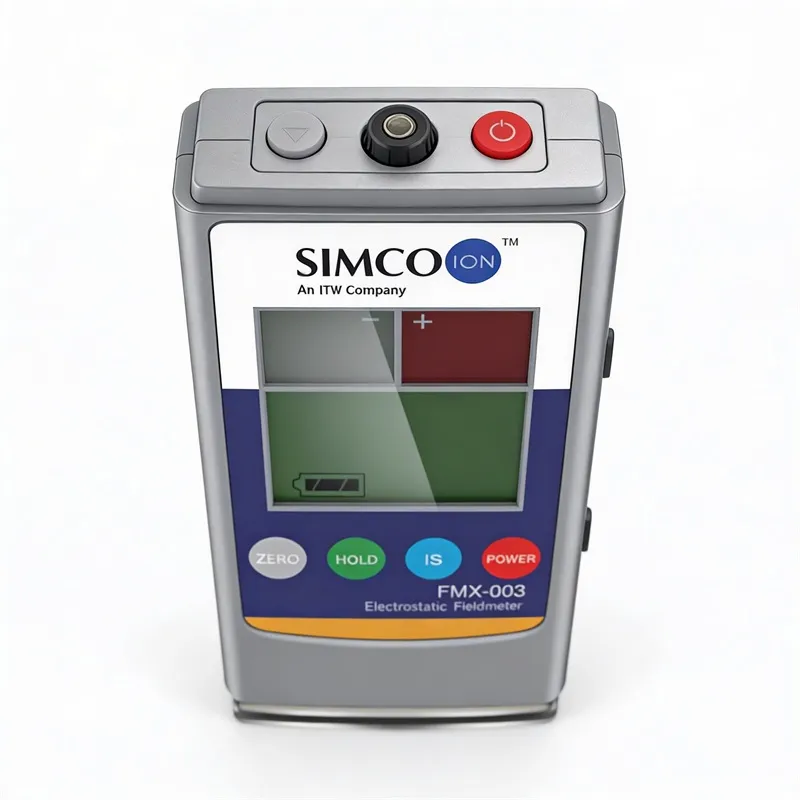
Электростатический измеритель поля FMX-003 Портативный детектор статического напряжения
Обзор
Introduction
If you’ve ever had to track down the source of an unexplained ESD failure or verify whether your ionisers are actually doing their job, you know that static charge is invisible but anything but harmless. That’s where an измеритель электростатического поля comes in. Unlike resistance testers that require physical contact, these handheld devices let you measure static charge on surfaces from a safe distance—quickly, reliably, and without disturbing the object under test. Whether you’re auditing a production floor, troubleshooting a cleanroom issue, or simply doing routine static surveys, a good electrostatic field meter is your eyes for the invisible.
What Exactly Is an Electrostatic Field Meter?
At its core, an измеритель электростатического поля is a non‑contact instrument that detects the electric field generated by a charged object. It works on the principle of electrostatic induction—sensing the field strength and converting it into a voltage reading, typically in kilovolts per unit distance. Because it doesn’t draw any current from the object, it can measure delicate electronic components, packaging materials, and even human body charges without affecting the charge itself. This makes it fundamentally different from a surface resistance tester, which measures ohmic conductivity.
The SIMCO FMX‑003 Electrostatic Field Meter
If there’s one model that has earned a reputation for reliability in the ESD community, it’s the SIMCO FMX‑003 electrostatic field meter. This pocket‑sized unit measures static voltages up to ±22 kV at a fixed distance of 1 inch (25 mm) – a distance that’s easily maintained thanks to two built‑in LED guide lights that show you exactly where to position the sensor. The display gives you both a numerical value and a colour‑coded bar graph (red for positive, blue for negative), so you can read results at a glance even in dim lighting. It also includes an ion balance mode for checking ioniser offset voltage (0 to ±220 V), a HOLD function to freeze readings, and an audible alarm for out‑of‑range measurements. Weighing just 170 g and featuring a conductive case with a grounding snap, it’s designed for real‑world field use—not just lab conditions.
Why Electrostatic Field Meter Calibration Matters
You might have the best instrument on the market, but without regular electrostatic field meter calibration, your readings are just educated guesses. Calibration ensures that the sensor’s response remains linear and accurate over time, compensating for component drift and environmental factors. Reputable manufacturers typically provide NIST‑traceable calibration certificates with each unit, and industry best practice recommends recalibration at least annually—or more frequently if the meter sees heavy use. Standards like IEC 61340 outline specific procedures for verifying performance, including test voltage levels, distance accuracy, and environmental conditions. Skipping calibration isn’t worth the risk: a false low reading could leave you with an unchecked static hazard, while a false high reading might send you chasing problems that don’t exist.
Where You’ll Actually Use a Handheld Electrostatic Field Meter
The list of applications for a handheld electrostatic field meter is longer than most people think. In electronics assembly, it’s the go‑to tool for auditing ESD workstations, checking charge buildup on PCBs and components, and verifying that packaging materials aren’t generating excessive static. In cleanrooms and medical device manufacturing, it helps prevent particle attraction—static charges can pull in dust and contaminants, compromising product sterility. In printing and converting, it identifies static issues that cause ink misregistration or material misalignment. And in R&D labs, it’s used for material characterisation and comparative studies. Essentially, any environment where static charge could affect quality, safety, or reliability is a candidate for regular electrostatic field meter use.
Техническая спецификация
| Модель | Диапазон измерений | Диапазон точности | Тестовое расстояние | Размер (Д×Ш×В) | Вес |
| 3W-7802(FMX-003) | ±20 кВ | 10% | 25 мм | 122×65×27мм | 130Г |
Производственные мощности мирового класса по защите от электростатических разрядов
При сотрудничестве с Sanwei вы напрямую взаимодействуете с ведущим в отрасли OEM/ODM-производителем. Мы управляем высокотехнологичным предприятием Интегрированный производственный комплекс площадью более 70 000 м² в Центральном индустриальном парке Юэцин провинции Чжэцзян, управляя каждым отдельным процессом от разработки собственной рецептуры материалов до окончательного формирования высокоточного изделия.
Интегрированная шкала
Передовой заводской комплекс площадью более 70 000 кв. м, оснащенный тяжелыми прецизионными литьевыми машинами для выполнения крупных оптовых заказов со стабильными сроками поставки.
Управление по всей цепочке
Полный производственный цикл собственными силами: от разработки собственных антистатических материалов и проектирования пресс-форм до автоматизированного производства и оперативной глобальной логистики.
Тщательная проверка
Строгий контроль сырья в сочетании с многоточечным измерением поверхностного удельного сопротивления на производственной линии гарантирует соответствие модели 100% требованиям международных стандартов по электростатической разрядке (ESD).
Антистатический Продукты и решения
Обеспечение комплексной электростатической защиты на всех этапах вашего производственного и операционного жизненного цикла.
SMT Оборудование
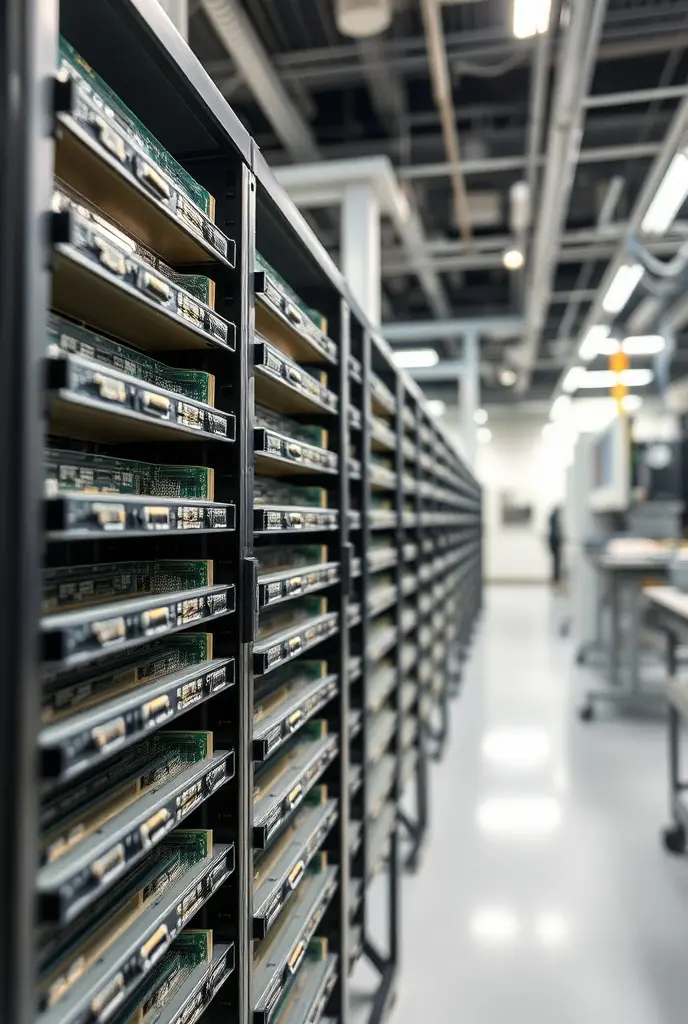
Антистатические накопительные ящики и стеллажи для автоматизированных линий.

Хранение и логистика
Тележки для оборота, стеллажи, коробки, лотки и контейнеры для комплектующих.

Рабочее место и СИЗ
Антистатические кресла, коврики, наручные ремни и средства индивидуальной защиты.
Заказная разработка
Разработка кастомных пресс-форм и специальные антистатические материалы.
Наши преимущества OEM/ODM

Передовые исследования и разработки и инновации в области материалов
Собственные антистатические материалы собственной разработки, защищенные национальными патентами на изобретения, с термостойкостью до 200℃. Мы не просто производим литье — мы создаем компаунды.

Производственная мощность в полном объеме
Завод площадью 30 000 кв. м с полным циклом систем литья под давлением, грануляции и вспомогательной обработки для обеспечения стабильных и эффективных поставок.

Полномасштабная кастомизация
Удельное электрическое сопротивление материалов, цвет, размер, логотип, упаковка и сертификаты могут быть адаптированы в соответствии с требованиями стандартов IEC61340-5-1, ANSI/ESD S20.20 или военных стандартов.

Сертифицированное качество и глобальное соответствие
“Компания Sanwei успешно разработала изготовленные по индивидуальному заказу термостойкие чистые поддоны натурального цвета для нашей линии сборки полупроводников, заменив импортную продукцию, обеспечив превосходную защиту от электростатических разрядов (ESD) и выполнив высокие требования чистоты цеха.”
НАМ ДОВЕРЯЮТ МИРОВЫЕ ЛИДЕРЫ ИНДУСТРИИ ИЗ СПИСКА FORTUNE 500
Наши запатентованные решения для защиты от электростатических разрядов используются на передовых производственных предприятиях по всему миру, включая: Intel, Motorola, Siemens, IBM, Panasonic, Nokia и Dell.
Ищете нестандартные размеры или оптовые цены?
Опираясь на нашу надежную собственную научно-исследовательскую группу, компания Sanwei предлагает полный спектр услуг OEM/ODM, адаптированных под ваши конкретные линии поверхностного монтажа (SMT) или планировку склада. Свяжитесь с нашими специалистами сегодня для заказа нестандартных пресс-форм, цветовой маркировки или комплексных консультаций по организации хранения по системе 5S.
Часто задаваемые вопросы (FAQ)
1. What is an electrostatic field meter used for?
It detects and measures static charge on surfaces without touching them, helping you find ESD risks in manufacturing, cleanrooms, packaging, and labs.
2. What is the principle of electrostatic field meter?
It senses the electric field from a charged object by induction – the field induces a charge on the meter’s sensor, which is then converted into a voltage reading.
3. What is the electrostatic field meter FMX 004?
It’s a compact handheld model from Simco‑Ion, measuring up to ±30 kV at 1‑inch distance, with LED guides, colour‑coded display, and ion‑balance mode.
4. How does the electrostatic field meter work?
It places a sensor near the charged surface, picks up the field strength, converts that into an electrical signal, and displays the result as a voltage value.
5. What is the difference between electrostatic field meter and electrostatic voltmeter?
A field meter measures the overall field over a larger area; a voltmeter measures the exact voltage at a tiny, specific spot. Field meters are quicker for surveys; voltmeters are more precise for detailed analysis.