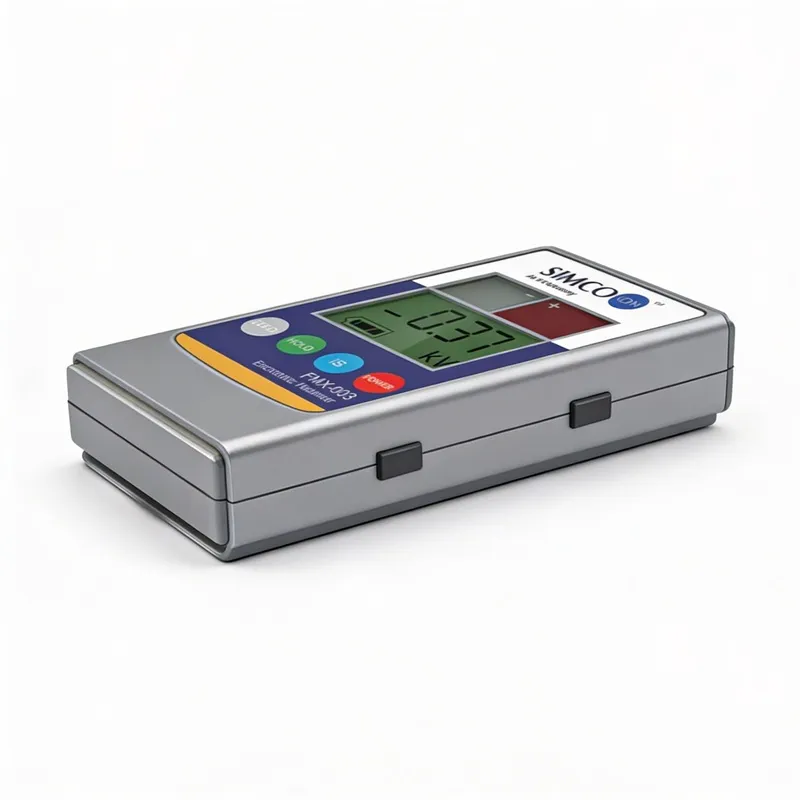
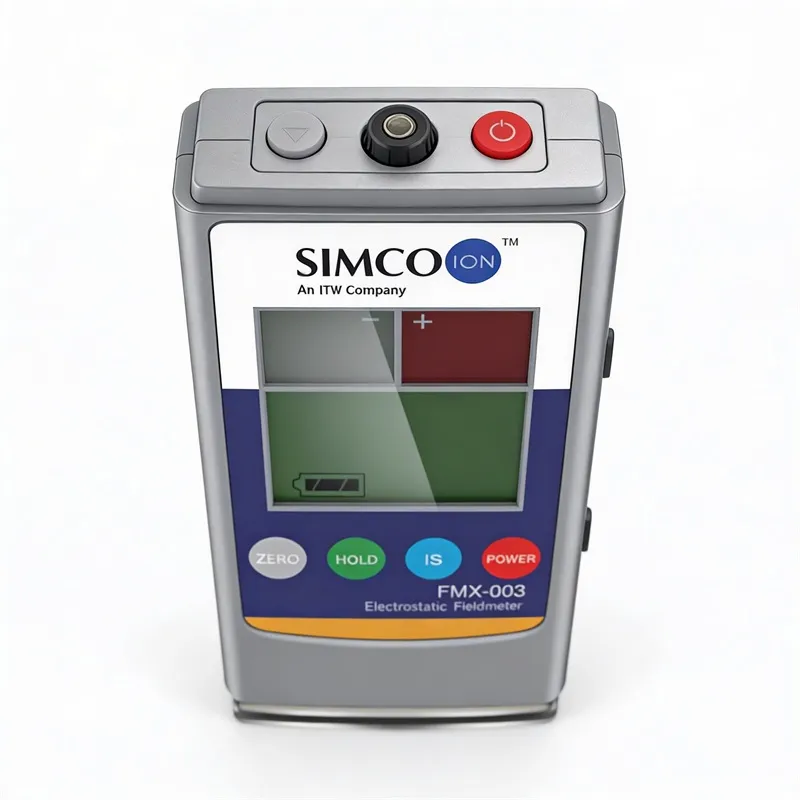
Ręczny detektor napięcia elektrostatycznego FMX-003 Miernik pola elektrostatycznego
Przegląd:
Introduction
If you’ve ever had to track down the source of an unexplained ESD failure or verify whether your ionisers are actually doing their job, you know that static charge is invisible but anything but harmless. That’s where an electrostatic field meter comes in. Unlike resistance testers that require physical contact, these handheld devices let you measure static charge on surfaces from a safe distance—quickly, reliably, and without disturbing the object under test. Whether you’re auditing a production floor, troubleshooting a cleanroom issue, or simply doing routine static surveys, a good electrostatic field meter is your eyes for the invisible.
What Exactly Is an Electrostatic Field Meter?
At its core, an electrostatic field meter is a non‑contact instrument that detects the electric field generated by a charged object. It works on the principle of electrostatic induction—sensing the field strength and converting it into a voltage reading, typically in kilovolts per unit distance. Because it doesn’t draw any current from the object, it can measure delicate electronic components, packaging materials, and even human body charges without affecting the charge itself. This makes it fundamentally different from a surface resistance tester, which measures ohmic conductivity.
The SIMCO FMX‑003 Electrostatic Field Meter
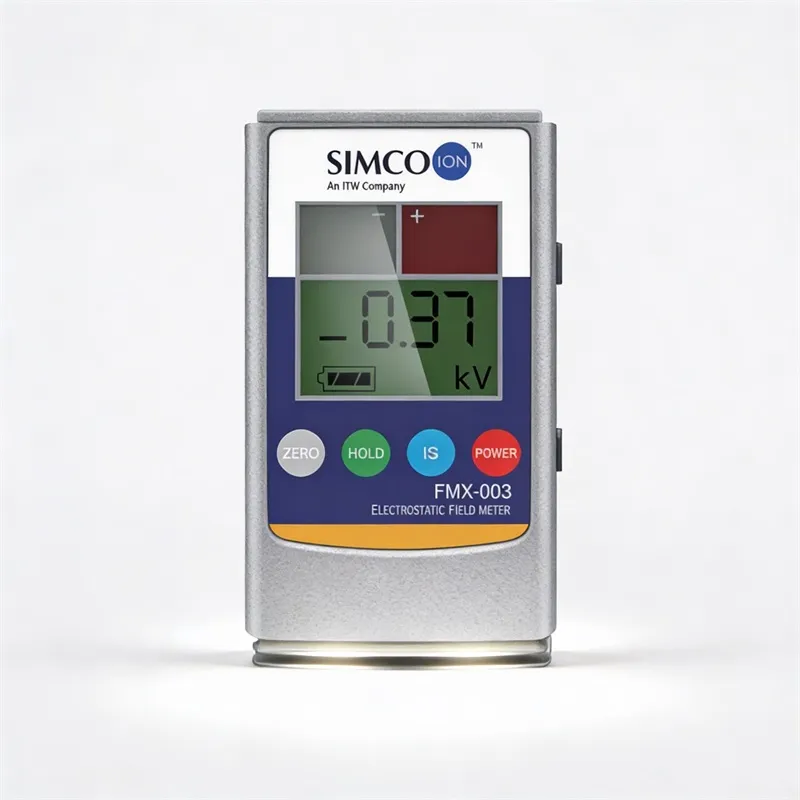
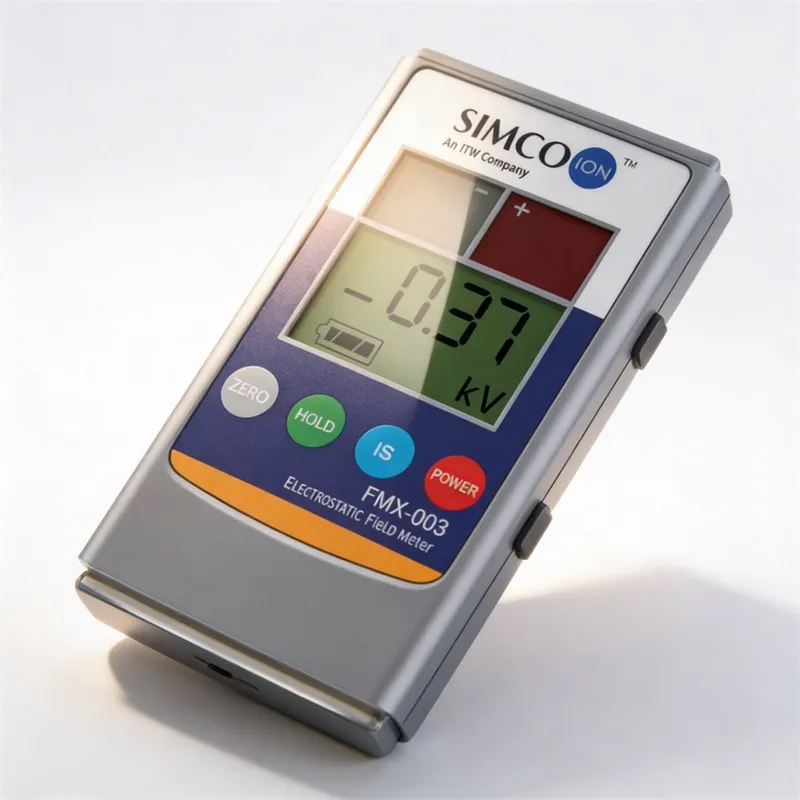
If there’s one model that has earned a reputation for reliability in the ESD community, it’s the SIMCO FMX‑003 electrostatic field meter. This pocket‑sized unit measures static voltages up to ±22 kV at a fixed distance of 1 inch (25 mm) – a distance that’s easily maintained thanks to two built‑in LED guide lights that show you exactly where to position the sensor. The display gives you both a numerical value and a colour‑coded bar graph (red for positive, blue for negative), so you can read results at a glance even in dim lighting. It also includes an ion balance mode for checking ioniser offset voltage (0 to ±220 V), a HOLD function to freeze readings, and an audible alarm for out‑of‑range measurements. Weighing just 170 g and featuring a conductive case with a grounding snap, it’s designed for real‑world field use—not just lab conditions.
Why Electrostatic Field Meter Calibration Matters
You might have the best instrument on the market, but without regular electrostatic field meter calibration, your readings are just educated guesses. Calibration ensures that the sensor’s response remains linear and accurate over time, compensating for component drift and environmental factors. Reputable manufacturers typically provide NIST‑traceable calibration certificates with each unit, and industry best practice recommends recalibration at least annually—or more frequently if the meter sees heavy use. Standards like IEC 61340 outline specific procedures for verifying performance, including test voltage levels, distance accuracy, and environmental conditions. Skipping calibration isn’t worth the risk: a false low reading could leave you with an unchecked static hazard, while a false high reading might send you chasing problems that don’t exist.
Where You’ll Actually Use a Handheld Electrostatic Field Meter
The list of applications for a handheld electrostatic field meter is longer than most people think. In electronics assembly, it’s the go‑to tool for auditing ESD workstations, checking charge buildup on PCBs and components, and verifying that packaging materials aren’t generating excessive static. In cleanrooms and medical device manufacturing, it helps prevent particle attraction—static charges can pull in dust and contaminants, compromising product sterility. In printing and converting, it identifies static issues that cause ink misregistration or material misalignment. And in R&D labs, it’s used for material characterisation and comparative studies. Essentially, any environment where static charge could affect quality, safety, or reliability is a candidate for regular electrostatic field meter use.
Specyfikacja techniczna
| Model | Measurement Range | Accuracy Range | Test Distance | Size (L×W×H) | Weight |
| 3W-7802(FMX-003) | ±20KV | 10% | 25mm | 122×65×27mm | 130G |
Światowej klasy potencjał produkcyjny ESD
Wybierając współpracę z Sanwei, partnerujesz bezpośrednio z wiodącym w branży producentem OEM/ODM. Posiadamy nowoczesne Zintegrowany zakład produkcyjny o powierzchni ponad 70 000 m² w Centralnym Parku Przemysłowym Yueqing w prowincji Zhejiang, zarządzając każdym pojedynczym procesem, od opracowania własnych formulacji materiałowych po ostateczne formowanie produktów o wysokiej precyzji.
Zintegrowana skala
Ponad 70 000 m² nowoczesnego zakładu wyposażonego w wytrzymałe, precyzyjne wtryskarki do obsługi hurtowych zamówień masowych z zachowaniem stabilnych terminów realizacji.
Kontrola całego łańcucha
Pełna kontrola wewnętrzna obejmująca badania i rozwój własnych materiałów antyelektrostatycznych, projektowanie form konstrukcyjnych, zautomatyzowaną produkcję oraz szybką globalną logistykę dostaw.
Rygorystyczna inspekcja
Rygorystyczne badania surowców w połączeniu z wielopunktowym pomiarem rezystywności powierzchniowej na linii produkcyjnej gwarantują zgodność modelu 100% z wytycznymi międzynarodowych norm dotyczących ochrony przed wyładowaniami elektrostatycznymi (ESD).
Antystatyczny Produkty i rozwiązania
Zapewnienie kompleksowej ochrony elektrostatycznej w całym cyklu produkcyjnym i operacyjnym.
Sprzęt SMT
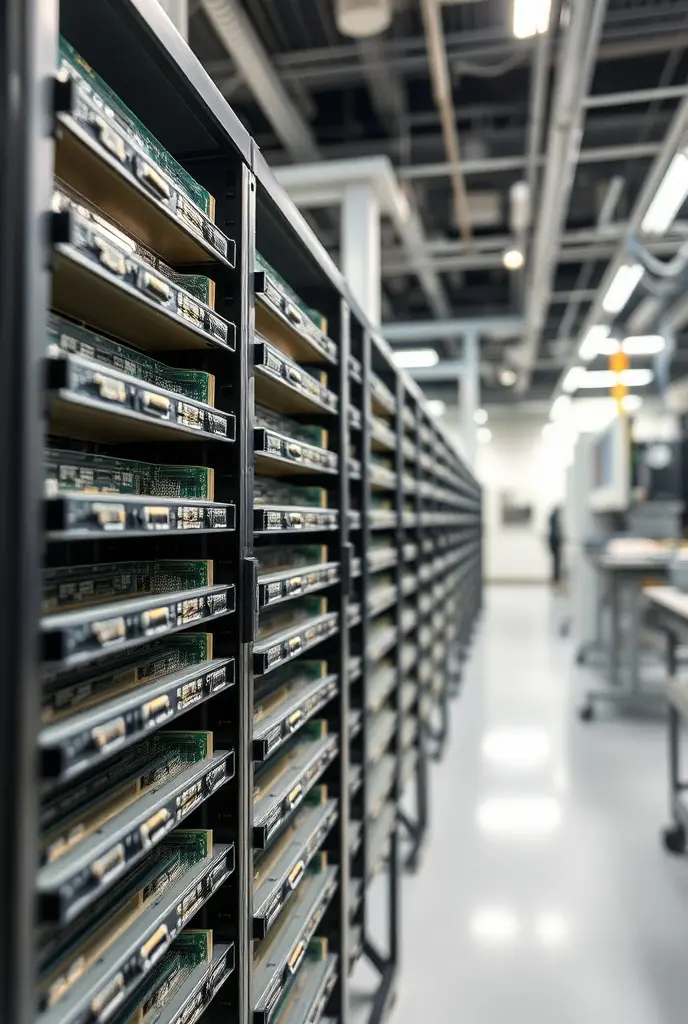
Antystatyczne pojemniki zbiorcze i stojaki do linii zautomatyzowanych.

Magazynowanie i logistyka
Wózki technologiczne, półki, skrzynie, tace i pojemniki na komponenty.

Stanowisko robocze i ŚOI
Antystatyczne krzesła, maty, paski na nadgarstek oraz ochrona osobista.
Wdrożenia dedykowane
Rozwój niestandardowych form oraz specjalne materiały antystatyczne.
NASZE ZALETY OEM/ODM

Zaawansowane prace B+R i innowacje materiałowe
Własne materiały antystatyczne opracowane wewnątrz firmy, objęte krajowymi patentami na wynalazki i odporne na temperaturę do 200℃. My nie tylko formujemy – my tworzymy związki chemiczne.

Pełnomocna zdolność produkcyjna
Fabryka o powierzchni 30 000 m² z kompletinymi systemami formowania wtryskowego, granulacji i przetwarzania wspomagającego dla zapewnienia stabilnych i wydajnych dostaw.

Kompleksowa personalizacja
Rezystywność materiału, kolor, rozmiar, logo, opakowanie i certyfikaty – możliwość dostosowania do norm IEC61340-5-1, ANSI/ESD S20.20 lub norm wojskowych.

Certyfikowana jakość i globalna zgodność z przepisami
“Firma Sanwei z powodzeniem opracowała niestandardowe, odporne na wysokie temperatury tace o czystym, naturalnym kolorze dla naszej linii montażowej półprzewodników, zastępując produkty importowane, zapewniając doskonałe bezpieczeństwo ESD i spełniając wysokie wymagania dotyczące czystości warsztatu.”
ZAUFALI MIĘDZYNARODOWYM LIDEROM RYNKOWYM Z LISTY FORTUNE 500
Nasze autorskie rozwiązania ESD są wdrażane w elitarnych zakładach produkcyjnych na całym świecie, w tym: Intel, Motorola, Siemens, IBM, Panasonic, Nokia i Dell.
Szukasz niestandardowych rozmiarów lub hurtowych cen?
Wspierani przez nasz silny, wewnętrzny zespół Badawczo-Rozwojowy (R&D), oferujemy kompleksowe opcje OEM/ODM dostosowane do Twoich konkretnych linii produkcyjnych SMT lub układu magazynu. Skontaktuj się z naszymi specjalistami już dziś w sprawie niestandardowych form, kodowania kolorami lub zintegrowanego doradztwa w zakresie magazynowania 5S.
Często zadawane pytania (FAQ)
1. What is an electrostatic field meter used for?
It detects and measures static charge on surfaces without touching them, helping you find ESD risks in manufacturing, cleanrooms, packaging, and labs.
2. What is the principle of electrostatic field meter?
It senses the electric field from a charged object by induction – the field induces a charge on the meter’s sensor, which is then converted into a voltage reading.
3. What is the electrostatic field meter FMX 004?
It’s a compact handheld model from Simco‑Ion, measuring up to ±30 kV at 1‑inch distance, with LED guides, colour‑coded display, and ion‑balance mode.
4. How does the electrostatic field meter work?
It places a sensor near the charged surface, picks up the field strength, converts that into an electrical signal, and displays the result as a voltage value.
5. What is the difference between electrostatic field meter and electrostatic voltmeter?
A field meter measures the overall field over a larger area; a voltmeter measures the exact voltage at a tiny, specific spot. Field meters are quicker for surveys; voltmeters are more precise for detailed analysis.