- Turbo
- Blog
Correct ESD heel straps instructions must cover more than fastening a band around a shoe. A heel grounder works only when its conductive contact reaches the wearer, the cup stays against the heel, the strap interfaces with an approved ESD floor, and the complete person-footwear-floor system passes the facility test. Fit, walking style, socks, contamination, damaged components, and an unsuitable floor can all interrupt the path. This guide gives operators and ESD coordinators a practical sequence for fitting, testing, daily use, troubleshooting, cleaning, inspection, and replacement without assuming that every heel strap or workplace uses the same resistance limits.
Understand what a heel strap can and cannot do
A heel grounder is a personnel-grounding device intended for use while a person is standing or walking on a compatible controlled floor. It does not make an ordinary floor conductive, protect a seated operator who lifts both feet, or replace a wrist strap where the written procedure requires one. The local ESD control plan decides the approved device and test limits.
The conductive ribbon or contact tab normally provides the connection from the wearer to the grounder. The outer cup and contact element then interface with the floor through the shoe. Because the complete path matters, approving a loose strap on a bench is not the same as verifying the worn system.

Fit the heel grounder in the correct sequence
Start with a clean, dry, approved shoe. Place the cup firmly around the heel so its contact surface can meet the floor through a normal walking step. Route the contact ribbon exactly as the manufacturer specifies, usually inside the shoe where it can contact the wearer. Do not fold, trim, knot, or place it over an insulating sock unless the approved design specifically permits that arrangement.
Fasten the strap snugly enough to stay in position but not so tightly that it creates discomfort or a safety problem. Loose hardware can rotate to the side, miss the floor, or catch on surrounding objects. Use one or two grounders according to the site rule; do not assume a single grounder is acceptable simply because one foot passed once.

Test before entry and respond to a failure
Use the facility-approved footwear tester and follow its posted sequence. Stand as instructed, place each foot on the proper plate, avoid leaning on grounded objects, and wait for a clear result. Record or acknowledge the test where required. Test limits and frequency belong to the site program and the applicable equipment instructions, not to a generic internet chart.
If the result fails, stop before entering the EPA. Refit the ribbon and heel cup, confirm the correct footwear and device are being used, check for obvious dirt or damage, and retest. If it still fails, quarantine or replace the grounder and notify the responsible coordinator. Never bypass a failed test by wetting the skin, changing tester settings, or touching grounded metal.

Walk and work without defeating the path
A heel strap depends on repeated floor contact. Normal heel-to-toe walking provides more consistent contact than walking on the toes, pushing a wheeled chair with both feet raised, or standing on insulating mats. Seated tasks may require a wrist strap or another approved method because the footwear path can be intermittent.
Keep the device inside its approved area. Outdoor grit, oils, water and uncontrolled cleaning products can contaminate the contact surfaces. Observe local rules at stairs, ladders and machinery: any device that affects traction, catches, or becomes loose must be removed from service safely. ESD control never overrides general workplace safety.
Clean, inspect and replace using written criteria
Inspect the ribbon, fastener, heel cup, conductive contact, seams and identification before use. Look for stretching, tears, embedded debris, worn contact material, loss of elasticity and parts that will not remain positioned. Clean only with a method compatible with the product and site; household polishes or residue-forming cleaners can change the contact path.
Set replacement criteria from inspection, test history and manufacturer guidance instead of promising a universal lifespan. Repeated failures, physical damage, uncontrolled modification, lost traceability or inability to stay fitted are reasons to remove the item. Store clean grounders so the ribbon and contact surface are protected.
Praktische controletabel
| Controlepost | Correct action | Stop condition |
|---|---|---|
| Shoe and floor | Use the approved combination | Unapproved or visibly contaminated surface |
| Contact ribbon | Position as instructed against the wearer | Folded, cut, missing or misplaced ribbon |
| Heel cup | Keep centered and secure | Loose, rotated or damaged cup |
| Entry test | Test each required foot or pair | Fail or unclear result |
| Daily use | Maintain floor contact and follow EPA rules | Loose device or loss of safe traction |
Bouw een gecontroleerde procedure en goedkeuringsvoorbeeld
**Locatieprocedure** **Verantwoordelijke (Owner):** [Voer naam/functie in] **Goedgekeurde materialen:** [Voer goedgekeurde materialen en referentie naar goedgekeurd monster/fotoreeks in] **Volgorde van werkzaamheden (Sequence):** 1. Train operators met de werkelijke route en apparatuur aan de hand van het goedgekeurde monster of de fotoreeks. 2. Voer de werkzaamheden uit volgens de leveranciersinstructies en het planningskader. 3. Observeer ten minste drie normale cycli van de operator om de correcte uitvoering te verifiëren. **Acceptatiecriteria (Pass Criteria):** - De configuratie en uitvoering komen exact overeen met het goedgekeurde monster of de fotoreeks. - Alle stappen zijn voltooid volgens de instructies van de leverancier. **Stopcondities:** - Afwijkingen van de goedgekeurde configuratie die niet direct door de operator mogen worden gecorrigeerd. - Onvoorziene onregelmatigheden in apparatuur, route of materialen tijdens de uitvoering. **Correctiebevoegdheid:** - **Direct te corrigeren door operator:** Kleine, operationele bijstellingen die binnen de standaard parameters vallen en direct herstelbaar zijn. - **Quarantaine en beoordeling vereist:** Alle afwijkingen buiten de standaard parameters, materiaaldefecten of configuratiefouten die het eindresultaat kunnen beïnvloeden. Het product/materiaal wordt direct in quarantaine geplaatst voor beoordeling door de verantwoordelijke. **Registraties (Records):** - Vastlegging van voltooide trainingen. - Logboek van uitgevoerde cycli en eventuele quarantainemeldingen.
Scheid veiligheid, reinheid, mechanische werking en ESD-verificatie. Een enkele visuele controle kan niet elk risico dekken, en één elektrische meting kan reinheid of mechanische integriteit niet bewijzen. Wanneer een meting vereist is, identificeer dan het instrument, de methode, de locaties, de omgeving en de acceptatielimieten. Houd de kalibratie van apparatuur en de training van personeel up-to-date binnen het facility-systeem.
Inkomende inspectie en wijzigingsbeheer
Controleer bij ontvangst het artikel, de hoeveelheid, revisie, leverancierslot en het verpakkingsetiket aan de hand van de inkooporder. Inspecteer op beschadiging, besmetting, ontbrekende identificatie en onverwachte verschillen in kleur, textuur, geometrie, geur, hardware of verpakking. Meet afmetingen en functionele kenmerken volgens het overeengekomen plan. Plaats onverklaarde afwijkingen in quarantine in plaats de productie druk te laten zorgen dat een uitzondering een ongedocumenteerde goedkeuring wordt.
Voorafgaande kennisgeving is vereist voorafgaand aan wijzigingen in het materiaal van de bron, toevoeging, kleefstof, gereedschap, afmetingen, reinigingsmiddel, constructie of kritieke hardware. Herkwalificatie moet zich richten op de functies die door de wijziging worden beïnvloed, maar dient ook de interacties te controleren. Een sterkere kleefstof kan de verwijdering beïnvloeden; een nieuwe zwenkwiel kan het volgen en de elektrische paden beïnvloeden; een nieuw reinigingsmiddel kan labels en het gedrag van het oppervlak beïnvloeden.
Kwalificatiewedstrijd en records
Voer de proef uit onder representatieve omgevings- en bedrijfsomstandigheden. Registreer datum, locatie, operators, monsters, partijnummers, apparatuur, reinigingsvoorbereiding, route, waarnemingen en afwijkingen. Voeg indien mogelijk een huidig goedgekeurd item toe als referentie. Verberg een harde mislukking niet in een gemiddelde score. Veiligheid, productbescherming, besmetting, bruikbaarheid, documentatie en ESD-vereisten moeten een eigen goedkeuringsbesluit krijgen.
Controleer de resultaten na voldoende cycli om de normale variatie zichtbaar te maken. Een enkele geslaagde demonstratie kan operatorverschillen, verkeerspieken, slijtage, belasting- en reinigingseffecten missen. Het rapport moet de beperkingen vermelden: wat niet is getest, welke beweringen leveranciersverklaringen blijven en welke conclusies alleen van toepassing zijn op de geteste configuratie. Bewaar bewijsmateriaal bij het item- of procesdossier zodat toekomstige teams de goedkeuringsgrondslag kunnen begrijpen.
Evalueer het proces na de release
Observeer het proces tijdens het normale werk na de release, niet alleen tijdens een gepland demonstratiemoment. Bevestig dat gebruikers de goedgekeurde volgorde volgen, materialen beschikbaar blijven, etiketten leesbaar zijn en stopcondities worden begrepen. Neem steekproeven van records op ontbrekende resultaten, herhaalde fouten en onverklaarde vervangingen. Vraag operators waar de procedure lastig is, omdat tijdelijke oplossingen vaak een probleem met de passendheid, toegang, doorstroming of training aan het licht brengen voordat dit een productdefect wordt.
Breng storingen in kaart per artikel, locatie, dienst en leverancierslot waar de beschikbare gegevens die analyse ondersteunen. Herhaalde problemen moeten aanleiding geven tot een oorzaakanalyse, en niet simpelweg tot frequentere vervanging. Werk de procedure bij wanneer het product, de werkvloer, apparatuur, reiniger, looproute, verpakking of het beheersplan verandert. Houd de herzieningsdatum zichtbaar en trek verouderde kopieën in zodat de goedgekeurde methode eenduidig blijft.
Offerteaanvraagchecklist voor kopers
Toestelapplicatie, omgeving, afmetingen, interfaces, constructie, vereiste functie, testmethode, acceptatiecriteria, reinheid, verpakking, etikettering, traceerbaarheid, monsterhoeveelheid, documentatie en wijzigingsmelding. Controleer de SWESD ESD footwear range en de SWESD-productcentrum Als uitgangspunten; de definitieve goedkeuring moet overeenkomen met het geleverde artikel en het eigen controleprogramma van de koper.
- Beschrijf de werkelijke gebruiksroute en het beschermde product.
- Identificeer harde afwijzingscriteria en acceptabel bewijsmateriaal.
- Vraag indien nodig tekeningen, materialen en herleidbare testresultaten op.
- Definieer monster- en nulserieshoeveelheden vóór de productie.
- Lijst met goedgekeurde uitgangspunten voor reiniging, inspectie en vervanging.
- Vereis schriftelijke openbaarmaking van uitzonderingen en wijzigingen.
Gerelateerde SWESD-bronnen
- using a wrist strap and footwear tester
- understanding ESD footwear
- coordinating clothing and footwear controls
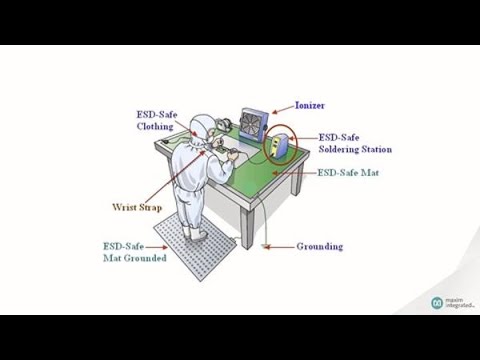
Educational video: Fundamentals of Electrostatic Discharge
This neutral educational video from Maxim Integrated provides background for the controlled process. The written guide remains complete without it.
Veelgestelde vragen
Should heel straps be worn on both feet?
Follow the facility control plan and product instructions. Many programs require two grounders for more continuous contact, but the approved system and test define the rule.
Can a heel strap work on any floor?
No. It must be used with a compatible, qualified flooring system and verified as the complete person-footwear-floor path.
What should I do after a failed test?
Stop before entering the EPA, refit and inspect the device, retest, and quarantine or replace it if the failure remains.
Can heel straps replace wrist straps at a seated bench?
Only if the documented ESD program has approved that method for the task. Foot contact may be intermittent while seated.

Plaats een reactie