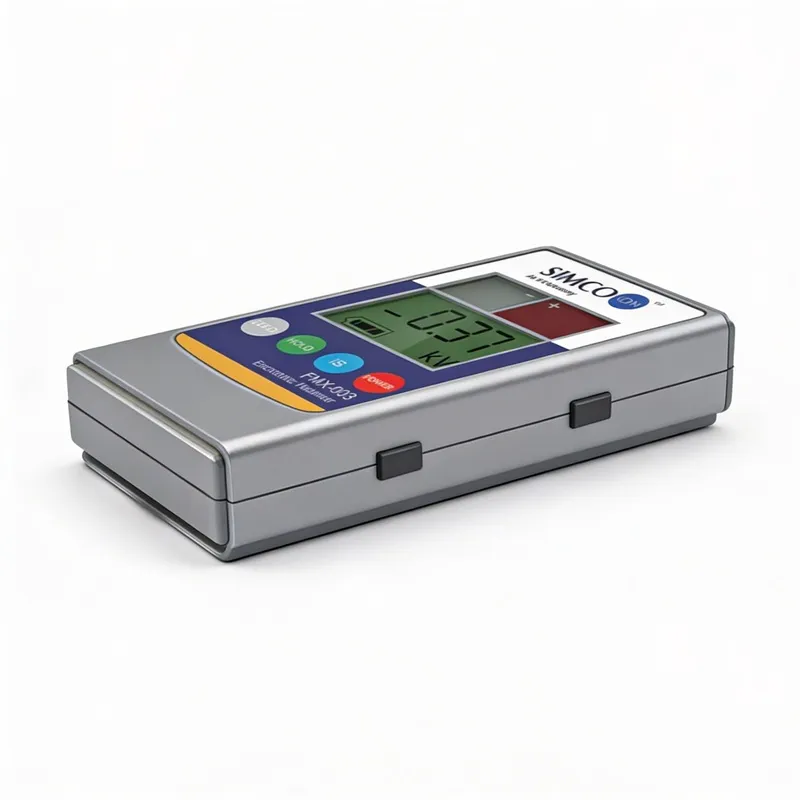
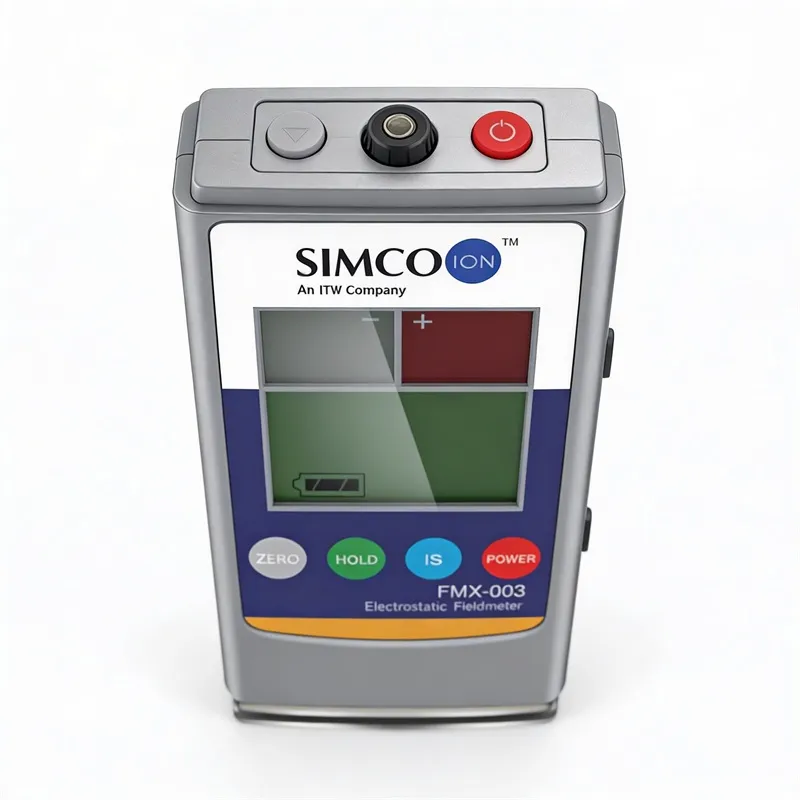
Pengukur Medan Elektrostatik Detektor Tegangan Statis Genggam FMX-003
Ikhtisar:
Introduction
If you’ve ever had to track down the source of an unexplained ESD failure or verify whether your ionisers are actually doing their job, you know that static charge is invisible but anything but harmless. That’s where an electrostatic field meter comes in. Unlike resistance testers that require physical contact, these handheld devices let you measure static charge on surfaces from a safe distance—quickly, reliably, and without disturbing the object under test. Whether you’re auditing a production floor, troubleshooting a cleanroom issue, or simply doing routine static surveys, a good electrostatic field meter is your eyes for the invisible.
What Exactly Is an Electrostatic Field Meter?
At its core, an electrostatic field meter is a non‑contact instrument that detects the electric field generated by a charged object. It works on the principle of electrostatic induction—sensing the field strength and converting it into a voltage reading, typically in kilovolts per unit distance. Because it doesn’t draw any current from the object, it can measure delicate electronic components, packaging materials, and even human body charges without affecting the charge itself. This makes it fundamentally different from a surface resistance tester, which measures ohmic conductivity.
The SIMCO FMX‑003 Electrostatic Field Meter
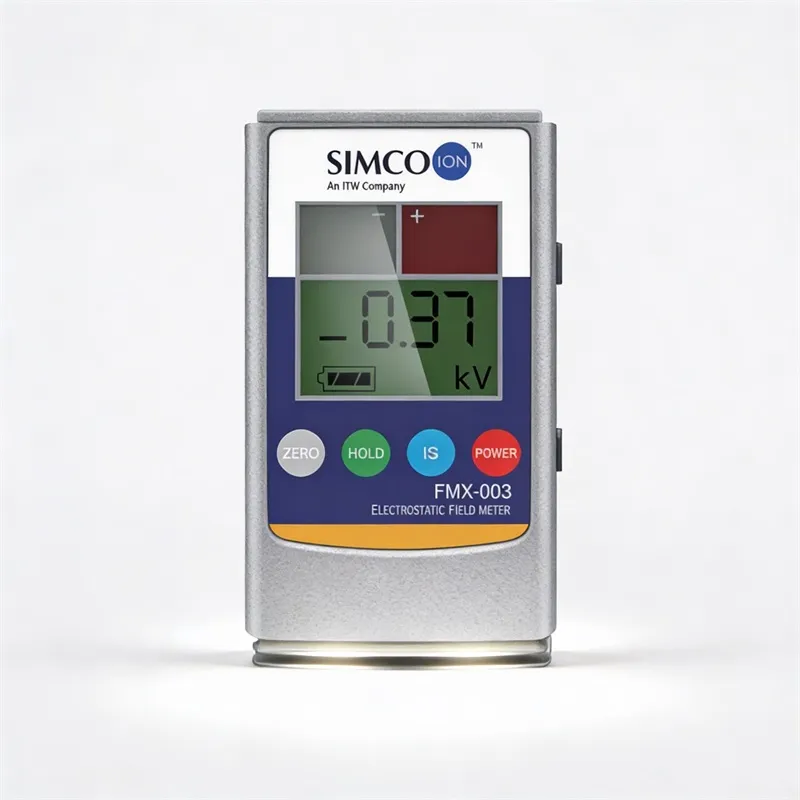
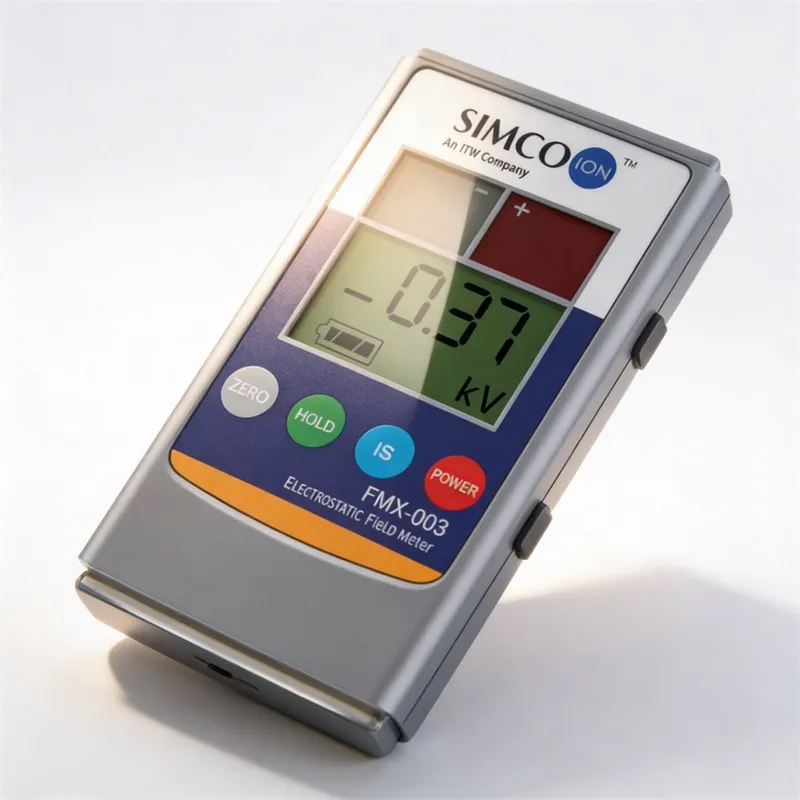
If there’s one model that has earned a reputation for reliability in the ESD community, it’s the SIMCO FMX‑003 electrostatic field meter. This pocket‑sized unit measures static voltages up to ±22 kV at a fixed distance of 1 inch (25 mm) – a distance that’s easily maintained thanks to two built‑in LED guide lights that show you exactly where to position the sensor. The display gives you both a numerical value and a colour‑coded bar graph (red for positive, blue for negative), so you can read results at a glance even in dim lighting. It also includes an ion balance mode for checking ioniser offset voltage (0 to ±220 V), a HOLD function to freeze readings, and an audible alarm for out‑of‑range measurements. Weighing just 170 g and featuring a conductive case with a grounding snap, it’s designed for real‑world field use—not just lab conditions.
Why Electrostatic Field Meter Calibration Matters
You might have the best instrument on the market, but without regular electrostatic field meter calibration, your readings are just educated guesses. Calibration ensures that the sensor’s response remains linear and accurate over time, compensating for component drift and environmental factors. Reputable manufacturers typically provide NIST‑traceable calibration certificates with each unit, and industry best practice recommends recalibration at least annually—or more frequently if the meter sees heavy use. Standards like IEC 61340 outline specific procedures for verifying performance, including test voltage levels, distance accuracy, and environmental conditions. Skipping calibration isn’t worth the risk: a false low reading could leave you with an unchecked static hazard, while a false high reading might send you chasing problems that don’t exist.
Where You’ll Actually Use a Handheld Electrostatic Field Meter
The list of applications for a handheld electrostatic field meter is longer than most people think. In electronics assembly, it’s the go‑to tool for auditing ESD workstations, checking charge buildup on PCBs and components, and verifying that packaging materials aren’t generating excessive static. In cleanrooms and medical device manufacturing, it helps prevent particle attraction—static charges can pull in dust and contaminants, compromising product sterility. In printing and converting, it identifies static issues that cause ink misregistration or material misalignment. And in R&D labs, it’s used for material characterisation and comparative studies. Essentially, any environment where static charge could affect quality, safety, or reliability is a candidate for regular electrostatic field meter use.
Spesifikasi Teknis
| Model | Measurement Range | Accuracy Range | Test Distance | Size (L×W×H) | Weight |
| 3W-7802(FMX-003) | ±20KV | 10% | 25mm | 122×65×27mm | 130G |
Kapasitas Manufaktur ESD Kelas Dunia
Saat Anda bermitra dengan Sanwei, Anda bekerja sama secara langsung dengan produsen OEM/ODM terkemuka di industri ini. Kami mengoperasikan fasilitas mutakhir Fasilitas produksi terintegrasi seluas 70.000+ m² di Taman Industri Pusat Yueqing, Zhejiang, mengelola setiap proses mulai dari formulasi bahan milik sendiri hingga pencetakan produk presisi tinggi akhir.
Skala Terintegrasi
Basis pabrik canggih seluas 70.000+ m² yang dilengkapi dengan mesin cetak suntik presisi tugas berat untuk menangani pesanan grosir massal dengan waktu tunggu yang stabil.
Kontrol Rantai Penuh
Pengendalian penuh di dalam perusahaan yang mencakup penelitian dan pengembangan material antistatis milik sendiri, rekayasa cetakan struktural, manufaktur otomatis, dan pengiriman logistik global yang cepat.
Inspeksi Ketat
Pengujian bahan baku yang ketat, dikombinasikan dengan pengukuran resistivitas permukaan multi-titik di jalur produksi, memastikan kepatuhan 100% terhadap pedoman standar ESD internasional.
Antistatis Produk dan Solusi
Menyediakan perlindungan elektrostatik yang komprehensif di seluruh siklus hidup manufaktur dan operasional Anda.
Peralatan SMT
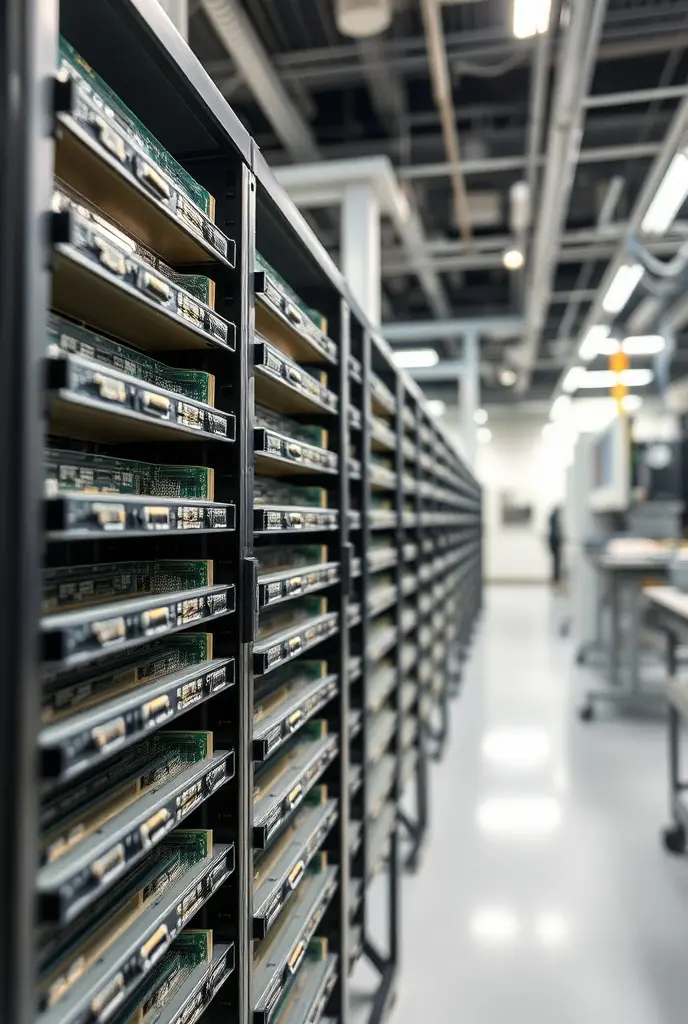
Kotak dan rak pengumpul anti-statis untuk jalur otomatis.

Penyimpanan & Logistik
Kereta dorong pemindah barang, rak, kotak, nampan, dan wadah komponen.

Stasiun Kerja & APD
Kursi anti-statis, tikar, tali pergelangan tangan, dan perlindungan diri.
Pengembangan Kustom
Pengembangan cetakan khusus dan bahan anti-statis khusus.
KEUNGGULAN OEM/ODM KAMI

R&D Lanjutan & Inovasi Material
Material anti-statis yang dikembangkan secara internal dengan paten penemuan nasional dan ketahanan panas hingga 200℃. Kami tidak hanya mencetak — kami memformulasikan senyawa.

Kapasitas Produksi Skala Penuh
Pabrik seluas 30.000㎡ dengan sistem pengecoran injeksi, granulasi, dan pemrosesan pendukung yang lengkap untuk pasokan yang stabil dan efisien.

Kustomisasi Proses Penuh
Resistivitas material, warna, ukuran, logo, kemasan, dan sertifikasi — dapat disesuaikan untuk memenuhi standar IEC61340-5-1, ANSI/ESD S20.20, atau standar militer.

Kualitas Bersertifikat & Kepatuhan Global
“Sanwei berhasil mengembangkan baki warna alami bersih tahan suhu tinggi khusus untuk lini perakitan semikonduktor kami, menggantikan produk impor, memastikan keamanan ESD yang sangat baik, dan memenuhi persyaratan kebersihan yang tinggi di area kerja.”
DIPERCAYA OLEH PEMIMPIN INDUSTRI FORTUNE 500 GLOBAL
Solusi ESD hak milik kami diterapkan di fasilitas produksi elit di seluruh dunia, termasuk: Intel, Motorola, Siemens, IBM, Panasonic, Nokia, dan Dell.
Mencari Ukuran Kustom atau Harga Grosir dalam Jumlah Besar?
Didukung oleh tim R&D internal kami yang tangguh, Sanwei menyediakan opsi OEM/ODM lengkap yang disesuaikan dengan lini produksi SMT atau tata letak gudang spesifik Anda. Hubungi spesialis kami hari ini untuk cetakan kustom, kode warna, atau konsultasi penyimpanan 5S terintegrasi.
Pertanyaan yang Sering Diajukan (FAQ)
1. What is an electrostatic field meter used for?
It detects and measures static charge on surfaces without touching them, helping you find ESD risks in manufacturing, cleanrooms, packaging, and labs.
2. What is the principle of electrostatic field meter?
It senses the electric field from a charged object by induction – the field induces a charge on the meter’s sensor, which is then converted into a voltage reading.
3. What is the electrostatic field meter FMX 004?
It’s a compact handheld model from Simco‑Ion, measuring up to ±30 kV at 1‑inch distance, with LED guides, colour‑coded display, and ion‑balance mode.
4. How does the electrostatic field meter work?
It places a sensor near the charged surface, picks up the field strength, converts that into an electrical signal, and displays the result as a voltage value.
5. What is the difference between electrostatic field meter and electrostatic voltmeter?
A field meter measures the overall field over a larger area; a voltmeter measures the exact voltage at a tiny, specific spot. Field meters are quicker for surveys; voltmeters are more precise for detailed analysis.