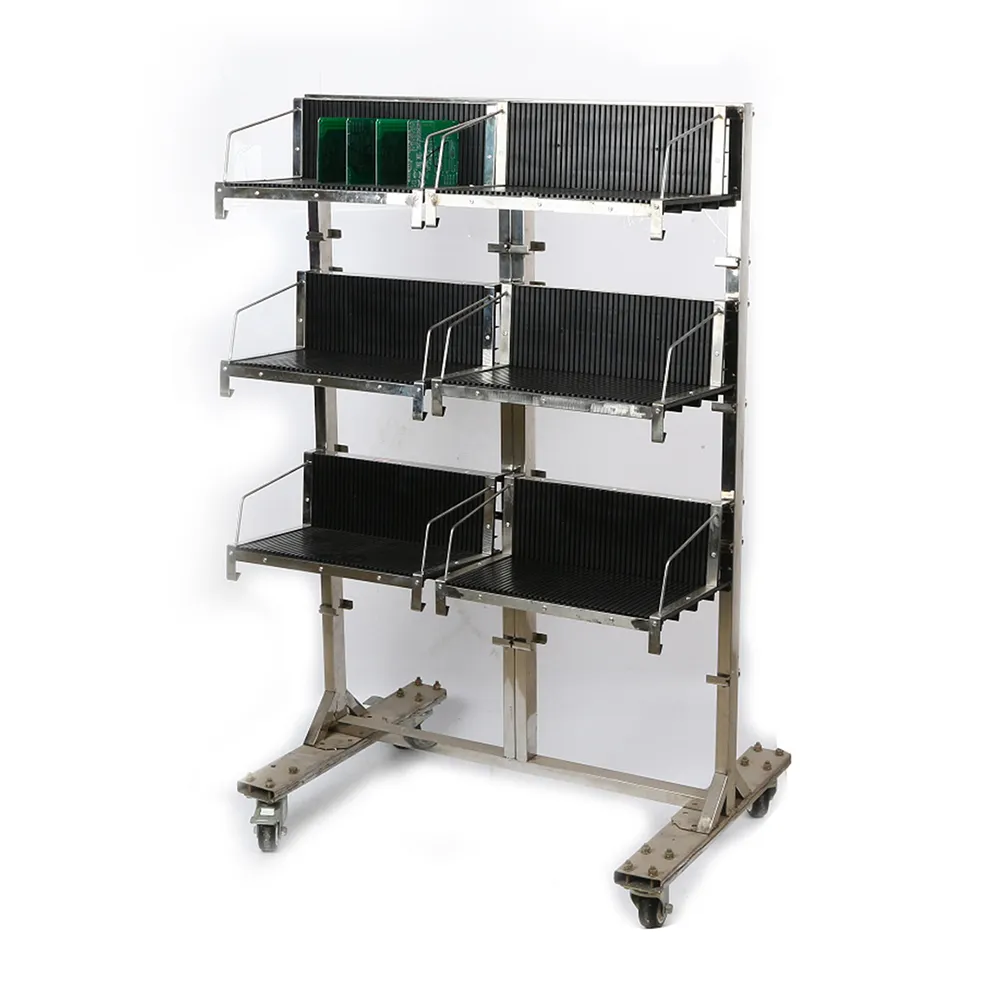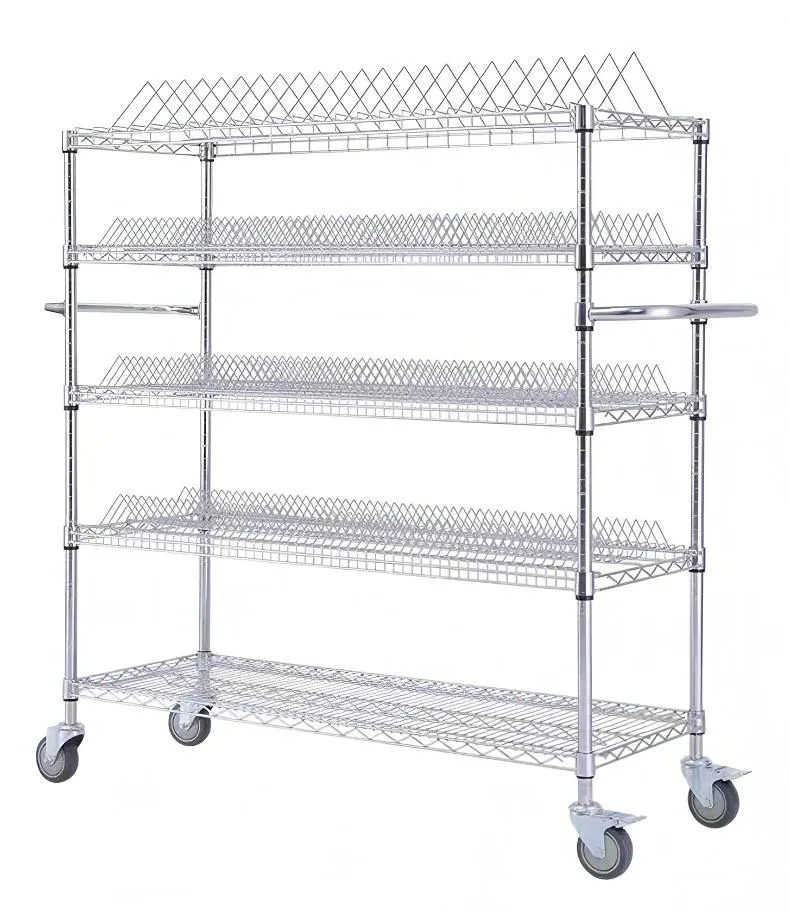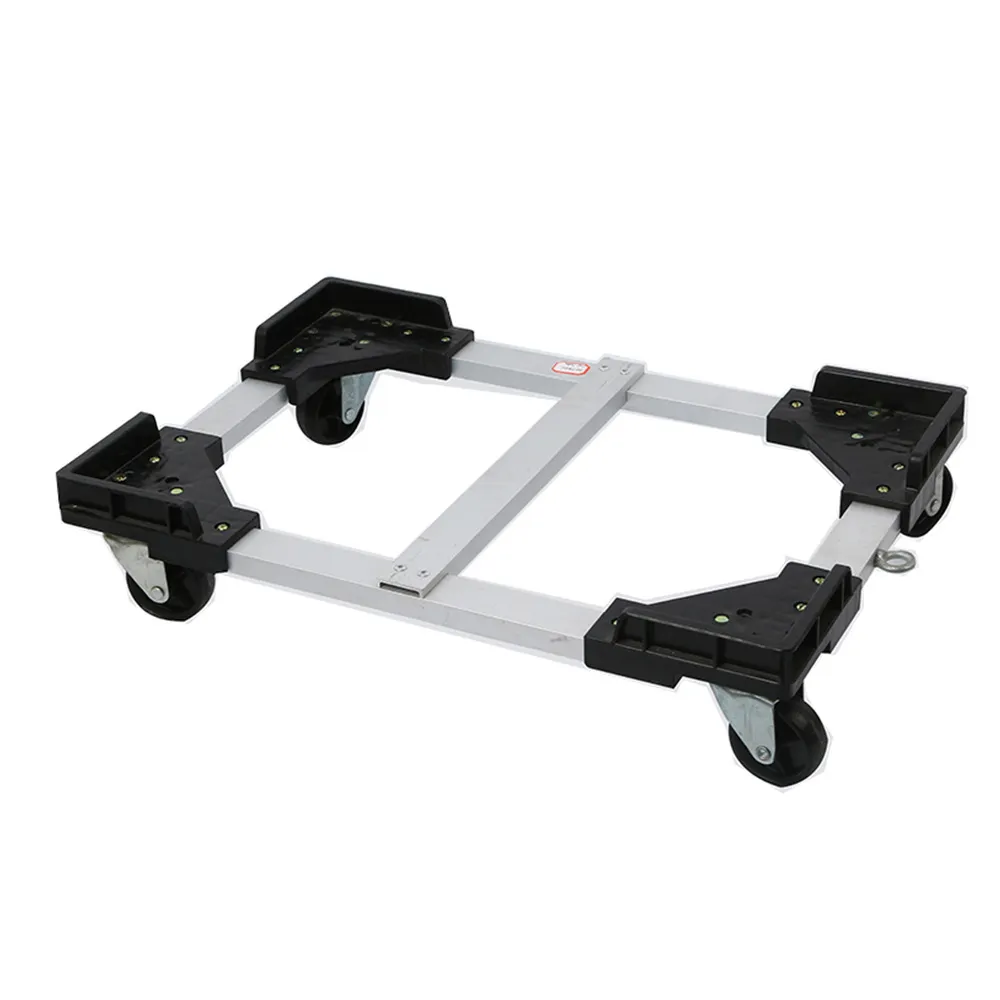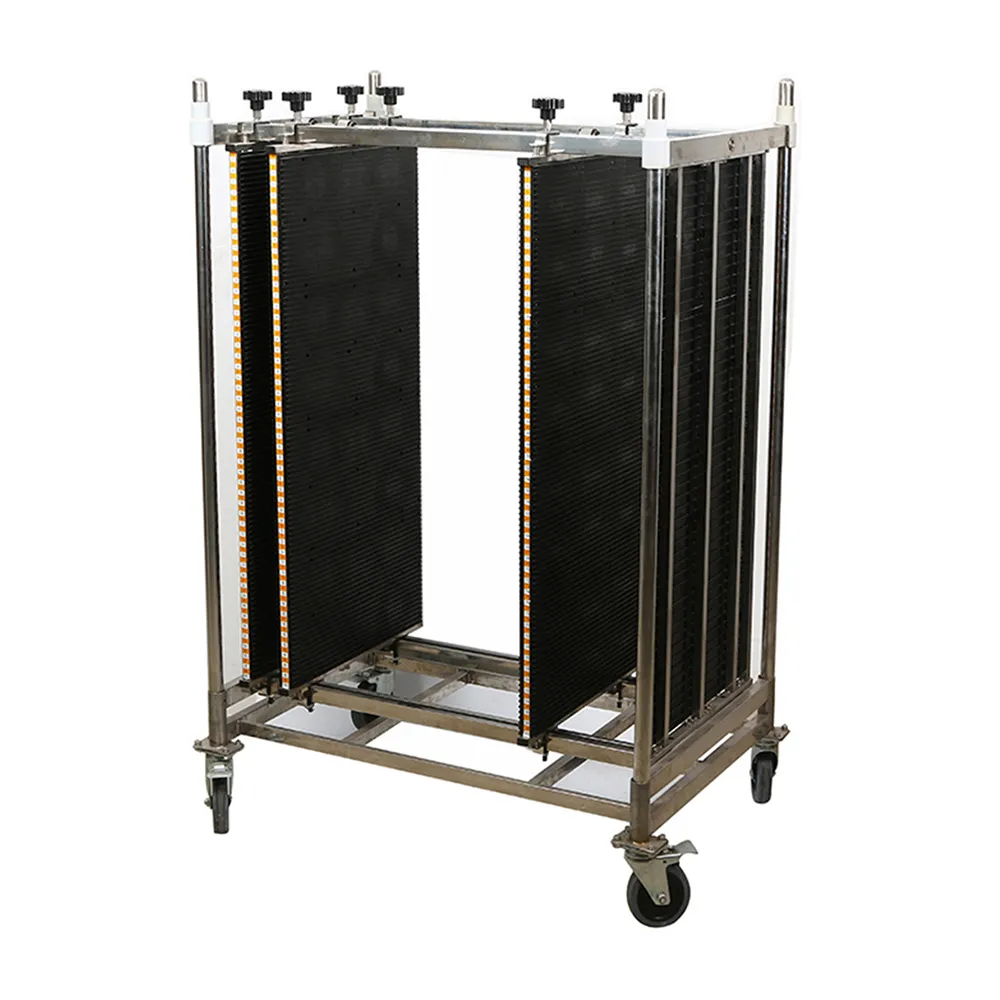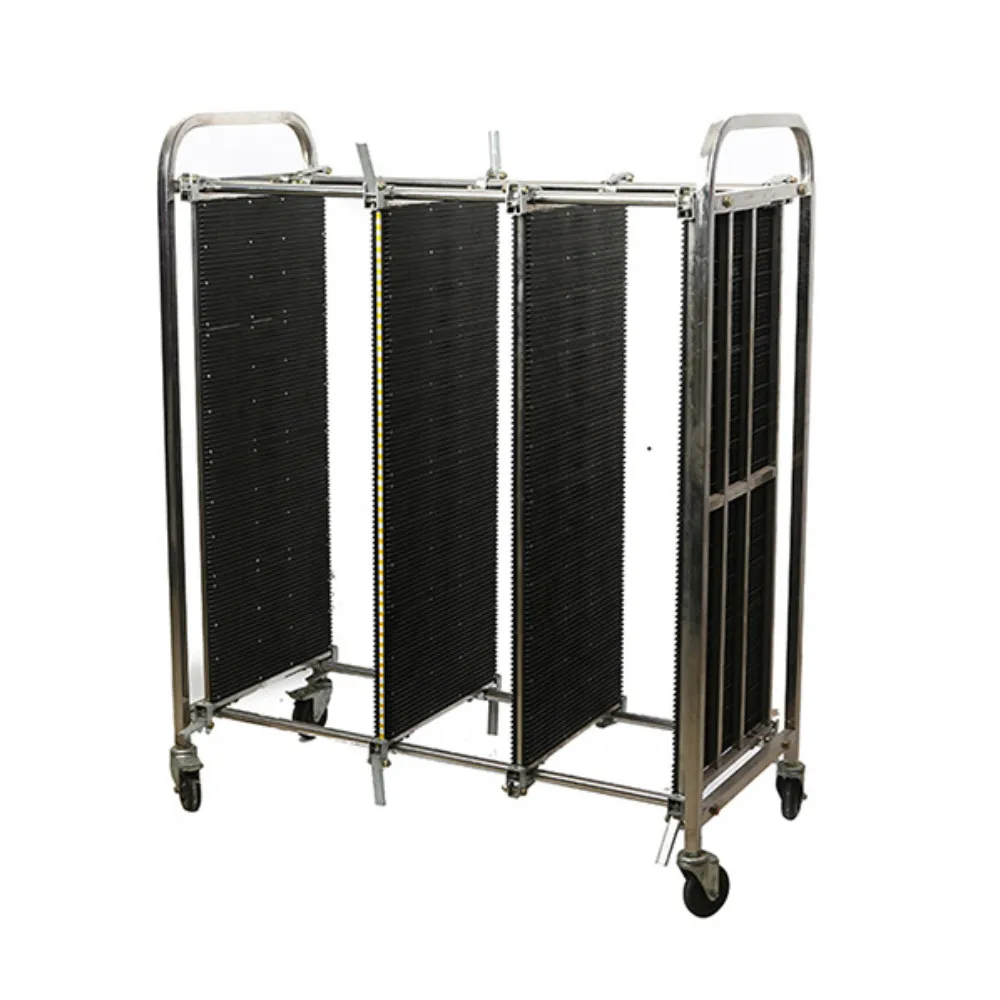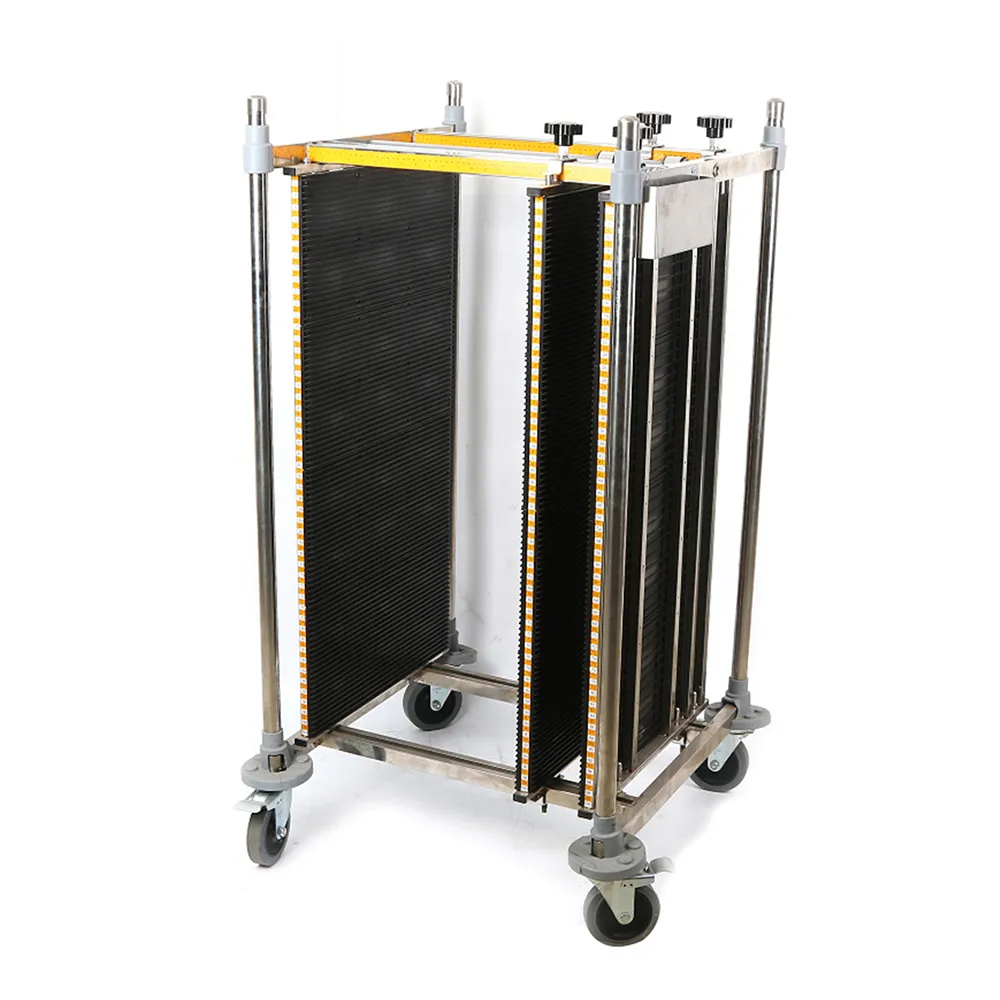
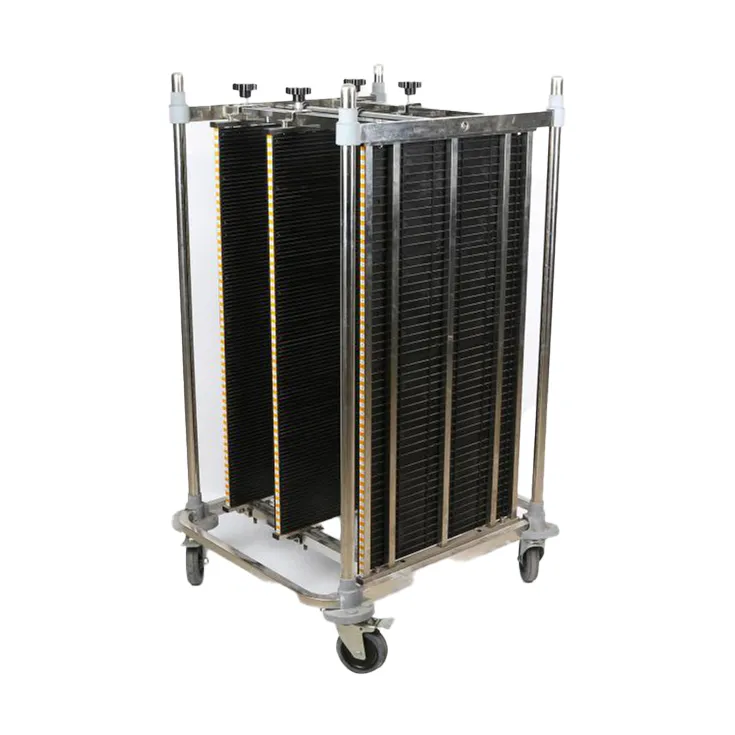
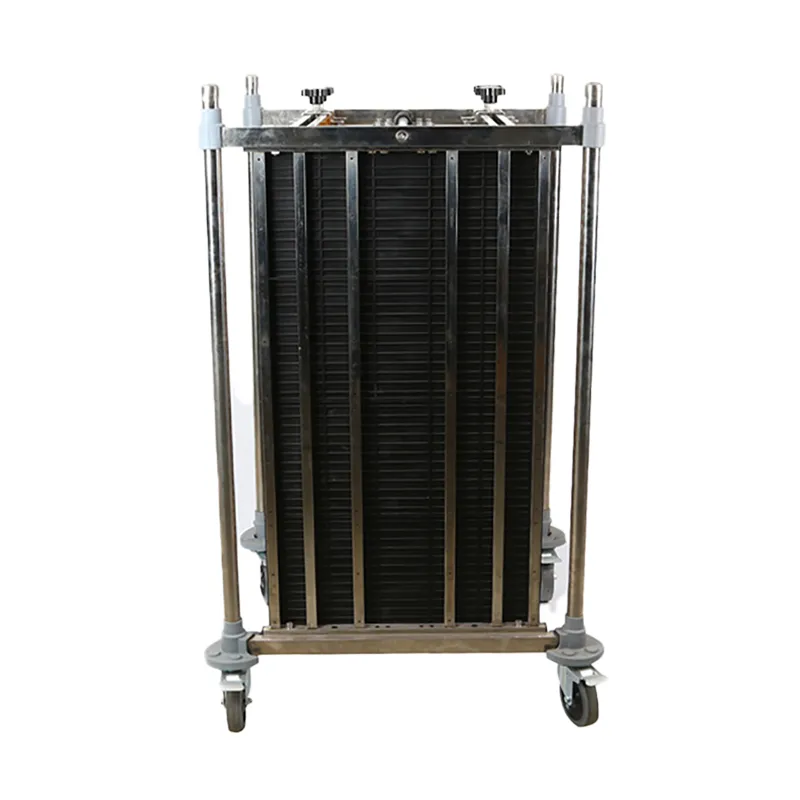
ESD Trolley PCB Storage Cart 3W-9805208 745×715×1350mm
Overview:
Technical advantages
An ESD safe trolley also referred to as a PCB board turnover cart, transfer cart, or storage cart—is industrial equipment specifically engineered to prevent static charge accumulation and discharge. It is widely deployed in static‑sensitive work environments, where its special materials and construction effectively eliminate static electricity and safeguard process stability.
These carts are fabricated from anti‑static materials with a surface resistance of 10⁶ to 10⁹ ohms, enabling rapid dissipation of built‑up charges and protecting electronic components from ESD damage. A metal grounding chain mounted at the bottom provides an alternative discharge path even if the wheels become contaminated with dust, further ensuring reliable static elimination.
Equipped with high‑quality anti‑static plastic or conductive rubber wheels (some with brakes), ESD trolleys offer flexible, stable movement for transporting goods between workshops, warehouses, and other areas. The wheel design ensures quiet operation, minimising noise interference in the workplace.
The body frame is typically constructed from stainless steel (e.g., 304 grade) or carbon steel, delivering excellent compression and wear resistance. This allows the cart to withstand heavy loads and maintain a long service life even under harsh conditions, while also providing good corrosion resistance where required.
Technical Specification
| Product name | ESD Trolley | |
| Product model | 3W-9806208 | |
| Specification parameters | ●External dimensions: | 745*715*1350mm |
| ●Side size: | 1028*545*30 (single) /40 (double)mm | |
| ●Pallet size: | 525*250mm | |
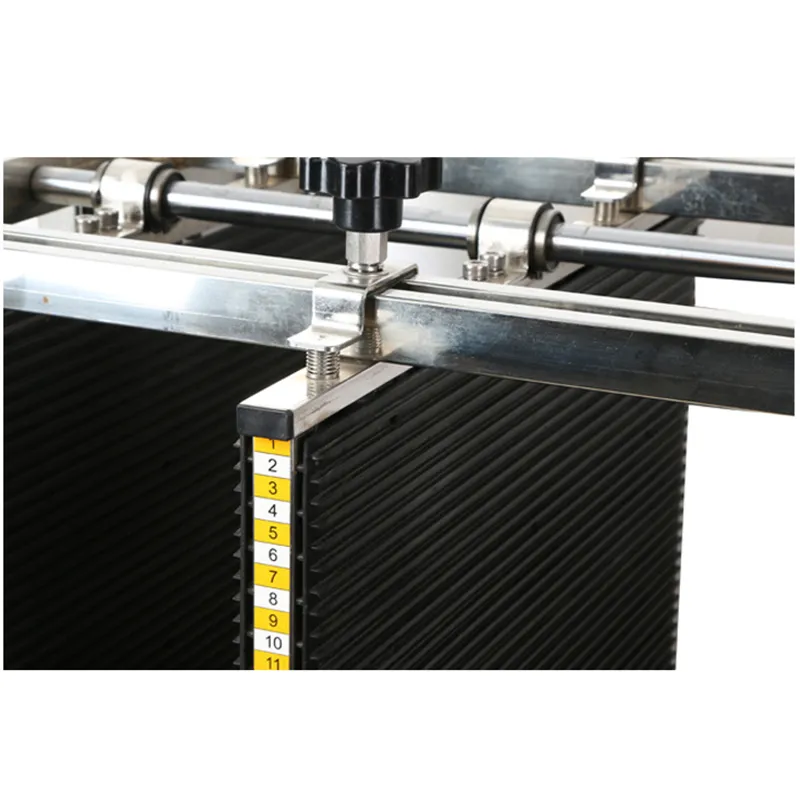
| ●Side panel structure: | 4-piece plug-in board | |
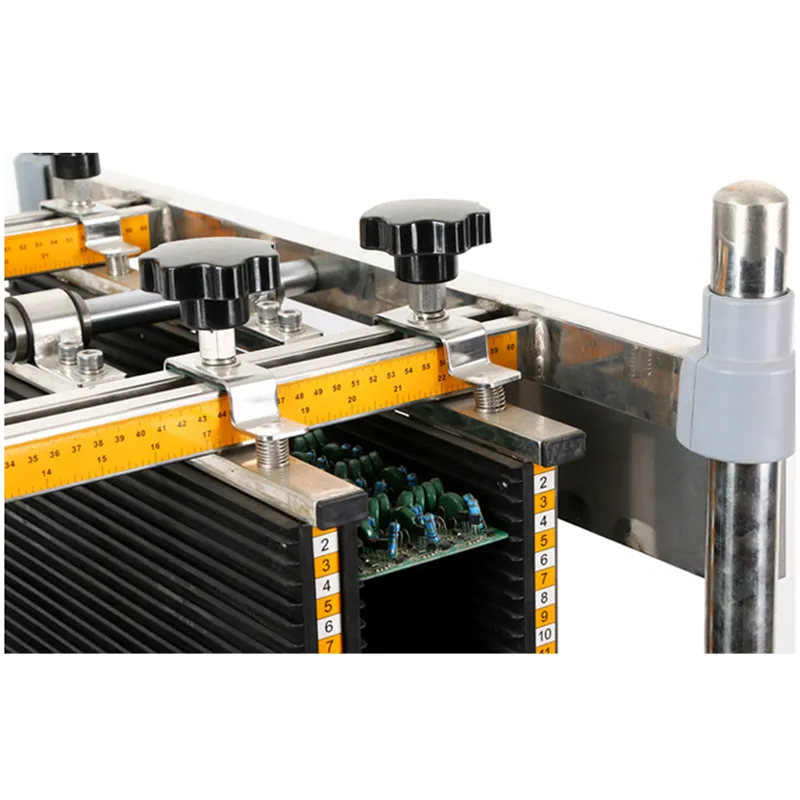
| ●Adjustable width: | 0-445mm (Max ) | |
| ●Groove depth: | 4mm | |
| ●Groove width: | 7mm | |
| ●Pitch: | 10mm | |
| ●Number of slots: | 100 | |
| ●Weight: | 47.5Kg | |
| ●PCB board storage capacity: | 200 tablets | |
| ●weight bearing: | 150kg | |
| Product description | ◆Bearing design, smooth movement | |
| ◆Double knob locking device | ||
| ◆2 single-sided panels and 1 double-sided panels | ||
| ◆Anti-silent caster material: PU material | ||
| ◆Static index: 10e4-10e8Ω | ||
| Temperature resistance options | 口100°C 口120°C 口150°C | |
| Optional accessories | □File box | |
| □Slot code label | ||
| □Anti-static label | ||
| □Anti-collision guardrail | ||
*Temperature resistance refers to the maximum temperature of the PCB board that the turnover cart can withstand
World-Class ESD Manufacturing Capacity
When you source from Sanwei, you are partnering directly with an industry-leading OEM/ODM manufacturer. We operate a state-of-the-art 70,000+ m² integrated production facility in Yueqing Central Industrial Park, Zhejiang, managing every single process from proprietary material formulation to final high-precision product molding.
Integrated Scale
70,000+ m² advanced plant base equipped with heavy-duty precision injection molding machines to handle bulk wholesale orders with stable lead times.
Full-Chain Control
Complete in-house control spanning proprietary anti-static material R&D, structural mold engineering, automated manufacturing, and swift global logistics delivery.
Rigorous Inspection
Strict raw material testing combined with multi-point surface resistivity metering on the production line ensures 100% compliance with international ESD standard guidelines.
Anti-Static Products and Solutions
Delivering comprehensive electrostatic protection across your entire manufacturing and operational lifecycle.
SMT Equipment
Anti-static collection boxes and racks for automated lines.

Storage & Logistics
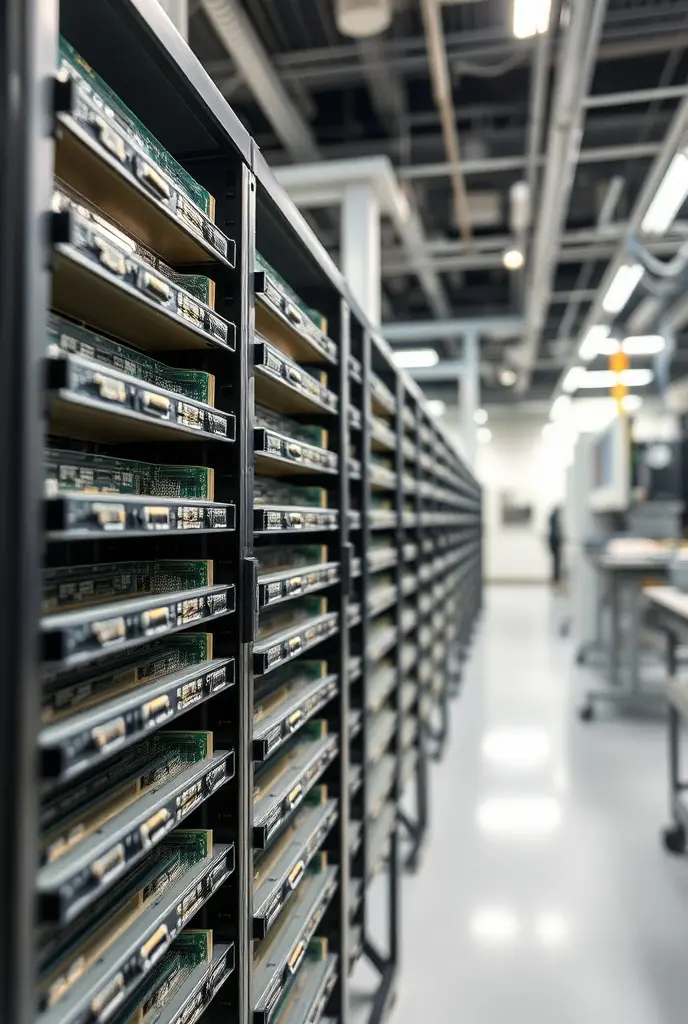
Turnover carts, shelves, boxes, trays, and component containers.

Workstation & PPE
Anti-static chairs, mats, wrist straps, and personal protection.
Custom Development
Custom mold development and special anti-static materials.
OUR OEM/ODM ADVANTAGES

Advanced R&D & Material Innovation
In-house developed anti-static materials with national invention patents and heat resistance up to 200℃. We do not just mold — we formulate compounds.

Full-Scale Production Capacity
30,000㎡ plant with complete injection molding, granulation and supporting processing systems for stable and efficient supply.

Full-Process Customization
Material resistivity, color, size, logo, packaging and certifications — customizable to meet IEC61340-5-1, ANSI/ESD S20.20 or military standards.

Certified Quality & Global Compliance
“Sanwei successfully developed custom high-temperature resistant clean natural color trays for our semiconductor assembly line, replacing imported products, ensuring excellent ESD safety, and meeting the high cleanliness requirements of the workshop.”
TRUSTED BY GLOBAL FORTUNE 500 INDUSTRY LEADERS
Our proprietary ESD solutions are deployed in elite production facilities worldwide, including: Intel, Motorola, Siemens, IBM, Panasonic, Nokia, and Dell.
Looking for Custom Sizes or Bulk Wholesale Pricing?
Backed by our robust in-house R&D team, Sanwei provides complete OEM/ODM options tailored to your specific SMT production lines or warehouse layout. Contact our specialists today for custom molds, color coding, or integrated 5S storage consulting.
Frequently Asked Questions (FAQ)
1. What is an ESD safe trolley?
An ESD safe trolley is a mobile cart made of static‑dissipative materials, with conductive wheels and a grounding chain, designed to transport sensitive electronic components without causing electrostatic discharge damage.
2. How does an ESD trolley differ from a regular cart?
A regular cart can generate and hold static charge, while an ESD trolley uses materials with surface resistance of 10⁶–10⁹ Ω and includes a grounding path, safely draining static to earth.
3. What materials are used in ESD trolleys?
Frames are typically steel or stainless steel; shelves use anti‑static laminate or PVC; wheels are conductive rubber or anti‑static plastic – all chosen to keep resistance within ESD‑safe limits.
4. Which standards do ESD trolleys need to meet?
They should comply with ANSI/ESD S20.20 and IEC 61340‑5‑1, with grounding resistance tested per ANSI ESD STM4.1 to ensure reliable static dissipation.
5. How often should an ESD trolley be tested and maintained?
Test surface resistance and ground continuity at least weekly (daily in dusty areas); inspect wheels and grounding chains for wear, and clean contacts to maintain effectiveness.
6. Can an ordinary cart be converted into an ESD safe trolley?
Yes, but you must replace the work surface, wheels, and add a grounding chain, then verify with ESD testing – though purpose‑built ESD trolleys are more reliable.
7. Where are ESD trolleys commonly used?
In electronics manufacturing, PCB assembly lines, SMT workshops, semiconductor fabs, cleanrooms, warehouses, and field service – anywhere static‑sensitive parts are handled.