- Tăng áp
- Blog
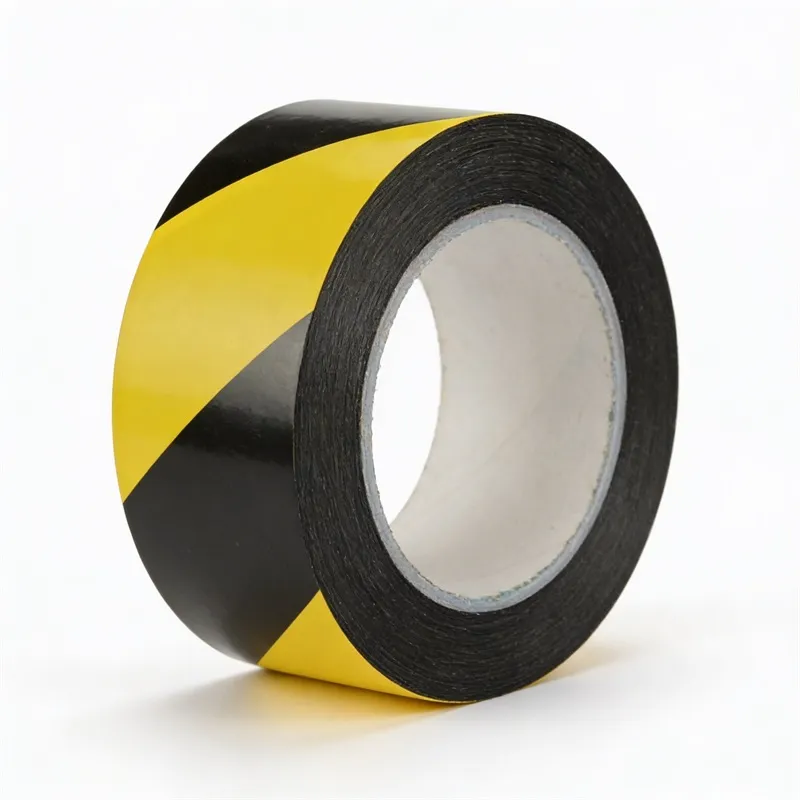
ESD floor tape identifies a controlled boundary, aisle, workstation zone, or handling instruction in an electrostatic protected area. It is primarily a communication and floor-marking product; it does not by itself ground personnel, dissipate charge, or make an uncontrolled floor into an ESD control system. A successful installation connects the tape wording and color to the site’s documented rules, uses an adhesive compatible with the floor and cleaning process, remains visible under traffic, and avoids loose edges that create a safety hazard. This guide helps ESD coordinators, facility teams, and buyers specify, trial, install, inspect, and replace floor tape without confusing a visual boundary with electrical protection.
Define the message before selecting the tape
State what the line means: entry into an EPA, an aisle boundary, a keep-clear zone, a cart location, or a transition where personnel checks are required. The exact wording should match the facility control plan, signs, training, and audit language. A decorative stripe with no agreed behavior does not create control.
Limit the number of colors and messages so workers can recognize them consistently. OSHA’s archived interpretation notes that aisle lines may use different colors as long as they clearly define the aisle; local codes and current site safety requirements still govern the installation. Do not present a company color convention as a universal legal rule.

Do not confuse marking with electrical performance
Some products are marketed as antistatic or ESD tape, while others are ordinary durable floor-marking tape printed with an ESD warning. Ask which function is claimed and what evidence supports it. Regardless of material, the visible line alone does not provide the grounding, footwear, flooring, work-surface, ionization, packaging, or personnel controls required by the ESD plan.
If the tape crosses or covers a functional ESD floor, assess whether its insulating area, adhesive residue, wear, or layout affects the approved system. The ESD coordinator and facilities owner should approve the detail. Do not extrapolate a surface claim from a small tape sample to the behavior of the entire floor-personnel system.
Match backing and adhesive to the floor
Document floor material, coating, texture, porosity, age, condition, cleaning chemistry, temperature, moisture exposure, and traffic. Adhesive that performs on smooth sealed concrete may behave differently on textured tile, epoxy, worn coatings, or contaminated surfaces.
Use a representative installation trial. Check initial placement, edge lift, removal, residue, print wear, cleaning compatibility, turning wheels, foot traffic, and the effect of normal environmental conditions. Do not rely only on a short hand-peel test or assume that the strongest adhesive is the safest choice.

Plan the layout around work and traffic
Create a scaled layout showing boundaries, doorways, benches, exits, fire equipment, material flow, forklift routes, and floor joints. Keep markings understandable at approach distance and avoid patterns that conflict with existing safety or logistics lines. Use signs or entry instructions where a line alone cannot communicate the required action.
At corners and transitions, avoid small loose pieces and abrupt geometry that receives concentrated wheel force. Do not cover damaged flooring or use tape as a substitute for repair. OSHA requires walking-working surfaces to be maintained in a clean and orderly condition; raised edges, wrinkles, and debris should be corrected promptly.
Inspect and replace before the boundary becomes ambiguous
Set routine checks for adhesion, edge lift, wrinkles, tears, dirt, print legibility, missing sections, adhesive residue, and conflict with changed layouts. Define who can repair the line and how temporary gaps are controlled. Random patching with a different color or wording can weaken the visual system.
Replacement timing should follow observed condition and risk rather than a universal service-life claim. Record recurring failure locations. Turning wheels, floor joints, harsh cleaning, oil, moisture, or poor preparation may require a different construction or layout—not simply more frequent replacement.
Bảng lựa chọn và sơ tuyển
| Planning item | Decision to document | Acceptance check |
|---|---|---|
| Boundary meaning | EPA entry, aisle, keep-clear or equipment zone | Matches procedure and signage |
| Floor condition | Material, coating, texture and contamination | Representative adhesion trial |
| Traffic | People, carts, pallet jacks or forklifts | Wear and edge-lift observation |
| Tape construction | Backing, adhesive, width, print and color | Approved sample and label |
| Bảo trì | Cleaning method and inspection owner | No loose edges or unreadable message |
| Thay đổi quyền kiểm soát | Who can move or repair markings | Updated layout and training |
Chạy thử nghiệm sản phẩm mẫu đầu tiên có kiểm soát
Sử dụng mẫu đã được ghi chép đại diện cho quá trình thi công sản xuất đề xuất. So sánh nó với hạng mục hiện tại đã được phê duyệt nếu có. Ghi lại nhận dạng, phiên bản, lô nhà cung cấp, điều kiện môi trường, thiết bị, người vận hành và các quan sát. Một đợt thử nghiệm nên bao gồm khâu tiếp nhận, lưu trữ, chuẩn bị, sử dụng bình thường, làm sạch nếu có, và xử lý hoặc trả lại. Dừng thử nghiệm nếu hạng mục làm hỏng sản phẩm, tạo ra sự ô nhiễm, cản trở thiết bị, hoặc xung đột với quy trình ESD hoặc an toàn.
Tách biệt các tiêu chí đạt chuẩn khỏi các quan sát. Kích thước, nhãn mác, độ vừa vặn, tay nghề chế tác, bằng chứng vật liệu và hành vi chức năng có thể yêu cầu các kiểm tra khác nhau. Giải quyết các sai lệch trước khi phê duyệt số lượng sản xuất, đồng thời lưu giữ bản vẽ được kiểm soát, báo cáo và mẫu phê duyệt. Yêu cầu nhà cung cấp thông báo trước khi có bất kỳ thay đổi nào đối với nguồn vật liệu, chất phụ gia, chất kết tinh, kết cấu, dụng cụ, quy trình hoặc kích thước quan trọng.
Kiểm tra đầu vào và kiểm soát thường xuyên
- Khớp mặt hàng, lần sửa đổi bản vẽ, số lượng, lô của nhà cung cấp và nhãn bao bì với đơn hàng.
- Kiểm tra sự ô nhiễm, hư hỏng, tay nghề kém, kích thước không chính xác và thiếu nhận diện.
- Tiến hành lấy mẫu và xác minh theo thỏa thuận bằng một phương pháp có tài liệu hướng dẫn và thiết bị hiệu chuẩn trong trường hợp yêu cầu đo lường.
- Cách ly các thay đổi không rõ nguyên nhân về màu sắc, mùi, kết cấu, độ dính, độ vừa vặn, kiểu quấn, hình học hoặc hiệu suất.
- Lưu giữ hồ sơ nghiệm thu và liên kết các khiếu nại hoặc lỗi với lô hàng bị ảnh hưởng.
- Xem xét lại đặc tả kỹ thuật khi có thay đổi về sản phẩm, thiết bị, tuyến đường, phương pháp vệ sinh hoặc kế hoạch kiểm soát.
Danh sách kiểm tra RFQ dành cho người mua
Nêu rõ ứng dụng, ranh giới bảo vệ, giao diện thiết bị hoặc bộ phận, kích thước và dung sai, cấu trúc vật liệu, chức năng yêu cầu, phương pháp thử nghiệm và tiêu chuẩn chấp nhận, các yêu cầu về độ sạch và tay nghề, bao bì, nhãn mác, khả năng truy xuất nguồn gốc, số lượng mẫu, kỳ vọng về sản phẩm mẫu đầu tiên (first-article), tài liệu, thông báo thay đổi, và số lượng giao hàng. Tham chiếu SWESD ESD floor marking tape product cho loại sản phẩm hiện đang hiển thị, và sử dụng Trung tâm sản phẩm SWESD để phối hợp nó với các thiết bị xử lý liên quan.
Yêu cầu nhà cung cấp liệt kê các giả định và ngoại lệ. Tránh sao chép các tuyên bố chưa được xác minh từ catalogue vào một thông số kỹ thuật được kiểm soát. Các giới hạn kỹ thuật, chứng nhận và tuyên bố tuân thủ cần được xem xét đối với mặt hàng thực tế được cung cấp và ứng dụng của bên mua.
So sánh các mẫu dưới cùng điều kiện
Một phép so sánh hữu ích chỉ thay đổi một quyết định tại một thời điểm. Sử dụng các bộ phận đại diện, thao tác, thiết bị, tuyến đường, bước chuẩn bị làm sạch và khoảng thời gian quan sát giống nhau cho mỗi ứng dụng viên. Dán nhãn các mẫu để người đánh giá không nhầm lẫn danh tính nhà cung cấp, phiên bản hoặc trình tự thử nghiệm. Khi thực tế cho phép, hãy đưa mặt hàng hiện đang được phê duyệt vào làm đường cơ sở. Ghi lại cả hành vi thành công lẫn công sức cần thiết để đạt được điều đó, chẳng hạn như điều chỉnh thêm, làm sạch lặp lại, xử lý chậm hơn hoặc sự can thiệp của người vận hành.
Không gộp các kết luận về điện, cơ khí, độ sạch và thương mại thành một điểm số chung chung. Một ứng viên có thể phù hợp nhưng thiếu bằng chứng vật lý có thể truy xuất, hoặc có tài liệu mạnh nhưng vận hành kém trên máy. Duy trì các tiêu chí đạt riêng biệt cho an toàn, kiểm soát ESD, bảo vệ sản phẩm, khả năng tương thích của thiết bị, độ nhiễm bẩn, khả năng sử dụng, tài liệu và chi phí vòng đời. Bất kỳ lỗi nghiêm trọng nào cũng phải được giải quyết thay vì bị che giấu bởi điểm trung bình cao.
So sánh thương mại nên sử dụng chi phí của một quy trình hoàn chỉnh và được nghiệm thu, không chỉ là giá trên từng sản phẩm. Cần tính đến công sức kiểm tra, thời gian chuyển đổi, phế liệu, vệ sinh, thay thế, rủi ro dừng máy, logistics thu hồi, tài liệu, và ảnh hưởng của các lô hàng không đồng nhất. Các yếu tố này không biện minh cho việc bịa đặt ra một tuyên bố về tuổi thọ dịch vụ; chúng giúp người mua thiết kế một cuộc thử nghiệm nhằm đo lường các điều kiện thực sự tạo ra chi phí.
Các tài nguyên lập kế hoạch SWESD liên quan
- reviewing ESD-safe tapes used in SMT areas
- planning grounded ESD workstation surfaces
- using precise ESD procurement language
Educational video: Fundamentals of Electrostatic Discharge by Maxim Integrated
This educational video explains the hazard controlled inside an EPA and reinforces why a marked line is only one part of the control system. The written guide remains complete without the video.
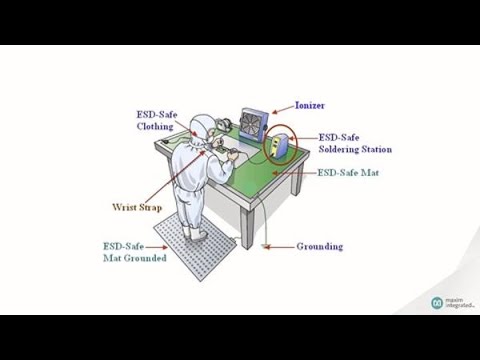
Open this video from Maxim Integrated on YouTube.
Các câu hỏi thường gặp
Does ESD floor tape ground people or equipment?
No. Floor tape normally identifies a boundary or instruction. Grounding and charge control require the separately approved systems in the facility ESD plan.
Must all ESD floor tape be yellow?
No universal color rule should be assumed. Use a documented site convention that remains clear and does not conflict with applicable safety requirements.
How should adhesion be approved?
Install a representative trial on the actual cleaned floor and observe edge lift, residue, cleaning, traffic, print wear, and removal.
When should floor tape be replaced?
Replace it when adhesion, damage, contamination, missing sections, or poor legibility makes the boundary unclear or creates a walking-surface risk.
Tài liệu tham khảo có thẩm quyền
Bài đăng gần đây
-
 Kiểm tra độ lệch của hộp ESD: Đo kích thước phù hợp trước khi phát hành22 tháng 10 năm 2026
-
 Kiểm tra điện trở bề mặt khay JEDEC: Hình dạng, tiếp xúc và báo cáo22 tháng 10 năm 2026
-

Để lại phản hồi