- Turbo
- Blog
SMT stencil wiper roll core damage receiving inspection should identify transit damage and configuration uncertainty before a roll reaches the printer. Check the package, item identity, projecting core ends and engagement features against the approved supplied configuration. Segregate suspect material instead of forcing it onto a spindle or reshaping a damaged end. A receiving check establishes visible condition within an agreed inspection scope; it does not prove cleaning performance or universal machine compatibility. This guide helps stores, quality and process teams turn a damaged-core observation into a clear hold, supplier inquiry and authorized disposition.
Define the item that receiving is checking
A stencil wiping roll is part of a printer cleaning arrangement. Web width alone does not describe that arrangement. The core, engagement features and supplied winding configuration also need to match the actual cleaning unit. Obtain the approved item reference or drawing and confirm which supplied variant the order requires. Do not use a printer brand name as a complete roll specification when different cleaning units or configurations may exist.
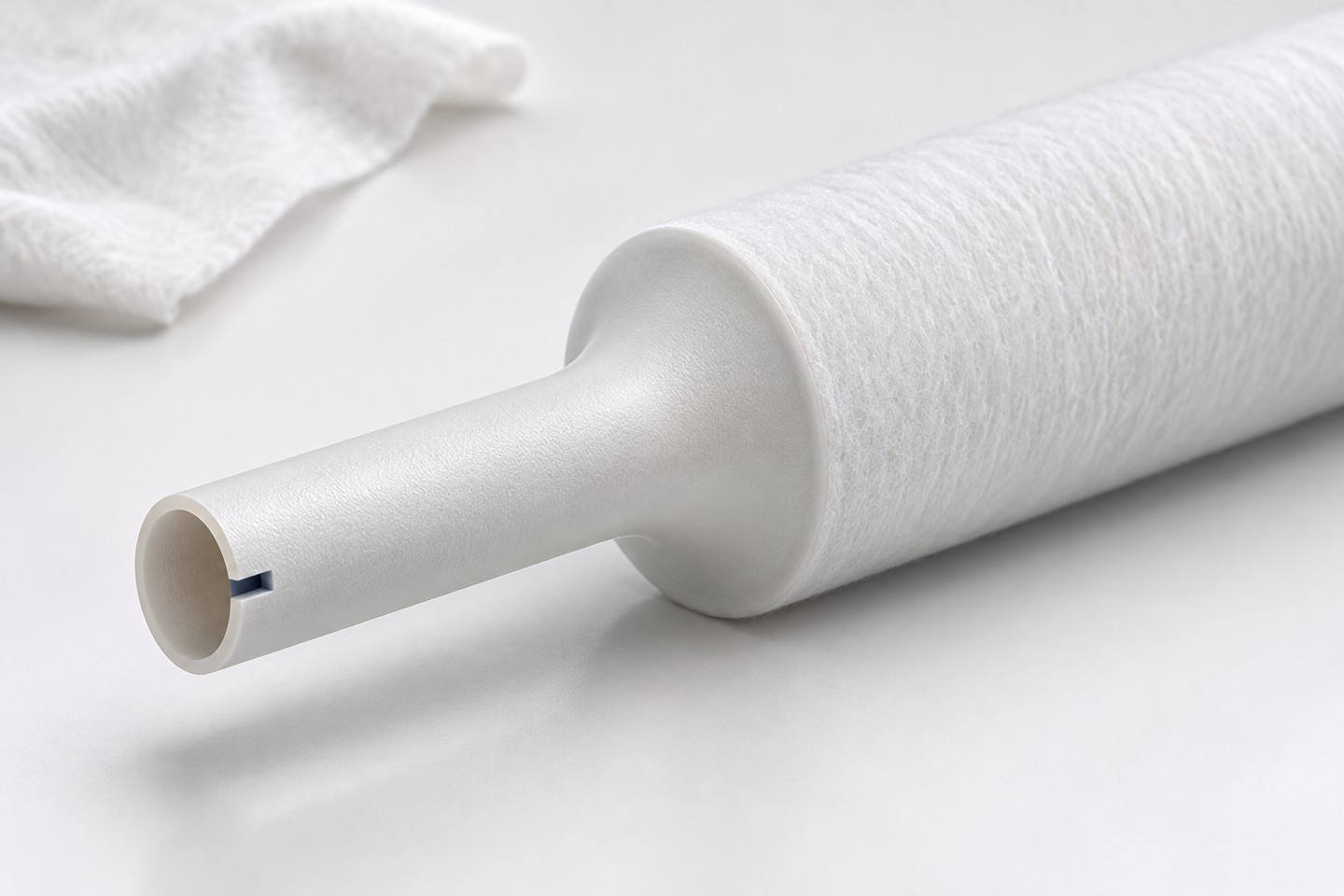
The SWESD stencil wiper provides a real product reference for a quotation. Its image shows a white wiping roll with projecting core ends and small end slots. Those visible features help communicate the product form, but the photograph does not define dimensions, tolerances, core material or the requirements of a particular printer. Confirm those details for the exact item offered.
Kekalkan yang panduan pemilihan kain lap stencil with the approved item record. This receiving review focuses on condition and damage escalation after selection. It should not be used to substitute an unqualified roll or to create new machine settings at the receiving bench.
Inspect the delivery before removing protection
Record the receipt identity and look for external damage, signs of crushing or an opened protective enclosure. Photograph the package condition with the affected item association before removing evidence. Follow the site’s clean handling requirements when opening material. Avoid opening every pack simply to collect pictures if the approved inspection plan does not require it.
Where several rolls share one outer carton, keep their individual identities and locations traceable while checking a concern. Damage to one corner may affect some material more than others. The authorized reviewer needs to determine the scope from evidence, the supplied packaging and the agreed inspection plan. Neither automatic acceptance of the whole carton nor automatic rejection of the delivery is a substitute for that decision.
A receiving record should distinguish observed condition from a suspected cause. Write that a package wall is crushed or a core end appears deformed. Do not state that a carrier dropped the carton unless evidence supports that explanation. A neutral condition record is easier for the supplier and receiving team to investigate.
Look at core ends and engagement features
Check accessible core ends for visible cracks, crushing, chips, distortion or loose fragments. Compare the observed form with the approved reference. If a slot appears irregular, record its location and the viewing direction. Do not decide that every visible recess is damage; an intentional engagement feature may look unusual without the correct configuration reference.
Use the agreed inspection equipment and handling method where dimensional checks are required. A product image cannot supply a tolerance, and a generic ruler check cannot answer every fit question. Keep the original measurement, unit, item identity and reference requirement together. If the requirement is missing, ask the technical owner to resolve it before inventing a pass criterion.
Examine the relation between the core and the visible wound material without pulling or dismantling the roll. Note obvious separation, displaced layers or contamination within the scope of the receiving plan. These are observations for review, not proof of the eventual cleaning result. Preserve protective packaging and avoid creating a new defect while investigating the original concern.
Distinguish damage from the wrong supplied variant
A roll can be undamaged and still have the wrong core configuration. Compare the item code, approved drawing and engagement features before blaming a tight fit on transit damage. A different core length or slot arrangement may require supplier clarification even when the delivery looks clean. Keep this configuration question separate from the condition observation in the hold record.
Likewise, an apparently correct variant can arrive damaged. Matching the ordered code does not erase a crushed end or unexplained fragment. The receiving decision must address both identity and condition. This separation helps the supplier respond with the right evidence rather than sending a replacement drawing when the actual problem is physical damage.
The winding-direction verification guide covers another distinct configuration question. Do not resolve uncertain orientation by turning or forcing a roll until it seems to feed. Confirm the reference view and approved loading arrangement before any authorized trial.
Use a practical receiving and escalation record
The table below is a qualitative checklist for an identified supplied roll. It contains no assumed dimensional limits or universal sampling rate. Add the relevant approved drawing, purchase requirement and receiving procedure before use. The aim is to preserve enough information for a proportionate decision while preventing suspect material from reaching routine production.
| Peringkat | Inspect or record | Eskalasi |
|---|---|---|
| Penerimaan | Outer package, item and lot identity | Damage or uncertain association |
| Core ends | Visible cracking, crushing and slot condition | Suspected deformation or fragments |
| Konfigurasi | Approved drawing and actual supplied features | Variant mismatch |
| Pengendalian | Protected supports and clean contact | Drop or uncontrolled exposure |
| Percubaan | Authorized loading and feed observations | Resistance, noise or poor seating |
| Tindakan | Affected quantity, evidence and owner | No informal reshaping or forced fit |
Mark the physical hold clearly and ensure the inventory record matches it. A note in an email does not stop another shift from issuing stock if the material remains mixed with released rolls. State the affected quantity and storage location. Keep unaffected material decisions within the authority of the receiving plan rather than allowing an informal conversation to redefine the hold.
Handle suspect rolls without informal repairs
Support the roll using a clean arrangement suitable for the supplied item. Avoid resting an end where it could be crushed or collecting debris on the wiping surface. Do not trim a projecting core, enlarge a slot, scrape an end or add tape to make a suspect roll fit. Such actions change the supplied configuration and can destroy the evidence needed for investigation.
If the supplier proposes rework, require a documented disposition through the responsible technical and quality process. The proposal should identify the affected item and what will be checked afterward. A casual instruction to straighten it does not define the method, cleanliness consequences or release authority. Keep material held until the actual approved action and result are recorded.
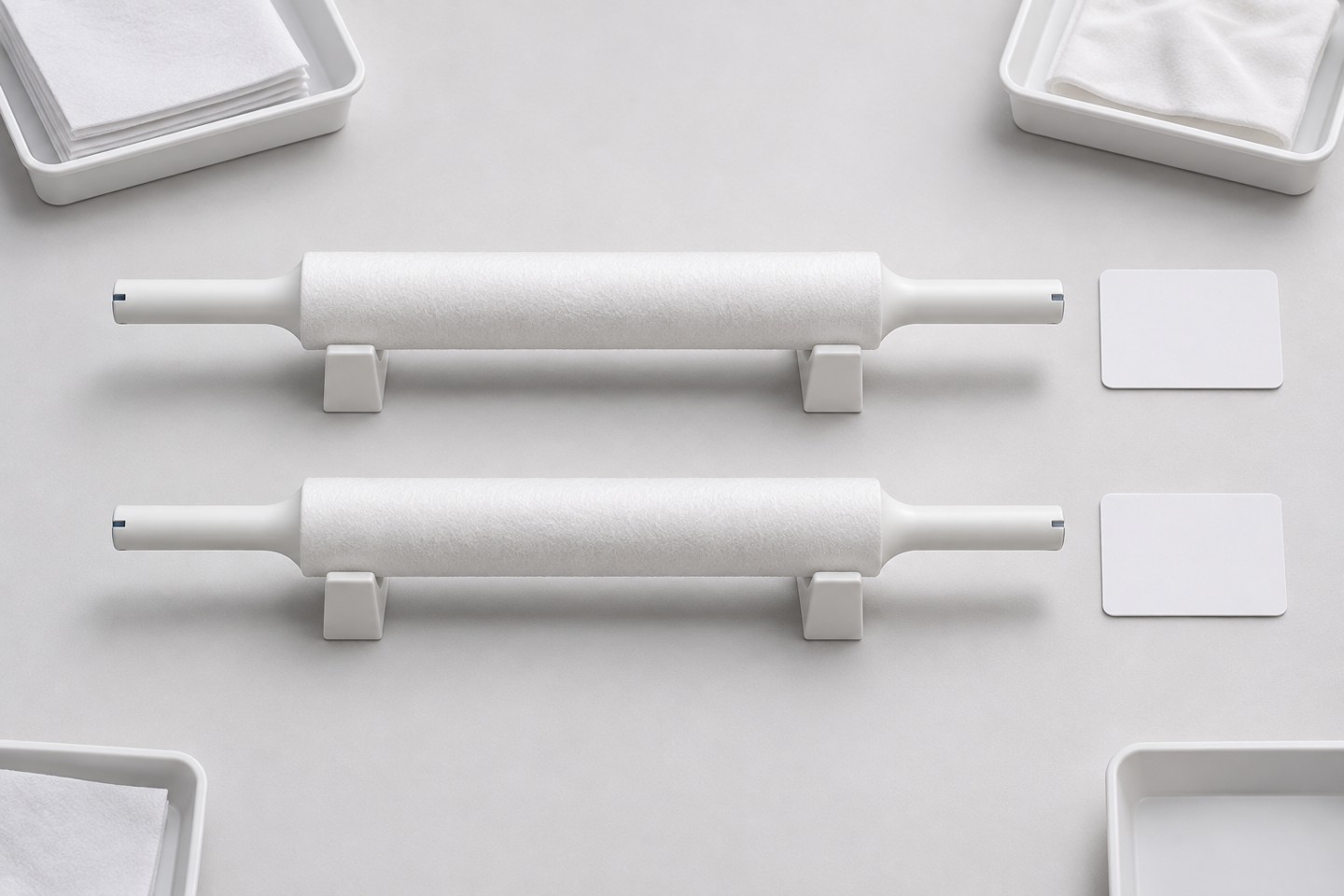
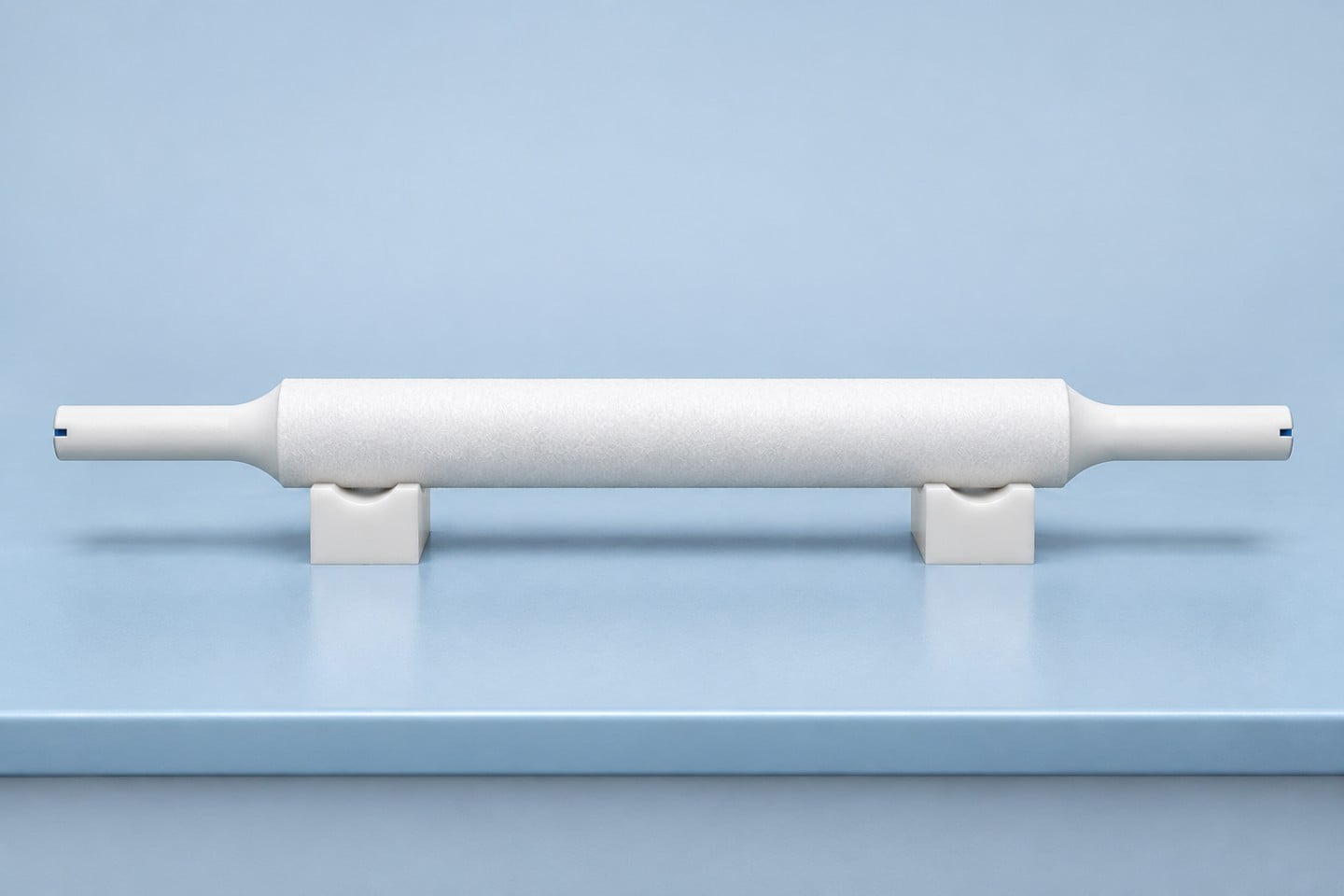
The illustrations show undamaged reference geometry and example inspection supports. They are not acceptance photographs, approved fixtures or dimensional drawings. Compare the delivered item with the agreed supplier information and retain actual photographs of the concern. This avoids mistaking an editorial image for evidence about the received stock.
For the difference between manual wipes and an automatic cleaning roll, see the SMT wiping-material comparison. A manual wipe should not become an improvised substitute for a mismatched roll without the authorized process review.
Keep loading trials under the machine procedure
Any loading or feed trial belongs to trained, authorized personnel using the actual printer instructions. A receiving inspector should not reach into the machine simply to confirm that a core can turn. Stop when there is unexpected resistance, uncertain seating or a mismatch with the approved configuration. Resolve the question before proceeding with production.
OSHA’s hazardous energy guidance addresses injury risks from unexpected energization and stored energy during applicable servicing and maintenance. Whether a specific task falls within a required energy-control procedure depends on the equipment, activity and applicable rules. Follow the site’s machine-specific safe procedure; switching off a control is not a universal substitute for required isolation.
Record the identity of the trialed roll, machine configuration reference and observations. A successful advance can support a narrow mechanical observation. It does not establish long-term reliability, cleaning effectiveness, paste compatibility or print quality. Those require the separate process evidence defined by the engineering team. Do not turn a limited trial into a general equivalence approval.
Hantar pertanyaan kerosakan yang berguna kepada pembekal
Berikan maklumat item yang dipesan, lot sumber, kuantiti yang diterima, kuantiti yang terjejas dan gambar daripada sudut pandangan yang dikenal pasti. Sertakan rujukan konfigurasi yang diluluskan serta penerangan faktual tentang isu yang dikenal pasti. Nyatakan sama ada gulungan tersebut kekal terlindung, telah dibuka untuk pemeriksaan atau telah diuji mengikut prosedur yang dibenarkan. Sejarah ini membantu membezakan keadaan semasa penghantaran daripada keadaan akibat pengendalian selepas itu.
Minta pembekal mengesahkan konfigurasi yang dibekalkan dan cadangan tindakan susulan. Produk gantian hendaklah kekal dikaitkan dengan isu asal dan memenuhi keperluan item yang telah dipersetujui. Jika pembekal mencadangkan binaan yang berbeza, kemukakan cadangan tersebut untuk semakan perubahan dan bukannya menerimanya secara automatik sebagai produk yang boleh saling menggantikan. Simpan maklum balas dan keputusan supaya penghantaran seterusnya tidak mengulangi perbincangan yang sama tanpa penyelesaian.
Jika perlindungan pembungkusan merupakan isu yang berulang, semak bukti daripada pelbagai penghantaran bersama bahagian pembelian dan kawalan kualiti. Hasil yang berguna mungkin berupa keperluan pembungkusan atau arahan penerimaan yang lebih jelas. Jangan mendakwa bahawa sesuatu perubahan telah menyelesaikan masalah sehingga penerimaan penghantaran seterusnya memberikan bukti yang menyokongnya. Simpan isu semasa dan tindakan pembetulan jangka panjang sebagai rekod yang berasingan dengan pihak yang bertanggungjawab dinyatakan dengan jelas.
Kekalkan kawalan pengendalian elektronik semasa semakan
Pemeriksaan teras mekanikal tidak membuktikan prestasi ESD. Bagi komponen elektronik yang sensitif, kekalkan program pengendalian yang diluluskan semasa bahan sedang disemak atau diuji. Pengenalan kepada ESD oleh Persatuan EOS/ESD memberikan maklumat latar belakang tentang risiko elektrostatik. Maklumat ini tidak boleh dianggap sebagai kelulusan terhadap gulungan, teras atau sokongan pemeriksaan tertentu.
Video pendidikan di bawah menerangkan maklumat asas ESD untuk kerja elektronik. Fungsinya terhad kepada konteks pengendalian yang berkaitan; video ini tidak menunjukkan kriteria penerimaan kerosakan teras atau proses pemuatan ke dalam pencetak. Rekod penerimaan bertulis, lukisan yang diluluskan dan prosedur mesin kekal sebagai sumber rujukan bagi keputusan tersebut.
Soalan tentang teras gulungan pengelap stensil yang rosak
Bolehkah teras yang rosak dipaksa dipasang pada spindle?
Tidak. Hentikan proses dan selesaikan keadaan tersebut atau ketidakpadanan konfigurasi mengikut prosedur yang dibenarkan.
Adakah lebar gulung yang sepadan menentukan keserasian?
Tidak. Dimensi teras, ciri penglibatan dan keperluan unit pembersihan sebenar juga penting.
Bolehkah imej produk menentukan toleransi teras?
Tidak. Gunakan lukisan yang diluluskan dan keperluan pemeriksaan yang telah dipersetujui untuk varian yang dibekalkan.
Adakah teras yang kelihatan utuh membuktikan prestasi pembersihan yang baik?
Tidak. Keadaan penerimaan, penyampaian mekanikal dan keberkesanan pembersihan memerlukan bukti berasingan.
Adakah keseluruhan penghantaran perlu ditolak selepas satu gulungan didapati rosak?
Pemisahan bahan yang terjejas dan biarkan penilai yang diberi kuasa menentukan skop menggunakan bukti dan pelan penerimaan yang dipersetujui.


Tinggalkan Balasan