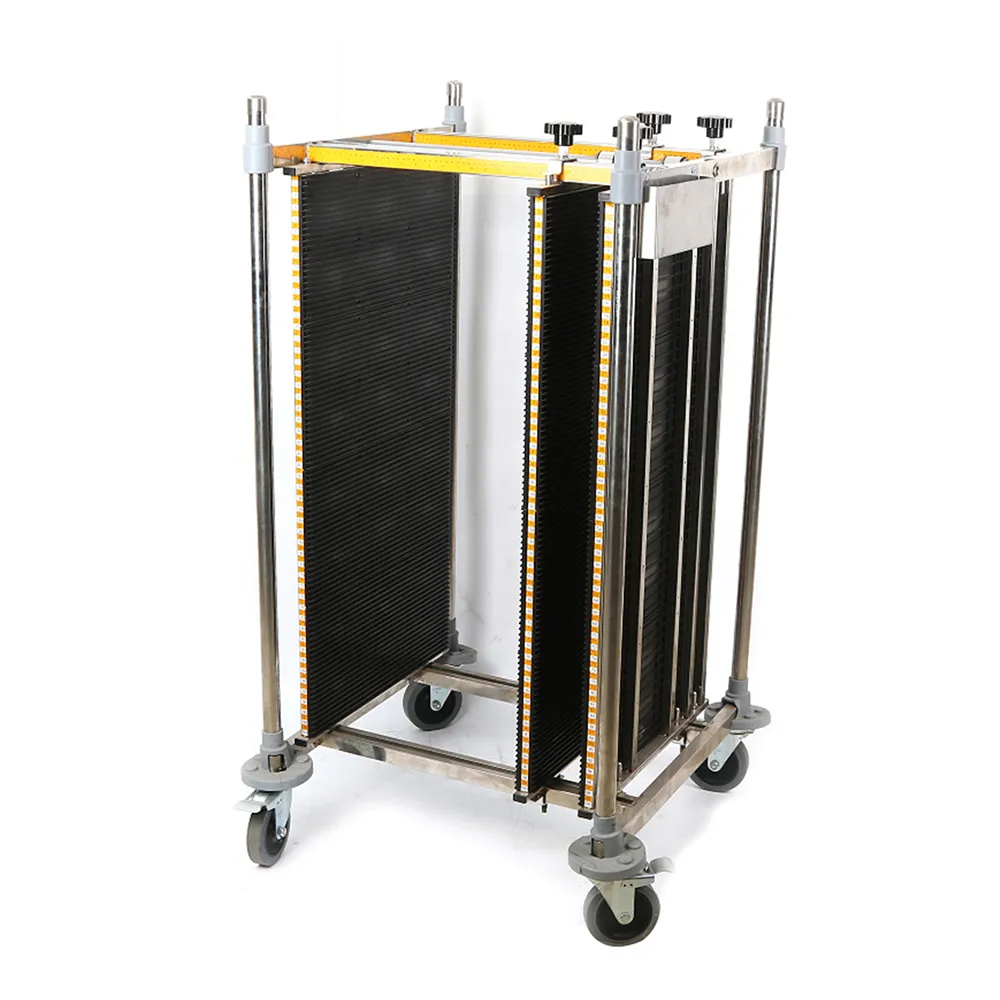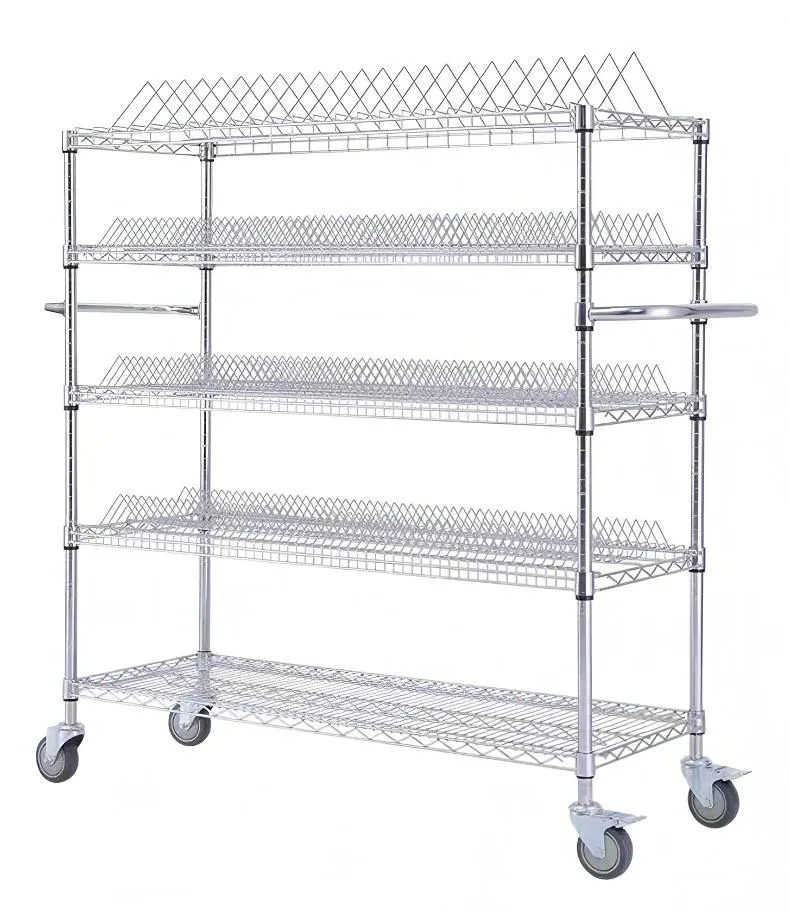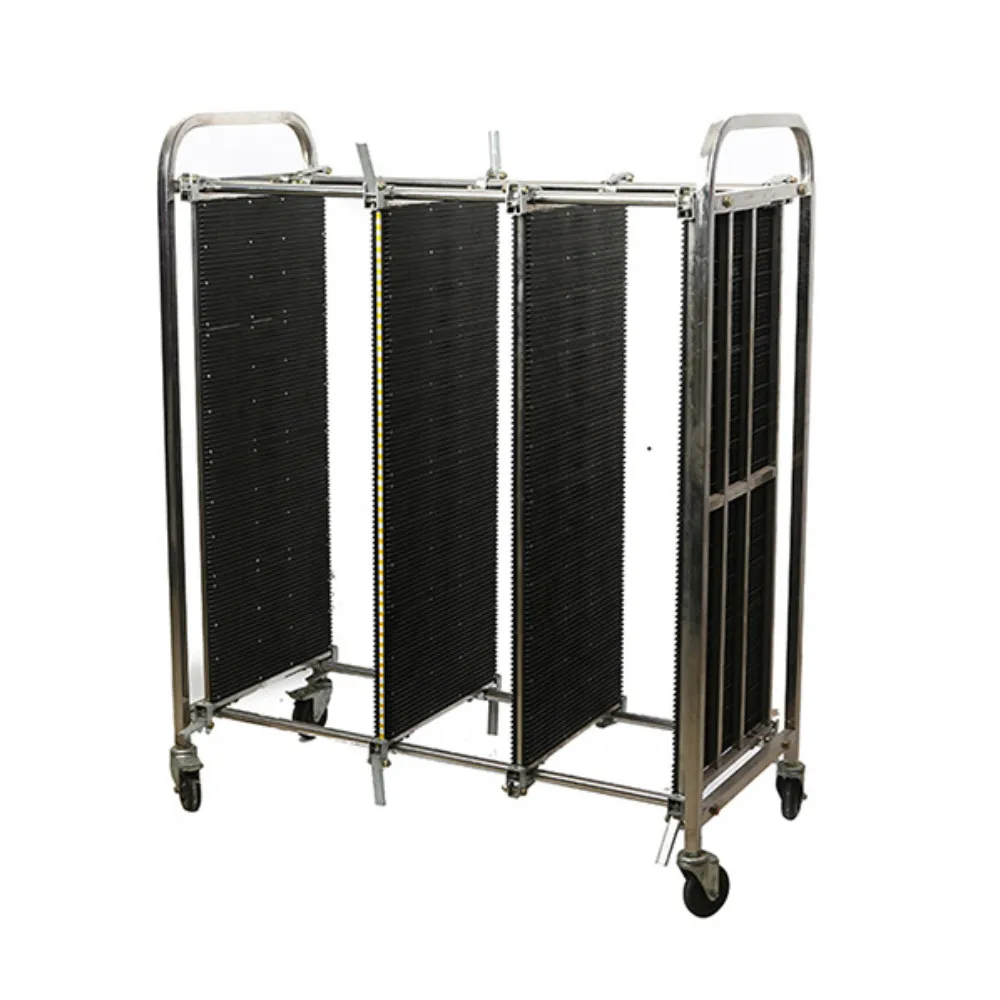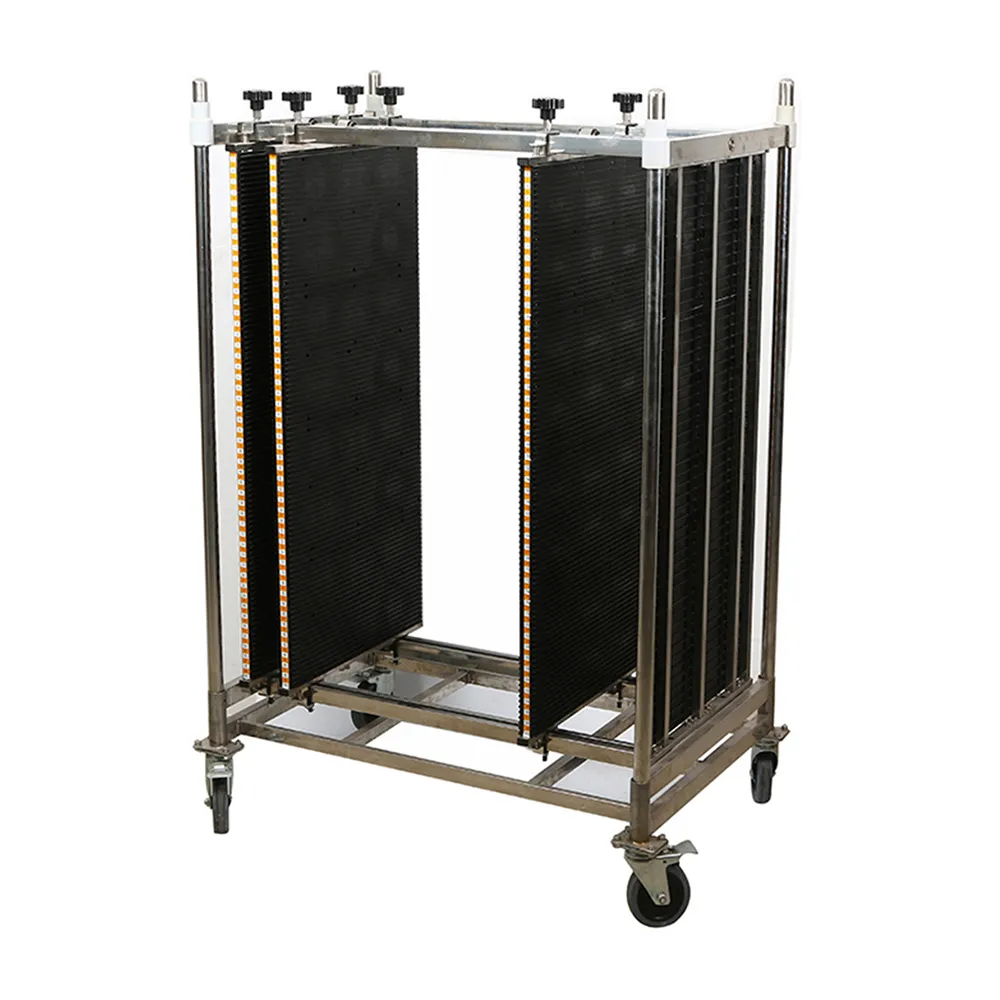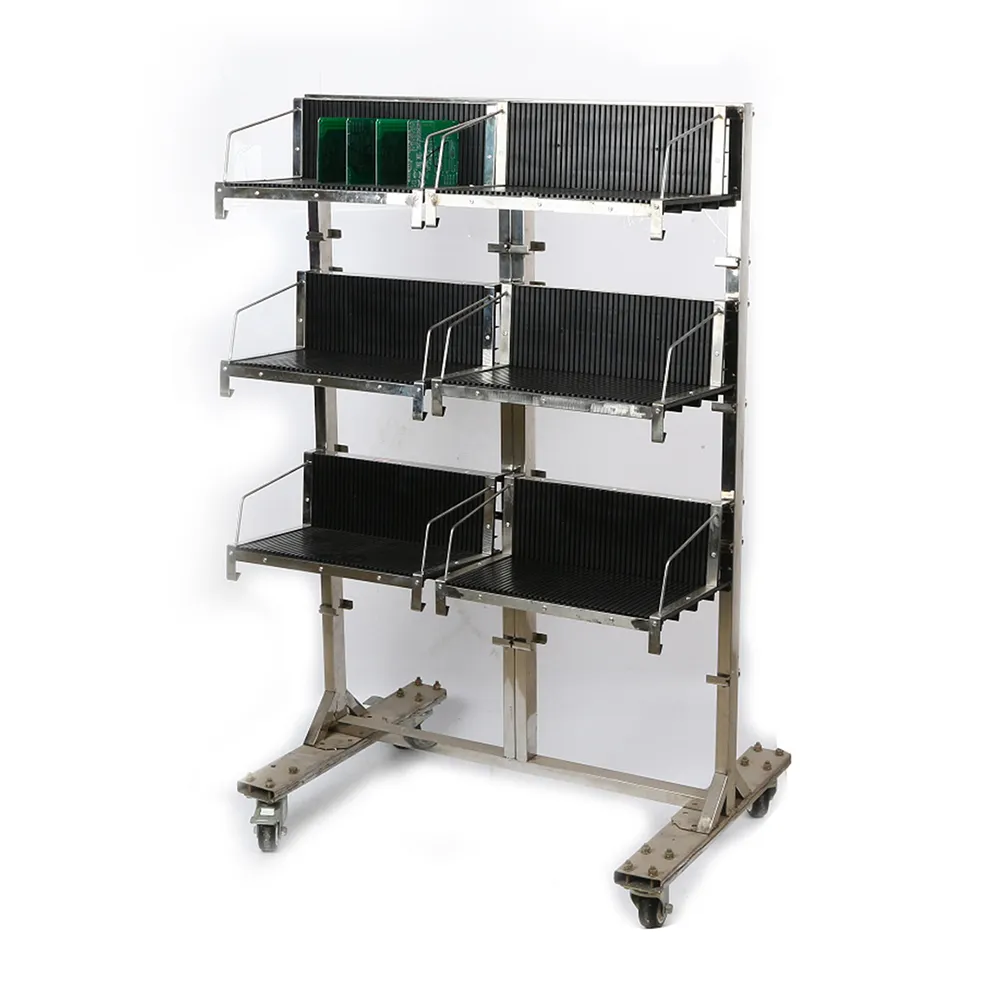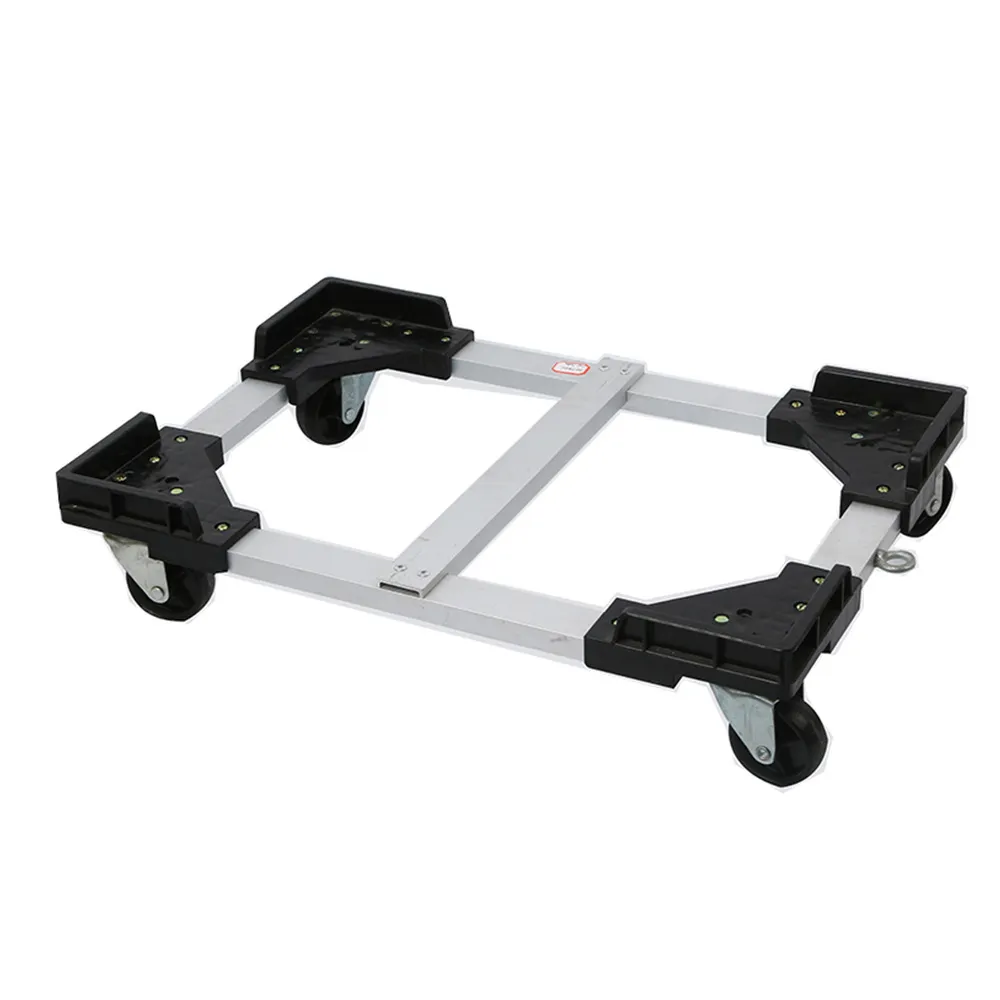
Chariot ESD à roues PU silencieuses Chariot de manutention antistatique 3W-9806101
Aperçu
Avantages techniques
Anti-static turnover carts, also known as PCB board turnover carts, transfer carts, or storage carts, are industrial equipment specifically designed to prevent the accumulation and discharge of static electricity. They are widely used in static‑sensitive working environments. By employing special materials and processes, they effectively eliminate static electricity and inhibit its re‑accumulation, ensuring safety and stability during production processes.
As a typical ESD PCB storage trolley, this cart is constructed with anti‑static materials featuring a surface resistance ranging from 10⁶ to 10⁹ ohms, which can quickly dissipate accumulated static charges and prevent damage to electronic components. A metal grounding chain installed at the bottom of the cart ensures reliable static discharge even if the wheels are affected by dust that might impair their conductivity, further guaranteeing effective static elimination.
Equipped with high‑quality anti‑static plastic wheels or conductive rubber wheels (some with brakes), the esd trolley moves flexibly and stably, facilitating the transport of goods between workshops, warehouses, and other locations. The wheel design ensures low noise during movement, minimizing disturbance to the working environment.
The frame is typically made of high‑quality stainless steel or carbon steel, offering excellent compression and wear resistance. It can withstand heavy loads and maintain a long service life even in harsh working conditions. For example, some models use 304 stainless steel frames, which are not only strong and durable but also possess good corrosion resistance, fully meeting the demands of frequent and long‑term turnover applications.
Spécification technique
| Nom du produit | Chariot ESD | |
| Modèle de produit | 3W-9806101 | |
| Paramètres de spécification | ●Dimensions extérieures maximales : | 810*470*140mm (la longueur et la largeur peuvent être personnalisées) |
| Description du produit | Matériau de roulement anti-bruit : Matériau PU | |
| Le chariot utilisé pour le retournement des rayonnages de magazines et des bacs de retournement | ||
| Indice statique : 10e4-10e8Ω | ||
| Accessoires optionnels | Étiquette antistatique | |
| Chaîne de mise à la terre | ||
Capacité de fabrication ESD de classe mondiale
En vous approvisionnant auprès de Sanwei, vous vous associez directement à un fabricant OEM/ODM leader de l'industrie. Nous exploitons un site de pointe Installation de production intégrée de plus de 70 000 m² dans le parc industriel central de Yueqing, dans le Zhejiang, en gérant chaque processus, de la formulation des matériaux propriétaires au moulage final de produits de haute précision.
Échelle intégrée
Base de production avancée de plus de 70 000 m² équipée de machines de moulage par injection de haute précision pour charges lourdes afin de traiter les commandes en gros avec des délais stables.
Contrôle de bout en bout
Maîtrise interne complète couvrant la R&D de matériaux antistatiques propriétaires, l'ingénierie des moules structurels, la fabrication automatisée et la livraison logistique mondiale rapide.
Inspection rigoureuse
Des contrôles rigoureux des matières premières, associés à des mesures multipoints de la résistivité de surface effectuées sur la chaîne de production, garantissent la conformité du 100% aux directives des normes internationales en matière d'ESD.
Antistatique Produits et Solutions
Fournir une protection électrostatique complète tout au long de votre cycle de fabrication et d'exploitation.
Matériel SMT
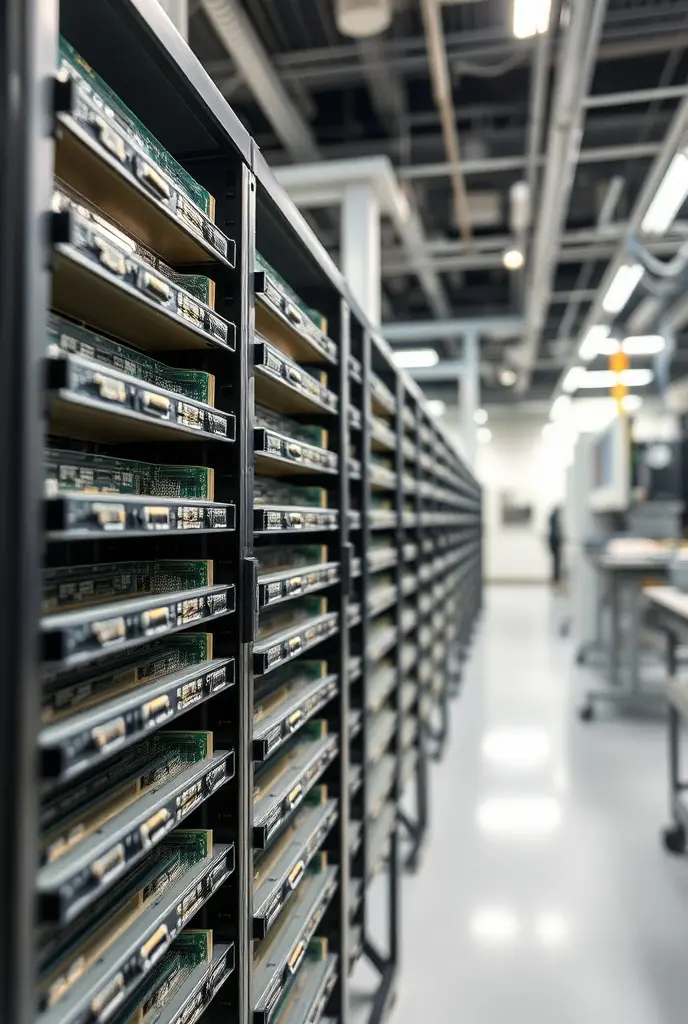
Boîtes et racks antistatiques pour lignes automatisées.

Stockage et Logistique
Chariots de manutention, étagères, boîtes, plateaux et conteneurs de composants.
Poste de travail & EPI
Chaises antistatiques, tapis, bracelets antistatiques et protection personnelle.
Développement personnalisé
Développement de moules sur mesure et matériaux antistatiques spéciaux.
NOS AVANTAGES OEM/ODM

R&D Avancé & Innovation en Matériaux
Matériaux antistatiques développés en interne bénéficiant de brevets d'invention nationaux et d'une résistance à la chaleur allant jusqu'à 200 °C. Nous ne faisons pas que mouler, nous formulons des composés.

Capacité de production à grande échelle
Usine de 30 000 m² dotée de systèmes complets de moulage par injection, de granulation et de traitement auxiliaire pour un approvisionnement stable et efficace.

Personnalisation complète du processus
Résistivité du matériau, couleur, taille, logo, emballage et certifications — personnalisables pour répondre aux normes CEI 61340-5-1, ANSI/ESD S20.20 ou militaires.

Qualité Certifiée & Conformité Globale
“Sanwei a développé avec succès des plateaux sur mesure résistants aux hautes températures, de couleur naturelle propre, pour notre chaîne d'assemblage de semi-conducteurs, remplaçant ainsi des produits importés, garantissant une excellente sécurité ESD et répondant aux exigences élevées de propreté de l'atelier.”
LA CONFIANCE DES LEADERS MONDIAUX DU FORTUNE 500
Nos solutions ESD propriétaires sont déployées dans des usines de production d'élite du monde entier, notamment : Intel, Motorola, Siemens, IBM, Panasonic, Nokia et Dell.
Vous recherchez des tailles sur mesure ou des tarifs de gros ?
Soutenue par notre solide équipe interne de R&D, Sanwei propose des options complètes d'OEM/ODM adaptées à vos lignes de production SMT ou à la disposition de votre entrepôt. Contactez nos spécialistes dès aujourd'hui pour des moules sur mesure, un code couleur ou un conseil en stockage 5S intégré.
Foire aux questions (FAQ)
1. What is an ESD trolley?
An ESD trolley (anti‑static turnover cart) is a mobile handling device designed for static‑sensitive environments. It is made of static‑dissipative materials, equipped with grounding chains and anti‑static wheels, to safely remove or dissipate electrostatic charges and protect electronic components from ESD damage during transport.
2. How to make a cart ESD safe?
To convert a standard cart into an ESD‑safe one:
-
Use anti‑static materials (surface resistance 10⁶–10⁹ Ω) for the shelf or work surface.
-
Install a metal grounding chain or grounding wire to ensure a path to earth.
-
Replace wheels with anti‑static or conductive rubber ones (some with brakes).
-
Bond all metal parts together and connect them to ground.
-
Regularly test the surface resistance and ground continuity (e.g., weekly) to maintain compliance.
3. What is an ESD safe material?
An ESD safe material is one that controls static generation or dissipates static charge quickly. Its surface resistance typically lies between 10⁵ and 10¹¹ Ω (commonly 10⁶–10⁹ Ω in industry). Examples include anti‑static plastics (ABS, PVC), conductive rubber, static‑dissipative composites, and metal‑fibre blended fabrics. These materials prevent charge build‑up and avoid spark discharge risks.
4. How often should an ESD trolley be tested?
It is recommended to test surface resistance and ground continuity at least once a week. In high‑use or dusty environments, daily checks are advisable. If values fall outside the specified range, clean or replace the affected parts immediately.
5. Can an ordinary cart be converted into an ESD cart?
Yes, but you must replace all critical components: add an anti‑static mat/shelf, install a grounding chain, change to anti‑static wheels, and ensure proper bonding to ground. After conversion, the cart must pass electrostatic testing. However, performance is often less reliable than that of a purpose‑built ESD trolley.
6. What are the common applications of ESD trolleys?
They are widely used in electronics manufacturing (PCBs, semiconductors, chip assembly), precision instrument assembly, medical equipment production, aerospace parts processing, and laboratories. Their main role is to safely transport static‑sensitive components and assemblies between production lines, warehouses, and workstations.