- Turbo
- Blog
Choosing PU palm coated vs fingertip ESD gloves is a decision about where the hand contacts the workpiece, how the glove behaves during that task, and whether the complete glove arrangement meets the approved process requirements. Palm coating provides a different coverage pattern from coating limited to fingertips; neither description proves a universal grip rating, cleanliness level, chemical resistance, or electrical performance. Start by mapping the actual contact surfaces, compare documented constructions, and qualify representative samples. This guide focuses on coating coverage, rather than replacing electrical testing or a general hand-size trial.
Map the contacts in the operation
Observe how the operator picks up, supports, turns, positions, and releases the part. A small component may be handled mainly between the thumb and fingertips. A larger housing may rest across the palm while fingers guide its edges. Some tasks combine both patterns. Record the contacts rather than assuming that the name of the assembly operation explains them.
Include incidental contacts with trays, fixtures, packaging, tools, and touch surfaces. If a palm touches a finished surface during repositioning, a fingertip-only trial that tests only the initial pickup misses part of the route. Note whether the component is dry, damp, coated, sharp, fragile, or sensitive to visible marks. Those conditions define what evidence is needed; they do not establish suitability by themselves.
Identify the delivered coating construction
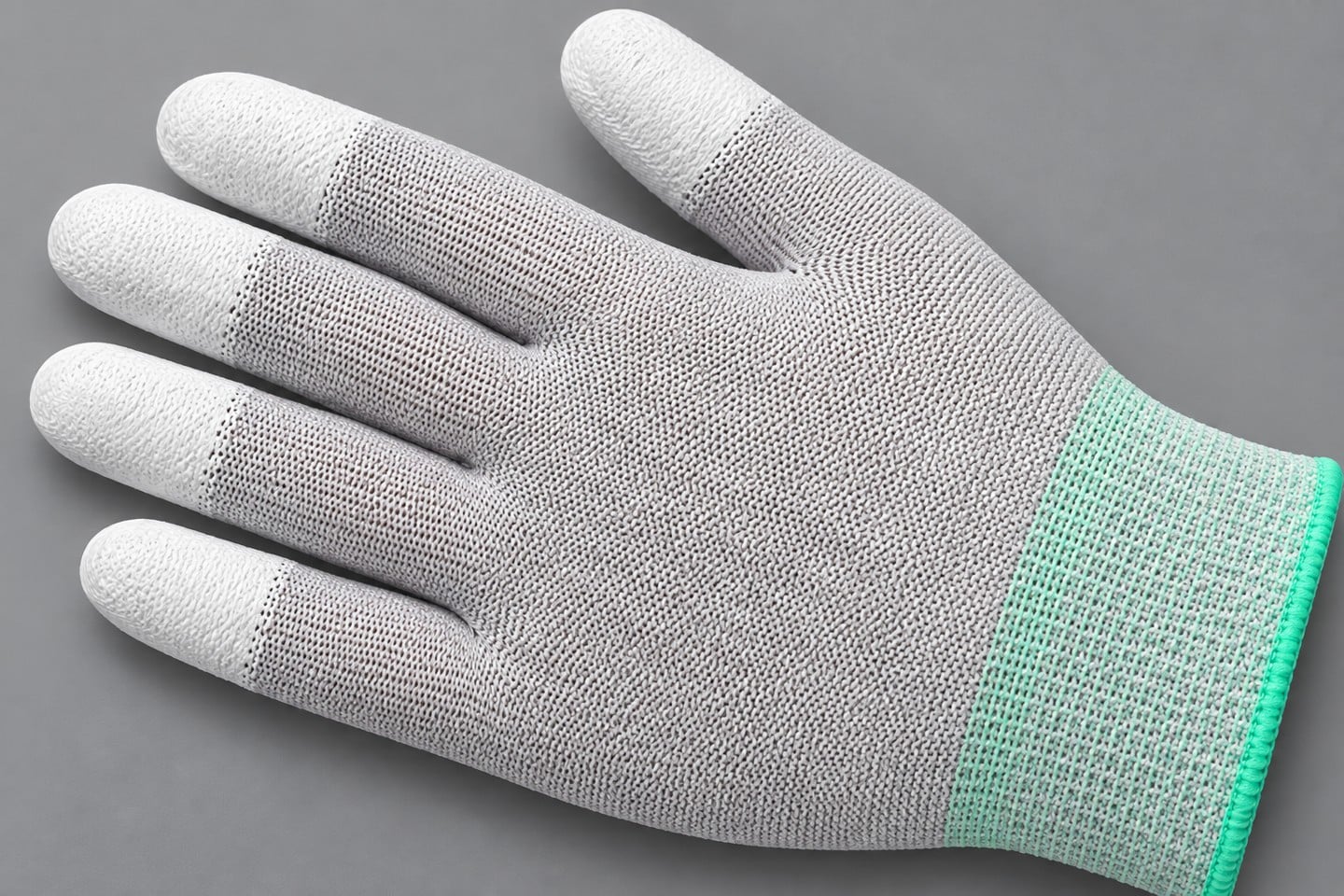
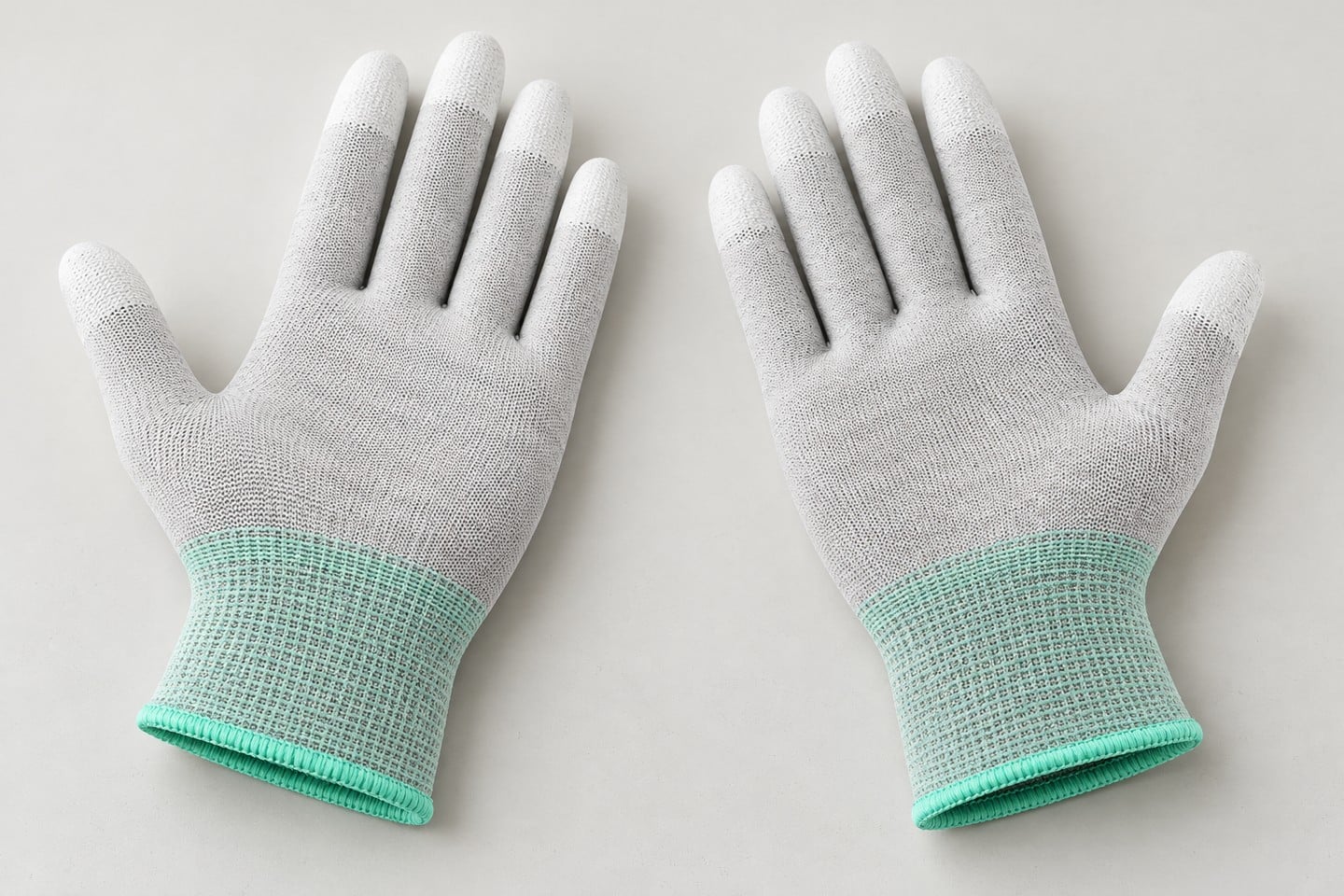
Request the exact model, size, knit substrate, coating description, coated areas, cuff construction, and supplied preparation. Ask the supplier to distinguish full-palm, partial-palm, fingertip, and any other coverage variants within the same product family. Similar photographs and names can conceal differences in the actual delivered construction.
Compare the SWESD fingertip-coated glove with the separate palm-coated glove product as product-identification examples. Confirm the delivered version before relying on either image. A photograph shows visible coverage and construction; it does not establish resistance values or suitability for a specific cleanliness class. Samples and reports should identify the same model and revision proposed for production supply.
Separate coverage from grip performance
More coated area does not automatically produce better control. The result depends on the part surface, movement, required force, glove fit, coating condition, and the worker’s task. A material that feels tacky on one dry surface can behave differently on another. Avoid ranking constructions using an unsupported universal friction number.
Design a practical trial with representative safe dummy parts or authorized process samples. Define a repeatable pickup, turn, placement, and release sequence. Record missed pickups, slipping, excessive force, difficulty releasing the part, and regripping. Keep the part surface and preparation consistent between candidates. The glove fit and dexterity guide addresses the separate question of sizing and movement; use it so a poor fit does not distort the coating comparison.
Keep the ESD decision independent
The label PU describes a coating material family, not a complete ESD qualification. The substrate, coating coverage, construction, use conditions, and intended contact path must be considered through the approved program. Neither a conductive-looking knit nor a pale coating proves the finished glove’s performance.
The EOS/ESD Association material-control overview explains that material choices belong within an overall control arrangement. Apply that principle when reviewing reports: identify what specimen and measurement path the report actually covers. Use the glove resistance and replacement guide for the electrical evidence request. Do not infer the result for a palm-coated glove from a different fingertip-coated specimen.
Compare coverage with a task matrix
| Task observation | Fingertip coverage question | Palm coverage question |
|---|---|---|
| Pinch pickup | Are the actual contact tips covered? | Does additional coverage change release? |
| Palm support | Does exposed knit contact a sensitive surface? | Does coated support behave acceptably? |
| Surface transfer | Is the evaluated contact clean enough? | Has the larger contact area been evaluated? |
| Electrical evidence | Does the report cover this exact glove? | Is this construction separately identified? |
| Wear | Do tip coating edges remain acceptable? | Are palm contact zones still acceptable? |
The matrix should organize observations rather than dictate a winner. A factory with several part families may approve different constructions for different tasks, provided issue and identification are controlled. One universal glove can appear simpler to purchase while performing poorly at important contacts. Conversely, multiplying variants without a clear task distinction can create avoidable mix-ups.
Record both benefits and limitations. If a fingertip-coated sample releases a smooth part more predictably but provides insufficient support during a separate palm contact, describe both findings. Do not turn a narrow trial into a blanket recommendation for all electronics handling. The approved scope should identify the workpiece, task, glove, and evaluated condition.
Check marks, residue and particle concerns
Inspect the representative surface after the agreed contact sequence. Define the observation conditions and what counts as an unacceptable mark before testing. Depending on the product, the process owner may need visual inspection, a specified cleanliness evaluation, or another validated method. This guide does not provide a universal residue or particle limit.
Distinguish material transferred during contact from background contamination already present on the part, fixture, or handling surface. Include an appropriate reference observation where necessary. A clean-looking glove is not proof that it will leave every critical surface acceptable. For cleanroom handling, also review the separate glove particle-shedding qualification guide rather than assuming coating coverage answers that requirement.
Evaluate wear at the actual contact zones
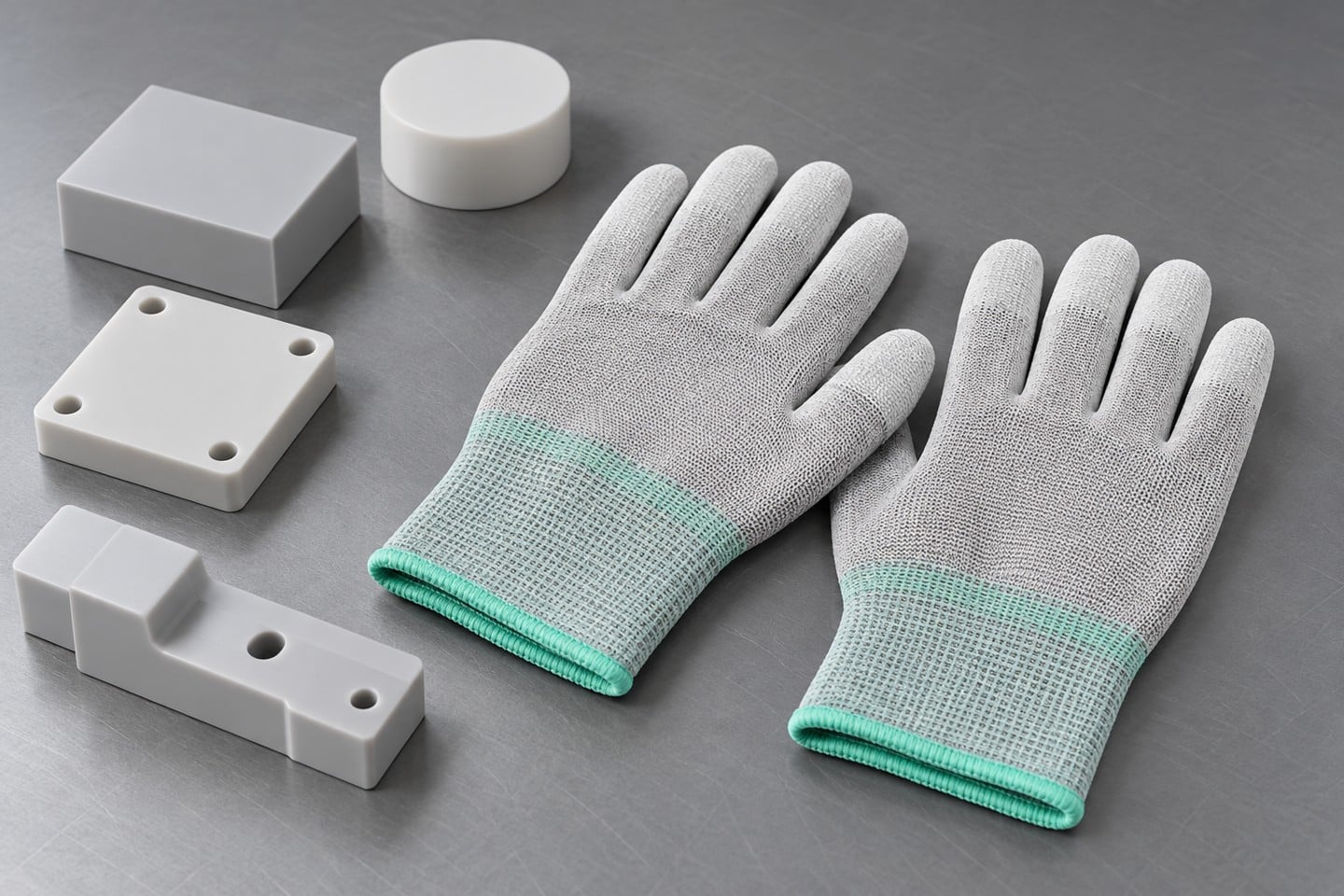
The most heavily contacted zone may not be the most visually obvious part of the glove. Inspect fingertips, thumb contact, palm support areas, seams, and coating edges after the trial. Record abrasion, coating damage, embedded debris, altered flexibility, and other changes relevant to the approved use. Do not invent a fixed service life from one short exercise.
Define what operators should do when a change is noticed. A coating that is peeling or contaminated may require removal from service under the site’s procedure even when another property has not yet been retested. Keep discarded examples or photographs where useful for training. The decision should follow documented criteria rather than comparing an old glove casually with a new one.
Treat cleaning as a construction-specific change
Ask whether the exact glove is reusable and whether cleaning is permitted. If it is, obtain the approved method and the evidence needed after cleaning. Do not assume the same solvent, detergent, or drying process suits all coatings and knit substrates. Disposable, reusable, washable, and cleanroom-prepared are different claims requiring their own support.
Evaluate the condition that operators will actually receive. A trial using freshly cleaned samples does not automatically cover unwashed supply, and a new-glove trial does not automatically cover repeated laundering. Record the tested state and any restrictions. If cleaning changes grip or surface transfer behavior, that is relevant even when the glove still looks intact.
Make a controlled purchasing comparison
Request samples in the correct size range and keep their identities separate throughout the evaluation. Use comparable tasks, preparation, handling time, and observation methods. Ask the supplier to explain differences in construction rather than presenting only a generic compliance certificate. A price comparison should identify which exact product each price represents.
The ESD glove purchasing checklist provides a broader RFQ structure. Add a coverage drawing or clear photographs, the intended contact map, required reports, permitted preparation, traceability, packaging, and change-notification expectations. Where information remains missing, mark it as missing instead of filling the gap with an assumed performance statement.
Introduce the selected variant without confusion
Label and store accepted variants so workers can select the correct model for the approved task. Training should explain the reason for the coverage choice and the conditions requiring replacement or review. Avoid relying entirely on cuff color if the supplier may use the same color across several variants or sizes.
The EOS/ESD Association training and auditing guidance supports verifying that the written procedure is actually followed. Include glove identity, task assignment, condition checks, and change handling in routine observations. If the product or surface changes, review the original comparison before extending its conclusion to the new work.
Educational background for the electrical boundary
The following introductory lecture from the EOS/ESD Association explains electrostatic-discharge principles. It supports understanding why coating coverage alone cannot establish the complete control arrangement. It does not compare these glove models, supply grip measurements, or certify either construction. Use the actual supplier evidence and task trial for those decisions.
A useful final selection statement names the accepted model, size range, workpiece contact pattern, evaluated preparation, required checks, and replacement rules. It also states the limitations of the trial. This gives procurement a repeatable specification and gives production a clear operating scope, without claiming that one coating pattern is best for every electronics assembly operation.
Frequently asked questions
Is palm coating always better for grip?
No. Compare the actual part surface, movement, fit, preparation and release behavior.
Does PU coating prove ESD suitability?
No. Obtain evidence for the complete construction and intended control arrangement.
Can fingertip and palm variants share one report automatically?
No. The supplier must establish which exact constructions the report covers.
Does a clean appearance prove low residue?
No. Evaluate the relevant surface and transfer requirement using an appropriate method.
Can reusable gloves be cleaned by any convenient method?
No. Follow the approved construction-specific care method and qualification.
Leave a Reply