- Turbo
- Blog
ESD glove particle shedding should be qualified separately from electrical resistance, fit and general comfort. Start with the surface being protected and the handling motion, then request a defined particle-release assessment for the exact glove construction and supplied condition. A resistance report cannot prove low particle release, and a description such as lint free does not identify a test method or acceptance limit. For electronics assembly buyers, a useful approval combines traceable laboratory evidence with a controlled handling trial that represents how the glove will actually touch tools, carriers and product surfaces.
Define what the glove must keep clean
Identify whether the operator touches an exposed component, a finished surface, a carrier or only an outer package. Record where released particles could go and which downstream operation might be affected. A glove used to transfer closed boxes may need a different assessment from one used near a sensitive bonding surface. Specify the actual task before asking a supplier for a general cleanroom rating.
Keep hazard protection separate. A glove chosen for contamination or ESD control is not automatically suitable for sharp edges, chemicals, heat or moving machinery. The employer’s hazard assessment and equipment instructions determine those requirements. A qualification exercise must use approved safe samples and normal access procedures, without creating an unprotected operation simply to observe how the glove behaves.
Identify the exact construction and supplied state
Record the model, material, knit or other construction, coating where present, cuff, size and lot. Ask whether the glove was washed, processed or packaged in a defined way before delivery. Do not transfer a report from a coated glove to an uncoated version solely because both carry the same family name. Surface finishing and construction can change what the evidence represents.
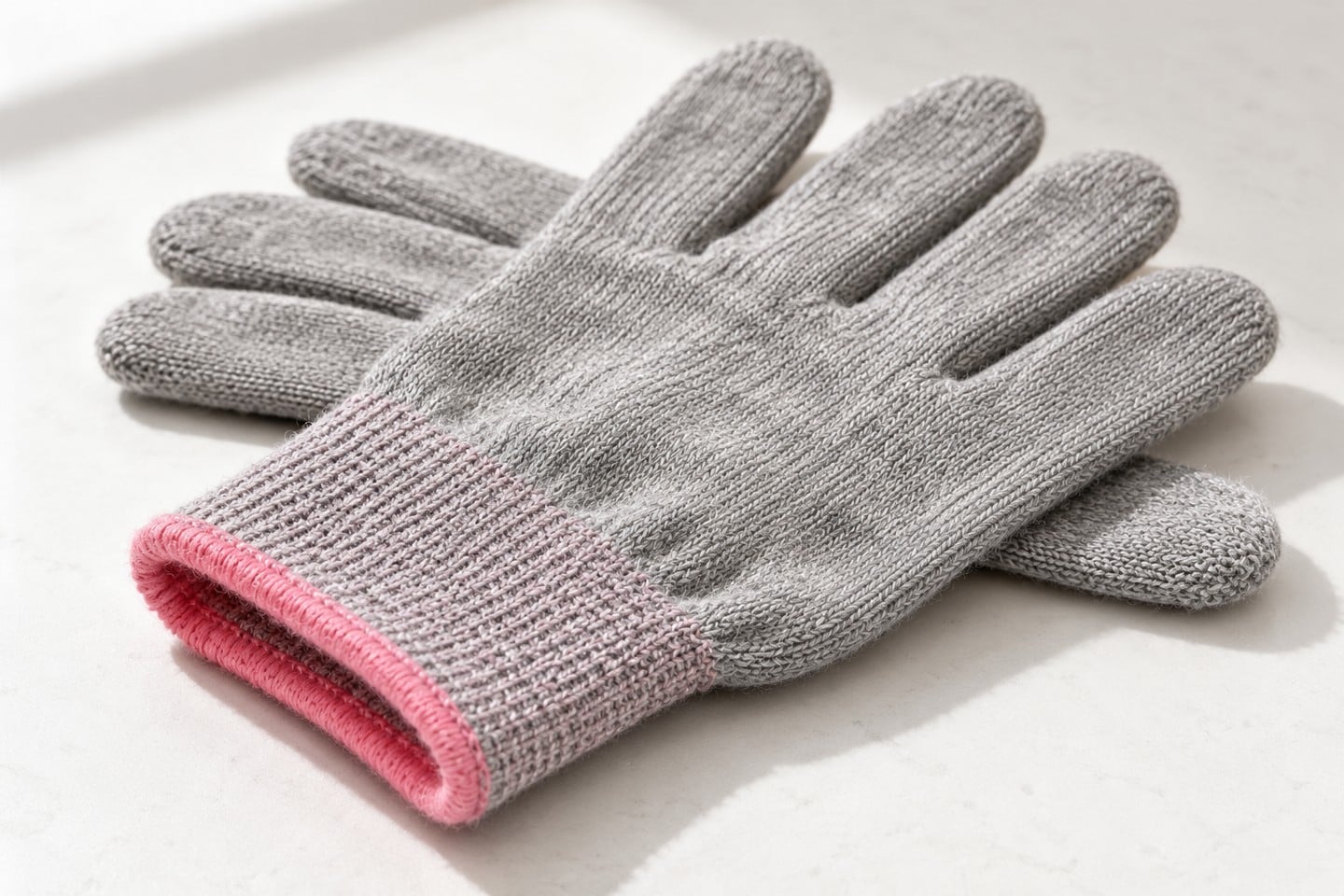
For a SWESD glove enquiry, describe the intended task and request confirmation of the offered specification. The gray knitted product photograph identifies visible construction; it does not establish a particle count, cleaning history or suitability for a particular classified environment. Request production-intent samples and retain their identity with the report, rather than relying on a marketing phrase or cuff color.
Read the method before comparing particle numbers
The IEST glove and finger-cot practice overview provides a starting point for discussing controlled-environment glove evaluation with a qualified laboratory. Use the current complete procedure and the application’s requirements to decide the appropriate assessment. This guide does not assign a universal particle limit or reproduce a laboratory method from its public overview.
A report should identify sample preparation, the release or sampling arrangement, the particle ranges covered, the reporting basis and relevant controls. Ask whether the result concerns an unused glove, a prepared specimen or a glove after a defined task. Those conditions cannot be silently treated as equivalent. Two attractive headline numbers may be incomparable if their methods, specimen areas or preparation differ.
Separate a material screen from a handling trial
A controlled material assessment helps compare candidates under the chosen procedure. It does not automatically represent every motion in production. Repeated finger flexing, contact with a carrier edge or handling a tool can present a different question from a glove lying still. Identify the actual motion and contact that the process owner needs to evaluate before defining the application trial.
Use an approved inert sample or nonproduction fixture during initial work. Specify how the glove is donned, how long it is used and which movements are repeated. Keep the tool, contact surface and handling instructions consistent between candidates. Do not deliberately abrade a glove against an unrelated rough object and then report the result as normal production release. The trial must answer a defined question with a recorded boundary.
| Evidence | Required context | Separate limitation |
|---|---|---|
| Material identity | Model, construction, lot and supplied preparation | Color or family name cannot establish equivalence |
| Particle assessment | Method, particle ranges and reporting basis | Unlike procedures cannot be ranked directly |
| Background | Controls and sample handling | A nearby particle is not automatically glove-generated |
| Handling trial | Actual contact, movement and evaluated state | A material screen does not cover every task |
| Release | Criteria, responsible owner and restrictions | Particle evidence does not establish ESD suitability |
Control the background and collection arrangement
Ask the laboratory how background contamination is distinguished from material-associated release. Follow the selected procedure for specimen handling, containers, blanks and controls. A particle found near a glove is not automatically proof that the glove generated it. The air, bench, packaging, tools and sampling arrangement may contribute and must be managed according to the approved method.
Keep the sampled construction and preparation traceable from delivery to analysis. Record any cleaning, conditioning or handling before the test. Do not rinse or wipe a glove to improve its appearance unless that treatment is explicitly part of the evaluated use state. An unrecorded preparation can make the laboratory result irrelevant to the item supplied to the production team.
Examine cuffs, fingertips and contact behavior
Review the areas that interact with the actual task. Record loose fibers, damaged material, cuff movement, surface changes and any observed transfer to the approved sample. Photographs can locate a condition, but visible observations do not replace the selected quantitative method. Keep the two kinds of evidence distinct so that a clean-looking glove is not assigned an unsupported particle result.
The glove sizing and dexterity guide addresses a complementary issue. Poor fit may cause extra adjustment or awkward contact, but a good fit still does not establish low shedding. Evaluate fit with representative users and particle behavior under the relevant procedure, then connect both decisions to the exact construction accepted for the station.
Include the intended wear and maintenance state
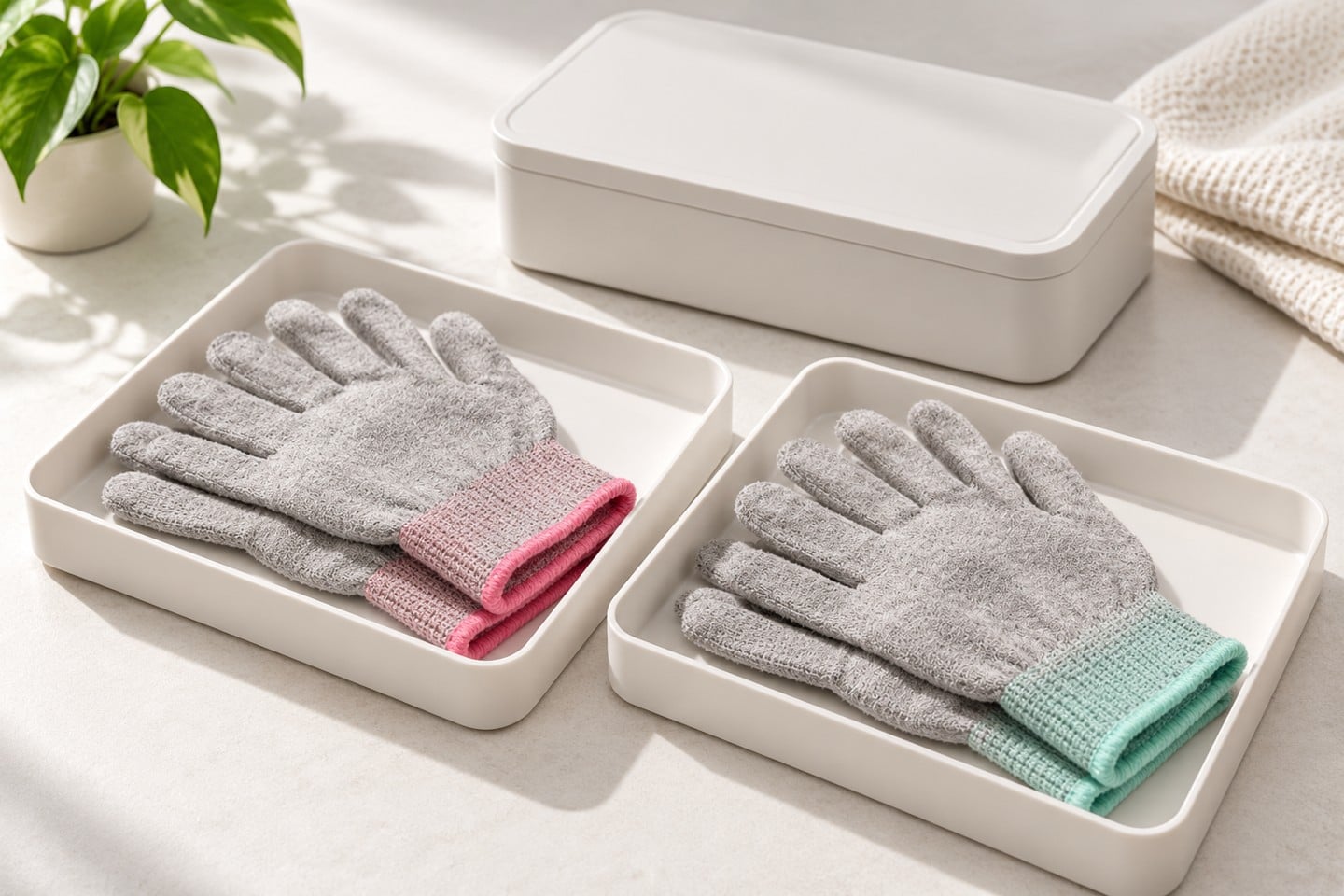
If the proposed use includes reuse or cleaning, obtain the manufacturer’s permitted instructions and the site’s acceptance rules. Evaluate the relevant state rather than assuming that a new glove represents every later cycle. Record changed appearance, damage, fit and handling observations. Do not invent a universal cleaning cycle count or claim that laundering restores every original property.
Define when gloves are replaced or isolated for review. A visible tear, uncontrolled contamination or untraceable construction can require action under the site’s procedure even if a previous electrical result was acceptable. Conversely, an unexplained particle observation should be investigated through the defined method rather than dismissed because the glove has not reached an arbitrary calendar age.
Keep electrostatic approval independent
The EOS/ESD Association control guidance places materials and personnel handling within a wider ESD program. Particle-release evidence does not establish resistance behavior, low charging or the operator’s grounding arrangement. The glove resistance and replacement guide explains that separate evaluation and why a glove does not resolve an unrelated failed grounding control.
Retain separate acceptance fields for contamination, electrical requirements, fit and workplace hazards. Identify the responsible owner for each decision. A supplier certificate may summarize accepted evidence, but it should link to the actual model, method and scope. Avoid a single unchecked box labeled approved that hides which requirements were evaluated and which remain outside the supporting report.
Set criteria and disposition before testing
The process owner should state the required result, applicable method, sample scope and release decision before reviewing the final data. If the application has no established criterion, treat an initial study as exploratory and identify what additional review is needed. Do not alter the limit after testing merely to accommodate a preferred glove or remove unfavorable specimens from the comparison.
Retain original results, blanks, deviations and unsuccessful trials. Record whether approval is limited to a particular task or maintenance condition. If a result is unexpected, investigate sample identity and background as well as the glove. A supported decision explains what was evaluated and what it can establish, without promising that a short trial predicts every operator, surface or future supply condition.
Make repeat orders preserve the accepted item
Write the accepted material, construction, size range, packaging and preparation into the purchasing specification. Ask the supplier to notify relevant changes before delivery. Define the receiving checks that connect a new lot to the accepted version and the route for resolving missing reports or an apparent substitution. Visual similarity alone is not an adequate basis for accepting a different construction.
The glove procurement checklist provides the broader enquiry framework. Add the actual contamination requirement, method and application trial to that request. Keep the approved sample, report and process restriction together so that another buyer can repeat the decision without reconstructing it from memory or assuming that a general lint-free claim answers the station’s specific question.
Educational background
The EOS/ESD Association video below introduces electrostatic control. It does not measure glove particle release or establish cleanroom suitability. Use the applicable contamination assessment and the approved application requirements for those separate decisions.
Frequently asked questions
Does a good resistance result prove low shedding?
No. Evaluate electrical behavior and particle-release requirements separately.
Can lint free replace a test report?
No. Request the exact method, specimen state and result needed for the application.
Should gloves be rinsed before submitting samples?
Only if the agreed preparation requires it; unrecorded rinsing changes what the specimen represents.
Can one particle count qualify every task?
No. Match the procedure and handling trial to the intended surface, contact and supplied condition.
What changes need review?
Review relevant changes to construction, preparation, packaging, cleaning and use conditions before extending the original acceptance.

Leave a Reply