- Blog
An IC tray presents chips to machines; a logistics tray moves loads across a facility. The two families share the same category page and the words “anti-static tray,” yet they differ by three orders of magnitude in scale. Map the workflow first, then read each published table on its own terms before writing either RFQ.
Both families appear on the ESD Tray category page. For board-level staging between those two extremes, the PCB tray overview covers the middle ground.
Part 1. Separate the two jobs behind one category
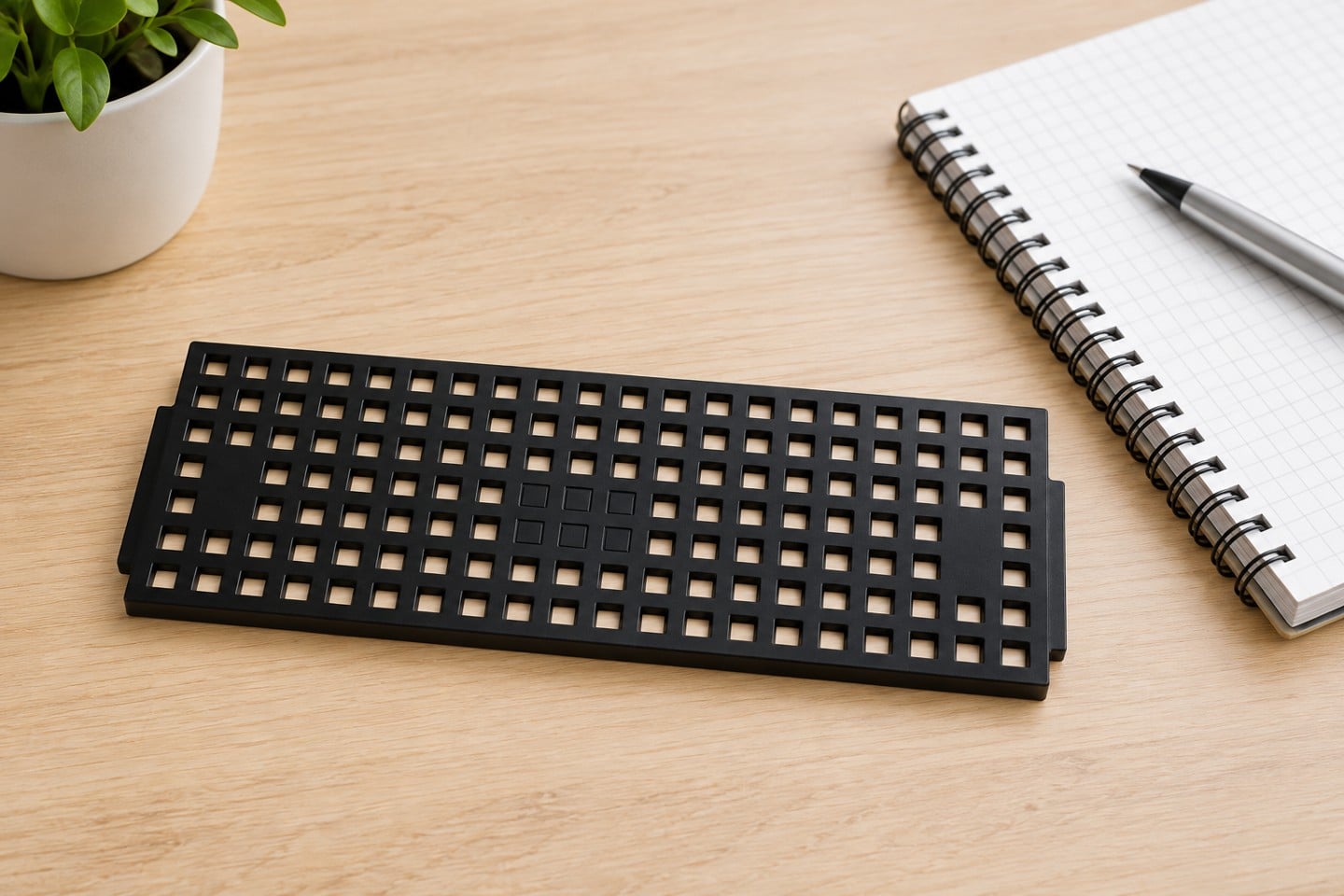
In semiconductor back-end plants, the IC tray is part of the machine interface. Chips sit in a matrix of pockets so handlers, testers, and pick-and-place heads can find every unit in a known position; trays stack into magazines and travel through bake, test, and assembly steps. Format discipline is the whole point.
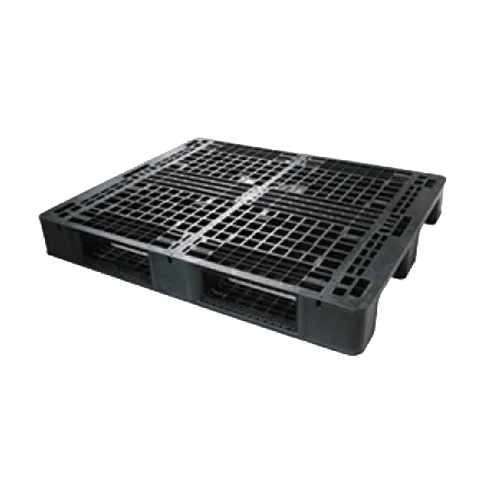
A logistics tray solves a facility problem instead. Pallet-scale loads — cartons, totes, stacked boxes of finished boards — need a static-safe deck that forklifts and pallet jacks can move without adding charge risk to the material on top. Nobody expects a chip pocket; everybody expects load stability.
Confusion starts when an RFQ says “ESD tray for our new line” without saying which world it lives in. The price, tooling, and evidence questions have almost nothing in common, so the workflow decides before any table is read.
| Question | IC tray world | Logistics tray world |
|---|---|---|
| What sits in it? | Individual packaged chips in matrix pockets | Palletized cartons, totes, or stacked goods |
| What handles it? | Handlers, magazines, operators at benches | Forklifts, pallet jacks, racking |
| What defines quality? | Format accuracy and stable pockets | Deck strength and stable carrying |
| Where does it run? | Packaging, test, and assembly floors | Warehouses, aisles, shipping docks |
Part 2. Map the workflow before the tray
Write the route down at the scale it really runs. For a chip flow, that means the package method and body size, the process steps the tray passes through (including any bake), the machines that grip or index the tray, and how trays stack and travel between steps.
For a facility flow, record the load per trip, the footprint the racking and trucks expect, whether trays meet automated conveyors, and which zones enforce static control. The line-side staging guide helps place bench-level staging, which is a third job and belongs to neither family here.
| Workflow fact to record | Why it decides the family |
|---|---|
| Unit of handling | A chip matrix and a pallet load cannot share a carrier |
| Equipment interfaces | Handler indexing versus fork pockets and racking |
| Process exposure | Bake steps versus dock-to-dock transport |
| Stacking state | Magazine stacks versus stacked loaded pallets |
| Static-control zone | Program requirements apply at both scales, differently |
One route can contain both worlds: chips leave test in IC trays, get boxed, and the boxes cross the warehouse on a logistics tray. Mapping the handoff points keeps each RFQ scoped to its own leg.
Part 3. Read the published IC tray evidence
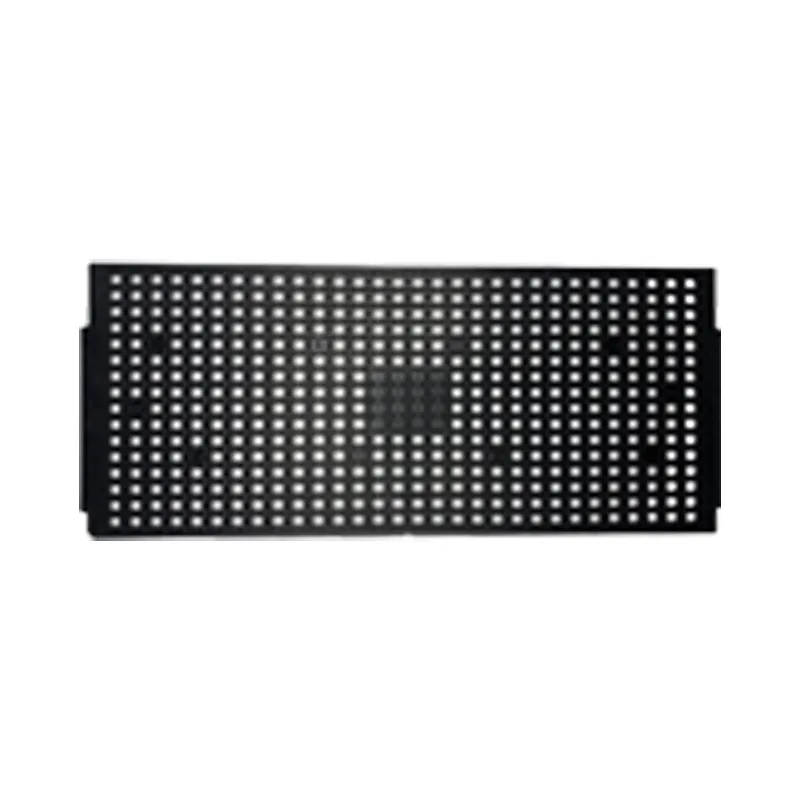
The published Sanwei IC Tray product page states that the trays comply with JEDEC international standards and lists package methods including BGA, QFN, QFP, PGA, TSOP, TQFP, LQFP, PLCC, SOC, and SiP. Published rows cover BGA and QFN formats with model designations, matrix counts, temperature, resistance, and weight.
Concrete row examples: the BGA6x8 row records a 16×30 matrix of 480 units, and the QFN5x5 row records 14×35 for 490 units. Listed rows show a temperature MAX of 150 and a surface resistance of 10^5 to 10^11 Ω, with one QFN row showing 10^4 to 10^11 Ω.
The page also explains why those figures exist: chips must be baked before terminal assembly, pins need dimensional stability, and materials should have low water absorption and support reuse. Read every value as row-specific evidence to confirm for the quoted format, not as a family-wide guarantee.
| Published observation | Selection use | Do not infer |
|---|---|---|
| JEDEC compliance statement and package list | Confirm the format language for the quoted package | Certification of a specific handler or process |
| Matrix counts per row (480, 490, and others) | Plan capacity and magazine loading | That every package size shares a matrix |
| Temperature MAX 150 on listed rows | Check against the documented bake exposure | Survival of an unstated thermal profile |
| Surface resistance 10^5 to 10^11 Ω (row-level) | Set the electrical starting point for evidence | Acceptance under the buyer’s test method |
Part 4. Study the published logistics tray evidence
The published Sanwei Anti-static Logistics Tray page works at facility scale. Its table lists three footprints — 1200×1200 mm, 1200×1000 mm, and 1200×800 mm — and two carrying figures: 800 kg active carrying and 2000 kg stable carrying.
Electrical behavior is published as a surface resistance of 1×10^6 to 1×10^9 Ω. The page also names three deck types — Chuan Shape, Nine Angle, and Tian Shape — and notes that further variants can be supplied on request, which is a quotation conversation rather than a published specification.
Match those figures to the mapped route: the footprint against racking and truck forks, the active figure against moving loads, the stable figure against static stacking, and the resistance range against the zone’s program requirement.
| Published observation | Selection use | Do not infer |
|---|---|---|
| 1200×1200 / 1200×1000 / 1200×800 mm sizes | Match racking, trucks, and conveyor widths | That other footprints are published |
| 800 kg active / 2000 kg stable carrying | Separate moving loads from static stacks | Dynamic behavior on a specific truck or rack |
| Surface resistance 1×10^6 to 1×10^9 Ω | Check the zone’s electrical requirement | Equivalence to chip-level packaging control |
| Chuan Shape, Nine Angle, Tian Shape types | Discuss deck style against the load | Which type suits a load without a route review |
Part 5. Compare the families on workflow factors
Set the two published tables side by side and the confusion disappears: the families overlap only in the words “anti-static” and “tray.”
| Workflow factor | IC tray (published page) | Anti-static logistics tray (published page) |
|---|---|---|
| Unit carried | Packaged chips in matrix pockets | Pallet-scale loads |
| Published formats | BGA and QFN rows, JEDEC compliance statement | Three 1200-series footprints, three deck types |
| Published capacity | Matrix counts such as 480 and 490 units | 800 kg active, 2000 kg stable carrying |
| Published thermal note | Temperature MAX 150 on listed rows | None published — confirm any need at quotation |
| Published electrical range | 10^5 to 10^11 Ω (one row 10^4 to 10^11) | 1×10^6 to 1×10^9 Ω |
| Equipment interface | Handlers, magazines, test floors | Forklifts, pallet jacks, racking |
Substitution fails at the interface. A logistics deck cannot present pins to a handler, and no stack of chip trays should meet a forklift. Where a route needs both, specify the handoff — who transfers material, in what container, at which point — instead of forcing one family across the line.
Boards in process sit between the scales: they usually belong in bench trays, magazines, or totes rather than either family here. Keep that middle layer out of both RFQs unless the route genuinely reaches pallet scale.
Part 6. Confirm ESD, bake, and load boundaries
Electrical ranges on both pages are starting points. The buyer’s program defines the requirement, the test method, the measurement conditions, and the evidence format for the specific quoted item — ESD Association standards information frames that program context without approving any carrier.
Thermal and mechanical figures follow the same rule. A temperature MAX of 150 on listed IC tray rows is checked against the documented bake profile for the quoted format, and the 800 kg and 2000 kg carrying figures are reviewed against the actual load, truck, and racking state; neither transfers to the other family, and neither replaces a route trial.
For chip formats, JEDEC standards documents provide the format vocabulary an RFQ can reference. Price, MOQ, lead time, custom footprints, and unlisted formats remain quotation items on both sides.
Part 7. Build the RFQ and sample plan
Split the request by family and attach the workflow map. A clean RFQ names the leg of the route it covers, the published row or type it starts from, and the evidence it needs back.
| RFQ input | IC tray request | Logistics tray request |
|---|---|---|
| Unit and format | Package method, body size, target matrix | Load description, weight per trip |
| Equipment | Handler and magazine interfaces | Trucks, racking, conveyor widths |
| Exposure | Documented bake profile and cycles | Route legs, stacking, wrap and film use |
| Electrical evidence | Resistance target, method, format | Zone requirement, method, format |
| Identification | Tray marking and lot rule | Deck marking and zone rule |
| Samples | Handler trial and bake check per buyer criteria | Load, move, and stack trial per buyer criteria |
| Quantities | Bands after format confirmation | Bands after type confirmation |
Product recommendation
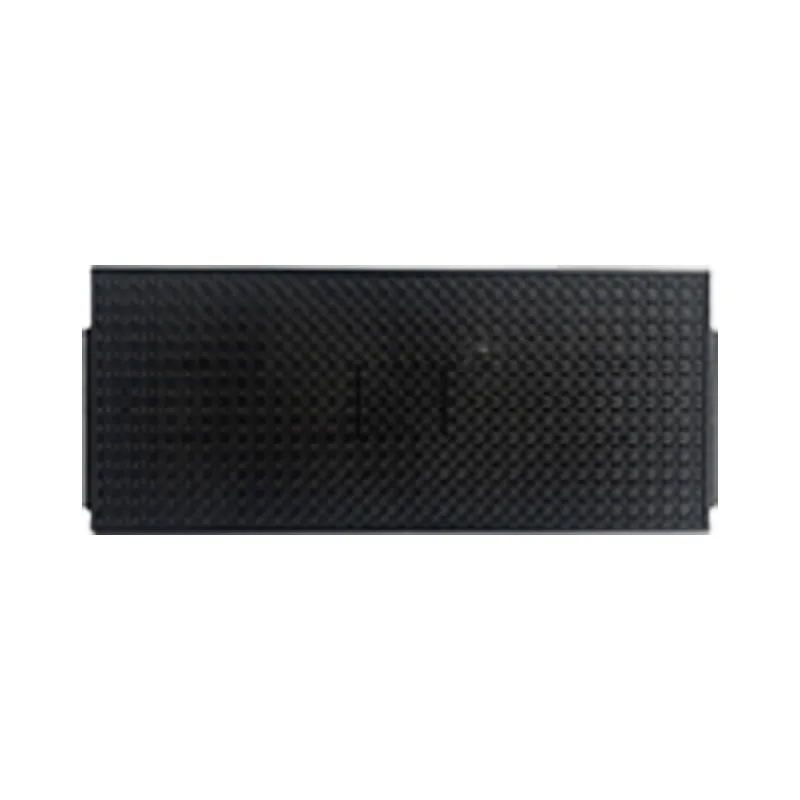
For chip presentation in packaging and test, start from the Sanwei IC Tray product page and confirm the quoted format, matrix, temperature, and resistance evidence for the selected row. For facility movement, start from the Anti-static Logistics Tray page and its published footprints and carrying figures.
Send the workflow map through Contact Sanwei to route each leg to the right family and quotation.
Fit Boundary
| Buyer situation | Suitable path | Avoid |
|---|---|---|
| Chip packaging and test flow | Match a published BGA or QFN row to the package and bake profile | Quoting a logistics deck for chip presentation |
| Warehouse and dock movement | Match published footprints and carrying figures to the route | Moving loose chip trays at pallet scale |
| Route contains both worlds | Define the handoff container and point | One family forced across the whole route |
| Board staging between machines | Bench trays, magazines, or totes | Either family stretched to the middle job |
| Any electrical requirement | Row- or type-level evidence under the buyer’s method | Treating a published range as acceptance |
FAQ
What is an IC tray used for?
It presents packaged chips in matrix pockets for semiconductor packaging and test, so handlers and operators work with known positions. Sanwei’s page states JEDEC compliance and lists supported package methods.
What is an anti-static logistics tray?
A pallet-scale static-safe carrier for facility movement. The published page lists 1200×1200, 1200×1000, and 1200×800 mm sizes, 800 kg active and 2000 kg stable carrying, and a 1×10^6 to 1×10^9 Ω surface resistance.
Can an IC tray and a logistics tray replace each other?
No. One presents chips to machines; the other carries floor-level loads. Substitution fails at the equipment interface, so map the route and specify each leg separately.
Does Sanwei publish IC tray temperature and resistance data?
Yes. Listed rows record a temperature MAX of 150 and surface resistance of 10^5 to 10^11 Ω, with one QFN row showing 10^4 to 10^11 Ω. Values are row-specific and confirmed at quotation.
What sizes does the published logistics tray list?
Three footprints: 1200×1200 mm, 1200×1000 mm, and 1200×800 mm, in Chuan Shape, Nine Angle, and Tian Shape types, with variants handled as quotation requests.
Which tray fits PCB handling between process steps?
Usually neither: boards in process belong in bench-scale trays, magazines, or totes. Reserve IC trays for packaged chips and logistics trays for pallet-scale movement.
What ESD evidence should be requested for either tray?
The electrical target, test method, conditions, measurement locations, and evidence format required by the buyer’s program for the specific quoted row or type.
What should be checked on samples before rollout?
IC side: handler indexing, stacking, and a bake check against the documented profile. Logistics side: load, movement, racking, and zone checks. Both against written acceptance criteria.

Leave a Reply