- hanqi
- Blog
Printed circuit boards (PCBs) are among the most delicate components used in electronic devices made today. Electrostatic discharge (ESD) can occur when two items with different electrical potential create a flow of electricity from one item to another. This type of discharge can damage chips, microcontrollers, sensors, and other delicate electronic devices mounted on PCBs. Because of this risk, using esd pcb trays is not just a packaging choice. It is part of an overall ESD control strategy that helps manufacturers improve quality assurance, reduce rework, and maintain a more consistent manufacturing process.
For electronics manufacturers, contract manufacturers, PCB assembly factories, repair centers, and component suppliers, ESD trays for PCB help organize printed circuit boards safely during building, assembly, inspection, storage, and shipping. The right tray helps protect boards from mechanical and electrical damage while they move from one process to another and before they are added to final products or shipped to customers.
What Are ESD Trays for PCB?
ESD trays for PCB are specialized trays made from ESD-safe materials that help protect printed circuit boards from damage caused by electrostatic discharge. Unlike regular plastic trays that may generate and store static charges, ESD trays are designed to dissipate or conduct electrical charges in a controlled way, reducing the risk of ESD damage to PCBs.
These trays are normally used to hold bare PCBs, assembled PCBs, electronic modules, SMT boards, and other devices that may be damaged by static electricity. Depending on the application, ESD trays may be made from conductive plastic, dissipative plastic, antistatic material, or properly formed ESD-safe sheet materials. Some trays are flat and stackable, while others include custom cavities, slots, ribs, or partitions to secure boards in fixed positions.
In daily production, a qualified pcb tray esd solution helps operators move boards from one process to another without exposing them to excessive static electricity or mechanical stress. This is especially important when handling high-value boards used in automotive electronics, industrial controls, medical devices, telecommunications, aerospace, and consumer electronics.

Why PCBs Need ESD-Safe Handling
Electrostatic discharge can occur when an object with one electrical potential touches or comes near another object with a different electrical potential. In electronics manufacturing, static can be generated by employees walking on the floor, clothing, work surfaces, tools, packaging, and even the movement of trays or boards themselves. Although the discharge may be invisible, it can seriously affect the electronic parts of boards and assemblies.
Many times, ESD damage cannot be seen immediately. A printed circuit board may pass initial testing but fail later in the field because a weak component was created by static discharge during handling. These latent defects can lead to warranty claims, customer dissatisfaction, production delays, and increased inspection costs.
Using esd pcb trays helps reduce these risks by giving operators a controlled method for transporting, storing, and handling boards. When used together with grounded workstations, wrist straps, ESD flooring, ionizers, and proper operator training, ESD trays become an important part of a complete ESD protected area.
Key Benefits of Using ESD PCB Trays
The main purpose of ESD trays is to protect circuit boards from electrostatic discharge, but their benefits go beyond static control. A well-designed tray can improve handling efficiency, offer mechanical impact protection, and support better organization throughout production.
For production teams, ESD trays help with counting, separating, identifying, and moving boards from one workstation to another. Custom tray layouts can hold each PCB in a fixed position, preventing boards from rubbing against each other or damaging solder joints, connectors, pins, or other mounted components. Stackable tray designs also help save space in storage areas and on assembly lines.
For quality managers, the use of ESD safe trays helps provide consistency within the process. When all PCBs are handled in the same controlled manner, the chance of human error is reduced. For buyers and sourcing managers, reusable and durable trays can also help lower long-term packaging costs compared with disposable or unsuitable alternatives.
Common Types of ESD Trays for PCB Applications
Not all PCBs require the same type of tray. A simple flat tray may be suitable for bare boards, while assembled boards with tall components may need custom cavities or raised support points. Understanding the most common tray types helps buyers choose a solution that meets both technical and operational requirements.
Conductive ESD Trays
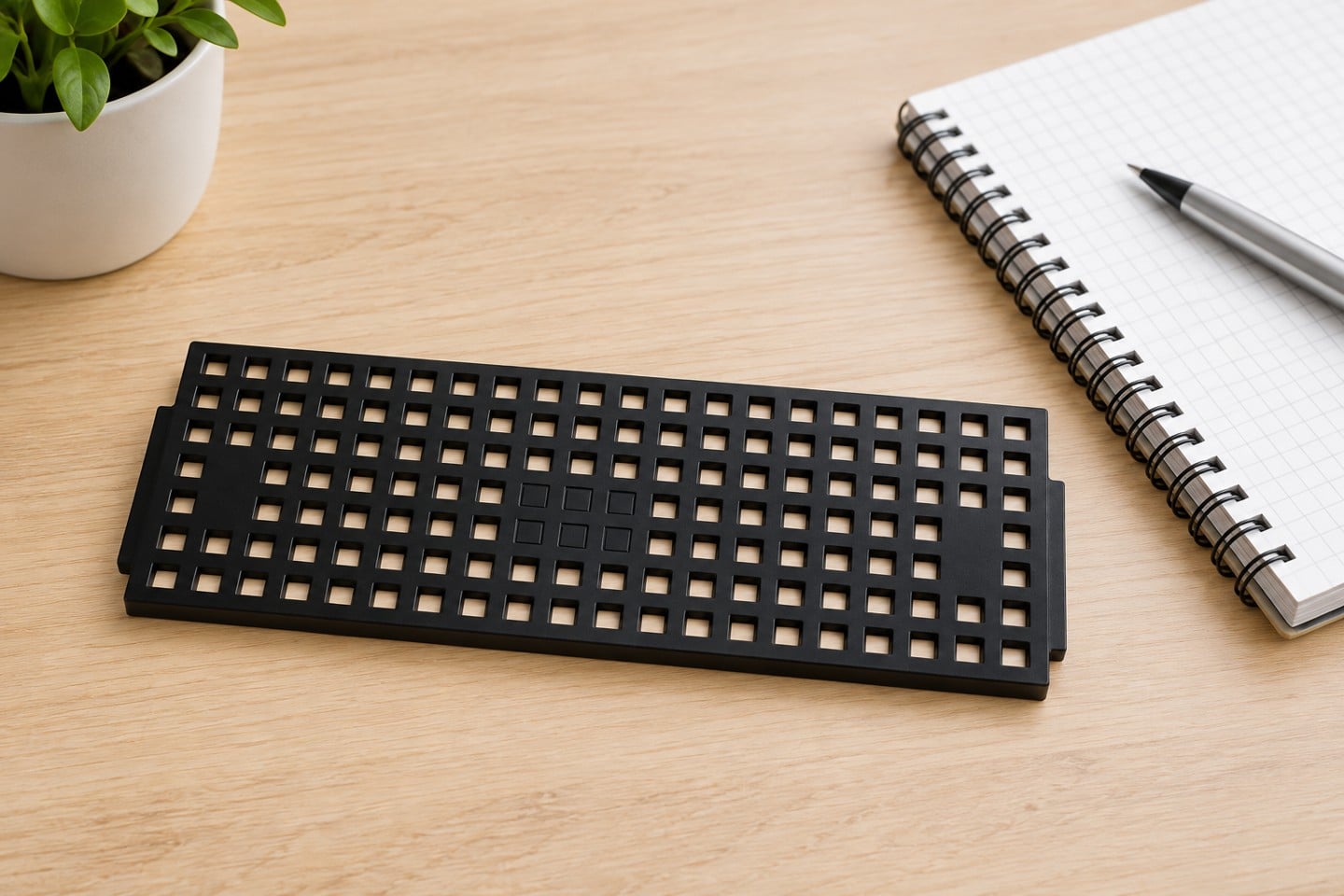
Conductive ESD trays are designed to allow electrostatic charge to move to ground quickly and safely when used in a controlled environment. They are typically black because carbon-based additives are commonly used to create conductivity. Electronics manufacturers often rely on conductive ESD trays for reliable static control performance during manufacturing.
Static Dissipative Trays
Static dissipative trays are engineered to allow a slower, more controlled discharge. This is important for many PCB storage and handling applications where rapid discharge may not be practical. A static dissipative tray typically balances ESD protection, material performance, and operator safety.
Antistatic Trays
Antistatic trays are designed to reduce the amount of static generated. However, they may provide less controlled discharge than static dissipative or conductive trays. They can be suitable for less sensitive applications, but buyers should verify surface resistance and compliance requirements before using antistatic trays for critical PCB handling.
Custom Thermoformed ESD Trays
Custom thermoformed ESD trays are created to match the size, shape, and component layout of a specific board. They are often used for assembled boards because they can provide cavities, clearance areas, supports, and stacking features that may not be possible with a generic tray. Custom thermoformed ESD trays are especially helpful for boards with irregular shapes, delicate components, connectors, and specific orientation requirements.
How to Choose the Right ESD Tray for PCB Handling
Selecting the most appropriate ESD tray starts with understanding the PCB itself. The tray should fit the dimensions of the PCB, provide support in the correct areas, avoid pressure on fragile components, and allow operators to remove the board safely. A good ESD tray should not only be static-safe but also practical for the actual manufacturing environment.
Key considerations include board size, component height, component weight, edge clearance, handling method, storage duration, cleaning frequency, transport distance, and whether the trays will be stacked. When trays are stacked, the design should prevent the upper tray from contacting the components on the lower tray. If trays will be used on automated lines, dimensional consistency and machine compatibility become even more important.
Buyers should carefully evaluate the ESD performance of the tray material. Surface resistance, volume resistance, temperature resistance, and long-term stability are all important. ESD tray buyers should request material data, ESD test results, or compliance information from the supplier instead of relying only on the appearance of the tray.
Material Considerations for ESD PCB Trays
ESD trays can be manufactured from different ESD-safe materials, including conductive PP, conductive PS, dissipative PET, conductive ABS, and other engineered plastic sheet materials. Each material has different characteristics in terms of strength, flexibility, heat resistance, cleanliness, and cost.
For general handling and storage, conductive or dissipative PP and PS materials are often cost-effective choices. For applications that require better clarity, dimensional stability, or a cleaner appearance, PET-based materials may be considered. If trays must operate at higher temperatures or in demanding industrial environments, material selection should be closely reviewed with the supplier.
The proper material depends on the specific application. For example, a tray used only for internal transfer may not require the same strength as a tray used for repeated shipments. A tray used near soldering or curing processes may need better temperature resistance than one used only for room-temperature storage. Matching the material to the real use environment helps prevent early tray failure and unnecessary cost.
Custom ESD Trays vs. Standard ESD Trays
Standard ESD trays work well when PCB sizes are common, handling is simple, or immediate tray availability is more important than a perfect fit. Standard trays are often used for basic PCB storage, temporary transfer, or low-volume PCB production.
Custom ESD trays should be strongly considered when the PCB has a unique shape, delicate components, strict positioning requirements, or high production volume. A custom tray is designed around the product, reducing the need to force the product into a generic tray. This improves product protection and increases workflow efficiency.
Custom ESD trays may require tooling or design time before production, but they often provide greater long-term value. By reducing product damage, improving stacking, saving space, and speeding up operator handling, a custom tray can quickly justify the initial investment, especially for high-value PCB assemblies.
Best Practices for Using ESD Trays in PCB Production
Even a high-quality ESD tray cannot protect a PCB if it is used improperly. ESD trays should be part of a broader ESD control program that includes grounded personnel, ESD-safe workstations, proper packaging, and regular audits. Operators should know how to handle trays, where to place them, and how to avoid mixing static-safe trays with ordinary plastic containers.
Before use, trays should be clean and free from dust, oil, stickers, tape residue, and other contamination that could affect ESD performance. Reusable trays should be inspected regularly for cracks, warping, deformation, or surface wear. A damaged tray can create handling risks and should be replaced when it no longer supports the PCB properly.
When transporting boards, do not overload trays or stack them higher than the recommended amount. If trays are moved on carts, shelves, or conveyors, make sure the full handling system is compatible with ESD requirements. A static-safe tray placed on an uncontrolled surface may not provide complete ESD protection.
Industries That Commonly Use ESD Trays for PCB
Most industries that manufacture, assemble, test, repair, or ship electronic products use ESD trays. In automotive electronics, they help protect control modules, sensor boards, lighting electronics, and battery management boards. In medical electronics, ESD trays support careful handling of diagnostic, monitoring, and control boards where reliability is especially important.
In telecommunications and industrial automation, PCB assemblies often contain sensitive chips and connectors that must be protected during production and logistics. Consumer electronics manufacturers also use ESD trays to handle high volumes of boards while reducing failure rates and improving production flow.
For contract manufacturers, having the proper ESD tray system can also increase customer confidence. It shows that the factory understands electrostatic discharge control and takes product protection seriously from incoming materials through final shipping.

What to Ask Before Buying ESD PCB Trays
Before ordering ESD trays for PCB boards, buyers should confirm both technical specifications and practical real-world application requirements. The goal is to choose a tray that not only looks suitable but also performs reliably in the actual manufacturing environment.
- What are the PCB size, thickness, weight, and component height?
- Will the tray hold bare PCBs, assembled PCBs, or fully assembled electronic modules?
- Does the application require conductive, dissipative, or antistatic material?
- Will the trays be stacked, shipped, cleaned, reused, or used with automation?
- Are there temperature, cleanliness, or packaging specifications?
- Can the manufacturer provide material information or ESD performance data?
Clear answers to these questions help the supplier recommend the correct material, ESD performance characteristics, tray thickness, and structure. This can reduce prototype or sampling cycle time and help prevent production-related problems during the first production run.
Why the Right ESD Tray Supplier Matters
An experienced supplier should understand both packaging design and ESD properties. The tray must fit the PCB properly while also meeting the electrical, mechanical, and operational requirements of the assembly process. A supplier experienced in electronics packaging can help evaluate drawings, samples, component layouts, stacking requirements, and transport methods before recommending a suitable solution.
Open communication early in the process helps avoid costly mistakes later. If PCBs contain tall capacitors, fragile connectors, sharp solder points, or components located near the edge, these details should influence the ESD tray design. The more accurately the tray reflects real handling conditions, the more likely it is to protect the board throughout daily use.
FAQs
What is an ESD tray?
An ESD tray is a static-safe tray designed to protect sensitive electronics, printed circuit boards, components, and assemblies from electrostatic discharge. ESD trays are made from conductive, dissipative, or antistatic materials that help control the buildup and movement of electrostatic energy during handling, storage, and transport. Unlike normal plastic trays, ESD trays are engineered for static control in electronics environments.
How to protect PCB from ESD?
To protect PCBs from ESD, handling should take place in an ESD-safe environment using grounded wrist straps, ESD-safe work surfaces, proper packaging, and suitable storage containers. PCBs should be placed in static-safe packaging or trays, such as esd pcb trays, instead of ordinary plastic containers or foam. Operators should avoid touching conductive sections directly and should follow established ESD procedures throughout assembly, testing, storage, and shipping.
Are all black plastic trays ESD-safe?
No. Not all black plastic trays are suitable for ESD protection. Some conductive ESD trays are black, but color alone does not prove that a tray is made from ESD-safe material. Some black plastic trays may be ordinary plastic and may generate static electricity. Always verify material properties, surface resistance, or manufacturer test data before using a tray for PCB handling.
Can ESD trays be reused?
Yes, many ESD trays are made for multiple uses. However, they should be inspected frequently to make sure they are free from damage, contamination, and deformation. Reusable trays should also be cleaned properly to maintain ESD properties and to ensure that no insulating residue is left on the tray surface.
Do custom ESD trays cost more than standard trays?
Custom trays generally have a higher upfront cost because they require design work and may require tooling. However, they often provide better protection, easier handling, improved stacking, and lower product loss due to damage. For medium- or high-volume PCB manufacturing, custom trays can be more cost-effective in the long run.
ESD trays for PCBs are critical for preventing damage to sensitive circuit boards from static electricity and physical handling risks. By choosing the appropriate material, configuration, and supplier, manufacturers can build more reliable products, reduce defects, and improve manufacturing efficiency. Whether you need standard ESD safe trays for general handling or custom trays for complex PCB assemblies, the right solution helps ensure that every board is properly protected from production to final delivery.

Leave a Reply