- Blog
A PP ESD box and a conductive PP box should not be treated as interchangeable labels. For EPA staging, the useful choice is the one supported by a defined material, electrical target, test method, handling configuration, and receiving evidence.
This comparison is for buyers planning reusable storage around SMT, PCB assembly, or electronics material flow. Start with the ESD Box category for the product cluster. If the immediate need is material, footprint, and general staging guidance for conductive PP, use the related conductive PP box material and sizing guide; this page instead focuses on converting the two labels into an evidence-led selection decision.
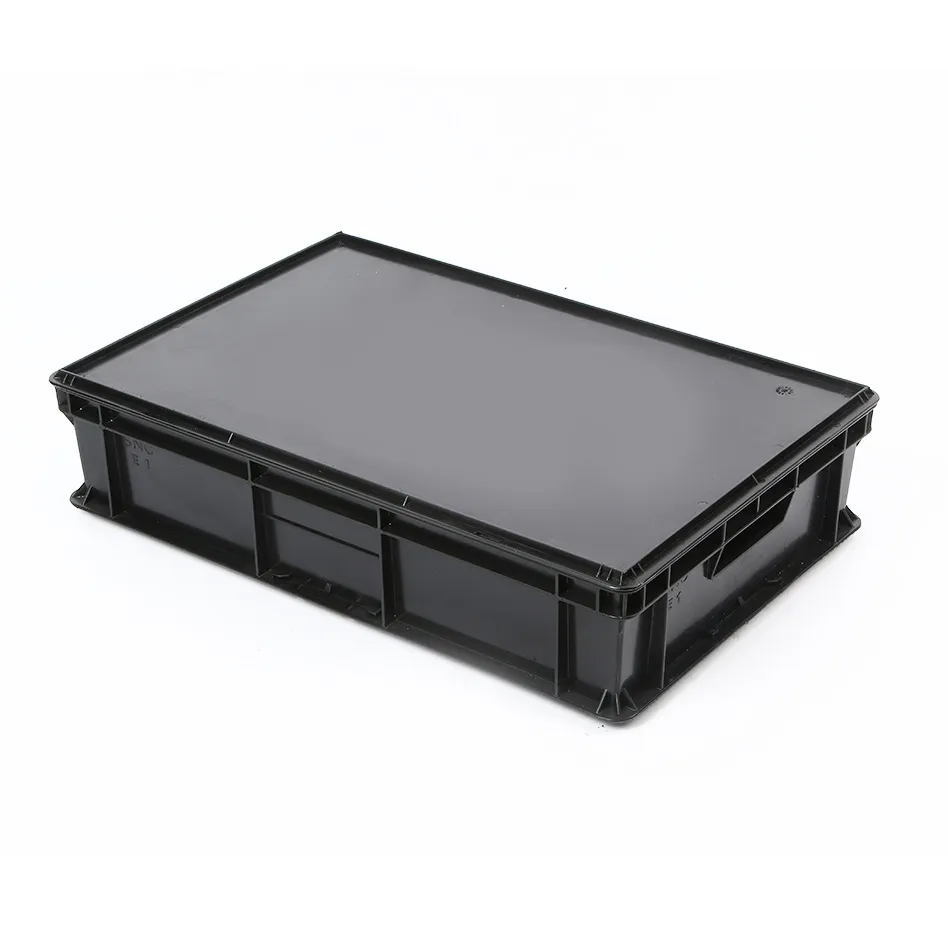
Part 1. What material-selection decision does this comparison make?
The comparison is not between two guaranteed performance classes. “PP ESD box” can be a broad request for a polypropylene box intended for an ESD-controlled workflow, while “conductive PP” identifies a more specific material direction. Neither phrase states the required electrical result, how it is measured, or whether the supplied lid, divider, label, and box body are included in the requirement.
For EPA staging, begin with the job the box performs: temporary WIP holding, line-side replenishment, cart transfer, rack storage, or protected part segregation. That operating role determines which surfaces contact the item, what path is expected for charge control, and which configuration details must be retained with the order.
| Buyer question | PP ESD box request | Conductive PP request | Decision needed |
|---|---|---|---|
| Material meaning | May be a general ESD-use label | Names conductive PP as the requested material direction | Record the material designation on the RFQ |
| Electrical requirement | Often unstated | Still needs a target and test basis | State the resistance target, test method, and condition |
| Box configuration | May omit lid, divider, or label details | May omit them too | Identify every supplied component in scope |
| EPA role | Can be assumed rather than described | Can also be assumed rather than described | Map the box to its actual handling and staging route |
| Receiving evidence | May rely on a catalogue description | May rely on the word “conductive” | Define the record needed for sample and incoming acceptance |
Part 2. How should “PP ESD box” become a usable specification?
A workable PP ESD box request starts with a controlled description, not a color, marketing label, or photo. Ask which PP material is proposed, which box model it applies to, and whether the lid, divider, insert, or label-holder materials are part of the electrical acceptance scope.
Then add the buyer’s electrical requirement. The request should name the resistance target, test method, probe arrangement where applicable, conditioning or environmental state, and the locations to be checked. A result without those conditions is difficult to compare with another quotation or to use at receiving.
| Specification field | Why it matters |
|---|---|
| Material designation | Separates a defined PP material request from a generic use label |
| Exact box and accessory list | Connects the claimed material to the supplied configuration |
| Resistance target | States the buyer’s expected electrical property rather than inferring it |
| Test method and condition | Makes quotations and incoming records comparable |
| Test locations | Shows whether the body, lid, divider, or other supplied parts are in scope |
| Lot traceability | Links a sample or record to the material actually delivered |
For terminology context, see the ESD, anti-static, and conductive terminology. The terminology article is useful background; the RFQ must still define the exact supplied configuration and acceptance rule.
Part 3. When is conductive PP the explicit requirement?
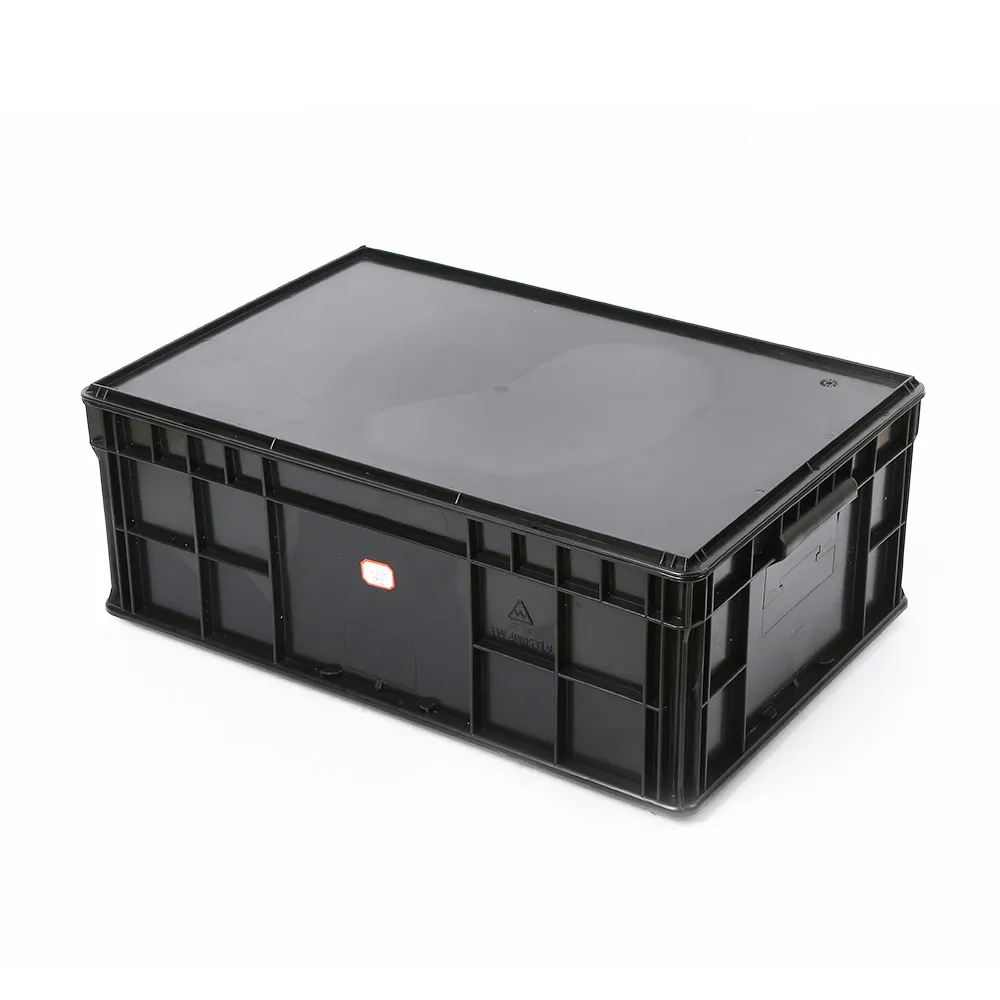
Specify conductive PP when the buyer’s own EPA procedure, engineering requirement, or controlled process calls for that material designation. The decision should be traceable to the process requirement, not to the assumption that a black box or the word “ESD” establishes conductivity.
Conductive PP is not a substitute for defining how the box is used. Review the contact surfaces, the route through racks or carts, the handling sequence, and any intended grounding path. Where grounding is required, the procedure should define the connection and verification method; the material name alone does not prove that a grounding path exists or works in the operating setup.
| Situation | Procurement response |
|---|---|
| Internal procedure requires conductive PP | State the requirement, target, method, condition, and acceptance evidence |
| Procedure calls for a different controlled material | Keep the specified material and document the corresponding test requirement |
| Buyer only states “ESD PP” | Clarify the material designation and intended EPA role before comparison |
| Accessories are added to the box | Decide whether each accessory is inside the electrical acceptance scope |
| Mobile staging is planned | Define the handling route and any required grounding-path checks |
Part 4. Which electrical and material evidence should be compared?
Compare evidence, not isolated labels. A supplier can only be evaluated against the buyer’s defined requirement when the material identity, electrical target, method, condition, test locations, and record-to-lot link can be reviewed together.
Sanwei’s ESD Box & ESD Tray solution lists material options and a customizable resistance range. That is a useful discovery point, but it is not a universal electrical result for every box. Request a quotation statement for the selected configuration and use the buyer’s ESD-control program to set the acceptance method.
| Evidence item | Compare this | Do not infer |
|---|---|---|
| Material record | Named PP material for the selected box | A formulation from a different family image |
| Electrical result | Value or range with method, condition, and test locations | A result with no stated test basis |
| Configuration | Box body, lid, divider, insert, and label hardware included | That every accessory shares the body material |
| Traceability | Connection between record, sample, and delivery lot | That a published range covers each incoming lot |
| Program fit | Buyer-defined role in the EPA procedure | That the box alone creates EPA compliance |
The IEC 61340-5-1 and ESD Association standards information provide program-level context. They do not replace model-specific evidence or the buyer’s chosen receiving criteria.
Part 5. How does EPA staging affect the box choice?
EPA staging changes the comparison because a box is part of a handling system. Define whether boxes sit on a grounded workstation, move on a cart, stack on a rack, or pass between controlled and uncontrolled areas. Each route can change the configuration and verification questions.
Avoid treating a conductive PP selection as a stand-alone approval. The EPA procedure should govern how items enter the area, how the container is handled, whether a grounding path is required, and what inspection or verification is performed. A lidded box may also need a separate review of access, stack orientation, and accessory fit.
For product discovery, the Sanwei ESD Box product family lists covers, anti-static partitions, labels, and slots on selected models. Confirm every option against the quoted model. For a published footprint and depth family, review the 600 × 400 mm ESD Box after the material and EPA configuration are defined.
Part 6. What belongs in the RFQ and sample-acceptance plan?
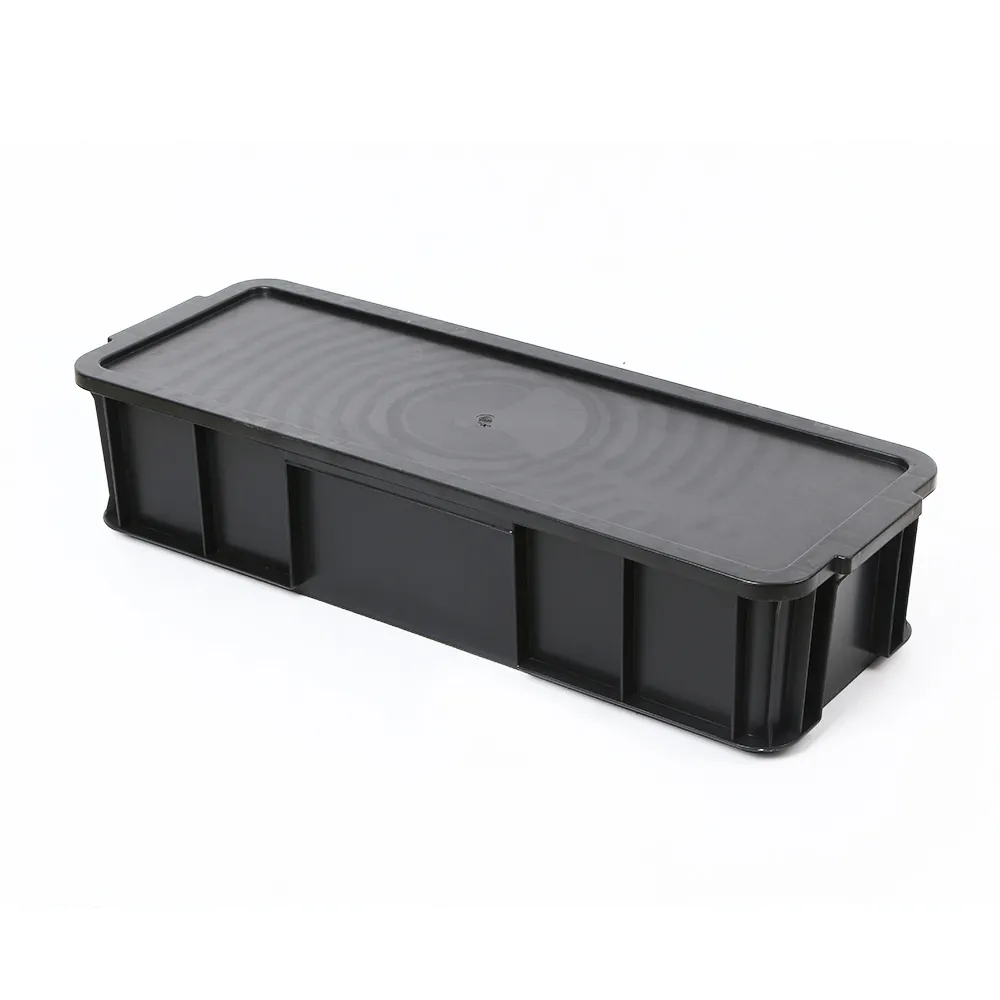
Use one RFQ attachment that joins the physical box to the electrical requirement and EPA staging method. It prevents a supplier from quoting an accessory or material assumption that the buyer did not intend.
| RFQ field | Buyer input |
|---|---|
| EPA role | WIP, line-side staging, rack storage, cart movement, or another defined task |
| Box configuration | Footprint, depth, body, lid, divider, insert, label hardware, and required quantities |
| Material designation | PP ESD description or explicit conductive PP requirement, as defined by the buyer |
| Electrical requirement | Target, test method, conditioning, test locations, and required record |
| Grounding-path expectation | Whether a connection is required, where it applies, and how it will be checked |
| Handling route | Bench, rack, cart, handoff, stack orientation, and any transition outside the EPA |
| Traceability | Sample, material record, delivery lot, and receiving-document linkage |
| Sample acceptance | Dimensional fit, accessory fit, handling trial, evidence review, and agreed acceptance rule |
Product recommendation
Use the Sanwei ESD Box product family as the starting point when the buyer can provide the EPA use case, footprint, material designation, electrical target, accessories, and acceptance plan. Sanwei lists material and customization routes across its box-and-tray offering, but the quote should identify the selected configuration and evidence needed for that requirement.
Fit Boundary
| Buyer situation | Reasonable path | Avoid |
|---|---|---|
| A controlled procedure explicitly requires conductive PP | Specify conductive PP with electrical and configuration acceptance details | Assuming the material name alone completes the requirement |
| A buyer only has the term “PP ESD box” | Clarify the intended EPA role and testable requirement | Ordering from color, image, or a generic label |
| A lidded or divided box is needed | Include each accessory in the configuration review | Assuming every accessory has the same property as the body |
| The box moves across carts or storage zones | Map the handling route and any grounding-path checks | Treating a static catalogue claim as an operational approval |
Send the EPA procedure excerpt, material requirement, target footprint, accessories, test details, and receiving criteria through Contact Sanwei for a configuration and sample review.
FAQ
Is a PP ESD box the same as a conductive PP box?
Not necessarily. “PP ESD box” can be a general request, while conductive PP names a material direction. Either label still needs an electrical target, test basis, configuration list, and acceptance evidence.
Does black PP automatically mean conductive PP?
No. Color is not a material or electrical test record. Request the stated material designation and evidence for the selected box configuration.
When should a buyer request conductive PP?
Request it when the buyer’s EPA procedure or engineering requirement calls for conductive PP. Put the required target, method, condition, and evidence in the RFQ.
What electrical evidence should an RFQ request?
Request the material designation, electrical target, test method, conditioning, test locations, result format, and traceability between the record and the supplied lot.
Does a conductive PP box make an EPA compliant?
No. EPA performance depends on the wider control program, handling method, surfaces, procedures, and verification. The container is one configured part of that system.
Must a conductive box be grounded?
Follow the buyer’s documented EPA procedure. If a grounding path is required, specify where it connects and how it will be checked instead of inferring it from the material label.
Can a published resistance range be used for receiving acceptance?
Not by itself. A published range is not a record for every supplied lot. Define the required method, condition, locations, and traceability for receiving acceptance.
What should be checked on a sample?
Check box dimensions, lid and divider fit where applicable, the intended handling route, the requested electrical evidence, configuration list, and the link between the sample and the proposed delivery record.

Leave a Reply