- Tăng áp
- Blog
SMT reel tray sample approval should establish whether an identified supplier sample fits the intended reels, handling route and storage location before a repeat order is released. Approve the sample against written acceptance criteria, record the actual configuration, and separate physical handling observations from electrical qualification. A tray that holds one demonstration reel is not automatically approved for every reel diameter, width, fill condition or workplace. For buyers, the useful output is an approval record that purchasing, receiving and production can reproduce, including the limits of the trial and the changes that would require another review.
Define the item being approved
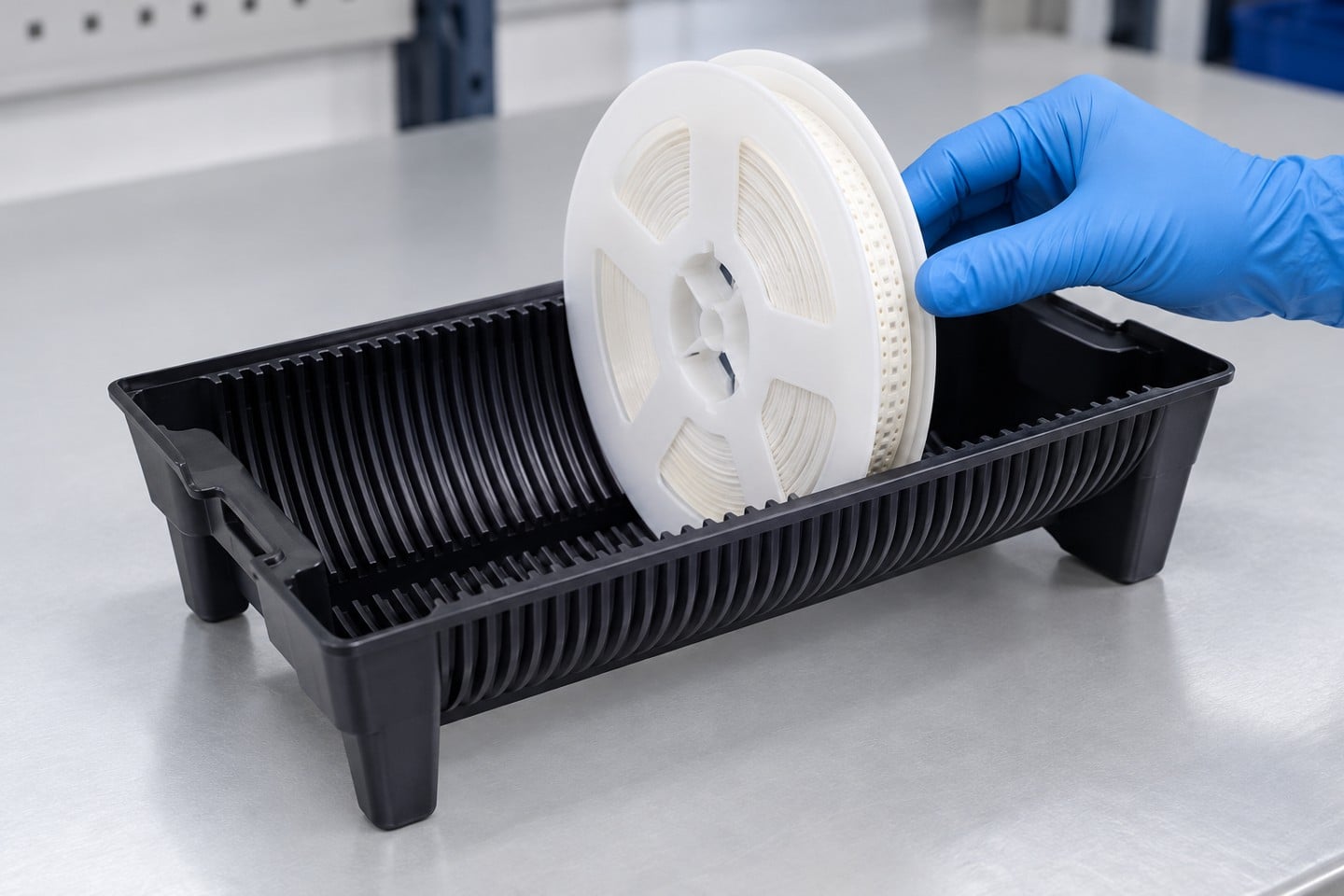
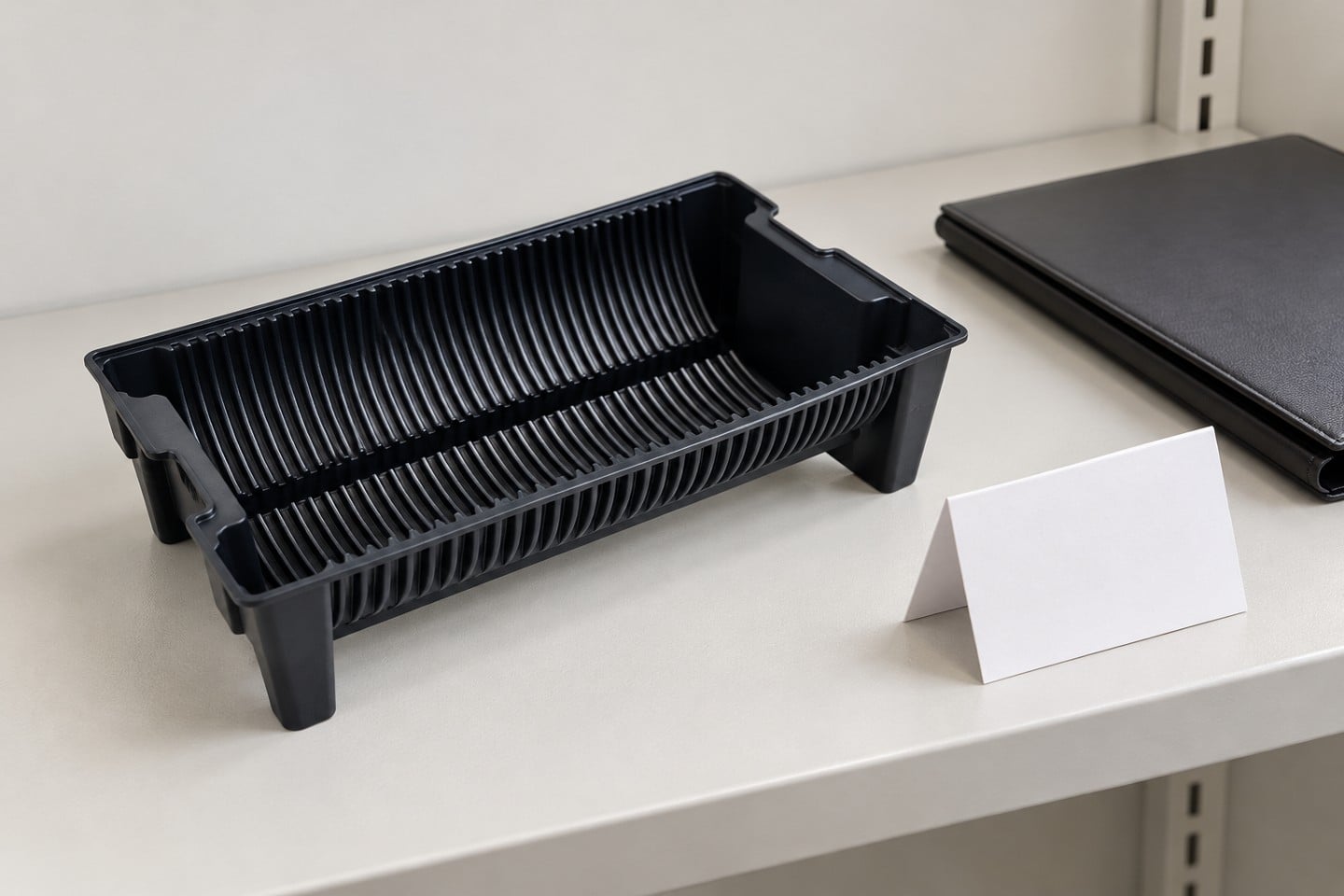
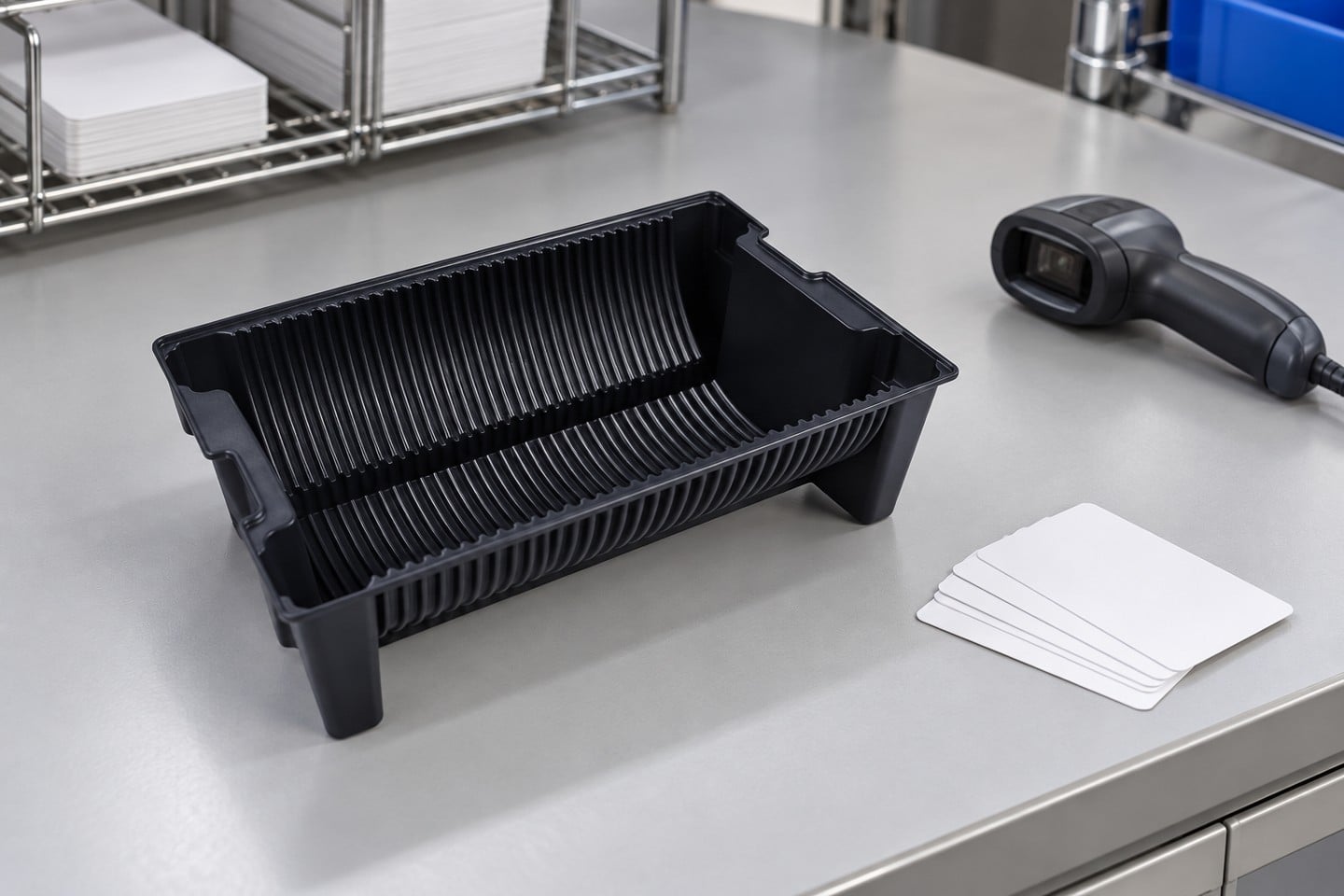
Start with the actual carrier rather than an attractive catalog photograph. The SWESD SMT reel storage tray provides the relevant product reference for this workflow: an open, ribbed carrier used to organize reels. Its appearance does not establish electrical resistance, shielding, cleanliness, load capacity or compatibility with a particular rack. Ask the supplier for the current drawing, material identification and applicable qualification evidence before deciding which claims belong in the purchase specification.
Give the sample a traceable identifier and record the supplier, part number, drawing revision, delivery date and any declared manufacturing variant. Photograph the sample before the trial. Keep those records with the assessment, rather than allowing a sample to become an unidentified item on an engineer’s desk. If several samples differ, record each separately. A signed approval should refer to a particular configuration, not an entire family described only as black ESD trays.
Turn the purchase requirement into an acceptance plan
Agree the decision criteria before putting reels into the carrier. Include physical envelope, slot engagement, operator access, label visibility and the intended storage route. Specify who can accept a deviation and which conditions immediately stop the trial. Avoid a form that offers only a single pass box: the reviewer needs room to record limitations, unresolved questions and required follow-up evidence.
The reel tray dimensions guide explains the fit information needed to define an order. Sample approval uses that information to make a documented purchasing decision. It should not repeat a generic dimensions exercise. For example, an existing dimensional requirement may already be correct, while the sample reveals that a normal gripping approach obscures the reel label or catches a tape leader.
| Review item | Record before approval | Decision boundary |
|---|---|---|
| Sample identity | Supplier part, revision and sample identifier | Do not approve unidentified variants |
| Reel compatibility | Listed reel configurations and observed engagement | Untried combinations remain outside scope |
| Handling sequence | Placement, retrieval and leader observations | Stop when force or interference is required |
| Bằng chứng ESD | Applicable product documents and responsible review | Physical fit does not establish electrical acceptance |
| Repeat supply | Order reference and controlled characteristics | Review agreed changes before routine substitution |
Use this decision table as a record structure, not a set of universal acceptance limits. Actual dimensions, permissible forces, loading and electrical criteria must come from the agreed product and process specifications. The EOS/ESD Association’s basic control procedures and materials guidance provides the program context for evaluating handling materials; it does not approve an individual supplier sample.
Build a representative reel matrix
List the reel configurations the purchasing decision is intended to cover. Include relevant differences in diameter, width, flange shape, leader condition and normal fill state. Use engineering-approved representative materials where suitable, and keep production-sensitive material under the site’s normal controls. Do not put exposed sensitive devices into an unqualified trial simply to make the demonstration look realistic.
Select challenging combinations deliberately. A light empty reel may behave differently from a normally filled reel, and a narrow reel can interact with a groove differently from a wide reel. Document which combinations were physically checked and which remain outside the approval. Where a proposed family is too broad for one trial, split the approval scope or obtain additional evidence rather than claiming that one sample represents every possible configuration.
Inspect the sample before loading
Check the sample for cracks, damaged grooves, sharp edges, deformation and unexpected substances before assessing fit. Record the as-received condition. A defect found at this stage should not be hidden by trimming, polishing or cleaning the sample without an approved investigation. Such work can remove evidence of the supplied condition and create a sample that no longer represents routine production.
Sử dụng tray damage inspection workflow when deciding how to record a questionable feature. Distinguish a visible manufacturing feature from a defect against the agreed criteria; appearance alone may not resolve the question. Ask the supplier for clarification when necessary, and preserve photographs with a location reference so another reviewer can find the same feature.
Observe the complete handling sequence
Run the intended sequence from receipt at the workstation through placement, retrieval and return. Confirm that operators can identify the reel before removing it, stabilize the carrier appropriately and avoid forcing the reel into or out of a groove. Watch the tape leader and any protruding material. A physically stable reel can still be inconvenient if routine access places its packaging at risk.
Record the actual support surface and available clearance. A sample observed on a wide bench has not been evaluated in a narrow storage position merely because the tray fits within the measured footprint. Include the normal hand approach, neighboring items and visibility restrictions. If the approved route includes movement, document that route and use the site’s authorized trial method; do not improvise drop, overload or impact tests. If stacking is proposed, use the separate tray stacking review and document its approved configuration rather than assuming this sample trial establishes stack capacity.
Invite a regular operator to participate alongside purchasing or engineering. Ask them to explain the steps they would take rather than relying only on a demonstration by someone who designed the trial. Record observed interference and uncertainty before modifying the arrangement. The goal is a repeatable handling decision, not an unusually careful performance that succeeds only while the reviewer is watching.
Keep electrical acceptance as a separate evidence stream
Black plastic and an ESD description are not test results. Obtain the material and product evidence required by the site’s ESD control plan, and have the responsible person decide whether the proposed item is appropriate for its intended use. Record the relevant method, configuration and acceptance requirement without inventing a resistance range or interpreting an unrelated material certificate as proof for the complete carrier.
Separate physical approval from any outstanding electrical review in the status field. For example, a record can state that the listed reels fit in the sample while purchase release remains on hold for required qualification documents. That is more useful than a general approval followed by an email explaining exceptions. A sample should not enter routine sensitive-device handling until all required approvals for that use are complete.
Record findings that another shift can reproduce
For each observation, identify the sample, reel configuration, action, result and reviewer. Add photographs that show the relevant relationship, such as groove engagement or label visibility, without exposing confidential component information. A photograph supports the observation; it does not replace a written account of what was checked, the conditions and the applicable acceptance criterion.
Bao gồm các kết quả âm tính và không có kết luận. Nếu sự can thiệp không xảy ra trong các bước được quan sát, hãy nêu rõ là không quan sát thấy hiện tượng đó trong những điều kiện đó. Không chuyển đổi tuyên bố đó thành một yêu cầu bồi thường độ tin cậy trọn đời. Nếu nhà cung cấp giải thích một tính năng đáng ngờ, hãy đính kèm lời giải thích đó và xác định ai đã chấp nhận nó. Giữ cho một vấn đề chưa được giải quyết luôn hiển thị cho đến khi chủ sở hữu chịu trách nhiệm đưa ra quyết định bằng văn bản.
Chọn trạng thái phát hành và kiểm soát mẫu tham chiếu
Sử dụng các kết quả rõ ràng như được phê duyệt cho mục đích sử dụng được liệt kê, phê duyệt có điều kiện với hạn chế được ủy quyền, bị từ chối hoặc đang chờ bằng chứng bổ sung. Xác định rõ mỗi kết quả cho phép những gì. Việc phê duyệt có điều kiện phải nêu rõ hạn chế và ai có thể thực thi nó; điều đó không được trở thành một cách không chính thức để bỏ qua một yêu cầu thiết yếu. Mẫu đang chờ xử lý chưa sẵn sàng để phát hành đơn hàng định kỳ.
Giữ lại mẫu tham chiếu đã được phê duyệt ở nơi tổ chức có thể tìm thấy và bảo quản nhận dạng của nó. Nếu việc sử dụng thông thường làm hỏng hoặc thay đổi mẫu, hãy thỏa thuận một phương pháp lưu giữ khác, chẳng hạn như ảnh chụp được kiểm soát và hồ sơ kích thước được hỗ trợ bởi một mặt hàng tham chiếu được xác định. Ghi lại vị trí lưu giữ mẫu tham chiếu và điều gì sẽ xảy ra nếu nó bị mất, mòn hoặc thay thế. Một mẫu tham chiếu không thể truy nguồn không thể giải quyết một cách đáng tin cậy một tranh chấp nhận hàng trong tương lai.
Chuyển quyết định sang đơn đặt hàng lặp lại
Đưa nhận dạng, phiên bản, phạm vi và các tài liệu đi kèm bắt buộc của bộ phận được phê duyệt vào đơn hàng hoặc thông số kỹ thuật liên kết. Yêu cầu nhà cung cấp xác định những thay đổi đối với vật liệu, nguồn sản xuất, hình học hoặc các đặc tính được kiểm soát khác trước khi giao hàng, theo thỏa thuận. Kết nối quan trọng là giữa những gì đã được phê duyệt và những gì bộ phận nhận hàng thực sự có thể nhận ra trong lô hàng được giao.
Đừng cho rằng mọi lần giao hàng sau đó đều cần thử nghiệm kỹ thuật hoàn chỉnh ban đầu. Xác định một bước kiểm tra nhận hàng phù hợp dựa trên rủi ro và hợp đồng mua hàng, có quy trình leo thang khi nhận dạng hoặc tình trạng khác biệt. Ngược lại, đừng để việc phê duyệt mẫu lịch sử che khuất sự không khớp có thể nhìn thấy được. Ghi lại các điểm sai lệch, cách ly hàng tồn kho bị ảnh hưởng theo quy trình của cơ sở và lấy quyết định xử lý trước khi trộn các mặt hàng vào kho lưu trữ thông thường.
Đào tạo người dùng về các giới hạn đã được phê duyệt
Chia sẻ hướng dẫn xử lý và nhận dạng với những người sẽ sử dụng thiết bị mang. Giải thích cấu hình cuộn và vị trí lưu trữ nào được áp dụng, phải làm gì khi cuộn không ăn khớp bình thường và ai chịu trách nhiệm thay đổi. Hiệp hội EOS/ESD hướng dẫn đào tạo và kiểm toán hỗ trợ việc coi đào tạo và xác minh là một phần của chương trình kiểm soát thay vì chỉ dựa vào việc mua thiết bị.
Video giáo dục sau đây của Hiệp hội EOS/ESD cung cấp thông tin nền tảng về chương trình ESD rộng lớn hơn. Đây không phải là quy trình phê duyệt khay cuộn và không xác thực sản phẩm được minh họa. Sử dụng kế hoạch chấp nhận bằng văn bản, tài liệu thực tế của nhà cung cấp và các yêu cầu của cơ sở chịu trách nhiệm đối với quyết định về mẫu.
Chuẩn bị yêu cầu tập trung đối với nhà cung cấp
Gửi cho nhà cung cấp ma trận cuộn dự kiến, điều kiện bảo quản, giới hạn vật lý và yêu cầu về bằng chứng cùng với yêu cầu lấy mẫu. Yêu cầu nhận dạng sản phẩm chính xác, bản vẽ hiện tại, vật liệu được khai báo, tài liệu đủ điều kiện có sẵn và quy trình thông báo các thay đổi đã thỏa thuận. Bao gồm liên hệ phê duyệt và tuyên bố rõ ràng rằng việc nhận mẫu không tự động cho phép giao hàng sản xuất.
Khi quá trình đánh giá kết thúc, hãy trả về một quyết định hợp nhất thay vì một số nhận xét mâu thuẫn. Liệt kê các điều kiện được chấp nhận, các quan sát bị từ chối và bằng chứng còn thiếu một cách riêng biệt. Đính kèm hồ sơ cấu hình đã phê duyệt vào tệp mua hàng và làm cho nó có thể truy cập được đối với bộ phận nhận hàng. Điều này thu hẹp khoảng cách thực tế giữa việc thử khay một lần và mua lại giải pháp đã được chấp nhận tương tự một cách đáng tin cậy.
Các câu hỏi thường gặp
Một cuộn dây thành công có chấp thuận mọi cuộn dây không?
Không. Phê duyệt bao gồm các cấu hình và điều kiện đã được ghi lại; đánh giá các tổ hợp bổ sung trước khi mở rộng phạm vi.
Màu khay đen có xác định được tính phù hợp chống ESD không?
Không. Lấy bằng chứng sản phẩm có liên quan và xem xét lại theo kế hoạch kiểm soát của cơ sở.
Một mẫu có thể được phê duyệt trong khi các tài liệu còn thiếu không?
Ghi lại bất kỳ quan sát vật lý nào một cách riêng biệt, nhưng không phát hành mục đích sử dụng vẫn thiếu bằng chứng đủ điều kiện bắt buộc.
Có nên sử dụng mẫu tham khảo trong sản xuất hàng ngày không?
Sử dụng phương pháp lưu giữ đã được phê duyệt. Việc sử dụng định kỳ có thể thay đổi mục và làm giảm giá trị của nó như một tài liệu tham khảo.
Những gì thuộc về đơn hàng lặp lại?
Xác định sản phẩm và phiên bản được chấp nhận, phạm vi dự định, tài liệu yêu cầu và các yêu cầu thông báo thay đổi đã thống nhất.
Bài đăng gần đây
-
-
 Đưa cuộn SMT trở lại kho: Hồ sơ bàn giao và phân tách vật mangNgày 01 tháng 11 năm 2026
-
 Kiểm tra băng keo đánh dấu sàn ESD: Tình trạng bong mép và quyết định thay thếNgày 01 tháng 11 năm 2026
Để lại phản hồi