- Tăng áp
- Blog
ESD packaging failure analysis after shipping damage should begin by preserving the shipment as received, protecting the devices through an approved handling procedure, and separating observations from hypotheses. A crushed carton, torn pouch, failed electrical test, and missing traceability are different findings. None alone proves that electrostatic discharge caused the device failure. Record the package layers, closures, support, device condition, shipment identity, and handling sequence before changing the evidence. This guide explains a practical investigation workflow for electronics buyers and quality teams, including containment, sample selection, packaging-property checks, transit evidence, and corrective-action verification.
Contain the shipment and preserve its identity
Follow the receiving and quality procedure for damaged or questionable material. Move the shipment to the approved inspection environment and maintain the protective conditions required for the devices. Do not open an uncertain package at an ordinary desk to satisfy curiosity or remove protective layers before the technical owner has defined the inspection. Identify the person responsible for the investigation and who may authorize handling or testing.
Record the order, shipment, carrier, tracking information, supplier, part, revision, lot, quantity, and receipt time. Preserve the outer labels and their connection to the contents. A package can be mechanically damaged and still contain the correct identified parts, while another can appear undamaged but contain an untraceable mix. Keep these observations separate so that the quality decision addresses the actual issue.
Notify the responsible parties with factual observations and follow contractual reporting requirements. State that damage or uncertain condition was observed; do not label it ESD damage before there is supporting technical evidence. If the supplier or device manufacturer needs the original package for analysis, agree on its preservation and return procedure before discarding a carton, cutting a bag, or cleaning a part.
Record every protective layer before disassembly
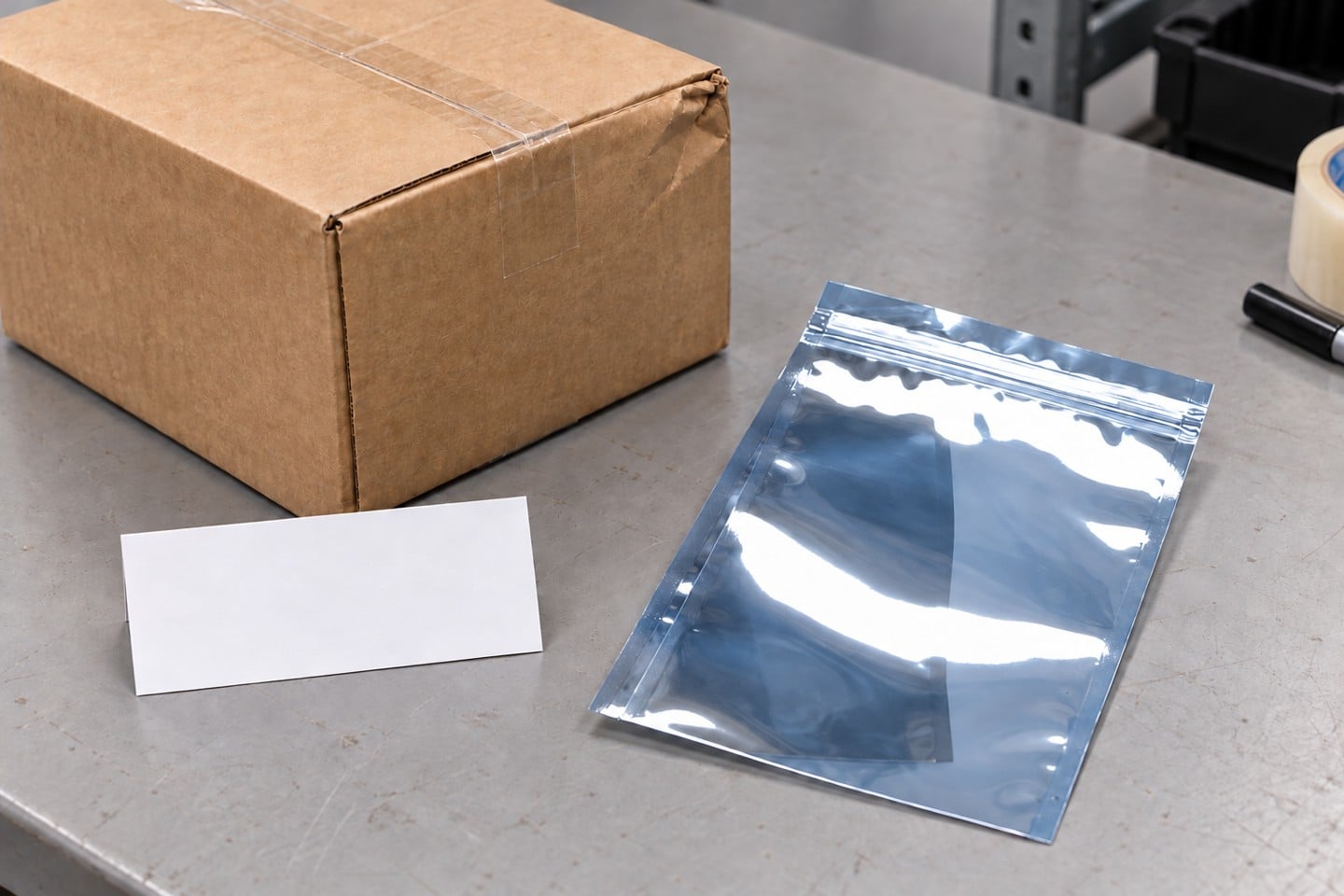
Photograph the as-received carton, internal support, pouch or container, closure, device orientation, and any visible damage when permitted. Include views that establish where the layers sit relative to each other. A close-up of a tear is useful, but without the surrounding arrangement it may be impossible to tell whether the tear occurred at a protruding component, a carton edge, or during opening.
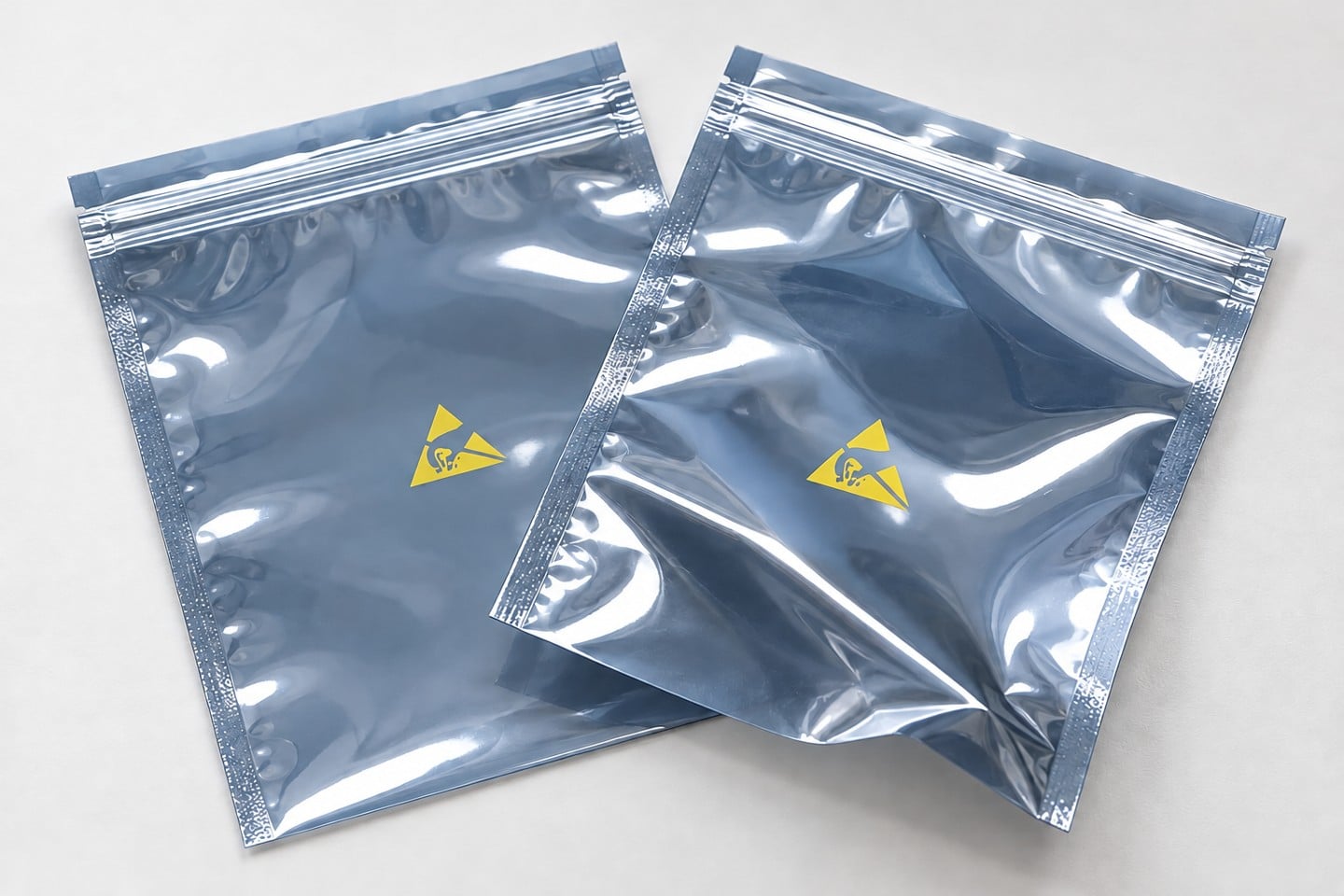
Create a layer-by-layer record. Identify the outer shipping package, mechanical support, ESD protective package, cushioning, labels, and any additional moisture-control arrangement required by the device. Record the observed closure state and whether the devices moved within the package. Do not assume a silver pouch is a moisture-barrier bag or that a black tray provides discharge shielding. Request evidence for the actual protective function and construction.
The EOS/ESD Association basic control-procedures guidance explains packaging functions within and outside an ESD protected area. Use the applicable current requirements and the device’s handling instructions to assess the shipment. General color or material appearance does not establish those functions, especially when a closure or film has been damaged.
Separate mechanical damage from electrical failure
Describe visible findings precisely: dented carton corner, displaced insert, bent lead, cracked component, loose part, punctured film, open closure, or abrasion. Record the observation and location without assigning the cause. An electrical failure detected after transport may be associated with the shipment, but its mechanism requires investigation. Mechanical stress, moisture, electrostatic events, other electrical overstress, handling, and unrelated device conditions should not be collapsed into one explanation.
The EOS/ESD Association introduction to ESD explains why device damage may require more than visual observation to recognize. It does not provide a diagnostic shortcut for a particular returned component. Use the device manufacturer’s approved analysis and the quality process to determine the relevant mechanism. A pouch resistance result cannot, by itself, diagnose the cause of a chip failure.
Preserve the timing of observations. Record whether damage was noticed before opening, during controlled unpacking, after installation, or during a later test. Identify the test method and equipment used for the reported electrical failure. Avoid a statement that the devices arrived dead if the only evidence is a failed test after several undocumented handling steps. Honest timing helps the investigation and prevents a misleading supplier claim.
Build an evidence-and-question matrix
The following qualitative matrix identifies useful next questions. It is not a diagnosis table or a set of numerical acceptance limits. Define actual inspection, test, and release criteria with the quality owner before testing. Protect the devices and evidence while the relevant specialist evaluates each finding.
| Observed finding | Question to investigate | Evidence needed |
|---|---|---|
| Crushed outer carton | Was the internal support and device position preserved? | As-received photographs, packing specification and controlled device inspection |
| Punctured or abraded pouch | Where did contact occur and when was the damage observed? | Layer arrangement, device protrusions, support and handling sequence |
| Open closure | Was closure incorrect, disturbed in transit or altered during opening? | Packing and receiving records; sample state before disassembly |
| Electrical test failure | Which mechanism and timing are supported by device analysis? | Approved test record and competent manufacturer or laboratory investigation |
| Packaging property uncertainty | Does the actual completed package supply the required function? | Applicable method, identified specimen, conditions and qualified evidence |
| Revised packing arrangement | Does the correction address the supported cause? | Controlled qualification, first-shipment checks and receiving observations |
Keep the hypotheses explicit. For example, movement within a pouch may suggest inadequate support, but the same evidence could reflect an incorrectly packed order or a support item damaged in transit. A closure found open could result from packing, transit, or unpacking. Record what would distinguish the possibilities instead of selecting the most convenient explanation at the first meeting.
Select samples without destroying the investigation
Identify which affected items and packages will be retained for analysis and which will be used for approved testing. Preserve representative intact and damaged evidence where the plan calls for it. Keep the connection between each device, its original protective layers, and the recorded observation. Do not pool bags from multiple shipments without identity if the decision concerns a particular lot or route.
Agree on destructive examination before it begins. Cutting a pouch, removing a closure, cleaning a surface, or sectioning a device may be justified, but can remove evidence needed by another party. Coordinate the order of examinations with the laboratory or manufacturer. Keep unused reference specimens when required by the plan and document every change to a sample’s state.
Use appropriate packaging and handling when returning samples. A failure-analysis specimen can be altered or further damaged during an uncontrolled return shipment. Include the evidence record, permitted handling, and the questions the analysis must answer. The Texas Instruments quality and reliability FAQ page provides manufacturer context for quality inquiries; the actual device manufacturer must specify its own return and analysis requirements.
Check packaging properties through the correct method
Identify the required packaging function for the route and device. Then request the relevant qualified evidence for the actual material, completed package, closure, and state under evaluation. Resistance, charging behavior, and shielding describe different properties; a result for one is not a substitute for the others. A certificate for unused film may not establish the condition of a damaged completed pouch.
Use the applicable full method and competent personnel for testing. Record sample preparation, conditioning, fixture, equipment, method edition, observations, and the criteria applied. Do not reconstruct a shielding test from an online illustration or use a handheld resistance meter as proof of every packaging function. When evidence is unavailable, record the property as unverified rather than treating the absence of a measured failure as a pass.
Review the package as an arrangement, not only a sheet of material. Device protrusions, bag dimensions, closure position, support, abrasion points, and handling can affect the intended protection. Our packaging supplier-qualification guide addresses the upstream approval evidence, while this article concerns the received shipment and the investigation of its actual condition.
Reconstruct the packing and transit sequence
Request the approved packing specification, revision, packing record, materials used, and any available inspection photographs. Compare them with the received arrangement. Check whether the intended support was included, whether the device orientation was correct, and whether labels or accessories were placed where the specification permitted them. Record deviations without assuming that every deviation caused the reported failure.
Collect transit observations and carrier evidence relevant to the shipment. Include handling events, recorded delays, visible carton damage, and any available indicators or monitoring data, with their limits. A carrier report may describe an event but not the condition of the protective pouch inside. Keep mechanical transport evidence distinct from electrical-control evidence, and identify where the sequence remains unknown.
Reproduction testing must have an approved objective and method. Use suitable representative specimens and qualified test arrangements rather than deliberately damaging customer production parts. A recreated carton impact that produces a similar tear can support a hypothesis, but it does not prove that the same event occurred in the original shipment. Document the conditions, observations, and differences from the received case.
Define corrective action against the supported cause
If the evidence identifies an inadequate support arrangement, revise the support and verify it through the relevant mechanical and handling evaluation. If the closure or packaging property is unsuitable, correct that requirement and obtain the relevant qualification evidence. If the problem is a packing deviation, address instructions, training, materials identification, and verification. Avoid a generic corrective action such as use better ESD bags without identifying the failure it is meant to prevent.
Assign responsibilities and change approval. Identify who revises the specification, who qualifies the arrangement, who trains packers, and who releases the first controlled shipment. Keep the old and revised versions distinguishable. A purchasing team should not authorize a material substitution solely because a supplier describes it as stronger or more antistatic; the required protective functions and physical arrangement still need evidence.
Use related route-specific guidance when defining the correction. Our PCB repair and return packaging guide addresses preservation of returned-board condition and identity. The semiconductor sample packaging guide addresses small engineering lots. Select the relevant route rather than applying one packing template to every device and shipment type.
Verify the correction and close the investigation honestly
Check the revised arrangement against the approved criteria and record the results. Follow the first controlled shipments as required by the quality plan, including receiving evidence and relevant device observations. Confirm that the packing process follows the revised specification. A successful pilot shipment supports that evaluated arrangement; it is not a guarantee that no future failure can occur.
Retain unresolved findings. If the available evidence cannot distinguish ESD from another mechanism, say so and identify the next investigation or the accepted limitation. Do not rewrite an inconclusive case as confirmed ESD damage merely to justify a packaging purchase. Closure should state the supported cause, correction, verification, affected-material decision, and open questions, with responsible owners.
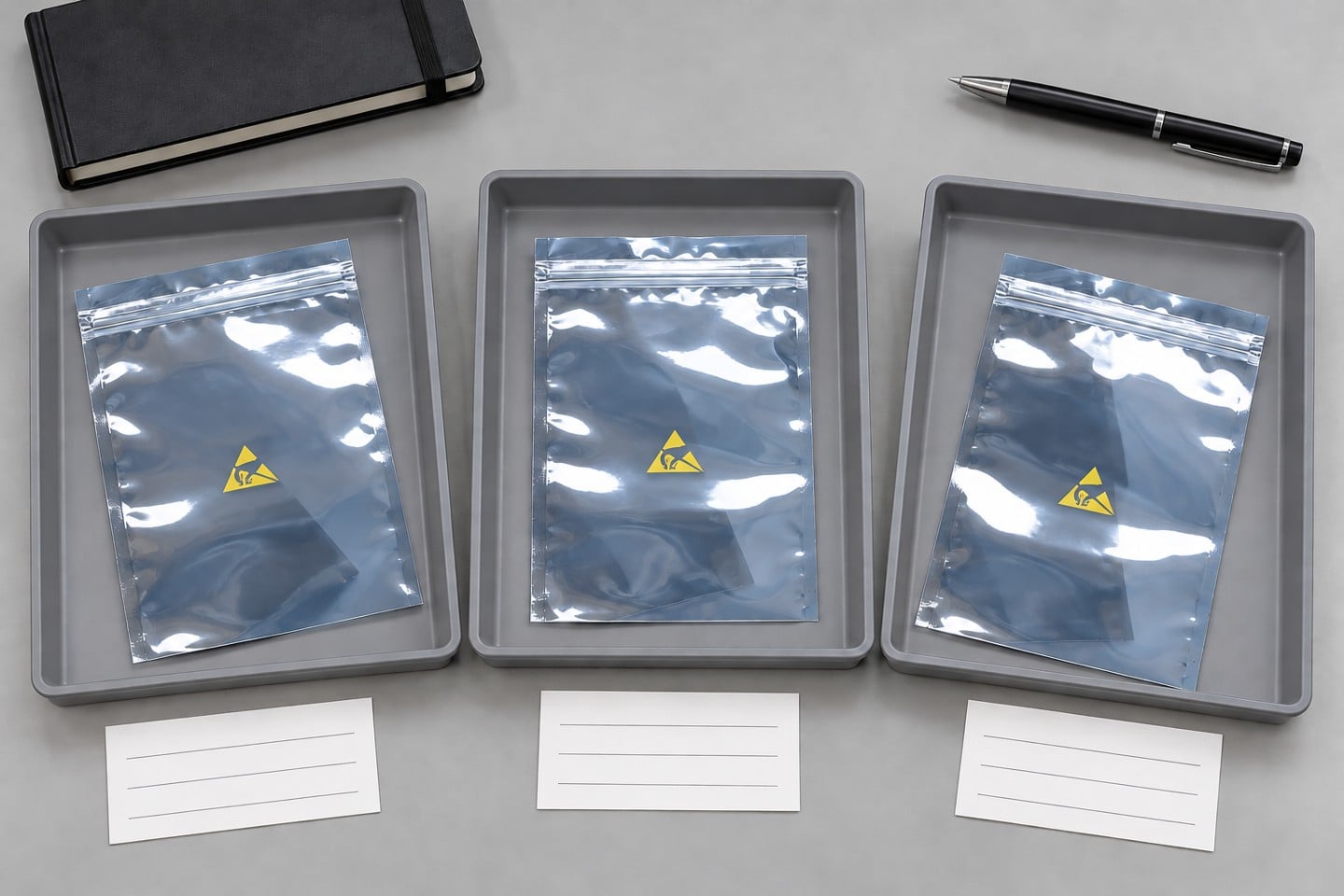
For an inquiry, the SWESD shielding-bag product page can begin discussion of the packaging item. Send the device configuration, route, closure and support needs, observed damage, required protective functions, and evidence plan. The reflective bags pictured in this article are product-reference illustrations; their intact appearance does not prove shielding performance or show an actual customer failure.
Further learning
The EOS/ESD Association educational video below introduces electrostatic-control principles. It helps explain why package appearance and device diagnosis must be separated, but does not replace laboratory analysis or packaging qualification. Keep the investigation grounded in the actual shipment, controlled evidence, and the tests appropriate to each question.
Các câu hỏi thường gặp
Does a damaged carton prove ESD damage?
No. Carton damage, package damage and electrical failure are separate observations; device failure mechanism needs supporting technical analysis.
Should the original packaging be discarded after receiving inspection?
Preserve the required evidence until the quality owner and analysis parties approve its disposition, including identity and the original arrangement.
Does a pouch resistance pass prove all packaging protection?
No. Resistance, charging behavior, shielding and mechanical protection answer different questions and need the applicable evidence.
Can a recreated shipment impact prove the original cause?
It can support a hypothesis under documented conditions, but does not prove that the same event occurred in the received shipment.
What should a corrective-action closure state?
Record the supported cause, revised specification or process, verification, affected-material decision, responsible owners and any unresolved findings.
Bài đăng gần đây
-
 ESD Packaging Failure Analysis After Shipping Damage16 Th10,2026
 -

-

Để lại phản hồi