- Tăng áp
- Blog
A cleanroom wipe lot certificate review should connect the received stock to the correct document, identify what was actually tested or declared, and compare that evidence with the agreed release requirements. A document headed certificate does not automatically contain results for the supplied batch. Typical product data, a conformity declaration and a report of analytical results serve different purposes. Check item identity, lot association, methods, units and decision scope before releasing stock. This guide gives buyers and quality teams a practical review sequence without inventing test limits, claiming universal cleanroom approval or transferring another manufacturer’s evidence to a SWESD product.
Begin with the stock and the purchasing requirement
Place the order description, receipt record and supplier document together. Confirm the supplied item code, variant and pack identity before examining the numerical results. A technically detailed report is of little value if nobody can connect it to the material on the shelf. Preserve the supplier’s original lot reference and record any internal stock code alongside it rather than replacing the source identity with a local nickname.
Read the order requirements as well. A routine conformity declaration may be sufficient for one approved application while another contract requires identified lot results. The receiving team should not quietly add a new requirement after delivery or waive an agreed one because a document looks professional. Resolve the intended evidence with purchasing and the technical owner, then document any approved exception for the affected stock.
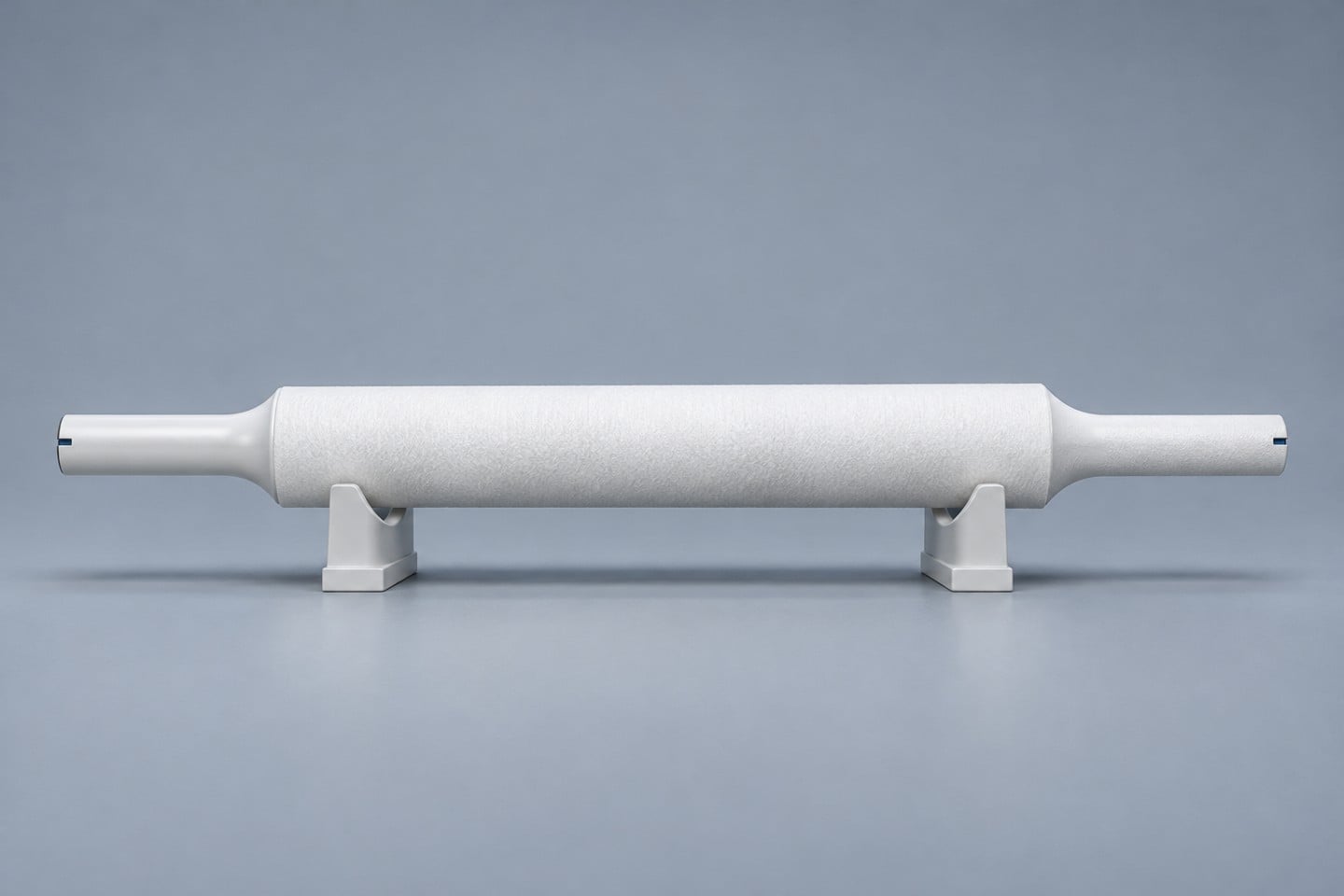
The SWESD clean wiper product page is a starting point for discussing the actual supplied wipe. Ask which documents are available for the offered variant and what each document establishes. The illustrations in this article show the real product reference with blank paperwork; they are not examples of a SWESD certificate or evidence that a particular test has been performed.
Read the scope rather than relying on the heading
A conformity statement generally declares compliance with a stated requirement, while an analysis report may contain reported measurements. Suppliers do not all use document names consistently. Read the text to determine whether it presents an actual batch result, a typical value, a specification or a statement about the quality system. If these categories are unclear, request clarification before treating one as another.
A quality-system certificate relates to the named organization’s system and scope. It does not itself report the particle or residue result of a particular wipe lot. Similarly, a brochure can describe a product family without showing the identity of delivered stock. Keep these documents in the supplier file where useful, but identify which evidence supports the specific receiving decision.

Separate process suitability from a reported test
IEST’s guidance on wiping materials places suitability within the intended process and application. A certificate therefore needs to be interpreted against the task rather than used as an automatic approval for every cleanroom. A reported result can support a defined requirement while leaving other questions, such as compatibility with a contact surface, unresolved.
The Thư mục thực hành được đề xuất của IEST identifies wiping-material evaluation as a specific technical topic. Where a report cites a method, have the responsible reviewer confirm the applicable version and scope. This article does not reproduce a test procedure or create acceptance limits. Obtain the required method information through the issuing body and the laboratory or supplier responsible for the report.
For the broader application decision, retain the hướng dẫn chọn khăn lau phòng sạch with the qualification record. Certificate review is an evidence check within that decision. It should not be used to reopen every approved selection question at the receiving desk, nor should it hide a change in the supplied construction.
Establish a reliable lot association
Compare the code printed on the received packaging with the lot reference on the document. Look for missing characters, different prefixes or a distinction between a production lot and a distribution code. These differences may have a legitimate explanation, but that explanation must be traceable to the supplier. Do not decide that two similar codes mean the same lot simply because the quantities arrived together.
A delivery can contain several lots. Record which packs belong to each source and obtain the relevant documents for each group. If the supplier provides one report covering a defined group of sublots, retain that association explicitly. The important issue is whether the stated scope includes the received material, not whether every document uses the site’s preferred format.
Keep mixed or uncertain stock separate while the association is resolved. A receiving hold should state the affected item, quantity and question. That allows a supplier to investigate without guessing what is missing. Avoid asking for a generic replacement certificate that merely repeats a product name; ask for a clear connection between the supplied material and the evidence.
Check methods and units before reading pass or fail
Record the test parameter, method reference, reported unit and normalization basis. Counts per wipe and counts per unit area are different presentations. A numerical comparison may require additional information, and changing a unit does not make two different extraction methods equivalent. Keep the original values and units intact, then attach any reviewed conversion as a separate explanation.
Look for distinctions between a specification limit and an observed result. A table can contain both without a clear visual separation. Identify whether a value is an actual reported measurement, a maximum requirement or a typical value taken from a product datasheet. A pass label should connect to an applicable criterion rather than invite the reader to infer a limit that is not stated.
Sử dụng hướng dẫn kiểm tra hạt bụi trên miếng lau when the question concerns particle-release evidence. For liquid uptake data, the wipe absorbency testing guide addresses a different functional property. A certificate can cover one without establishing the other, and neither result automatically proves every aspect of process suitability.
Use a short review record
The following table organizes a qualitative document review. Add the actual order reference and approved criteria in the site’s controlled record. It is not a substitute for a laboratory method, a regulatory requirement or the supplier’s original report. Its purpose is to make missing identity, scope and decision information visible before stock is issued.
| Review | Evidence required | Hold when |
|---|---|---|
| Nhận dạng | Item, variant and source lot association | Certificate cannot be linked to stock |
| Document type | Actual lot results or stated declaration | Typical data presented as batch result |
| Phương pháp | Method reference and test scope | Different methods compared without review |
| Đơn vị | Reported unit and normalization basis | Units absent or ambiguous |
| Quyết định | Applicable agreed acceptance criteria | Pass label has no explained basis |
| Phân phối | Authorized decision and restrictions | Reviewer or disposition unclear |
The reviewer should distinguish administrative clarification from a technical exception. A missing internal purchase-order number may be resolved through a reliable receipt association. A missing source lot or an unexplained method difference may require a different level of review. Route the issue to the person who owns the requirement rather than forcing every discrepancy through the same automatic accept or reject rule.
Ask focused questions when evidence is incomplete
Send the supplier the specific mismatch and the document reference. Ask whether the supplied value is lot-specific, which item variant it covers and how it maps to the received code. Where the method or unit is incomplete, request the missing information. Avoid asking the supplier to confirm that everything is fine; that produces a broad reassurance instead of resolving the actual evidence gap.
If a report is revised, retain the original and revised documents with the explanation for the correction. Check whether the change affects identity, result interpretation or release status. Do not overwrite the original file and lose the history. The receiving decision should show which revision was reviewed and whether any previously issued stock needs follow-up.

Release the named stock with clear restrictions
An acceptance record should name the stock, the evidence reviewed, the applicable requirement and the authorized decision. State any restriction, such as use within a particular approved process. Avoid a broad note saying cleanroom approved when only a narrow receiving requirement was checked. Operators and stores personnel need a usable instruction, not an invitation to infer a wider approval.
Nếu thông tin vẫn chưa được giải quyết, hãy ghi lại ai sở hữu việc theo dõi và nơi lưu giữ tài liệu. Một quyết định có điều kiện phải tuân theo quy trình ngoại lệ được ủy quyền của địa điểm. Không gọi một tài liệu chưa được xem xét là chấp nhận chỉ để tránh trì hoãn. Tương tự, không loại bỏ hàng tồn kho hợp lệ khi người xem xét được ủy quyền có thể giải quyết mối liên hệ hành chính mà không cần thay đổi yêu cầu kỹ thuật.
Giữ cho bằng chứng còn sử dụng được sau khi phát hành
Bảo tồn mối liên hệ giữa các gói đã phát hành và lô nguồn của chúng khi kho hàng bị chia nhỏ. Một chứng chỉ lưu trữ trong thư mục chia sẻ khó sử dụng nếu vật liệu đã mất đi danh tính của nó. Xác định nơi tham chiếu tài liệu tồn tại và cách một mối quan tâm sau này có thể xác định số lượng bị ảnh hưởng. Đây là một sắp xếp truy xuất nguồn gốc thực tế, không phải là tuyên bố rằng một tài liệu ngăn chặn ô nhiễm.
Xem xét khả năng truy cập của tài liệu khi nhà cung cấp, xây dựng hoặc biến thể cung cấp thay đổi. Một tên nhóm sản phẩm không đổi không xác nhận rằng bằng chứng vẫn còn phù hợp. Bộ phận mua hàng nên xác nhận gói tài liệu dự kiến trước đơn hàng tiếp theo, trong khi chủ sở hữu kỹ thuật quyết định xem sự thay đổi có cần thêm xác nhận hay không. Điều này giúp tránh việc nhận hàng trở thành nơi đầu tiên phát hiện ra sự thay thế quan trọng.
Giữ yêu cầu xử lý chống tĩnh điện cùng với việc xem xét
Trong công việc điện tử, xử lý sạch sẽ và kiểm soát tĩnh điện đề cập đến các rủi ro liên quan nhưng khác biệt. Video giáo dục dưới đây giải thích nền tảng ESD cho nhân viên xử lý các bộ phận nhạy cảm. Nó không dạy xác thực chứng chỉ, xác định đặc tính điện của khăn lau trong hình hoặc thay thế chương trình ESD đã được phê duyệt của địa điểm. Bằng chứng sản phẩm và kiểm soát xử lý vẫn cần có sự xem xét riêng của chúng.
Câu hỏi về tài liệu lô khăn lau
Chứng nhận phù hợp có giống với chứng nhận phân tích không?
Tên tài liệu thay đổi. Đọc phạm vi thực tế: một tuyên bố và kết quả phân tích báo cáo cung cấp bằng chứng khác nhau.
Bảng dữ liệu điển hình có chứng minh một lô hàng cụ thể đã vượt qua không?
Không. Xác nhận xem các giá trị báo cáo có áp dụng cho lô hàng đã xác định hay không.
Hai kết quả có thể so sánh khi các đơn vị khác nhau không?
Chỉ sau khi phương pháp và cơ sở chuẩn hóa được hiểu rõ và mọi chuyển đổi hợp lệ được ghi lại đầy đủ.
Chứng chỉ có thể xác định tính phù hợp cho mọi phòng sạch không?
Không. Bằng chứng nhận nhận phải được đánh giá dựa trên quy trình dự kiến và yêu cầu đã thống nhất.
Điều gì nên xảy ra khi mã lô không khớp?
Giữ lại hàng tồn kho bị ảnh hưởng và giải quyết mối liên kết nguồn trước khi phát hành theo quy trình của địa điểm.


Để lại phản hồi