- Blog
Escolha uma tote ou transportador quando o trabalho principal for uma mudança definida ou transferência de peça de trabalho; escolha uma caixa quando o trabalho principal for uma apresentação acessível no ponto de uso. “Caixa” é um termo mais amplo de recinto, portanto torna-se útil apenas após a equipa definir se o item deve mover-se, apresentar peças, segregar material ou suportar uma peça de trabalho específica.
Começar com o caixas ESD e categoria de contentores ESD para rever os clusters de produtos disponíveis. Os termos nos catálogos de fornecedores podem sobrepor-se, mas a tarefa ao lado da linha deve permanecer clara: movimento, apresentação, recinto ou suporte de peça de trabalho.
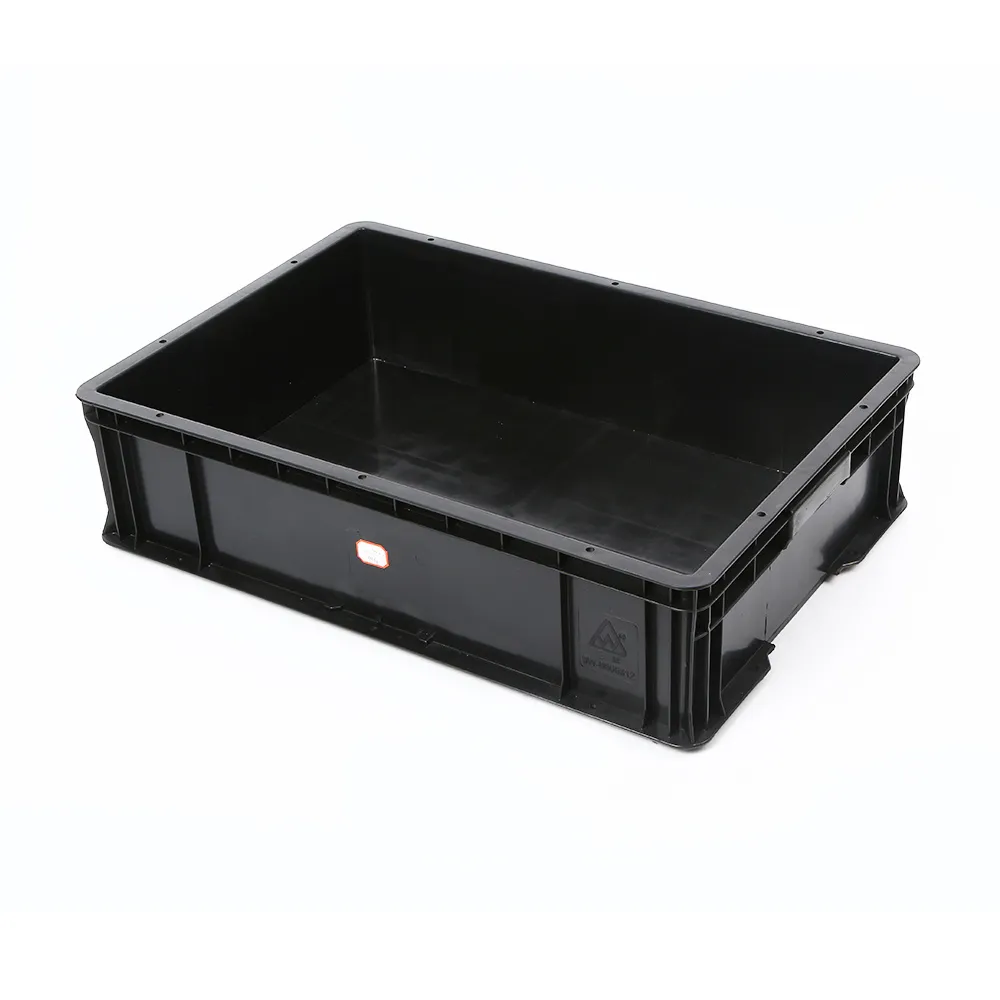
Parte 1. Separe os nomes da tarefa ao lado da linha
Tote, transportador, caixa e recipiente podem todos descrever contentores ESD, mas orientam decisões operacionais diferentes. Uma tote geralmente acompanha o material entre pontos definidos. Um transportador geralmente suporta uma peça de trabalho específica enquanto ela se move.
Uma caixa geralmente mantém as peças visíveis e acessíveis no ponto de uso. Uma caixa pode ser qualquer recinto, portanto o seu papel precisa de mais detalhes.
A etiqueta sozinha não é uma regra de seleção. Comece pelo que o operador deve fazer: levar uma placa a uma estação nomeada, apresentar hardware reabastecível numa estação de trabalho, segregar um lote ou devolver equipamento vazio. Depois, registe o item, o lado de acesso, o método de identificação, o remetente, o destinatário e a ação de devolução.
| Termo neste guia | Tarefa principal ao lado da linha | Decisão de documentar | Não presumir |
|---|---|---|---|
| Tote | Movimento definido entre pontos | O que pode entrar, para onde vai e quem o recebe | Uma classificação de carga ou adequação ao transporte |
| Transportador | Suporte para uma peça nomeada durante um movimento ou transição | Envelope da peça, pontos de contacto e regra de transição | Que aceita peças soltas não relacionadas |
| Caixa (Bin) | Apresentação acessível no ponto de utilização | Acesso de recolha, reabastecimento, identificação e segregação | Que uma caixa de linha de montagem é uma rota de movimento |
| Caixa | Invólucro ou contentor geral | Se o trabalho real é o movimento, armazenamento, apresentação ou segregação | Que o nome confirma a adequação operacional |
Parte 2. Use uma tote ou transportador para uma mudança definida
Um contentor (tote) é útil quando o processo necessita de um movimento nomeado em vez de armazenamento aberto. Defina o item permitido ou o estado do WIP (trabalho em curso), ponto de partida, destino, identificador de rota, responsável pela receção e ação de exceção antes de o contentor sair da origem. Isso transforma um contentor num elemento controlado do procedimento de fluxo de materiais do comprador.
Para um transportador, a primeira questão é a peça. Um PCB, painel ou outro item pode necessitar de suporte específico, orientação ou separação que os componentes soltos não necessitam. O comprador deve verificar o envelope da peça e as condições de contacto pretendidas durante uma revisão de utilização de amostra, em vez de assumir que uma categoria de produto geral responde a essas perguntas.
O movimento ainda precisa de um responsável em ambas as extremidades. O relacionado regras controladas de transição de WIP mostram porque a chegada não é o mesmo que a aceitação. Um contentor ou transportador pode ostentar o identificador do comprador, mas a instrução de trabalho e o registo associado continuam a ser responsáveis pelo estado de libertação e pela rastreabilidade.
Parte 3. Use uma caixa para apresentação no ponto de uso
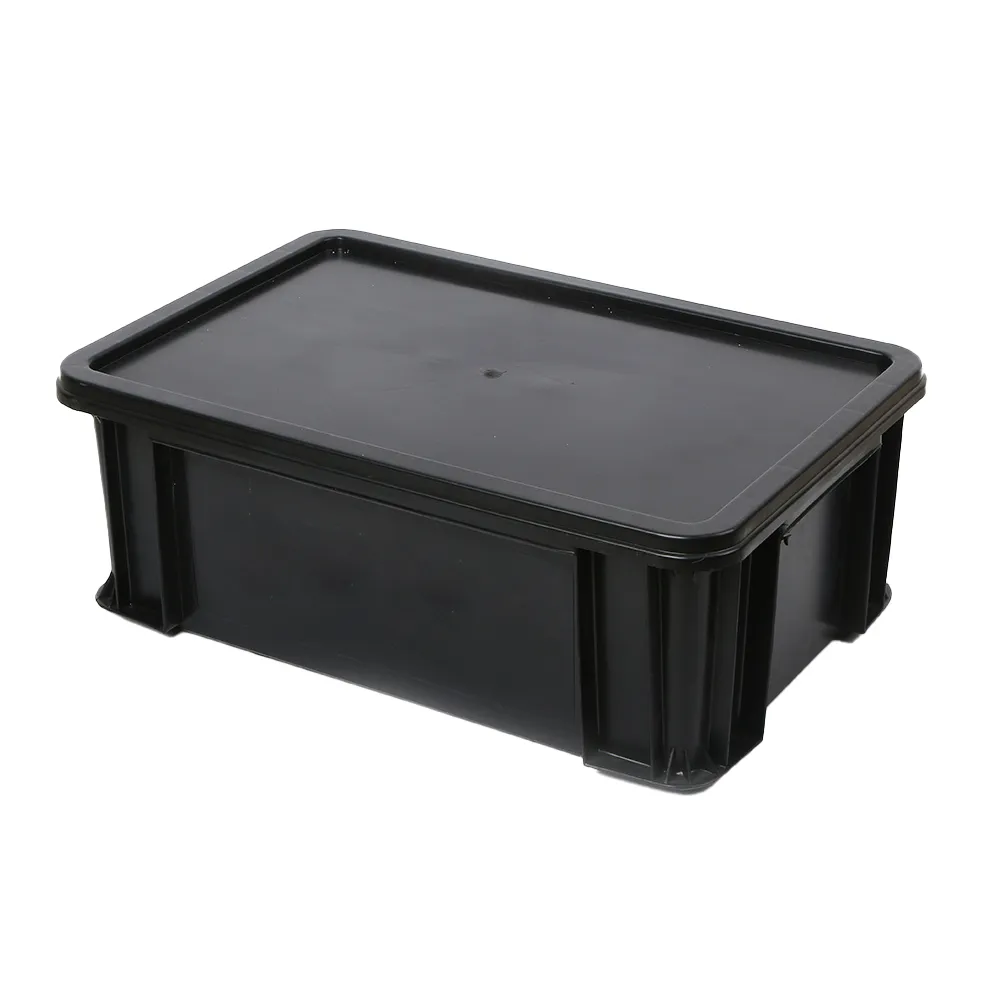
Num posto de trabalho, uma caixa (bin) geralmente ganha o seu lugar através do acesso. O operador deve ser capaz de ver, recolher, reabastecer e identificar o material pretendido sem transformar o local numa área de retenção sem dono. Isto torna uma caixa uma boa candidata quando a peça permanece perto do ponto de consumo e o processo tem uma regra de reabastecimento.
A apresentação precisa dos seus próprios controlos. Cada caixa deve corresponder a um item definido, regra de lote, campo de etiqueta ou sinal de reabastecimento escolhido pelo comprador. Onde os componentes necessitam de separação deliberada, o lista de verificação de RFQ de segregação de componentes ajuda a enquadrar as questões de layout da célula; um layout de divisor não substitui a regra de identificação.
| Se a necessidade principal é… | Comece por considerar… | Depois defina… |
|---|---|---|
| Repetir a seleção numa estação de trabalho | Um recipiente | Acesso, sinal de reabastecimento, identificação do item e segregação |
| Mover material para um destino nomeado | Um contentor | Rota, remetente, destinatário, identificador e ação de exceção |
| Apoiar uma placa ou peça de trabalho específica | A carrier | Envelope, orientation, support points, and handoff procedure |
| Holding a defined item while its role is still unclear | A box only after the role is specified | Whether movement, presentation, storage, or segregation is required |
Parte 4. Mantenha o papel da caixa específico
“Box” can describe a physical form without saying how the line will use it. A box may serve as a tote in a defined return loop, as a line-side container after a replenishment rule is set, or as an enclosure with dividers for controlled segregation. Those are different operating roles even when the same family name appears in a catalogue.
Do not use a general box name to skip the decision. If the team needs movement, document the route. If it needs point-of-use access, document the bin rule.
If the item needs workpiece-specific support, document the carrier review. For material and EPA context, use the related armazenamento e preparação de materiais e EPA after the operational job is defined.
Da Sanwei Solução de caixas ESD e tabuleiros ESD lists material options, customizable resistance range, custom dimensions, compartments, dividers, and labels. The Família de produtos Sanwei ESD Box lists covers, partitions, labels, and slots on selected models. Treat those as configuration topics to confirm for a selected request, not as evidence that every box fits every line task.
Parte 5. Controle o reabastecimento, identificação e devoluções
The choice only works when the loop around the container is clear. A tote that returns empty can carry an obsolete label; a bin can contain mixed material after an unrecorded replenishment; a carrier can arrive at the wrong station without a receiving check. Establish a simple rule for every transition.
| Ponto de controlo | Buyer-defined question | Example action |
|---|---|---|
| Fill or load | What item or state may enter? | Confirm the identifier and permitted content |
| Departure or replenishment | Where is it going, or which station is it serving? | Send to the named point or replenish the named bin |
| Receipt or use | Who accepts the item or maintains the bin? | Accept, replenish, redirect, or stop for clarification |
| Exceção | What happens if identification is missing or content is mixed? | Move to the documented exception action |
| Empty return | How is the container reassigned for reuse? | Follow the buyer’s return and reuse rule |
A physical container should not be the only signal. Color, location, or a label can support the buyer’s procedure, but they do not independently establish content status or traceability. When a return loop is used, remove or update obsolete route information according to the site’s work instruction before the container re-enters service.
Parte 6. Confirme a configuração e a evidência ESD
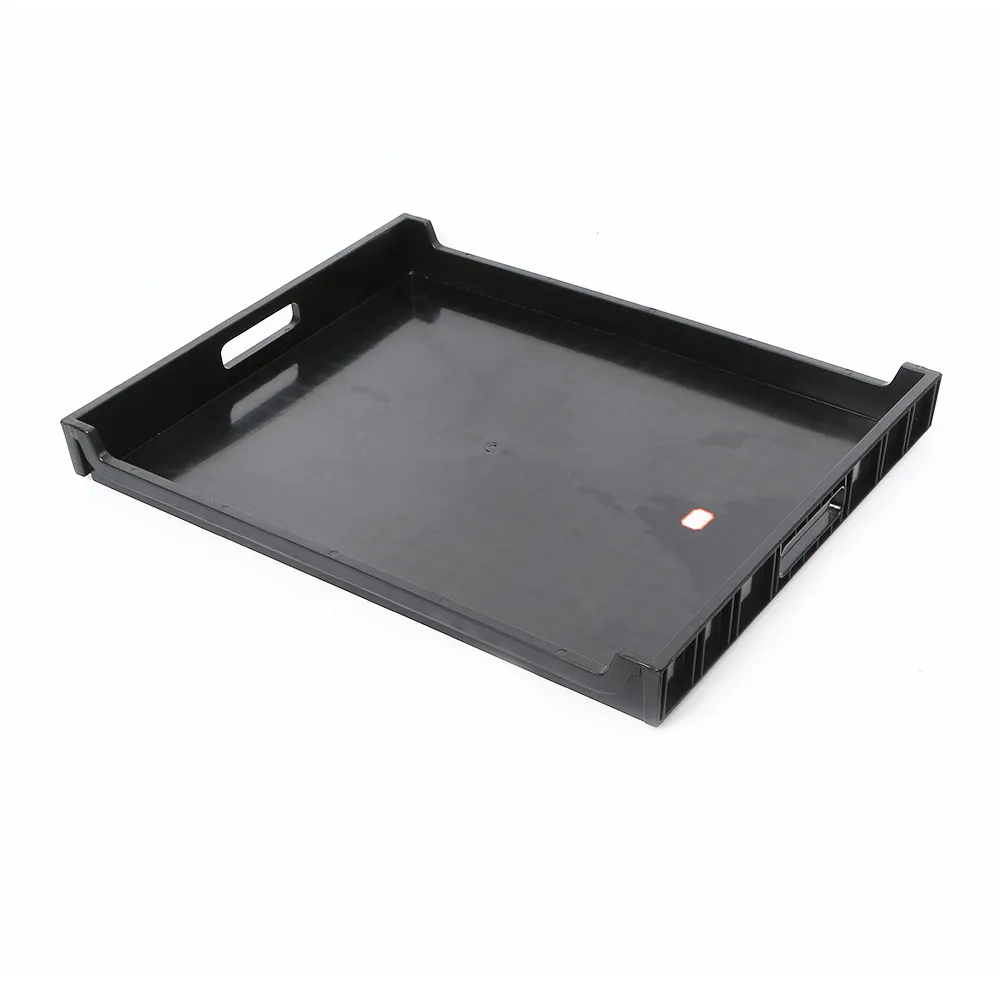
After the job is documented, review the physical configuration. The item or workpiece envelope, access direction, required separation, label position, route interface, and intended user action determine what needs confirmation. A photo or family name does not establish those details for a specific line.
Use the buyer’s ESD-control program to state the material requirement, test method, conditions, test locations, and acceptance evidence needed for the selected configuration. IEC 61340-5-1 e Informações sobre as normas da ESD Association provide program context; neither source approves a particular container or handling workflow.
Keep unverified commercial and performance points outside the article and RFQ assumptions. Confirm any load requirement, transport requirement, MOQ, price, lead time, and model-specific evidence directly for the selected request. The supplier can respond to a defined configuration; the buyer retains responsibility for the line procedure and acceptance criteria.
Parte 7. Preparar o pedido de cotação (RFQ) e a avaliação da utilização de amostras
An effective RFQ describes the job before the product name. It gives Sanwei enough context to discuss a selected configuration while keeping the buyer’s process ownership clear.
| Informações para o pedido de cotação (RFQ) ou utilização de amostras | O comprador deve definir |
|---|---|
| Item or workpiece | Part type, envelope, contact constraints, and required orientation |
| Line-side job | Movement, workpiece support, point-of-use presentation, enclosure, or segregation |
| Route or workstation | Source, destination, access point, receiving owner, and replenishment method |
| Identificação | Label, traveler, work order, or electronic-record connection used by the buyer |
| cURL Too many subrequests by single Worker invocation. To configure this limit, refer to https://developers.cloudflare.com/workers/wrangler/configuration/#limits | cURL Too many subrequests by single Worker invocation. To configure this limit, refer to https://developers.cloudflare.com/workers/wrangler/configuration/#limits |
| Configuração | cURL Too many subrequests by single Worker invocation. To configure this limit, refer to https://developers.cloudflare.com/workers/wrangler/configuration/#limits |
| Evidências ESD | cURL Too many subrequests by single Worker invocation. To configure this limit, refer to https://developers.cloudflare.com/workers/wrangler/configuration/#limits |
| Revisão da utilização das amostras | cURL Too many subrequests by single Worker invocation. To configure this limit, refer to https://developers.cloudflare.com/workers/wrangler/configuration/#limits |
| Planeamento de quantidades | cURL Too many subrequests by single Worker invocation. To configure this limit, refer to https://developers.cloudflare.com/workers/wrangler/configuration/#limits |
Recomendação de produto
Utilize Família de produtos Sanwei ESD Box cURL Too many subrequests by single Worker invocation. To configure this limit, refer to https://developers.cloudflare.com/workers/wrangler/configuration/#limits Contactar a Sanwei cURL Too many subrequests by single Worker invocation. To configure this limit, refer to https://developers.cloudflare.com/workers/wrangler/configuration/#limits.
Ajustar Limite
| Situação do comprador | Percurso adequado | Evitar |
|---|---|---|
| cURL Too many subrequests by single Worker invocation. To configure this limit, refer to https://developers.cloudflare.com/workers/wrangler/configuration/#limits | Define a tote route with sender, receiver, and exception rule | Treating a point-of-use bin as an unowned transport queue |
| Repeated workstation picking | Define a bin with access and replenishment controls | Moving a mixed bin between stations without a route rule |
| Workpiece-specific handling | Review a carrier against the actual workpiece and use scenario | Treating a carrier as a general loose-parts container |
| General enclosure request | Define what the box must do before choosing a configuration | Assuming “box” describes the required line function |
| Requisitos de ESD | State the buyer’s test and evidence requirements | Inferring acceptance from an image or category name |
FAQ
What is an ESD tote used for?
An ESD tote can be used as a controlled container for a defined movement or handoff. The buyer should define permitted content, route identification, sender, receiver, exception action, and return rule.
What is the difference between an ESD tote and an ESD bin?
The usual operational difference is the primary job. A tote supports a defined move between points, while a bin supports accessible point-of-use presentation. Supplier naming can overlap, so confirm the selected role in the work instruction.
When should components stay in a line-side bin?
Keep components in a line-side bin when the primary need is visible, accessible picking at a defined workstation and the process includes a replenishment, identification, and segregation rule.
Is a PCB carrier the same as a component box?
Not necessarily. A carrier may be designed around the support and orientation needs of a particular workpiece, while a component box may be intended for enclosure or segregation. Review the actual item and use scenario.
Can one container serve movement and point-of-use storage?
It can only do so under a clear buyer-defined procedure that controls content, identification, receiving, replenishment, and return. One physical container does not remove the need to separate those operating rules.
How should empty containers return to the line?
Use a documented return loop. Identify the empty container as route equipment, remove or update obsolete information as required by the site procedure, and complete the buyer’s reuse check before the next assignment.
What ESD information should be requested for a container?
Request the material requirement, electrical target, test method, test conditions, test locations, and evidence format required by the buyer’s ESD-control program for the selected configuration.
What should a tote, carrier, or bin RFQ include?
Include the line-side job, item or workpiece details, movement or access rules, identification method, return logic, configuration needs, ESD requirement, sample-use acceptance criteria, and quantity bands.

Deixar uma resposta