- Turbo
- Blog
ESD floor tape identifies a controlled boundary, aisle, workstation zone, or handling instruction in an electrostatic protected area. It is primarily a communication and floor-marking product; it does not by itself ground personnel, dissipate charge, or make an uncontrolled floor into an ESD control system. A successful installation connects the tape wording and color to the site’s documented rules, uses an adhesive compatible with the floor and cleaning process, remains visible under traffic, and avoids loose edges that create a safety hazard. This guide helps ESD coordinators, facility teams, and buyers specify, trial, install, inspect, and replace floor tape without confusing a visual boundary with electrical protection.
Define the message before selecting the tape
State what the line means: entry into an EPA, an aisle boundary, a keep-clear zone, a cart location, or a transition where personnel checks are required. The exact wording should match the facility control plan, signs, training, and audit language. A decorative stripe with no agreed behavior does not create control.
Limit the number of colors and messages so workers can recognize them consistently. OSHA’s archived interpretation notes that aisle lines may use different colors as long as they clearly define the aisle; local codes and current site safety requirements still govern the installation. Do not present a company color convention as a universal legal rule.

Do not confuse marking with electrical performance
Some products are marketed as antistatic or ESD tape, while others are ordinary durable floor-marking tape printed with an ESD warning. Ask which function is claimed and what evidence supports it. Regardless of material, the visible line alone does not provide the grounding, footwear, flooring, work-surface, ionization, packaging, or personnel controls required by the ESD plan.
If the tape crosses or covers a functional ESD floor, assess whether its insulating area, adhesive residue, wear, or layout affects the approved system. The ESD coordinator and facilities owner should approve the detail. Do not extrapolate a surface claim from a small tape sample to the behavior of the entire floor-personnel system.
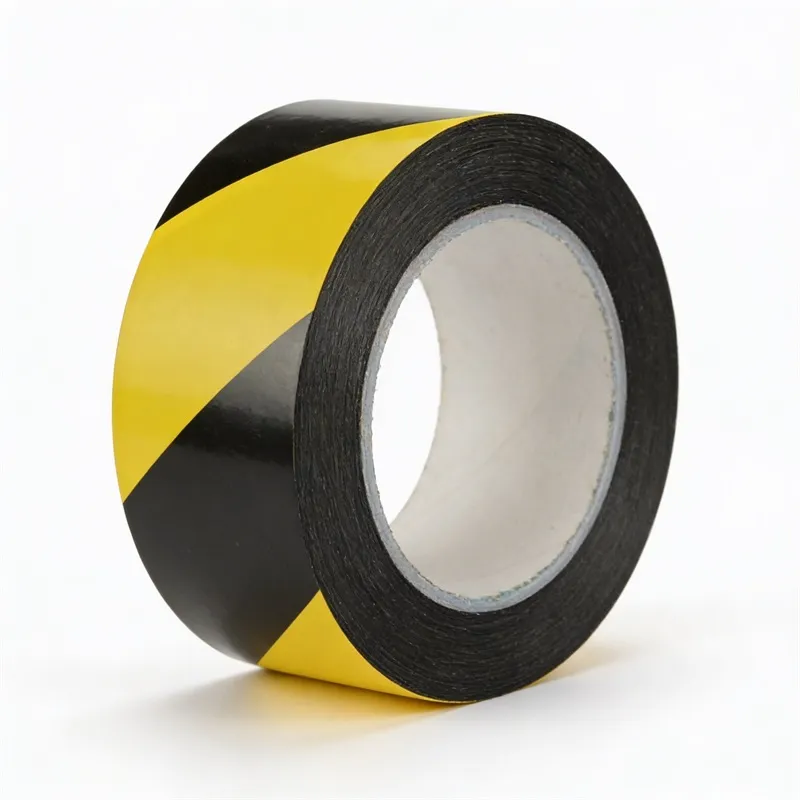
Match backing and adhesive to the floor
Document floor material, coating, texture, porosity, age, condition, cleaning chemistry, temperature, moisture exposure, and traffic. Adhesive that performs on smooth sealed concrete may behave differently on textured tile, epoxy, worn coatings, or contaminated surfaces.
Use a representative installation trial. Check initial placement, edge lift, removal, residue, print wear, cleaning compatibility, turning wheels, foot traffic, and the effect of normal environmental conditions. Do not rely only on a short hand-peel test or assume that the strongest adhesive is the safest choice.

Plan the layout around work and traffic
Create a scaled layout showing boundaries, doorways, benches, exits, fire equipment, material flow, forklift routes, and floor joints. Keep markings understandable at approach distance and avoid patterns that conflict with existing safety or logistics lines. Use signs or entry instructions where a line alone cannot communicate the required action.
At corners and transitions, avoid small loose pieces and abrupt geometry that receives concentrated wheel force. Do not cover damaged flooring or use tape as a substitute for repair. OSHA requires walking-working surfaces to be maintained in a clean and orderly condition; raised edges, wrinkles, and debris should be corrected promptly.
Inspect and replace before the boundary becomes ambiguous
Set routine checks for adhesion, edge lift, wrinkles, tears, dirt, print legibility, missing sections, adhesive residue, and conflict with changed layouts. Define who can repair the line and how temporary gaps are controlled. Random patching with a different color or wording can weaken the visual system.
Replacement timing should follow observed condition and risk rather than a universal service-life claim. Record recurring failure locations. Turning wheels, floor joints, harsh cleaning, oil, moisture, or poor preparation may require a different construction or layout—not simply more frequent replacement.
Selectie- en kwalificatietabel
| Planning item | Decision to document | Acceptance check |
|---|---|---|
| Boundary meaning | EPA entry, aisle, keep-clear or equipment zone | Matches procedure and signage |
| Floor condition | Material, coating, texture and contamination | Representative adhesion trial |
| Traffic | People, carts, pallet jacks or forklifts | Wear and edge-lift observation |
| Tape construction | Backing, adhesive, width, print and color | Approved sample and label |
| Maintenance | Cleaning method and inspection owner | No loose edges or unreadable message |
| Change control | Who can move or repair markings | Updated layout and training |
Voer een gecontroleerde nulserieproef uit
Gebruik een gedocumenteerd monster dat de voorgestelde productieconstructie vertegenwoordigt. Vergelijk dit met het huidige goedgekeurde item, indien dat aanwezig is. Leg identificatie, revisie, leverancierspartij, omgevingsomstandigheden, apparatuur, operators en observaties vast. Een proef moet ontvangst, opslag, voorbereiding, normaal gebruik, reiniging waar van toepassing, en afvoer of retour omvatten. Stop de proef als het item een product beschadigt, verontreiniging veroorzaakt, interfereert met apparatuur, of in conflict is met de ESD- of veiligheidsprocedure.
Scheid goedkeuringscriteria van observaties. Afmetingen, etikettering, pasvorm, vakmanschap, materiële bewijzen en functioneel gedrag kunnen verschillende controles vereisen. Los afwijkingen op voordat productiehoeveelheden worden goedgekeurd, en bewaar de gecontroleerde tekening, het rapport en het goedkeuringsmonster. Vereist melding door de leverancier voorafgaand aan een wijziging in materiaalbron, additief, lijm, constructie, gereedschap, proces of kritische afmeting.
Inkomende inspectie en doorlopende controle
- Controleer of het artikel, de revisie van de tekening, de hoeveelheid, de leverancierslot en het verpakkingsetiket overeenkomen met de bestelling.
- Inspecteren op verontreiniging, beschadiging, slechte afwerking, onjuiste afmetingen en ontbrekende identificatie.
- Voer de overeengekomen bemonstering en verificatie uit met een gedocumenteerde methode en gekalibreerde apparatuur waar meting vereist is.
- Quarantaine onverklaarbare veranderingen in kleur, geur, textuur, kleverigheid, pasvorm, wikkeling, geometrie of prestaties.
- Houd acceptatieregistraties bij en koppel klachten of storingen aan de betreffende lotgrootte.
- Herzie de specificatie wanneer het product, de apparatuur, de route, de reinigingsmethode of het beheersplan verandert.
Offerteaanvraagchecklist voor kopers
Vermeld de toepassing, beschermingsgrens, uitrusting- of onderdeelinterface, afmetingen en toleranties, materiaalsamenstelling, vereiste functie, testmethode en acceptatiecriteria, reinheids- en afwerkingsvereisten, verpakking, etikettering, traceerbaarheid, monsterhoeveelheid, verwachtingen voor het eerste artikel, documentatie, wijzigingsmelding en leveringshoeveelheid. Verwijs naar de SWESD ESD floor marking tape product voor het momenteel weergegeven producttype, en gebruik de SWESD-productcentrum om dit te coördineren met aanverwante behandelingsapparatuur.
Vraag de leverancier om aannames en voorbehouden op te sommen. Vermijd het overnemen van niet-gecontroleerde catalogusclaims in een beheerde specificatie. Technische limieten, certificeringen en nalevingsverklaringen moeten worden getoetst aan het daadwerkelijk geleverde item en de toepassing van de koper.
Vergelijk monsters onder dezelfde omstandigheden
Een nuttige vergelijking verandert één beslissing tegelijk. Gebruik dezelfde representatieve onderdelen, operators, apparatuur, route, reinigingsvoorbereiding en observatieperiode voor elke kandidaat. Voorzie monsters van een label zodat reviewers de identiteit van de leverancier, revisie of testvolgorde niet verwarren. Neem, waar praktisch, het goedgekeurde item van dat moment op als referentiekader. Registreer zowel het succesvolle gedrag als het werk dat nodig was om dat te bereiken, zoals extra afstelling, herhaalde reiniging, langzamere hantering of tussenkomst van de operator.
Combineer elektrische, mechanische, reinigheids- en commerciële conclusies niet tot één vaag score. Een kandidaat past misschien goed, maar mist aantoonbaar materieel bewijs, of heeft sterke documentatie maar presteert slecht in de machine. Houd afzonderlijke slaapcriteria aan voor veiligheid, ESD-besturing, productbescherming, apparatuurcompatibiliteit, vervuiling, bruikbaarheid, documentatie en levensduurkosten. Een harde fout moet worden opgelost in plaats van verborgen te worden door een hoge gemiddelde score.
Commerciële vergelijking moet gebruikmaken van de kosten van een voltooid en geaccepteerd proces, niet alleen de prijs per stuk. Neem hierin op: inspectie-inspanning, omsteltijd, uitval, reiniging, vervanging, stilstandsrisico, retourlogistiek, documentatie en het effect van inconsistente lots. Deze factoren rechtvaardigen niet het verzinnen van een levensduurclaim; ze helpen de koper bij het ontwerpen van een proef die de omstandigheden meet die daadwerkelijk kosten veroorzaken.
Gerelateerde SWESD-planningsbronnen
- reviewing ESD-safe tapes used in SMT areas
- planning grounded ESD workstation surfaces
- using precise ESD procurement language
Educational video: Fundamentals of Electrostatic Discharge by Maxim Integrated
This educational video explains the hazard controlled inside an EPA and reinforces why a marked line is only one part of the control system. The written guide remains complete without the video.
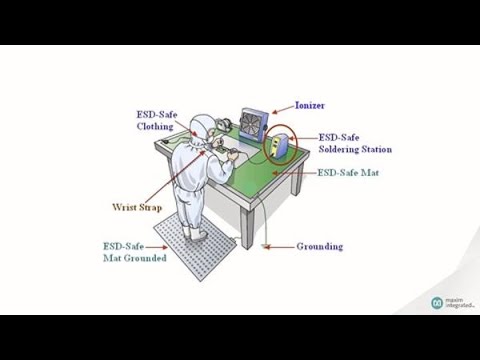
Open this video from Maxim Integrated on YouTube.
Veelgestelde vragen
Does ESD floor tape ground people or equipment?
No. Floor tape normally identifies a boundary or instruction. Grounding and charge control require the separately approved systems in the facility ESD plan.
Must all ESD floor tape be yellow?
No universal color rule should be assumed. Use a documented site convention that remains clear and does not conflict with applicable safety requirements.
How should adhesion be approved?
Install a representative trial on the actual cleaned floor and observe edge lift, residue, cleaning, traffic, print wear, and removal.
When should floor tape be replaced?
Replace it when adhesion, damage, contamination, missing sections, or poor legibility makes the boundary unclear or creates a walking-surface risk.

Plaats een reactie