- Turbo
- Blog
An ESD foam material change notification should trigger a comparison with the approved packaging configuration before the changed material enters normal use. Identify what changed, which deliveries are affected, which protection functions might be affected, and who can authorize the transition. A familiar color, unchanged purchase code or matching sheet thickness does not establish equivalence. Keep the proposed material identifiable while engineering and the ESD program owner decide which previous evidence remains applicable and what needs checking again.
This guide concerns a change to a previously approved foam supply. It is different from routine lot receiving inspection or choosing a first supplier. Use the actual purchase specification, component sensitivity and handling route as the decision basis; there is no universal test package that proves every foam suitable for every electronic assembly.
Define the approved baseline before reviewing the change
Start with the configuration your facility actually approved. Retrieve its material description, supplier and manufacturing source, drawing or cut pattern, thickness, supporting test reports, packaging arrangement and release conditions. If approval only covers cushioning within an EPA, do not silently extend it to unprotected shipping. A review cannot compare a proposal with a baseline that nobody can identify.
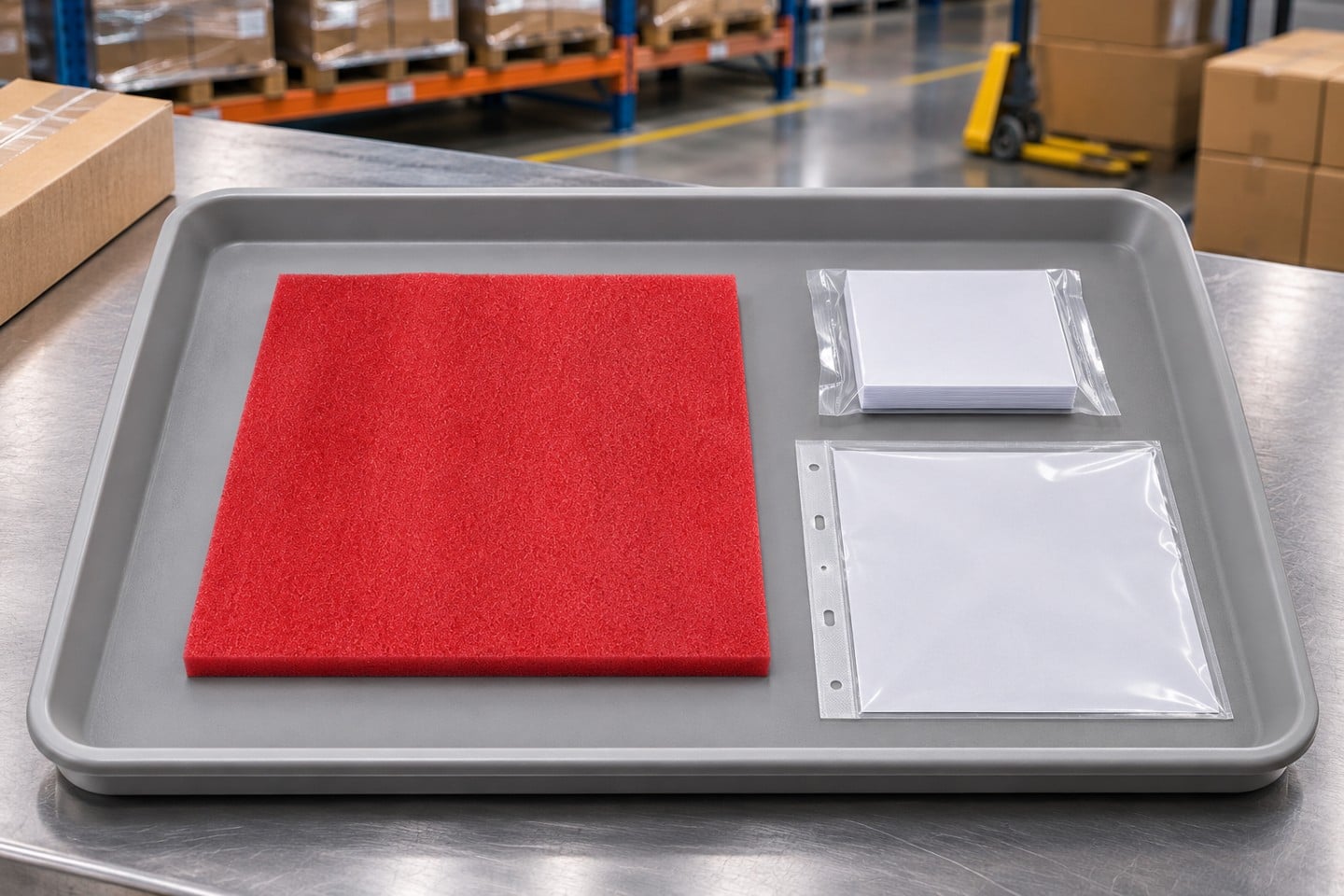
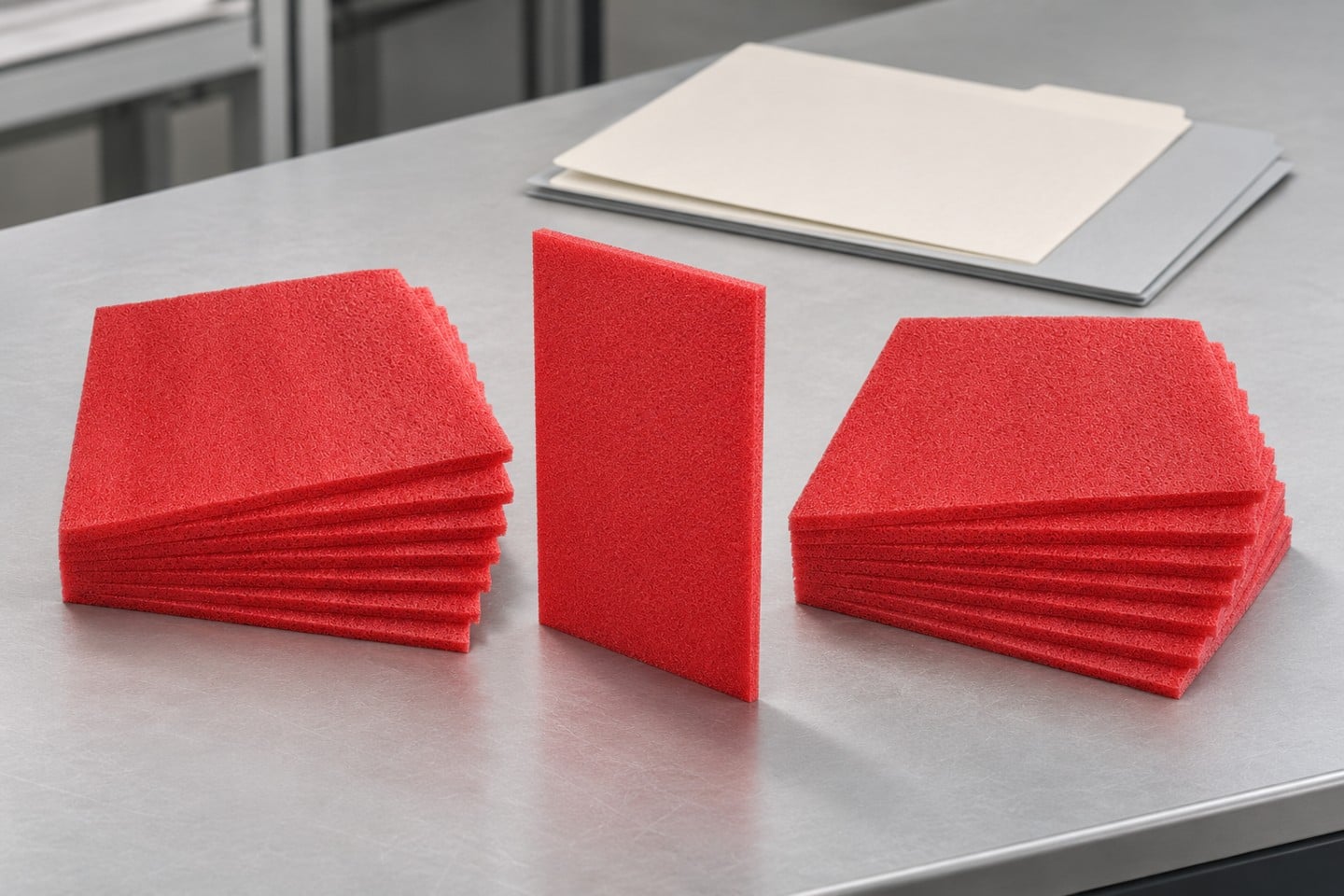
The SWESD ESD foam sheet range includes named material options, but the product family name is not a single interchangeable specification. Ask for the exact proposed variant and supporting information. Our ESD foam packaging guide explains broader packaging decisions; the change review should concentrate on the differences from your accepted configuration.
Preserve a reference sample when it is useful and representative. Record how it was stored and what it represents. An aged, compressed or unidentified sample can mislead a comparison. Documents and samples should agree on identity, yet neither should be treated as a substitute for application evidence.

Ask the supplier to describe the difference explicitly
A useful notice says more than “equivalent material.” Request a before-and-after description, reason for change, affected item numbers, proposed implementation point and sample availability. Relevant differences can include the base material, additive system, manufacturing site, conversion method, adhesive, surface treatment or packaging protection. These are review prompts, not a claim that every change has the same consequences.
For example, a supplier may retain an ordering code while moving production. Ask whether formulation, processing and inspection remain the same, which records establish that assertion, and how delivered lots will distinguish the transition. If information is commercially restricted, agree on sufficient controlled evidence rather than guessing the undisclosed composition.
Separate known differences from unanswered questions. A statement that dimensions are unchanged answers a dimensional question. It does not answer whether contact compatibility, electrical behavior or particle generation remains within your requirements. Assign each open question to the person who can resolve it and keep delivery acceptance separate from commercial urgency.
Map changes to the functions that matter
The Perbincangan Persatuan EOS/ESD mengenai prosedur kawalan asas dan bahan describes packaging as part of an ESD control program. Use that distinction when deciding whether a foam is being relied on for contact behavior, cushioning, separation or another specified function. Do not assume cushioning foam supplies the shielding needed elsewhere in the package.
The following table is a practical review aid. It contains no universal acceptance limits and does not replace the applicable specification. Choose checks for the actual change and intended use, document why they are relevant, and identify who will interpret the results.
| Soalan perubahan | Bukti untuk diminta | Keputusan untuk mendokumentasikan |
|---|---|---|
| Formulation or material family | Identified before-and-after construction | Which approved functions need reassessment |
| Manufacturing source | Site identity and applicable process information | Whether existing reports cover the new supply |
| Cut geometry or thickness | Drawing revision and representative fit observations | Support and contact acceptance for the actual part |
| Adhesive or contact surface | Exact contact construction and relevant compatibility evidence | Permitted contact and limitations |
| Implementation point | Affected lots and delivery identification | Release scope and transition controls |
Mechanical and electrical questions may need different reviewers. A foam that holds the part securely can still lack evidence for an electrical requirement. Conversely, an acceptable electrical report does not prove that a revised cavity supports the component without loading fragile features. Agree on the combined decision before placing production material in the proposed insert.
Bina pelan perbandingan yang fokus
Write the question each check will answer. “Evaluate new foam” is too broad. “Confirm the revised cut construction still supports this assembly without contact on the connector” is a reviewable question. Specify the assembly or representative surrogate, package configuration, conditioning where relevant, method, observations and decision criteria before the trial begins.
Where electrical testing is required, use the applicable approved method and conditions, with appropriate equipment and competent interpretation. Ask whether a supplier report covers the exact construction being delivered. Do not transfer a result from one material thickness, surface or conditioning history to another without a documented basis. Do not invent a resistance limit from an “anti-static” label.
Consider changes in handling as well as material. An otherwise similar foam used for repeated returns may need evidence different from a single journey insert. The foam compression-set review addresses repeated mechanical support, while our foam corrosion compatibility guide concerns sensitive metal contact. Use those complementary checks only where the change could affect them.
Keep the trial interpretable
cURL Too many subrequests by single Worker invocation. To configure this limit, refer to https://developers.cloudflare.com/workers/wrangler/configuration/#limits.
cURL Too many subrequests by single Worker invocation. To configure this limit, refer to https://developers.cloudflare.com/workers/wrangler/configuration/#limits.
cURL Too many subrequests by single Worker invocation. To configure this limit, refer to https://developers.cloudflare.com/workers/wrangler/configuration/#limits.
cURL Too many subrequests by single Worker invocation. To configure this limit, refer to https://developers.cloudflare.com/workers/wrangler/configuration/#limits
cURL Too many subrequests by single Worker invocation. To configure this limit, refer to https://developers.cloudflare.com/workers/wrangler/configuration/#limits.
cURL Too many subrequests by single Worker invocation. To configure this limit, refer to https://developers.cloudflare.com/workers/wrangler/configuration/#limits cURL Too many subrequests by single Worker invocation. To configure this limit, refer to https://developers.cloudflare.com/workers/wrangler/configuration/#limits cURL Too many subrequests by single Worker invocation. To configure this limit, refer to https://developers.cloudflare.com/workers/wrangler/configuration/#limits.
Decide what happens to remaining old stock. It may remain acceptable for its original approved use, require separation for a specific customer, or need another disposition. A new-material approval does not automatically invalidate old stock. Equally, consuming old stock first must not conceal the date when changed material begins reaching a controlled customer application.
Record the decision and its limits
The approval record should identify the exact material and change, evidence reviewed, unresolved items, permitted application and release authority. If approval is conditional, state the condition and how it will be checked. A trial quantity approved for one assembly should not become unrestricted stock merely because the delivery note was marked received.
NASA’s ESD control handbook provides engineering context for an organized ESD control program. It is not a certificate for a commercial foam product. Use your applicable contractual and program requirements to decide whether the change affects qualification, verification, documentation or training.
Close the review by updating the material specification, work instructions and purchasing reference where needed. Make the accepted revision findable at the point of use. Keep the superseded baseline accessible for traceability, with its status clear, rather than leaving operators to choose between conflicting documents.
Prepare a change-review request that can be answered
Send SWESD the current approved item description, proposed application, relevant drawing or photographs, quantities, intended handling route and the information needed for your review. Identify the properties that are essential to your process and request available evidence for the proposed variant. Avoid sending confidential assembly information beyond what is necessary to explain support and contact requirements.
Ask how future changes will be communicated and linked to orders. Agree the notification route and required information within the purchasing arrangement; this guide does not prescribe a universal notice period. If supply is urgent, discuss an identified sample or controlled trial with the responsible technical owner instead of treating urgency as equivalence.
For the first released delivery, confirm that the supplied identity matches the reviewed proposal and that any conditions are visible to receiving and production. Schedule a proportionate follow-up based on the identified risks. The practical outcome is a traceable transition with a clear permitted use, rather than a folder of reports disconnected from the foam on the shelf.
Educational background for the ESD review
The following EOS/ESD Association lecture introduces electrostatic-control concepts that help explain why packaging material changes require technical review. It does not provide a foam change-approval method or demonstrate the electrical performance of the illustrated sheets. Use it as supporting education alongside the site-specific comparison plan.
Soalan Lazim
Does the same ordering code prove equivalent foam?
No. Compare the delivered construction and evidence with the approved baseline.
Must every change trigger every possible test?
No. The responsible technical owners should define checks for the actual change and intended use.
Can a trial approval release all applications?
Only if the recorded scope explicitly covers them; a limited trial does not establish unrestricted approval.
Does approval of new foam automatically reject old stock?
No. Decide the disposition of old stock according to its existing approval and customer requirements.
Can color prove electrical protection?
No. Use appropriate specification and performance evidence for the identified construction.

Tinggalkan Balasan