- Turbo
- Blog
A cleanroom sticky mat removes loose particles from footwear and cart wheels at a controlled transition, but it cannot compensate for poor gowning, inadequate housekeeping, or uncontrolled material flow. Selection requires more than choosing a color and nominal size. Buyers should define the entry route, traffic, wheel geometry, floor finish, tack level, layer construction, packaging cleanliness, removal method, and evidence used to decide when a layer is spent. Placement and operator behavior then determine whether users make enough contact without creating a slip, trip, residue, or congestion problem. This guide provides a practical specification, installation, inspection, and replacement framework for electronics and clean manufacturing areas.
Map the transition and contamination route
Identify which doorway, airlock, pass-through or material entrance the mat supports and what crosses it. Footwear traffic differs from narrow cart wheels, pallet jacks or heavy equipment. Record direction of travel, peak traffic, available floor area, cleaning schedule and whether users can pause without blocking an exit.
A sticky mat collects only material that contacts its tacky surface and releases under the applied load. It is one control in a broader zoning plan. Keep gowning, hand hygiene, packaging, wheel cleaning, pressure differentials and room cleaning under their own procedures.

Select dimensions from stride and wheel contact
Choose length and width so normal users and approved carts make repeated full contact before entering the cleaner zone. A small mat that can be stepped over or avoided will not provide consistent control. Larger dimensions may improve coverage but can interfere with doors, turning paths or emergency access.
For carts, evaluate every wheel path and turning behavior. Narrow casters can concentrate load, tear a layer or track adhesive. Heavy equipment may require another engineered cleaning approach. Trial the real footwear and wheels rather than relying on a catalogue photograph.

Balance tack, release and surface compatibility
Higher tack is not automatically better. Excessive adhesion can pull shoe covers, affect gait, lift weak floor coatings, transfer residue or damage wheels. Too little tack may fail to retain loose particles. Request a representative sample and test under the actual temperature, humidity, traffic and cleaning conditions.
Review base adhesion and peel behavior separately from the exposed collection surface. The base must remain flat without leaving unacceptable residue when removed. Confirm compatibility with sealed concrete, epoxy, tile or other actual floor finish and with approved cleaning agents.

Install and peel layers without spreading debris
Prepare the floor using the approved procedure and let it dry. Position the mat square to travel, smooth it flat and keep every edge secure. Do not bridge joints, damaged flooring or moisture. Mark the intended crossing route where needed and train users not to jump over the mat.
When a layer is loaded, control the peel so captured particles remain on the removed sheet. Avoid snapping or shaking it. Fold the dirty surface inward, dispose of it under the facility waste rule and confirm the next layer is intact. Numbered layers support traceability but do not replace a condition-based rule.
Inspect performance and set replacement criteria
Check surface loading, tears, wrinkles, lifting edges, transferred residue, missed wheel paths and changes in user behavior. A dirty layer may still look tacky while redepositing particles; a visually clean layer may be damaged by a wheel. Define who can peel a layer and how that action is recorded.
Replace the entire mat when layers are exhausted, the base moves, edges remain unsafe, residue cannot be controlled, the product is contaminated outside its intended use, or performance no longer meets the approved observation method. Never promise a fixed number of crossings without trial evidence.
Jadual kawalan praktikal
| Selection field | Buyer decision | Qualification check |
|---|---|---|
| Lokasi | Entry, airlock or material transition | Route observation |
| Traffic | People, carts and peak crossings | Representative trial |
| Size | Required foot and wheel contacts | Floor layout and crossing test |
| Tack | Particle pickup without unsafe pull | Footwear and wheel compatibility |
| Layers | Count, numbering and peel design | Controlled peel trial |
| Floor interface | Finish, cleaner and residue limit | Installation and removal test |
Bina prosedur terkawal dan sampel kelulusan
**Prosedur Tapak Ringkas** * **Pemilik:** [Namakan Pemilik] * **Bahan Diluluskan:** Rujuk sampel kelulusan atau set foto yang dikenal pasti untuk konfigurasi yang dijangkakan. * **Urutan Kerja:** Latihan dijalankan menggunakan laluan dan peralatan sebenar, diikuti dengan pemerhatian terhadap beberapa kitaran normal. * **Kriteria Lulus:** Mematuhi konfigurasi yang ditunjukkan dalam sampel atau foto yang diluluskan. * **Syarat Henti Kerja:** Sebarang penyelewengan daripada konfigurasi yang diluluskan. * **Tindakan Pembetulan & Kuarantin:** Nyatakan perkara yang boleh dibetulkan serta-merta oleh pengendali berbanding perkara yang memerlukan kuarantin dan semakan. * **Rekod:** Simpan rekod latihan, pemerhatian kitaran, dan sebarang tindakan kuarantin/semakan.
Asingkan keselamatan, kebersihan, fungsi mekanikal dan pengesahan ESD. Satu pemeriksaan visual tunggal tidak boleh merangkumi setiap risiko, dan satu bacaan elektrik tidak boleh membuktikan kebersihan atau integriti mekanikal. Apabila pengukuran diperlukan, kenal pasti instrumen, kaedah, lokasi, persekitaran dan had penerimaan. Pastikan penentukuran peralatan dan latihan kakitangan sentiasa terkini di bawah sistem fasiliti.
Pemeriksaan masuk dan kawalan perubahan
Semasa penerimaan, padankan item, kuantiti, semakan, lot pembekal dan label pembungkusan dengan pesanan belian. Periksa kerosakan, pencemaran, pengenalan yang hilang dan perbezaan yang tidak dijangka dalam warna, tekstur, geometri, bau, perkakasan atau pembungkusan. Sampel dimensi dan atribut fungsi mengikut pelan yang dipersetujui. Kuarantin perubahan yang tidak dapat dijelaskan daripada membenarkan tekanan pengeluaran mengubah pengecualian menjadi kelulusan yang tidak didokumenkan.
Memerlukan pemberitahuan sebelum sebarang perubahan pada sumber bahan, bahan tambah, pelekat, perkakas, dimensi, pencuci, binaan atau perkakasan kritikal. Kelayakan semula harus tumpu pada fungsi yang terjejas akibat perubahan tersebut tetapi tetap perlu menyemak interaksi. Pelekat yang lebih kuat mungkin menjejaskan proses penanggalan; roda baharu mungkin menjejaskan pengesanan dan laluan elektrik; pencuci baharu mungkin menjejaskan label dan kelakuan permukaan.
Percubaan kelayakan dan rekod
Jalankan percubaan di bawah keadaan persekitaran dan operasi yang mewakili. Rekodkan tarikh, lokasi, pengendali, sampel, nombor lot, peralatan, penyediaan pembersihan, laluan, pemerhatian dan sisihan. Sertakan item diluluskan semasa sebagai garis dasar jika boleh. Jangan sembunyikan kegagalan ketara di dalam skor purata. Keselamatan, perlindungan produk, pencemaran, kebolehgunaan, dokumentasi dan keperluan ESD memerlukan keputusan lulus masing-masing.
Semak keputusan selepas kitaran yang mencukupi untuk mendedahkan variasi biasa. Satu demonstrasi yang berjaya boleh terlepas perbezaan pengendali, puncak trafik, kesan kehausan, pemuatan dan pembersihan. Laporan harus menyatakan had: apa yang tidak diuji, tuntutan yang kekal sebagai pengisytiharan pembekal dan kesimpulan yang hanya terpakai kepada konfigurasi yang diuji. Simpan bukti bersama rekod item atau proses supaya pasukan masa depan boleh memahami asas kelulusan.
Audit proses selepas pelancaran
Amati proses semasa kerja biasa selepas pelancaran, bukan hanya semasa demonstrasi yang dirancang. Sahkan bahawa pengguna mengikut urutan yang diluluskan, bahan kekal tersedia, label boleh dibaca dan syarat penhentian difahami. Sampelkan rekod untuk keputusan yang hilang, kegagalan berulang dan penggantian yang tidak dapat dijelaskan. Tanya pengendali di mana prosedur itu sukar, kerana penyelesaian sementara selalunya mendedahkan masalah kesesuaian, akses, trafik atau latihan sebelum ia menjadi kecacatan produk.
Trend kegagalan mengikut item, lokasi, syif dan lot pembekal di mana rekod yang tersedia menyokong analisis tersebut. Isu berulang harus mencetuskan semakan punca, bukan sekadar penggantian yang lebih kerap. Kemas kini prosedur apabila produk, lantai, peralatan, pencuci, laluan lalu lintas, pembungkusan atau pelan kawalan berubah. Pastikan tarikh semakan sentiasa kelihatan and tarik balik salinan lapuk supaya kaedah yang diluluskan kekal jelas.
Senarai semak RFQ untuk pembeli
Nyatakan aplikasi, persekitaran, dimensi, antara muka, pembinaan, fungsi yang diperlukan, kaedah ujian, kriteria penerimaan, kebersihan, pembungkusan, pelabelan, kebolehkesanan, kuantiti sampel, dokumentasi dan pemberitahuan perubahan. Semak SWESD cleanroom sticky mat product dan Pusat produk SWESD sebagai titik permulaan; kelulusan akhir mesti sepadan dengan item yang dibekalkan dan program kawalan pembeli sendiri.
- Terangkan laluan penggunaan sebenar dan produk terlindung.
- Kenal pasti kriteria tapisan lepass dan bukti yang boleh diterima.
- Minta lukisan, bahan dan keputusan ujian yang boleh dikesan jika berkaitan.
- Tentukan kuantiti sampel dan artikel pertama sebelum pengeluaran.
- Senaraikan andaian pembersihan, pemeriksaan dan penggantian yang diluluskan.
- Perlukan pendedahan bertulis mengenai pengecualian dan perubahan.
Sumber SWESD yang berkaitan
- selecting a sticky roller for controlled surfaces
- planning sticky mat replacement frequency
- comparing sticky and tacky mat terminology
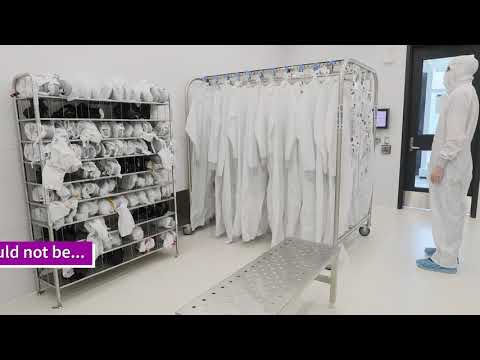
Educational video: MIT.nano Cleanroom Gowning Procedure
This neutral educational video from MIT.nano provides background for the controlled process. The written guide remains complete without it.
Soalan Lazim
How often should a sticky mat layer be changed?
Use observed loading and the approved facility rule. Traffic, contamination and wheel behavior make a universal time or crossing count unreliable.
Should a mat have the highest available tack?
No. Tack must collect particles without creating unsafe pull, residue, shoe-cover lift or wheel damage.
Can carts cross the same mat as people?
Only after a representative trial confirms size, load, wheel contact, layer durability and safe traffic flow.
Does a sticky mat replace cleanroom cleaning?
No. It is a transition control and must work with gowning, housekeeping and material-flow procedures.
Tinggalkan Balasan