- Turbo
- Blog
ESD floor tape identifies a controlled boundary, aisle, workstation zone, or handling instruction in an electrostatic protected area. It is primarily a communication and floor-marking product; it does not by itself ground personnel, dissipate charge, or make an uncontrolled floor into an ESD control system. A successful installation connects the tape wording and color to the site’s documented rules, uses an adhesive compatible with the floor and cleaning process, remains visible under traffic, and avoids loose edges that create a safety hazard. This guide helps ESD coordinators, facility teams, and buyers specify, trial, install, inspect, and replace floor tape without confusing a visual boundary with electrical protection.
Define the message before selecting the tape
State what the line means: entry into an EPA, an aisle boundary, a keep-clear zone, a cart location, or a transition where personnel checks are required. The exact wording should match the facility control plan, signs, training, and audit language. A decorative stripe with no agreed behavior does not create control.
Limit the number of colors and messages so workers can recognize them consistently. OSHA’s archived interpretation notes that aisle lines may use different colors as long as they clearly define the aisle; local codes and current site safety requirements still govern the installation. Do not present a company color convention as a universal legal rule.

Do not confuse marking with electrical performance
Some products are marketed as antistatic or ESD tape, while others are ordinary durable floor-marking tape printed with an ESD warning. Ask which function is claimed and what evidence supports it. Regardless of material, the visible line alone does not provide the grounding, footwear, flooring, work-surface, ionization, packaging, or personnel controls required by the ESD plan.
If the tape crosses or covers a functional ESD floor, assess whether its insulating area, adhesive residue, wear, or layout affects the approved system. The ESD coordinator and facilities owner should approve the detail. Do not extrapolate a surface claim from a small tape sample to the behavior of the entire floor-personnel system.
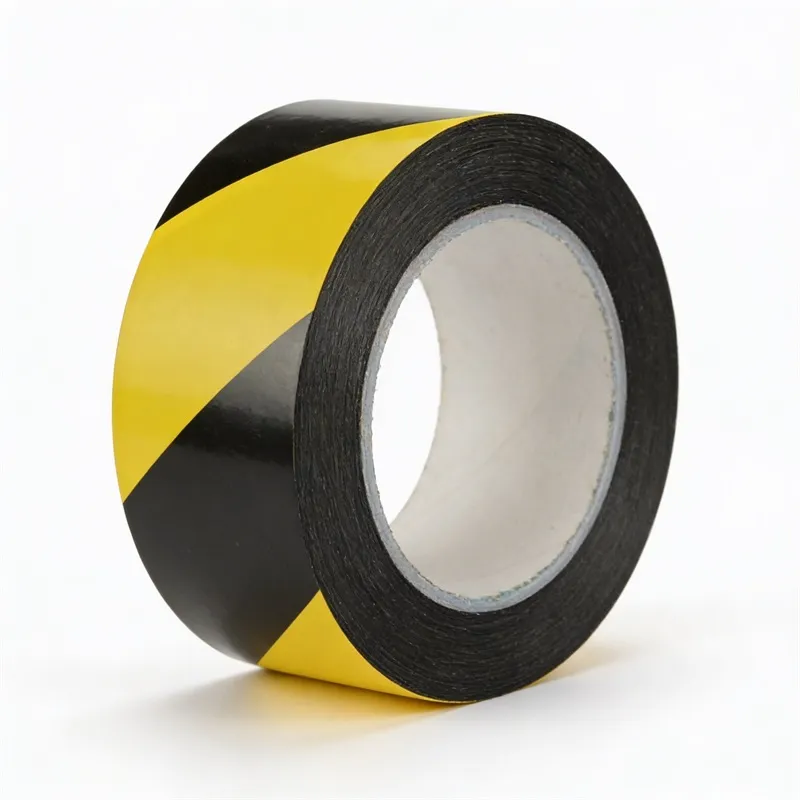
Match backing and adhesive to the floor
Document floor material, coating, texture, porosity, age, condition, cleaning chemistry, temperature, moisture exposure, and traffic. Adhesive that performs on smooth sealed concrete may behave differently on textured tile, epoxy, worn coatings, or contaminated surfaces.
Use a representative installation trial. Check initial placement, edge lift, removal, residue, print wear, cleaning compatibility, turning wheels, foot traffic, and the effect of normal environmental conditions. Do not rely only on a short hand-peel test or assume that the strongest adhesive is the safest choice.

Plan the layout around work and traffic
Create a scaled layout showing boundaries, doorways, benches, exits, fire equipment, material flow, forklift routes, and floor joints. Keep markings understandable at approach distance and avoid patterns that conflict with existing safety or logistics lines. Use signs or entry instructions where a line alone cannot communicate the required action.
At corners and transitions, avoid small loose pieces and abrupt geometry that receives concentrated wheel force. Do not cover damaged flooring or use tape as a substitute for repair. OSHA requires walking-working surfaces to be maintained in a clean and orderly condition; raised edges, wrinkles, and debris should be corrected promptly.
Inspect and replace before the boundary becomes ambiguous
Set routine checks for adhesion, edge lift, wrinkles, tears, dirt, print legibility, missing sections, adhesive residue, and conflict with changed layouts. Define who can repair the line and how temporary gaps are controlled. Random patching with a different color or wording can weaken the visual system.
Replacement timing should follow observed condition and risk rather than a universal service-life claim. Record recurring failure locations. Turning wheels, floor joints, harsh cleaning, oil, moisture, or poor preparation may require a different construction or layout—not simply more frequent replacement.
Jadual pemilihan dan kelayakan
| Planning item | Keputusan untuk mendokumentasikan | Acceptance check |
|---|---|---|
| Boundary meaning | EPA entry, aisle, keep-clear or equipment zone | Matches procedure and signage |
| Floor condition | Material, coating, texture and contamination | Representative adhesion trial |
| Traffic | People, carts, pallet jacks or forklifts | Wear and edge-lift observation |
| Tape construction | Backing, adhesive, width, print and color | Approved sample and label |
| Maintenance | Cleaning method and inspection owner | No loose edges or unreadable message |
| Kawalan perubahan | Who can move or repair markings | Updated layout and training |
Jalankan percubaan artikel pertama yang terkawal
Gunakan sampel didokumenkan yang mewakili pembinaan pengeluaran yang dicatatkan. Bandingkannya dengan item diluluskan semasa jika ada. Rekodkan pengenalan, semakan, lot pembekal, keadaan persekitaran, peralatan, pengendali, dan pemerhatian. Percubaan harus merangkumi penerimaan, penyimpanan, penyediaan, penggunaan biasa, pembersihan jika berkenaan, dan pelupusan atau pemulangan. Hentikan percubaan jika item tersebut merosakkan produk, menyebabkan pencemaran, mengganggu peralatan, atau bercanggah dengan ESD atau prosedur keselamatan.
Asingkan kriteria lulus daripada pemerhatian. Dimensi, pelabelan, kesesuaian, mutu kerja, bukti bahan, dan kelakuan fungsian mungkin memerlukan pemeriksaan yang berbeza. Selesaikan penyimpangan sebelum kelulusan kuantiti pengeluaran, dan simpan lukisan terkawal, laporan, dan sampel kelulusan. Wajibkan pemberitahuan pembekal sebelum sebarang perubahan pada sumber bahan, bahan tambah, pelekat, pembinaan, perkakasan, proses, atau dimensi kritikal.
Pemeriksaan ketibaan dan kawalan berterusan
- Padankan item, semakan lukisan, kuantiti, lot pembekal, and label pembungkusan dengan pesanan.
- Periksa pencemaran, kerosakan, mutu kerja yang buruk, dimensi yang tidak betul, and pengenalan yang hilang.
- Lakukan persampelan dan pengesahan yang bersetuju dengan kaedah yang didokumenkan dan peralatan yang dikalibrasi di mana pengukuran diperlukan.
- Kuarantin perubahan yang tidak dapat dijelaskan pada warna, bau, tekstur, kemelekatan, kesesuaian, gulungan, geometri, atau prestasi.
- Simpan rekod penerimaan dan pautkan aduan atau kegagalan kepada lot yang terjejas.
- Semak semula spesifikasi apabila produk, peralatan, laluan, kaedah pembersihan, atau pelan kawalan berubah.
Senarai semak RFQ untuk pembeli
Nyatakan aplikasi, sempadan perlindungan, antara muka peralatan atau bahagian, dimensi dan toleransi, binaan bahan, fungsi yang diperlukan, kaedah ujian dan kriteria penerimaan, keperluan kebersihan dan mutu kerja, pembungkusan, pelabelan, kebolehkesanan, kuantiti sampel, jangkaan artikel pertama, dokumentasi, pemberitahuan perubahan, dan kuantiti penghantaran. Rujuk kepada SWESD ESD floor marking tape product untuk jenis produk yang sedang dipaparkan, dan gunakan Pusat produk SWESD untuk menyelaraskannya dengan peralatan pengendalian yang berkaitan.
Minta pembekal menyenaraikan andaian dan pengecualian. Elakkan daripada menyalin dakwaan katalog yang belum disahkan ke dalam spesifikasi terkawal. Had teknikal, pensijilan, and penyataan pematuhan harus disemak berbanding item sebenar yang dibekalkan dan aplikasi pembeli.
Bandingkan sampel di bawah syarat yang sama
Perbandingan yang berguna mengubah satu keputusan pada satu masa. Gunakan bahagian, pengendali, peralatan, laluan, persediaan pembersihan, dan tempoh pemerhatian yang sama untuk setiap calon. Labelkan sampel supaya penilai tidak mengelirukan identiti pembekal, semakan, atau urusan ujian. Jika praktikal, sertakan item yang diluluskan sekarang sebagai garis dasar. Rekodkan kedua-dua kelakuan berjaya dan kerja yang diperlukan untuk mencapainya, seperti pelarasan tambahan, pembersihan berulang, pengendalian yang lebih perlahan, atau campur tangan pengendali.
Jangan gabungkan kesimpulan elektrik, mekanikal, kebersihan, dan komersial ke dalam satu skor yang samar. Calon mungkin sesuai tetapi kekurangan bukti ketara yang boleh dikesan, atau mempunyai dokumentasi yang kukuh tetapi prestasi yang lemah dalam mesin. Kekalkan kriteria lulus yang berasingan untuk keselamatan, kawalan ESD, perlindungan produk, keserasian peralatan, pencemaran, kebolehtagunaan, dokumentasi, dan kos kitaran hayat. Sebarang kegagalan ketara harus diselesaikan dan bukannya disembunyikan oleh skor purata yang tinggi.
Perbandingan komersial harus menggunakan kos proses yang siap dan diterima, bukan hanya harga sepasang. Masukkan usaha pemeriksaan, masa penukaran, sisa, pembersihan, penggantian, risiko masa henti, logistik pemulangan, dokumentasi, dan kesan lot yang tidak konsisten. Faktor-faktor ini tidak mewajarkan penciptaan tuntutan jangka hayat perkhidmatan; faktor-faktor ini membantu pembeli merangka percubaan yang mengukur syarat-syarat yang sebenarnya mewujudkan kos.
Sumber perancangan SWESD yang berkaitan
- reviewing ESD-safe tapes used in SMT areas
- planning grounded ESD workstation surfaces
- using precise ESD procurement language
Educational video: Fundamentals of Electrostatic Discharge by Maxim Integrated
This educational video explains the hazard controlled inside an EPA and reinforces why a marked line is only one part of the control system. The written guide remains complete without the video.
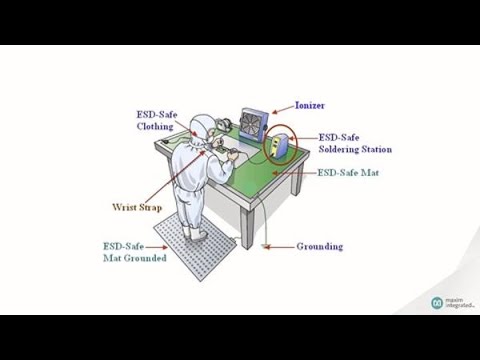
Open this video from Maxim Integrated on YouTube.
Soalan Lazim
Does ESD floor tape ground people or equipment?
No. Floor tape normally identifies a boundary or instruction. Grounding and charge control require the separately approved systems in the facility ESD plan.
Must all ESD floor tape be yellow?
No universal color rule should be assumed. Use a documented site convention that remains clear and does not conflict with applicable safety requirements.
How should adhesion be approved?
Install a representative trial on the actual cleaned floor and observe edge lift, residue, cleaning, traffic, print wear, and removal.
When should floor tape be replaced?
Replace it when adhesion, damage, contamination, missing sections, or poor legibility makes the boundary unclear or creates a walking-surface risk.

Tinggalkan Balasan