- 터보
- 블로그
ESD floor tape identifies a controlled boundary, aisle, workstation zone, or handling instruction in an electrostatic protected area. It is primarily a communication and floor-marking product; it does not by itself ground personnel, dissipate charge, or make an uncontrolled floor into an ESD control system. A successful installation connects the tape wording and color to the site’s documented rules, uses an adhesive compatible with the floor and cleaning process, remains visible under traffic, and avoids loose edges that create a safety hazard. This guide helps ESD coordinators, facility teams, and buyers specify, trial, install, inspect, and replace floor tape without confusing a visual boundary with electrical protection.
Define the message before selecting the tape
State what the line means: entry into an EPA, an aisle boundary, a keep-clear zone, a cart location, or a transition where personnel checks are required. The exact wording should match the facility control plan, signs, training, and audit language. A decorative stripe with no agreed behavior does not create control.
Limit the number of colors and messages so workers can recognize them consistently. OSHA’s archived interpretation notes that aisle lines may use different colors as long as they clearly define the aisle; local codes and current site safety requirements still govern the installation. Do not present a company color convention as a universal legal rule.

Do not confuse marking with electrical performance
Some products are marketed as antistatic or ESD tape, while others are ordinary durable floor-marking tape printed with an ESD warning. Ask which function is claimed and what evidence supports it. Regardless of material, the visible line alone does not provide the grounding, footwear, flooring, work-surface, ionization, packaging, or personnel controls required by the ESD plan.
If the tape crosses or covers a functional ESD floor, assess whether its insulating area, adhesive residue, wear, or layout affects the approved system. The ESD coordinator and facilities owner should approve the detail. Do not extrapolate a surface claim from a small tape sample to the behavior of the entire floor-personnel system.
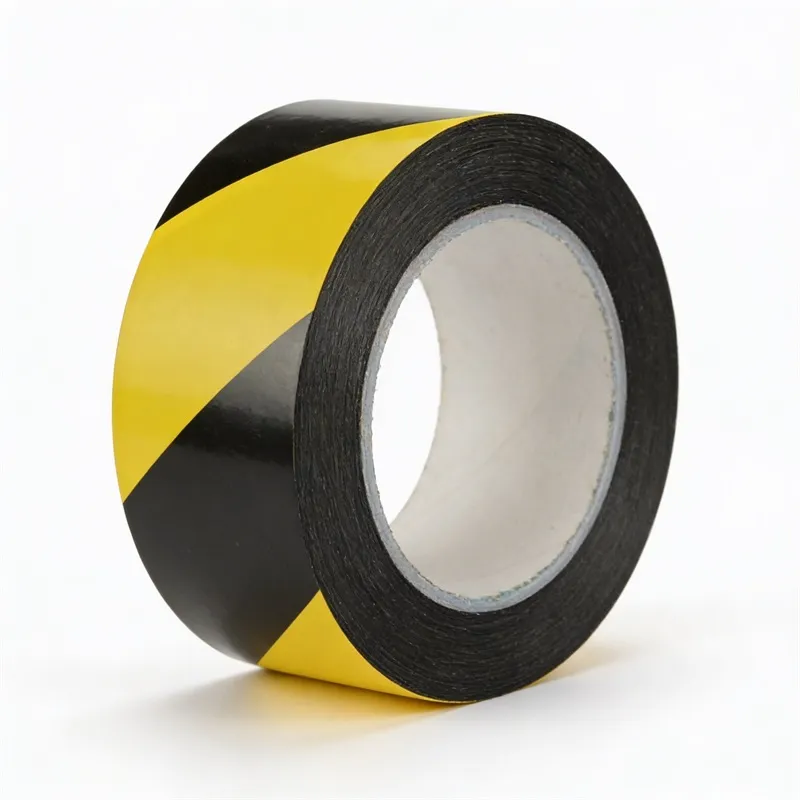
Match backing and adhesive to the floor
Document floor material, coating, texture, porosity, age, condition, cleaning chemistry, temperature, moisture exposure, and traffic. Adhesive that performs on smooth sealed concrete may behave differently on textured tile, epoxy, worn coatings, or contaminated surfaces.
Use a representative installation trial. Check initial placement, edge lift, removal, residue, print wear, cleaning compatibility, turning wheels, foot traffic, and the effect of normal environmental conditions. Do not rely only on a short hand-peel test or assume that the strongest adhesive is the safest choice.

Plan the layout around work and traffic
Create a scaled layout showing boundaries, doorways, benches, exits, fire equipment, material flow, forklift routes, and floor joints. Keep markings understandable at approach distance and avoid patterns that conflict with existing safety or logistics lines. Use signs or entry instructions where a line alone cannot communicate the required action.
At corners and transitions, avoid small loose pieces and abrupt geometry that receives concentrated wheel force. Do not cover damaged flooring or use tape as a substitute for repair. OSHA requires walking-working surfaces to be maintained in a clean and orderly condition; raised edges, wrinkles, and debris should be corrected promptly.
Inspect and replace before the boundary becomes ambiguous
Set routine checks for adhesion, edge lift, wrinkles, tears, dirt, print legibility, missing sections, adhesive residue, and conflict with changed layouts. Define who can repair the line and how temporary gaps are controlled. Random patching with a different color or wording can weaken the visual system.
Replacement timing should follow observed condition and risk rather than a universal service-life claim. Record recurring failure locations. Turning wheels, floor joints, harsh cleaning, oil, moisture, or poor preparation may require a different construction or layout—not simply more frequent replacement.
선정 및 자격 요건 표
| Planning item | Decision to document | Acceptance check |
|---|---|---|
| Boundary meaning | EPA entry, aisle, keep-clear or equipment zone | Matches procedure and signage |
| Floor condition | Material, coating, texture and contamination | Representative adhesion trial |
| Traffic | People, carts, pallet jacks or forklifts | Wear and edge-lift observation |
| Tape construction | Backing, adhesive, width, print and color | Approved sample and label |
| 유지보수 | Cleaning method and inspection owner | No loose edges or unreadable message |
| Change control | Who can move or repair markings | Updated layout and training |
통제된 초도품 시험 생산을 실행하세요
제안된 양산 제조 공정을 나타내는 문서화된 샘플을 사용하십시오. 존재하는 경우 현재 승인된 품목과 비교하십시오. 식별 정보, 개정 번호, 공급업체 로트, 환경 조건, 장비, 작업자 및 관찰 내용을 기록하십시오. 시험에는 입고, 보관, 준비, 정상 사용, 해당되는 경우 세척, 그리고 폐기 또는 반품이 포함되어야 합니다. 해당 품목이 제품에 손상을 주거나, 오염을 유발하거나, 장비에 지장을 주거나, ESD 또는 안전 절차와 저촉되는 경우 시험을 중단하십시오.
합격 기준을 관찰 결과와 분리하십시오. 치수, 라벨링, 적합성, 제작 완성도, 자재 증거, 기능적 거동은 서로 다른 검토가 필요할 수 있습니다. 양산 수량을 승인하기 전에 편차를 해결하고, 제어 도면, 보고서 및 승인 샘플을 보관하십시오. 자재 공급원, 첨가제, 접착제, 구조, 금형, 공정 또는 주요 치수의 변경 전에 공급업체 통지를 요구하십시오.
수입검사 및 진행 중 관리
- 품목, 도면 개정 번호, 수량, 공급업체 로트 번호, 포장 라벨을 주문서와 대조하세요.
- 오염, 손상, 불량한 제작 상태, 잘못된 치수, 누락된 식별 표시를 검사하십시오.
- 측정이 필요한 경우, 문서화된 방법과 교정된 장비를 사용하여 합의된 시료 채취 및 검증을 수행하십시오.
- 색상, 냄새, 질감, 끈적임, 치수, 권취(와인딩), 형상 또는 성능의 설명할 수 없는 변화는 격리하십시오.
- 인수 기록을 유지하고 불만 사항이나 고장을 해당 로트에 연결하십시오.
- 제품, 장비, 경로, 세척 방법 또는 관리 계획이 변경될 때 시방서를 검토하십시오.
구매자를 위한 견적요청서(RFQ) 체크리스트
용도, 보호 경계, 장비 또는 부품 인터페이스, 치수 및 공차, 재질 구조, 요구 기능, 시험 방법 및 합격 기준, 청결도 및 제작 기술 요구사항, 포장, 라벨링, 추적성, 시료 수량, 초도품 기대치, 문서화, 변경 통지, 납품 수량을 명시하십시오. 다음을 참조하십시오: SWESD ESD floor marking tape product 현재 표시된 제품 유형에 대해 그리고 사용하세요 SWESD 제품 센터 관련 취급 장비와 연동하기 위하여.
공급업체에 가정 사항과 예외 사항을 나열해달라고 요청하십시오. 검증되지 않은 카탈로그 주장을 통제된 시양서에 그대로 복사하는 것을 피하십시오. 기술적 한계, 인증, 그리고 규정 준수 진술은 실제 공급된 품목과 구매자의 용도에 비추어 검토되어야 합니다.
동일한 조건에서 샘플들을 비교하세요
유용한 비교는 한 번에 하나의 결정만 변경합니다. 각 후보에 대해 동일한 대표 부품, 작업자, 장비, 경로, 세척 준비 및 관찰 기간을 사용하십시오. 검토자가 공급업체 신원, 리비전 또는 테스트 순서를 혼동하지 않도록 시료에 레이블을 부착하십시오. 실용적인 경우, 현재 승인된 품목을 기준선으로 포함하십시오. 성공적인 동작과 추가 조정, 반복된 세척, 느린 취급 또는 작업자 개입과 같이 이를 달성하는 데 필요한 작업을 모두 기록하십시오.
전기적, 기계적, 청결도, 상업적 결론을 하나의 모호한 점수로 통합하지 마십시오. 후보자는 적합하지만 추적 가능한 물증이 부족하거나, 문서는 강력하지만 장비 성능이 저조할 수 있습니다. 안전, ESD 제어, 제품 보호, 장비 호환성, 오염, 사용성, 문서화 및 수명 주기 비용에 대해 각각 별도의 합격 기준을 유지하십시오. 어떠한 치명적 결함(하드 패러)도 높은 평균 점수에 가려지지 않고 해결되어야 합니다.
상업적 비교는 개당 가격뿐만 아니라 완료 및 수락된 공정의 비용을 사용해야 합니다. 검사 노력, 교체 시간, 폐기물, 세척, 교체, 가동 중단 위험, 반품 물류, 문서화, 그리고 불일치하는 로트의 영향을 포함하십시오. 이러한 요소들은 수명 주기에 대한 주장을 조작하는 것을 정당화하지 않으며, 구매자가 실제로 비용을 발생하는 조건을 측정하는 테스트를 설계하는 데 도움을 줍니다.
관련 SWESD 계획 리소스
- reviewing ESD-safe tapes used in SMT areas
- planning grounded ESD workstation surfaces
- using precise ESD procurement language
교육용 비디오: 맥심 인테그레이티드의 정전기 방전 기초
This educational video explains the hazard controlled inside an EPA and reinforces why a marked line is only one part of the control system. The written guide remains complete without the video.
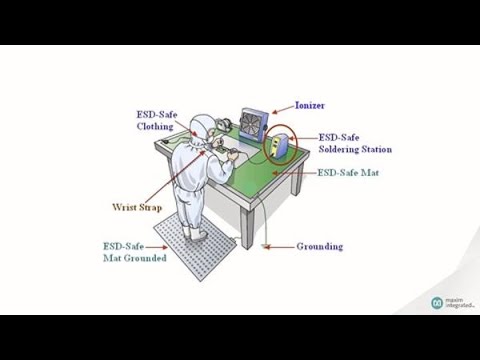
YouTube에서 Maxim Integrated의 이 동영상을 엽니다..
자주 묻는 질문
Does ESD floor tape ground people or equipment?
No. Floor tape normally identifies a boundary or instruction. Grounding and charge control require the separately approved systems in the facility ESD plan.
Must all ESD floor tape be yellow?
No universal color rule should be assumed. Use a documented site convention that remains clear and does not conflict with applicable safety requirements.
How should adhesion be approved?
Install a representative trial on the actual cleaned floor and observe edge lift, residue, cleaning, traffic, print wear, and removal.
When should floor tape be replaced?
Replace it when adhesion, damage, contamination, missing sections, or poor legibility makes the boundary unclear or creates a walking-surface risk.
공신력 있는 참고 문헌
최근 게시물
-
 ESD 박스 변형 검사: 출시 전 적합성 측정22 10월, 2026
-
 JEDEC 트레이 표면 저항 테스트: 기하학, 접촉 및 보고22 10월, 2026
-
 클린룸용 닦음용 용제 호환성: 완전한 닦음 프로세스 인증22 10월, 2026
댓글 남기기