- Turbo
- Blog
An ESD cleanroom consumables supplier should be audited against the intended process, the exact supplied item and traceable evidence of both contamination control and electrostatic suitability. A cleanroom label does not establish ESD performance, and an antistatic claim does not establish particle cleanliness. Start with the surfaces, devices, solvents and handling steps that the consumable will contact. Then request relevant test methods, identified samples, manufacturing controls and a change-notification agreement. This checklist helps electronics manufacturers qualify wipes and related consumables without confusing a product description, a room classification or a supplier certificate with evidence that a particular lot will work safely in their process.
Define the purchasing scope before sending the questionnaire
A useful audit begins with an item-level scope. List every proposed wipe, glove, packaging liner or cleaning accessory separately. Record the part number, material description, dimensions, intended condition of use and packaging format. A supplier may manufacture one item and distribute another; the evidence and change controls can differ. Ask who controls the production specification and who can approve a material substitution. A general company questionnaire cannot resolve these item-specific responsibilities.
Describe where the item enters the process. A wipe used on an external enclosure has a different exposure pathway from a wipe contacting an unprotected assembly or a precision surface. State whether the application involves dry use, a specified cleaning liquid, repeated folding or contact with sharp edges. Identify restrictions imposed by the process owner. Do not copy a cleanroom class into the specification as the only acceptance requirement: room cleanliness and the suitability of a consumable address different questions.
Itu ISO 14644-18 overview from IEST describes assessment of consumables used to maintain air or surface cleanliness. Use that framework to organize an application assessment, then obtain the applicable document and define your own controlled specification. This article supplies an audit workflow, not universal particle limits or a substitute for the governing requirements of your facility.
Separate cleanliness evidence from ESD evidence
Require two evidence paths where both risks apply. Cleanliness evidence should address relevant contamination characteristics, sample preparation and actual use conditions. ESD evidence should address the property being claimed and the appropriate test arrangement. A result for bulk material is not automatically a result for a finished wipe, its packaging or its behavior while being handled. Ask the supplier to state precisely which article and condition were evaluated.
For ESD suitability, involve the person responsible for the site’s electrostatic control program. The EOS/ESD Association overview explains the role of an organized program and protective measures. Do not infer that a wipe is acceptable simply because it is used near grounded equipment. A consumable can interact with people, surfaces and sensitive devices in ways that require a process-specific assessment. Avoid inventing a resistance requirement before identifying the relevant risk and method.
For contamination control, the IEST guidance on evaluating wiping materials covers characteristics associated with cleanliness and function. Request the method and conditions behind each report. A single marketing phrase such as low lint cannot explain the sample size, extraction procedure, particle size range, blank correction or functional suitability. Keep electrostatic and contamination claims separate in the audit record so a strong result in one area does not hide missing evidence in the other.
Build an evidence matrix that buyers can actually use
| Audit area | Bukti untuk diminta | Buyer decision |
|---|---|---|
| Application scope | Item revision, intended surfaces and liquid | Approve only the defined use |
| Kebersihan | Relevant method, conditions and sample identity | Review against process-specific requirements |
| Kesesuaian ESD | Claimed property and applicable test evidence | Review with ESD program owner |
| Manufacturing controls | Controlled processes and change route | Identify changes needing approval |
| Lot traceability | Pack labels and shipment documentation | Keep suspect lots identifiable |
| Complaint handling | Investigation, disposition and corrective action | Confirm closure beyond replacement |
Treat the matrix as a decision record. For every requirement, assign an owner who can interpret the evidence and an outcome: accepted, clarification required, trial required or rejected. Missing evidence should remain visible. Do not turn an unanswered questionnaire field into a pass because delivery is urgent. If a characteristic is not relevant to the intended process, explain why it is excluded and who approved the exclusion.
Request complete reports where interpretation depends on context. A screenshot of a passing value can omit the sample identity, conditioning and measurement uncertainty. Where a supplier cannot share proprietary detail, agree what independent evidence will satisfy the requirement. The buyer still needs enough information to establish comparability and make a defensible decision. A certificate format should support traceability rather than merely reassure the purchasing department.
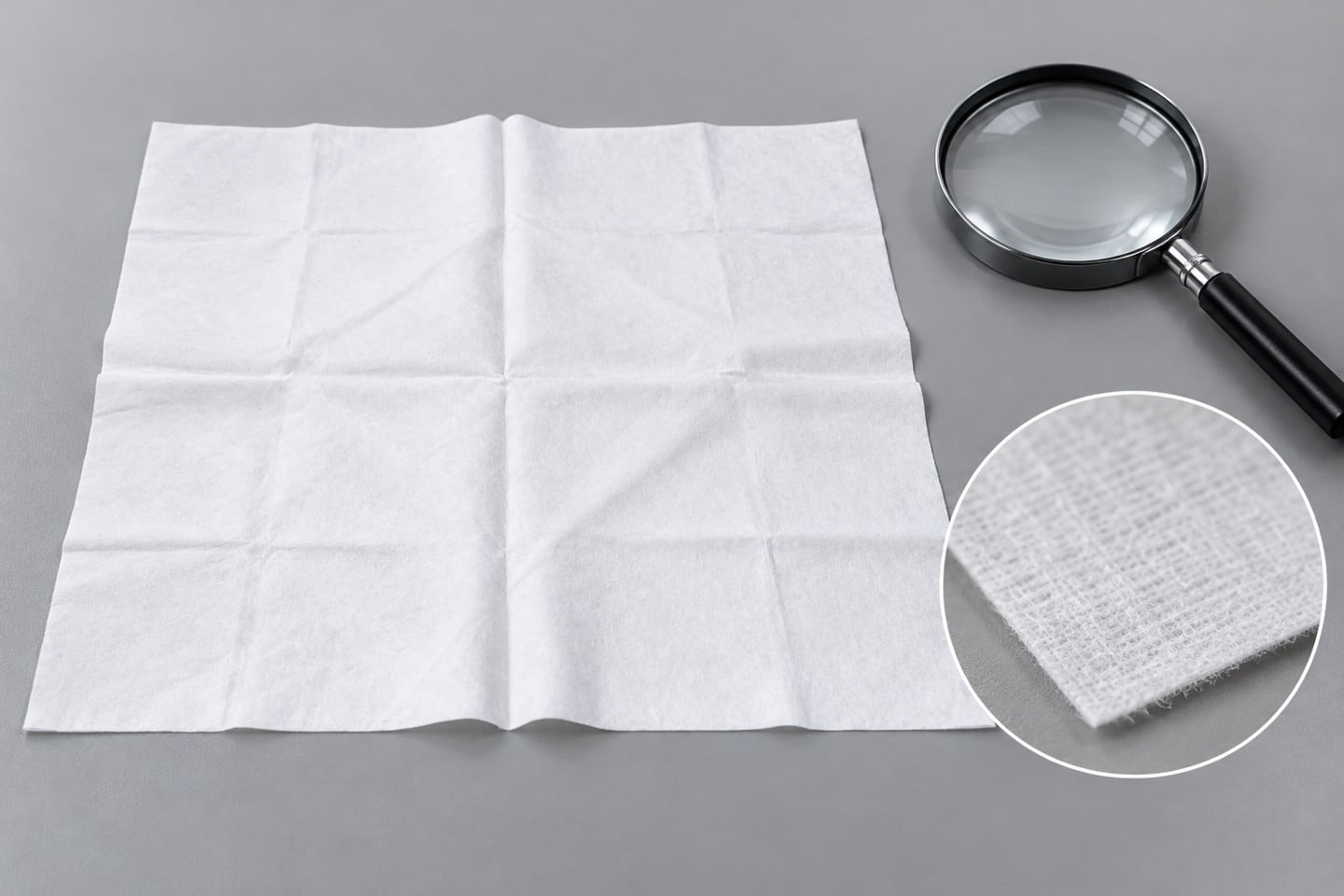
Review manufacturing, conversion and packaging controls
Ask which operations can change the finished consumable. Cutting, edge treatment, washing, handling, packing and storage may influence the supplied item. The audit does not need every confidential production detail, but it should identify the controlled characteristics and the records used to demonstrate consistency. Determine whether subcontractors participate and whether their changes pass through the same approval process. An unchanged sales part number does not prove an unchanged manufacturing route.
Examine packaging as part of the product. Record how the inner pack is sealed, how lot information is preserved after the outer carton is removed and how the item is introduced into the clean area. A visually tidy package is not evidence of its cleanliness. Similarly, an ordinary outer carton does not establish that an inner material provides suitable ESD protection. Assign each packaging layer a role and check that instructions are clear enough for receiving and production staff.
Request the supplier’s process for handling nonconforming lots. Who decides whether a lot is reworked, relabeled or replaced? How are affected shipments identified? Define which records the supplier must retain and how quickly the buyer expects a response. These questions are particularly valuable when several items share a family description but differ in construction or packaging. The audit should prevent an apparently equivalent item from entering production without review.
Qualify samples against the actual cleaning task
Create a sample trial that reflects the proposed use while protecting production material. Identify the lot and maintain the original packaging information. Compare the candidate with the approved baseline under the same procedure. Record the surface, liquid, handling technique, number of uses and observations required by the trial plan. If the trial needs quantitative contamination or ESD measurements, use qualified personnel and the applicable controlled method; a visual inspection alone cannot replace those measurements.
Use samples to evaluate functional issues as well as reports. Does the wipe tear or leave visible fibers during the defined task? Does the packaging allow controlled dispensing? Can operators follow the introduction procedure consistently? These observations help reveal practical problems, but they do not prove the absence of particles or chemical residues. Keep qualitative findings distinct from laboratory results and avoid extending a successful trial beyond the conditions actually evaluated.
For wipe-specific decisions, consult the existing ESD cleanroom wipe selection guide and the comparison of ESD wipes and cleanroom wipes in stencil cleaning. Those pages support material and task selection. This audit focuses on supplier evidence, traceability and continuing control. The separate cleanroom sticky mat guide helps avoid treating floor-entry consumables and direct-contact wipes as interchangeable purchases.
Verify that delivered lots match the qualified item
Define receiving checks before approving the supplier. Match the delivered part number, revision, lot identifier, quantity and packaging to the qualification record. Check whether the report or certificate actually covers the shipment. A generic annual certificate can provide background information, but it should not be described as a lot-specific result unless it identifies that lot and the relevant tests. Specify which discrepancies trigger quarantine or review.
Preserve enough labeling when packs are divided between departments. If individual users cannot identify a suspect lot, a complaint can become difficult to investigate. Decide how opened packs are stored and when damaged packaging requires rejection. These controls should reflect the application’s risk and operating procedure. Avoid asserting a shelf life that the supplier has not documented; storage suitability and expiration requirements require evidence for the particular product and packaging.
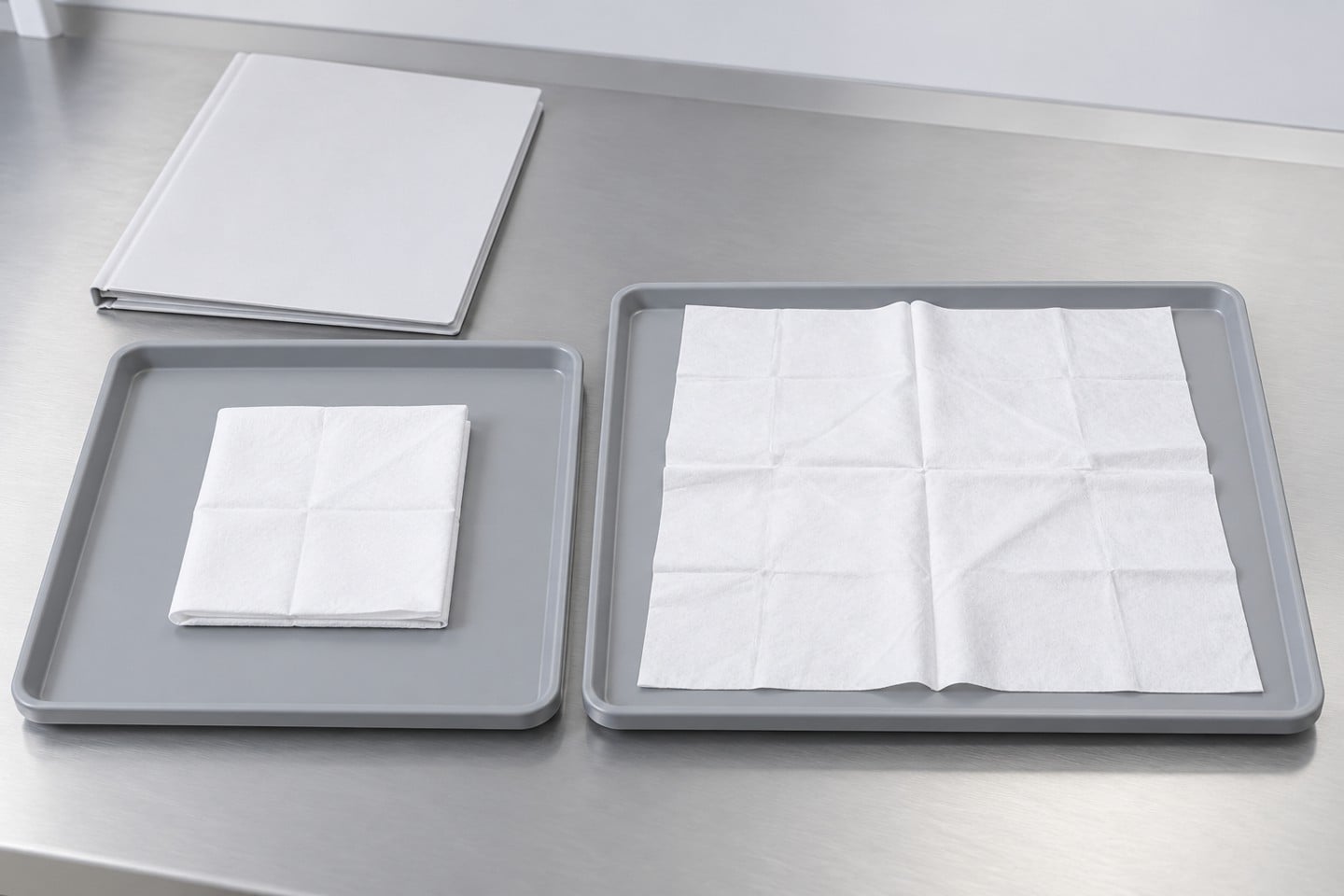
Agree change control and complaint handling before the first order
A supplier agreement should name changes that require notification: material source, construction, conversion process, cleaning, production location, subcontractor and packaging are useful categories to review. The exact list depends on the item. Set a notification route, review responsibility and effective-date rule. Without these details, purchasing may accept a change that engineering would have required to be requalified. A statement that quality will be maintained does not replace defined change control.
For complaints, retain the initial observation, affected lot, handling conditions, photographs where helpful and the disposition of remaining stock. Ask for an investigation that distinguishes manufacturing defects from transport, storage or use problems. Do not discard the original packaging before collecting evidence. Agree what closes the issue: a replacement shipment alone may solve the immediate supply problem while leaving the underlying cause unresolved.
Track repeated issues by item and lot rather than only by supplier name. Small recurring inconsistencies may signal a control problem that a yearly audit overlooks. Review these trends with the process owner before expanding approved use. Supplier performance should include response quality and evidence completeness, alongside delivery and price. This keeps the audit connected to actual operations instead of allowing a completed questionnaire to become permanent approval.
Understand electrostatic contamination as a separate process risk
The IEST educational video below discusses electrostatic contamination in cleanrooms. It helps explain why contamination control and electrostatic behavior deserve coordinated review. It is background education, not a test report for a supplied consumable and not evidence of SWESD product performance. Use the discussion to frame questions for your process owner rather than to infer a pass from the appearance of a wipe.
Send an RFQ that makes supplier responses comparable
Provide the supplier with the application, exact item requirements, relevant methods, documentation expectations, packaging route and sample approval process. Ask for explicit deviations rather than a blanket statement of compliance. Separate mandatory characteristics from preferences so commercial discussions cannot silently relax a technical requirement. Request the production part number and revision that would appear on the order and on delivered packs.
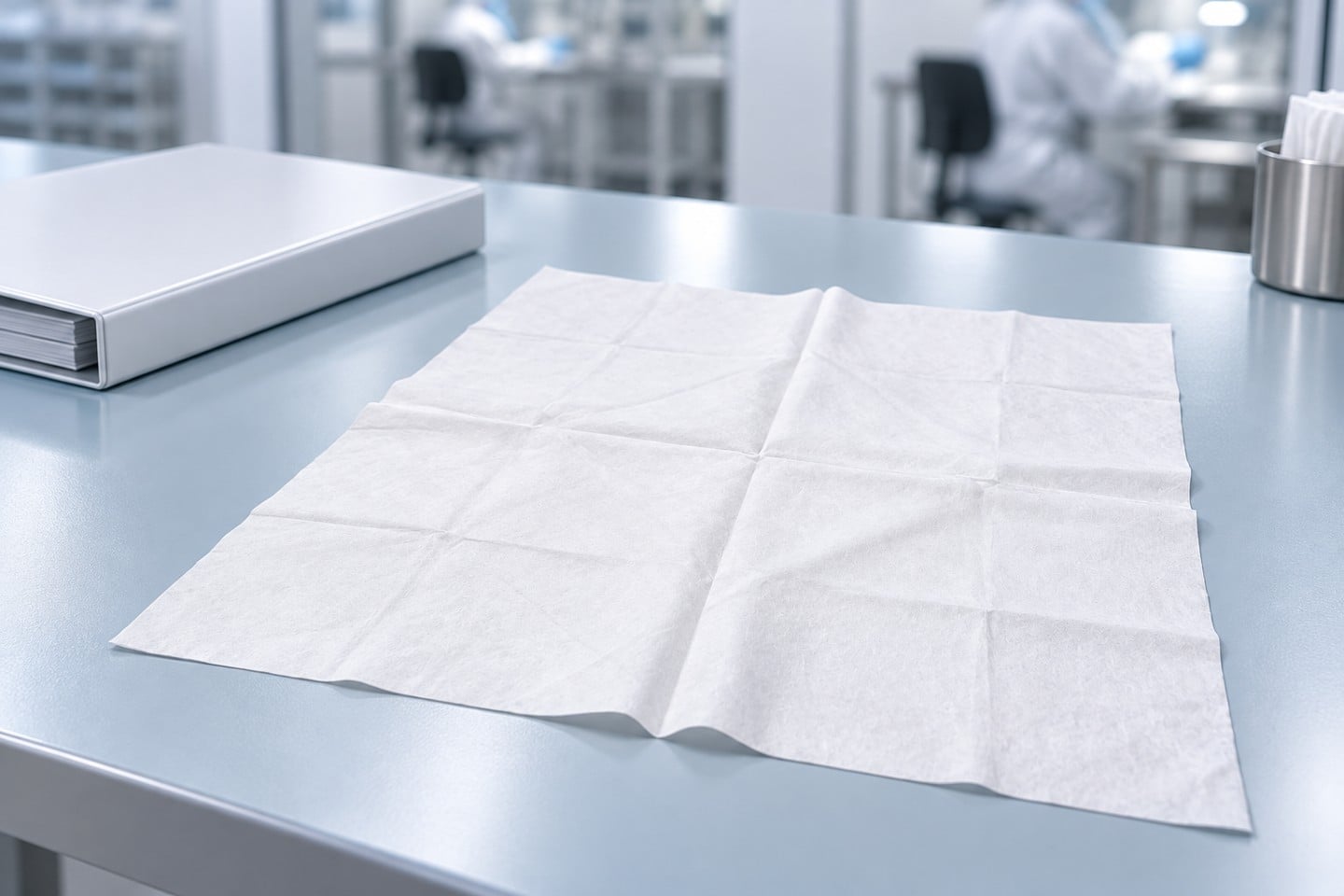
For a discussion of available products, review the SWESD ESD clean wiper page and request information for the intended item. The product photograph identifies a reference appearance; it does not establish cleanliness, electrostatic performance, certification or solvent compatibility. Confirm those characteristics through applicable evidence and qualification. Retain the approved specification with the order so repeat purchases can be checked against the same decision, not against a changing website description.
Pertanyaan yang sering diajukan
Does a cleanroom label prove ESD suitability?
No. Cleanliness and electrostatic suitability need separate relevant evidence for the actual item and intended use.
Can one supplier certificate qualify every consumable?
No. Scope each item, construction, application and evidence requirement separately.
What should a sample trial establish?
It should evaluate the defined task under controlled conditions and distinguish qualitative observations from required measurements.
Does a generic certificate establish lot-specific test results?
Only documentation identifying the relevant lot and tests can be described as lot-specific evidence.
Which supplier changes should be reviewed?
Define notification rules for relevant material, construction, process, location, subcontractor and packaging changes in the qualification agreement.
Postingan Terbaru
-
-
 ESD Wrist Strap Test Frequency and Recordkeeping12 Okt,2026
 -
 Handheld vs Fixed Electrostatic Field Meters12 Okt,2026
Tinggalkan Balasan