- Turbo
- Blog
To verify cleanroom sticky mat effectiveness, compare contamination transfer under a defined, repeatable entry procedure before and after the mat is introduced, while keeping cleaning, footwear, traffic, and sampling conditions comparable. Visible footprints on adhesive show that material contacted the sheet; they do not establish a removal percentage or prove that the cleanroom has met its cleanliness requirements. Use a documented pilot with agreed sampling locations, suitable measurements, acceptance criteria, and replacement rules. This guide explains how a buyer or contamination-control team can evaluate a sticky mat without confusing a product demonstration, an operational housekeeping check, and formal cleanroom qualification.
Define the claim that the evaluation must answer
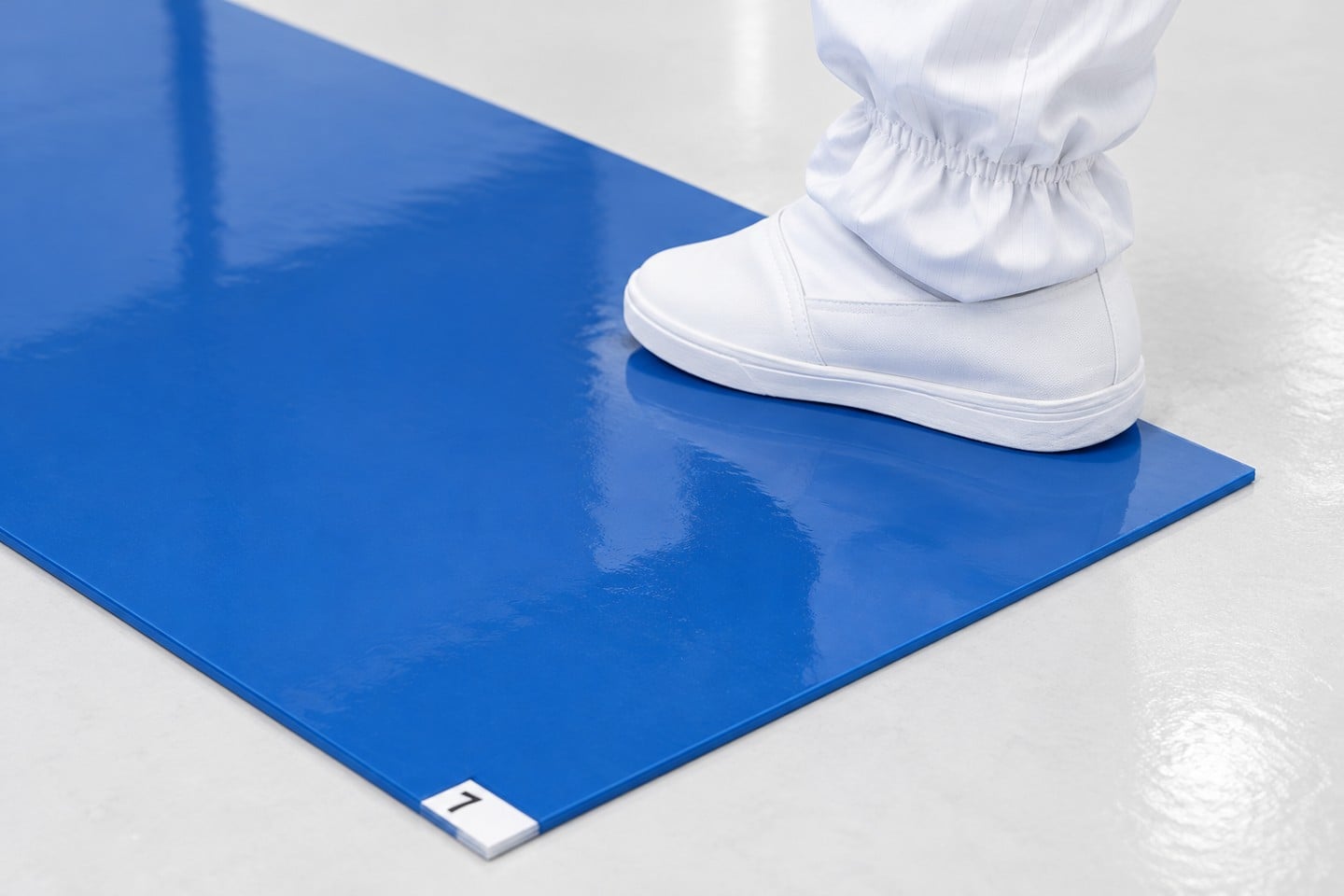
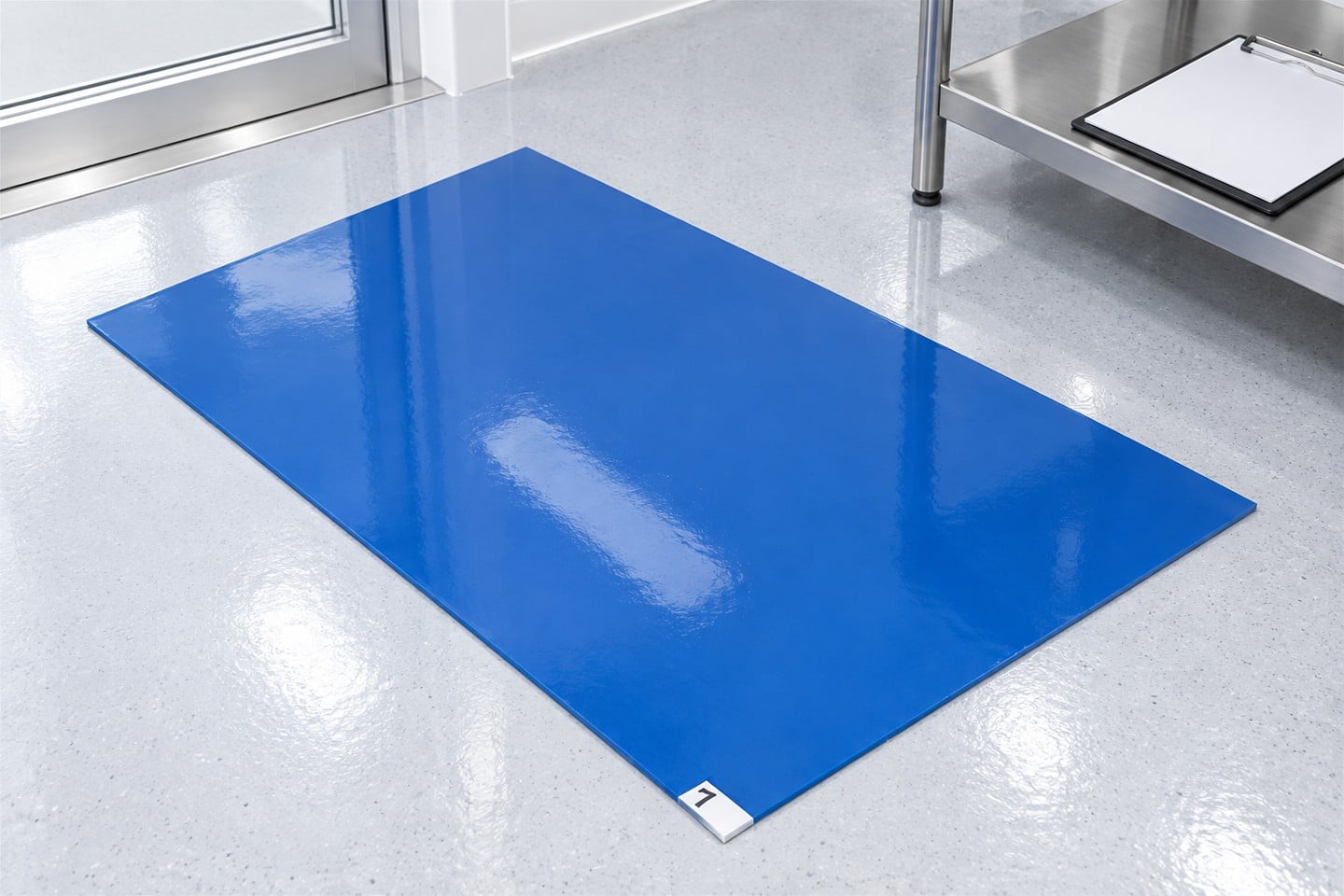
Begin with the intended function. A peelable adhesive mat at an entry transition is used to intercept contamination transferred by footwear or suitable wheels under the specified contact conditions. It is not an air filter, a sterilization process, or proof of electrostatic protection. Specify which traffic path, contamination type, and operating condition the evaluation covers. A narrow, useful claim is that the selected mat helps reduce the transfer detected at a designated downstream sampling location during a defined entry process.
Do not start with a desired percentage. If a supplier advertises a removal rate, request the method, contamination challenge, sample size, controls, footwear, contact procedure, and measurement uncertainty behind it. Ask whether the claim relates to a fresh sheet, an aged sheet, an entire shift, or a laboratory demonstration. Without those details, the number cannot be adopted as a facility acceptance limit. An advertised result on one test surface does not establish performance for your traffic and process.
For the general product choice and installation questions, use our sticky mat selection, placement and replacement guide. The purpose here is different: to establish an evidence plan for a proposed or existing mat, including a usable comparison and a decision after the pilot. Do not duplicate the installation guide or assume the presence of a mat resolves a contamination problem.
Map the entry route before selecting measurements
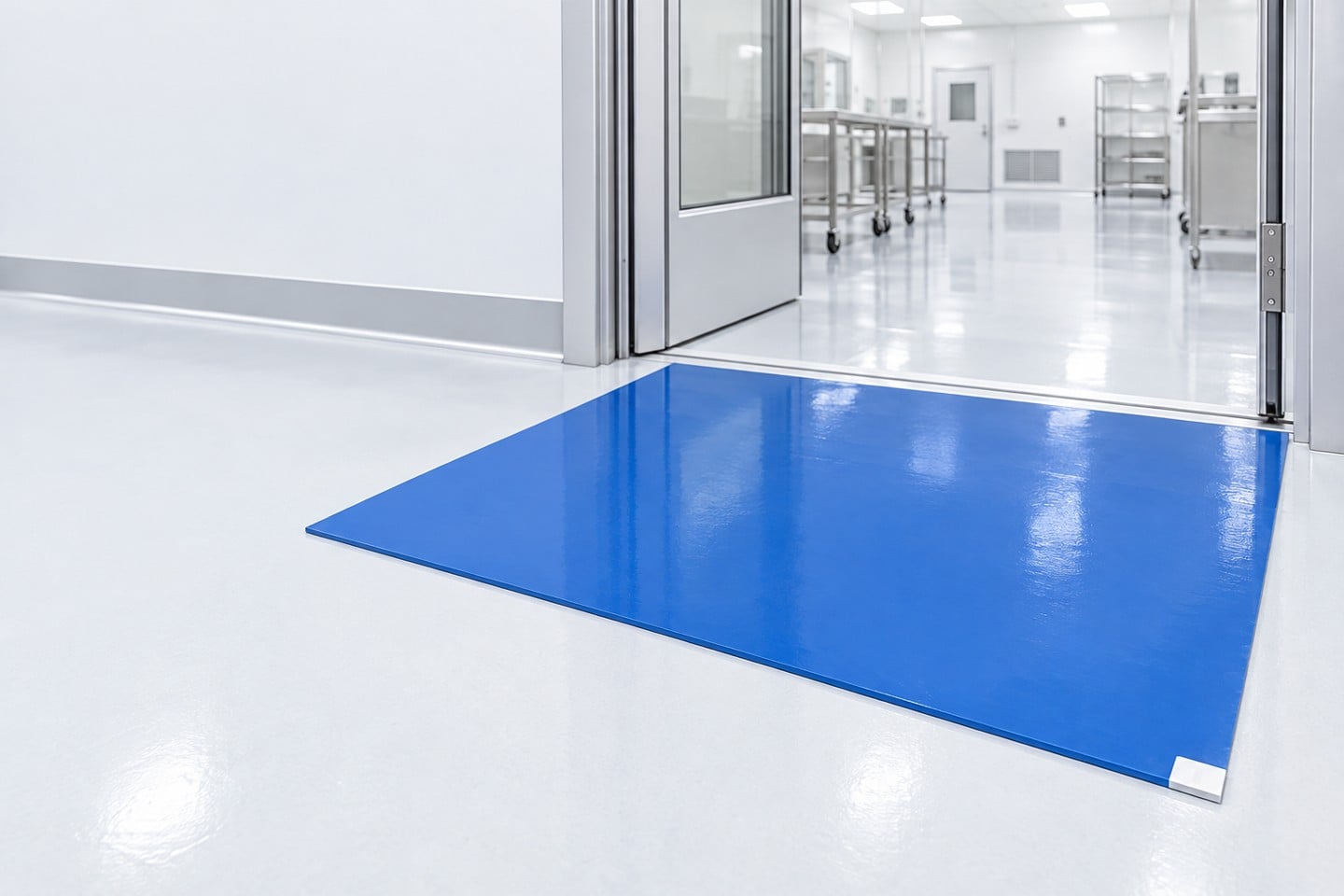
Document where people and materials move, which routes bypass the mat, and where contamination might reach the controlled space. Include carts, temporary visitors, contractors, and maintenance activity when they use the evaluated route. A mat located where only some shoes make contact may give an attractive visual impression while leaving the main transfer path uncontrolled. Observe normal traffic before designing a forced demonstration that no one will follow in production.
Record the floor condition, footwear policy, cleaning schedule, and gowning sequence. Define whether the mat lies before or after a footwear change and whether wheels are allowed to contact it. The acceptable arrangement must also preserve safe movement and emergency access. Seek approval from the contamination-control and safety teams before modifying a route. The HSE slips-prevention guidance identifies contamination, cleaning, flooring, the environment, and footwear as areas for review; it does not specify a sticky-mat contamination-removal test.
Select sampling locations that answer the actual question. A downstream floor site may help evaluate transfer along a route, while an airborne particle measurement describes a different condition and may be affected by many unrelated sources. Surface sampling also requires a defined method, sampled area, handling procedure, and interpretation. Do not treat measurements from different methods as interchangeable counts of the same contamination population.
Establish a baseline that can be compared fairly
Collect baseline observations over representative operating conditions using the planned sampling method. Record traffic counts or another agreed measure of exposure, footwear types, cleaning times, visible events, and unusual work. The baseline should describe the existing approved process, not an intentionally dirty route created to make the new mat appear effective. Keep necessary contamination controls in place; removing an approved control requires an authorized evaluation plan.
Use the same sampling locations, area, timing, equipment, and handling method in the comparison period. If the method has a background or blank check, include it as required by the approved procedure. Identify who collects the samples and whether that person knows which period is being assessed. Where practical, consistency or independent assessment can reduce bias. Preserve the raw results rather than reporting only the best-looking comparison.
Itu IEST cleanroom cleaning and monitoring recommended-practice overview describes housekeeping, monitoring effectiveness, and establishing suitable surface-cleanliness levels. Use its current full document or another approved method when developing a facility procedure. The public overview is not enough to reconstruct every sampling detail, and this article supplies no substitute method or universal cleanliness threshold.
Separate observations from the decisions they support
The following table is a qualitative evaluation plan. It identifies what an observation may support and what it cannot establish. Choose actual acceptance criteria with the responsible facility team before the pilot. Do not create a pass rule after seeing the data, and do not apply the same rule to a different contamination type or traffic arrangement without reviewing its relevance.
| Bukti | Useful interpretation | Limit to record |
|---|---|---|
| Visible marks on adhesive | Confirms contact and visible material transfer to the sheet | Does not quantify removal efficiency or downstream cleanliness |
| Defined downstream surface samples | Can compare transfer at the chosen location under matched conditions | Method, area, timing, exposure and background must be comparable |
| Airborne particle observations | Describes the sampled air under its measurement conditions | Does not isolate mat performance from other airborne sources |
| Traffic and bypass observations | Tests whether the procedure is practical and the route is covered | A forced demonstration may not represent normal entry |
| End-of-sheet observations | Supports the proposed inspection and replacement rule | Fresh-sheet performance does not establish performance throughout service |
| Edge, residue and movement inspection | Identifies operational and safety concerns | A favorable contamination result does not override unsafe installation |
Keep photographs as supporting records when permitted. A dirty adhesive sheet can explain that the mat was used and indicate where traffic contacted it, but it is not a calibrated measurement of removed contamination. Similarly, a sheet that appears clean may reflect low traffic, unsuitable contact, or contamination too small to see. Pair visual observations with the defined method instead of allowing a photograph to decide the result.
Run the pilot without introducing uncontrolled changes
Identify the mat product and lot, sheet condition, installation location, and start time. Follow the manufacturer’s instructions and the approved entry procedure. Maintain the cleaning and footwear conditions used for the comparison, or record every deviation. If cleaning frequency, entry traffic, gowning behavior, or nearby maintenance changes at the same time, it becomes difficult to attribute a difference to the mat.
Define the exposure period and the situations that trigger inspection or replacement. Record the number or approximate load of entries when the agreed procedure uses that information. A trial covering only a quiet hour may not represent peak traffic or a delivery shift. Include the relevant conditions, while keeping the evaluation controlled and safe. Avoid repeatedly stepping through a contrived powder challenge unless that challenge is specifically authorized and scientifically appropriate.
Observe user behavior. People may step beside a narrow mat, shorten contact to avoid a sticky sensation, or move a cart around it. These findings are not merely operator errors; they may indicate that the placement or process is impractical. The evaluated product must work within an achievable procedure. Record bypass frequency and the reason so that the decision addresses the full entry system rather than only the adhesive material.
Evaluate the end of a sheet's useful service period
A new sheet and a used sheet are different operating conditions. Include observations near the proposed replacement point, not only immediately after peeling. Follow the manufacturer’s removal instructions and the contamination-control procedure so that changing sheets does not transfer collected material into the controlled area. Define how the removed sheet is handled and disposed of; do not leave a contaminated sheet beside the route.
Inspect for lifted edges, displaced mats, damage, residue, or loss of suitable contact. These are operational concerns even when a sampling result looks acceptable. Replacement criteria may combine defined contamination observations, traffic exposure, visible condition, and safety triggers. They must be grounded in the facility’s evaluation and product instructions rather than a universal rule that every site should peel a sheet at the same interval.
Do not extend service simply because the product still looks blue. Conversely, changing sheets very frequently without evidence may increase cost and handling activity without providing a measurable benefit. The pilot should support a defensible interval or event-based rule, with a plan to revisit it when traffic, footwear, or cleaning changes. Record both the contamination outcome and the material used during the trial.
Interpret results without exaggerating causation
Compare like conditions and show all valid observations. Report the measurement units, sampling method, locations, exposure information, exclusions, and known limitations. If a relative change is calculated, explain the baseline and calculation, and do not present it as a universal product efficiency. A result close to the method’s variability may not justify a firm performance claim. The responsible specialist should decide whether more observations are necessary.
Investigate inconsistent results. A reduction at one location with an increase at another might reflect changed traffic, cleaning, sampling variation, or a transfer route that the mat does not address. Review the route and records before increasing adhesive strength or adding more mats. A missing effect is useful evidence: it can prevent spending on a product that does not solve the site’s actual problem.
Document the conclusion as accepted for the defined application, not proven for every cleanroom. State whether the procedure is practical, whether the result meets the pre-agreed criteria, and what follow-up monitoring is required. If evidence is inconclusive, preserve the existing approved controls and identify the next investigation. Do not label a trial successful only because the supplier supplied a certificate or the adhesive visibly collected debris.
Keep other cleaning controls consistent
Surface wiping, cleaning tools, gowning, and material transfer can influence the same downstream observations. Our cleanroom wipe particle-testing guide helps explain why the cleaning consumable and its qualification matter, while the cleanroom consumables supplier-audit checklist addresses documentation and change control. Keep these activities stable during the mat comparison and record any changes that could affect interpretation.
The IEST video below demonstrates proper cleanroom wiping techniques. It supports the need for consistent background cleaning during the evaluation; it does not demonstrate sticky-mat removal performance or provide a mat acceptance limit. Use the facility’s approved cleaning method and staff training so that a variable wiping technique does not obscure the comparison. The article remains complete without relying on the video for the evaluation design.
Prepare an inquiry and a controlled purchase decision
When contacting a supplier, provide the route, mat dimensions needed, floor and traffic conditions, footwear or wheel contact, cleaning constraints, and the evaluation plan. Request installation and sheet-removal instructions, storage guidance, lot identification, material information relevant to the process, and evidence for any performance claim. The SWESD sticky mat product page can start that discussion; suitability for the application requires review and testing.
Keep the purchase decision linked to the pilot record. State the product and configuration accepted, the replacement rule, training required, responsible owner, and changes that trigger re-evaluation. An adhesive mat can be a useful part of an entry control process, but its value must be demonstrated under that process. Practical observations, comparable measurements, and honest limits make the decision more useful than an unsupported removal percentage.
Pertanyaan yang sering diajukan
Do dirty footprints prove a sticky mat is effective?
They show contact and visible transfer, but do not establish a removal percentage or demonstrate downstream cleanliness.
Can airborne particle counts be used as a direct mat efficiency test?
Not alone. Airborne counts are affected by multiple sources and describe a different condition from transfer on footwear or wheels.
Should every site use the same sheet replacement interval?
No. Define the interval or event-based rule using the product instructions, actual traffic, observed condition and facility evaluation.
What must remain consistent during a comparison?
Keep sampling locations, method, timing, cleaning, footwear and traffic conditions comparable, and record deviations.
Does a sticky mat prove cleanroom or ESD compliance?
No. A mat is one potential entry control; cleanroom qualification and ESD requirements need their own applicable procedures and evidence.
Tinggalkan Balasan