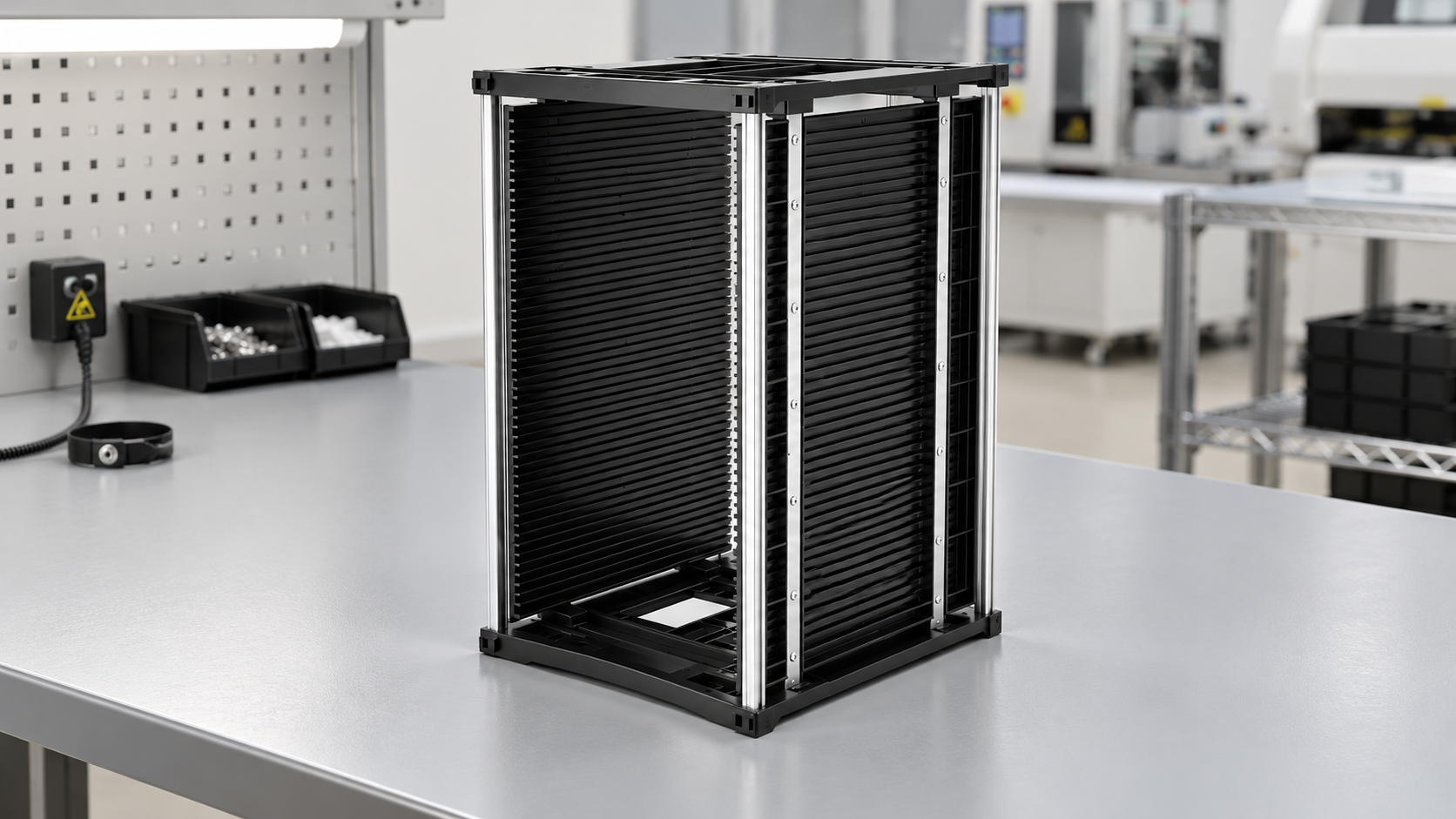
Select ESD magazine rack slot width from finished PCB edge thickness, groove geometry and a real loading trial—not nominal board thickness alone.
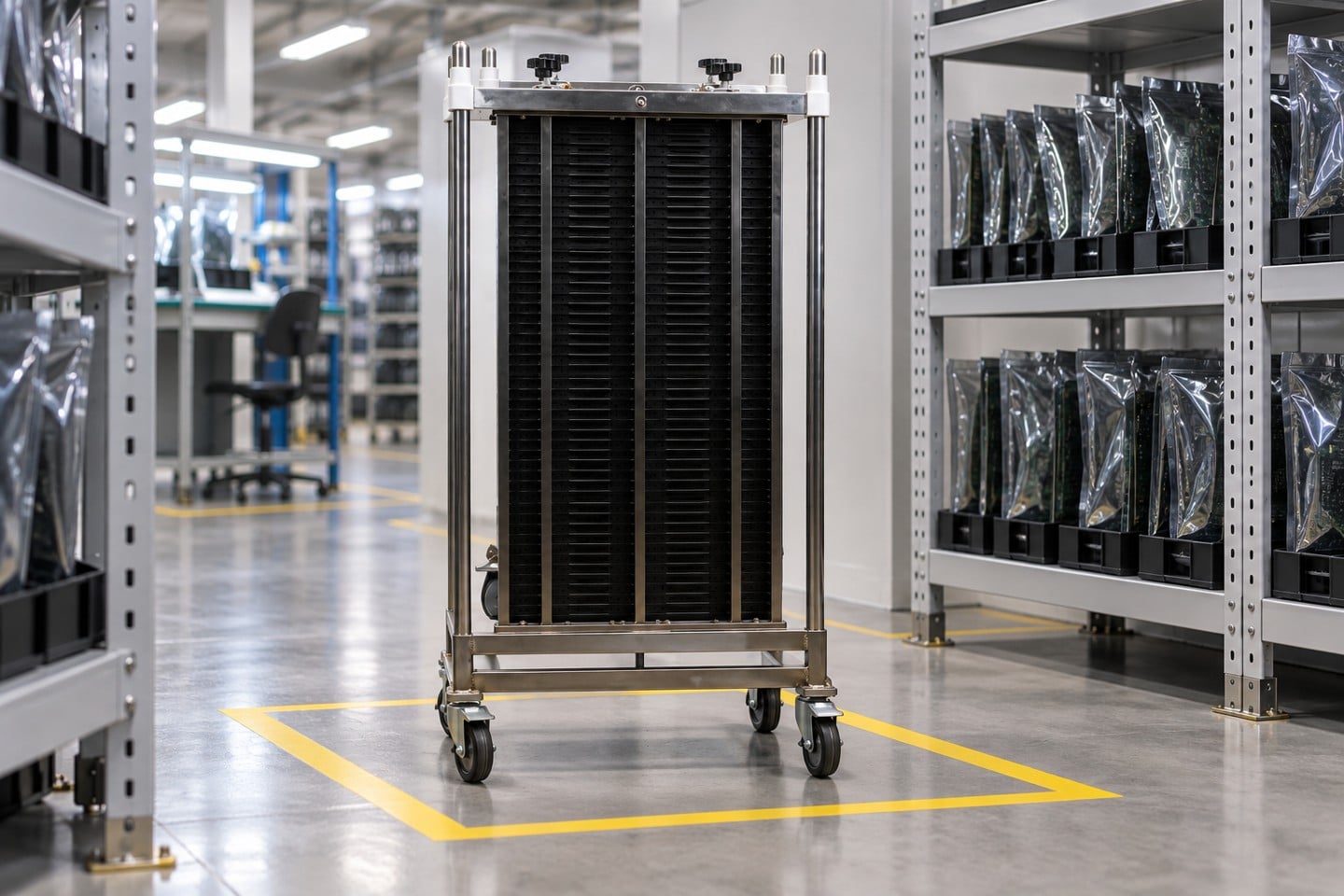
Evaluate ESD trolley brakes and stability for the approved load, caster function, parking arrangement, floor route and independent electrical checks.
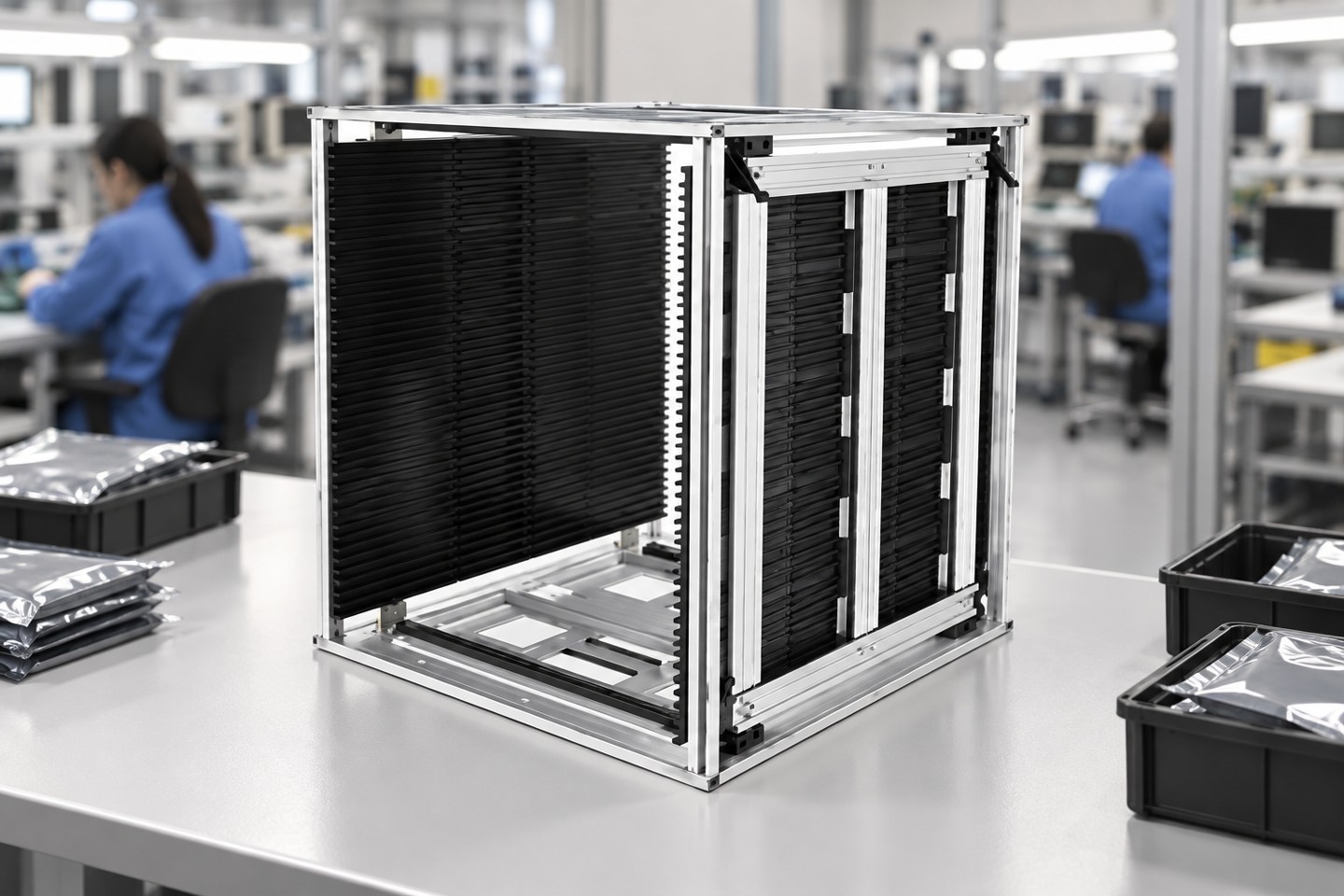
Control PCB magazine transfer from SMT to downstream assembly with approved board support, interfaces, process identity and route-specific handling.
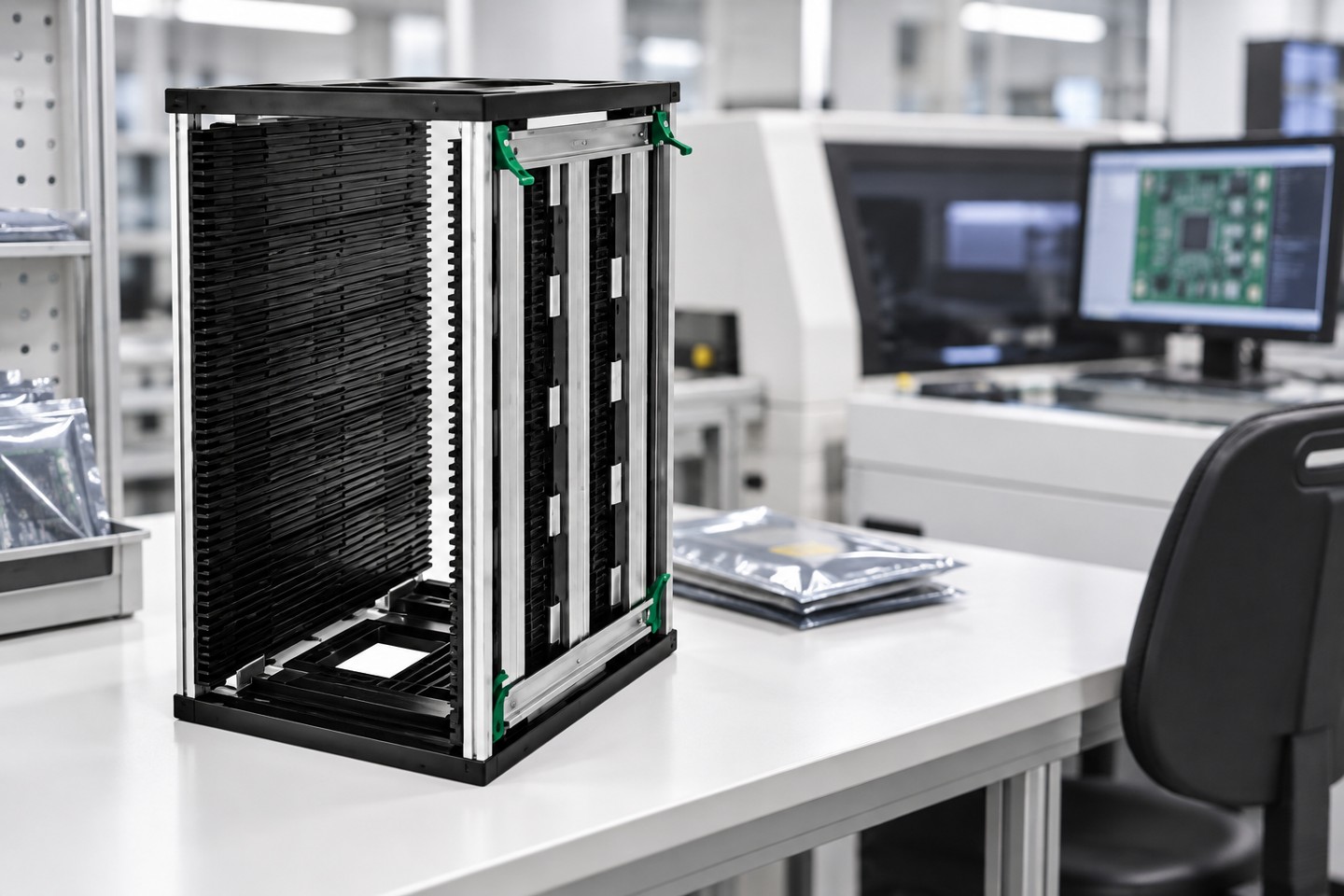
Configure ESD magazine racks for AOI and test stations by verifying populated-board clearance, carrier interfaces, status records and handling controls.

Set up ESD magazine racks at selective soldering lines with defined board support, staging, interfaces, process identity and separate thermal approval.
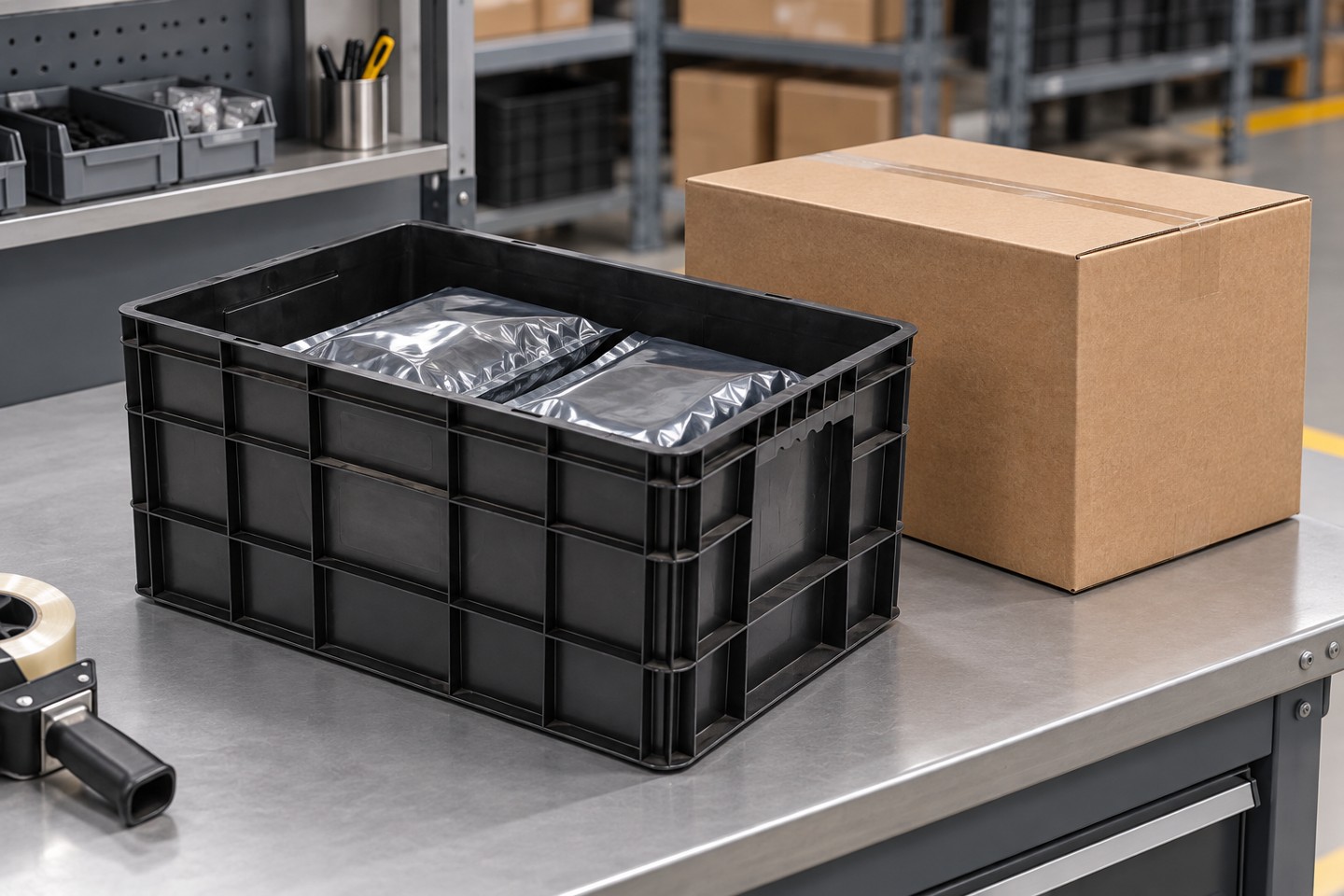
Specify ESD field service packaging for spare parts with qualified inner protection, outer support, clear identification and controlled returns.

Manage a returnable ESD packaging pool using actual circulation time, usable-stock statuses, ownership, inspection and release controls.
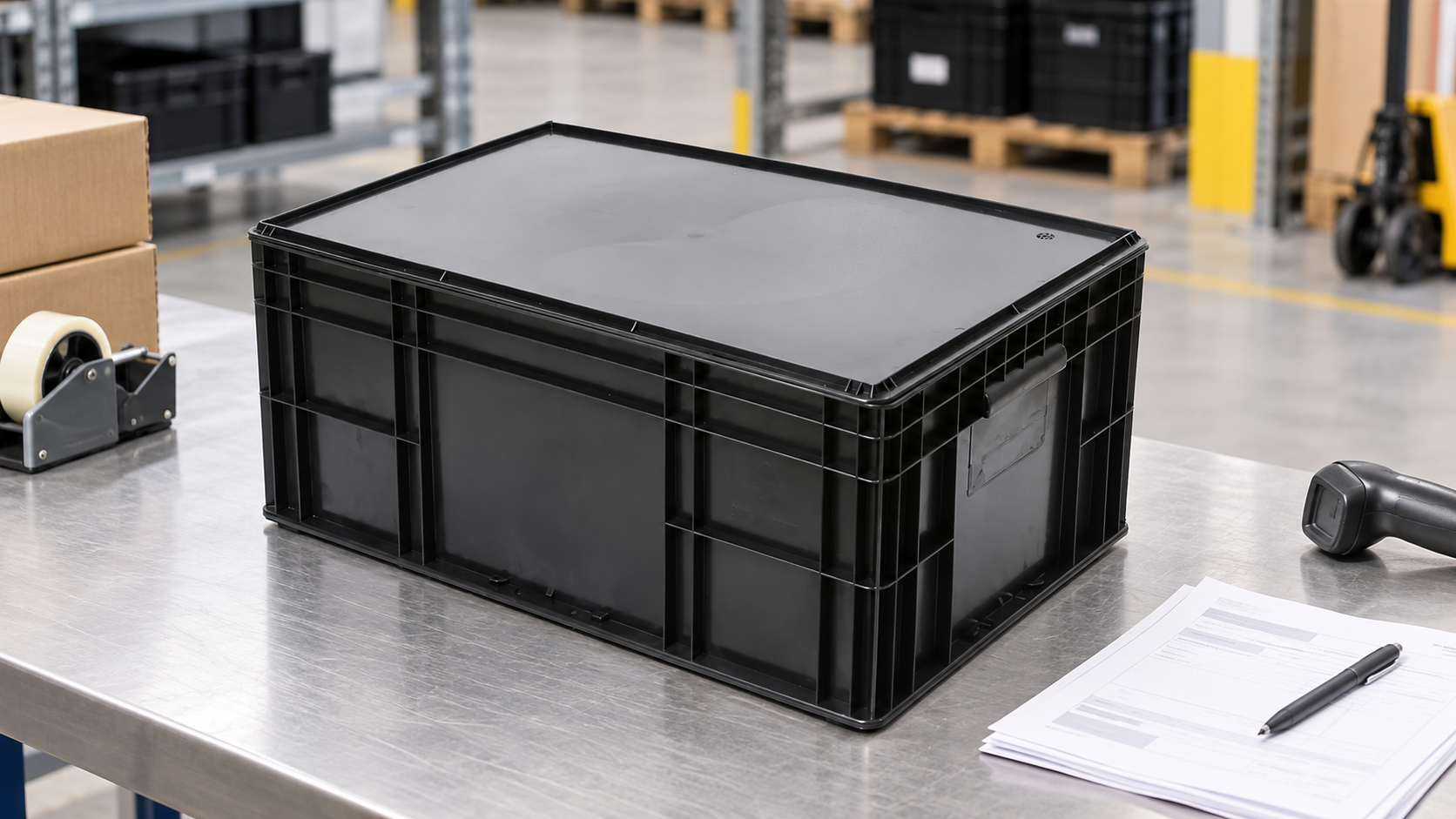
Specify ESD shipping boxes by route, shielding, payload protection, reusable-tote inspection and handoff control—not by color or label alone.
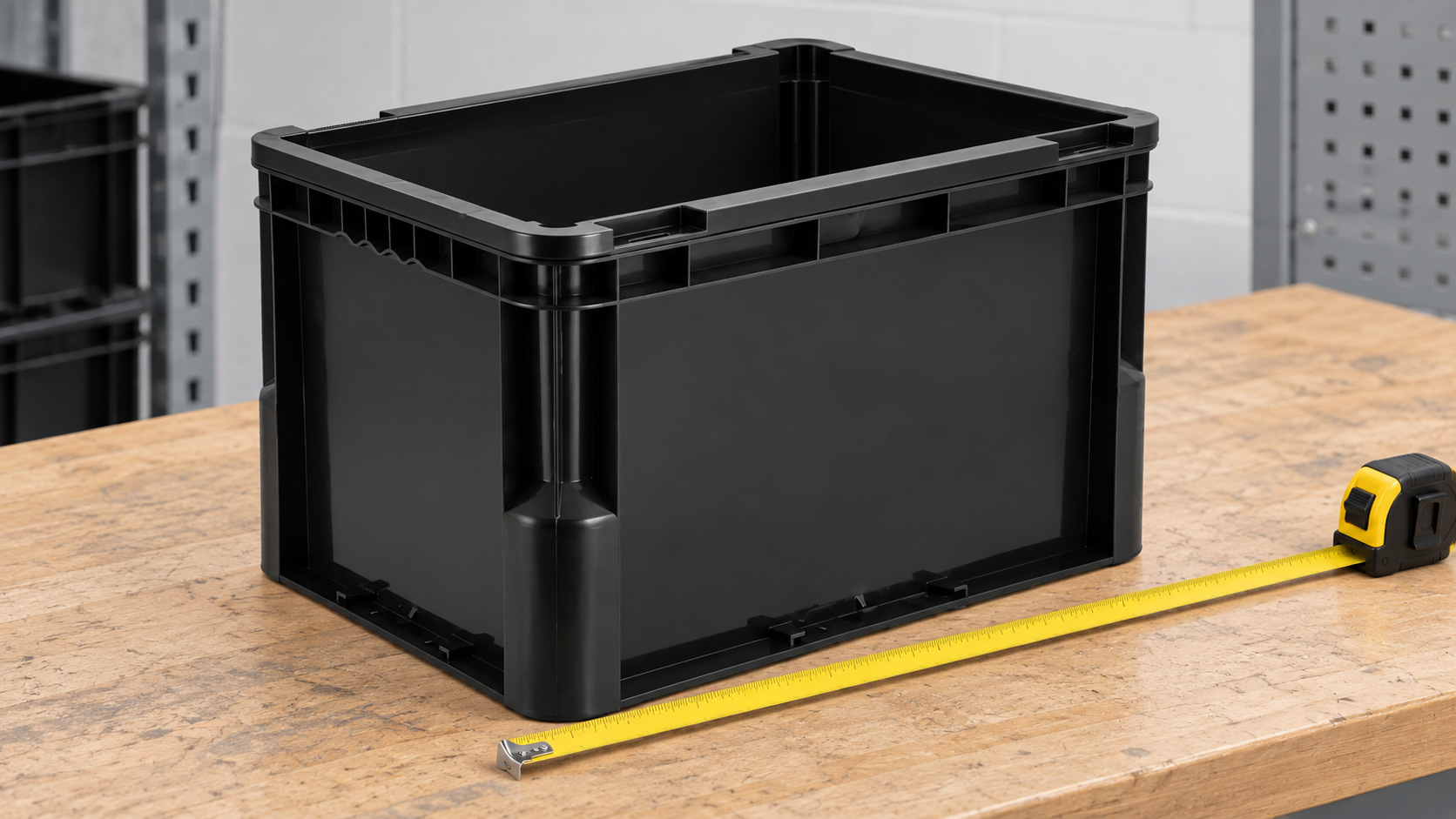
Measure usable interior, outer envelope, stacked height and equipment clearance before specifying an ESD tote for racks, carts or conveyors.
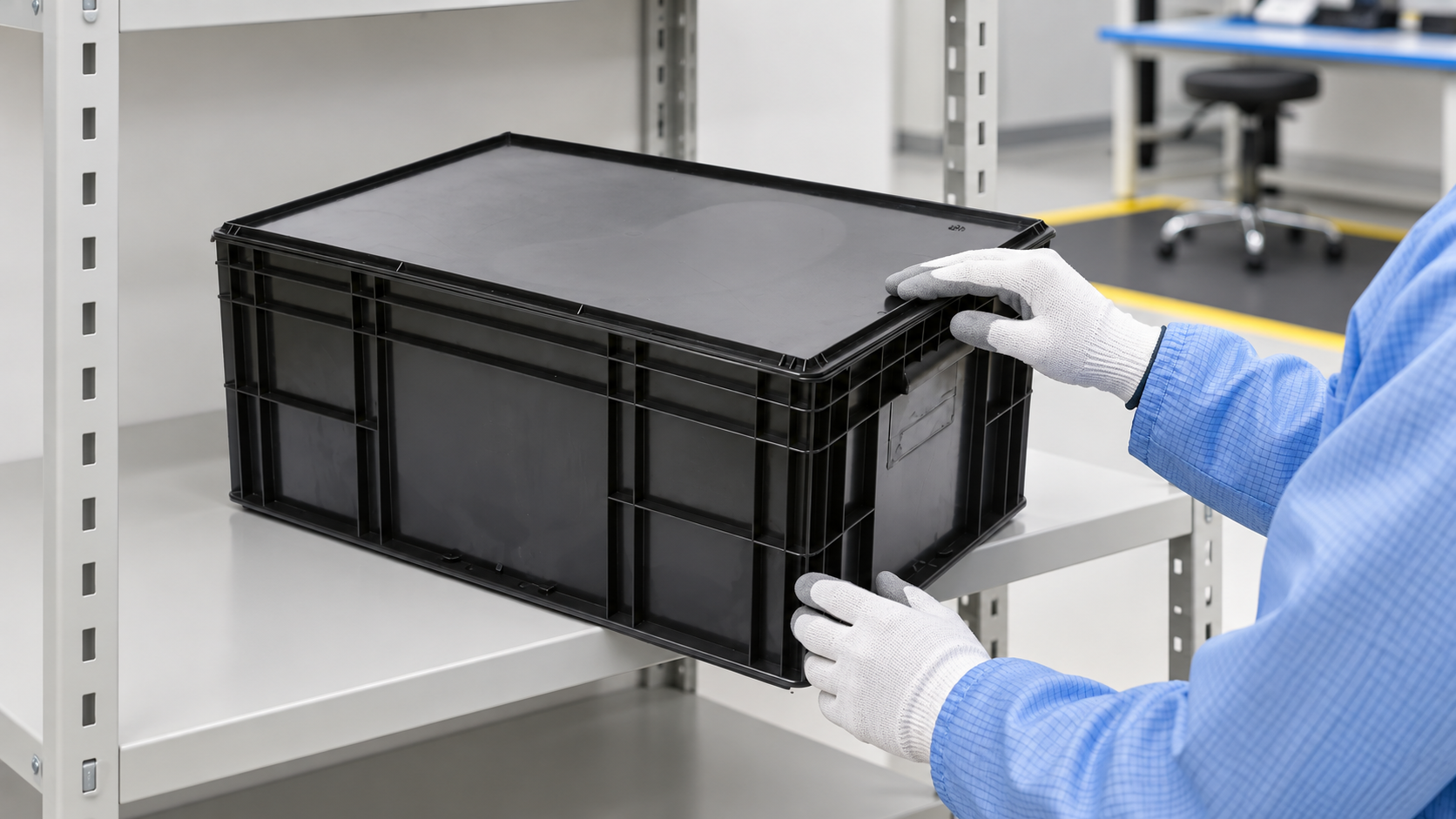
A practical ESD storage audit checklist for EPA boundaries, containers, shelving, labels, handoffs and corrective action.
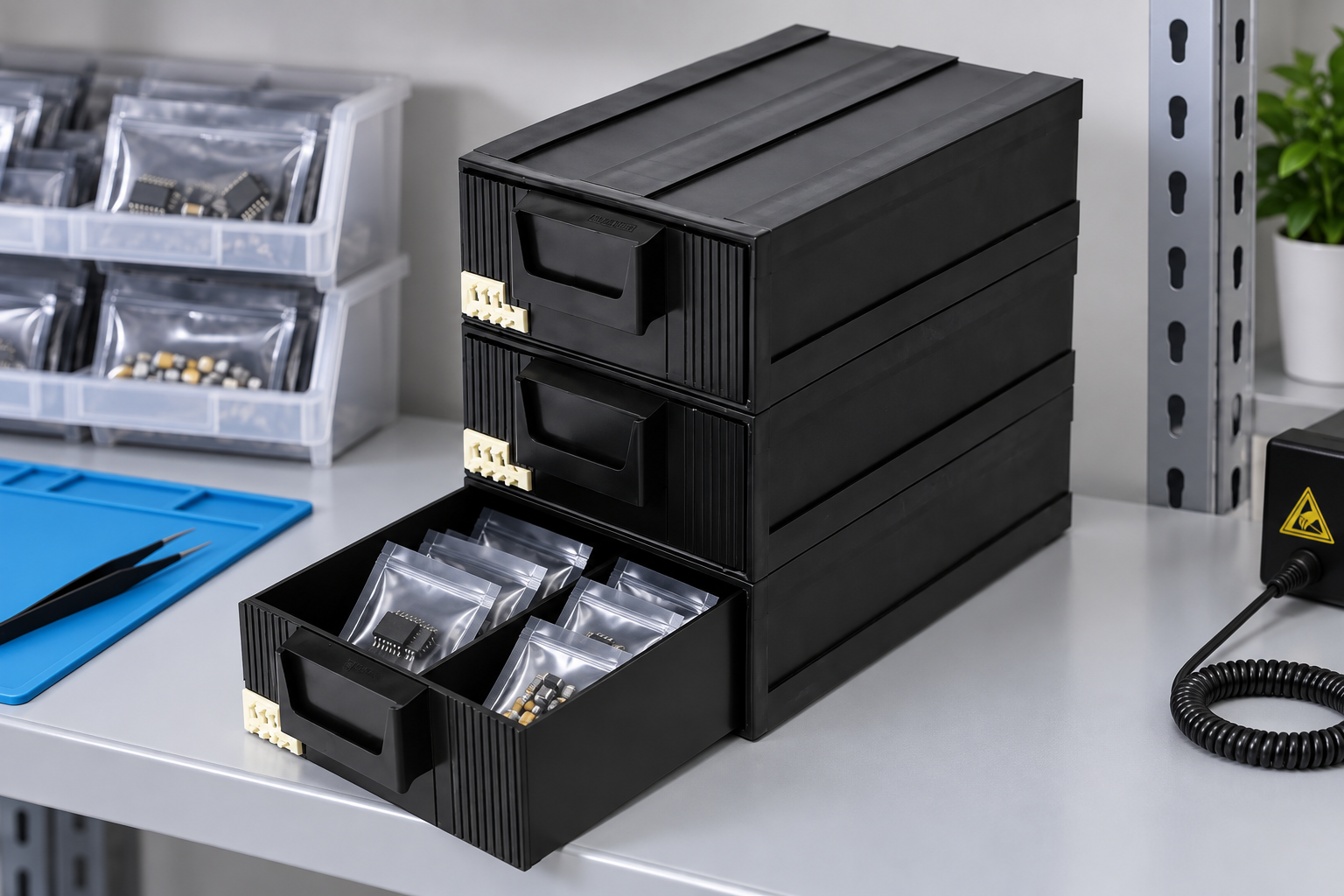
Select ESD drawer cabinets for small parts using protected-package fit, drawer travel, stable locations, labels, ergonomics and cleaning.
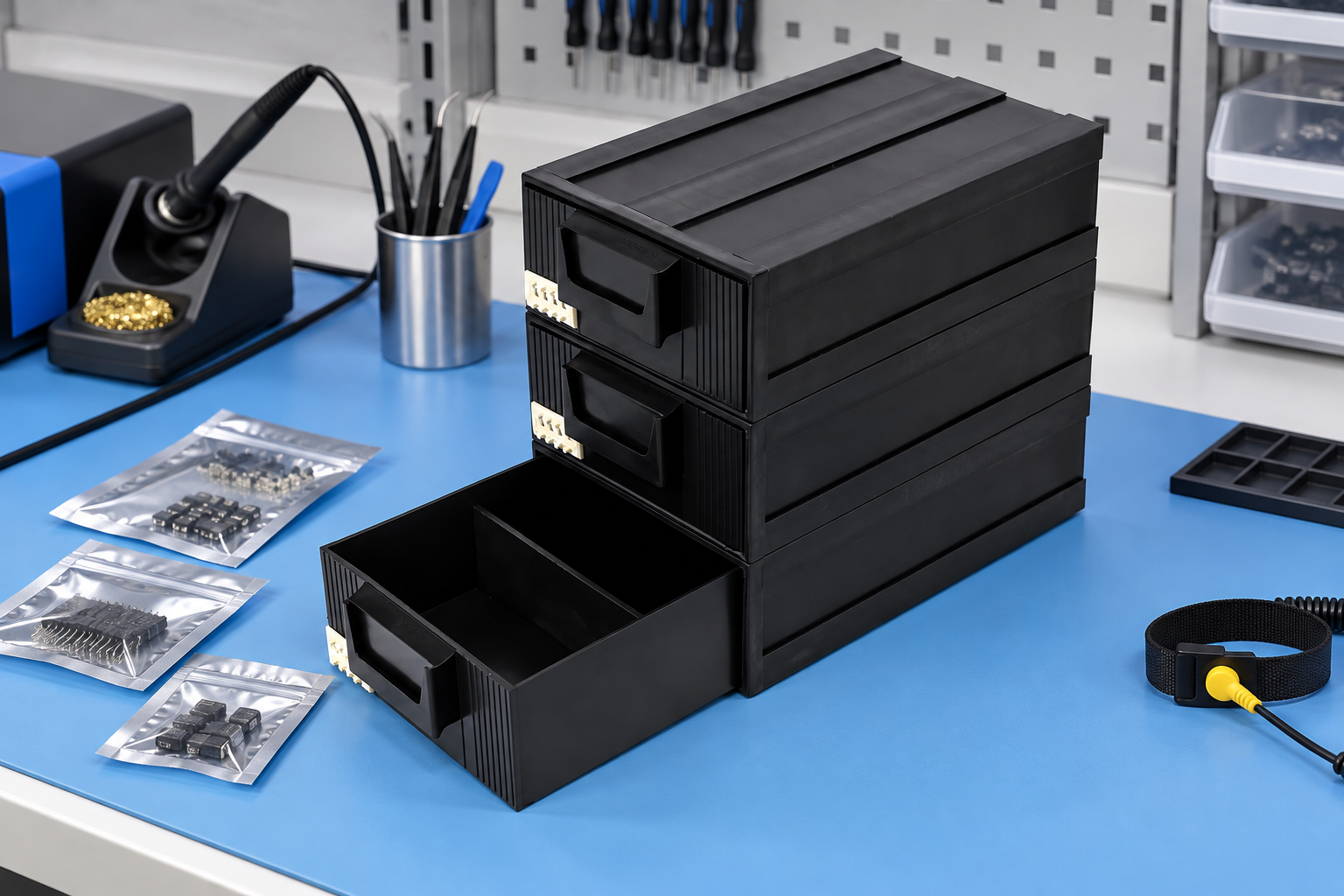
Organize an ESD repair station around job status, approved replacements, removed parts, drawer identity and controlled closeout.