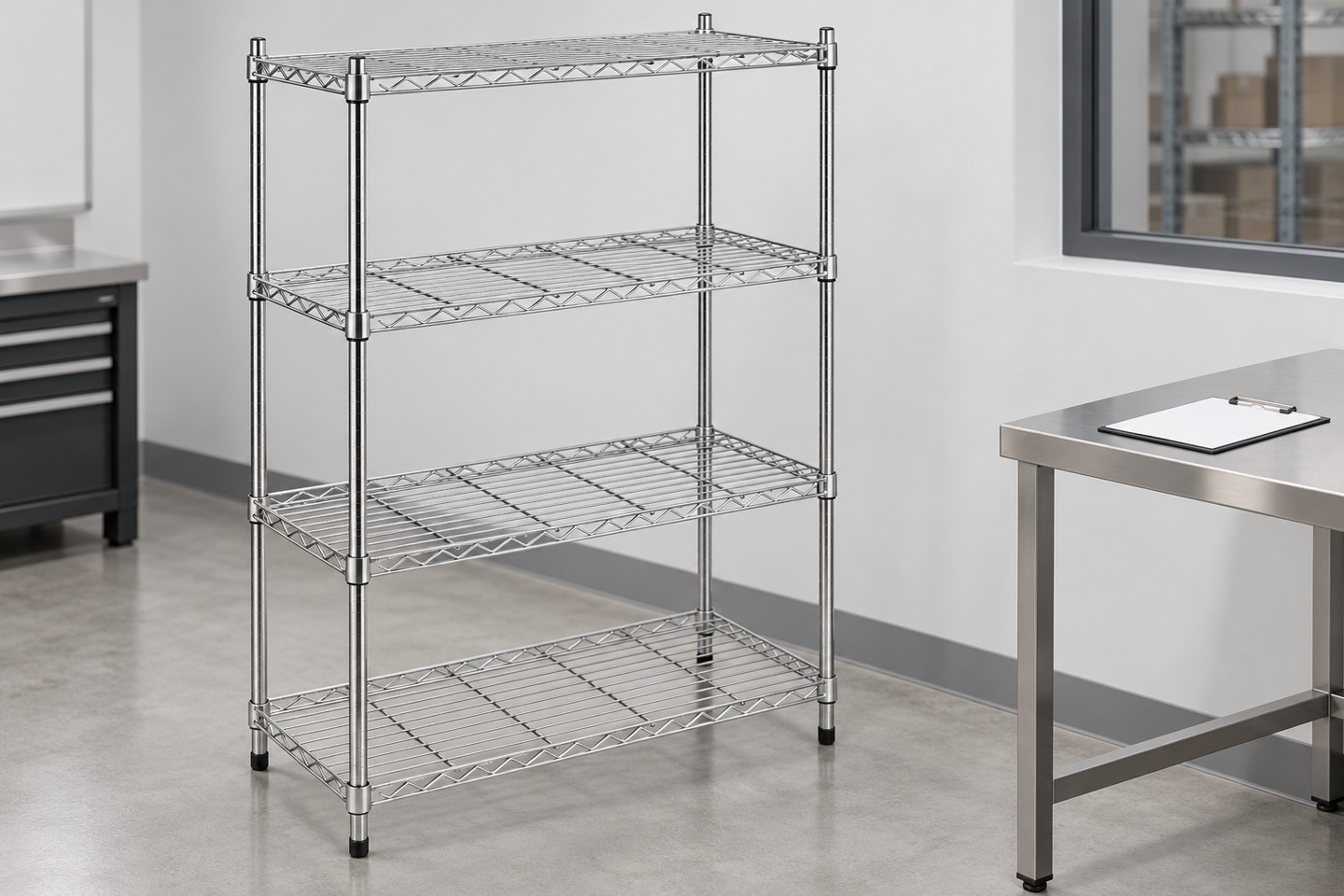
Plan fixed ESD shelf grounding by actual assembly paths, approved connections, suitable verification methods and documented changes; distinguish continuity from qualification.
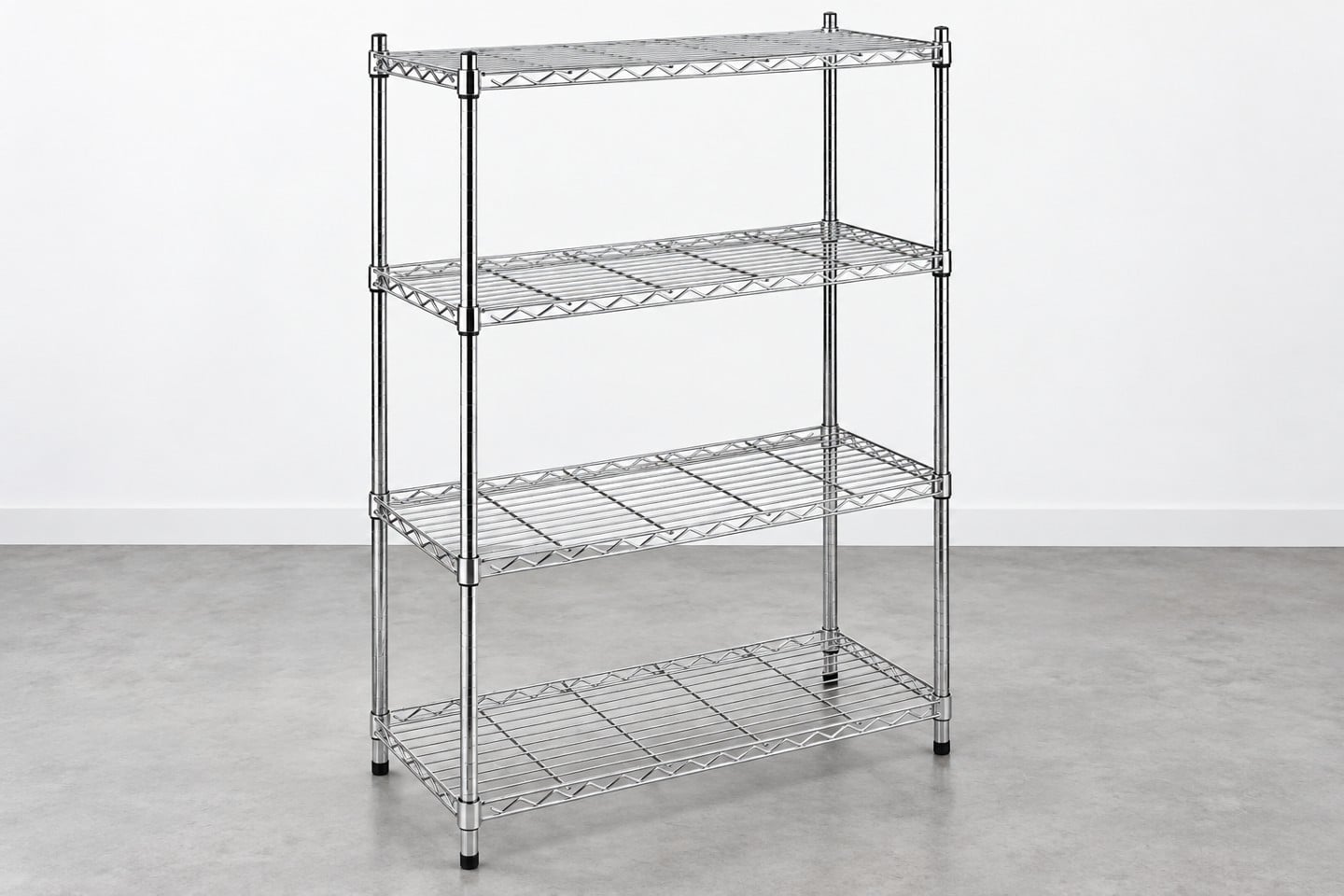
Review ESD rack shelf and frame ratings, load distribution, installation evidence, stability and site-specific anchoring before approving production storage.
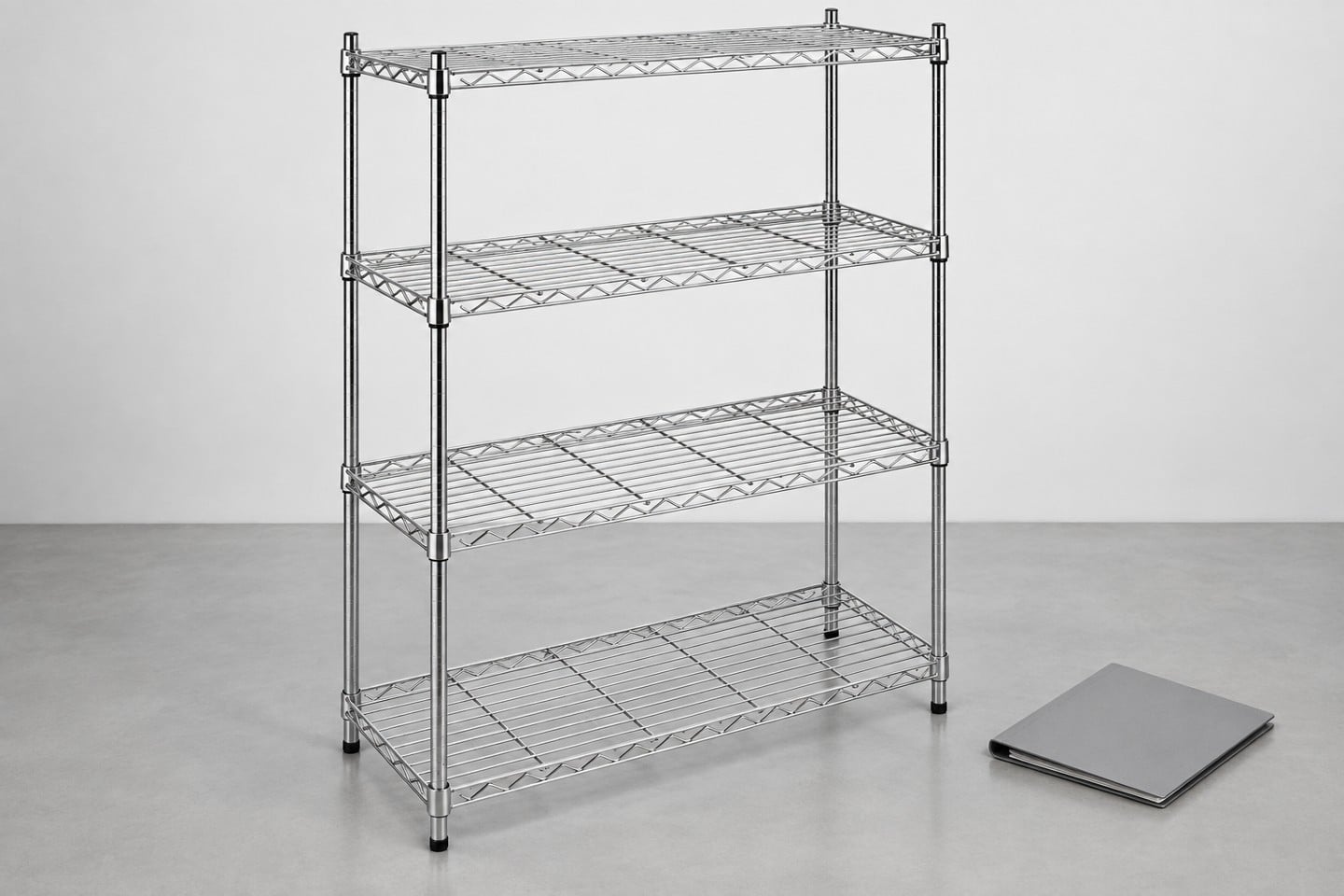
Specify rack surface treatments by actual substrate, application, complete electrical paths, cleaning exposure and repair acceptance rather than coating color.

Verify JEDEC tray bake temperature against the exact carrier specification, device drying procedure, load configuration and documented pre-bake release checks.
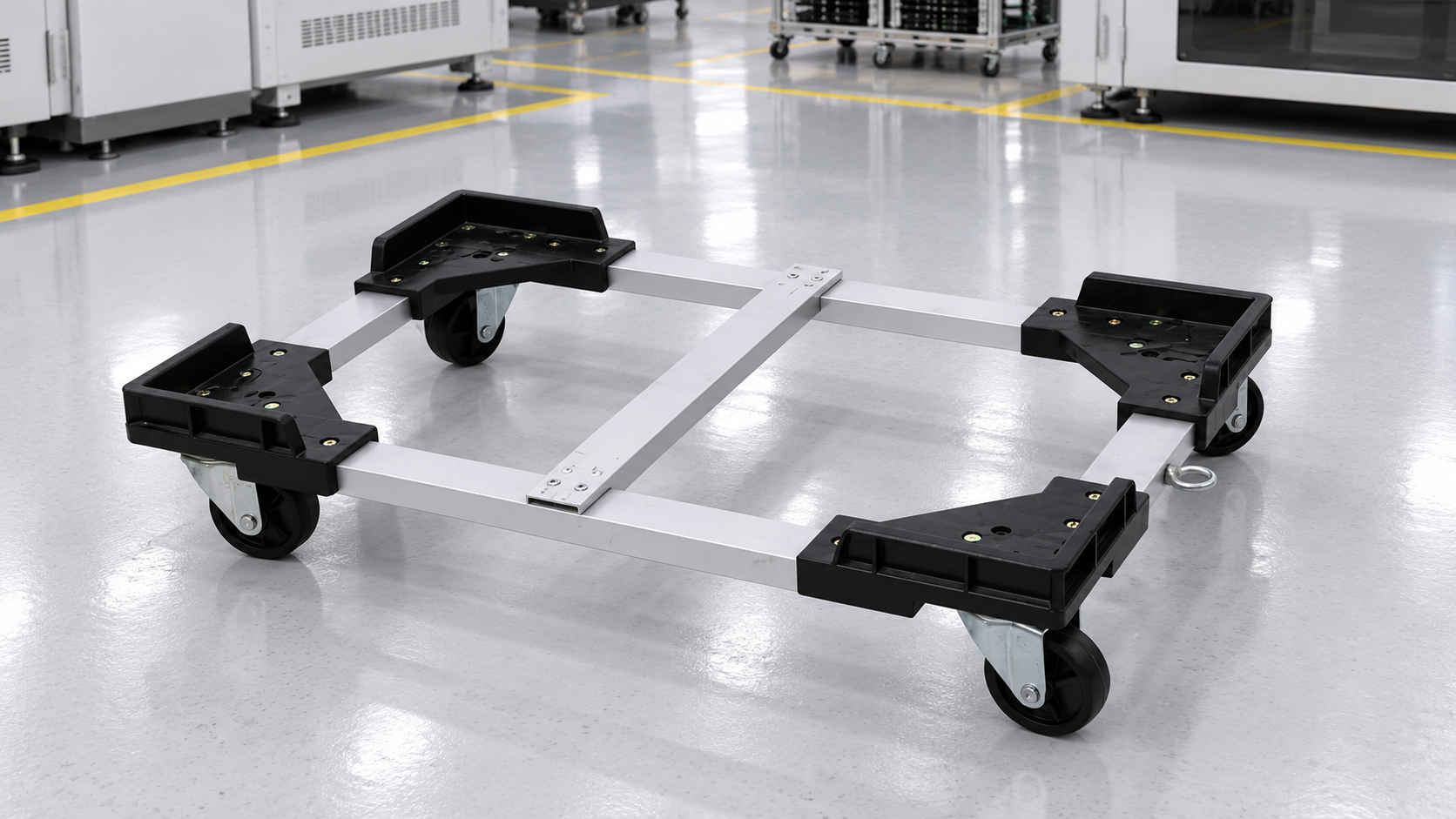
Select ESD trolley casters for actual SMT floors and cleanroom requirements: electrical checks, load, fit, cleaning and replacement acceptance.
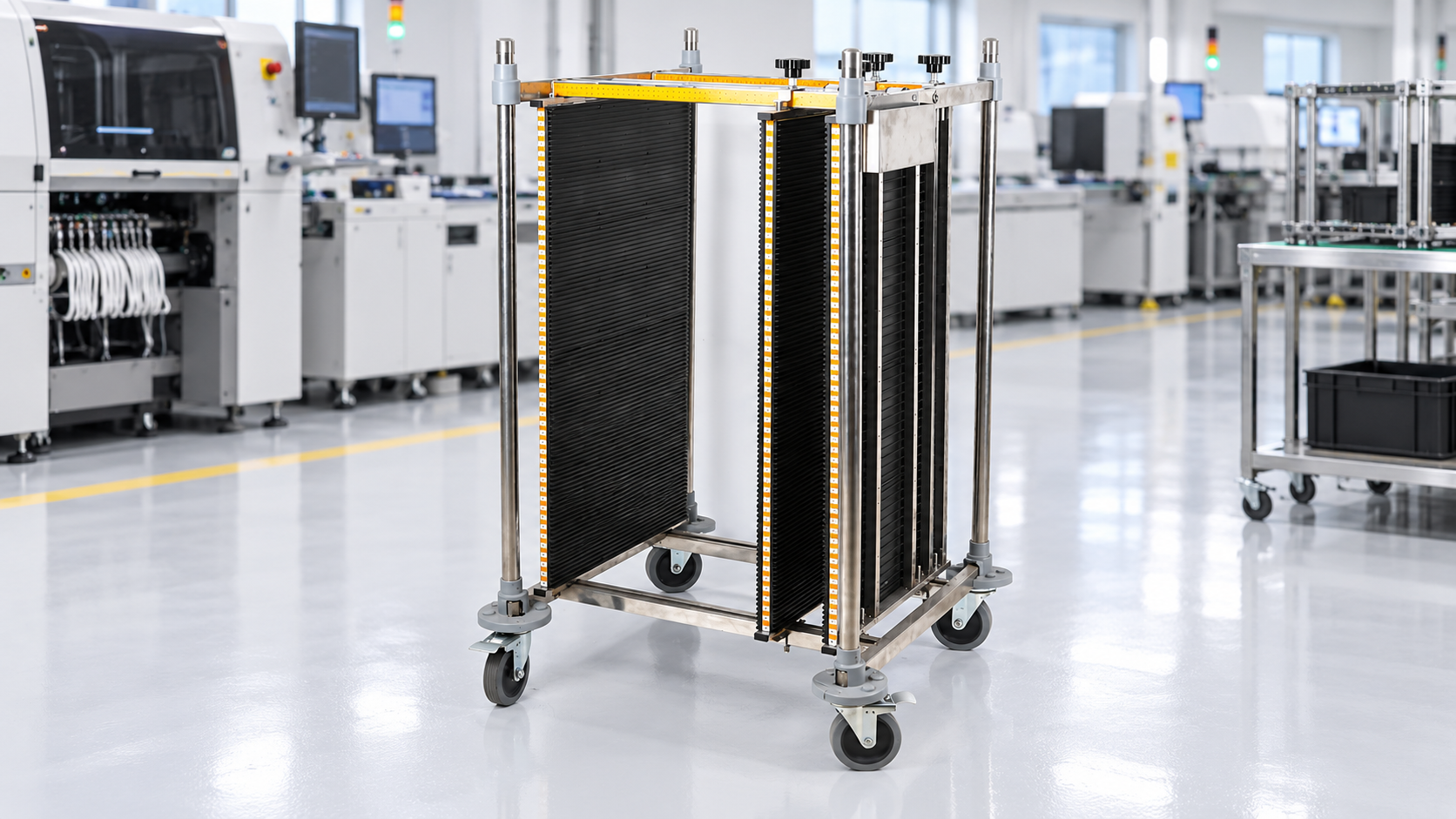
Specify trolley payload, shelf loads, caster conditions and representative route trials without confusing component ratings with assembly capacity.
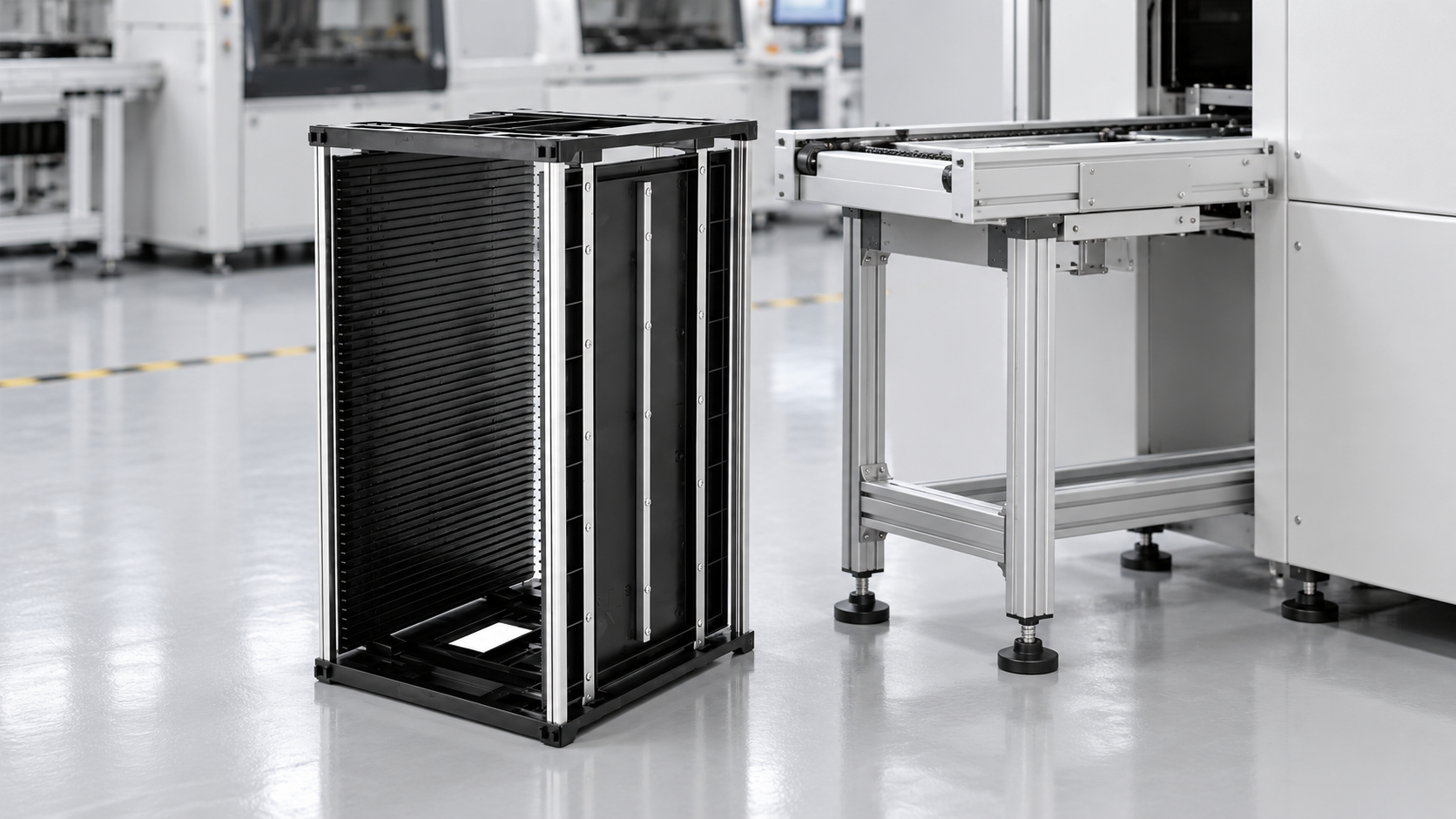
Check magazine bases, slot pitch, board transfer and loader setup before approving a PCB magazine rack for an existing SMT line.

Inspect used PCB magazine racks for identity, frame and groove condition, board fit, ESD performance and traceability before reuse.
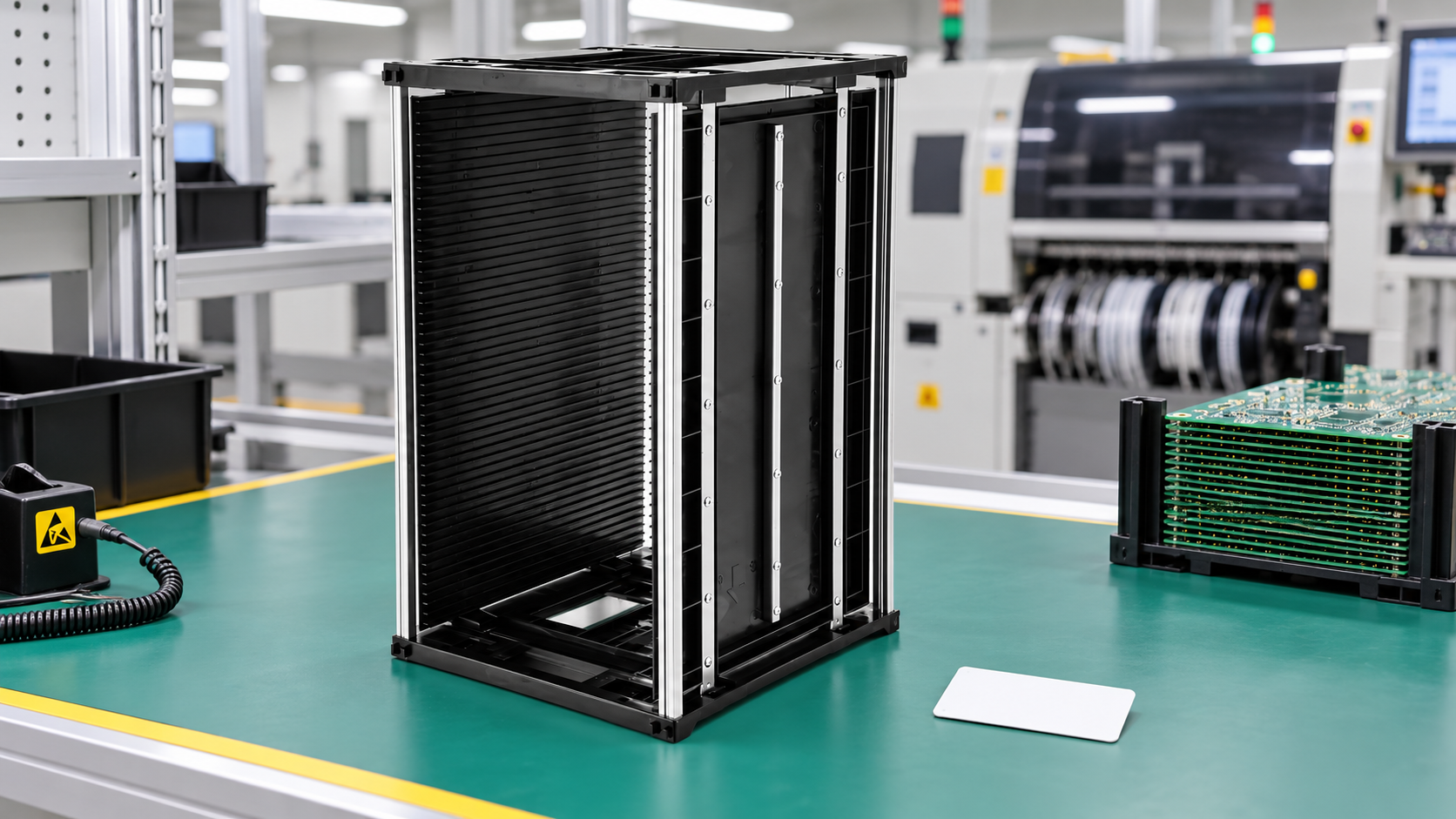
Separate permanent rack ID from temporary PCB lot travelers, then verify labels and handoff events at every SMT transfer.
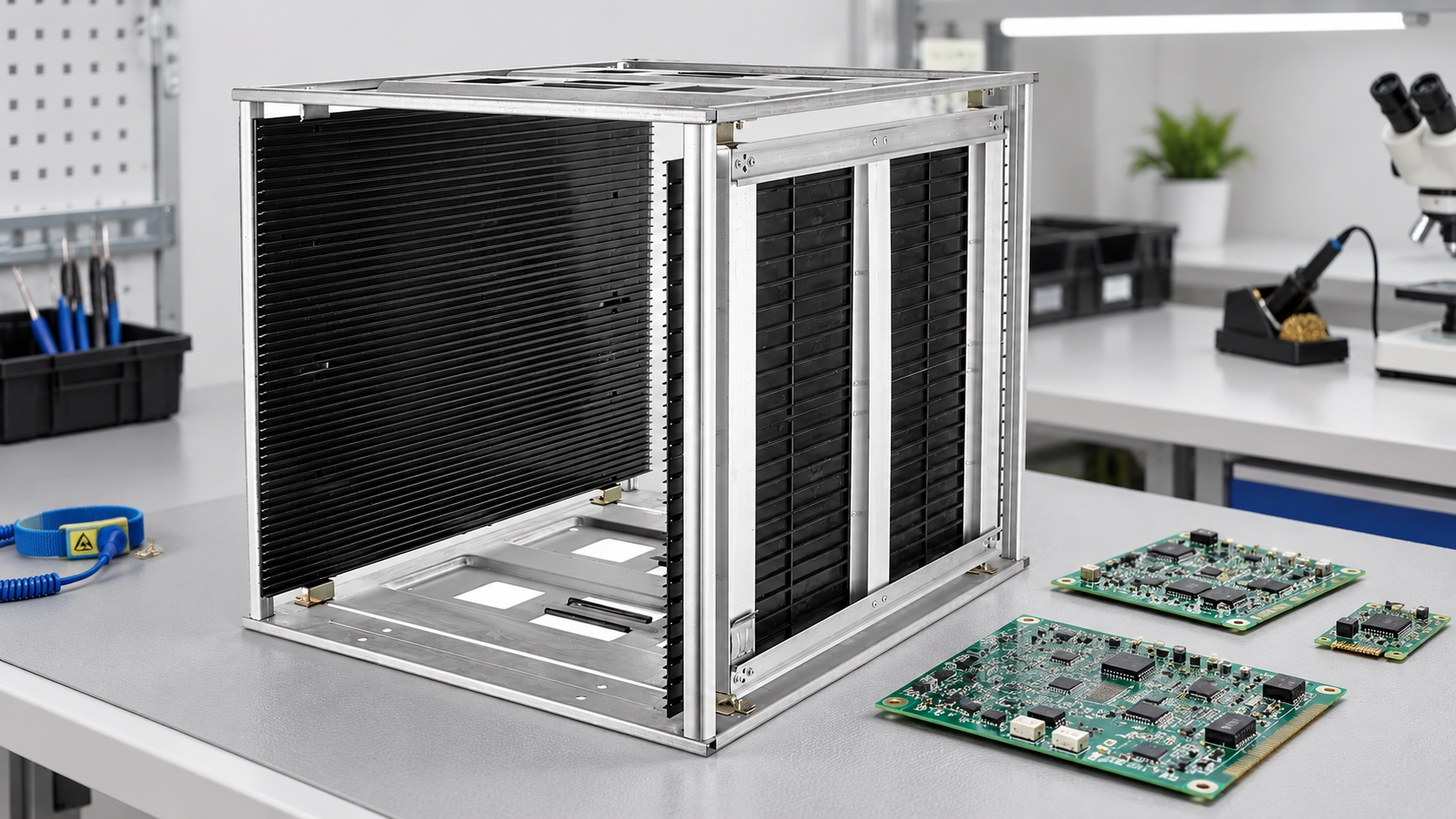
Specify ESD magazine rack load capacity using actual PCB mass, load pattern, frame deformation, route trials and post-test ESD checks.
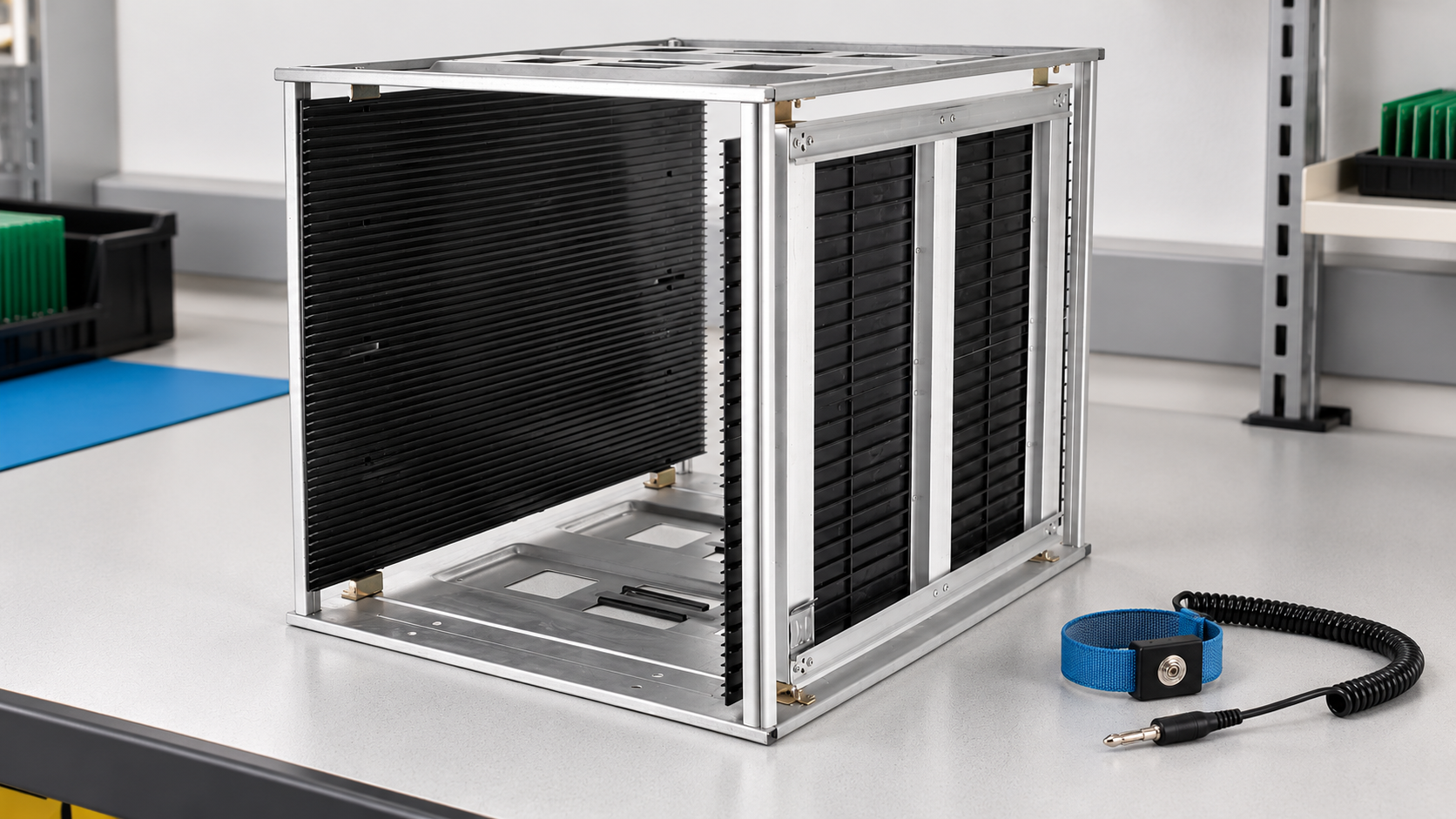
Verify ESD magazine rack grounding as an assembled EPA system: contact surfaces, frame path, portable use and approved measurement.

Qualify magazine rack heat resistance by actual exposure, loaded fit, material evidence and ESD performance after thermal cycling.