- Turbo
- Blog
ESD trolley maintenance protects two different functions: safe material handling and the electrostatic-control role declared for the cart. Wheels, brakes, shelves, frames, fasteners, stops and handles must remain mechanically sound, while conductive or static-dissipative paths must be verified using the site-approved method. Dirt, oil, loose hardware, unauthorized paint, replacement casters and improvised repairs can alter both functions. A cart that still rolls is not necessarily fit for sensitive assemblies, and a resistance reading cannot prove that the loaded cart is mechanically safe. This checklist helps electronics factories establish daily inspections, planned cleaning, periodic verification, repair controls and retirement criteria for ESD trolleys.
Start from the approved trolley configuration
Keep a controlled record of model, asset number, drawing or supplier configuration, shelf count, caster type, brakes, grounding features, load rating and intended route. Photographs can help identify unauthorized changes, but they do not replace the approved technical record.
Define whether the trolley carries exposed assemblies, closed protective packaging, tools or general materials. This determines the required packaging boundary and verification. Do not assume the cart itself provides shielding or corrects uncontrolled packaging.
Perform a short inspection before every shift
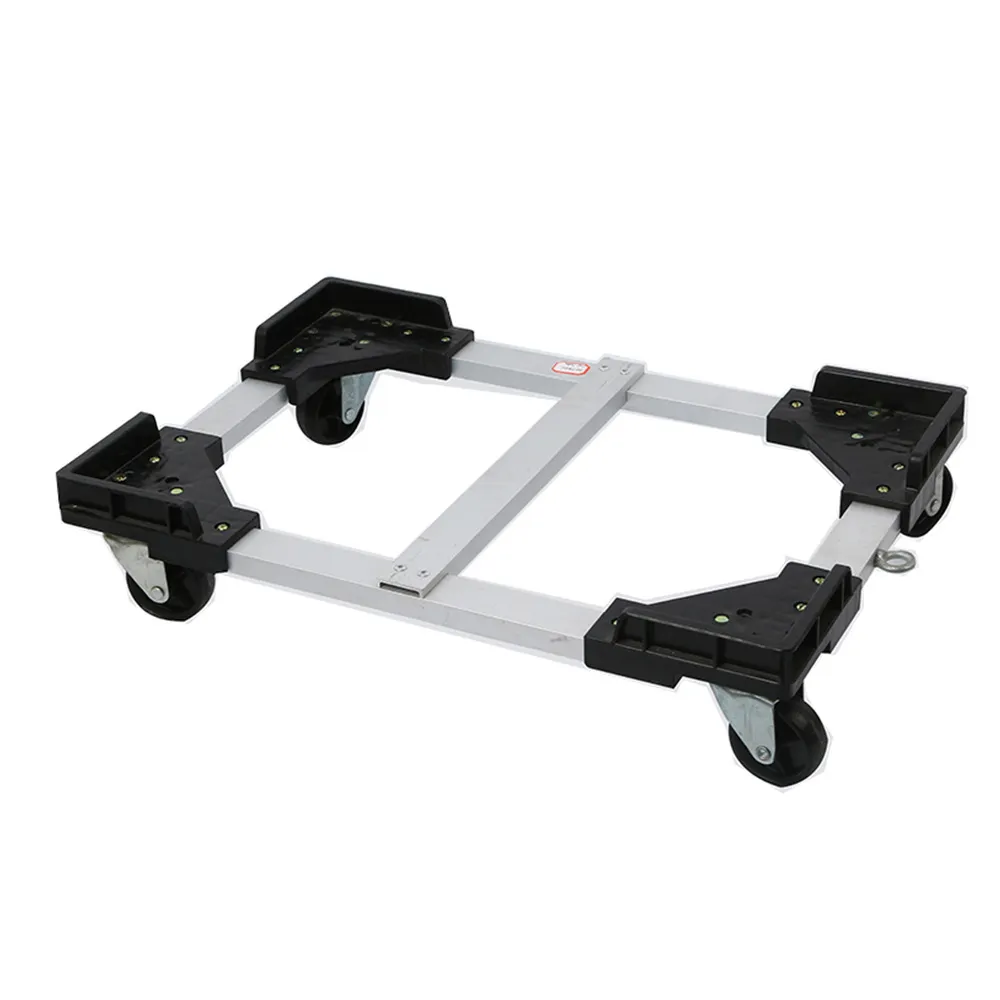
Walk around the unloaded trolley. Look for bent frames, cracked welds, loose bolts, sharp edges, damaged shelves, missing stops, unstable handles, contaminated surfaces and illegible labels. Roll it slowly and listen for binding, flat spots, excessive noise or caster wobble. Apply each brake and confirm it holds on the approved test surface.
Remove a trolley from service if it tips, tracks unpredictably, has a failed brake, exposes a sharp edge or cannot retain the expected load. Use a visible quarantine method so another operator does not return it to the line before repair and release.
Clean without changing the electrical or mechanical system
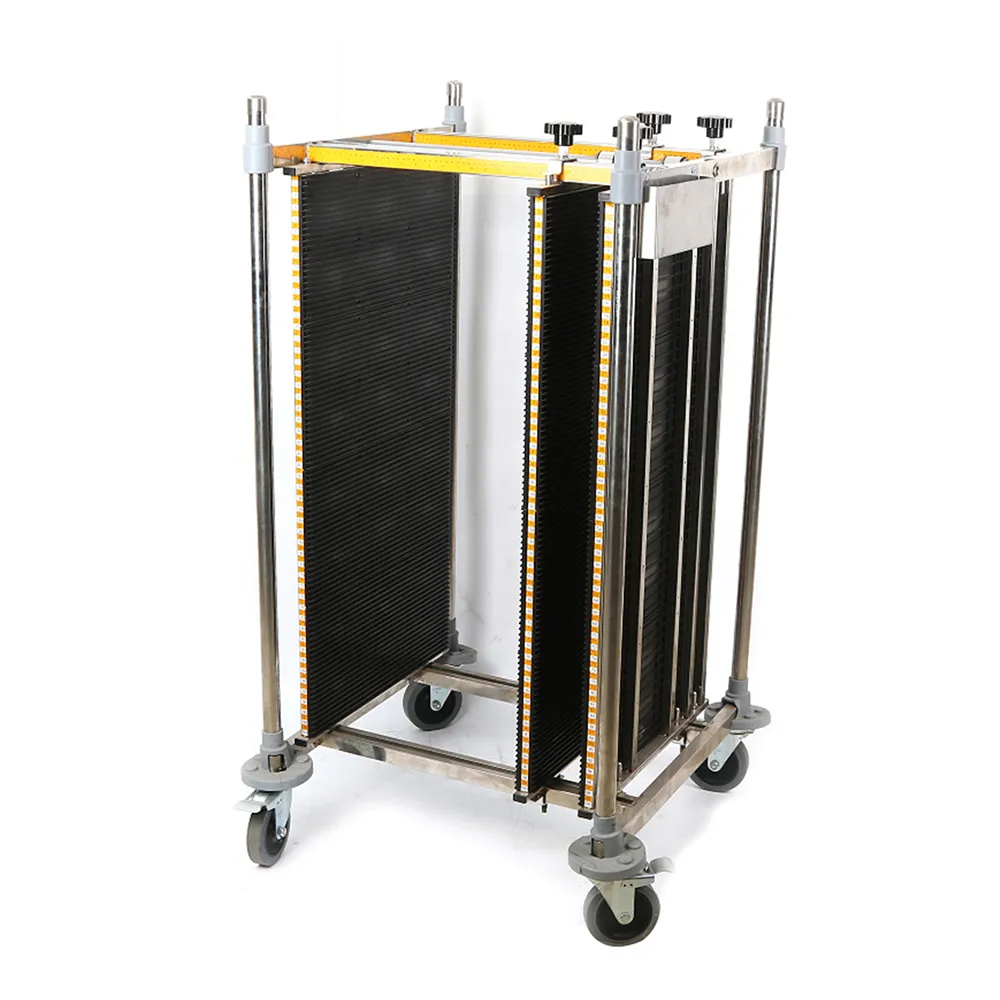
Use only an approved cleaner and controlled wiping method. Residue-forming products can coat shelves or wheels, while aggressive chemicals can attack polymers, coatings, labels and adhesives. Prevent liquid from entering bearings or electrical monitoring hardware where fitted.
Clean wheels and caster pivots because fibers, tape and debris can impair steering and braking. Do not scrape surfaces with tools that expose metal, damage coatings or create loose particles. Record unusual contamination because repeated oil or solder-paste exposure may indicate a process problem.
Verify declared ESD paths with a documented method
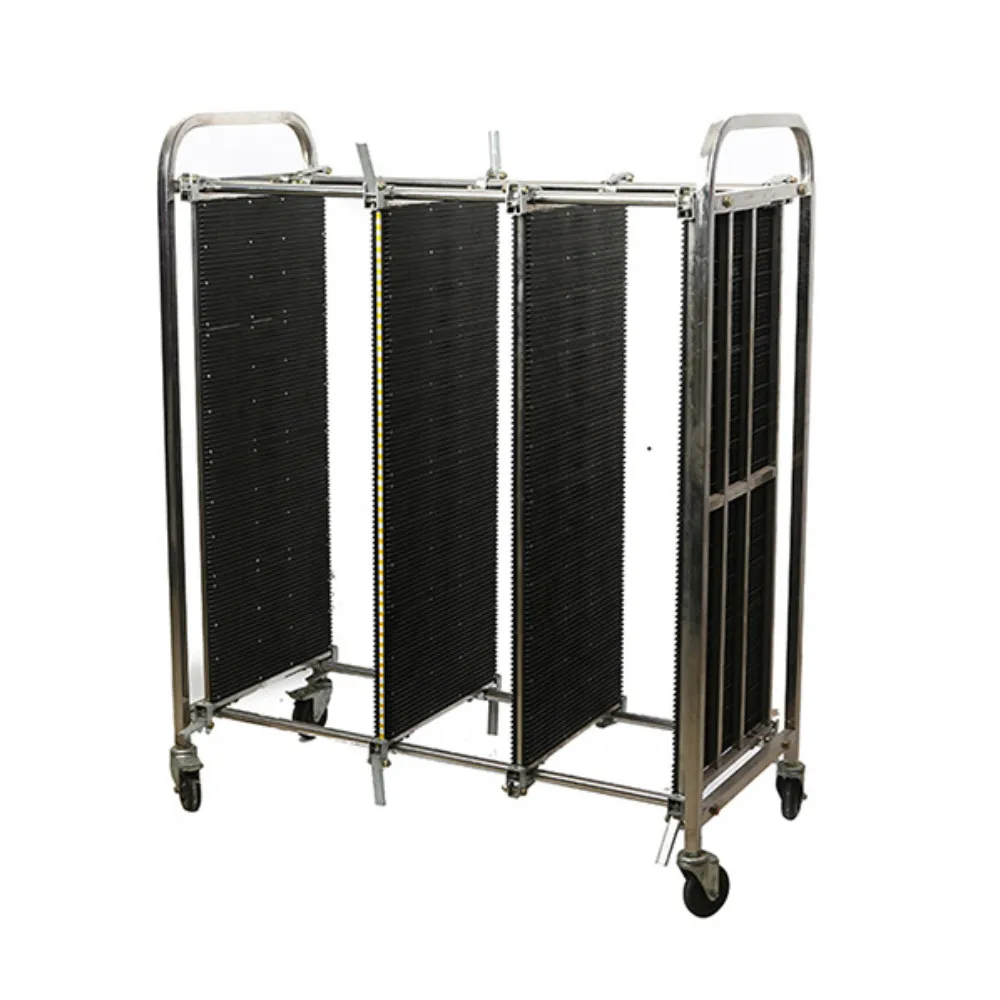
The ESD coordinator should identify what is measured: shelf surface, point-to-point path, frame, wheel-to-floor path or another declared feature. Use calibrated equipment, defined electrode placement, environmental conditions and acceptance limits from the site program or product specification.
Do not infer whole-cart behavior from one convenient spot. Replacement casters, shelf liners, coatings, fasteners and dirt can interrupt an intended path. When a cart is used with containers or racks, verify relevant interfaces in the actual loaded configuration if the control plan requires it.
Control repairs, parts and return to service
Require approved replacement casters, brakes, shelves, fasteners and grounding components. A wheel that matches diameter may still differ in load, tread, bearing, braking and electrical behavior. Record the old and new part, reason for change, repair date and responsible person.
After repair, repeat the relevant mechanical and ESD checks before release. Review caster alignment, fastener torque where specified, brake operation, stability, route clearance, labels and measurement results. Retire the cart when structural damage, recurring instability or unavailable controlled parts make reliable restoration impractical.
Tableau de contrôle pratique
| Frequency | Inspection item | Action on failure |
|---|---|---|
| Each use | Visible damage, cleanliness and labels | Quarantine if function is uncertain |
| Each shift | Wheels, tracking, brakes and shelf security | Remove from service for safety failure |
| Planned cleaning | Shelves, frame, wheels and handles | Use approved cleaner only |
| Periodic | Declared electrical path and records | Verify with approved method |
| After repair | Changed parts and affected functions | Retest before release |
| Annual review | Route, load, configuration and procedure | Update plan when use has changed |
Élaborer une procédure contrôlée et un exemple d'approbation
Procédure de chantier Responsable : [Insérer le responsable] Matériaux approuvés : Échantillon d'approbation ou ensemble photographique identifié. Séquence : 1. Former le personnel avec l'itinéraire réel et les équipements. 2. Observer plusieurs cycles normaux. Critères de réussite : Conforme à la configuration attendue. Conditions d'arrêt : Écart par rapport à la configuration approuvée ou anomalie sur l'équipement. Actions de l'opérateur : - Ce qui peut être corrigé immédiatement : Ajustements mineurs conformes à la configuration de référence. - Ce qui nécessite une mise en quarantaine et un réexamen : Tout défaut majeur ou non-conformité par rapport à l'échantillon d'approbation. Enregistrements : Consigner les formations, les observations de cycles et les rapports de contrôle.
Séparez la sécurité, la propreté, le fonctionnement mécanique et la vérification ESD. Un seul contrôle visuel ne peut pas couvrir tous les risques, et une seule lecture électrique ne peut pas prouver la propreté ou l'intégrité mécanique. Lorsqu'une mesure est requise, identifiez l'instrument, la méthode, les emplacements, l'environnement et les limites d'acceptation. Maintenez l'étalonnage des équipements et la formation du personnel à jour dans le cadre du système de l'installation.
Contrôle des réceptions et gestion des modifications
À la réception, comparez l'article, la quantité, la révision, le lot fournisseur et l'étiquette d'emballage au bon de commande. Inspectez pour détecter tout dommage, contamination, absence d'identification et différence inattendue de couleur, de texture, de géométrie, d'odeur, de quincaillerie ou d'emballage. Prélevez des échantillons pour vérifier les dimensions et les attributs fonctionnels selon le plan convenu. Mettez en quarantaine les changements inexpliqués plutôt que de laisser la pression de la production transformer une exception en une approbation non documentée.
Exiger une notification avant toute modification de la source des matériaux, des additifs, de l'adhésif, de l'outillage, des dimensions, du produit de nettoyage, de la construction ou de la quincaillerie critique. La requalification doit se concentrer sur les fonctions affectées par la modification, mais doit tout de même vérifier les interactions. Un adhésif plus puissant peut affecter le retrait ; une nouvelle roulette peut affecter le suivi et les chemins électriques ; un nouveau produit de nettoyage peut affecter les étiquettes et le comportement de la surface.
Essai de qualification et records
Exécutez l'essai dans des conditions environnementales et opérationnelles représentatives. Enregistrez la date, le lieu, les opérateurs, les échantillons, les numéros de lot, l'équipement, la préparation du nettoyage, l'itinéraire, les observations et les écarts. Incluez un article approuvé actuel comme référence dans la mesure du possible. Ne cachez pas une défaillance critique dans un score moyen. La sécurité, la protection du produit, la contamination, l'ergonomie, la documentation et les exigences ESD doivent faire l'objet de décisions de réussite distinctes.
Examiner les résultats après un nombre de cycles suffisant pour révéler la variation normale. Une seule démonstration réussie peut passer à côté des différences liées aux opérateurs, des pics de trafic, de l'usure, des effets de charge et de nettoyage. Le rapport doit mentionner les limites : ce qui n'a pas été testé, quelles allégations restent des déclarations du fournisseur et quelles conclusions s'appliquent uniquement à la configuration testée. Conserver les preuves avec l'élément ou le dossier de processus afin que les futures équipes puissent comprendre le fondement de l'approbation.
Auditer le processus après la mise en production
Observez le processus pendant le travail normal après la libération, et pas seulement lors d'une démonstration planifiée. Confirmez que les utilisateurs suivent la séquence approuvée, que les matériaux restent disponibles, que les étiquettes sont lisibles et que les conditions d'arrêt sont comprises. Échantillonnez les enregistrements pour détecter les résultats manquants, les échecs répétés et les substitutions inexpliquées. Demandez aux opérateurs où la procédure est difficile, car les solutions de contournement révèlent souvent un problème d'adéquation, d'accès, de circulation ou de formation avant qu'il ne devienne un défaut du produit.
Analysez les tendances des défaillances par article, emplacement, équipe et lot de fournisseur lorsque les enregistrements disponibles le permettent. Les problèmes répétés doivent déclencher une analyse des causes, et non pas simplement un remplacement plus fréquent. Mettez à jour la procédure lorsque le produit, l'atelier, l'équipement, le produit de nettoyage, le circuit de circulation, l'emballage ou le plan de surveillance change. Conservez la date de révision visible et retirez les copies obsolètes afin que la méthode approuvée reste sans ambiguïté.
Liste de contrôle RFQ pour les acheteurs
Précisez l'application, l'environnement, les dimensions, les interfaces, la construction, la fonction requise, la méthode d'essai, les critères d'acceptation, la propreté, l'emballage, l'étiquetage, la traçabilité, la quantité d'échantillons, la documentation et la notification des modifications. Passez en revue le SWESD ESD trolley product et le Centre de produits SWESD à titre de points de départ ; l'approbation finale doit correspondre à l'article fourni et au propre programme de contrôle de l'acheteur.
- Décrire l'itinéraire d'utilisation réelle et le produit protégé.
- Identifier les critères éliminatoires et les preuves acceptables.
- Demandez des plans, des matériaux et des résultats de tests traçables le cas échéant.
- Définissez les quantités d'échantillons et de premier article avant la production.
- Lister les hypothèses approuvées de nettoyage, d'inspection et de remplacement.
- Exiger la divulgation écrite des exceptions et des modifications.
Ressources SWESD associées
- defining ESD transport cart load requirements
- reviewing the role of an ESD trolley
- planning trolley, box and rack combinations
Educational video: Fundamentals of Electrostatic Discharge
This neutral educational video from Maxim Integrated provides background for the controlled process. The written guide remains complete without it.
Foire aux questions
How often should an ESD trolley be tested?
Set the interval from the facility control plan, risk, use, environment, repair history and verification results rather than a universal calendar.
Can ordinary replacement casters be used?
Only when the replacement meets the approved mechanical and electrical requirements and the affected functions are retested.
Is a resistance test enough to release a trolley?
No. Mechanical safety, load retention, brakes, wheels, cleanliness and configuration also need acceptance.
When should a trolley be quarantined?
Quarantine it after a safety failure, unexplained change, damage, contamination, failed verification or unauthorized repair.


Laisser un commentaire