- Blog
Pick the tray construction from the part, route, and reuse expectation — not from the material word. A rigid polypropylene-family ESD tray and a thermoformed cavity tray solve different handling jobs, and the published model evidence, ESD data, and a sample-use review decide which one belongs in the quotation.
La ESD Tray category lists the published tray families on one page. For the formed-cavity side, the first-party thermoformed tray customization guide is useful background reading before comparing constructions.
Part 1. Define the job each tray family does
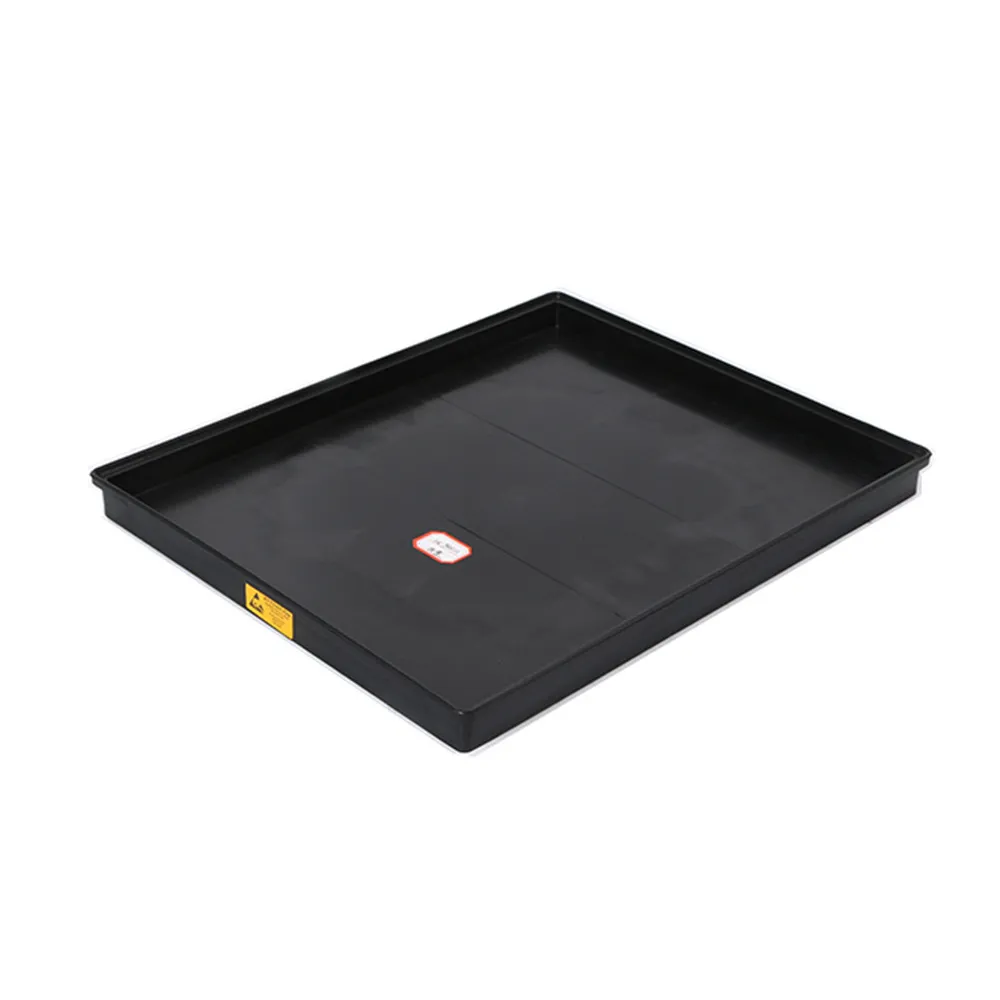
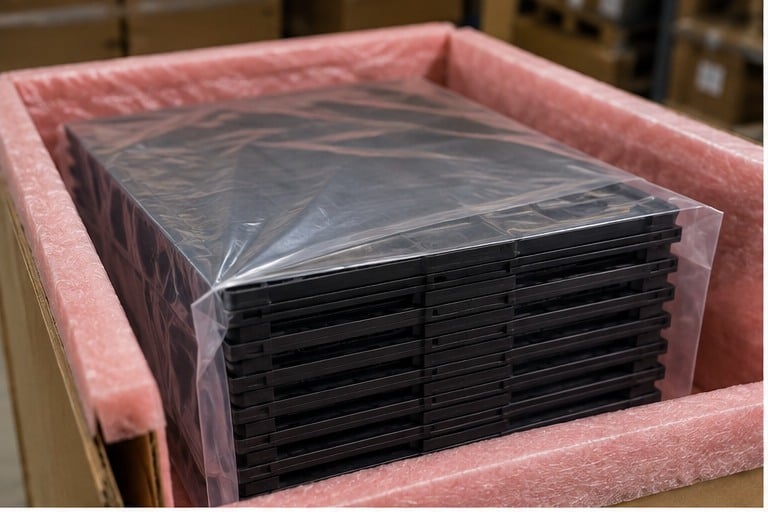
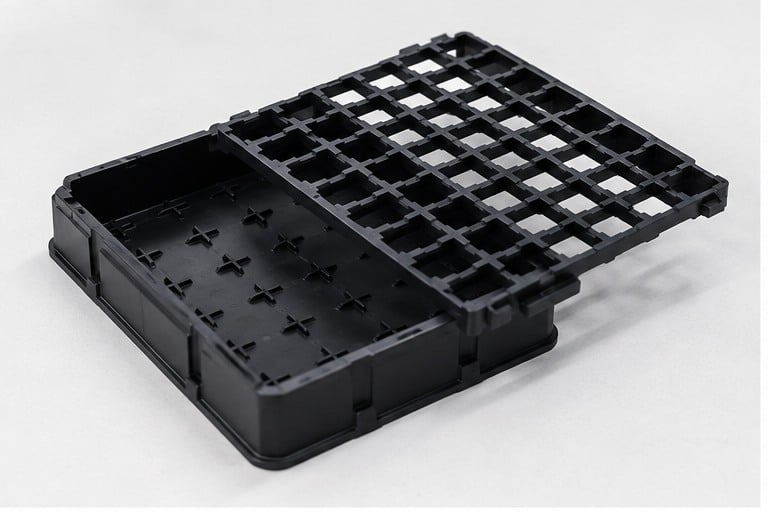
A rigid tray in the polypropylene family typically serves open or partitioned staging: parts wait at a bench, move between stations, sit in a rack, or cycle through a turnover loop. Stiff walls, a flat base, and a repeatable footprint matter more than a part-shaped pocket in that role.
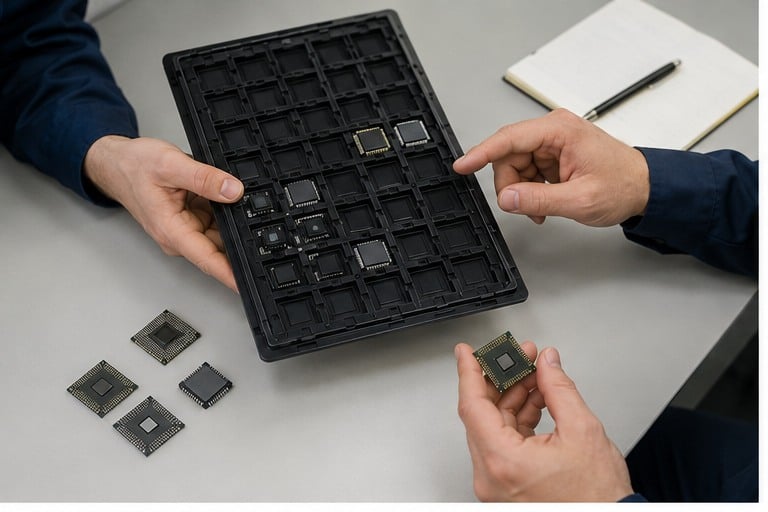
Thermoformed trays answer a different question. When each unit must sit in its own shaped cavity — an IC strip, a module with connectors, an odd-shaped subassembly — a formed sheet can nest the part so orientation and spacing stay controlled. The PCB tray overview shows how tray roles split across board handling before any material decision is made.
Neither family is an upgrade of the other. Sending a formed cavity tray on a heavy turnover loop, or asking a flat rigid tray to hold an irregular part in fixed orientation, replaces one problem with another.
| Operating question | Rigid tray family answer | Formed tray answer |
|---|---|---|
| What holds the part? | Open floor, partitions, or grids | A cavity shaped to the part |
| What repeats? | Footprint, stacking, and turnover | Nesting, orientation, and count per sheet |
| What defines success? | Route survival and staging discipline | Cavity fit confirmed against a drawing |
| What breaks the choice? | Parts that need fixed orientation | Routes that exceed the formed sheet’s duty |
Part 2. Record the part, route, and reuse inputs
Start the comparison with the part record: maximum length, width, height, protrusions, connectors, and any contact-sensitive faces. Add the required orientation and how an operator or machine loads and removes the unit. A marked-up drawing beats a part name.
Route and reuse inputs carry equal weight. Note where the tray travels (line-side, between buildings, through a wash bay, into storage), how many return trips are expected, and what happens to a tray that comes back damaged or dirty. Buyers who skip the reuse line often discover it later as an unplanned cost.
| Worksheet field | What to record | Why it moves the decision |
|---|---|---|
| Part envelope | Dimensions, protrusions, restricted faces | Determines cavity need versus open staging |
| Orientation | Stored face, entry direction, removal motion | Formed nesting fixes orientation; open trays do not |
| Route | Stations, transport legs, wash or cleaning steps | Duty on the tray body differs by construction |
| Reuse expectation | Return trips, inspection, retirement rule | Changes the economics of each construction |
| Identification | Label, lot, or work-order fields | Both families need a documented label rule |
Part 3. Review the published polypropylene-family evidence
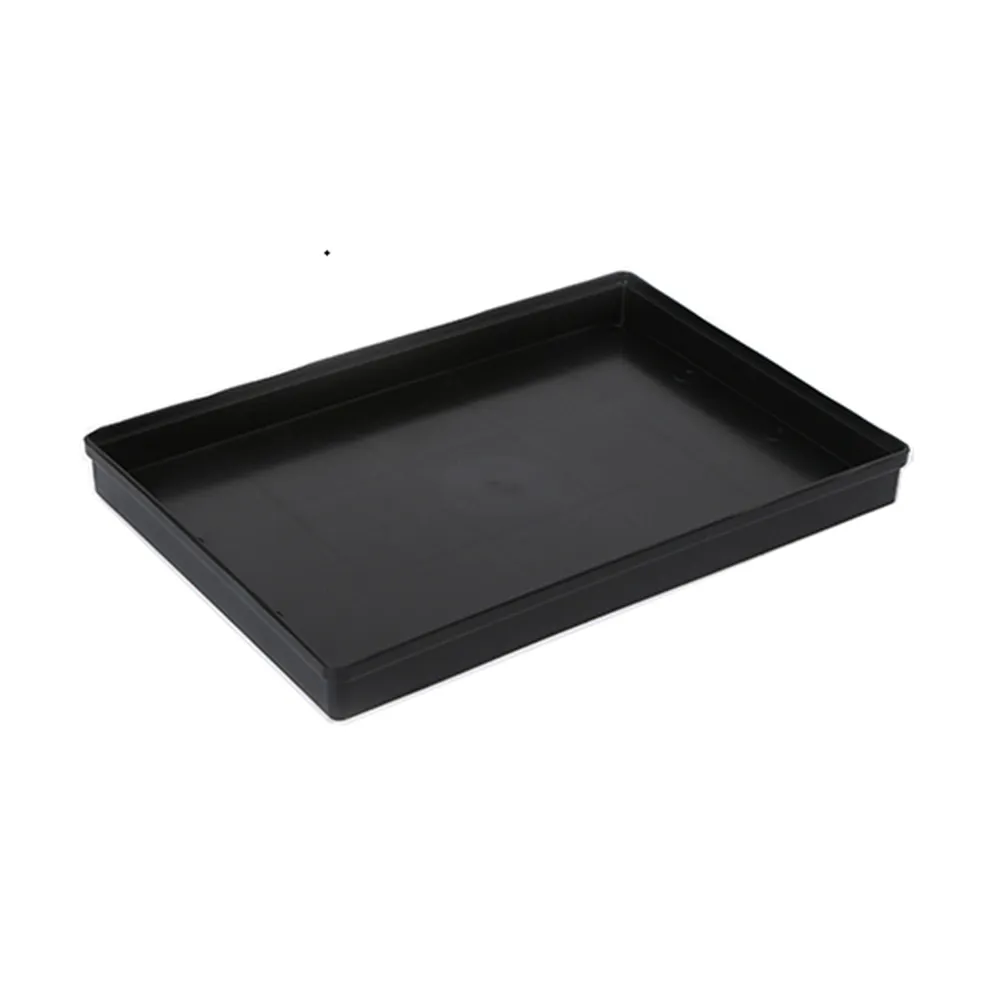
The published Sanwei ESD Tray product page lists named model rows from 3W-9805108 to 3W-9805134. Each row records external dimensions, inner size, wall thickness, and weight — for example, 3W-9805108 shows 225 × 165 × 37 mm external, 215 × 155 × 32 mm inner, a 2 mm wall, and 0.18 kg, while larger rows reach 592 × 545 × 37 mm with walls up to 4.5 mm.
Listed rows also record a static index of 10e4-10e8 Ω and optional accessories such as an anti-static label, an anti-static partition, and silk screen printing. On the related Sanwei ESD Tray With Grids page, the family description cites conductive PP materials or surface treatment technology.
Read those rows as row-level facts. A dimension or accessory published for one model does not transfer to another, and the page does not publish a molding process, resin datasheet, or load rating for any row.
| Published observation | Selection use | Do not infer |
|---|---|---|
| Named rows 3W-9805108 to 3W-9805134 | Shortlist rows near the part envelope and route | That unlisted sizes exist or match |
| Wall thickness 2 to 4.5 mm by row | Compare stiffness needs against the route | A load rating or drop performance |
| Static index 10e4-10e8 Ω on listed rows | Set the electrical starting point for the RFQ | Acceptance under the buyer’s own test method |
| Label, partition, and silk screen options | Plan identification and segregation | That every option applies to every row |
Part 4. Weigh the published thermoformed-side evidence
Sanwei’s first-party blog covers the formed-cavity side. The thermoformed tray customization guide explains how custom formed trays support IC packaging, and the PS thermoform tray notes discuss polystyrene as a forming material for electronics trays.
Treat those articles as guidance rather than a model table. A formed tray is defined by its drawing: cavity layout, part clearance, sheet behavior, and the count per sheet all come from the buyer’s part geometry and the agreed design, so the evidence that matters is the reviewed drawing and the sample, not a catalogue row.
That difference shapes procurement. The rigid family starts from published rows and narrows; the formed side starts from a part drawing and builds. Budget review time accordingly.
Part 5. Compare the constructions on buyer factors
With the worksheet and both evidence sets in hand, the comparison becomes a table of trade-offs instead of a material debate. Score each factor against the documented part and route.
| Buyer factor | Rigid polypropylene-family tray | Thermoformed cavity tray |
|---|---|---|
| Part control | Open floor or partition cells; orientation by procedure | Cavity nests the part; orientation by design |
| Evidence available | Published model rows with dimensions, wall, weight, static index | Drawing-driven; confirmed at design and sample review |
| Turnover duty | Selected by row and confirmed on the route | Confirmed per design; duty is part of the drawing review |
| Change tolerance | New part often fits an existing row or partition plan | Part revision can require a cavity revision |
| Identification | Label and silk screen options published on rows | Label plan defined in the formed-tray design |
| Typical fit | Staging, turnover, storage, mixed parts | Part-specific nesting, shipment sets, machine presentation |
Mixed programs are common: a formed insert can ride inside a rigid tray, or the two families can serve different process stages. Where both appear, define which tray owns each handoff so the reuse rule stays enforceable.
Part 6. Confirm ESD and material evidence boundaries
Electrical wording needs the same discipline for both constructions. Ask for the static index or resistance evidence for the quoted model or formed design, the test method and conditions, the measurement locations, and the evidence format the buyer’s program requires. ESD Association standards information frames the program context; it does not approve a specific tray.
Material wording deserves a direct question. Confirm in writing what material family the quoted item uses, how the anti-static property is achieved, and whether cleaning agents on the route affect it. A category word on a page — polypropylene, PS, or PC — is a starting point for that question, not the answer.
Keep unpublished attributes out of the decision. Temperature behavior beyond published notes, load limits, chemical exposure, price, MOQ, and lead time are quotation items for the specific request, whichever construction wins.
Part 7. Build the RFQ and sample-use review
A reviewable RFQ names the job, not just a material. Attach the worksheet, identify the candidate published row or the formed-cavity concept, and list the open questions from Part 6 so the supplier can answer them against a defined request.
| RFQ or sample-use input | Buyer should provide |
|---|---|
| Part record | Drawing or marked photos with envelope, protrusions, restricted faces |
| Route and reuse | Stations, transport legs, cleaning steps, expected return trips |
| Construction intent | Candidate published row, or cavity concept with orientation and count |
| Identification | Label fields, lot rule, and placement expectation |
| Electrical evidence | Required static index or resistance target, method, and format |
| Material confirmation | Written material family and cleaning compatibility for the quote |
| Sample acceptance | Load, seat, remove, identify, and route checks with pass criteria |
| Quantity planning | Quantity bands after the model or design is confirmed |
Product recommendation
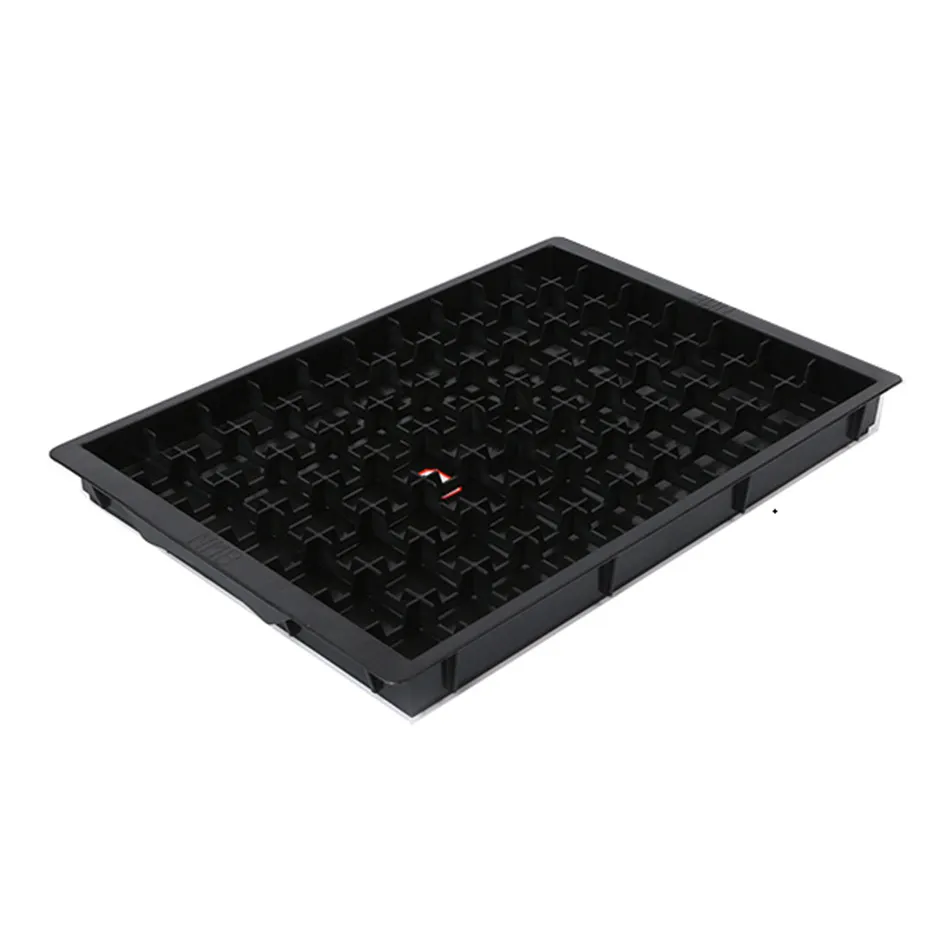
Use the Sanwei ESD Tray product page as the starting point when the job is rigid staging, turnover, or storage and a published row sits near the documented part envelope. Send the worksheet through Contact Sanwei to confirm the selected row, accessories, material wording, and evidence for the quotation — or to route a formed-cavity request into a design review.
Fit Boundary
| Buyer situation | Suitable path | Avoid |
|---|---|---|
| Defined part, heavy turnover loop | Shortlist published rigid rows against the route | Assuming any formed sheet survives the same duty |
| Part needs fixed orientation and nesting | Start a formed-cavity design review from the drawing | Forcing an open tray to do a cavity’s job |
| Material required by a customer spec | Confirm material wording in writing for the quoted item | Treating a category word as a datasheet |
| ESD requirement | Request row- or design-level evidence under the buyer’s method | Reading a static index as universal acceptance |
| Unknown reuse economics | Run a sample-use review across the real route | Deciding on price per tray alone |
FAQ
What is a polypropylene ESD tray used for?
It generally serves open or partitioned staging, turnover, and storage of electronic parts where a stiff, repeatable tray footprint matters. The specific published model row and the buyer’s route define the actual use.
Are thermoformed ESD trays reusable?
Reuse depends on the sheet design, the route, and the buyer’s acceptance rule. State the expected return trips in the RFQ and confirm the behavior on a sample rather than assuming either answer.
Which tray type is better for PCB handling?
Neither wins by default. Boards moving through staging and turnover usually point to rigid rows; boards or modules that need fixed nesting point to a formed design. The worksheet decides.
How do I confirm what material an ESD tray uses?
Ask for the material family and anti-static construction in writing for the quoted model or design, and check cleaning-agent compatibility for the documented route.
Does Sanwei publish tray dimensions and static index values?
Yes. The ESD Tray product page lists named rows with external and inner dimensions, wall thickness, weight, and a 10e4-10e8 Ω static index, plus optional accessories on listed rows.
What ESD evidence should be requested for either tray?
Request the electrical target, test method, conditions, measurement locations, and evidence format required by the buyer’s ESD-control program for the specific quoted item.
Can one program use both tray types?
Yes, and many do — for example, formed inserts inside rigid trays or different constructions at different stages. Define which tray owns each handoff and label rule.
What should be checked on a tray sample?
Loading, seating, removal, orientation, identification, route survival, and cleaning behavior against the buyer’s documented acceptance criteria.
Laisser un commentaire